
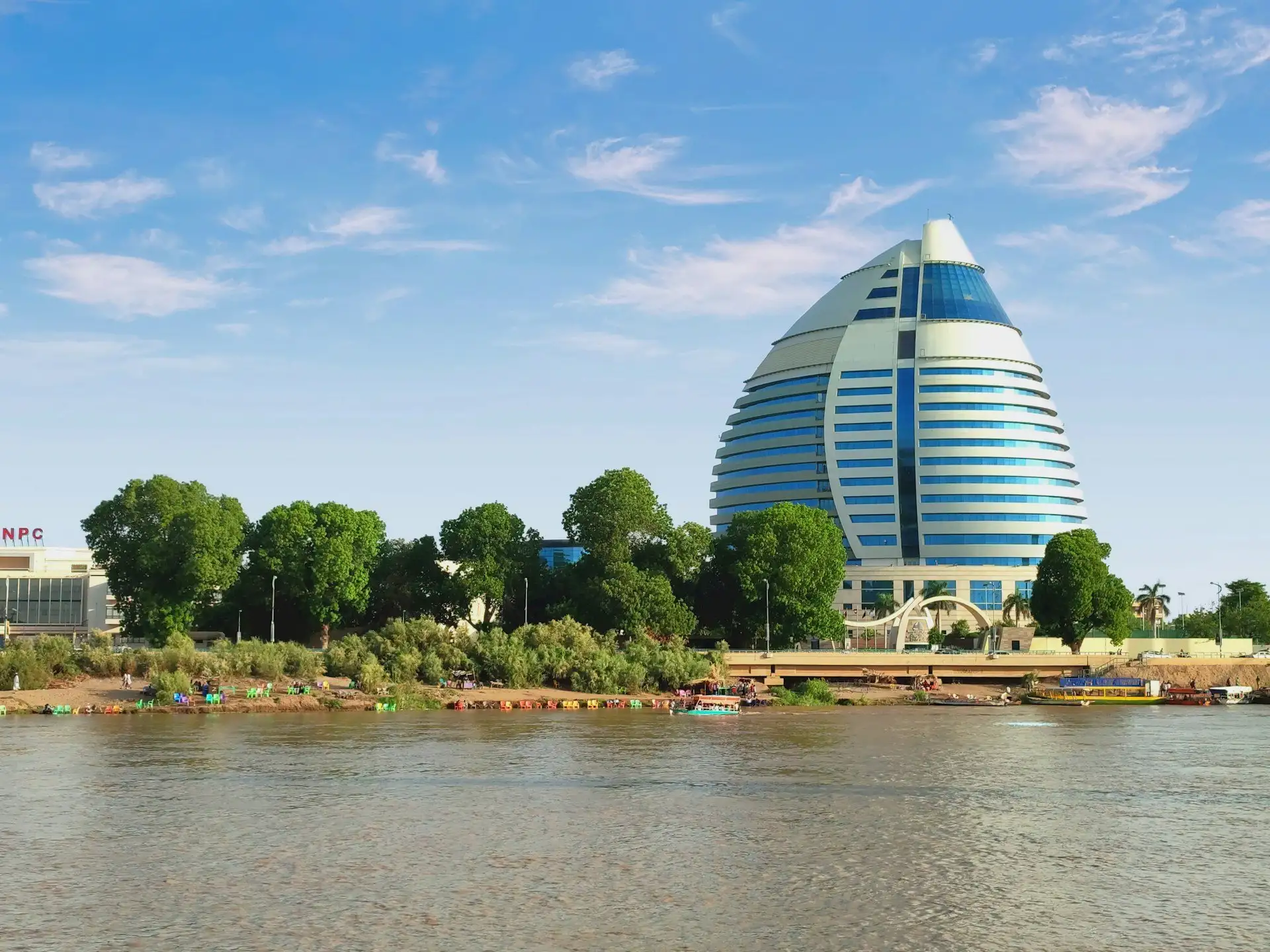
What You're Actually Getting Into
War broke out in Sudan in April 2023 between the Sudanese Armed Forces (SAF) and the paramilitary Rapid Support Forces (RSF), after a power-sharing arrangement following the 2021 military coup collapsed. The army recaptured Khartoum in 2025 and the government formally returned to the capital in January 2026, but the RSF still controls most of Darfur in the west and contests parts of Kordofan and Blue Nile state, and drone warfare has intensified rather than eased through 2026: the United Nations attributes more than 80 percent of civilian deaths in the war's early 2026 months to drone strikes. The International Rescue Committee describes the resulting humanitarian crisis, over 13 million people displaced, as the largest ever recorded. This is the context every other fact on this page sits inside.
It is also true that Sudan holds heritage almost nobody gets to see: more than 200 Nubian pyramids at Meroe, Naqa and Musawwarat es Sufra, a UNESCO World Heritage Site and more pyramids than Egypt has, plus a Red Sea coast with coral reef so lightly dived it barely registers on the global circuit. That is not an invitation. It is context for why this page exists at all, rather than simply telling you to stay away and stopping there.
Who this guide is actually for
This is not a leisure travel guide, and we are not going to pretend otherwise by wrapping a Do Not Travel country in itinerary language. It exists for aid workers, diplomatic and NGO staff, journalists, researchers and people with genuine family ties who are traveling to Sudan regardless of the advisory, and who need honest, current, practical information rather than either alarmism or a sanitized brochure. If you are choosing a first Northeast African destination for a holiday, this is not it; our Egypt guide, right across the northern border, covers an established alternative with a functioning tourism industry.
The Advisory, and What It Means
The US State Department renewed Sudan's Level 4, Do Not Travel advisory on 15 May 2026, citing risk of armed conflict, crime, kidnapping, terrorism, landmines and extremely limited health care. The UK FCDO advises against all travel to the whole country. The US Embassy in Khartoum has been suspended since the war began in April 2023 and cannot provide routine or emergency consular services; Americans in Sudan are directed to the US Embassy in Cairo instead. None of this is boilerplate caution: it reflects an active, volatile front line that has moved substantially within the last eighteen months and could move again.
Armed conflict & drones
Fighting between the SAF and RSF continues in Darfur, Kordofan and Blue Nile state, and long-range drone strikes have hit Khartoum repeatedly through 2026 as well as Port Sudan itself in a wave of attacks in May 2025. Front lines shift with little warning.
Crime & kidnapping
Armed robbery, carjacking, home invasion and kidnapping, including of foreign aid workers and journalists, occur across the country. More than 120 humanitarian personnel have been killed since the war began, the large majority of them Sudanese nationals.
Landmines & medical care
Landmines and unexploded ordnance exist in and around conflict-affected areas and are not always marked. Medical services are extremely limited nationwide; adequate treatment for routine and emergency care is often unavailable outside a handful of facilities.
Two more things worth knowing: communications and the cash crisis
Communications have been repeatedly disrupted during the war, with periods of nationwide internet and mobile blackouts in past years. Do not assume you will have reliable connectivity, and arrange check-in protocols with your organization before entering the country.
The cash and banking crisis is severe and ongoing: the Sudanese pound has fallen sharply against the dollar, some banks cap withdrawals, and ATMs are unreliable even in Port Sudan. See the Budget chapter for how essential travelers actually manage money here.
Emergency numbers
Why we're flagging these numbers as unreliable
999, 333 and 777 are the nationally listed police, ambulance and fire numbers, with 112 accessible from mobile phones and intended to route to the right service. The nationwide rollout of this system remains incomplete as of 2026, largely because the war has damaged infrastructure and disrupted response capacity in many areas, so treat these as a starting point rather than a guarantee, and rely on your organization's own security contacts and your hotel or compound's local contacts first.
Consular contact: the US Embassy in Cairo (+20-2-2797-3300) handles Sudan-related consular matters since Khartoum's embassy suspended operations; the State Department's 24/7 line for citizens abroad is +1-888-407-4747 from the US and Canada, or +1-202-501-4444 from elsewhere.
A History Worth Knowing
Sudan's Nile valley held the Kingdom of Kush, a Nubian civilization that ruled Egypt itself as its 25th dynasty and later built more pyramids at Meroe than the Egyptians did. Centuries of Ottoman-Egyptian and then British-Egyptian rule followed, independence came in 1956, and the decades since have been dominated by two long civil wars, the 2011 secession of South Sudan, a 2019 revolution, a 2021 coup, and since April 2023, the war still underway today.
- c. 780 BCE-350 CE
The Kingdom of Kush. A Nubian civilization centered on the Nile that ruled Egypt as the 25th dynasty and later built the pyramid fields at Meroe, now a UNESCO World Heritage Site.
- 1956
Independence. Sudan becomes independent from Anglo-Egyptian condominium rule on 1 January.
- 1955-1972, 1983-2005
Two civil wars. Conflict between the north and south, rooted in religious, ethnic and resource disputes, kills an estimated two million people over the two wars combined.
- 2011
South Sudan secedes. Following a 2011 referendum, South Sudan becomes the world's newest country, taking most of Sudan's oil reserves with it.
- 2019
Revolution. Mass protests topple president Omar al-Bashir after three decades in power, opening a fragile civilian-military transition.
- 2021
Military coup. Army and RSF leaders jointly seize power, ending the civilian transition and setting up the rivalry between them that triggers the current war.
- 2023-present
SAF-RSF war. Fighting erupts in Khartoum in April 2023 and spreads nationwide. The army recaptures Khartoum in 2025; the RSF continues to hold most of Darfur. The government formally returns to Khartoum from wartime capital Port Sudan in January 2026.
Read the full history: Kush, colonial rule and the roots of today's war
Ancient Nubia produced one of Africa's great civilizations. The Kingdom of Kush controlled Egypt itself between roughly 744 and 656 BCE as the 25th dynasty, and after retreating south continued for centuries from Meroe, building more pyramids, smaller and steeper-sided than Egypt's, than the Egyptians ever did. This history is a source of real national pride and largely unknown outside specialist circles, partly because so little of Sudan's archaeology has ever been open to mass tourism even in peacetime.
Ottoman-Egyptian rule from 1821 gave way to the Mahdist State after a 1885 revolt, then to Anglo-Egyptian condominium rule from 1899 until independence in 1956. Independent Sudan inherited a north-south divide, Arab and Muslim in the north, African and predominantly Christian or animist in the south, that colonial administration had deepened rather than resolved, and this divide drove two devastating civil wars (1955-1972 and 1983-2005) before South Sudan's 2011 secession removed the south, and most of the country's oil, from Sudan altogether.
What followed was not stability. Omar al-Bashir, in power since a 1989 coup, was toppled by mass protests in 2019. A transitional government tried to balance civilian and military power until the army and the RSF, a paramilitary force descended from the Darfur-era Janjaweed militias, jointly seized full control in an October 2021 coup. The alliance between the two forces was always uneasy, built on rival ambitions rather than shared goals, and it collapsed into open war in Khartoum in April 2023 over exactly the question that had held it together: how and whether to integrate the RSF into a unified national army.
Port Sudan, and What's Not Currently On the Table
This guide does not present Sudan as a country with a normal travel circuit right now, because it doesn't have one. What follows is scoped to Port Sudan and its immediate Red Sea coast, the one part of the country where essential travelers realistically operate, plus honest context on the heritage sites this war has put out of reach for the time being.
Port Sudan, the country's working gateway
Port Sudan, capital of Red Sea State and Sudan's main maritime outlet, is where nearly all of this guide's practical advice is set. It has been comparatively more stable than Khartoum since a wave of RSF drone strikes hit its airport, fuel depots and the Marina Hotel in May 2025, and it now hosts most of the country's functioning NGO, diplomatic and aid infrastructure. Full detail on staying there, getting around and what's within reach lives on our dedicated Port Sudan city guide.
The Meroe pyramids
North of Khartoum along the Nile sit the pyramid fields of Meroe, Naqa and Musawwarat es Sufra, jointly a UNESCO World Heritage Site since 2011 and the resting place of Kushite royalty, more than 200 pyramids across the wider region, more than Egypt has. Reporting through the war describes the immediate Meroe area as having stayed relatively peaceful, with local groundskeepers continuing to guard the site largely alone. That is a genuinely remarkable fact about the site's endurance. It is not the same as the site being reachable: getting there from anywhere a visitor can currently and safely be means routing through or near Khartoum and its active security situation, and ordinary independent tourism to Meroe has not resumed. We are not recommending an itinerary here, only telling you honestly that the pyramids still stand.
Culture & Etiquette
Sudan is an overwhelmingly Muslim, Arabic-speaking country (Arabic and English are both official languages) with a hospitality tradition that has held up even through years of war and displacement: Sudanese hosts, including ones with very little to spare, are known for insisting on sharing what food and tea they have with guests. Dress conservatively, modest clothing that covers shoulders and knees is expected of everyone, more so for women, and greetings matter: a warm verbal greeting before getting to business is standard and appreciated.
Alcohol
Sudan has enforced sharia-based prohibition on alcohol since 1983 and it remains illegal nationwide. Do not bring, buy or drink alcohol; enforcement has been used against foreigners in the past.
Photography
Photographing military and security installations, checkpoints, government buildings, bridges and airports is prohibited and enforced, and this matters far more now than in ordinary times given how many such sites exist. Ask before photographing people.
Tea & coffee culture
Sudanese tea (shai) and spiced coffee (jebena, brewed in a clay pot) are central to daily social life, traditionally served by women at streetside stalls. Where this culture continues to operate, it's a genuine window into normal Sudanese life amid everything else.
Friday & Ramadan
Friday is the weekly day of rest and the working week runs Sunday to Thursday in most of the country. During Ramadan, avoid eating, drinking or smoking in public during daylight hours out of basic respect, even where not strictly enforced.
Food & Drink
Sudanese cooking centers on legumes, grains and, on the Red Sea coast, fresh seafood. Ful medames, slow-cooked fava beans mashed with oil, garlic and spices, is close to a national dish, typically eaten with kisra, a fermented sorghum flatbread, for breakfast or any meal. On the coast around Port Sudan, sayadia, seasoned fish with cumin-scented rice, reflects the city's fishing economy far more than the meat-and-grain cooking found further inland.
Alcohol is illegal nationwide, so tea and coffee fill the social role it would elsewhere: Sudanese tea (shai, often with mint or spices) and jebena coffee, brewed and served from a distinctive clay pot, are both worth seeking out from streetside vendors where operating normally.
Getting There, Getting Around & Staying
Nearly everything about logistics in Sudan right now runs through Port Sudan. Full operational detail, including named hotels and how to move around the city, is on the Port Sudan city guide; this section covers the country-level picture.
Getting there
Port Sudan New International Airport (PZU) is Sudan's main functioning gateway, handling roughly 40 flights a day with the majority connecting abroad, mostly to the Middle East; Qatar Airways resumed service in July 2026. Khartoum International Airport has also resumed limited domestic, regional and some international flights since early 2026 after nearly two years closed, but it continues to face intermittent drone-strike risk and closures, and this guide does not treat it as a reliable point of entry. Overland routes exist from Egypt, including a passenger ferry between Aswan and Wadi Halfa that resumed in early 2026 after a six-year gap, but border and security conditions change quickly and should be confirmed immediately before travel, not planned around in advance.
Getting around
Independent road travel outside secured areas is not something this guide can responsibly walk through step by step, because the honest answer depends entirely on current, localized security conditions that shift week to week. If you're traveling for work, aid or diplomatic reasons, movement should be planned through your organization's security team, typically with vetted local drivers, known routes and check-in protocols, not arranged independently the way a leisure itinerary would be.
Budget Planning
Money in Sudan right now works differently than in a normal travel destination. Banking infrastructure has been badly disrupted by the war, the Sudanese pound has fallen sharply and moves quickly against the dollar, and ATMs are unreliable even in Port Sudan. Essential travelers plan around cash, specifically US dollars, rather than cards.
- Bring clean, newer bills; damaged or old-series notes are often refused
- Smaller denominations for daily costs, larger for hotels
- Do not rely on ATMs or card payment as a backup plan
- Exchange rate has fallen sharply and moves fast; check a live rate, not a printed one
- Useful for markets, tea stalls and local transport
- Street/parallel-market rates commonly differ from official ones
Practical reference costs (Port Sudan)
| Secured hotel room, Port Sudan | $60-150/night |
| Simple local meal | $3-6 |
| Sit-down meal, seafood, hotel restaurant | $10-20 |
| Local SIM card, where available | $5-15 |
| Vetted driver, half-day in city | Arrange via hotel or sponsor org. |
Prices reflect August 2026 research and are approximate; the currency situation makes anything quoted in Sudanese pounds unreliable within weeks. Treat these as a rough planning baseline, arranged in most cases through an organization or hotel rather than independently.
Visa & Entry
Almost every nationality needs a visa for Sudan; there is no meaningful visa-free or visa-on-arrival access for leisure travelers. Applications typically run through Sudan's Ministry of Interior e-services portal or a Sudanese embassy or consulate abroad, and while an invitation or sponsor letter is not always formally listed as mandatory, it is commonly requested in practice and strongly improves the odds of a smooth application. Passports need at least 6 months' validity from the date of entry, and you must travel on the same passport used in the application, since officers check the number on arrival.
✓ Visa, applied in advance
Via Sudan's e-services portal or an embassy. Processing has historically taken around three days once submitted, but treat that as a baseline, not a guarantee, given current conditions.
✓ Sponsor or invitation letter
Commonly requested even when not formally mandatory. Aid organizations, employers and hosts typically provide this; independent leisure applicants should expect more friction.
✓ Yellow fever certificate
Required if arriving from, or having transited more than 12 hours through, a country with yellow fever transmission risk. Not universally required otherwise, but confirm against your actual routing.
✓ Passport, 6 months' validity
From your date of entry. Keep photocopies and digital copies separate from the original, and register with your embassy's nearest operating post (Cairo, for US citizens) on arrival.
| Sudan | Egypt | |
|---|---|---|
| US advisory | Level 4: Do Not Travel | Level 2: Exercise Increased Caution |
| Tourism infrastructure | Essentially none outside Port Sudan's basic hotels | Established, with a full range of budgets and operators |
| Ancient sites | 200+ Nubian pyramids, currently not reachable independently | Giza, Luxor, Aswan, fully open and well-served |
| Entry | Visa plus sponsor letter in practice, essential travel only | Straightforward e-visa, genuinely open to leisure travelers |
| Region | Northeast Africa, Red Sea and Nile | Northeast Africa, Red Sea, Nile and Mediterranean |
Sudan FAQ
Is Sudan safe to visit?
No, not for leisure travel. The US State Department rates Sudan Level 4, Do Not Travel, citing armed conflict, crime, kidnapping, terrorism, landmines and extremely limited medical care, and the UK FCDO advises against all travel. This guide is written for people who must travel for work, aid or family reasons.
Do I need a visa for Sudan?
Yes, almost all nationalities need a visa, usually applied for through Sudan's Ministry of Interior e-services portal or a Sudanese embassy, and an invitation or sponsor letter is commonly requested even when not formally listed as mandatory. Confirm current requirements directly with Sudanese immigration before you travel, as the process shifts.
What is the capital of Sudan and where should visitors base themselves?
Khartoum is the official capital and the government returned there in January 2026 after the army recaptured the city in 2025, but Khartoum remains heavily damaged and its airport continues to face drone attacks. Port Sudan on the Red Sea coast is the more realistic base: it hosts the country's main functioning international airport and most of its NGO and diplomatic infrastructure.
Is Sudan currently in a civil war?
Yes. War broke out in April 2023 between the Sudanese Armed Forces and the paramilitary Rapid Support Forces. The army recaptured Khartoum in 2025, but the RSF still holds most of Darfur and contests parts of Kordofan and Blue Nile state, and drone warfare has intensified through 2026 rather than easing.
What currency does Sudan use?
The Sudanese pound (SDG), though US dollars in cash are widely preferred for larger payments. The pound has fallen sharply against the dollar during the war and the exchange rate moves quickly, so check a live rate rather than relying on a printed figure.
Are there landmines in Sudan?
Yes, in scattered and not always marked locations, particularly in and around active or former conflict zones. This is a specific reason not to leave marked roads or travel independently outside secured areas.
Can I use ATMs in Sudan?
Unreliably. Banking infrastructure has been badly disrupted by the war and cash availability varies by city and by week. Bring sufficient clean, newer US dollar bills in cash rather than planning around ATMs or cards.
Can tourists visit the Pyramids of Meroe?
Sudan holds more than 200 Nubian pyramids, more than Egypt, and the Meroe area has reportedly stayed relatively peaceful through the war. But it sits north of Khartoum along a route this guide cannot currently recommend for independent travel, and normal tourism to the site has not resumed. It is not something to arrange casually.
What Stays With You
This page exists because people still have to go to Sudan, for jobs and duties and family this war didn't ask permission to interrupt. It does not exist to talk anyone into a trip. The pyramids at Meroe, more numerous than Egypt's and guarded now mostly by a handful of loyal groundskeepers, are a real and remarkable fact about this country. So is the humanitarian crisis the United Nations calls the largest ever recorded, and the drone strikes that in 2026 alone have killed more than a thousand civilians.
If you're reading this because you have to travel to Sudan regardless, go in with current information, a real security plan and honest expectations, not a printout of this page treated as settled fact. Confirm everything again immediately before you leave.