
What You're Actually Getting Into
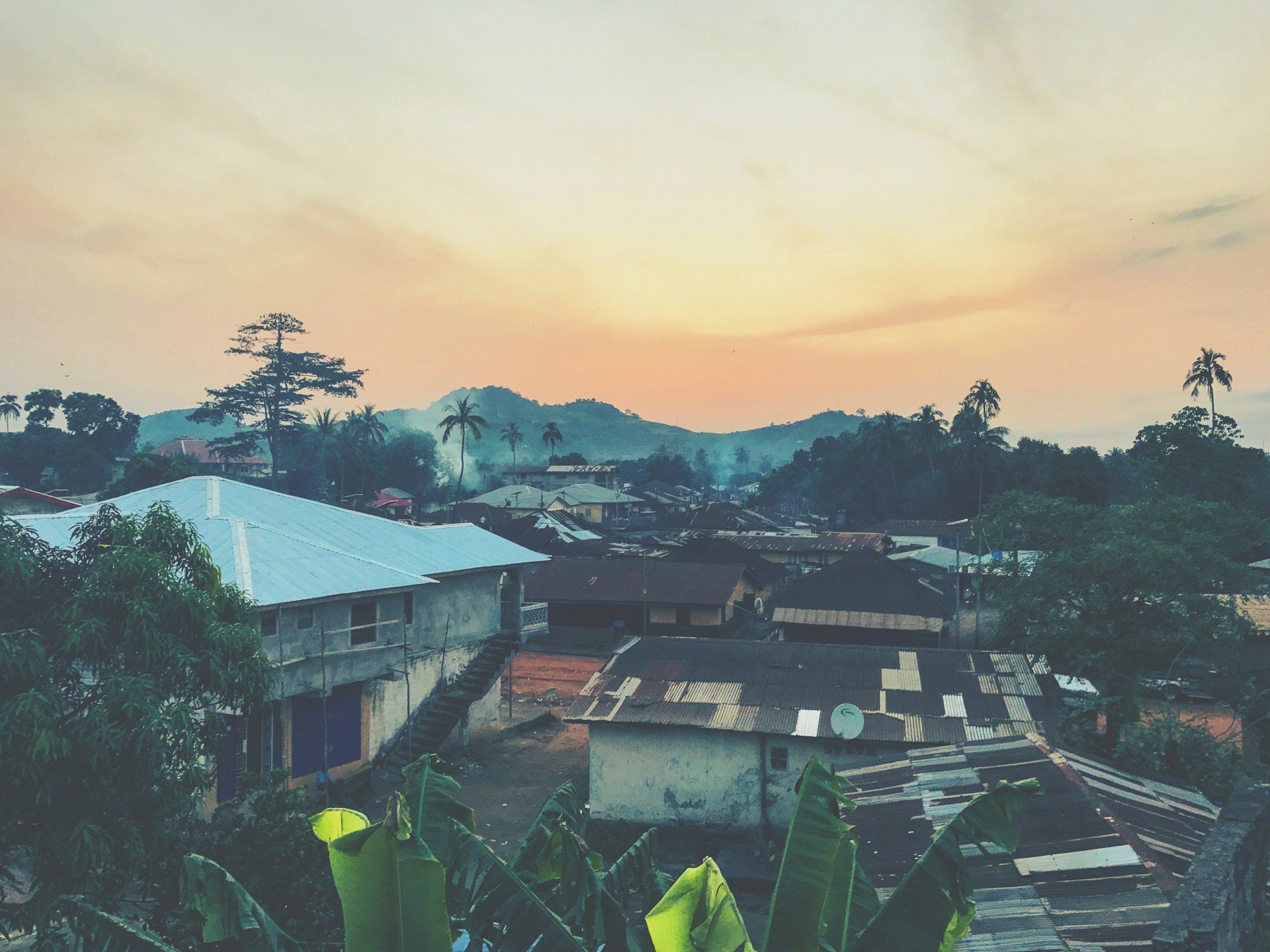
Sierra Leone is a small English-speaking country on West Africa's Atlantic coast that most of the world only knows for two things: a civil war fought partly over diamonds through the 1990s, and the Ebola outbreak of 2014 to 2016. Both are more than a decade in the past, both changed the country profoundly, and neither defines the place a visitor actually experiences today. What a visitor experiences is a mountainous, rainforest-covered peninsula wrapped in some of the emptiest, whitest beaches left in West Africa, a capital that is loud, hilly and genuinely welcoming, and a population whose warmth toward strangers surprises almost everyone who arrives expecting otherwise.
Tourism infrastructure is real but thin. There is no Ghana- or Senegal-scale circuit of package resorts here: a handful of beach lodges on the Freetown Peninsula, a Radisson Blu and a scattering of business hotels in the capital, and beyond that, guesthouses and a lot of word-of-mouth. That thinness is exactly what makes the Peninsula's beaches, Bureh, River No. 2, Tokeh, feel undiscovered rather than curated. It also means this is not a destination for a first trip to Africa without some tolerance for imperfect infrastructure.
The honest complications
Sierra Leone is not a cheap destination despite its infrastructure gaps: imported goods, fuel and the small number of decent hotels keep prices above budget-friendly neighbors like Guinea. Roads outside the paved Peninsula highway can be rough, especially in the May-October rainy season, and the water taxi or ferry crossing from Lungi Airport to Freetown is an unavoidable extra step and expense that catches first-time visitors off guard. Power cuts and patchy internet are normal outside a handful of hotels. And Freetown itself, hilly, crowded, humid and short on formal pavements in places, takes a day or two of adjustment before its energy reads as charm rather than chaos. None of this makes Sierra Leone a hard destination by regional standards, but it rewards travelers who come with realistic expectations rather than resort-brochure ones.
A History Worth Knowing
Sierra Leone's modern story starts with an unusual founding: Freetown was established in 1787 as a settlement for freed and formerly enslaved Black people, first from London, then from Nova Scotia, then Jamaican Maroons, whose intermarriage over generations created the Krio people and their English-based creole language. Independence from Britain came peacefully in 1961; what followed was less peaceful, and understanding both halves of that story changes how the country reads to a visitor.
- 1787-1792
Freetown founded. British abolitionists settle freed Black Londoners, then Nova Scotian former slaves, on the Sierra Leone peninsula, naming it the Province of Freedom.
- 1800
The Krio people form. Jamaican Maroons, exiled after the Second Maroon War, join the settlement. Intermarriage between these groups and Liberated Africans creates the Krio ethnicity and language.
- 1961
Independence. Sierra Leone gains independence from Britain on 27 April, with Sir Milton Margai as the first prime minister, following a peaceful transition.
- 1991-2002
Civil war. The Revolutionary United Front's decade-long rebellion, funded by illicit "blood diamonds," kills more than 50,000 people before British and UN intervention ends it.
- 2014-2016
Ebola outbreak. Sierra Leone, Liberia and Guinea are hit hardest by West Africa's Ebola epidemic; the World Health Organization declares Sierra Leone Ebola-free in November 2015, with the wider regional emergency ending in 2016.
- 2018-present
Bio era. Julius Maada Bio becomes president in 2018 and is re-elected in 2023; Sierra Leone chairs ECOWAS from mid-2025, and tourism grows slowly from a very low base.
Read the full history: Krio origins, the diamond war and recovery
The founding of Freetown is one of the more unusual origin stories of any modern capital. The Committee for the Relief of the Black Poor, an abolitionist group that included Thomas Clarkson and William Wilberforce, first settled around 400 freed Black Londoners on the peninsula in 1787. That settlement failed within two years, destroyed by conflict with the indigenous Temne population. A second, larger wave of roughly 1,100 formerly enslaved people who had fought for the British in the American Revolution and been resettled in Nova Scotia arrived in 1792 and founded the Freetown that survives today. In 1800, around 550 Jamaican Maroons, exiled after resisting British colonial rule in Jamaica, joined them. Out of these groups, together with tens of thousands of Africans later freed from slave ships by the British Navy after abolition, came the Krio: a new ethnicity with its own English-derived creole language, still spoken as Sierra Leone's lingua franca today regardless of a person's ethnic background.
Independence in 1961 under Milton Margai gave way to decades of political instability, one-party rule under Siaka Stevens from 1968 to 1985, and the economic decline of a country whose diamond wealth was being smuggled out faster than it built anything at home. That instability collapsed into civil war in 1991 when the Revolutionary United Front, led by Foday Sankoh and backed at times by Liberia's Charles Taylor, began a rebellion in the diamond-rich east funded directly by the illicit sale of what the world came to call blood diamonds. The war became notorious for its brutality, including widespread amputation as a tactic of terror and the forced recruitment of child soldiers, and killed more than 50,000 people before a British military intervention and a UN peacekeeping mission brought it to an end in 2002.
The Kimberley Process, the international certification scheme meant to keep conflict diamonds out of the legitimate market, was created directly in response to what happened in Sierra Leone and Angola. Sierra Leone's Truth and Reconciliation Commission and a UN-backed Special Court, which tried Charles Taylor and senior RUF commanders, are widely regarded as genuine, if imperfect, attempts to reckon with the war rather than bury it, and museums and guides in Freetown discuss this history directly rather than avoiding it.
Barely a decade into peacetime recovery, Sierra Leone was hit by the 2014-2016 West African Ebola epidemic, which killed roughly 4,000 people in the country and devastated an already fragile health system and economy. The country's recovery since has been real but slow: infrastructure investment, a growing mining and agriculture sector, and a tourism industry still working from a very low base after two successive shocks. Visitors today are engaging with a country actively rebuilding, not one defined by either crisis.
Top Destinations
Nearly every first-time visitor's trip is built around the Freetown Peninsula: the capital itself, plus the mountainous, beach-fringed finger of land that hangs south of it. Most of the rest of the country, the diamond fields of the east, the Loma Mountains, Outamba-Kilimi National Park, has minimal tourism infrastructure and is a trip for a different kind of traveler. A week is enough to cover Freetown and the Peninsula's best beaches properly.
Freetown, the capital
Freetown climbs a set of hills above a natural harbor, one of the largest in the world, and rewards a couple of days before heading to the beaches. The 500-plus-year-old Cotton Tree, the city's oldest and most famous landmark, sits at the heart of downtown near the King's Yard, where the first liberated Africans landed. The Big Market has the best concentration of crafts and textiles, and the National Museum covers the country's history including the civil war years directly. Aberdeen, on the western edge of the city, is the expat and nightlife hub with beach bars along Lumley Beach; the Radisson Blu Mammy Yoko sits on that same stretch of coast.
River No. 2, Tokeh & Bureh
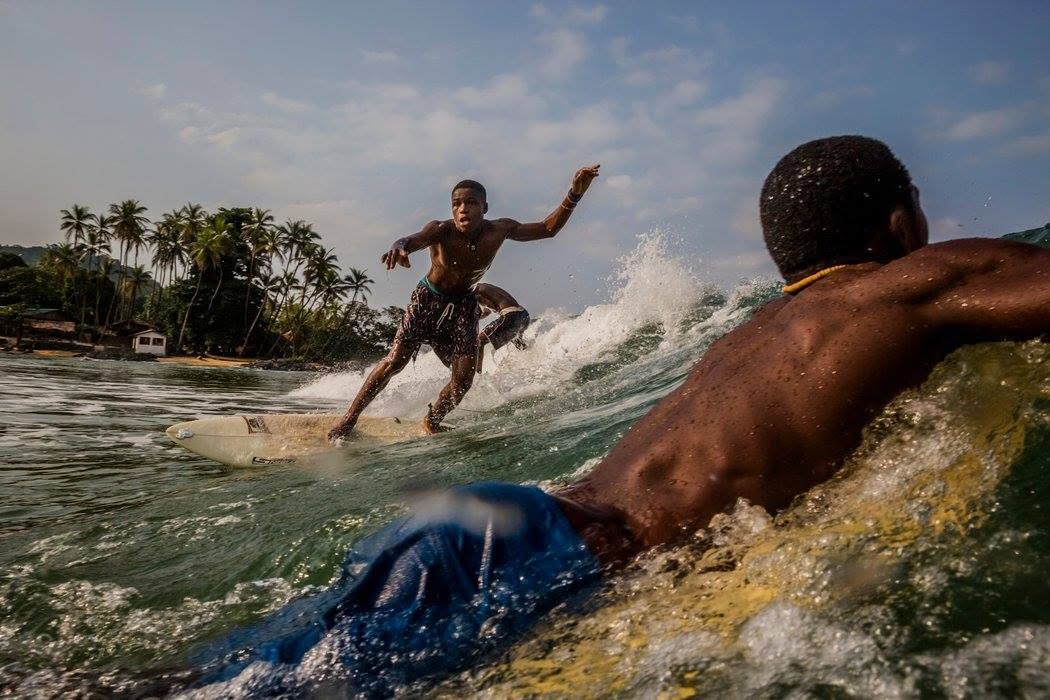
The Freetown Peninsula's south-facing coast has a run of beaches that would each be a headline destination almost anywhere else. River No. 2 Beach, about 45 minutes to an hour south of the city, is a crescent of powder-white sand where a clear river meets the Atlantic, framed by palms and forested hills; it's the most photographed beach in the country and still rarely crowded outside weekends. Tokeh Beach, a short 4x4 hop further on, is more developed, with The Place Beach Resort as the main beachfront stay. Bureh Beach, at the peninsula's southern tip about 90 minutes from Freetown, is Sierra Leone's surf capital: a community-run club, Bureh Beach Surf Club, founded in 2012, rents boards and teaches beginners, with all profits staying in the village. Weekdays are noticeably quieter than weekends at all three.
Tacugama Chimpanzee Sanctuary
Set in the forested hills above Freetown, Tacugama rescues and rehabilitates chimpanzees orphaned by hunting, habitat loss and the illegal pet trade, and is widely regarded as one of the best wildlife experiences in West Africa; Jane Goodall has visited and praised the project. Guided tours run twice daily, at 10:30am and 4pm, by appointment, and take about an hour through forest walkways overlooking the enclosures; a 4x4 or hired driver is needed for the approach road. Combine it with a walk in the surrounding Western Area Peninsula National Park, the forest reserve that protects Freetown's water supply and the last significant rainforest on the peninsula.
Bunce Island
Bunce Island, about 20 miles up the Sierra Leone River from Freetown and reachable only by chartered boat, held a British slave-trading fort that shipped tens of thousands of captive Africans to the Americas, with a documented and unusually direct connection to the rice plantations of coastal South Carolina and Georgia, whose owners specifically sought captives from this region for their rice-farming expertise. The ruins, overgrown but substantial, are one of the most historically significant and least-visited sites of their kind on the West African coast. Go with a guide who can walk you through the fort's layout and the transatlantic story it represents; this is not a casual half-day add-on so much as the most sobering thing most visitors do in Sierra Leone.
Worth the extra effort
The Peninsula covers a first trip well. With extra days or a taste for the road less traveled, these reward the detour.
Banana Islands
A pair of small islands off the peninsula's southern tip, reachable by boat from Kent village, with old cannon emplacements, quiet snorkeling and a genuinely castaway feel. Overnight stays are basic but memorable.
Outamba-Kilimi National Park
Sierra Leone's most established national park, with elephants, chimpanzees, hippos and river crossings by dugout canoe. Remote and under-visited; a specialist operator and several days are the realistic way to see it.
Loma Mountains
Mount Bintumani, West Africa's second-highest peak outside Cameroon, rises from rainforest in a remote reserve. A multi-day trek for experienced hikers with a local guide and porters, not a casual excursion.
Culture & Etiquette
Sierra Leone is one of Africa's most religiously mixed and tolerant societies: a roughly 60% Muslim, 30% Christian population that intermarries, celebrates each other's holidays, and treats sectarian tension as something that happens elsewhere. Hospitality runs deep and genuine; visitors consistently describe Sierra Leoneans as unusually warm even by regional standards, a trait many locals connect directly to the country's founding as a haven for the formerly enslaved and its history of taking people in.
Do
- Greet before you ask for anything. A warm "how di body" (how are you, in Krio) before any request or transaction is expected and genuinely appreciated.
- Learn a few Krio phrases. "Kushe" (hello), "tenki" (thank you) and "how di body" (how are you) go a long way, since Krio, not English, is what most people actually speak day to day.
- Dress modestly away from the beach, particularly in Freetown's downtown and at religious sites; shoulders and knees covered is the safe default.
- Carry small bills. Change for large Leone notes can be hard to find outside hotels and banks; break large notes when you can.
- Negotiate transport fares before you get in, for taxis, okadas (motorbike taxis) and unmetered rides of any kind.
Don't
- Photograph people, government buildings or the port without asking. Permission is a matter of basic courtesy, and some official sites restrict photography outright.
- Assume the civil war or Ebola are open topics for casual conversation. Many Sierra Leoneans lost family to one or both; follow their lead rather than raising it first.
- Walk unfamiliar parts of Freetown alone after dark, particularly downtown and the areas around Kroo Bay; stick to well-lit, populated streets or arranged transport at night.
- Expect fast, predictable timing. Buses, ferries and appointments run on a looser schedule than Western visitors are used to; build slack into any plan involving a connection.
- Flash cash or phones openly in crowded markets or on public transport, standard advice anywhere with real income inequality, doubly true here.
Deeper culture: Krio identity, secret societies and the ethnic mosaic
Krio identity. Though a numerical minority nationally, the Krio have historically held outsized cultural and political influence centered on Freetown, and Krio the language functions as the country's genuine lingua franca across its roughly 16 other ethnic groups, most prominently the Temne and Mende.
Secret societies. Poro (for men) and Bondo/Sande (for women) initiation societies remain culturally significant in many communities outside Freetown, particularly among the Mende and Temne, and their masked performances are sometimes visible at festivals; these are living cultural institutions, not tourist performances, and should be treated with corresponding respect and distance unless specifically invited.
Religious coexistence. Interfaith marriage and mixed Muslim-Christian families are common and unremarkable in Sierra Leone, and both Eid and Christmas are widely celebrated national holidays regardless of a household's specific faith.
Food & Drink
Sierra Leonean food centers on rice, the true national staple, served with one of a handful of rich, slow-cooked sauces called "plasas." Fresh fish and seafood are excellent and cheap along the coast, and the food is generally milder and less chili-forward than neighboring Guinea or Ghana, though pepper sauce is always on the table for those who want the heat added back in.
Cassava Leaf Stew $3-6
Widely considered Sierra Leone's national dish: pounded cassava leaves slow-cooked with fish or meat, palm oil and groundnut paste, served over rice. Rich, dark green and found on nearly every local menu.
Groundnut Soup
A hearty peanut-based stew, usually with chicken or fish and vegetables, closely related to versions found across West Africa but with its own Sierra Leonean seasoning. A staple comfort dish.
Grilled Fish & Lobster $5-15
Barracuda, snapper and lobster grilled fresh at beach stalls along Lumley Beach and the Peninsula beaches, usually with rice or chips and a squeeze of lime. The best seafood in the country, at some of the lowest prices.
Jollof Rice $3-8
Sierra Leone's entry in West Africa's ongoing jollof rivalry: tomato-and-pepper-based rice, usually with chicken or fish, found everywhere from street stalls to hotel restaurants.
Palm Nut Soup (Banga)
A rich, oily soup made from pounded palm nut pulp, typically served with fish or meat over rice or fufu. Heavier and more intensely flavored than groundnut soup.
Star Beer & Poyo
Star, the local lager, is the default beer everywhere. Poyo, fresh unfiltered palm wine tapped daily from palm trees, is the traditional drink of choice in rural areas and markets; it ferments fast, so morning poyo is milder than evening poyo.
When to Go & Itineraries
Sierra Leone has two seasons: dry (November to April) and rainy (May to October), with the heaviest rain falling in July and August, when Freetown can see some of the highest monthly rainfall totals of any capital in Africa. The dry season is unambiguously the better time to visit: reliable sun, passable Peninsula roads, and calmer seas for the beaches. Shoulder months, November and April, offer a reasonable compromise between good weather and lower prices.
Both seasons compared, with temperatures
| Season | Verdict | Temps | Notes |
|---|---|---|---|
| Nov-Apr (dry) | Best | 24-32°C | Sunny, passable roads, best beach conditions; harmattan haze possible Dec-Feb |
| May-Jun & Sep-Oct | Good | 24-30°C | Lighter rain, green landscape, fewer visitors |
| Jul-Aug (peak rain) | Difficult | 23-28°C | Heaviest rainfall of the year; some Peninsula roads become hard going |
Freetown stays warm and humid year-round with little temperature swing; rainfall, not temperature, is what actually changes the trip.
A one-week itinerary
One week is a comfortable amount of time to see Freetown and the Peninsula's highlights without rushing. Nearly every itinerary in Sierra Leone is built around this same core loop.
- Days 1-2
Freetown. Cotton Tree, King's Yard, the Big Market, the National Museum, and an evening of grilled fish on Lumley Beach in Aberdeen.
- Day 3
Tacugama Chimpanzee Sanctuary. A half-day trip into the hills for one of the two daily guided tours, combined with a walk in the surrounding national park.
- Days 4-6
Peninsula beaches. Move down the coast to River No. 2 or Tokeh for a couple of relaxed days, then on to Bureh Beach for surfing or simply the country's most laid-back stretch of sand.
- Day 7
Bunce Island or Banana Islands. A boat day to either Bunce Island's slave-fort ruins or the quieter, more casual Banana Islands, before returning to Freetown for departure.
Getting there & around
Freetown Lungi International Airport (FNA) is the country's only real international gateway, served by Brussels Airlines, Air France, Turkish Airlines, Royal Air Maroc and several regional West African carriers. The catch that surprises nearly every first-time visitor: the airport sits across the wide Sierra Leone River estuary from the city itself, so getting to Freetown means a further water crossing or a long road detour. A water taxi (roughly 25-30 minutes, about $15-40 per person) is the standard option; the government ferry is cheaper (roughly $2-4, 45-90 minutes) but slower and less predictable; a helicopter shuttle covers the same distance in 15 minutes for about $100-140. Arrange this before you land rather than negotiating it on arrival.
Getting around once you're there: taxis, okadas, SIM cards
| Option | Price | Notes |
|---|---|---|
| Taxis in Freetown | $5-10/ride | Shared "poda poda" taxis run fixed routes for pennies; private taxis should be negotiated before departure. |
| Okadas (motorbike taxis) | $1-3/ride | Fast for short hops but higher accident risk; agree the fare first and skip them after dark. |
| Hired driver/4x4 | $60-100/day | The practical way to reach Tacugama, Tokeh and Bureh; arrange through your hotel or guesthouse. |
| SIM cards | ~$1 + credit | Africell, Orange and Qcell all sell tourist SIMs at the airport and in Freetown; Orange is generally considered the most reliable network. |
Practical prep: a yellow fever vaccination certificate is mandatory for entry and is checked. Malaria prophylaxis is strongly recommended countrywide. Download offline maps before heading to the Peninsula beaches, since signal thins out past Freetown, and confirm your guesthouse has a generator or solar backup, since power cuts are routine outside the main hotels.
Where to stay
Freetown business hotels
The Radisson Blu Mammy Yoko Hotel on Aberdeen's coastline is the city's best-known international-standard option, with a pool and sea views. The Country Lodge Hotel and Bintumani Hotel, both a short walk from Lumley Beach, are reliable mid-range alternatives with pools and generators.
Peninsula beach stays
The Place Beach Resort at Tokeh Beach is the most developed beachfront option outside the capital. At Bureh, simple guesthouse-style rooms run by the community around Bureh Beach Surf Club are the honest, low-cost way to stay near the surf.
Budget Planning
Sierra Leone is not the bargain its regional neighbors are. Thin tourism infrastructure, imported goods and fuel costs keep hotel and transport prices above what similar-looking beach destinations in Southeast Asia or even parts of West Africa charge. Where the country is genuinely cheap is street food, local transport and market goods.
- Local guesthouse $15-30
- Local cook-shop meals $3-6
- Shared poda poda taxis
- Free beaches, self-arranged transport
- Business hotel or beach lodge
- Restaurant meals $8-20
- Hired driver for day trips
- Tacugama tour, Bunce Island boat trip
- Radisson Blu or equivalent
- Private driver for the full trip
- Helicopter airport transfer
- Chartered boat to Bunce/Banana Islands
Quick reference prices: taxis, SIMs, water taxi, hotels
| Freetown taxi ride | $5-10 |
| SIM card + basic data | $10-30 |
| Lungi water taxi (one way) | $15-40 |
| Lungi government ferry (one way) | $2-4 |
| Local guesthouse | $15-30/night |
| Business hotel (Freetown) | $90-180/night |
| Cassava leaf stew (local spot) | $3-6 |
| Grilled fish, beach stall | $5-15 |
| Star beer | $1-3 |
| Hired driver/4x4, full day | $60-100 |
Prices reflect August 2026 research and drift over time, especially fuel-linked transport costs. Treat them as a planning baseline, not a quote.
Visa & Entry
Almost all visitors, including US, UK, EU, Canadian and Australian passport holders, need a visa for Sierra Leone. The straightforward route is the official evisa.sl portal, which processes most applications in a few business days; a visa on arrival is also available at Lungi International Airport for travelers who haven't pre-applied. Fees vary by nationality, entry type and route, roughly $80-160, so check the official portal directly for your nationality's current fee rather than relying on third-party visa-agency sites, several of which mark up the official price substantially.
✓ Valid passport
At least 6 months validity from your date of entry, a stricter requirement than many West African neighbors.
✓ Yellow fever certificate
Mandatory and checked on arrival. Get vaccinated well before travel; the certificate becomes valid 10 days after the shot.
✓ eVisa or visa on arrival
Apply in advance at evisa.sl for the smoothest arrival, or budget extra time at Lungi if arriving without one.
✓ Onward travel proof
May be requested at immigration; keep a printed or digital copy of your return or onward ticket handy.
| Sierra Leone | Liberia | |
|---|---|---|
| Daily budget | $50-70 gets you around comfortably | Pricier still, $60-90 for a comparable trip |
| Beaches | Freetown Peninsula: Bureh, River No. 2, Tokeh, all close together | Robertsport's surf coast, more spread out |
| Founding story | Freetown founded 1787 by freed Black Britons and Nova Scotians | Monrovia founded 1822 by freed African Americans |
| Recent history | Civil war ended 2002, driven partly by diamonds | Two civil wars, ending 2003 |
| Airport access | Water taxi/ferry required from Lungi across the estuary | Direct road from Roberts International to Monrovia |
Safety, Solo Women & Family
The US State Department rates Sierra Leone Level 2, exercise increased caution, the same tier as much of Latin America, Turkey and Southeast Asia, and well below the Level 3 and 4 "reconsider travel" and "do not travel" tiers assigned to several of Sierra Leone's regional neighbors. Violent crime specifically targeting tourists is uncommon. The real, current risk pattern is opportunistic: robbery and assault happen, concentrated in parts of Freetown after dark, and the standard official guidance is to avoid travel outside the Freetown Peninsula after nightfall.
Freetown after dark
Stick to well-lit, populated areas or arranged transport at night, especially downtown and around Kroo Bay. The Peninsula beach areas are generally calmer than the city center.
Petty & opportunistic theft
Pickpocketing and bag-snatching happen in crowded markets and bus parks. Keep valuables secured and avoid displaying cash or phones openly.
Health infrastructure
Medical facilities outside a few private Freetown clinics are limited. Comprehensive travel insurance with medical evacuation coverage is strongly recommended, not optional.
Two more things worth knowing: road safety and swimming conditions
Road safety. Roads outside the paved Peninsula highway can be poorly maintained, poorly lit and shared with erratic traffic, particularly during the May-October rains. Avoid night driving outside Freetown where possible and use a known, recommended driver for Peninsula trips.
Ocean conditions. Some Peninsula beaches, including sections near Bureh, have rip currents and limited lifeguard presence. Swim cautiously, ask locally about conditions on a given day, and treat the surf breaks as an experienced-swimmer activity unless you're taking a lesson with the surf club.
Solo women travelers
Sierra Leone requires more caution for solo women than Western Europe or much of Southeast Asia. Harassment and persistent unwanted attention are reported by solo female travelers, particularly in downtown Freetown, though many also describe Sierra Leoneans as exceptionally warm and protective once a genuine rapport is established, echoing the country's broader reputation for hospitality. Practically: book well-reviewed guesthouses with good security, avoid walking alone after dark anywhere in the city, use a trusted driver or hotel-arranged transport rather than hailing taxis off the street, and dress modestly away from the beach itself. Traveling with at least one companion, or joining a small guided group for the Peninsula beach circuit and Bunce Island, is a reasonable choice for a first visit. Full detail on our Solo Woman Explorer pages.
Emergency numbers
A note on emergency numbers, and embassy contacts
Sierra Leone's emergency numbers are reported inconsistently across sources: 900 is the toll-free unified line the Sierra Leone Police introduced in November 2022 to route callers to police, fire and ambulance services, but the older 999 line, in use since 2011, is still commonly cited and may still connect in some areas. 117 is specifically the health emergencies line run through Freetown's District Health Security and Emergencies call center. Save more than one number before you travel and don't assume any single one is guaranteed to connect quickly outside Freetown.
The US Embassy in Freetown and the British High Commission both maintain walk-in services for citizens; register with your embassy's travel program before arrival if one is available to your nationality.
Family travel
Sierra Leone can work for adventurous families with older children, though it is not a turnkey family destination the way a package beach resort elsewhere might be. Tacugama's guided tours engage kids well, the Freetown Peninsula's calmer beach coves are manageable for supervised swimming, and Sierra Leoneans are generally warm toward traveling children. The realistic limiting factors are health precautions (malaria prophylaxis and the mandatory yellow fever vaccination apply to children too, discuss timing with a pediatric travel health provider), limited medical infrastructure outside Freetown, and the general infrastructure thinness described throughout this guide. Families with young children or without West Africa travel experience should strongly consider a reputable local guide or operator for the full trip rather than self-driving the Peninsula.
Sierra Leone FAQ
Is Sierra Leone safe to visit?
The US State Department rates Sierra Leone Level 2, exercise increased caution, the same tier as many popular destinations. Petty and opportunistic crime happens, mostly in parts of Freetown after dark, but violent crime targeting tourists is uncommon and the Freetown Peninsula beaches are generally relaxed. Avoid travel outside the Peninsula after nightfall.
Do I need a visa for Sierra Leone?
Yes, almost all visitors need a visa. Apply in advance through the official evisa.sl portal or get one on arrival at Lungi International Airport. Fees vary by nationality and route, roughly $80 to 160, and a valid yellow fever vaccination certificate is required for entry.
How much does Sierra Leone cost per day?
Budget travelers manage on $50 to 70 a day using guesthouses and local food, mid-range runs $100 to 150 with hotels and restaurant meals. It is not a cheap backpacker destination by West African standards; imported goods, fuel and hotel infrastructure push prices above neighbors like Guinea.
How do I get from Lungi Airport to Freetown?
The airport sits across the estuary from the city. A water taxi takes 25 to 30 minutes and costs roughly $15 to 40 per person, the government ferry is the budget option at around $2 to 4 but takes 45 to 90 minutes, and a helicopter shuttle covers it in 15 minutes for about $100 to 140. Arrange transport before you land.
What is the best time to visit Sierra Leone?
The dry season, November to April, is best: sunny days, passable roads and the Freetown Peninsula beaches at their most reliable. May to October is the rainy season, with the heaviest rain in July and August, when some peninsula roads become difficult.
What is there to do in Sierra Leone besides beaches?
Tacugama Chimpanzee Sanctuary in the hills above Freetown rehabilitates orphaned chimps and is one of the best wildlife experiences in West Africa. Bunce Island, a former British slave-trading fort reachable by boat, is a sobering and historically important site. Freetown itself has the 500-year-old Cotton Tree, colonial architecture and the Big Market for crafts.
What language do people speak in Sierra Leone?
English is the official language and works throughout tourist areas. Krio, an English-based creole that most Sierra Leoneans speak as a lingua franca regardless of ethnic background, is the language you will actually hear on the street, and a few Krio phrases go a long way.
Is Sierra Leone in West Africa's Ebola or civil war zone today?
No. The civil war ended in 2002 and the 2014 to 2016 Ebola outbreak was declared over in 2016, both more than two decades and a decade behind the country respectively. Both remain part of Sierra Leone's story and are addressed honestly by museums and guides, but neither is an active travel risk today.
Is Sierra Leone good for surfing?
Yes. Bureh Beach, at the southern end of the Freetown Peninsula, is West Africa's best-known surf spot, with a community-run surf club renting boards and running lessons for beginners.
Is Sierra Leone safe for solo female travelers?
It requires more caution than Western Europe or Southeast Asia. Harassment and unwanted attention happen, particularly downtown Freetown, and solo women should stick to well-reviewed guesthouses, avoid walking alone after dark, and use trusted drivers rather than hailing taxis off the street. Many solo travelers report Sierra Leoneans as exceptionally warm and helpful once a rapport is established.
What Stays With You
Most visitors arrive in Sierra Leone braced for a hard trip and leave describing something closer to a discovery. The white sand at River No. 2 with almost nobody on it. A chimpanzee at Tacugama recognizing its keeper across an enclosure it was rescued into. The particular quiet of standing in the ruins of a slave fort on Bunce Island and understanding, in a way a textbook can't quite deliver, what that place actually was. None of it is packaged, none of it is curated for you, and that rawness is exactly what makes it stick.
The country's own history, a settlement founded on the idea of freedom, nearly undone twice, still standing, is not a marketing line here. It's the reason the welcome feels the way it does. Go while it's still Sierra Leone's story to tell you in person, not a chapter in someone else's guidebook.