
What You're Actually Getting Into
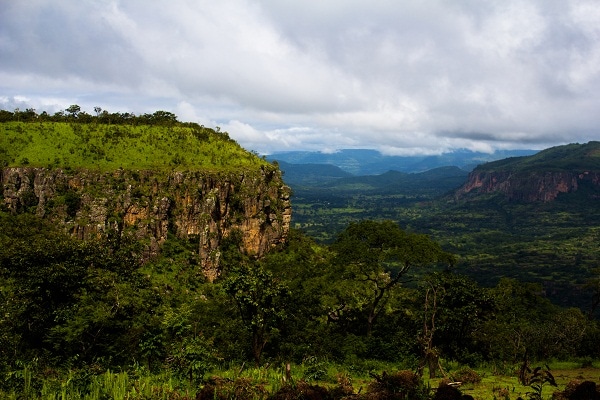
Guinea is one of the least-visited countries in West Africa, and the reason is not that it lacks the goods. It has a cool highland plateau, the Fouta Djallon, that is the source of the Niger, Gambia and Senegal rivers and looks like nowhere else on the coast: red sandstone canyons, waterfalls, and a climate mild enough that colonial administrators built hill stations there to escape the coastal heat. It has a genuine Atlantic archipelago, the Îles de Los, half an hour by boat from the capital. It has one of the tallest peaks in West Africa inside a UNESCO-protected reserve. What it does not have, yet, is tourist infrastructure to match, or a recent history calm enough to make that infrastructure grow quickly.
Guinea was the only French colony in Africa to vote for immediate, total independence in 1958, and France withdrew so abruptly that it reportedly stripped out office equipment and cut telephone lines on the way. What followed was decades of authoritarian rule, a 2008 coup, a 2009 massacre of protesters that a Guinean court only handed down sentences for in 2024, and most recently a 2021 coup that put a colonel in charge for nearly four years before an election, widely criticized by the opposition, returned him to power as a civilian president in January 2026. None of this is ancient history. It is the country you would be landing in.
The honest complications
Tourist infrastructure is thin outside Conakry and the main Fouta Djallon towns: expect negotiated taxi fares instead of meters, cash instead of cards, and roads that get considerably harder in the rainy season. The US State Department rates Guinea Level 2, Exercise Increased Caution, and the UK's Foreign Office states plainly that there are no formal emergency services in the country, directing travelers to two private clinics in Conakry instead of a police or ambulance number. Demonstrations can happen without warning and have turned violent. None of this makes Guinea a no-go destination, plenty of travelers move through it without incident, but it asks more of you than a well-worn West African circuit like Senegal or Ghana, and it rewards travelers who plan routes, hire guides for the highlands, and stay alert to the news before and during the trip.
A History Worth Knowing, Including the Last Six Months
Guinea's modern history runs from the most dramatic exit from French colonialism in Africa, through decades of one-party and military rule, to a 2021 coup whose leader has now, as of January 2026, been sworn in as elected civilian president. Understanding roughly how the country got from one to the other matters more here than in most guides, because the transition is recent enough to still be shaping daily life.
- 1958
Independence, abruptly. Guinea is the only French African colony to vote against Charles de Gaulle's referendum for continued association with France, choosing full independence instead. France withdraws immediately; Ahmed Sékou Touré becomes president.
- 1958-1984
Sékou Touré's one-party rule. Decades of repression and purges under Guinea's first president, ending with his death in 1984.
- 1984-2008
Lansana Conté. Took power in a coup after Touré's death and ruled until his own death on 22 December 2008.
- 2008-2009
Moussa Dadis Camara's coup and the stadium massacre. Camara seizes power after Conté's death. On 28 September 2009, security forces kill at least 150 opposition supporters gathered at a Conakry stadium and rape dozens of women. A Guinean court sentences Camara to 20 years for crimes against humanity in July 2024, fifteen years after the massacre.
- 2010-2021
Alpha Condé's presidency. Wins 2010 and 2015 elections, then pushes through a contested 2020 referendum enabling a third term and wins a disputed October 2020 election amid deadly unrest.
- 5 September 2021
Mamady Doumbouya's coup. A special forces commander captures Condé, dissolves the government and constitution, and cites corruption and mismanagement. A military transition follows, with suspended political parties and restrictions on protest and civil society.
- 28 December 2025
Presidential election. Doumbouya, having barred key opposition challengers, wins with 86.72% of the vote. Prominent opposition figures call the vote a "charade."
- 17 January 2026
Inauguration. Doumbouya is sworn in as civilian president for a seven-year term in a stadium ceremony attended by regional heads of state, formally ending nearly four years of military rule on paper. Legislative and municipal elections follow on 31 May 2026.
Read the full history: colonial Guinea, the Touré years and today's contested transition
Before colonization, the area that is now Guinea was home to parts of the historic Mali Empire and, in the highlands, an Islamic theocracy centered on the Fouta Djallon plateau that shaped the region's culture and Islamic scholarship for centuries. French Guinea was folded into French West Africa; Guinea's 1958 referendum vote against continued French association, urged on by Sékou Touré's famous line that Guineans preferred "poverty in freedom to riches in slavery," made it the first French African colony to break away completely, and France's abrupt withdrawal of personnel and equipment set an isolated, difficult tone for the young state.
Touré ruled for 26 years, marked by purges, forced-labor camps and mass exile of the educated class, before dying in 1984. Lansana Conté then ruled for 24 years through a mix of authoritarianism and gradual, limited opening, until his death in December 2008 triggered Moussa Dadis Camara's coup. Camara's short, chaotic rule ended in international isolation after the September 2009 stadium massacre, one of the worst episodes of state violence in Guinea's post-independence history; he was eventually pushed from power and, remarkably, tried and sentenced in a Guinean court in 2024, a rare instance of accountability for this kind of crime in the region.
Alpha Condé, Guinea's first freely elected president in 2010, initially represented a genuine democratic opening, but his pursuit of a third term through a 2020 constitutional referendum and a disputed election eroded much of that goodwill and set up the conditions for Mamady Doumbouya's September 2021 coup. Doumbouya's junta ran a nearly four-year transition marked, according to human rights groups, by suspended political parties, banned protests and the arrest or disappearance of opposition and civil society figures. Doumbouya then entered the presidential race himself in late 2025 after barring prominent rivals, won the December 2025 election by a wide margin, and was sworn in as civilian president in January 2026, with legislative and municipal elections following in May 2026.
As of mid-2026, Guinea has completed the formal, procedural steps of a transition back to civilian government. Whether that transition represents a genuine opening or a managed continuation of the same leadership under a different title is genuinely disputed among Guineans, international observers and rights groups, and restrictions on opposition activity and independent media reportedly persist. Travelers should treat any claim that "democracy has been restored" with the same caution the situation warrants, and check current news before a trip, particularly around any election-adjacent dates.
Top Destinations
Guinea divides into four zones worth knowing: the capital on its Atlantic peninsula, the cool Fouta Djallon highlands at the country's center, the Îles de Los just offshore from Conakry, and Mount Nimba on the far southeastern border. The highlands and Nimba both reward extra days and, in Nimba's case, advance planning; Conakry and the islands work well even on a short trip.
Conakry, the capital on a peninsula
Guinea's capital sits on the Kaloum peninsula jutting into the Atlantic, its governmental core surrounded by newer commercial districts spreading up the coast. It is not a city that performs for visitors, there is little in the way of a polished "old town," but it has real energy, a large mosque, a lively if uneven restaurant scene concentrated in Ratoma, and the Îles de Los sitting just offshore as an easy escape. Most trips to Guinea start and end here, since it is the country's only real international gateway. See our full Conakry city guide for neighborhoods, hotels, restaurants and getting around.
Labé, Pita & Dalaba
The Fouta Djallon is a highland plateau at the center of the country, cool enough that French colonial administrators built hill stations here to escape the coastal heat, and the source of three major West African rivers: the Niger, the Gambia and the Senegal. Base yourself in Labé, the regional hub, or the smaller towns of Pita and Dalaba, and hire a local guide for canyon and waterfall hikes; moto-taxis and rough tracks reach most trailheads, and English is rare, so French or a guide is essential. Two waterfalls anchor the region near Pita: the Chutes de Kinkon, dropping into a deep gorge, and the Chutes de Kambadaga downstream on the Kokoulo River, the widest falls in the area in the wet season with three successive drops. Near Dalaba, the Chutes de Ditinn drop roughly 80 meters and are commonly cited as the highest waterfall in Guinea. Dry season (November to March) makes for easier hiking; the falls run fullest in the rains.
Tamara, Roume & Kassa
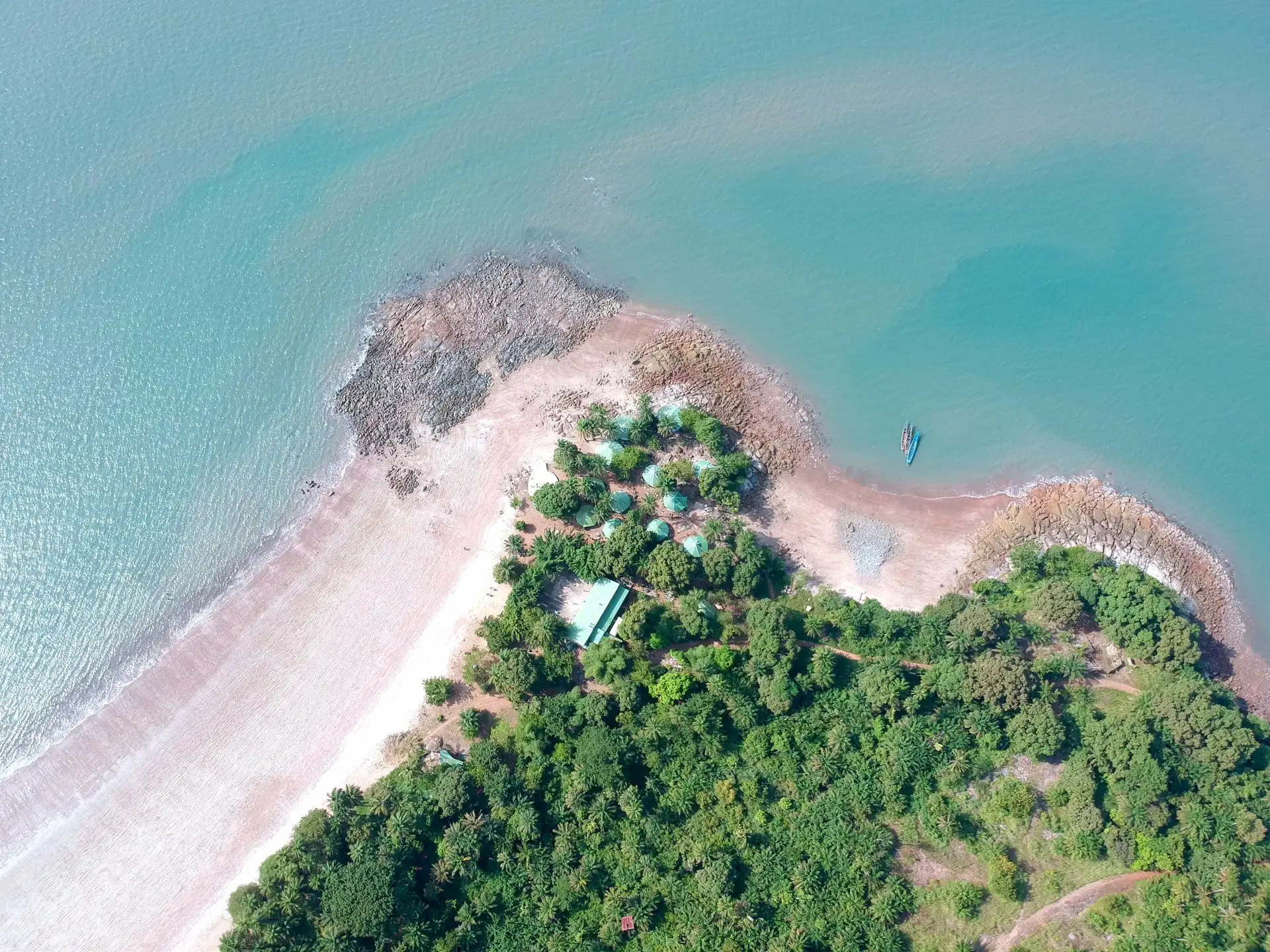
The Îles de Los are a small Atlantic archipelago visible from Conakry's coastline, reached by pirogue, a traditional wooden boat, in around 30 minutes. Kassa has the calmest, most swimmable beaches of the three main islands; Tamara and Roume are quieter still and worth a stop if you have a full day rather than a half. There is no formal ferry schedule or published fare, so expect to negotiate the boat price at the departure point, and treat it as a relaxed half-day or full-day trip out of Conakry rather than an overnight unless you have arranged accommodation in advance.
Mount Nimba Strict Nature Reserve
Mount Nimba, a UNESCO World Heritage Site since 1981, sits on the border where Guinea, Liberia and Côte d'Ivoire meet, near the southeastern town of Nzérékoré, a long way from Conakry. At 1,752 meters it is the highest point in West Africa, and its isolation has preserved exceptional biodiversity, including species found nowhere else, such as viviparous toads and chimpanzees observed using stone tools. Access is genuinely restricted and permission-dependent rather than a casual hike-in, which keeps it one of the least-visited UNESCO sites on the continent; this is a trip for travelers with extra time and a guide or operator who can arrange the paperwork, not an add-on to a short highlands trip.
Culture & Etiquette
Guinea is roughly 85% Muslim, mostly Sunni, with a Christian minority of around 10% (Catholic, Anglican, Baptist and other Protestant denominations) and a small remainder practicing traditional beliefs, often alongside Islam rather than instead of it. Three main ethnic groups shape the country's regional character: Fulani (Peul), concentrated in the Fouta Djallon highlands and the largest group at roughly a third of the population; Malinké, strong in Haute-Guinée in the east; and Susu, dominant along the coast around Conakry. Smaller groups, including Kpelle and Kissi, are concentrated in the forested southeast near Nzérékoré.
Do
- Learn some French. It is the sole official language and essential for anything outside a hotel lobby; English is not widely spoken, even in Conakry.
- Take greetings seriously. In West African social custom generally, and Guinea is no exception, an unhurried greeting before getting to business is a basic courtesy, not a delay.
- Dress modestly. Cover shoulders and knees, particularly outside upscale Conakry venues and always in the Fouta Djallon and rural areas.
- Carry cash. Guinea is overwhelmingly a cash economy; ATMs are unreliable outside Conakry and card machines are rare everywhere.
- Hire a local guide in the Fouta Djallon. Trail marking is minimal, French is necessary for logistics, and a guide also supports the local economy directly.
Don't
- Photograph government buildings, military sites or checkpoints. This applies across much of West Africa and is enforced inconsistently but can lead to real trouble.
- Walk into or near a demonstration. Protests can turn violent with little warning; security forces have used tear gas and live fire on crowds. Leave the area immediately if one starts nearby.
- Expect fixed prices in taxis or markets. Negotiation is the norm; agree a fare before getting in a vehicle.
- Assume the political transition means normal democratic conditions. Restrictions on opposition activity and media reportedly persist even after the formal 2026 handover; stay informed rather than assuming otherwise.
- Rely on emergency numbers the way you would in Europe. The UK Foreign Office states there are no formal emergency services in Guinea; know your hotel's and embassy's contacts before you need them.
Food & Drink
Rice is the backbone of Guinean food in a way that sets it apart from more millet-and-sorghum-reliant Sahelian neighbors, usually served with a sauce and eaten by hand or with a spoon. Guinean cuisine breaks into four loose regional traditions: Basse-Côte (the coast, including Conakry), the Fouta Djallon highlands, Haute-Guinée in the east, and the forested Guinée Forestière in the southeast, each with its own take on the same rice-and-sauce foundation.
Sauce feuilles
A cassava-leaf stew, usually with meat or fish, simmered down to a dark, rich sauce and served over rice. One of the most common home-cooked meals in the country.
Sauce gombo
An okra-based sauce, often with palm oil and fish or meat, another everyday rice topping found across all four regional traditions in some form.
Poulet yassa
Chicken marinated and cooked with onions and mustard, widely eaten in Guinea though it originated across the border in Senegal, worth knowing before calling it a purely Guinean dish.
When to Go & Itineraries
November to March, the dry season, is the easiest window: passable roads, manageable Fouta Djallon trekking, and reliable sun. The rainy season, roughly May to October, fills the waterfalls dramatically but makes rural roads slow and sometimes impassable, and cuts into the appeal of a highlands trip specifically.
Itineraries
A week is enough for Conakry and a first, focused taste of the Fouta Djallon. Two weeks allows a proper highland circuit plus the Îles de Los at a relaxed pace. Mount Nimba, given its distance and permission requirements, is realistically a separate trip or an extension for travelers with three weeks or more.
- Days 1-2
Conakry. Grande Mosquée, Marché Madina, and a day trip to the Îles de Los for the beaches at Kassa.
- Days 3-5
Labé & Pita. Travel inland to the Fouta Djallon; base in Labé or Pita, hire a local guide, and hike to the Chutes de Kinkon and Chutes de Kambadaga.
- Days 6-7
Dalaba & return. The Chutes de Ditinn and the cooler air of Dalaba before the drive back to Conakry.
- Days 1-3
Conakry & the Îles de Los. A slower start in the capital, with a full day rather than a half on the islands.
- Days 4-9
The full Fouta Djallon circuit. Labé, Pita and Dalaba in sequence, with rest days built in for longer treks to the region's canyons and waterfalls.
- Days 10-12
Kindia. The waypoint region between the highlands and the coast, a lower-key stop to break up the return journey.
- Days 13-14
Return to Conakry. A final day or two in the capital with buffer for delayed transport, which is common on rural routes.
Getting there & around
Ahmed Sékou Touré International Airport (CKY) outside Conakry is Guinea's only major international gateway. Confirmed year-round direct service comes from Air France (Paris CDG) and Brussels Airlines (Brussels), with seasonal Turkish Airlines service to Istanbul roughly July to September. Passport validity should extend at least six months beyond arrival, and the e-visa (see the Visa chapter) must be arranged before you travel. Within the country, intercity travel outside the main Conakry-Fouta Djallon road corridor is slow, roads can be rough, and building buffer time into any rural itinerary is a genuinely good idea rather than excessive caution.
Practical prep: SIM cards, cash and connectivity
Guinea is a cash economy outside the top-end Conakry hotels: no card machines in taxis, and ATMs can be unreliable once you leave the capital, so carry enough Guinean francs (GNF) for rural travel before you leave Conakry. Mobile data coverage is concentrated in Conakry and the larger Fouta Djallon towns; download offline maps before heading into the highlands. Standard travel insurance is worth confirming covers medical evacuation, given the UK Foreign Office's explicit statement that there are no formal emergency services in the country.
Budget Planning
Guinea is inexpensive by Western standards, though published price data for the country is thin and inconsistent, so treat the figures below as planning ranges rather than fixed quotes. Prices are also frequently negotiated rather than posted, particularly for transport, which adds its own variability.
- Guesthouse or basic private room
- Local meals and street food
- Moto-taxis and shared bush taxis
- Free sights, negotiated boat trips
- Comfortable Conakry hotel
- Restaurant meals in Ratoma
- Private or arranged transfers
- A local guide for highland hikes
- Conakry's top hotels (Noom, Radisson Blu)
- Private drivers and arranged tours
- Fewer logistics headaches overall
Visa & Entry
US, EU and UK citizens all need a visa before arrival; there is no visa-free or visa-on-arrival access for these passports. The e-visa is arranged through the official government portal, paf.gov.gn, run by Guinea's Police de l'Air et des Frontières. Numerous third-party sites resell the same e-visa at a markup and quote conflicting fees; apply directly through the official portal and confirm the current price there rather than trusting a third-party quote.
✓ Valid passport
At least 6 months validity from date of arrival, per standard requirements referenced by the US Embassy in Guinea.
✓ E-visa arranged in advance
Apply through paf.gov.gn before you travel; primary port of entry for e-visa holders is Ahmed Sékou Touré International Airport (CKY).
✓ Proof of vaccination
Travelers staying four weeks or more may need to show proof of polio vaccination (ICVP) on exit, per UK Foreign Office guidance; check current yellow fever and other requirements with a travel clinic before departure.
✓ Cash for incidentals
Guinean francs for taxis and incidentals from the moment you land; airport currency exchange and ATM reliability should not be assumed.
| Guinea | Guinea-Bissau | |
|---|---|---|
| Signature landscape | Cool highland plateau, canyons and waterfalls | The Bijagós Archipelago, a UNESCO biosphere reserve |
| Political status, 2026 | Elected civilian president since Jan 2026, after a 2021 coup | Military transitional government since a Nov 2025 coup |
| Getting there | Direct flights from Paris and Brussels | Fewer direct European connections |
| Best for | Highland trekking and waterfalls | Archipelago and river-delta boat trips |
| Visa | E-visa required, apply via paf.gov.gn | Visa required, check current entry rules |
Safety, Solo Women & Family
The US State Department rates Guinea Level 2, Exercise Increased Caution, citing crime, civil unrest and inadequate health infrastructure. That is a meaningfully more cautious rating than neighboring Senegal, and it should shape how you plan the trip: routes with a purpose, guides in the highlands, and awareness of the news rather than an open-ended wander. Most visits pass without incident, but this is not a country to arrive in casually.
Crime in Conakry
Pickpocketing, purse snatching, theft from vehicles, assault and residential burglary are the specific risks the US State Department names for the capital. Risk rises after dark; keep car windows up and avoid poorly lit, deserted areas at night.
Demonstrations
Protests can occur without warning and have turned violent, with security forces using tear gas and live gunfire on crowds. September 28 Stadium in Conakry is a recurring rallying point. Leave the area immediately if you encounter one.
No formal emergency services
The UK Foreign Office states plainly that Guinea has no formal emergency services. Know your hotel's arrangements and your embassy's contact details before you need them, rather than counting on a police or ambulance number.
Political transition context and health infrastructure
The political transition is recent and contested. Mamady Doumbouya, who led the 2021 coup, was sworn in as elected civilian president in January 2026 after a December 2025 election that prominent opposition figures dismissed as unfair. Restrictions on opposition parties and independent media reportedly persisted through the transition and may continue. This is not settled history; check current news close to any travel date, particularly around election-adjacent periods.
Health infrastructure does not meet US or Western European standards. The UK Foreign Office directs travelers needing urgent medical help in Conakry to two private clinics rather than a public emergency system: Clinique Pasteur and Clinique Ambroise Paré (contact details in the Emergency Numbers section below). Confirm your travel insurance covers medical evacuation before you go.
Solo women travelers
We don't have enough Guinea-specific reporting on harassment or solo female travel experiences to give this an honest numeric score, and we would rather say that plainly than invent one. What we can say: Guinea is a conservative, majority-Muslim country where modest dress is a sensible baseline, English is not widely spoken so a French phrasebook or guide matters more here than in tourist-heavy West African destinations, and the same crime and unrest cautions in this chapter apply to everyone regardless of gender. Traveling with a companion or a hired guide, especially in the Fouta Djallon and outside Conakry, is a reasonable choice rather than an overreaction. Full detail on our Solo Woman Explorer pages.
Emergency numbers
The UK Foreign Office states there are no formal emergency services in Guinea. For urgent medical help in Conakry, these two private clinics are the recommended contacts rather than a police or ambulance line.
Embassies in Conakry
- USA
- +224 65 10 40 00, Centre Administratif de Koloma, Ratoma
- France
- +224 621 00 00 10, Avenue du Commerce, Kaloum
- UK
- By appointment only, BritishEmbassy.Conakry@fcdo.gov.uk; urgent consular help via +44 (0)1908 516 666
Family travel
We don't have enough verified, Guinea-specific detail on family travel infrastructure, activity suitability for children, or pet import rules to responsibly write this section without guessing, so we're leaving it out rather than filling it with generic claims. If you're traveling with children or pets, confirm current requirements directly with the Guinean embassy nearest you before booking.
Guinea FAQ
Is Guinea safe to visit?
The US State Department rates Guinea Level 2, Exercise Increased Caution, for crime and protests that can turn violent without warning. Most trips are uneventful with normal precautions, but this is not a relaxed, low-vigilance destination the way its neighbor Senegal can be.
Do I need a visa for Guinea?
Yes. US, EU and UK citizens all need an e-visa arranged before arrival through the official portal, paf.gov.gn. Fees vary by validity and third-party sites overcharge, so apply directly through the government portal and confirm the current fee there.
What is the political situation in Guinea right now?
Colonel Mamady Doumbouya, who led a 2021 coup, was elected president in a December 2025 vote he won with over 86 percent after barring key rivals, and was sworn in as civilian president in January 2026. Legislative elections followed in May 2026. Opposition figures and rights groups dispute how free and fair the process was.
When is the best time to visit Guinea?
November to March, the dry season: passable roads, easier trekking in the Fouta Djallon, and reliably sunny weather. The rainy season (roughly May to October) fills the waterfalls but makes rural roads difficult.
How many days do you need in Guinea?
A week covers Conakry and a first taste of the Fouta Djallon highlands. Two weeks allows a proper highland trekking circuit through Labé, Pita and Dalaba plus the Îles de Los.
What is the Fouta Djallon?
A cool, mountainous plateau in central Guinea, the source of the Niger, Gambia and Senegal rivers, with red sandstone canyons and waterfalls around the towns of Labé, Pita and Dalaba. It is the country's best trekking region.
Is Conakry the only entry point?
For international flights, yes. Ahmed Sékou Touré International Airport (CKY) is Guinea's only major international gateway, with confirmed year-round direct service from Air France (Paris) and Brussels Airlines, plus seasonal Turkish Airlines service to Istanbul.
What language is spoken in Guinea?
French is the sole official language and essential outside hotels. Fulani (Pular), Malinké and Susu are widely spoken depending on region and ethnicity. English is not widely spoken.
Is Guinea safe for solo female travelers?
We do not have enough Guinea-specific reporting to give this a confident score. As a conservative, majority-Muslim country with real crime and unrest risks in Conakry, modest dress, traveling with a guide outside the capital and avoiding demonstrations are sensible baseline precautions.
What currency does Guinea use?
The Guinean franc (GNF). It is a cash economy outside top-end Conakry hotels; there are no card machines in taxis, and ATMs can be unreliable outside the capital, so carry enough cash for rural travel.
Are the Îles de Los worth visiting?
Yes, as an easy half-day escape from Conakry. The archipelago's three main islands, Tamara, Roume and Kassa, are a 30-minute pirogue crossing away, with Kassa having the calmest swimming beaches.
How much does a trip to Guinea cost?
Budget travelers manage on roughly $30-50 a day, mid-range around $100-120, and comfortable travel with Conakry's best hotels runs $200 or more. These are planning estimates in a cash economy where prices are not always fixed.
What Stays With You
Guinea does not make itself easy, and that is precisely why so few travelers make it here. The cool air of the Fouta Djallon after the heat of the coast, a waterfall reached on foot with a guide who grew up in the village at its base, the quiet crossing to Kassa with Conakry shrinking behind you: none of it has been smoothed over for visitors, because almost none have come to smooth it over for.
Go with a plan, a guide for the highlands, and current information on the political situation, and Guinea gives back a version of West Africa that the more-visited coastline further south mostly can't anymore.