
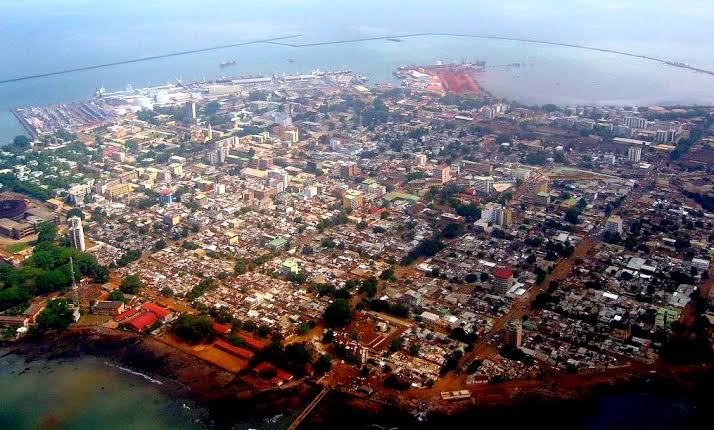
The gateway city, not the destination
Conakry sits on the Kaloum peninsula, a narrow finger of land pushing into the Atlantic, with the historic core, government buildings and the Grande Mosquée clustered at the tip and newer commercial districts, Camayenne, Dixinn, Ratoma, spreading up the coast behind it. Most travelers pass through rather than linger, using it as the launchpad for the Fouta Djallon highlands or a quiet half-day on the Îles de Los, and that is a reasonable way to treat it.
What Conakry does have is real, unpolished city energy: a restaurant scene concentrated in Ratoma that ranges from Japanese fusion to Lebanese to no-frills Guinean cooking, a genuinely large central mosque, and a market, Marché Madina, that operates at the scale and pace of a serious West African trading hub rather than a tourist-facing bazaar. None of it is arranged for visitors, which is either the appeal or the friction depending on what kind of trip you're after.
The honest complications
Conakry is not a walkable city in the way a compact European capital is: distances are real, there's no metro, and heat plus traffic make moving between neighborhoods on foot impractical. Taxis are negotiated rather than metered, which means every ride starts with a small negotiation and first-timers often overpay. The city also carries the same crime and unrest risks flagged for the country overall, pickpocketing and vehicle break-ins are the specific issues named by the US State Department, and demonstrations, when they happen, can turn violent with little warning. None of this rules out a short, well-planned stay, but Conakry rewards a hired driver and a plan more than it rewards wandering.
Five communes, and where visitors actually go
Conakry is organized into five administrative communes strung along and around the peninsula. Visitors mostly move between three of them: Kaloum for the historic sights, Camayenne (part of Ratoma commune) for the best hotels, and Ratoma more broadly for restaurants.
Kaloum
The original colonial-era downtown, at the very tip of the peninsula: government buildings, the Grande Mosquée, and Marché Madina. This is where you come for a morning of sightseeing rather than where you base yourself overnight.
Camayenne (Ratoma)
Home to Conakry's top hotels, including the Noom and Palm Camayenne, on the oceanfront north of Kaloum. The most practical base for a short visit, close enough to the Ratoma restaurant scene and a manageable taxi ride from the airport.
Ratoma
The commune that contains Camayenne and extends further north, and the center of Conakry's restaurant and nightlife scene. The US Embassy sits in Koloma, within Ratoma.
Dixinn
Home to the university campus and a concentration of foreign embassies. More residential and less geared toward visitors than Kaloum or Ratoma.
Matam & Matoto
Matam is quieter and more residential, with less tourist relevance. Matoto, the largest commune by area, holds Ahmed Sékou Touré International Airport, so you'll pass through it on arrival and departure even if you never stop there otherwise.
From oceanfront five-stars to family guesthouses
Conakry's hotel market splits sharply between a small cluster of international-standard properties in Camayenne and a wider field of budget guesthouses across the city. There isn't much in between yet. These picks are currently listed and bookable across major platforms as of this guide's research.
At the top, the Noom Hotel Conakry is a 5-star, 183-room property in Camayenne with an oceanfront, cruise-ship-inspired design, a pool and a gym, from roughly $185-220 a night. The Radisson Blu Hotel Conakry matches it with a pool, gym and bar, from around $266 a night, and the Riviera Royal Hotel adds a spa and wellness center at a similar rate, from around $263. Palm Camayenne rounds out the top tier with a pool, fitness center and terrace restaurant; rates vary meaningfully by platform, from roughly $123 to $220, so check current pricing directly before booking.
At the budget end, guesthouses cluster around $30-45 a night: Diallo Guest House 1 (from about $31), Hakaba guesthouse (from about $34-43, with a terrace and garden), Résidence Diakhaby (private parking and security), Chez Sophie guesthouse (free Wi-Fi, 24-hour front desk), and Hôtel Kiriboungni chez Sylfatou in Tahiré, a recently renovated bed-and-breakfast.
A surprisingly international table in Ratoma
Conakry's dining scene is concentrated in Ratoma and Camayenne, and it's more international than the country's reputation suggests: Japanese, Lebanese, Vietnamese and Italian kitchens sit alongside home-style Guinean rice-and-sauce cooking. These are currently active, reviewed restaurants rather than a generic "best of" list.
Avenue
Conakry's best-reviewed restaurant on Tripadvisor, a Japanese-leaning kitchen and bar in Ratoma. Menu at avenuegroupgn.com.
Italia Box
A well-rated Italian and pizza kitchen; orders can be placed via WhatsApp, a common practical workaround in a city with limited formal delivery infrastructure.
Le Cèdre
One of Conakry's established Lebanese and Mediterranean addresses, reflecting the city's sizeable Lebanese business community.
Siete Conakry
The city's fine-dining option, a Nikkei-style Japanese-Peruvian fusion kitchen for a splurge night.
A short list, done properly
Conakry's sightseeing is genuinely compact: a morning covers the core sights, and most visitors spend the rest of their time either arranging onward travel to the Fouta Djallon or heading out to the Îles de Los. That's not a criticism of the city so much as an honest description of what it's for.
Grande Mosquée de Conakry
Also known as the Faisal Mosque, built in 1984 and one of the largest mosques in West Africa, in the Dixinn area. Worth a visit for the scale alone; dress modestly and check current visiting norms for non-worshippers before arriving.
Marché Madina
Conakry's large central market in Kaloum: crafts, produce and everyday goods at the scale and pace of a real trading hub rather than a tourist bazaar. Keep bags secure and valuables out of sight, as with any crowded market.
Jardin 2 Octobre
A city park with a children's playground and picnic space, named for Guinea's 2 October 1958 independence date. A quieter break from the market and mosque circuit.
National Museum of Guinea
Listed as a Conakry attraction, though we could not confirm current opening hours or admission fees from a reliable source. Check locally or with your hotel before planning a visit around it.
Negotiated fares, no metro, plan ahead
There is no metro or formal bus rapid transit system in Conakry, and taxis are negotiated rather than metered, so every ride starts with agreeing a price before you get in. From Ahmed Sékou Touré International Airport (CKY), a fair reference fare to the city centre is roughly the equivalent of €3.50 in Guinean francs, but unprepared arrivals are commonly quoted several times that. Cash only; there are no card machines in taxis. For a first arrival, arranging a transfer through your hotel or a ground handler in advance is considerably easier than negotiating cold at the curb.
In the city, shared taxis and moto-taxis are the everyday transport, and traffic is genuinely chaotic with unevenly maintained vehicles, so factor real time buffers into any cross-town trip. There is no dedicated tourist transit product, unlike more visited West African capitals.
Best time to visit
Conakry follows Guinea's national dry-and-wet pattern: November to March is dry and the easiest window for a visit, including any onward trip inland. May to October brings the rains, which don't stop city travel but make the roads out toward the Fouta Djallon or elsewhere considerably harder going.
A wide gap between the top and the budget end
Conakry's costs split sharply: a handful of international-standard hotels charge Western prices, while guesthouses, local meals and negotiated transport keep a budget trip genuinely affordable. Published price data for the city is thinner and less consistent than for well-covered destinations, so treat these as planning ranges.
- Guesthouse $30-45/night
- Local meals and market food
- Shared taxis and moto-taxis
- Free sights: mosque, market, park
- Palm Camayenne-tier hotel
- Ratoma restaurant meals
- Arranged or private transfers
- Half-day Îles de Los trip
- Noom or Radisson Blu, $185-270/night
- Siete Conakry-tier dining
- Private driver for the full stay
More caution than a typical West African capital
The US State Department's Level 2 advisory for Guinea names specific Conakry risks: pickpocketing, purse snatching, theft from vehicles, assault and residential burglary. Risk rises after dark, and foreigners are reportedly targeted especially around the airport. None of this makes a short, sensible visit unusual, but it's a meaningfully more cautious profile than nearby Dakar or Accra, and worth planning around rather than discovering on arrival.
Traffic chokepoints worth knowing by name, mostly for congestion rather than crime specifically, include the Bambeto and Hamdallaye traffic circles and the Cosa intersection on Route le Prince. Demonstrations can occur without warning; September 28 Stadium is a recurring rallying point for marches, and security forces have used tear gas and live gunfire on crowds. Leave the area immediately if you encounter one, and avoid large public gatherings on principle during any visit.
There is no formal citywide emergency number system we could verify. The UK Foreign Office states plainly that Guinea has no formal emergency services and directs travelers needing urgent medical help in Conakry to two private clinics: Clinique Pasteur (+224 621 35 01 01) and Clinique Ambroise Paré (+224 631 40 10 40). Save both before you arrive.
The Îles de Los, and the road inland
Conakry's position on the coast makes it a natural base for one easy escape and the starting point for a longer inland trip.
Îles de Los
A small Atlantic archipelago visible from Conakry's coastline: Tamara, Roume and Kassa are the three main islands, with Kassa having the calmest, most swimmable beaches. There's no formal ferry schedule or published fare, so negotiate the pirogue price at the departure point and treat it as a relaxed half or full day out rather than an overnight unless you've arranged accommodation in advance.
Fouta Djallon Highlands
Guinea's cool highland plateau, several hours inland by road, with waterfalls and canyon trekking around Labé, Pita and Dalaba. Not a day trip in practice, but the natural next stop after Conakry for anyone with more than two or three days; see our full Guinea country guide for the highland circuit and itineraries.
Conakry FAQ
Is Conakry safe for tourists?
Conakry needs more caution than most West African capitals. The US State Department names pickpocketing, purse snatching, theft from vehicles, assault and residential burglary as specific risks, and demonstrations can turn violent without warning. Most visits are uneventful with a private driver, awareness after dark, and avoiding any gathering.
How many days do I need in Conakry?
Two days covers the city itself: the Grande Mosquée, Marché Madina and a Ratoma dinner. Add a half or full day for the Îles de Los, which most visitors treat as an easy escape from the capital.
How much does Conakry cost per day?
Budget travelers manage on roughly $30-50 a day with guesthouses and local meals; mid-range runs $100-120. Conakry's top hotels, the Noom, Radisson Blu and Riviera Royal, run $185-270 a night on their own.
How do I get from Conakry airport to the centre?
There are no metered taxis; fares are negotiated with the driver before you get in, cash only in Guinean francs. A fair reference price is roughly the equivalent of €3.50 to the centre, but unprepared arrivals are often quoted several times that. Arranging a transfer through your hotel for the first arrival is the easier route.
What is the best area to stay in Conakry?
Camayenne, in the Ratoma commune, has the city's best hotels (Noom, Palm Camayenne) and is close to the restaurant scene. Kaloum, the peninsula tip, is the historic downtown core with the mosque and main market.
Do I need to speak French in Conakry?
Yes, effectively. French is Guinea's sole official language and English is not widely spoken, even in hotels. A phrasebook or a few prepared phrases genuinely help.
Are the Îles de Los easy to visit from Conakry?
Yes. The archipelago's three main islands, Tamara, Roume and Kassa, are roughly a 30-minute pirogue crossing from Conakry, with Kassa having the calmest beaches. There's no formal published fare, so expect to negotiate the boat price at departure.
Is Conakry walkable?
Not really, in the way a European city is. The city sprawls, there's no metro, and heat and traffic make walking between neighborhoods impractical. Plan around negotiated taxis or a hired driver.
What Stays With You
Conakry doesn't try to be a destination in the way Dakar or Accra now are, and that honesty is refreshing in its own way. The call to prayer rolling out from the Grande Mosquée over Kaloum, the negotiation over a plate of sauce feuilles at a Ratoma stall, the moment the city noise drops away on the pirogue crossing to Kassa: none of it is staged, because almost nobody outside Guinea is watching yet.
Treat it as the gateway it is, plan the logistics before you land, and let the Fouta Djallon or the Îles de Los be the real payoff waiting on the other side of a couple of careful days in the capital.