
What You're Actually Getting Into
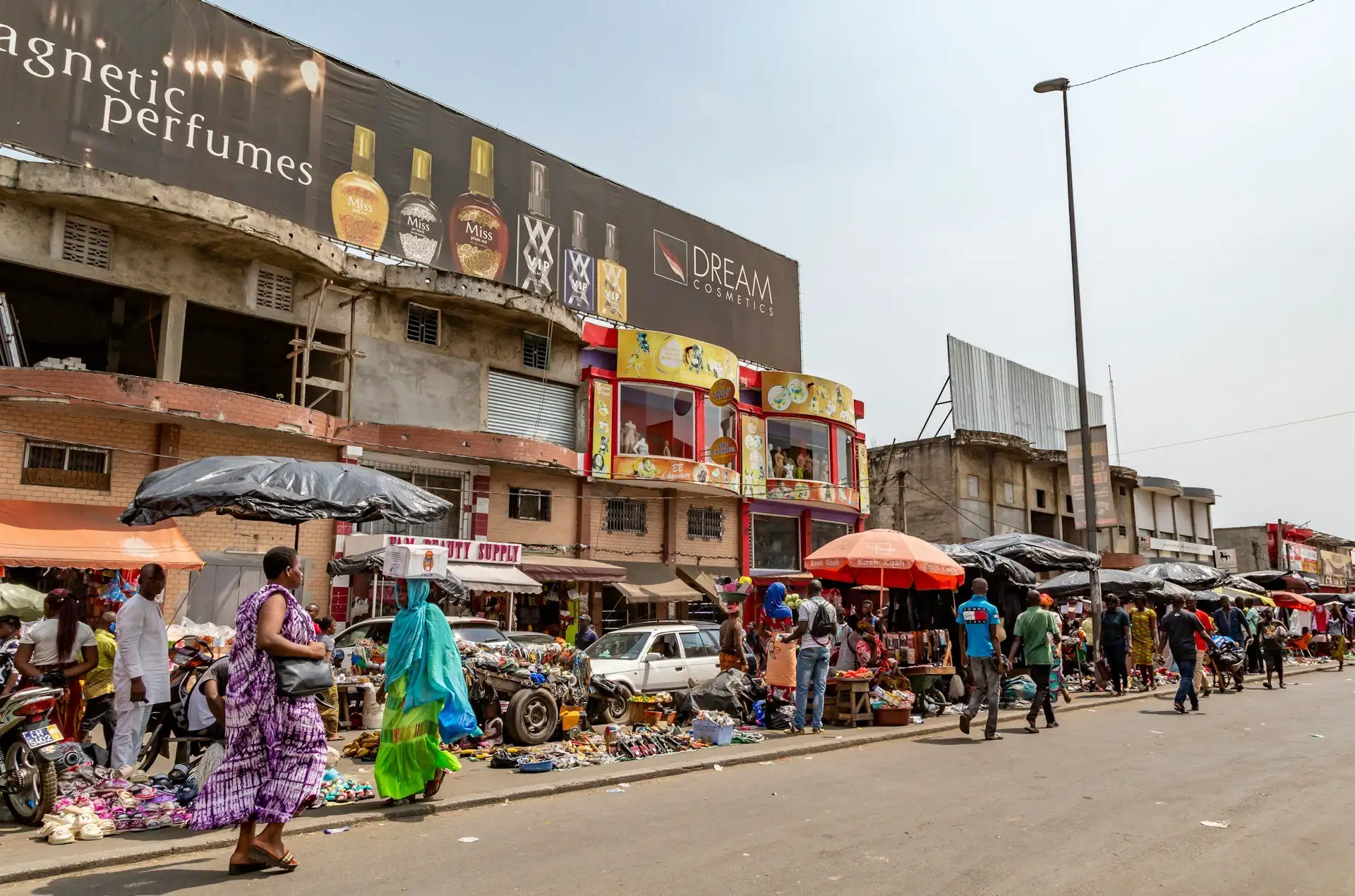
Ivory Coast, Côte d'Ivoire in French and on every official document, is the largest economy in French-speaking West Africa and the world's biggest producer of cocoa, the raw material behind a meaningful share of the planet's chocolate. Abidjan, the commercial capital, is a genuine lagoon city: business towers rise straight out of the Ebrié Lagoon in the Plateau district, water-buses shuttle commuters between districts faster than the bridges can, and the whole place runs with an energy that surprises visitors who arrive expecting a smaller, quieter country.
The tourism infrastructure is real but still developing compared with East Africa's safari circuit or North Africa's medina towns. What you get instead is unusually direct access to a working West African capital, a genuinely well-preserved colonial town in Grand-Bassam, and a religious monument in Yamoussoukro so oversized it feels almost surreal. English is limited outside the top hotels, so some French, even just numbers and greetings, changes the experience considerably.
The honest complications
Ivory Coast spent 2002 to 2011 in and out of civil war, split for years between a rebel-held north and government-held south, and the country is still rebuilding trust in its institutions even as the economy booms. The US State Department currently rates the country Level 2 overall, exercise increased caution, with the northern strip near the Mali and Burkina Faso borders at Level 4, do not travel, because of militant activity spilling south from the Sahel. None of that affects Abidjan, Grand-Bassam or the southern coast in practical terms, but it does mean this is not (yet) a country to wander off-script in without checking current advisories first. Petty theft in markets and transport hubs is the more everyday concern, and solo women should expect more unwanted attention than in most tourist destinations.
A History Worth Knowing
France made Ivory Coast a colony in 1893 and folded it into French West Africa; independence came on 7 August 1960 under Félix Houphouët-Boigny, who ruled as a one-party president for 33 years and built what became known as the "Ivorian miracle," a cocoa-and-coffee export boom that made the country one of Africa's wealthier post-colonial economies. His death in December 1993 opened a succession crisis that the country is still, in some ways, working through.
- 1960
Independence. Declared 7 August, with Félix Houphouët-Boigny as founding president, a role he held until his death in 1993.
- 1960-1993
The Ivorian miracle. Sustained cocoa and coffee export growth makes Ivory Coast one of the wealthiest economies in West Africa, under one-party rule that legalized opposition parties only in 1990.
- 1999-2002
Succession crisis. A 1999 military coup and a disputed 2000 election destabilize the post-Houphouët-Boigny order.
- 2002-2007
First Civil War. Northern rebels split the country from the Gbagbo government in the south; France's Operation Licorne and UN peacekeepers intervene before the 2007 Ouagadougou Political Agreement reunifies the country on paper.
- 2010-2011
Second Civil War. Incumbent Laurent Gbagbo refuses to accept his 2010 election loss to Alassane Ouattara, triggering renewed fighting until Gbagbo's arrest on 11 April 2011.
- 2011-present
Reconstruction and growth. Under President Ouattara, Ivory Coast rebuilds infrastructure, restores its position as the world's top cocoa exporter, and Abidjan's skyline and tourism sector grow rapidly.
Read the full history: pre-colonial kingdoms, colonization and the two civil wars
Before French colonization, the territory that became Ivory Coast held a patchwork of societies: Akan-related kingdoms including the Baoulé in the center, the Agni near Grand-Bassam, and Mande and Senufo peoples in the north, along with the Dan and Guéré of the western forest region, whose mask traditions remain central to Ivorian cultural identity today. France declared a protectorate in 1889 and a full colony in 1893, absorbing it into French West Africa in 1904, and the colonial economy was built explicitly around cocoa, coffee and timber exports, a structure independence inherited rather than replaced.
Félix Houphouët-Boigny, a planter and physician who had served in the French National Assembly, became independent Ivory Coast's first president and ran the country as an effectively one-party state for over three decades. His approach combined close economic ties with France (the country never left the CFA franc zone) with heavy investment in infrastructure and agriculture, producing genuinely rapid growth through the 1960s and 1970s that regional neighbors envied. Yamoussoukro, his home town, became the country's official capital in 1983, though Abidjan retained nearly all embassies, business headquarters and the practical functions of a capital, a split that still defines the country today.
Houphouët-Boigny's death in December 1993 triggered a succession struggle his single-party system had never had to resolve. Henri Konan Bédié took over, introduced the divisive concept of "Ivoirité" that questioned the citizenship of northern and immigrant-descended Ivorians, and was overthrown in a 1999 coup led by General Robert Guéï. Guéï's attempt to claim victory in the disputed 2000 election was rejected by street protests that installed Laurent Gbagbo instead, but the underlying north-south, Muslim-Christian fault lines Bédié had opened were never resolved.
On 19 September 2002, a mutiny by northern soldiers escalated into the First Ivorian Civil War, splitting the country between a rebel-controlled north and the Gbagbo government's south for years. France deployed troops under Operation Licorne to protect its citizens and separate the combatants, and the UN Security Council authorized its own peacekeeping mission; a ceasefire and power-sharing arrangement, the 2007 Ouagadougou Political Agreement, formally reunified the country, though tensions persisted. When Gbagbo lost the long-delayed 2010 presidential election to Alassane Ouattara and refused to step down, the Second Ivorian Civil War followed, ending with Gbagbo's arrest by pro-Ouattara forces on 11 April 2011 after French and UN forces intervened against his shelling of civilian areas in Abidjan.
Ouattara has governed since 2011, and the country's turnaround has been genuinely dramatic: Abidjan's skyline has been transformed by new towers and bridges, the economy has grown at some of the fastest rates in Africa, and Ivory Coast has consolidated its position as the source of roughly 40 percent of the world's cocoa. The 2002-2011 period still shapes how the country is discussed internationally, and the northern border zone's current security situation is a distant echo of the same north-south tension, driven now by Sahel militancy rather than domestic politics.
Top Destinations
Ivory Coast's tourist geography is compact and coastal: Abidjan as the base, Grand-Bassam and Assinie as beach and heritage day trips, Yamoussoukro as the inland basilica detour, and the western mask country around Man for travelers with more time and a stronger interest in Ivorian culture beyond the capital. The northern savanna and Comoé National Park sit close enough to the current no-go border zone that they belong in a future trip rather than a first one.
Abidjan, the lagoon capital
Abidjan is West Africa's most confidently modern city: glass towers in Le Plateau, upscale Cocody spreading along the lagoon's north shore, and Marcory's Zone 4 running the restaurant and nightlife scene. It's the country's real capital in every sense except the constitutional one, and it's covered in full in our dedicated Abidjan city guide, with neighborhoods, hotels, food and a full itinerary. Budget two to three days.
Grand-Bassam, the UNESCO coast
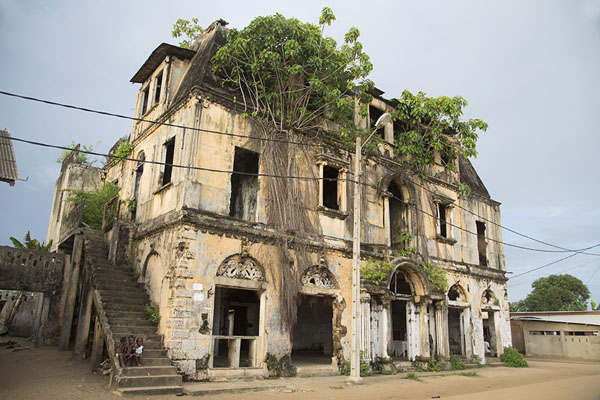
Grand-Bassam was Ivory Coast's first colonial capital until a yellow fever outbreak in the 1890s pushed the administration to Bingerville and eventually Abidjan; what it left behind is the Quartier France, a UNESCO World Heritage Site since 2012 and the most intact French colonial quarter surviving in West Africa. The old Governor's Palace, the former Post Office and a scatter of decaying merchant mansions sit a short walk from a working Atlantic beach lined with maquis restaurants. The National Costume Museum, housed in a restored colonial building, covers traditional Ivorian dress and masks from across the country. About 40 minutes from Abidjan by road, easily done as a day trip or a slower overnight.
Yamoussoukro, the basilica city
Ivory Coast's official capital since 1983 exists largely because it was Félix Houphouët-Boigny's home town, and it shows: wide, near-empty boulevards built for a capital that never fully materialized, and at the center of it, the Basilica of Our Lady of Peace. Consecrated by Pope John Paul II in 1990 and recognized by Guinness World Records as the largest church on earth, its dome reaches 149 meters and its colonnade holds 272 Doric columns, with room for 18,000 worshippers inside. It's open to visitors Monday to Saturday, 8am to 5pm, with an entry charge outside of Mass times. About 2.5 to 3 hours from Abidjan by road, doable as a long day trip or an overnight with the crocodile-filled lake at the presidential palace grounds added on.
Assinie, the weekend coast
Assinie is where Abidjan's wealthier residents go to disconnect: a narrow strip of land between the Ébrié Lagoon and the Atlantic about 90 minutes east of the city, lined with beach villas, small hotel-restaurants and coconut palms. Assinie-Mafia, the more exclusive stretch, has the calmest lagoon-side water for swimming since the open Atlantic side carries a strong undertow in places. Jet-skiing, paddleboarding and lagoon canoe trips through the mangroves are the standard activities, and a weekend rather than a day trip does it justice.
Man, mask country
Man, in the forested mountains of western Ivory Coast, is home to the Dan (Yacouba), Guéré and Wobé peoples, whose carved masks are among the most recognized in West African art and remain living ritual objects rather than museum pieces. The Fêtes des Masques, held in villages around Man, gathers masked dancers competing to honor the forest spirits the masks are believed to embody; a sacred monkey forest and a waterfall sit within walking distance of the town center. It's a genuine detour, roughly 10-12 hours by road from Abidjan or a short domestic flight, and worth building a specific western itinerary around rather than bolting on.
Beyond the coastal circuit
Everything above covers a first trip well. With more time and a higher tolerance for logistics, these reward the extra effort.
Taï National Park
A UNESCO World Heritage rainforest since 1982, among the last significant blocks of primary forest left in West Africa, home to chimpanzees, pygmy hippopotamus and forest elephants. Remote and requiring real planning, but one of the region's genuine wildlife destinations.
Comoé National Park
One of West Africa's largest protected areas, a UNESCO-listed transition zone between forest and savanna. Its location closer to the country's northern security zone means checking current advisories carefully before planning a visit, rather than assuming access.
Sassandra
A quiet fishing and former colonial port town on cliffs above the Atlantic, with far fewer visitors than Grand-Bassam and a slower, more local pace. Reachable by road from Abidjan in around 4-5 hours.
Culture & Etiquette
Ivory Coast is home to more than 60 ethnic groups, broadly clustered into Akan peoples (including the Baoulé and Agni) in the center and east, Mande and Senufo groups in the north, Kru peoples including the Bété in the southwest, and the mask-carving Dan and Guéré of the west. French is the language of government, business and school, but Dioula functions as an everyday trade language in markets, and greetings in a local language are noticed and appreciated. Hospitality runs deep: sharing food, greeting elders first, and accepting an offered seat are all small gestures that carry real weight.
Do
- Greet before you ask anything. Walking straight into a question or a transaction without a greeting reads as rude; a simple "Bonjour" and a handshake come first, always.
- Use your right hand. For eating, giving and receiving objects, the left hand is considered unclean in much of West Africa, including here.
- Dress modestly outside the beach and pool. Casual is fine in Abidjan, but conservative dress is expected in markets, government offices and rural areas.
- Learn a few French basics. Bonjour, merci, s'il vous plaît. English drops off fast outside upscale Abidjan hotels, and even minimal French changes how you're received.
- Carry small CFA franc notes and coins. Vendors, taxis and maquis rarely have change for large bills.
Don't
- Photograph people, markets or checkpoints without asking. Security personnel in particular can react strongly to unauthorized photos of government buildings, bridges or checkpoints.
- Assume the 2002-2011 conflict is ancient history. Many Ivorians lived through it directly; it's a sensitive subject to raise casually rather than a historical curiosity.
- Bargain aggressively over small amounts. Negotiating is normal in markets, but haggling hard over a few hundred francs with a street vendor reads as mean-spirited rather than savvy.
- Wander unlit streets after dark, in Abidjan or elsewhere. Stick to known routes, use a taxi or ride app after dusk, and avoid isolated areas.
- Expect the mask traditions of the west to be performance for tourists. For the Dan and Guéré peoples, masks retain genuine ritual and spiritual significance; treat ceremonies with real respect, not as photo opportunities.
Deeper culture: mask traditions, Baoulé heritage and the Abissa
Dan and Guéré masks. Carved wooden masks from the western forest region are considered among the finest traditions in West African art, collected by museums worldwide, but in their home communities they remain active ritual objects believed to embody forest spirits and ancestral presences, brought out for funerals, initiations and festivals like the Fêtes des Masques around Man.
The Baoulé. An Akan-descended people who migrated west into central Ivory Coast in the 18th century, the Baoulé are known for finely carved wooden figures and goldweights, and their traditional social structure, organized around age-grades and chieftaincy, still shapes rural governance in the region.
Abissa. The N'Zima people's roughly two-week new year festival, centered on Grand-Bassam, suspends normal social hierarchy and professional activity so that grievances can be aired publicly and forgiven, ending with masked processions and communal drumming. It runs each October or November and has been celebrated since the 1800s.
Food & Drink
Ivorian food centers on cassava, plantain and rice, grilled meat and fish, and a chili-forward sauce culture, most of it served at maquis, the open-air eateries with plastic chairs and a charcoal grill that are the backbone of eating out in Ivory Coast. Restaurant meals in Abidjan's upscale neighborhoods can run French-influenced and genuinely refined; everywhere else, a full meal at a maquis costs a few thousand francs.
Attiéké ~500-1,000 XOF
Fermented, grated cassava steamed into a light, slightly sour couscous-like base, the single most common side dish in the country, served with grilled fish, chicken or the fried-tuna street snack called garba.
Kedjenou
Chicken (or guinea fowl) slow-cooked with tomatoes, onions and peppers in a sealed clay or metal pot over low heat, traditionally without added water, so the dish stews in its own juices. Ivory Coast's most recognized single dish.
Alloco ~500 XOF
Ripe plantain, sliced and deep-fried in palm oil until caramelized at the edges, sold from street carts with a spicy onion-and-chili sauce and often grilled fish or a hard-boiled egg alongside.
Garba ~500 XOF
Fried tuna over attiéké with tomato, onion and chili, sold from roadside stalls across Abidjan; one of the city's defining cheap eats and a genuine local institution, not a tourist dish.
Foutou & sauce graine
Pounded plantain and cassava formed into a dense dough, eaten by hand with a rich, orange palm-nut sauce usually containing fish or meat. Heavier and more filling than attiéké-based meals.
Bangui & local beer
Bangui is palm wine, tapped and lightly fermented, drunk fresh in rural areas; in cities, Ivorian lagers like Flag and Bock are the standard maquis order alongside grilled meat.
When to Go & Itineraries
December through March, the harmattan dry season, is the best window: minimal rain and the clearest skies of the year, though the dry, Sahara-borne harmattan wind can bring a dusty haze in late January and early February. April through October brings rising heat and humidity, with the heaviest rain typically falling May through July. Coastal temperatures stay warm year-round, rarely dropping much below the mid-20s Celsius even at night.
Seasons compared, with temperatures
| Season | Verdict | Temps | Notes |
|---|---|---|---|
| Dec-Mar | Best | 24-32°C | Harmattan dry season; dusty haze possible late Jan/early Feb |
| Apr & Nov | Good | 25-32°C | Transitional, generally dry with occasional showers |
| May-Jul | Rainy | 24-30°C | Heaviest rain of the year, high humidity |
| Aug-Oct | Mixed | 23-29°C | Brief drier spell in August, rain returns by September |
Abidjan's coastal humidity is high year-round; inland Yamoussoukro and Man run slightly cooler and drier.
Itineraries
A week covers the coastal core comfortably. Two weeks adds the beaches at Assinie and a proper trip to Man in the west, for travelers who want more than the capital-and-day-trips circuit.
- Days 1-3
Abidjan. Le Plateau's skyline and cathedral, the Musée des Civilisations, a lagoon bateau-bus crossing, and dinner at a Marcory maquis.
- Day 4
Grand-Bassam. A day trip to the UNESCO Quartier France, the National Costume Museum and a beachfront lunch.
- Days 5-6
Yamoussoukro. The Basilica of Our Lady of Peace and the presidential palace grounds, overnight before returning to Abidjan.
- Day 7
Assinie. A relaxed final day on the lagoon-side beaches before flying out of Abidjan.
- Days 1-3
Abidjan, as above, at a slower pace with time in Cocody and Treichville's markets.
- Days 4-5
Grand-Bassam, overnight rather than a day trip, with a full day at the beach and the colonial quarter.
- Days 6-7
Yamoussoukro, the Basilica and the palace grounds, unhurried.
- Days 8-11
Man and the west. Fly or drive to Man for the Dan and Guéré mask country, the sacred monkey forest and the waterfall.
- Days 12-14
Assinie, three unhurried days on the beach to close out the trip.
- Days 1-4
Abidjan extended. All neighborhoods, plus day trips to smaller lagoon towns.
- Days 5-7
Grand-Bassam & Assinie, combined as a slower coastal stretch.
- Days 8-9
Yamoussoukro, with time for the crocodile lake at the palace grounds.
- Days 10-15
Man and the west, extended with day hikes and time to properly experience the mask festival calendar if timing allows.
- Days 16-18
Sassandra, the quiet southwestern coast, reached by road.
- Days 19-21
Back to Abidjan for a final relaxed stretch before departure.
Getting there & around
Félix Houphouët-Boigny International Airport (ABJ) in Abidjan is the country's main gateway, connected to Paris, Brussels and several West African hubs by major European and regional carriers. Within cities, taxis, shared woro-woro taxis and gbaka minibuses cover most routes at low cost, while intercity travel runs on a mix of long-distance buses and shared taxis; a private driver or organized tour is the more comfortable option for trips to Yamoussoukro or Man.
Practical prep: SIM cards, insurance and vaccination requirements
Yellow Fever vaccination is mandatory for all travelers entering Ivory Coast regardless of nationality or origin; carry the certificate with your passport, as it is checked on arrival. Hepatitis A and B, typhoid and routine vaccines are commonly recommended; consult a travel clinic well before departure.
SIM cards from Orange, MTN or Moov are available at the airport and in Abidjan for a few thousand francs with a reasonable data allowance; an eSIM before landing is a convenient backup. Standard travel insurance is advisable, and given the northern border situation, confirm your policy doesn't exclude travel near the current advisory zones.
Budget Planning
Ivory Coast is inexpensive by Western standards away from Abidjan's top hotels and restaurants, where prices can match Western Europe. Maquis meals, shared taxis and modest guesthouses keep daily costs low across most of the country.
- Guesthouse or budget hotel
- Maquis meals €2-5
- Woro-woro & gbaka transport
- Free lagoon bateau-bus rides
- 3-star hotel in Cocody or Plateau
- Restaurant meals €8-20
- Private taxi or ride app
- Grand-Bassam or Assinie day trip
- Top Abidjan hotels (Sofitel-tier)
- Fine dining
- Private driver for day trips
- Domestic flight to Man
Quick reference prices: street food, transport, entry fees
| Garba or alloco from a street stall | ~500 XOF (€0.75) |
| Maquis meal with grilled fish | 2,000-4,000 XOF (€3-6) |
| SOTRA airport bus (Bus 6) | 200 XOF |
| Woro-woro shared taxi ride | 200-500 XOF |
| Yamoussoukro Basilica entry | ~5,000 XOF (€7-8) |
| Mid-range hotel room, Abidjan | €50-90/night |
Prices reflect July 2026 research and drift over time. Treat them as a planning baseline, not a quote.
Visa & Entry
Most Western passport holders, including US, UK, EU, Canadian and Australian citizens, need an e-Visa arranged online before departure: a Tourist e-Visa for leisure travel or a Business e-Visa for work trips, both allowing multiple entries over a 90-day validity window with individual stays capped at 30 days. Apply through Ivory Coast's official government e-Visa portal rather than third-party sites that charge markups for a service the government provides directly.
✓ Valid passport
At least 6 months validity remaining from your date of arrival.
✓ Yellow Fever certificate
Mandatory for every traveler regardless of nationality or origin country. Checked on arrival; carry it with your passport.
✓ Proof of accommodation
A hotel booking or similar confirmation for your first nights, requested as part of the e-Visa application.
✓ Return or onward ticket
Along with proof of sufficient funds; both may be checked at the e-Visa stage or on arrival.
| Ivory Coast | Ghana | |
|---|---|---|
| Visa process | e-Visa online, straightforward, 90-day validity | Embassy visa required in advance, no visa on arrival, costs run considerably higher |
| Language | French; English limited outside top hotels | English, official language, much easier for Anglophone travelers |
| Coastal heritage | Grand-Bassam's UNESCO colonial quarter | Cape Coast and Elmina's slave-trade forts |
| Advisory level | Level 2 overall, Level 4 on the northern border strip | Level 2 overall, with elevated risk in some northern regions |
| Signature landmark | The Yamoussoukro Basilica, the world's largest church | Kakum National Park's rainforest canopy walk |
Safety, Solo Women & Family
The US State Department currently rates Ivory Coast Level 2, exercise increased caution, covering Abidjan, Grand-Bassam, Yamoussoukro and the rest of the southern coast where the overwhelming majority of visitors spend their trip. The northern border strip, roughly within 50km of Mali and Burkina Faso, is rated Level 4, do not travel, because of militant activity, including groups linked to al-Qa'ida, expanding south from the Sahel. That zone does not affect a standard Abidjan-Grand-Bassam-Yamoussoukro itinerary, but it does mean checking current advisories before any trip north of Man or Comoé National Park.
Petty theft
Pickpocketing and bag-snatching occur regularly in crowded markets and transport hubs. Keep valuables secured and out of sight, and avoid displaying phones or cash openly.
Violent crime, at night
Carjacking, robbery and home invasion occur, mostly after dark and disproportionately outside the main tourist areas. Use a taxi or ride app after dusk rather than walking, and avoid isolated streets.
The northern border zone
Areas within roughly 50km of the Mali and Burkina Faso borders are a genuine Level 4 do-not-travel zone due to militant spillover from the Sahel. Not a concern for the coastal circuit, but confirm current status before any northern travel.
Maritime risk and the honest crime picture
Coastal waters: the International Maritime Bureau recorded numerous incidents in Ivorian territorial waters in 2025, including crew kidnappings, relevant mainly to shipping and cruising rather than typical land-based tourism, but worth knowing if a coastal boat trip or fishing charter is part of your plans.
Daytime versus nighttime: most visitors report feeling comfortable exploring Abidjan, Grand-Bassam and Yamoussoukro during the day with normal city awareness. The risk profile changes meaningfully after dark, when both petty and violent crime become more common.
Solo women travelers
This is genuinely a harder destination for solo women than most on this site. Catcalling and persistent unwanted attention are common, and independent research on solo female safety ranks Ivory Coast low, around 3.5 out of 10. That doesn't make it impossible: many women travel here safely with sensible precautions, but it does mean the trip requires more planning than a first-time solo destination would. Traveling with a companion, arranging airport transfers and hotel transport in advance rather than hailing taxis on the street, dressing conservatively outside resort areas, and having a trusted local contact for Abidjan all meaningfully improve the experience. Full detail on our Solo Woman Explorer pages.
Emergency numbers
Consular contacts and family travel notes
Operators generally speak French only; having a French-speaking hotel staff member or guide help place the call in an emergency is genuinely useful. For consular emergencies, the US Embassy in Abidjan and equivalent European missions maintain current contact details on their official sites; save these before you travel rather than searching for them mid-emergency.
Family travel: Abidjan's upscale hotels in Cocody and Marcory are set up reasonably well for families, and the calmer lagoon-side water at Assinie-Mafia suits children better than the open Atlantic beaches. Yellow Fever vaccination requirements apply to children too, so confirm pediatric dosing with a travel clinic well ahead of departure.
Ivory Coast FAQ
Is Ivory Coast safe to visit?
Abidjan and the southern coast, including Grand-Bassam, are visited routinely and rate a Level 2 (exercise increased caution) advisory from the US State Department. The northern border area within about 50km of Mali and Burkina Faso is rated Level 4, do not travel, because of militant activity spilling south from the Sahel. Petty theft is the main everyday risk in cities.
Do I need a visa for Ivory Coast?
Most Western passport holders, including US, UK, EU, Canadian and Australian citizens, need an e-Visa arranged online before arrival. It allows multiple entries over 90 days with stays of up to 30 days each, and a Yellow Fever vaccination certificate is mandatory for entry regardless of nationality.
What currency does Ivory Coast use?
The West African CFA franc (XOF), pegged to the euro at a fixed rate of 655.957 XOF to 1 euro. It's shared with seven other West African countries including Senegal and Burkina Faso, and isn't usable outside that zone, so change leftover francs before flying home.
When is the best time to visit Ivory Coast?
December through March, the harmattan dry season: minimal rain and the highest number of clear days. Late January and early February can bring a dusty haze from the Sahara. April to October is hot and increasingly humid, with the heaviest rain from May to July.
How many days do you need in Ivory Coast?
A week covers Abidjan, Grand-Bassam and Yamoussoukro comfortably. Two weeks adds Assinie's beaches and the mask country around Man in the west, for travelers who want to go beyond the coastal circuit.
What is the Yamoussoukro Basilica?
The Basilica of Our Lady of Peace, the largest church in the world by Guinness World Records, built in the late 1980s in President Félix Houphouët-Boigny's home town and consecrated by Pope John Paul II in 1990. Its dome rises 149 meters and the colonnade holds 272 columns.
What language is spoken in Ivory Coast?
French is the official language, used in business, government and signage. More than 60 local languages are spoken day to day, with Dioula serving as a common trade language in markets. English is limited outside upscale hotels in Abidjan.
Is Ivory Coast good for solo travelers?
Solo male travelers generally manage well with normal city awareness. Solo women face a harder trip: catcalling and unwanted attention are common, and the country scores low on solo female safety indexes. Traveling with a companion or a trusted local contact is the practical recommendation.
How much does Ivory Coast cost per day?
Budget travelers manage on roughly €25-40 a day using maquis food stalls and shared taxis. Mid-range runs €60-100 a day with air-conditioned hotels and private transport. Abidjan's top hotels and restaurants reach Western European prices.
What is a maquis?
An open-air Ivorian eatery, usually plastic chairs under a tin roof, grilling fish and chicken over charcoal and serving it with attiéké or alloco. Maquis are the backbone of Ivorian dining and are found in every neighborhood of Abidjan and every town in the country.
Is Grand-Bassam worth visiting?
Yes. The former colonial capital, a UNESCO World Heritage Site since 2012, has the best-preserved colonial-era quarter in West Africa alongside a working Atlantic beach town, and it sits about 40 minutes from Abidjan, making it an easy half or full day trip.
What Stays With You
Ivory Coast is not a country that arrived at its current confidence easily. Abidjan's skyline, the water-buses cutting across the lagoon at rush hour, the queue for garba at a roadside stall at midnight: none of it existed in this form when the country was splitting apart between 2002 and 2011. What you see now is a genuine rebuild, cocoa money and infrastructure investment turned into a capital that runs with real energy, standing next to a basilica in Yamoussoukro that is, quite literally, bigger than the Vatican's.
Go with reasonable caution about where you travel and when, some working French, and an appetite for kedjenou and attiéké, and Ivory Coast delivers a version of West Africa that few visitors from outside the region see for themselves.