
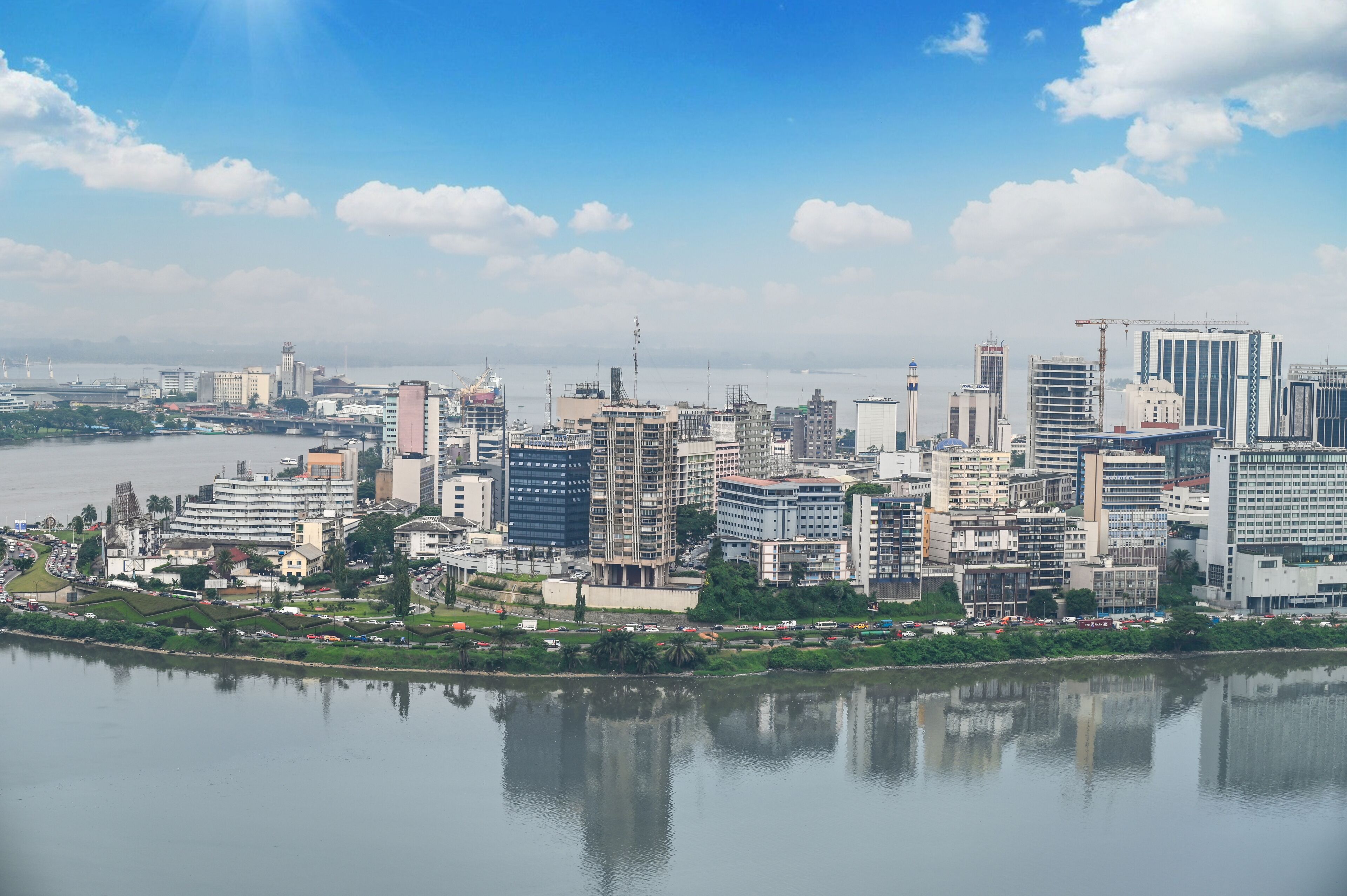
West Africa's most confidently modern capital
Abidjan sits on and around the Ébrié Lagoon, a body of water that shapes the whole city more than any single street or district does. Le Plateau's business towers rise straight out of the water on their own peninsula, Cocody wraps the lagoon's northern shore in leafy, upscale calm, and the water-buses that connect them are not a tourist novelty, they're how the city actually gets to work every morning. It is the commercial and cultural capital in every sense except the constitutional one, which technically belongs to Yamoussoukro two and a half hours inland.
What surprises first-time visitors is how developed it feels: rooftop bars in Plateau, a genuinely serious restaurant scene in Marcory's Zone 4, and a skyline that has been rebuilt and expanded dramatically since the political crisis of 2002 to 2011. Step two streets back from the towers, though, and you're in Treichville's markets or Yopougon's dense residential sprawl, where the city's five million-plus residents actually live, and where a full maquis meal costs a few thousand francs.
The honest complications
Abidjan's bridge traffic is genuinely bad at rush hour, which is exactly why the lagoon bateau-bus exists and why using it saves real time. The city carries a Level 2, exercise increased caution, advisory: daytime sightseeing in Plateau, Cocody and central Marcory is generally comfortable, but petty theft in markets and transport hubs is common, and violent crime including carjacking rises meaningfully after dark in less central areas. English is limited outside the top hotels, so this is a city where a few French phrases go a long way. None of this should keep a reasonably prepared traveler away; it just means Abidjan rewards more planning than a typical first-time city break.
Five communes, one lagoon tying them together
Abidjan's districts, called communes, are defined by their relationship to the Ébrié Lagoon. Where you base yourself comes down to whether you prioritize proximity to sights, calm residential streets, or the restaurant and nightlife scene.
Le Plateau
Abidjan's administrative and financial heart occupies its own peninsula into the lagoon, packed with government ministries, bank headquarters and the city's tallest towers, alongside genuinely good infrastructure and well-maintained roads by regional standards. The Cathédrale Saint-Paul, the Musée des Civilisations de Côte d'Ivoire, and most upscale hotels sit here, and the lagoon views from its rooftop bars are the best in the city. Quiet at night once the offices empty out.
Cocody
Abidjan's most residential and international commune, home to Riviera, favored by expatriates for its secure compounds, and Deux Plateaux, a livelier commercial strip of cafes, bakeries and boutiques. Calmer than Plateau, greener, and close enough to the lagoon crossing to stay convenient. A strong first-time base alongside Plateau.
Marcory
Originally built as an industrial zone, Marcory's Zone 4 has become Abidjan's most vibrant restaurant and nightlife district, with a young international crowd and the city's best concentration of maquis and upscale dining side by side. The neighborhood to prioritize if evenings matter more to you than proximity to museums.
Treichville
Treichville is Abidjan's beating heart in the everyday sense: crowded markets, street vendors, and the CAVA craft market for Ivorian art and handmade goods. It shares Marcory's reputation as the city's most energetic quarter, connected to Plateau by both bridge and the lagoon bateau-bus.
Yopougon
Abidjan's largest and most populous commune by area, mostly residential and industrial rather than touristic, home to the Pasteur Institute and a major university hospital. Worth knowing about for context on how the city actually works, less essential for a short first visit.
From lagoon-view towers to Plateau's business hotels
Abidjan's hotel scene runs from serious international five-star properties in Plateau and Cocody to compact guesthouses and budget hotels further out. Air conditioning and a generator or reliable backup power are worth checking before booking, since outages happen more often than in a typical European city break.
At the top, Sofitel Abidjan Hôtel Ivoire is the city's grand landmark property, a lagoon-side complex in Cocody with two outdoor pools and long-standing status as Abidjan's most recognizable hotel, from around €200 a night. In Plateau, Noom Hotel Abidjan Plateau (from about €200) sits within walking distance of the Presidential Palace and the Cathédrale Saint-Paul, a genuinely central business-hotel base.
In the boutique bracket, La Maison Palmier in Deux Plateaux, Cocody, is a Design Hotels member known for its breakfast and a genuinely high guest-rating average, a quieter and more personal alternative to the big towers. Villa Mango (from around €125) is a well-regarded mid-range pick with a pool, popular with longer-staying business travelers.
For value, Silver Moon Hotel (from about €82) offers a pool at a lower price point, and at the budget end, Résidence Bethany Palace (from around €28) is a straightforward, well-priced option with free WiFi for travelers keeping costs tight.
Garba, kedjenou and a maquis on every corner
Abidjan's food culture runs on the maquis, an open-air eatery with plastic chairs and a charcoal grill, found in genuinely every neighborhood, and cheap, filling street food that locals eat daily rather than a tourist-facing scene layered on top. The upscale end, concentrated in Plateau and Marcory's Zone 4, blends Ivorian ingredients with French technique, a legacy of the colonial period repurposed into something genuinely good.
Garba
Fried tuna over attiéké, the fermented cassava couscous that is Ivory Coast's defining side dish, topped with tomato, onion and chili. This is Abidjan's essential cheap eat, sold from roadside stalls in every commune, most densely in Treichville and Yopougon, and it is not a dish tourists discovered, it's what the city actually eats.
Kedjenou
Chicken or guinea fowl slow-cooked in a sealed pot with tomatoes, onions and peppers until it stews in its own juices, Ivory Coast's most recognized dish and a maquis menu fixture. Restaurant des Combattants in Le Plateau is a long-standing address known for an especially careful version, served in a dining room with a distinctly presidential-era feel and a wine list weighted toward Bordeaux.
Alloco
Ripe plantain sliced and deep-fried in palm oil until the edges caramelize, sold with a spicy onion-chili sauce and often grilled fish or a hard-boiled egg alongside. The other pillar of Abidjan street food, sold from carts on nearly every commercial street after dark.
A skyline, a cathedral, and a lagoon crossing that beats any tour
Abidjan rewards a mix of planned sightseeing and simply riding the lagoon ferries to see the city the way its own residents do. A few sights need advance thought around opening hours and heat; this chapter walks through the city roughly the way a good two or three days would.
Le Plateau's landmarks
The Cathédrale Saint-Paul d'Abidjan is a striking piece of modern architecture, its swept concrete form visible across much of Plateau, with stained glass and mosaics inside worth the visit alone; go in the late afternoon for the best light through the windows. A short walk away, the Musée des Civilisations de Côte d'Ivoire on Boulevard Carde holds more than 15,000 ethnographic, archaeological and artistic objects spanning every region of the country, including the mask traditions of the western Dan and Guéré peoples, a genuinely useful primer before any trip further into the country. Both sit close enough to walk between in under fifteen minutes.
The lagoon and the skyline
Riding the bateau-bus, the public ferry across the Ébrié Lagoon linking Le Plateau, Treichville and Cocody, is the best few hundred francs you'll spend in Abidjan: it bypasses the notorious bridge traffic entirely and delivers the best view of Le Plateau's towers reflected in the water, especially in the last hour before sunset. Combine it with a rooftop drink in Plateau looking back across the water you just crossed.
Treichville's markets
Treichville's street markets are where Abidjan's daily commercial life actually happens: stalls selling everything from produce to fabric to phone accessories, loud, crowded and genuinely local. The CAVA craft market is the place to look for Ivorian art, carved masks and handmade goods rather than mass-produced souvenirs, and bargaining respectfully over a few hundred francs is expected and normal here.
Evenings in Marcory
Zone 4 in Marcory is Abidjan's night-out district: restaurants, bars and clubs with a genuinely international crowd, busiest from Thursday through Saturday. This is also where the city's best maquis sit alongside its most polished restaurants, so a night here can run from a plastic-chair grilled-fish dinner to a proper cocktail bar within a few blocks.
One, two or three days, planned commune by commune
Two to three full days covers Abidjan properly, using the lagoon crossing as the connective thread between neighborhoods rather than fighting bridge traffic.
- Morning
Le Plateau. Cathédrale Saint-Paul, then the Musée des Civilisations, both an easy walk apart.
- Midday
Garba lunch from a street stall, then the bateau-bus across the lagoon to Cocody.
- Afternoon
Cocody's Deux Plateaux. Cafes and boutiques at a slower pace.
- Evening
Maquis dinner in Marcory's Zone 4, then a rooftop drink back in Plateau.
- Day 1
The one-day route: Plateau's landmarks, the lagoon crossing, Cocody, maquis dinner in Marcory.
- Day 2 morning
Treichville's markets and the CAVA craft market for Ivorian art and masks.
- Day 2 afternoon
Back across the lagoon for a slower look at Plateau's skyline from the water, then rest before evening.
- Day 2 evening
Zone 4 again, or a quieter dinner in Cocody if the previous night was a late one.
- Days 1-2
The two-day route above, at a gentler pace.
- Day 3
Grand-Bassam day trip. The UNESCO colonial quarter and an Atlantic beach lunch, about 40 minutes from the city, back in Abidjan by evening.
Bridges get the traffic, the lagoon gets you there faster
Félix Houphouët-Boigny International Airport (ABJ) sits about 15km from Le Plateau. SOTRA's Bus 6 runs between the airport and South Plateau station daily from 6am to 9pm for 200 XOF, the cheapest option; a taxi or ride app to Plateau or Cocody costs considerably more but is faster and easier with luggage, especially at night.
Within the city, woro-woro shared taxis run fixed routes within a single commune at low fixed fares, while gbaka minibuses cover most neighborhoods even more cheaply, though their routes are unmarked and informal, better attempted with a local companion than alone on your first day. The bateau-bus water ferries across the Ébrié Lagoon are often the fastest way to move between Plateau, Treichville and Cocody, bypassing the bridge traffic entirely, and standard taxis are widely available for door-to-door trips, especially useful after dark.
Best time to visit and the harmattan haze
December through March is Abidjan's dry season and the best window to visit: minimal rain and the clearest skies of the year, though the harmattan wind can bring a dusty haze from the Sahara in late January and early February that affects visibility and can irritate allergies or asthma. April through October is hotter and increasingly humid, with the heaviest rain typically falling May through July.
Genuinely affordable outside the top hotels
Abidjan runs cheap at the street-food and shared-taxi level and expensive at the top-hotel, fine-dining level, with relatively little in between compared with a typical European city. The main cost trap is assuming taxi fares without agreeing a price first.
- Budget hotel or guesthouse €15-30
- Maquis and street food €3-6
- Woro-woro, gbaka and bateau-bus
- Free lagoon crossings and markets
- 3-star hotel in Plateau or Cocody
- Restaurant meals €10-25
- Taxi or ride app for most trips
- Museum entry, Grand-Bassam day trip
- Sofitel-tier lagoon-view hotel
- Upscale Marcory dining
- Private driver for day trips
- Domestic flight onward
Comfortable by day, more caution needed after dark
Abidjan rates 6.0/10 on our safety scale, reflecting a Level 2, exercise increased caution, advisory. Most visitors report feeling comfortable exploring Le Plateau, Cocody and central Marcory during the day with normal city awareness. The picture shifts after dark: violent crime including carjacking and robbery becomes more common, especially outside the main tourist areas, so use a taxi or ride app rather than walking at night.
The two things that actually catch visitors: pickpocketing and bag-snatching, concentrated in crowded markets like Treichville and at transport hubs, so keep bags closed and valuables out of sight; and unofficial taxi overcharging, particularly around the airport, so agree a fare before getting in or use a ride-hailing app instead. Abidjan is also a genuinely harder city for solo women than most on this site: catcalling and unwanted attention are common, and independent research puts solo female safety here around 3.5/10, so traveling with a companion or a trusted local contact meaningfully improves the experience. Emergency numbers are police on 110, fire on 180 and ambulance (SAMU) on 185; operators generally speak French only.
A UNESCO beach town and the world's largest basilica
Abidjan's position on the coast makes it a strong base for two very different day trips, both easily reached by road.
Grand-Bassam
Ivory Coast's first colonial capital, abandoned after a yellow fever outbreak in the 1890s, left behind the Quartier France, the best-preserved French colonial quarter in West Africa. Combine the colonial buildings and National Costume Museum with lunch and a swim at the adjacent Atlantic beach. An easy half or full day from Abidjan.
Yamoussoukro
Ivory Coast's official capital exists largely because it was President Félix Houphouët-Boigny's home town, and its centerpiece, the Basilica of Our Lady of Peace, is Guinness-certified as the largest church in the world, consecrated by Pope John Paul II in 1990. A long day trip or a better overnight, given the drive.
Assinie
The narrow lagoon-and-Atlantic peninsula where Abidjan's residents go to disconnect, with calmer swimming on the Assinie-Mafia lagoon side and options for jet-skiing, paddleboarding and mangrove canoe trips. Better as a weekend than a rushed day trip.
Abidjan FAQ
Is Abidjan safe for tourists?
Abidjan rates a Level 2, exercise increased caution, advisory. Daytime exploring in Le Plateau, Cocody and Marcory is generally comfortable with normal city awareness; petty theft in markets and transport hubs, plus more serious crime after dark, are the real risks. Avoid isolated streets at night and use a taxi or ride app instead of walking.
How many days do I need in Abidjan?
Two to three full days covers the city well: one for Le Plateau's skyline and the cathedral, one for Cocody and the lagoon crossing, one for Treichville's markets and a maquis dinner in Marcory. A fourth day fits a Grand-Bassam day trip and is worth adding.
How much does Abidjan cost per day?
Budget travellers manage on roughly €25-40 a day with modest hotels and maquis meals; mid-range runs €60-100. Abidjan's top hotels and restaurants in Plateau and Cocody can reach Western European prices.
When is the best time to visit Abidjan?
December through March, the harmattan dry season, brings the clearest skies and least rain, though late January and early February can carry a dusty haze. April to October is hotter and increasingly humid, with the heaviest rain from May to July.
What is the best area to stay in Abidjan?
Le Plateau or Cocody for first-timers: central, well-connected by the lagoon bateau-bus, and close to the main sights. Marcory's Zone 4 suits travellers who prioritise restaurants and nightlife over sightseeing proximity.
How do I get from Abidjan airport to the centre?
SOTRA's Bus 6 runs between Félix Houphouët-Boigny Airport and South Plateau station for 200 XOF, daily from 6am to 9pm. A taxi or ride app to Plateau or Cocody costs more but is faster and simpler with luggage.
Do I need to speak French in Abidjan?
It helps enormously. French is the working language of the city, and English is limited outside the top hotels in Plateau and Cocody. A handful of French phrases changes how you are received almost everywhere.
What is the lagoon bateau-bus?
A public ferry system across the Ébrié Lagoon connecting Le Plateau, Treichville and Cocody. It is how much of the city actually commutes, it costs a few hundred francs, and it avoids the traffic on Abidjan's bridges while giving the best skyline views in the city.
Is Grand-Bassam a good day trip from Abidjan?
Yes. The UNESCO-listed former colonial capital sits about 40 minutes east of Abidjan by road, combining a preserved colonial quarter with a working Atlantic beach town, and it is easily done in a half or full day.
What should I eat in Abidjan?
Start with garba, fried tuna over attiéké sold from street stalls, then a maquis dinner of grilled fish or kedjenou chicken stew. Alloco, fried sweet plantain, is the essential street-food side.
What Stays With You
Abidjan doesn't perform for visitors, it's too busy running West Africa's cocoa-fueled economy to bother. The city gets on with its life: the lagoon ferries packed with commuters at 7am, the maquis grills going in Marcory by early evening, the same market stalls in Treichville that have been there for generations. None of it was staged for a tourist board, which is exactly why the skyline from the bateau-bus at sunset and the first bite of garba from a street stall stick the way they do.
Cross the lagoon on the last evening of your trip, watch Le Plateau's towers catch the light from the water, and understand why this city rebuilt itself as fast and as confidently as it did.