
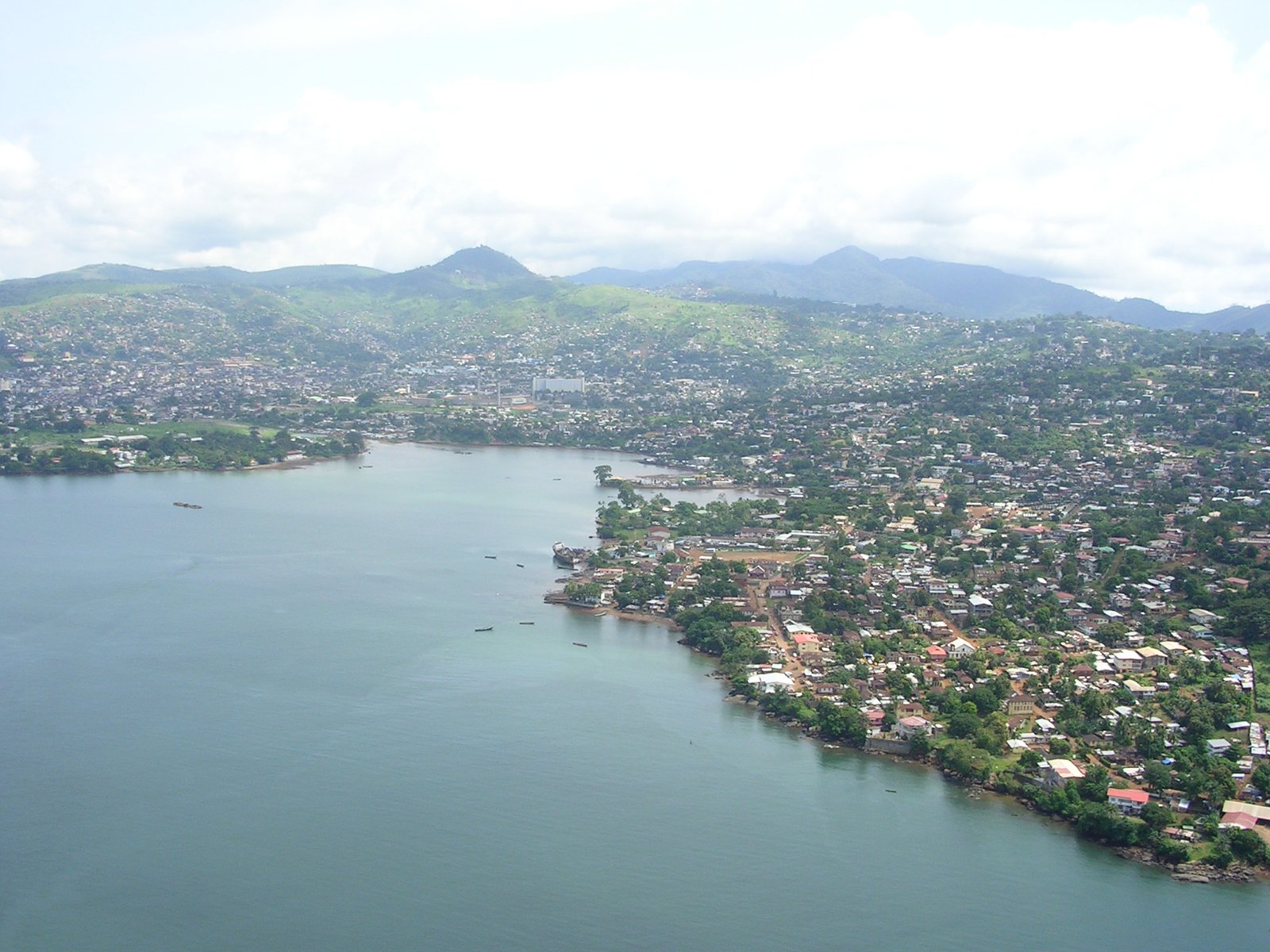
A capital that earns its welcome
Freetown climbs a set of forested hills above one of the largest natural harbors in the world, its neighborhoods stacked up from the water toward the Western Area Peninsula National Park behind them. It is a working port city first and a tourist destination second, which means the polish is thin but the texture is real: markets that sell to residents, not souvenir counters; a 500-plus-year-old cotton tree standing over traffic that has grown up around it rather than for it; and a harbor view from Hill Station or the road up to Aberdeen that stops most first-time visitors mid-sentence.
What changed in the last decade is recovery, not reinvention. Freetown is rebuilding from a civil war that ended in 2002 and an Ebola outbreak that ended in 2016, and both are still visible in the city's infrastructure gaps and its unusually direct way of talking about its own history. What visitors actually experience day to day is friendlier and less complicated than that history might suggest: fresh grilled fish on Lumley Beach at sunset, a genuinely warm "kushe" from strangers, and some of West Africa's best beaches less than two hours away.
The honest complications
Freetown is hilly, humid and short on formal pavements in places, so comfortable shoes matter more than they would in a flatter city. Power cuts are routine outside the main hotels, ATMs are limited and unreliable for foreign cards, and downtown traffic can turn a short trip into a long one at peak hours. The airport sits across the estuary from the city itself, so every arrival and departure involves a water taxi, ferry or helicopter crossing rather than a straightforward taxi ride, a detail that surprises almost everyone on their first trip. None of this is a reason to skip Freetown; it is simply the honest baseline to plan around rather than discover the hard way.
Aberdeen for the beach, downtown for the history
Freetown's neighborhoods split cleanly between the historic downtown core and the beachfront western edge, with the hills behind the city holding the quieter residential and diplomatic districts.
Aberdeen
The western tip of the peninsula, home to Lumley Beach, the Radisson Blu Mammy Yoko, and the highest concentration of restaurants, beach bars and expat-oriented services in the city. This is where most visitors base themselves: walkable to the beach, closer to the airport water taxi jetties, and noticeably calmer after dark than downtown.
Downtown / Central Freetown
The original settlement, packed with colonial-era buildings, the Cotton Tree, King's Yard and the Big Market. Essential for a half-day or full day of sightseeing, but dense, noisy and better visited in daylight than as an evening base.
Congo Cross & Wilberforce
Middle-class residential districts between downtown and Aberdeen, with some of the city's best local restaurants, including Balmaya's terrace, tucked among houses and shops that see far fewer tourists than the beachfront.
Hill Station
A former British colonial hill station above the city, cooler and quieter than the coast, with sweeping harbor views and a concentration of embassies and NGO offices. Worth the drive up for the view alone, even without a specific reason to linger.
From the Radisson Blu to community-run beach rooms
Freetown's hotel scene is small and split between a handful of international-standard properties in Aberdeen and simpler guesthouses everywhere else. There is no sprawling mid-range like you'd find in a bigger West African capital, so booking ahead matters more here than in most cities this guide covers.
At the top, the Radisson Blu Mammy Yoko Hotel sits directly on Aberdeen's coastline with sea views, a pool and the most reliable power and wifi in the city, from around $150 a night and the default choice for business travelers and anyone wanting a dependable landing point. A short walk from Lumley Beach, the Bintumani Hotel (from around $90) offers a pool, fitness center and garden at a noticeably lower price than the Radisson, while the Country Lodge Hotel (from around $100) adds a tennis court and a quieter, more residential setting.
Outside Aberdeen, options thin out fast. Downtown business hotels exist but are geared toward NGO and government travel rather than tourism, and are worth booking directly rather than assuming walk-up availability. For the Peninsula beaches, see the Day Trips chapter below for where to stay overnight at Bureh, River No. 2 and Tokeh.
Cassava leaf stew, grilled fish and a Star beer at sunset
Freetown's food scene runs on rice, fresh seafood and the same rich plasas sauces found across Sierra Leone, with the Aberdeen beach strip adding grilled fish and lobster cooked to order over open coals. Restaurant dining is a small, specific list rather than a sprawling scene, but what's here is genuine rather than tourist-facing.
Cassava Leaf Stew
Sierra Leone's national dish, pounded cassava leaves simmered with fish or meat, palm oil and groundnut paste over rice, is best found at small local cook shops around Congo Cross and Wilberforce rather than hotel menus. Balmaya on Main Motor Road in Congo Cross serves a well-regarded rotating "African dish of the day" on its street-facing terrace that regularly features it.
Grilled fish & lobster
Lumley Beach in Aberdeen fills with plastic chairs and grill smoke after dark on weekends: barracuda, snapper and lobster grilled to order over charcoal, served with rice or chips. Roy Hotel & Restaurant, right on Lumley Beach, does a more formal sit-down version of the same coastal seafood with a proper view.
Crown Bakery
A long-running local favorite for fresh bread, pastries and simple meals, consistently ranked among Freetown's most reliable places to eat. Good for breakfast before a day of sightseeing downtown.
Modern fusion in Aberdeen
Alex's Restaurant in Aberdeen combines local ingredients with international technique for a more polished sit-down meal than the beach-stall standard, a good choice for a first or last night in the city.
A history lesson, a chimp sanctuary and a lot of coastline
Freetown rewards a mix of downtown history, a wildlife morning in the hills, and beach time that technically counts as a day trip but shapes most visitors' memory of the whole city.
Downtown and the Cotton Tree
Start at the Cotton Tree, the more than 500-year-old tree at the heart of downtown where the first freed settlers are said to have gathered to give thanks in 1792, and still the city's most recognizable landmark. Walk to King's Yard nearby, where liberated Africans intercepted from slave ships were processed after Britain's abolition of the slave trade, then the Big Market, the best concentration of crafts, textiles and woodwork in the city, good for souvenirs bought directly from the makers. The National Museum of Sierra Leone, a short walk away, covers the country's history including the civil war years directly rather than skirting them, worth an hour for context before heading further afield.
Tacugama Chimpanzee Sanctuary
Set in forested hills above the city inside the Western Area Peninsula National Park, Tacugama Chimpanzee Sanctuary rescues and rehabilitates chimpanzees orphaned by hunting, habitat loss and the illegal pet trade, and is regarded as one of the best wildlife experiences in West Africa; Jane Goodall has visited and praised the project. Guided tours run twice daily at 10:30am and 4pm by appointment, take about an hour along forest walkways above the enclosures, and require a 4x4 or a hired driver for the unpaved approach road. Combine it with a short walk in the surrounding national park, which also protects the city's water supply.
Lumley Beach at golden hour
Aberdeen's Lumley Beach is the city's main urban beach, busiest on weekends with locals swimming, jogging and playing beach volleyball, and lined with bars including the long-running Warehouse and O'Casey's for a livelier evening. Walk it in the late afternoon as the light turns gold over the Atlantic, then stay for the grilled fish stalls that set up after dark.
Evenings in Aberdeen
Aberdeen's beach bars and the restaurants clustered around the Lumley strip carry the city's nightlife, low-key by regional capital standards but genuinely social. A Star beer at a beachfront table as the sun goes down is the default Freetown evening, and it's a good one.
One, two or three days, planned realistically
Two full days covers Freetown itself properly; a third day (or more) is really the start of the Peninsula beach trip covered in the Day Trips chapter below.
- Morning
Downtown. The Cotton Tree, King's Yard and the Big Market for crafts, then the National Museum for context.
- Midday
Lunch at Balmaya. Cassava leaf stew or the African dish of the day on the Congo Cross terrace.
- Afternoon
Aberdeen and Lumley Beach. Walk the beach as the light turns gold.
- Evening
Grilled fish on Lumley Beach. Plastic chairs, fresh barracuda or lobster, a Star beer.
- Day 1
The one-day route above: Cotton Tree, King's Yard, Big Market, National Museum, Lumley Beach at sunset.
- Day 2 morning
Tacugama Chimpanzee Sanctuary. Book the 10:30am tour, hired driver or 4x4 required for the approach.
- Day 2 afternoon
Hill Station. The drive up for harbor views, then back down to Aberdeen.
- Day 2 evening
Dinner at Alex's Restaurant. A more polished last-night meal in Aberdeen.
- Days 1-2
The two-day route above, covering the city and Tacugama.
- Day 3
River No. 2 or Tokeh Beach. A day trip or overnight to the Peninsula's most photographed stretch of sand.
- Day 4+
Bureh Beach. Surf lessons with the community-run Bureh Beach Surf Club, or simply the country's most laid-back stay.
A water crossing before you even reach the city
Freetown Lungi International Airport (FNA) sits across the wide Sierra Leone River estuary from the city, so arriving means a further water crossing rather than a direct taxi ride, the detail that catches nearly every first-time visitor off guard. A water taxi takes 25-30 minutes for roughly $15-40 per person, the government ferry is the budget option at about $2-4 but takes 45-90 minutes and runs on a looser schedule, and a helicopter shuttle covers the same distance in 15 minutes for about $100-140. Arrange this before you land rather than negotiating it on arrival, ideally through your hotel.
Within the city, taxis are the default: shared "poda poda" taxis run fixed routes for pennies, while a private taxi should be negotiated before you get in, typically $5-10 for most central trips. Okadas, motorbike taxis, are faster for short hops but carry a higher accident risk and are best avoided after dark. For Tacugama and the Peninsula beaches, a hired driver with a 4x4 (roughly $60-100 for a full day) is the practical choice, arranged through your hotel or guesthouse rather than found on the street.
Best time to visit and practical prep
Freetown has two seasons: dry (November-April) and rainy (May-October), with the heaviest rain in July and August, when the city can see some of the highest monthly rainfall totals of any capital in Africa. The dry season is the clear choice for a first visit: reliable sun, passable Peninsula roads and calmer seas for the beaches.
Practical prep: a yellow fever vaccination certificate is mandatory and checked on arrival. Malaria prophylaxis is strongly recommended. SIM cards from Africell, Orange or Qcell are available at the airport and around Aberdeen for about $1 plus credit; Orange is generally considered the most reliable network. Carry US dollars in good condition to exchange, and Leone for day-to-day spending, since card acceptance outside the Radisson and a handful of upscale spots is limited.
Not West Africa's cheapest capital
Freetown is more expensive than its thin infrastructure might suggest: imported goods, fuel and a small pool of decent hotels keep prices above budget-friendly neighbors like Guinea. Where the city is genuinely cheap is street food, local transport and market goods.
- Local guesthouse $15-30
- Cook-shop meals $3-6
- Shared poda poda taxis
- Lumley Beach, Big Market, Cotton Tree
- Bintumani or Country Lodge
- Restaurant meals $8-20
- Hired driver for Tacugama
- Water taxi airport transfer
- Radisson Blu Mammy Yoko
- Private driver for the full stay
- Helicopter airport transfer
- Chartered boat to Bunce Island
Level 2, exercise increased caution, with a clear pattern
Freetown rates 5.5/10 on our safety scale, reflecting the US State Department's Level 2 advisory for Sierra Leone: exercise increased caution, the same tier as much of Latin America and Southeast Asia. Violent crime specifically targeting tourists is uncommon. The real, current risk pattern is opportunistic: robbery and assault happen, concentrated downtown and after dark, and the standard guidance is to avoid travel outside the Freetown Peninsula after nightfall.
The areas that actually catch visitors out: downtown and Kroo Bay after dark, best avoided on foot at night in favor of arranged transport; crowded markets and bus parks, where pickpocketing happens at the level of a busy regional capital, so keep valuables secured; and unmetered taxis and okadas, where agreeing the fare before you get in avoids nearly all disputes. Aberdeen and the Peninsula beach areas are noticeably calmer than downtown. Emergency numbers are reported inconsistently: 900 is the current unified toll-free line introduced in 2022, while the older 999 line may still connect in some areas. Comprehensive travel insurance with medical evacuation coverage is strongly recommended given the limited medical infrastructure outside a few private Freetown clinics.
The Peninsula beaches are the real reason to linger
Freetown's position at the tip of a beach-lined peninsula makes it an outstanding base, or launch point, for some of West Africa's best coastline. Three beaches and one haunting island are worth the trip, all reachable by hired driver or 4x4.
River No. 2 Beach
A crescent of powder-white sand where a clear river meets the Atlantic, framed by palms and forested hills, and the most photographed beach in the country while still rarely crowded outside weekends. The best single beach day trip from the city.
Tokeh Beach
A short 4x4 hop past River No. 2, with vast white sand and The Place Beach Resort as the main beachfront stay for those who'd rather overnight than drive back.
Bureh Beach
At the peninsula's southern tip, Bureh is Sierra Leone's surf capital: a 4-kilometer crescent of golden sand backed by forest, with reliable waves and the community-run Bureh Beach Surf Club, founded in 2012, renting boards and running lessons for beginners, with all profits staying in the village. Simple guesthouse-style rooms nearby make an overnight stay easy.
Bunce Island
About 20 miles up the Sierra Leone River, reachable only by chartered boat, Bunce Island held a British slave-trading fort with a documented, unusually direct connection to the rice plantations of coastal South Carolina and Georgia. The overgrown ruins are one of the most historically significant and least-visited sites of their kind on the West African coast, best visited with a guide who can walk you through the transatlantic story it represents.
Freetown FAQ
Is Freetown safe for tourists?
Freetown is rated Level 2, exercise increased caution, by the US State Department. Opportunistic crime happens, mostly downtown and after dark, but the main tourist areas around Aberdeen and the Peninsula beaches are generally calmer. Avoid walking alone at night and use arranged transport after dark.
How many days do I need in Freetown?
Two full days covers the city itself: one for downtown landmarks and the Big Market, one for Tacugama and Aberdeen's beach and food scene. Add three to four more days to properly cover the Peninsula beaches at Bureh, River No. 2 and Tokeh.
How much does Freetown cost per day?
Budget travelers manage on $50-70 a day with guesthouses and local cook-shop meals; mid-range runs $100-150 with business hotels and restaurant dining. Freetown is not a cheap capital by regional standards.
How do I get from Lungi Airport to Freetown?
The airport sits across the estuary from the city. A water taxi takes 25-30 minutes for roughly $15-40 per person, the government ferry costs about $2-4 but takes 45-90 minutes, and a helicopter shuttle covers it in 15 minutes for about $100-140.
What is the best area to stay in Freetown?
Aberdeen for first-timers: beachfront, walkable to Lumley Beach's restaurants and bars, and home to the Radisson Blu Mammy Yoko. Downtown is more central for the historic landmarks but noisier and less geared toward visitors after dark.
Is Freetown walkable?
The city is hilly and pavements are inconsistent, so Freetown works better as a taxi-and-walk city than a fully walkable one. Aberdeen and downtown are each walkable in themselves; moving between the two is easier by taxi.
What is the best time to visit Freetown?
November to April, the dry season: sunny days, passable Peninsula roads and calmer seas. May to October is the rainy season, heaviest in July and August, when some Peninsula roads become difficult.
Do I need a visa to visit Freetown?
Yes, almost all visitors need a Sierra Leone visa, arranged in advance at evisa.sl or on arrival at Lungi Airport, plus a yellow fever vaccination certificate. See the full Sierra Leone country guide for entry details.
Can I day-trip to the beaches from Freetown?
Yes. River No. 2 Beach is about 45 minutes to an hour from the city, Tokeh a little further, and Bureh Beach roughly 90 minutes, all reachable by hired driver or 4x4 for a day trip, though an overnight lets you enjoy them without the return drive.
What Stays With You
Freetown doesn't ask you to see past its history, it walks you straight through it: a museum that discusses the war directly, a chimp sanctuary rebuilding something the country nearly lost, a cotton tree that has watched over the harbor since before the city had a name. And then, an hour south, sand so white and so empty it feels like it belongs to a different, more finished country. Neither half is staged for visitors, which is exactly why both stick.
Go for the grilled fish on Lumley Beach at sunset, stay for the version of West Africa that isn't yet on anyone's shortlist. It won't be a secret forever.