
Madagascar's hub, not its highlight, and that's fine
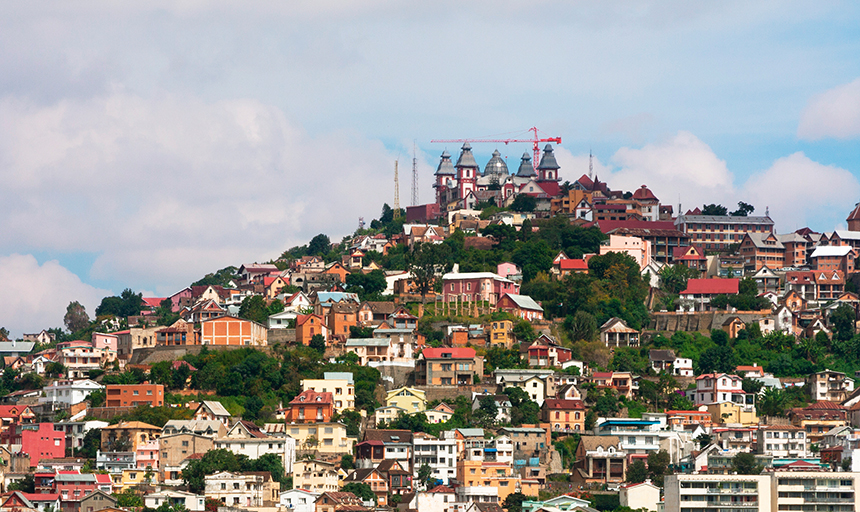
Antananarivo sits at roughly 1,280 meters in the central highlands, spread across a dozen hills the way Rome or Lisbon are, with the old royal quarter, the Haute-Ville, occupying the highest ground and looking down over lower neighbourhoods that spill toward Lake Anosy. It was the seat of the Merina kingdom that unified most of the island before French colonization in 1896, and that royal history is still the city's visual anchor even though the palace itself burned in 1995.
Almost nobody plans a trip around Antananarivo the way they would around Cape Town or Nairobi. It's the near-universal hub: the only place with reliable international flights, the place where drivers, guides and permits get arranged, and the first and last stop of almost every Madagascar itinerary. Given a day or two of its own, though, it has a genuine, unpolished character: a working capital rather than a curated one, still recognizably rebuilding infrastructure and confidence after the political transition of late 2025.
The honest complications
Tana went through serious political unrest in September and October 2025, culminating in a change of government; day-to-day life and tourism have continued through the transition, but it's worth checking current conditions close to your travel dates rather than assuming nothing has changed since this page was written. Traffic is genuinely bad at rush hour, the hills mean even short walks can take longer than a flat map suggests, and infrastructure, power cuts among them, is less consistent than in comparable African capitals. None of this makes Tana unpleasant to visit; it just isn't a polished city break, and going in with that expectation set correctly makes the actual visit better.
Three areas that cover almost everything
Tana's geography is vertical: the Haute-Ville sits highest, Isoraka occupies the flatter hinge below it, and Analakely and the lower town spread out toward Lake Anosy. Where you base yourself is mostly a question of how much climbing you want to do and how central you want to be.
Isoraka
Isoraka occupies the narrow strip of relatively flat ground between Lake Anosy to the south and the steep climb up to the Haute-Ville to the north. This is where the embassies cluster, where the city's most reliable restaurants operate, and where the Avenue de l'Indépendance, Tana's broad ceremonial street, terminates at a former train station now used as an event hall. For a first visit, this is the base that keeps everything within a manageable walk or short taxi ride.
Haute-Ville
The upper town holds the Rova palace ruins, the Andafiavaratra Palace museum, and a warren of narrow lanes and stairways with views back down over the whole city. It's compact enough to cover on foot in half a day, but the climb from Isoraka is real; a taxi up and a walk down is the easier order.
Analakely & the lower town
Home to the Zoma market's green-and-white umbrella stalls and the bulk of the city's everyday commercial life. Good for a morning wander and cheap eats, less appealing after dark; most visitors pass through rather than stay here overnight.
From a colonial-era boutique to the international waterfront towers
Tana's hotel scene splits cleanly between historic, character-driven properties in and around Isoraka and the newer international chains near the Ambodivona waterfront. Both work well as a one- or two-night base before or after the national park circuit.
In the boutique bracket, Hotel Sakamanga (from around $51-76 a night) is the city's best-known character stay: a 46-room colonial-era property on rue Ratianarivo in central Tana, built around a courtyard pool, with three in-house restaurants and a genuinely central location a short walk from Isoraka's embassy row. At the higher end, Hotel Carlton Madagascar is the established grande-dame choice, with a casino, tennis courts, an outdoor pool and four dining options, popular with business travellers and tour groups alike.
On the waterfront near Ambodivona, the Radisson Blu Hotel Antananarivo Waterfront (from roughly $138-205 a night) is the city's most consistent international 5-star option, about 2.2 kilometres from the centre, and the easiest choice for travellers who want predictable international-brand standards over historic character. It's also a sensible pick for a late arrival or early departure given its proximity to the airport road.
Colonial French roots, Malagasy rice and Zebu at the centre
Tana's dining scene mixes a genuine French colonial legacy, good bread and coffee, serious sauces, with Malagasy staples built around rice and zebu. Isoraka has the highest concentration of the city's better restaurants, most within an easy walk of each other.
Romazava & Ravitoto
Rice and a zebu-based laoka is the daily Malagasy meal, and it's worth eating the two national dishes properly at least once: romazava, a tomato-and-ginger zebu stew with brèdes mafana greens, and ravitoto, mashed cassava leaves with pork or zebu and fresh tomato chutney. Grill du Rova, on the hillside near the Rova with views back over the city, does both with a strong Malagasy touch and freshly squeezed juices, plus a Sunday brunch accompanied by traditional Malagasy music.
La Varangue
La Varangue is Tana's classic colonial-French dining room: brass chandeliers, vintage decor, and a Malagasy chef trained in Paris turning out lobster thermidor and a signature pan-seared duck. It's the address to book for a proper sit-down dinner rather than a quick meal.
Le Combava
Le Combava pairs fresh seafood with aromatic curries and local specialties, and doubles as a small hotel for travellers who want to stay in the same spot they eat well. A solid middle-ground choice between Grill du Rova's Malagasy focus and La Varangue's formality.
A half-day royal history lesson and a lake full of jacarandas
Antananarivo's sights cluster tightly enough that a single day, or a relaxed day and a half, covers the essentials before heading out to the national parks.
The Rova and the Haute-Ville
The Rova of Antananarivo, the royal palace complex that was the seat of the Merina kingdom from the 17th century, still dominates the city's skyline from its hilltop even though a fire destroyed most of its original wooden structures on the night of 6 November 1995, just before the complex was due for UNESCO listing. Less than 20 percent of the exhibits on display at the time were saved; today they're housed a short walk away at the Andafiavaratra Palace, the former residence of 19th-century prime minister Rainilaiarivony, whose stone structure survived the fire and now functions as the city's most important history museum. Budget two to three hours for both together.
Lake Anosy
Lake Anosy, the heart-shaped lake ringed by jacaranda trees below the Haute-Ville, is at its best in October and November when the trees bloom into a wall of purple visible from most of the palace balconies above. A war memorial obelisk sits on a small island in the lake, and the surrounding promenade is a pleasant, flat walk after the hill climbing elsewhere in the city.
Analakely and the Zoma market
Analakely Market, known locally by its old name Zoma, is one of the city's most photographed everyday scenes: rows of green-and-white umbrellas shading stalls selling everything from vanilla pods to secondhand clothes. Go in the morning when it's liveliest and coolest, and keep bags zipped and close given the crowd density.
One, two, or half a day if the parks are calling
Most visitors give Tana one to two days, arrival and departure bookends around a longer national park trip. These routes work whether you have a rushed half day or a fuller two.
- Morning
The Rova and Andafiavaratra Palace. Cover the Haute-Ville's core history in under three hours with a taxi up and a walk down.
- Midday
Lunch at Grill du Rova, still on the hillside, with the view over the city included.
- Afternoon
Onward transport to the airport or your national park driver-guide pickup.
- Morning
Zoma market at Analakely, then the climb to the Haute-Ville for the Rova and Andafiavaratra Palace.
- Midday
Lunch in Isoraka, Le Combava or Grill du Rova depending on whether you want seafood or Malagasy classics.
- Afternoon
Lake Anosy for a flat, easy walk, jacarandas in bloom if you're visiting in October or November.
- Evening
Dinner at La Varangue for a proper sit-down finish to the day.
- Day 1
The one-day route above: Zoma market, the Rova and Andafiavaratra, Lake Anosy, dinner at La Varangue.
- Day 2
Ambohimanga day trip. A half or full day at the UNESCO-listed Royal Hill, 45-60 minutes northeast, then an easy evening back in Isoraka before an early departure for the national parks or the airport.
Sixteen kilometres from the airport, then straight up a hill
Ivato International Airport (TNR) sits about 16 kilometres north of the centre, served by Air France, Ethiopian Airlines and Madagascar Airlines (rebranded from Air Madagascar), with connections onward to Nosy Be, Morondava, Toliara and other regional hubs. A pre-arranged hotel transfer or licensed taxi takes 30-45 minutes depending on traffic and runs roughly $15-25; agree the fare in advance, since few taxis run meters.
Within the city, taxis are the practical option for anything beyond a short walk, especially given the hills: expect $1-3 for short central trips. There's no metro or reliable public transit system geared toward visitors, and given the road conditions and language gap outside French-speaking areas, most travellers arrange a driver-guide through their hotel or a tour operator like Boogie Pilgrim or Mad Cameleon for both the city and the onward national park route.
Best time to visit and the jacaranda bloom
Tana's highland altitude, around 1,280 meters, means noticeably cooler weather than the coasts: April to October is the dry season and the most comfortable window, with June to August genuinely cold at night by Madagascar standards. December to March brings the rainy season and periodic cyclone-related disruption further afield, though the capital itself is less directly cyclone-exposed than the coast.
The jacaranda bloom around Lake Anosy in October and November is worth timing a visit around if your schedule allows: the trees turn the lakeside a solid purple for a few weeks, one of the city's most photographed seasonal moments and largely free of the crowds that similar blooms attract elsewhere.
Cheap by itself, expensive as a launchpad
Antananarivo itself is inexpensive by international standards: hotels, food and local taxis all run low relative to comparable African or Indian Ocean capitals. What raises a Madagascar trip's overall cost is what you arrange from Tana outward, domestic flights and driver-guides for the national park circuit, not the city stay itself.
- Guesthouse $15-30
- Market meals and street food $2-6
- City taxis $1-3
- Free sights: Zoma market, Lake Anosy
- Hotel Sakamanga or similar $51-100
- Restaurant meals $10-25
- Half-day Ambohimanga tour
- Rova and Andafiavaratra Palace entry
- Radisson Blu Waterfront or Hotel Carlton
- Dinner at La Varangue
- Private driver-guide for city and day trips
- Full-day Ambohimanga with private guide
Normal city caution, with a political transition in the background
Antananarivo carries the same US State Department Level 2 (Exercise Increased Caution) rating as the rest of Madagascar, following the political unrest and transition of September and October 2025. Day-to-day tourism in the city has continued through the transition, and most visitors experience nothing beyond normal capital-city precautions, but it's a genuinely fluid situation worth checking again close to your travel dates.
The practical, everyday risks are more mundane: petty theft and occasional snatch-and-grab incidents around crowded areas like Analakely market, armed robbery risk after dark in isolated or poorly lit areas, and the general rule that walking anywhere in the city after nightfall is best avoided in favor of a pre-arranged taxi. Traffic is the other genuine hazard, drive defensively if self-driving, which most visitors don't attempt in Tana anyway.
Ambohimanga is the one that matters
Tana's surroundings don't offer the density of easy day trips a European capital would; the region's real draws, the national parks, are multi-day trips in their own right. One nearby destination, though, is genuinely worth building into any visit.
Royal Hill of Ambohimanga
The Royal Hill of Ambohimanga, a UNESCO World Heritage Site since 2001, was the original seat of the Merina kingdom before Antananarivo, and it remains, in a real sense, the most significant single site of Malagasy national identity. A walled royal compound holds the palace of King Andrianampoinimerina, who reigned from 1787 to 1810 and is remembered for reunifying Merina territory, alongside the queen's bathing pools, gardens of endemic and medicinal plants, and a necropolis. It's a living site rather than a museum piece: Malagasy visitors still come to pay respects to ancestors here, and treating it with the same quiet respect they show is expected. Half-day tours with hotel pickup run from Antananarivo; a full day allows a slower pace through the citadel and grounds.
Antananarivo FAQ
Is Antananarivo safe for tourists?
Antananarivo is generally safe for tourists who take normal city precautions: avoid walking after dark, especially around Analakely and the lower town, keep valuables out of sight, and arrange transport in advance rather than hailing unmarked taxis at night.
How many days do I need in Antananarivo?
One to two days covers the city itself well: a half day for the Rova and Haute-Ville, a half day for Analakely market and Lake Anosy, plus a half or full day for the Ambohimanga UNESCO site. Most visitors treat Tana as a logistics hub bookending a longer national park trip rather than a standalone destination.
How much does Antananarivo cost per day?
Budget travellers manage on $35-50 a day with guesthouses and market food; mid-range runs $80-150 with a comfortable hotel and restaurant meals. Antananarivo itself is inexpensive; it's onward transport to the national parks that drives up a Madagascar trip's overall cost.
When is the best time to visit Antananarivo?
April to October, the dry season, is best: comfortable highland temperatures and passable roads for onward travel. November's jacaranda bloom around Lake Anosy is a specific highlight worth timing a visit around. December to March is the wet season and cooler travel months (June-August) can be genuinely cold at Tana's altitude.
How do I get from Ivato Airport to central Antananarivo?
Ivato International Airport (TNR) is about 16 kilometres north of the centre. A pre-arranged hotel transfer or licensed taxi takes 30-45 minutes depending on traffic and costs roughly $15-25; agree the fare before getting in, since few taxis use meters.
What is the best area to stay in Antananarivo?
Isoraka for first-timers: central, walkable to the Haute-Ville and the city's best restaurants, and home to the embassy district. The waterfront area near Ambodivona suits travellers who prioritise a modern international hotel over historic character.
Do I need to speak French in Antananarivo?
It helps significantly. French is widely used in hotels, restaurants and by guides; English is limited outside the most international properties. A driver-guide bridges the gap for anyone without French, which is how most visitors get around anyway.
Is Antananarivo walkable?
The centre is walkable but steep: the Haute-Ville around the Rova sits well above Isoraka and Analakely, connected by long stairways and narrow lanes. Comfortable shoes matter, and after dark it's safer to take a taxi even for short distances.
Is Ambohimanga worth the day trip from Antananarivo?
Yes. The UNESCO-listed Royal Hill of Ambohimanga is 21 kilometres, 45-60 minutes, northeast of the city and combines a walled royal palace, the queen's bathing pools and a still-active sacred site into a satisfying half-day trip, often paired with the airport run on departure day.
What Stays With You
Antananarivo doesn't perform for visitors the way a city built for tourism does, and most people arrive not expecting much from it and leave a little surprised. The jacarandas over Lake Anosy, the view back over red rooftops from the Rova's ruined walls, the quiet dignity of Ambohimanga where Malagasy families still come to honor ancestors: none of it was arranged for you, which is part of why it sticks.
Give the city its day, then head for the parks. That's what it's built for, and it knows it.