
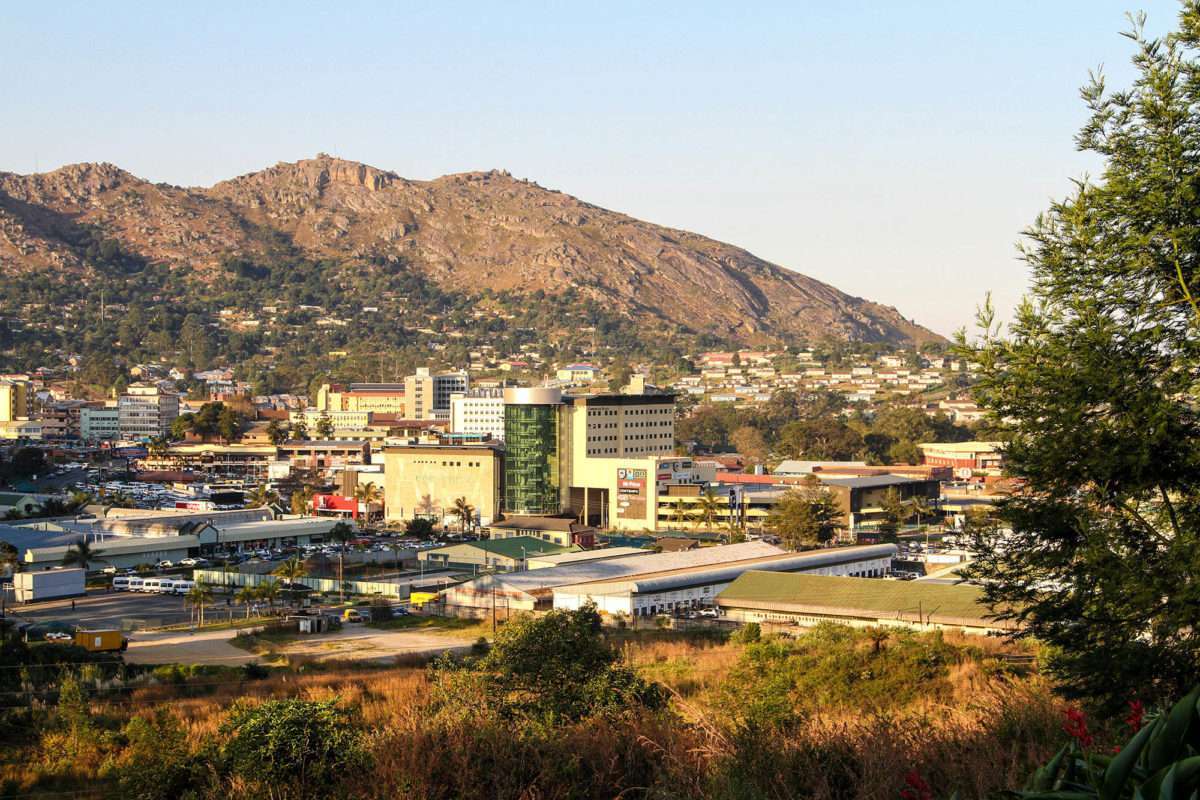
Eswatini's capital plays it quiet, on purpose
Mbabane sits at 1,243 meters in the Dlangeni hills, cool enough that Swazis themselves joke about needing a jacket in a country most outsiders assume is uniformly hot. It became the administrative capital under British rule because the climate suited colonial officials better than the lowveld, and that highveld air is still the first thing you notice: crisp mornings, mist that burns off by mid-morning, and none of the humidity that defines the eastern reserves an hour and a half away.
The town itself is small and functional rather than a sightseeing destination in its own right: Gwamile Street, the Swazi Plaza mall and the central market cover most of what a visitor needs within a twenty-minute walk. What makes Mbabane work as a base is everything around it. Sibebe Rock rises fifteen minutes north. The Ezulwini Valley, the country's cultural and tourism heart, starts twenty minutes south. Malolotja's highland trails and canopy tour are forty minutes northwest. Mbabane itself is the launchpad, not the show, and it plays that role better than anywhere else in the country.
The honest complications
Mbabane is not a lively city after dark: restaurants and the town centre wind down early, and nightlife means Ezulwini or nothing. Petty theft around the market and bus rank is a real, if manageable, concern, worse than in most of Eswatini's rural areas. Public transport within town is fine but reserve gates, Malolotja's trailheads and the Malkerns craft cluster all require a car or a pre-arranged transfer; independent budget travel without a rental car is considerably harder here than in a country with a developed bus network. And King Mswati III International Airport's thin route map means most visitors arrive overland from South Africa or connect via Johannesburg, adding a step most city breaks don't require.
Mbabane, Ezulwini or Malkerns: where to actually stay
Most visitors base themselves in one of three places within a twenty-minute drive of each other. Where you choose depends on how much you want to walk to dinner versus how close you want to be to the valley's cultural sites.
Central Mbabane
The town centre around Gwamile Street and Swazi Plaza has the widest range of accommodation and services in the country: banks, ATMs, fuel, supermarkets and both budget guesthouses and mid-range hotels within walking distance of each other. It is genuinely the practical choice for a first visit, fifteen to twenty minutes from most attractions by car, though the town itself goes quiet well before 9pm.
Sibebe
The area at the base of Sibebe Rock, a short drive north of central Mbabane, suits travellers who want hiking and adventure activities without a daily commute: quad biking, ziplining and caving are all available on site alongside the rock hike itself.
Ezulwini Valley
The valley between Mbabane and Manzini is where Eswatini's tourism actually concentrates: craft markets, spas, Mantenga Cultural Village, and the royal village of Lobamba. Staying here trades Mbabane's practicality for proximity to the valley's sights and a more scenic setting, at a similar price range.
From adventure resorts to family-run guesthouses
Mbabane's accommodation scene is small but covers every budget honestly, and prices stay far more stable year-round here than at the coast-driven destinations that double in peak season. These picks cover the practical range, from the cheapest comfortable bed in town to the one property built entirely around a single landmark hike.
At the top of the adventure bracket, Sibebe Resort (from $88) sits directly at the base of Sibebe Rock and is built around the hike itself, with quad biking, ziplining and caving on site, the pick for travellers who want activities without driving between them. For dependable mid-range comfort, the Hilton Garden Inn Mbabane (from $90) and The Place Guest House (from $70) both sit a short drive from Ezulwini's restaurants and craft markets, with the reliability of proper hotel service.
At the budget end, The Haven Guest House Thembelihle (from $34) and Eden Guest House (from $33) are the two most reliably booked family-run guesthouses close to the town centre, both a short walk or quick drive from Gwamile Street. Mac Atini Guest House rounds out the budget options a few minutes further out.
Sishwala on Gwamile Street, kudu carpaccio around the corner
Mbabane's food scene runs on two parallel tracks that rarely overlap: the street-and-market economy that feeds the town every day, and a small cluster of proper restaurants that would not feel out of place in Johannesburg. Both are worth your time, and neither costs much by Western standards.
Sishwala & street grills
Sishwala, the thick maize porridge that anchors the Swazi diet, is served from stalls behind the bus rank with sidvudvu (pumpkin) or tinkhobe (boiled maize kernels) and a meat or vegetable stew, rarely more than a dollar or two. Further up Gwamile Street, past the central market, vendors grill boerewors sausage and roast corn over open coals, a full meal for around 20 emalangeni ($1.10). This is how Mbabane actually eats on a weekday, and it is worth doing at least once even if you spend the rest of the trip at proper restaurants.
Ramblas at the Mall
A local institution built on one dish: smoky chicken livers peri-peri, done properly enough that it has outlasted several trend cycles of what's fashionable to order in Mbabane. Casual, reliable, and a fair introduction to how the town actually eats when it goes out.
Finesse
Mbabane's upmarket option, with a small serious wine list and game meat on the menu, including a kudu carpaccio worth ordering. The kind of restaurant that surprises visitors who arrive expecting Mbabane to have nothing beyond guesthouse dinners.
The Calabash
A short drive into the valley, The Calabash runs a German-Swazi fusion menu that has become a fixture for both locals and visitors staying in Ezulwini. Worth the fifteen-minute drive from central Mbabane on any night you want a proper sit-down dinner.
A granite dome, a living homestead, and a glassblowing workshop
Mbabane's own sights fit into a morning; the real draw is everything within a twenty-to-forty-minute radius. This chapter covers the town and the Ezulwini Valley and Malkerns cluster roughly the way a good two or three days would.
Sibebe Rock
Fifteen minutes north of central Mbabane, Sibebe Rock is a three-billion-year-old granite dome rising nearly 1,500 meters, the world's largest exposed granite monolith after Australia's Uluru. The guided route up the bare rock face takes two to three hours round trip and rewards with a panoramic view over the Ezulwini Valley that is the best in the country. Book a guided hike rather than climbing alone; the granite is unmarked and route-finding matters. Sibebe Resort at the base runs the hike alongside quad biking, ziplining and caving for a fuller adventure day.
The Ezulwini Valley
Twenty minutes south, the "Valley of Heaven" is Eswatini's cultural and tourism centre. Mantenga Cultural Village, a living reconstruction of a 19th-century Swazi homestead, runs daily performances of Sibhaca, the high-kicking traditional dance style, alongside a waterfall trail through the Mantenga Nature Reserve. Mlilwane Wildlife Sanctuary, Eswatini's oldest protected area, has no predators, so you can explore among zebra, warthog and antelope on foot, by mountain bike, or on horseback, a relaxed and unusually accessible first safari. Lobamba, the royal village nearby, is where the Umhlanga Reed Dance and Incwala First Fruits ceremony take place; respectful visitors can watch from the edges during ceremony season, roughly late August into September for Umhlanga and around the December solstice for Incwala.
Malkerns: glass, candles and craft
A further fifteen minutes south, Malkerns is Eswatini's arts cluster. Ngwenya Glass, near the Ngwenya border post, blows recycled glass into animal figurines in an open workshop free to visit, with proceeds from its Rhino & Elephant Fund line supporting Mkhaya's conservation work. Swazi Candles does the same for hand-painted wildlife-shaped candles. Malandela's, home to the House on Fire performance venue and the Gone Rural weaving studio, anchors the valley's arts scene and hosts MTN Bushfire, one of southern Africa's biggest performing arts festivals, over the last weekend of May.
The Malolotja Canopy Tour
Forty minutes northwest, Malolotja Nature Reserve's highland grassland and cliffs hold the country's most serious adventure activity: eleven platforms, ten ziplines and a 50-meter suspension bridge over the Majolomba River, reached by an open game-vehicle drive through terrain where blesbok, eland and zebra sightings are routine. Worth a full day if hiking and ziplining both appeal; the reserve's shorter trails also work as a half-day add-on.
One, two or three days, planned by drive time
Two to three days covers Mbabane and the Ezulwini Valley properly; even one well-planned day delivers Sibebe Rock and a taste of the valley. These routes assume a rental car, which makes the whole area considerably easier to cover.
- Morning
Sibebe Rock. A guided hike up the granite dome before the day heats up, with the valley view as the payoff.
- Midday
Lunch on Gwamile Street. Sishwala and grilled meat from the market stalls, or Ramblas at the Mall for the sit-down version.
- Afternoon
Ezulwini Valley. Mantenga Cultural Village's dance performance, then a walk through Mlilwane Wildlife Sanctuary.
- Evening
Dinner at The Calabash. German-Swazi fusion in the valley before heading back to Mbabane.
- Day 1
The one-day route: Sibebe Rock, Gwamile Street lunch, Mantenga and Mlilwane, dinner at The Calabash.
- Day 2 morning
Malkerns. Ngwenya Glass and Swazi Candles workshops, then lunch at Malandela's.
- Day 2 afternoon
Craft shopping and Finesse. Browse the Mbabane craft market on Gwamile Street, then a proper dinner at Finesse to close out the trip.
- Days 1-2
The two-day route above, at a gentler pace.
- Day 3, option A
Malolotja Canopy Tour. A full day of highland hiking and ziplining, forty minutes northwest of Mbabane.
- Day 3, option B
Hlane Royal National Park. A day trip for self-drive rhino, elephant and lion viewing, roughly 1.5 hours from Mbabane.
Compact centre, everything else needs a car
Mbabane's town centre is genuinely walkable: Gwamile Street, Swazi Plaza and the market are all within twenty minutes of each other on foot. Everything that makes the area worth visiting, Sibebe, Ezulwini, Malkerns and any reserve, sits outside that radius and needs a car or pre-arranged transport. King Mswati III International Airport (SHO) is about 80km away near Sikhuphe; there is no scheduled public transport link, so a private transfer or taxi (E450-800, roughly $28-49) is the standard way in, best booked through your hotel in advance.
Kombi minibuses cover Mbabane, Manzini and the main towns cheaply (E10-30 a route) but run without a fixed schedule and don't reach reserve gates or trailheads, so they suit light-packing, unhurried travellers better than a tight itinerary. A rental car ($35-60 a day, available at the airport and in Mbabane) is the practical choice for most visitors, and most overland arrivals from South Africa simply drive their rental across the Oshoek or Ngwenya border, about 1.5 hours from Johannesburg.
Best time to visit and the Bushfire festival
Mbabane's highveld climate runs noticeably cooler than the rest of the country year-round. May to September, the dry winter, brings clear skies, cool nights and the best conditions for both the Sibebe hike and reserve game viewing. October to April is warmer and wetter, with the lowveld reserves carrying their highest malaria risk in the summer months; Mbabane itself is malaria-free throughout the year.
MTN Bushfire, the last weekend of May at House on Fire in Malkerns, is one of southern Africa's biggest performing arts festivals: live music, theatre and a global food fair. Accommodation in Mbabane and Ezulwini books up in advance; plan around it deliberately if the dates line up with your trip.
Noticeably cheaper than a comparable South African trip
Mbabane and the surrounding valley are inexpensive by regional standards, with the Lilangeni pegged 1:1 to the South African Rand and Rand notes accepted everywhere. The main cost driver isn't the town itself but reserve day trips and packages, which bundle transfers, guiding and conservation fees into the price.
- Guesthouse $30-45
- Market meals & street food $3-6
- Kombis for in-town trips
- Free Ngwenya Glass & Swazi Candles visits
- Hilton Garden Inn or similar
- Restaurant meals $10-25/person
- Rental car $35-60/day
- Sibebe hike plus one paid activity
- Sibebe Resort with activities included
- Private guided day trips
- Fine dining at Finesse
- A night at Hlane or Mkhaya
Manageable with normal city awareness
Mbabane is a moderate-risk destination, not a high-alert one: violent crime against tourists is uncommon, but petty theft and pickpocketing cluster around the central market and bus rank, particularly after dark. The reserves, Sibebe and the Ezulwini Valley are calmer than the town centre itself.
The three things that actually catch visitors: walking after dark, which is worth avoiding in favour of a pre-arranged taxi or your guesthouse's transfer; bag security in the market and bus rank, where pickpocketing is the main risk; and malaria planning, which matters only if your trip extends into the lowveld reserves like Hlane or Mkhaya, since Mbabane itself sits malaria-free on the highveld. Emergency numbers are Police 999, Ambulance 977 and Fire 933; the European-standard 112 is not reliably routed here, so use the direct numbers.
Rhino country is closer than it looks on the map
Mbabane's position in the centre of a small country makes it an excellent base for reaching Eswatini's wildlife reserves and markets. Three trips are worth a day each, all reachable by rental car.
Hlane Royal National Park
Eswatini's largest protected area and a former royal hunting ground, with the highest concentration of rhino in southern Africa alongside elephant and lion, viewable on self-drive routes. Ndlovu Camp, the main rest camp, overlooks a busy waterhole with a Kruger-style bushveld atmosphere; worth an overnight rather than a rushed day trip if your schedule allows it.
Mkhaya Game Reserve
A private reserve specialising in black and white rhino, widely regarded as one of the best rhino-tracking experiences in the region, with sightings often on foot at close, carefully guided range. Access is by pre-arranged transfer only, no self-drive, which keeps the reserve quiet; book ahead through an organised Mkhaya day or overnight package.
Manzini Market
Eswatini's largest urban market, hot and crowded but the most authentic Swazi market experience in the country: produce, traditional medicine stalls and crafts at prices well below the Ezulwini tourist stalls. A good half-day add-on to a Hlane or Mkhaya trip, since Manzini sits on the route east.
Mbabane FAQ
Is Mbabane safe for tourists?
Mbabane is manageable with normal city awareness. Petty theft and pickpocketing occur around the market and bus rank, especially after dark; violent crime against tourists is uncommon. Avoid walking alone at night and use pre-arranged transport.
How many days do I need in Mbabane?
Two to three days covers Mbabane and the Ezulwini Valley well: one for Sibebe Rock and the town centre, one for Ezulwini's cultural sites and craft markets, and a third for Malolotja hiking or a rhino reserve day trip.
How much does Mbabane cost per day?
Budget travellers manage on $35-55 a day with guesthouses and market food. Mid-range, including a rental car and restaurant meals, runs $100-150. Reserve day trips to Hlane or Mkhaya add $30-330 depending on the package.
When is the best time to visit Mbabane?
May to September, the dry winter season: cool, clear highveld days that are ideal for hiking Sibebe Rock, and the best game viewing conditions for reserve day trips. The MTN Bushfire festival in late May is a strong reason to time a visit around it.
Is Mbabane or the Ezulwini Valley the better base?
Mbabane has the widest range of accommodation and services and sits 15-20 minutes from most attractions. The Ezulwini Valley is more scenic and closer to specific sites like Mantenga and Lobamba. First-time visitors do well based in Mbabane with a rental car.
How do I get from the airport to Mbabane?
King Mswati III International Airport is about 80km from Mbabane. A pre-arranged transfer or taxi costs roughly $28-49; there is no direct public transport link, so book a car or transfer in advance.
What is the best area to stay in Mbabane?
Central Mbabane near Gwamile Street for walkable access to restaurants and the market, or the base of Sibebe Rock for travellers who want hiking and adventure activities on site.
Do I need a car in Mbabane?
For the town centre, no; it's compact and walkable. For the Ezulwini Valley, Malkerns and any reserve day trip, yes. Kombis cover the main routes but not reserve gates, so a rental car makes the trip far easier.
Can I see rhinos on a day trip from Mbabane?
Yes. Hlane Royal National Park is about 1.5 hours from Mbabane and allows self-drive game viewing for rhino, elephant and lion. Mkhaya Game Reserve is further and requires a pre-arranged guided transfer, better suited to an overnight.
Is Sibebe Rock hard to climb?
The guided route up Sibebe Rock is a moderate hike on bare granite, manageable for most reasonably fit visitors in 2-3 hours round trip. Good grip shoes matter more than technical fitness; go with a guide rather than alone.
What Stays With You
Mbabane never asks to be the highlight of the trip, and that quiet confidence is exactly why the whole area works. The town gets on with its own business, the market stalls sell the same sishwala they've sold for decades, the mist burns off the hills every morning on schedule, and lets you use it as a base for the granite dome, the valley, and the rhino an hour and a half east.
Climb Sibebe Rock in the cool of the morning, and understand why the view from the top is the thing every visitor mentions first.