
Chad's capital, not Chad's showpiece
N'Djamena, formerly Fort-Lamy under French colonial rule, sits where the Chari and Logone rivers meet, directly across the water from Cameroon. It is home to roughly a tenth of Chad's population and almost all of its functioning infrastructure: the one international airport, the hotels an international traveler can actually book, the hospitals, the embassies. None of that makes it a conventionally attractive capital. The streets are wide, dusty and low-rise, the pace is unhurried, and the sights that exist, a national museum, a grand mosque, a market, fill a day or two rather than a week.
What N'Djamena actually is, for the travelers this guide is written for, is the fixed point every trip to Chad passes through: the arrival and departure city for a Zakouma safari or an Ennedi expedition, and the place where you'll spend a night adjusting before and after either. Treat it that way and it works well. Treat it as a city-break destination in its own right and you'll be disappointed.
The honest complications
Infrastructure that looks fine on a hotel's website can be inconsistent in practice: power cuts happen even at the better hotels, water pressure varies, and English is limited outside the two or three international properties. More seriously, N'Djamena sits inside a country under a Level 4, Do Not Travel advisory, and while it is genuinely the safest single point in Chad, that is a relative statement, not an absolute one. Read the safety chapter below before booking anything.
What the advisory means inside the capital
N'Djamena does not carry a separate, lower advisory rating from the rest of Chad: the whole country sits at US Level 4, Do Not Travel. In practical terms, N'Djamena is meaningfully calmer and better resourced than anywhere else in the country, which is why every organized trip bases itself here, but "calmer than the rest of Chad" is not the same as "safe" by ordinary travel standards.
Street crime
Pickpocketing and purse-snatching concentrate around the Grand Marché and other crowded areas; foreigners are visibly targeted for perceived wealth. Carry minimal valuables and keep bags closed and in front.
After dark
Avoid moving around the city after dark. Arrange transport through your hotel for evening restaurant visits rather than walking or flagging a taxi on the street.
Checkpoints
Police checkpoints appear on major roads, more often after dark, and can become more frequent during periods of unrest. Keep your passport and visa documents on you, stay calm and cooperative, and let your driver handle the interaction.
A handful of districts, one that matters for visitors
N'Djamena is organized into ten numbered municipal districts (arrondissements), each holding several named neighbourhoods. Almost all international visitors stay in or near the city center; the districts below are useful for orientation rather than as a menu of where to base yourself.
City center, Avenue Charles de Gaulle
The commercial spine of the city, lined with shops, government buildings, embassies and the international hotels. This is where every visitor covered by this guide should base themselves; it's the most secure, best-lit and easiest area to navigate.
Sabangali
An older, riverside district near the Grand Marché, historically one of the city's central trading neighbourhoods. Worth a daytime visit with a guide for the market itself, not somewhere to wander independently.
Chagoua
A large residential district southeast of the center. Mostly relevant to visitors as a reference point on a map rather than a destination.
Moursal
Sits close to N'Djamena International Airport; some visitors pass through it on airport transfers without otherwise stopping.
A short list, and it matters more than usual
N'Djamena has a small number of hotels that meet the security and reliability standard this guide would recommend for a Level 4 destination; this list sticks to those rather than padding it out with unverified budget options.
At the top, the Kempinski Hotel N'Djamena is the city's premier address, about a 7km drive from the airport, with a large pool, on-site restaurant and bar, gym, spa and dependable backup power, the practical difference between a hotel that copes with N'Djamena's grid and one that doesn't. The Radisson Blu Hotel N'Djamena is the other international-standard option, centrally located with an outdoor pool, balcony rooms and the reliable Wi-Fi that's harder to find elsewhere in the city. For a step down in price without stepping too far down in reliability, Ledger Plaza N'Djamena sits a short distance from the center and is a regularly used base for business and NGO travelers, which is itself a reasonable proxy for a hotel that handles the basics consistently.
Hotel restaurants first, the market by day
N'Djamena's dining options for visitors are genuinely limited compared to almost anywhere else on this site, and that's the honest starting point. The safest, most reliable meals are at your hotel: the Kempinski and Radisson Blu both run on-site restaurants serving local and international dishes, and eating there for dinner rather than venturing out after dark is standard, sensible practice here, not an admission of failure to explore.
By day, the Grand Marché is the place to see and smell how the city actually eats: capitaine grilling over charcoal, sacks of millet destined for boule, stalls of dates, peanuts and dried fish, all best experienced with a guide who can navigate both the layout and the pickpocketing risk the market carries. Boule and moulah, the pounded grain staple with its okra and tomato sauce, is what most Chadians eat daily and is worth trying at least once, ideally guided to a stall your hotel or driver already trusts rather than picked at random.
A short, real list for a one or two day stay
N'Djamena's sights don't take long to see, which suits its role as a stopover rather than a destination. A guided half-day covers the essentials.
Chad National Museum
The Musée National du Tchad is the single best reason to spend a few hours in the city: its paleontology pavilion holds the cast and story of Toumaï, the roughly 7-million-year-old Sahelanthropus tchadensis skull found in the Djurab Desert in 2001, alongside collections covering the Sao civilization, Islamic heritage and Chad's ethnic folk art. Posted hours run Monday to Thursday 8:30am-2:30pm and Friday 8:30-10:30am, though it's worth confirming the day of your visit given how much operating hours can vary in practice.
N'Djamena Grand Mosque
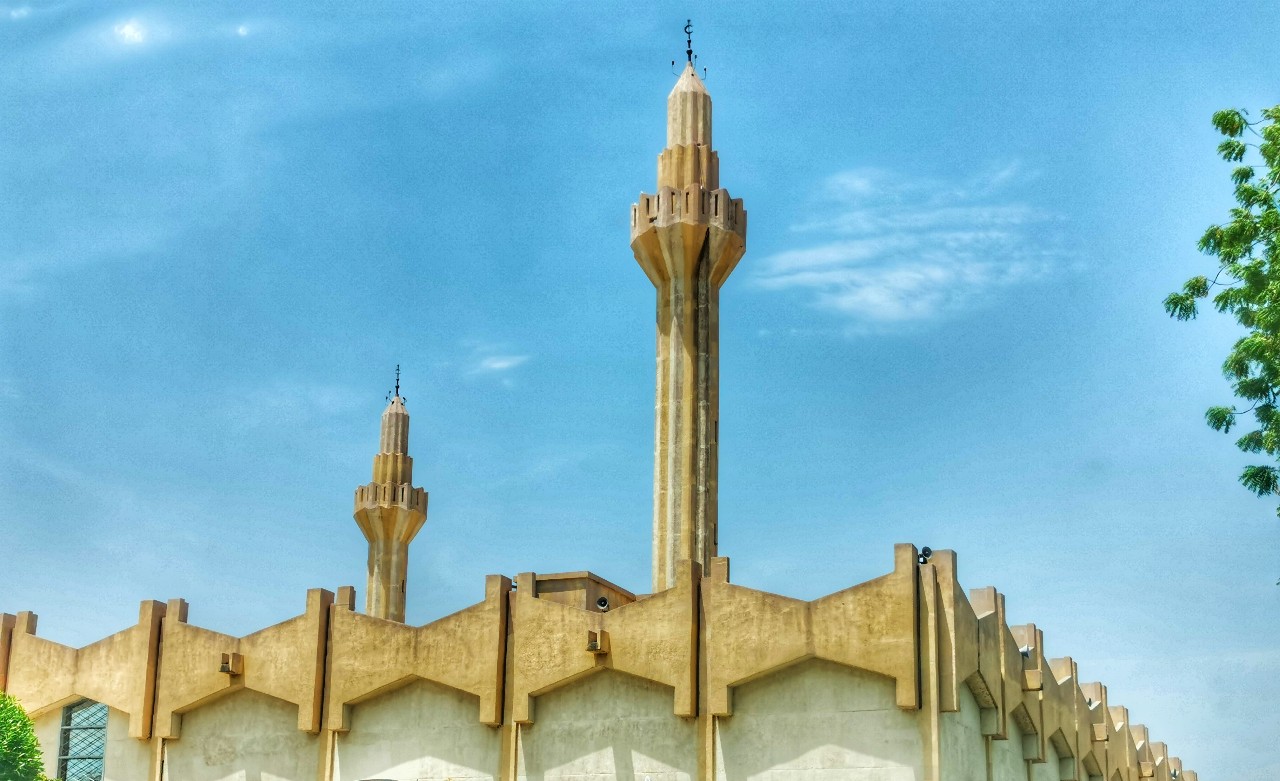
The largest mosque in Chad, established in 1978 with an attached complex of libraries and schools, and the city's most recognizable landmark. Dress modestly, visit in early morning or late afternoon light, and check with your guide whether entry to non-Muslim visitors is possible on the day, since this varies.
Our Lady of Peace Cathedral
The Catholic cathedral of N'Djamena, near Avenue Charles de Gaulle and Avenue Félix Éboué, originally built in 1965, destroyed during the 1980 civil war fighting, and rebuilt through the 1980s with further restoration in 2013. A quiet counterpoint to the Grand Mosque and a marker of the city's religious mix.
Grand Marché
The Grand Marché is N'Djamena's central market and its liveliest daytime scene, vendors of books, food, crafts and textiles packed into narrow lanes a few minutes from the city center. It's also the place local security guidance most consistently flags for pickpocketing, so visit in daylight with a guide or driver, keep valuables to a minimum, and treat it as a look-and-listen experience rather than a leisurely browse.
One day, or two if you have the time
Almost every visitor to N'Djamena is here as a stopover before or after a Zakouma or Ennedi trip. These two routes cover the city thoroughly without stretching it further than it goes.
- Morning
National Museum. Start with the Toumaï skull and the paleontology and Sao collections while the day is still cool.
- Midday
Grand Marché with a guide. An hour of markets, then lunch back at the hotel.
- Afternoon
Grand Mosque and the cathedral. Both from the outside at minimum, with entry to the mosque if your guide confirms it's possible that day.
- Evening
Dinner at the hotel. Standard practice here rather than venturing out after dark.
- Day 1
The one-day route above, at an unhurried pace.
- Day 2
Avenue Charles de Gaulle on foot in daylight, a slower pass through the Grand Marché, and time built in for visa, permit or operator logistics ahead of onward travel to Zakouma or the Ennedi.
Arranged transport, not hailed transport
N'Djamena International Airport (NDJ) sits under 3km from the city center and the Grand Marché, close enough that the drive rarely takes more than 15 to 20 minutes outside peak congestion. Arrange your airport transfer through your hotel or tour operator before you land; this is the norm here, not an extravagance. Within the city, the same rule applies to all movement: a hotel-arranged driver or your tour operator's vehicle, not a street-hailed taxi or moto-taxi, which are common local transport but not something this guide can recommend to visitors given the security guidance for foreigners.
Not a budget city
N'Djamena's international-standard hotels price closer to a major regional capital than to what the rest of Chad's economy would suggest, a function of limited supply and a guest list dominated by NGOs, diplomats and the oil and mining sector rather than tourists.
- Ledger Plaza or comparable
- Hotel restaurant meals $15-30
- Arranged driver for a half-day $40-70
- Kempinski or Radisson Blu
- Full-service dining, pool, gym, dependable power
- Airport transfer typically included or easily arranged
Not day trips. Multi-day trips that start here.
Nothing beyond N'Djamena qualifies as a day trip, and this guide isn't going to pretend otherwise. The two reasons most visitors are in Chad at all, Zakouma and the Ennedi, are both standalone, multi-day trips booked through a specialist operator, with N'Djamena as the fixed departure and return point.
Zakouma National Park
Chad's flagship wildlife park, home to the largest elephant herd in Central Africa and a stronghold population of Kordofan giraffe, run by African Parks with guided game drives and walking safaris from Tinga Camp. Book this as its own multi-day trip with a specialist operator, not an add-on to your N'Djamena stay.
Ennedi Plateau
A UNESCO World Heritage Sahara landscape of sandstone arches, ancient rock art and the crocodile-holding Guelta d'Archei, reached only by organized desert expedition. Like Zakouma, this is arranged as its own trip through a Saharan specialist, departing from and returning to N'Djamena.
N'Djamena FAQ
Is N'Djamena safe for tourists?
Chad carries a US Level 4, Do Not Travel advisory, and N'Djamena is not exempt from that rating even though it is the safest single point in the country. Petty crime targeting foreigners, occasional unrest and checkpoints are real considerations; stay in secured hotel accommodation, avoid moving around after dark, and keep valuables out of sight, especially around the Grand Marché.
How many days do I need in N'Djamena?
One to two days covers what the city itself offers: the National Museum, the Grand Mosque, the Grand Marché and the cathedral. Most visitors are here as a stopover before or after a Zakouma or Ennedi trip, not as a standalone destination.
What is the best hotel in N'Djamena?
The Kempinski Hotel N'Djamena and the Radisson Blu Hotel N'Djamena are the two international-standard options, both with pools, restaurants and reliable security. Ledger Plaza N'Djamena is a solid mid-range alternative closer to the center.
How do I get from N'Djamena airport to the city?
N'Djamena International Airport (NDJ) sits under 3km from downtown and the Grand Marché. Arrange a hotel airport transfer in advance rather than taking an unmarked taxi from the arrivals area; this is standard practice given the security situation.
What currency and language do I need in N'Djamena?
The Central African CFA franc (XAF); bring euros or dollars to change, since cards are accepted only at the international hotels. French is the language of business and government, Chadian Arabic the everyday street language; English is limited to hotel staff.
Can I visit Zakouma or the Ennedi as a day trip from N'Djamena?
No. Zakouma requires either a charter flight or a 13 to 18 hour drive and is only open mid-November to mid-May; the Ennedi Plateau requires a multi-day 4x4 expedition. Both are booked as standalone trips through a specialist operator, not add-ons to a city stay.
Is the Grand Marché worth visiting?
Yes, it's the liveliest single spot in the city by day, with food, crafts and books, but it is also the place local security guidance flags most consistently for pickpocketing. Go in daylight, go with a local guide or hotel-arranged driver, and keep valuables minimal.
Do I need a guide in N'Djamena?
Not legally, but practically, yes. A hotel-arranged driver or local guide handles navigation, checkpoints and language, and removes most of the friction and risk of moving around the city independently.
What Stays With You
N'Djamena isn't trying to be a destination, and that honesty is oddly refreshing after enough over-marketed capitals elsewhere. It's a working city that happens to sit at the only door into a country most of the world has decided not to visit right now, and it does that one job, arrival, logistics, a night's rest before or after the real trip, competently enough.
If Zakouma's elephants or the Ennedi's sandstone arches are why you're here, N'Djamena is the two days on either side that make them possible. Treat it as exactly that.