
Atlas Guide Logo
Atlas Guide

Explore the World

The Ennedi Plateau in northeastern Chad — sandstone arches and rock formations rising from the Saharan desert, with ancient cave paintings sheltered in the rock overhangs
High–Critical Risk · Avoid All Non-Essential Travel · Zakouma Accessible via Charter
🇹🇩

Travel Warning:
Chad

Chad is the geographic heart of the African continent — a vast, landlocked country stretching from the Sahara desert in the north through the Sahel to the tropical savannah of the south. The Ennedi Plateau in the northeast contains some of the world's finest Saharan rock art; Zakouma National Park in the southeast is one of Africa's most remarkable conservation successes; Lake Chad — once the continent's sixth-largest lake, now reduced to a fraction of its former size by climate change and overextraction — was a cradle of some of West Africa's greatest pre-colonial empires. None of this is easily or safely accessible. Chad has been in near-continuous political and security crisis since independence in 1960, and the death of President Idriss Déby in April 2021 began a political transition whose outcome remains uncertain. This page is for aid workers, journalists, researchers, diaspora visitors, and the small number of travellers for whom Zakouma or the Ennedi justify exceptional preparation.

🔴 US Advisory: Level 3/4 by region
🔴 UK: Against All But Essential Travel
🏛️ Capital: N'Djamena
💱 Currency: CFA Franc (XAF)
🗣️ Languages: Arabic / French
📅 Updated: Mar 2026
🚫
Government Travel Advisories — Avoid All Non-Essential Travel
The United States advises Do Not Travel (Level 4) for the Lake Chad basin, the eastern border with Sudan, the Tibesti region, and the Borkou region — and Reconsider Travel (Level 3) for N'Djamena and the remainder of the country. The UK FCDO advises against all but essential travel to the whole country. France, Germany, and Australia issue similar high-level warnings. The Sudan conflict that began in April 2023 has significantly worsened the security situation in eastern Chad, with hundreds of thousands of Sudanese refugees crossing the border and armed actors moving alongside civilian displacement flows.
⚠️
Sudan Conflict Spillover — Eastern Chad Severely Affected Since April 2023
The armed conflict in Sudan that began in April 2023 between the Sudanese Armed Forces (SAF) and the Rapid Support Forces (RSF) has created one of the world's largest refugee crises — with over 600,000 Sudanese refugees crossing into eastern Chad by early 2024. Eastern Chad's refugee population, already the largest per capita of any country from previous Darfur crises, has been overwhelmed. Armed actors, weapons, and instability cross the border with the refugee flows. The border regions of Wadi Fira, Ennedi Est, and Sila provinces are particularly affected. The Ennedi Plateau — which sits in Ennedi Est province — has become significantly more dangerous since 2023.
Current Situation

Chad in 2026 — Political Transition and Ongoing Insecurity

👑
The Déby Dynasty and 2021 Transition
Idriss Déby ruled Chad for 30 years (1990–2021), maintaining power through a combination of military force, patronage networks, and France's consistent support as a regional counterterrorism partner. He was killed on 20 April 2021 — the day after being announced winner of a presidential election — reportedly at the front lines fighting rebel forces of the FACT (Front pour l'Alternance et la Concorde au Tchad) advancing from Libya. His son Mahamat Idriss Déby (known as Kaka) assumed power immediately via a Transitional Military Council, bypassing constitutional succession. A National Dialogue process led to a transitional period; Mahamat won a presidential election in May 2024 that international observers considered neither free nor fully fair. He governs a country with the same structural challenges as his father faced.
💧
Lake Chad — The Shrinking Sea
Lake Chad was once the sixth-largest lake in the world — approximately 25,000 km² in the 1960s. By 2020 it had shrunk to approximately 1,500 km², a loss of 90% driven by climate change (reduced rainfall), agricultural irrigation abstraction, and population growth. This collapse has been catastrophic for the approximately 30 million people in the Lake Chad basin (Chad, Nigeria, Niger, Cameroon) whose livelihoods depended on the lake's fisheries, farming, and water supply. Resource scarcity has directly fuelled the conflict environment that Boko Haram and ISWAP exploited — the lake's shrinkage is one of the most documented examples of climate change driving armed conflict.
🕌
Boko Haram / ISWAP — Lake Chad Basin
Boko Haram and its ISWAP (Islamic State West Africa Province) splinter have been active in the Lake Chad basin since approximately 2015, when Boko Haram expanded from Nigeria into Chad, Niger, and Cameroon. The Lac region of Chad (surrounding Lake Chad) has experienced suicide bombings, armed raids, and kidnappings. Chad's military — with French support under Operation Barkhane (which France wound down in 2022–2023) — has mounted periodic operations against these groups. The threat has diminished somewhat from its 2015–2017 peak but remains active and unpredictable.
🆘
Humanitarian Crisis — One of the World's Most Severe
Chad hosts over 1.1 million refugees — from Sudan (Darfur), CAR, Nigeria, and other conflicts — making it one of the world's largest refugee host countries relative to its own population and resources. Approximately 7 million Chadians (nearly half the population) require humanitarian assistance. Chronic food insecurity, exacerbated by climate variability and conflict, affects millions. The healthcare system outside N'Djamena is minimal. Chad has the world's second-highest maternal mortality rate and one of the lowest life expectancies globally (approximately 54 years). The UN's humanitarian response for Chad is chronically underfunded.
Historical Context

Chad's Pre-Colonial Empires — A Forgotten History

The Lake Chad basin was home to some of West and Central Africa's most sophisticated pre-colonial empires — a history largely unknown outside specialist academic circles but that gives the region's current crisis a deeper dimension.

700–1380 CE
The Kanem Empire
The Kanem Empire — centred northeast of Lake Chad — was one of the earliest and most durable states in sub-Saharan Africa. Founded around the 9th century and lasting until the late 14th century, Kanem controlled trans-Saharan trade routes connecting sub-Saharan Africa to North Africa and the Arab world. Islam arrived in Kanem by the 11th century and the empire became a centre of Islamic scholarship. At its peak, Kanem's authority extended from the Fezzan (Libya) to Hausaland (northern Nigeria). The empire's wealth derived from the trans-Saharan trade in slaves, ivory, kola nuts, and natron (sodium carbonate mined from Lake Chad deposits). The ruins of the Kanem capital at Njimi are in modern Chad.
1380–1893
The Bornu Empire
The successor to Kanem, the Bornu Empire (centred in modern northeastern Nigeria and extending into Chad) was one of the longest-lasting states in African history — over 500 years. At its height in the 16th century under Mai Idris Alooma, Bornu controlled territory from the Air Mountains to the Darfur border and maintained diplomatic relations with the Ottoman Empire and the Moroccan sultanate. Bornu persisted until 1893 when it was conquered by the Sudanese warlord Rabih az-Zubayr. The Shehu of Borno title still exists as an important traditional emirate in northeastern Nigeria.
1893–1920
Rabih's Conquest and French Colonisation
The Sudanese warlord Rabih az-Zubayr conquered the Lake Chad basin in 1893, ending the Bornu Empire and establishing a militaristic state based in what is now Chad. Three French columns converging from different directions defeated and killed Rabih at the Battle of Kousséri in April 1900 — one of the defining moments of the Scramble for Africa in the Sahel. France incorporated Chad into French Equatorial Africa. Colonial rule was extractive and thin — Chad was the poorest and most neglected territory in the French empire, with minimal infrastructure investment and governance.
1960–1990
Independence and Perpetual Conflict
Chad gained independence in 1960 under François Tombalbaye — and has been in near-continuous internal armed conflict ever since. The first civil war began in 1965. Libya under Gaddafi invaded northern Chad and occupied the Aouzou Strip (1973–1994, when the ICJ awarded it to Chad). The Toyota War (1986–1987) — named for the pickup trucks both sides used — saw France-backed Chadian forces defeat a Libyan-backed rebel coalition in the desert. Hissène Habré, a French-backed leader with a documented record of mass atrocities under his political police (the DDS), ruled 1982–1990 before being overthrown by Idriss Déby, supported by Sudan and France.
1990–2021
Idriss Déby's Three Decades
Idriss Déby ruled Chad for 30 years — an era of relative stability compared to what preceded it, but marked by political repression, corruption, and recurring armed challenges. Oil production began in 2003 (via the Chad-Cameroon pipeline) but revenues did not translate into broad development. Déby was a key partner for France and the West in the Sahel counterterrorism effort — Chad's military was the most capable conventional force in the region and Déby deployed it repeatedly against jihadist groups in Mali, Niger, and Nigeria under French operational umbrella. His death in April 2021 removed a figure who, whatever his failures of governance, had been the central stabilising force in Chadian politics.
Geographic Risk Assessment

Chad's Security Zones

Chad's security situation varies significantly by region. Understanding the geography is essential for any assessment of specific travel plans.

N'Djamena — The Capital High Risk

N'Djamena, on the Chari River bordering Cameroon, is the country's political, commercial, and most accessible point. It is the one part of Chad where international organisations, diplomatic missions, and the government maintain a concentrated presence. The city has experienced periodic violence during political crises — the rebel advance to N'Djamena in February 2008 reached the presidential palace before being repelled; political demonstrations have been met with lethal force. Day-to-day in stable periods, N'Djamena functions as a working West African capital with significant NGO and UN presence.

  • Armed robbery and carjacking are documented — use organisation-provided or vetted vehicles, not street taxis
  • Photography near the presidential palace, military installations, government buildings, and the border bridge to Cameroon is prohibited and enforced
  • Police checkpoint shakedowns throughout the city — have documents accessible; ask for receipts if fees are demanded
  • The Grand Marché (central market) and riverfront areas are the main visitor spaces — standard urban security awareness required
  • N'Djamena can be reached by direct flights from Paris (Air France), Addis Ababa (Ethiopian), Casablanca (Royal Air Maroc), and regional hubs
Lake Chad Region — Lac Province DO NOT TRAVEL

The Lac region surrounding what remains of Lake Chad is the area most affected by Boko Haram and ISWAP activity. Suicide bombings, armed raids on fishing communities, kidnappings, and displacement of civilian populations are all documented. The lake's massive shrinkage has compressed communities and resources into a much smaller area, intensifying competition and creating the resource scarcity that fuels recruitment. The islands remaining in the lake are particularly difficult for security forces to monitor and have been used as Boko Haram staging areas.

  • All travel to the Lac region is advised against by all major governments — this is an active conflict zone
  • Boko Haram/ISWAP conduct suicide bombings, ambushes, and kidnappings throughout the region
  • The Nigerian, Nigerien, and Cameroonian borders in this area are all high-risk — cross-border armed actor movement is constant
  • The Multinational Joint Task Force (MNJTF) — comprising forces from Chad, Nigeria, Niger, and Cameroon — conducts operations in the region but cannot guarantee security
Eastern Chad — Sudan Border DO NOT TRAVEL

Eastern Chad's border with Sudan (Darfur) has been a conflict zone since the Darfur crisis began in 2003. The region hosts one of the world's largest refugee concentrations — over 400,000 Sudanese refugees were present before the 2023 Sudan conflict dramatically worsened the situation. The armed groups and weapons flowing out of Sudan since April 2023 have significantly increased insecurity in eastern Chad's Wadi Fira, Ennedi Est, Sila, and Ouaddaï provinces. Abéché — the main town of eastern Chad and traditional capital of the Ouaddaï Sultanate — has military and NGO presence but is not safe for independent travel.

  • The entire eastern border with Sudan is a Do Not Travel zone — armed actors and weapons cross freely with refugee flows
  • Abéché has basic services and UN/NGO presence but requires organised security arrangements for any visit
  • The Ouaddaï Sultanate — historically one of the Sahel's great Islamic states — makes Abéché historically significant, but this significance cannot be explored safely
  • The Ennedi Plateau sits in Ennedi Est province — significantly more dangerous since 2023 due to Sudan conflict spillover
Tibesti & Northern Desert DO NOT TRAVEL

The Tibesti Mountains in the far north — an extraordinary volcanic massif rising to 3,415m at Emi Koussi (the highest peak in the Sahara) — are among the most spectacular landscapes in Africa and were, in the 1990s, a destination for specialist desert expeditions. The region has been closed to visitors since recurring armed activity. The Toubou people of the Tibesti have resisted external control throughout history — including French colonial authority, Gaddafi's Libyan occupation, and successive Chadian governments. Rebel groups including FACT (which killed Idriss Déby in 2021) use the Tibesti as a base and Libya as a supply corridor.

  • Tibesti is a Do Not Travel zone — armed rebel groups use the region as a base and armed clashes with government forces occur
  • The Libya border in the north is an active arms and fighter trafficking route — proximity to this border is extremely dangerous
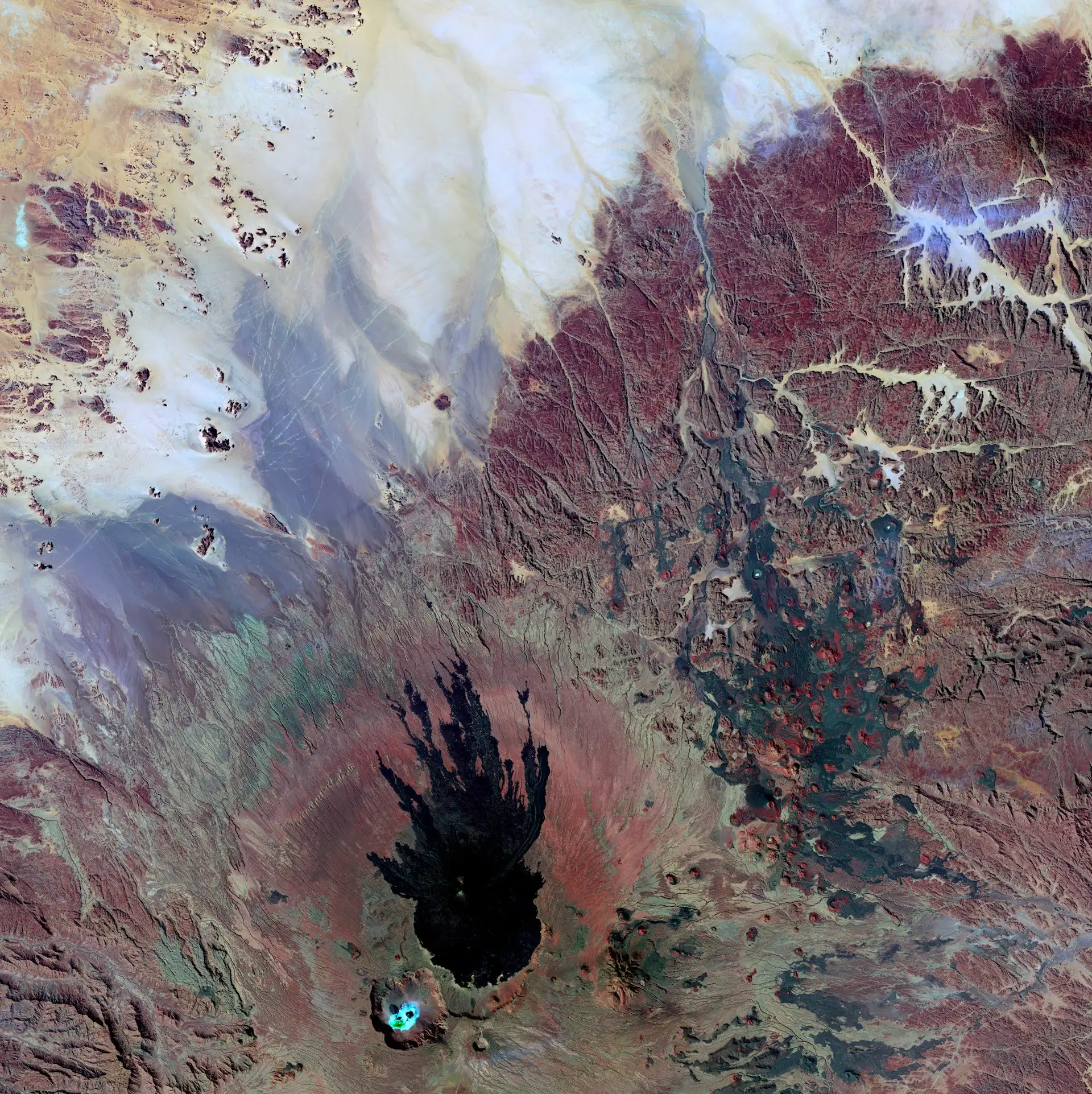
  • Emi Koussi (3,415m, highest peak in the Sahara) and the Tibesti volcanic landscapes are inaccessible under current conditions
  • The Borkou region (including Faya-Largeau oasis) has periodic armed group activity and requires current security assessment
South & Southeast — Zakouma Area High Risk · Zakouma Exception

The southern and southeastern regions of Chad — the Salamat province where Zakouma sits, the Moyen-Chari, and the Mandoul — are the most stable parts of Chad outside N'Djamena, but this stability is relative and fragile. The road network in the south deteriorates severely during the rainy season (July–October) and armed banditry on rural roads is documented. Zakouma National Park, operated by African Parks, maintains its own security infrastructure and is accessed exclusively by charter flight from N'Djamena. The park is the one destination in Chad where carefully organised tourist visits have been viable.

  • Zakouma: accessible only by charter flight from N'Djamena through African Parks — road travel from N'Djamena to Zakouma is not safe
  • The areas immediately around Zakouma (Am Timan town in Salamat province) have experienced periodic armed incursions — the park's security is maintained internally by African Parks rangers with armed patrol capacity
  • Southern border with CAR: the CAR conflict periodically spills across — the Chad-CAR border region (Logone Oriental province) requires current security assessment
Ennedi Plateau — Saharan Rock Art Very High Risk — Check Advisories

The Ennedi Plateau (UNESCO World Heritage Site since 2016) in northeastern Chad is one of the Sahara's most extraordinary landscapes — sandstone arches, towering pillars, and sheltered gorges containing thousands of rock paintings and engravings spanning 7,000 years of human presence. Before 2023, small numbers of specialist expedition operators ran tours to the Ennedi with appropriate security arrangements. The spillover from the Sudan conflict since April 2023 has made the Ennedi significantly more dangerous — it sits in Ennedi Est province, directly adjacent to the conflict zone. Any Ennedi expedition planning must begin with embassy consultation and current ACLED security mapping.

  • Ennedi was accessible to specialist expeditions before 2023; the Sudan conflict has significantly increased risk since then
  • Any visit requires: current embassy consultation, specialist expedition operator with local knowledge and security contacts, satellite communication equipment, and medevac insurance
  • Operator: Chari Voyages (N'Djamena-based) and a small number of French expedition specialists have historical experience in the Ennedi — consult them directly for current conditions
  • The rock art at Gonoa, Archei Gorge (with its population of desert-adapted crocodiles), and the Guelta d'Archei waterhole are the iconic Ennedi sites
Chad's Accessible Wonder

Zakouma National Park — Africa's Quiet Safari Giant

Zakouma is one of the continent's most compelling conservation stories and, for a small number of visitors each year, the primary reason to travel to Chad at all.

🐘
Zakouma — A Genuine Safari Destination Despite the Context
Zakouma National Park, managed by African Parks since 2010, operates two seasonal camps and receives several hundred visitors per year despite Chad's overall security situation. The park's security is maintained by an armed ranger force that has transformed poaching from near-total impunity to a managed threat. The elephant population recovery from under 500 to over 800 is one of African conservation's success stories. African Parks' direct management model — taking full operational responsibility for the park — has produced a visitor experience that is genuinely excellent: few other tourists, vast landscapes, and extraordinary wildlife. It is not cheap (approximately USD 600–900 per person per night all-inclusive) and requires charter flight access, but for those with the budget and interest, it is one of Africa's finest wild experiences.
🐘
The Elephant Recovery
Zakouma's elephant population was devastated by poaching in the 2000s — armed groups on horseback and camels used automatic weapons to kill elephants for ivory, reducing the population from approximately 4,000 to under 450 by 2010. African Parks implemented a comprehensive anti-poaching programme including armed ranger patrols, aerial surveillance, and community engagement. By the mid-2020s, the population had recovered to over 800 and calves are regularly born — a sign of a population that has regained security. The dry season aggregations at Zakouma's permanent water sources, where hundreds of elephants gather simultaneously, are among the most spectacular wildlife sights in Africa.
🦒
Wildlife Beyond Elephants
Zakouma's wildlife extends well beyond elephants. The park holds significant populations of Kordofan giraffe (one of the most endangered giraffe subspecies, with perhaps 2,000 individuals remaining globally), enormous herds of Cape buffalo (often numbering in the thousands — among the largest buffalo concentrations in Africa), tiang (a large hartebeest-like antelope in huge numbers), roan antelope, waterbuck, and reedbuck. Lions and leopards are present. The Salamat floodplain that borders the park creates extraordinary wet-season bird diversity — over 370 species recorded, including large breeding colonies of herons, storks, and ibis.
🏕️
The Camps — Tinga and Camp Nomade
African Parks operates two camps in Zakouma. Tinga Camp — open year-round in the dry season (November–June) — is the permanent base, a classic tented camp on the Salamat River. Camp Nomade is a mobile dry-season camp that moves to follow the elephant herds and is typically operational January–May. Both offer all-inclusive rates covering accommodation, meals, game drives, and park fees. The atmosphere is distinctly un-commercialised — Zakouma receives perhaps 300–500 visitors per year versus the tens of thousands that flow through East African parks.
✈️
Access — Charter Only
Access to Zakouma is exclusively by charter flight from N'Djamena — typically a 2-hour flight in a small propeller aircraft. Road access from N'Djamena (approximately 800km) is not safe and deteriorates to impassable during the rainy season. African Parks coordinates charter flights as part of the booking process. Arriving in N'Djamena from Europe (Paris direct with Air France, or via Addis Ababa on Ethiopian Airlines) and proceeding by charter to Zakouma the same day or next morning is the standard itinerary. Book through African Parks directly at africanparks.org or through specialist safari operators who work with them.
For Those Who Must Travel

If You Must Go — Essential Protocols

For aid workers, journalists, Zakouma visitors, and those with essential reasons. Not an endorsement of travel — practical guidance for those going regardless.

🚔
Police & Military Checkpoint Shakedowns
All roads throughout Chad — N'Djamena city streets to inter-city routes
Most Pervasive Practical Risk

Checkpoint shakedowns are the most consistent practical challenge for anyone moving by road in Chad. Police, gendarmerie, and military checkpoints are present throughout the country and officers routinely request informal payments from vehicles — particularly from foreigners and NGO vehicles. The amounts are typically small (XAF 500–5,000) but checkpoints are frequent on all routes and the cumulative time and financial cost is significant. Officers may claim a document is incorrect, that a fee is owed for an invented infraction, or simply wait silently in expectation.

How to handle checkpoints
  • Carry all original documents — passport, visa, any relevant NGO or press credentials — accessible at all times. Chadian checkpoints require originals, not copies.
  • Ask politely for an official receipt (un reçu officiel) if a payment is demanded — this request ends most informal shakedowns since genuine fines have paperwork.
  • Use a Chadian driver with checkpoint experience — local drivers navigate these interactions in Arabic or Chadian French far more efficiently than foreigners driving independently.
  • Photography of checkpoints, officers, or military vehicles is prohibited and will create a serious problem — keep cameras completely out of sight at all checkpoints.
📸
Photography Restrictions — Broadly Applied
N'Djamena and throughout Chad
High Risk

Photography restrictions in Chad are broad and seriously enforced. Prohibited subjects include: the presidential palace, all military installations, government buildings, checkpoints, uniformed personnel, airports, bridges, the Chari River bridges, and in practice many other subjects that security services interpret as sensitive. Confiscation of equipment, detention, and formal charges have resulted from photography violations. In the current political environment — a transitional government with heightened security sensitivity — the enforcement is unpredictable and the consequences of an altercation with security forces are significant.

How to protect yourself
  • Ask explicit permission before photographing anything in Chad that is not clearly a tourist or commercial subject — markets, craftspeople, or natural landscapes away from infrastructure.
  • Keep cameras in bags when moving through N'Djamena — do not have them visibly around your neck in any urban environment.
  • If equipment is confiscated, do not resist — contact your embassy and organisation's security focal point immediately.
  • Receive a comprehensive security briefing from UNDSS, your organisation's security focal point, or a specialist consultancy (Control Risks, Crisis24) before any travel. The situation changes rapidly — no static published assessment is reliable for specific route planning.
  • Register with your embassy before and during your stay — US Embassy N'Djamena (+1 235-2251-5017), French Embassy (+235 22 52 25 75), UK (covered by Yaoundé, Cameroon). Embassy capacity to assist in emergencies is real but limited — registration matters.
  • Use only vetted, organisation-provided transport in N'Djamena and for any inter-city movement. Do not use street taxis or informal vehicles. All inter-city road travel requires current security information and ideally UNDSS or organisational convoy arrangements.
  • Carry a satellite communicator (Garmin inReach or equivalent) for any travel outside N'Djamena — mobile coverage is absent across most of Chad's territory. Establish regular check-in protocols before departure.
  • Medical evacuation insurance covering airlift to N'Djamena from the interior, and from N'Djamena to Nairobi, Addis Ababa, or Paris, is non-negotiable. Medical facilities in Chad outside N'Djamena are essentially absent. The Hôpital de la Liberté in N'Djamena is the main referral facility — limited by Western standards.
  • Yellow fever vaccination is required for entry. Malaria prophylaxis is essential throughout Chad — transmission is high in the south, moderate in the Sahel, and year-round in N'Djamena. Meningitis vaccination is strongly recommended — Chad sits in the meningitis belt. Cholera outbreaks occur; hepatitis A and typhoid vaccinations are advised.
  • For Zakouma visits: book exclusively through African Parks (africanparks.org) or authorised specialist operators. Do not attempt independent access. Charter flight from N'Djamena is the only safe transport option — African Parks coordinates this as part of the booking process.
Emergency Contacts

Emergency Numbers & Contacts

🚨
Police — N'Djamena
+235 22 51 24 42
Police Nationale — N'Djamena
🏥
UNDSS N'Djamena
+235 63 53 60 00
UN Security — for UN/NGO personnel
🚑
Hôpital de la Liberté
+235 22 51 58 60
Main referral hospital — N'Djamena
🌿
African Parks — Zakouma
africanparks.org
Book and contact via africanparks.org for all Zakouma matters
🇺🇸
US Embassy N'Djamena
+1 235-2251-5017
Rond-Point de la Lutte, N'Djamena
🇫🇷
French Embassy N'Djamena
+235 22 52 25 75
Rue du Lt-Colonel Colonna d'Ornano, N'Djamena
🏥
Medical Care in Chad — Critically Limited
Medical facilities in Chad are among the most limited in the world. In N'Djamena, the Hôpital de la Liberté is the main public facility; the Clinique Internationale de N'Djamena and the Centre de Santé de l'Ambassade de France serve expatriate communities. Outside N'Djamena, medical care is essentially absent except where MSF operates field clinics. For any serious medical emergency, evacuation to Nairobi (3 hours by air), Addis Ababa (3 hours), or Paris (5 hours) is the protocol. Medical evacuation insurance is absolutely non-negotiable. Malaria is hyperendemic in the south and present year-round in N'Djamena — prophylaxis (atovaquone/proguanil or doxycycline) and rigorous bite prevention are essential. Chad sits in the meningitis belt — meningococcal vaccination (ACWY) is strongly recommended. Yellow fever certificate required for entry. Cholera is endemic and outbreaks occur — bottled water only, food hygiene essential. Heat illness is a genuine risk in the north and during the hot dry season (March–June) when temperatures regularly exceed 45°C in the Saharan north and 38°C in N'Djamena.
Common Questions

Chad Travel — FAQ

The Guelta d'Archei is a permanent waterhole in the Ennedi Plateau's Archei Gorge — one of the most extraordinary natural features in the Sahara. Its fame rests on two things. First, it contains a population of desert-adapted Nile crocodiles — relict animals surviving in a deep sandstone gorge thousands of kilometres from any other crocodile habitat, descendants of populations that were widespread across the Sahara when the region was wetter 5,000–10,000 years ago. These crocodiles, approximately 10 individuals, survive in a waterhole used by thousands of camels whose waste forms the basis of the food chain. The precise mechanism of how they subsist is still being studied. Second, the gorge walls are covered in rock paintings spanning thousands of years — some of the finest Saharan rock art in existence, depicting cattle (from the Green Sahara period), horses, camels, and human figures. The Guelta was on the Ennedi circuit for specialist expedition operators before the Sudan conflict made the region significantly more dangerous — its current accessibility requires specific, up-to-date security assessment.
Lake Chad's shrinkage from approximately 25,000 km² in 1963 to roughly 1,500 km² in the 2020s — a 90% reduction — is one of the most dramatic environmental changes of the 20th and 21st centuries, and one of the most clearly documented consequences of the interaction between climate change and human water demand. The causes are multiple and reinforcing. Reduced Sahelian rainfall since the 1960s — part of the broader pattern of Sahel desertification — reduced the river inflows that feed the lake (primarily the Chari/Logone river system from the south). Population growth in the Lake Chad basin drove massive expansion of irrigation agriculture, particularly in Nigeria, which abstracts enormous volumes of water from the inflowing rivers. Climate warming accelerates evaporation from the shallow lake (maximum depth approximately 10 metres). The combination produced a collapse that has been catastrophic for the approximately 30 million people whose livelihoods depend on the lake's fisheries and water supply. The Lake Chad Basin Commission — representing Chad, Nigeria, Niger, Cameroon, and CAR — has proposed an inter-basin water transfer from the Congo River (the Transaqua project) to replenish the lake, but this remains unfunded and contentious. The lake's shrinkage has been directly linked by researchers including the late Ahmadou Kourouma and UN Security Council reports to the rise of Boko Haram — as fishermen lost livelihoods, as farmers and herders competed for diminishing resources, armed recruitment became economically rational for young men with no alternatives.
The Toyota War (1986–1987) is one of the more grimly named conflicts in recent African history — named for the Toyota pickup trucks that both sides used as fighting platforms in the Chadian-Libyan conflict over the Aouzou Strip in northern Chad. Libya under Muammar Gaddafi had occupied the mineral-rich Aouzou Strip (approximately 114,000 km²) in 1973, claiming it on the basis of a disputed colonial-era treaty. When Hissène Habré came to power in Chad in 1982, France supported his government militarily. The crucial innovation was the mounting of anti-aircraft guns, recoilless rifles, and Milan anti-tank missiles on Toyota Land Cruiser and Hilux pickups — creating highly mobile weapons platforms ideally suited to desert warfare. Chadian forces equipped with these "technicals" (a term that entered military vocabulary from this conflict) destroyed Libyan armour and aircraft with striking effectiveness. The Battle of Fada in January 1987 saw Chadian forces destroy over 60 Libyan T-55 tanks — a tactical humiliation. Libyan forces withdrew from Chad in 1987 (though Libya retained the Aouzou Strip until the International Court of Justice awarded it to Chad in 1994). The Toyota War is studied in military academies as a case study in asymmetric warfare and the effectiveness of light mobile forces against heavier conventional armies — lessons that influenced subsequent conflicts from Somalia to Syria and beyond.
Yes — the Zakouma-only visit is how almost all tourist visitors experience Chad, and for those with the budget and the appetite for a genuinely off-the-beaten-path experience, it is absolutely worth it. The logistics are straightforward in the context of the broader security situation: fly to N'Djamena (Air France from Paris direct, Ethiopian Airlines via Addis Ababa, Royal Air Maroc via Casablanca), spend one night at a hotel in N'Djamena (the Radisson Blu or Kempinski are the established options for NGO and expatriate use), then charter flight to Zakouma the following morning. The charter takes approximately 2 hours. You are in African Parks' care from the moment of arrival at Zakouma and the security situation there is managed by the park's own infrastructure. The experience itself — the dry season elephant aggregations at permanent pools (January–May), the buffalo herds of thousands, the Kordofan giraffes, the extraordinary birdlife of the Salamat floodplain — is genuinely unlike any mainstream African safari destination. The combination of near-total absence of other tourists, the conservation redemption story (from 450 elephants to over 800), and the atmospheric, flat, seasonally flooded landscape makes Zakouma feel like a discovery rather than a tick on a list. The price point (USD 600–900 per person per night all-inclusive) is comparable to premium East African safari camps, and the experience is arguably richer precisely because of its inaccessibility. Book well in advance at africanparks.org — the camp is small and popular with the specialist safari community.