
What You're Actually Getting Into
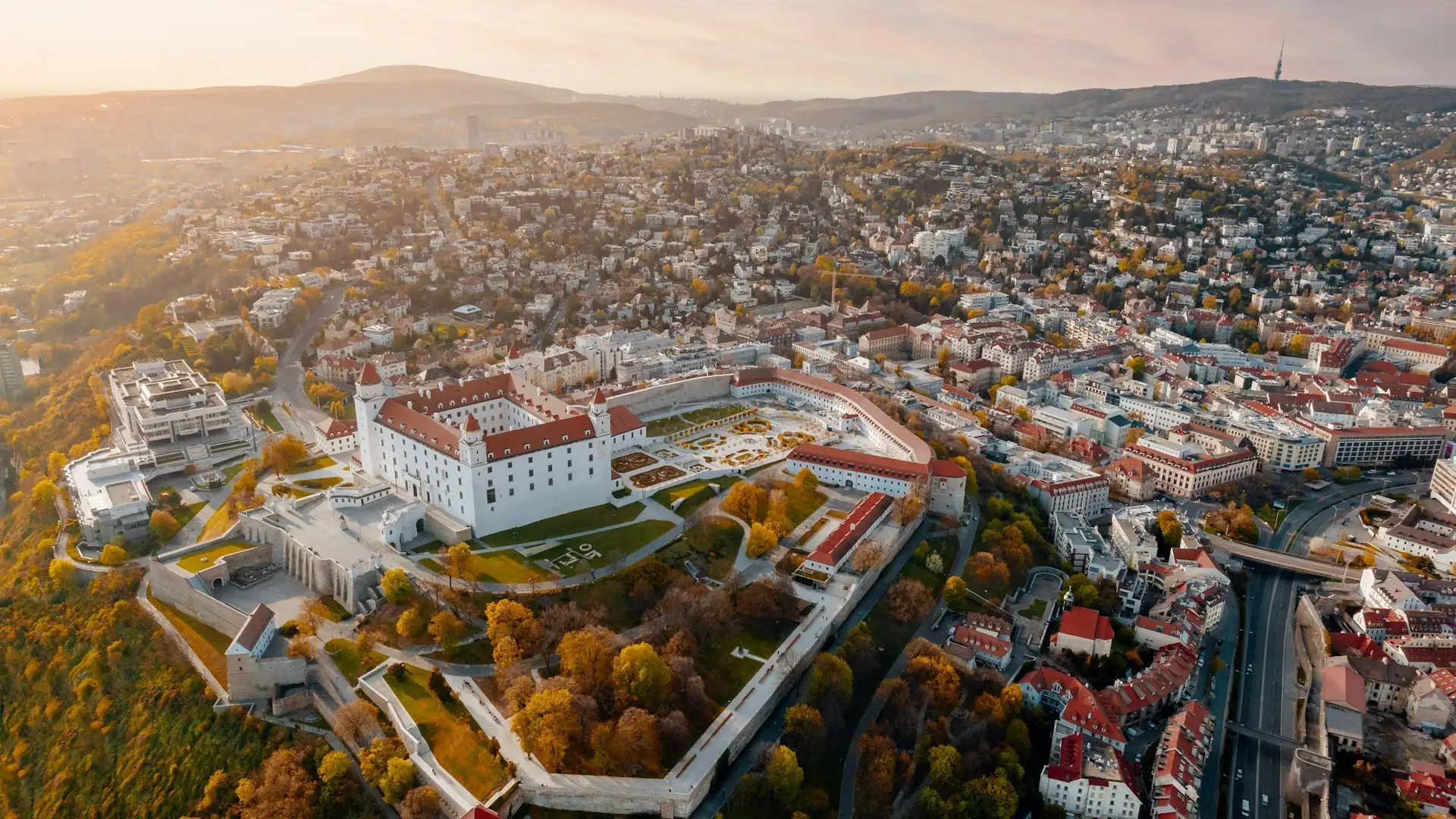
Most people arrive in Slovakia by accident. They booked Prague, someone mentioned Bratislava is only an hour away by train, they spent a weekend, and they came back the following year on purpose. That's the standard Slovakia story, and it keeps repeating because the country consistently surprises people who come in with low expectations.
The country is small, about the size of Ireland, and compact in a way that actually works in your favor. In a single week you can walk the old town of Bratislava in the morning, be on a chairlift in the High Tatras by afternoon, sleep in a medieval mining town that evening, and visit a fairytale castle the next day. Slovakia separated from the Czech Republic in 1993 in what everyone calls the Velvet Divorce, and the two countries have developed distinct identities since: Czech Republic got the reputation, Slovakia got the mountains, the caves, and 180 castles.
The honest complications
Bratislava is genuinely compact and can feel thin after two days if you're used to capital cities with more metropolitan weight. The country isn't set up for visitors who want everything handed to them; some of the most rewarding places, Banská Štiavnica, Vlkolínec, the Slovak Karst, require planning, regional buses, and a certain tolerance for things not being immediately obvious. That's also exactly what makes Slovakia worth it.
A History Worth Knowing
Slovakia's history is largely the story of a people who spent centuries as part of someone else's empire and spent the 20th century finally sorting that out. The earliest major Slavic state in the region was Great Moravia, flourishing in the 9th century; in 863, Byzantine missionaries Cyril and Methodius arrived from Thessaloniki and created the Glagolitic script to write down the Slavic language, an alphabet that became the ancestor of Cyrillic.
- 863
Cyril & Methodius arrive. Byzantine missionaries create the first Slavic literary language, the ancestor of Cyrillic script.
- 907
Kingdom of Hungary. Great Moravia falls; Slovakia becomes part of the Hungarian Kingdom for the next thousand years.
- 1536-1783
Bratislava as capital. Bratislava (Pozsony) serves as the capital of the Kingdom of Hungary while the Ottomans hold Budapest.
- 1843
Standard Slovak codified. Ľudovít Štúr standardizes written Slovak, a unifying force for national identity.
- 1918
Czechoslovakia founded. After WWI, Czechs and Slovaks join in one republic.
- 1989
Velvet Revolution. Communist rule ends peacefully; crowds in Bratislava's SNP Square jingle keys in protest.
- 1993
The Velvet Divorce. Slovakia becomes an independent republic on January 1, a negotiated split with no fighting or referendum.
Read the full history: the Hungarian centuries, WWII reckoning, and EU accession
The thousand years under the Hungarian Kingdom weren't straightforward colonial subjugation; Slovak towns had considerable autonomy at various points, and the coronations of Hungarian monarchs happened in St. Martin's Cathedral in Bratislava's old town, the coronation footprints still visible in the pavement today. The 19th century brought Slovak national awakening, with intellectuals like Ľudovít Štúr codifying standard written Slovak in the 1840s and the national poem Mor ho!, written in 1846, still memorized by Slovak schoolchildren.
WWII brought a separate Slovak State that collaborated with Nazi Germany, a period Slovaks reckon with honestly in museums and public discourse, before communist Czechoslovakia joined the Soviet bloc after 1945 until the Velvet Revolution of 1989. Slovakia joined NATO and the EU in 2004 and adopted the euro in 2009, developing a strong manufacturing base, Volkswagen, Kia and Stellantis all have major plants here, and a cultural identity that feels increasingly comfortable with itself.
Top Destinations
Slovakia is compact enough that you can genuinely see the capital, a mountain range, two major castles, and a UNESCO-listed mining town in ten days without feeling rushed. The country runs roughly east to west, and a single route from Bratislava through central Slovakia to the Tatras and then Košice in the east covers most of what makes the country exceptional.
Bratislava
Europe's only capital bordering two other countries, Austria and Hungary both within half an hour. The old town is compact, genuinely walkable in a morning, and cluttered with outdoor cafes by afternoon. Hviezdoslavovo námestie square on a warm evening, opera house at one end and restaurants at the other, is one of Central Europe's better places to sit and watch time pass. Plan two days, three if combining with a day trip to Devin Castle, 9km west along the Danube.
High Tatras
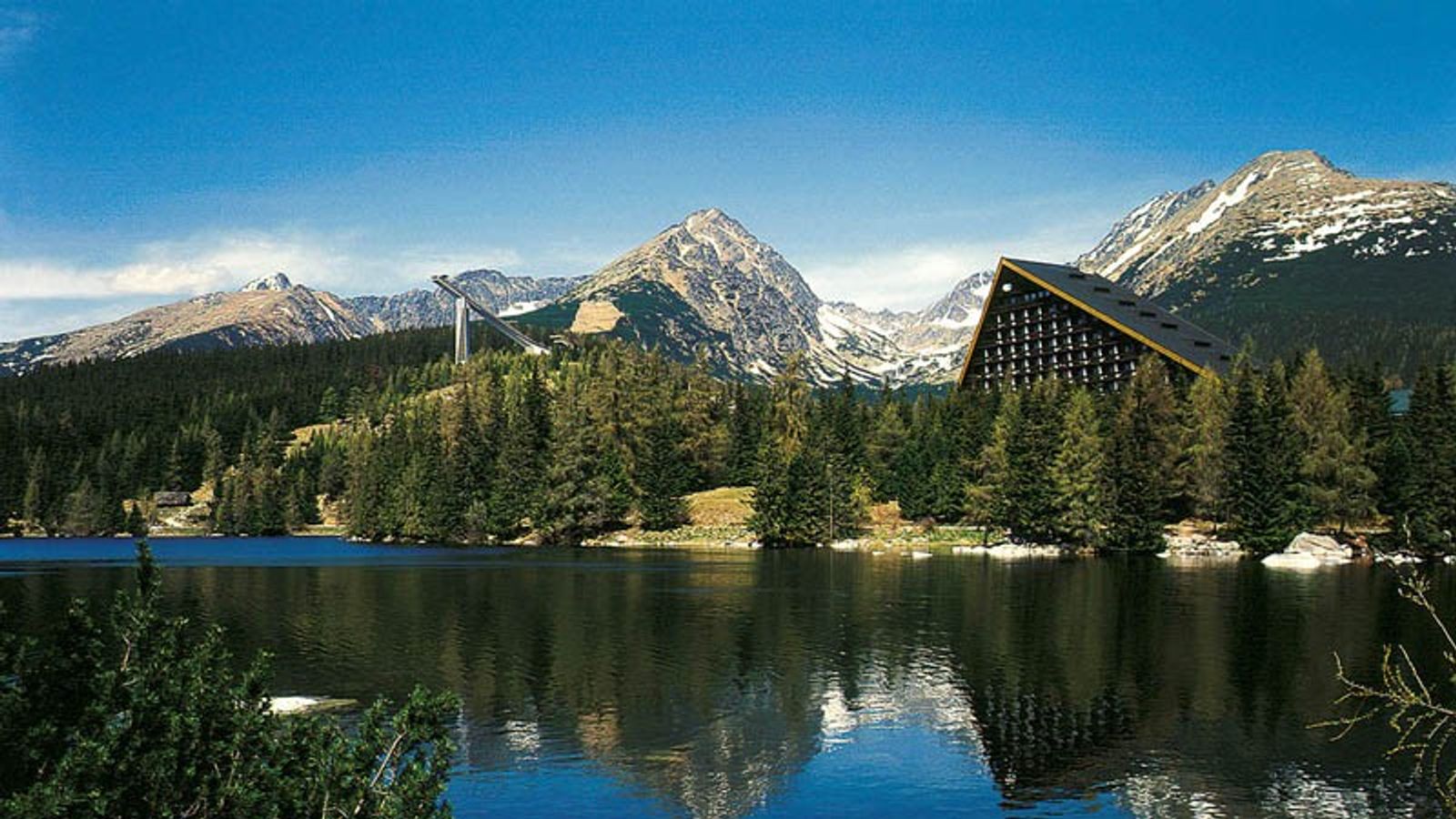
The only truly alpine mountain range in Central Europe outside the Alps themselves. Peaks top 2,600 meters, glacial lakes sit at altitude in basins of grey rock, and the trails are well-marked enough that you don't need a guide for most popular routes. Štrbské Pleso has a high-altitude lake that freezes solid in winter and reflects the peaks on still summer mornings. Poprad is the gateway town, with direct rail connections from Bratislava. Allow at least two full days.
Bojnice Castle
Slovakia's most photographed castle, with neo-Gothic turrets above a thermal spring looking like a children's book illustration made real. In late April and early May, the International Festival of Ghosts and Spirits fills the grounds with theatrical absurdity.
Spiš Castle
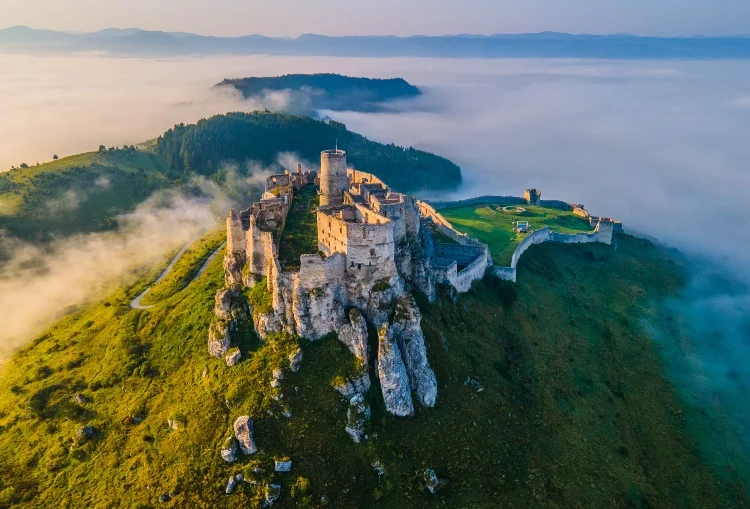
One of the largest castle complexes in Central Europe, on a limestone ridge in eastern Slovakia, a ruin since a 1780 fire and UNESCO-listed. The surrounding area, including Spišská Kapitula and the old town of Levoča, forms one of Europe's most intact medieval landscapes.
Banská Štiavnica
A silver mining town once one of the most important cities in the Habsburg Empire, now a UNESCO-listed time capsule with a Baroque townscape and an underground mining museum going into actual 18th-century mine shafts. Stay the night for the wine cellars and near-total absence of tourist crowds after day visitors leave.
Slovak Karst Caves
One of the highest concentrations of caves in Europe. Domica Cave is the largest, crossing into Hungary underground; Ochtinská Aragonite Cave contains formations found in only three places on earth. Both UNESCO-listed.
Culture & Etiquette
Slovaks tend toward reserve with strangers and warmth with people they know, which means the first conversation can feel cooler than expected and the second feels like you've been friends for ten years. Folk culture runs deeper here than in most Central European countries and is actively maintained, not preserved in a museum sense; villages in the Orava region still hold folk festivals with traditional dress and music that are genuine community events.
Do
- Greet shopkeepers when you enter. "Dobrý deň," "Ďakujem" when you leave. Basic courtesy that goes further than expected in smaller towns.
- Bring a small gift when invited to a home. Flowers in odd numbers, wine or chocolates; being invited to a Slovak home isn't casual.
- Toast properly. "Na zdravie" before the first drink, with eye contact when clinking glasses.
- Try a few words of Slovak. Even mangled pronunciation is received warmly, and it's noticeably distinct from Czech to Slovak ears.
Don't
- Confuse Slovakia with Slovenia. Different countries in different parts of Europe; this happens constantly and Slovaks are politely tired of it.
- Call it Czechoslovakia. That country ended in 1993; Slovakia has been independent for over 30 years.
- Assume everything works like Western Europe. Rural bus schedules and museum opening days reward checking twice; verify before traveling specifically to see something.
- Dismiss Slovak as "just Czech." Related but distinct languages, and Slovaks are particular about the difference.
Deeper culture: folk music, Christmas markets, and religious customs
Folk music. Especially from the Horehronie and Záhorie regions, involving string ensembles, the fujara (a 2-meter bass flute, UNESCO-listed as intangible heritage), and striking vocal harmonies. Folk festivals in July and August, particularly in Východná village, are the real thing.
Christmas markets. Bratislava's main square market, late November to early January, is consistently rated among Europe's best; mulled wine (varené víno) comes in ceramic mugs you keep as a deposit, and trdelník pastry grilled on a cylinder is the correct thing to eat with your first mulled wine.
Religious customs. Slovakia is predominantly Catholic and practices actively; Easter Monday involves young men sprinkling women with water or tapping them with willow twigs, representing health and fertility, a real tradition in villages rather than a spectator event.
Food & Drink
Slovak cuisine is hearty Central European cooking with enough regional variation to stay interesting. Bratislava has developed an actual restaurant scene over the past decade, chefs applying modern technique to Slovak ingredients, and the wine is better than its reputation suggests.
Bryndzové Halušky €6-9
The national dish: potato dumplings, sheep cheese, bacon. Order it at a koliba, a traditional mountain inn with exposed timber beams and a fireplace, ideally after a morning hike, not before an afternoon one.
Game & Grilled Meats
Wild boar goulash, deer medallions, pheasant, appearing on menus across central and eastern Slovakia from October onward. Best in a hunting lodge in the Low Tatras with bread dumplings and a dark Zlatý Bažant beer.
Kapustnica
Sauerkraut soup with sausage, dried mushrooms and cream, the traditional Christmas Eve dish, found in traditional restaurants October through March. Warms from the inside in a way layering can't replicate.
Lokše & Šúľance
Thin potato pancakes, savory with goose fat and cabbage or sweet with poppy seed filling, sold at markets and Christmas stalls; šúľance are potato noodles that function as dessert.
Slovak Wine
The Small Carpathian region produces Riesling, Grüner Veltliner and Welschriesling at quality that would cost twice as much with an Austrian label; the Tokaj region overlaps with Hungary's famous appellation for excellent late-harvest sweet wines.
Beer & Spirits
Zlatý Bažant is the standard lager and genuinely good; Bratislava's craft beer scene has expanded with Golem Brewery and Urpiner. Slivovica, plum brandy, is the national spirit.
When to Go & Itineraries
May and June are the sweet spot: Tatra trails clear of snow at lower elevations, castle landscapes in full green, and the July-August crowds still weeks away. Autumn, September and October, runs a close second with mountain foliage and harvest festivals; December is worth considering for Bratislava's Christmas market specifically.
All seasons compared, with temperatures
| Season | Verdict | Temps | Notes |
|---|---|---|---|
| May-Jun | Best | 12-22°C | Hiking trails clear, castles crowd-free, Tatras at their greenest |
| Sep-Oct | Best | 8-18°C | Forest foliage, grape harvest, cooler temperatures ideal for castle walks |
| Dec-Feb | Good | -3-5°C | Bratislava Christmas market excellent; Jasná ski resort is Central Europe's best outside Austria |
| Jul-Aug | Think twice | 18-28°C | Old town gets crowded; Tatras trails busy weekends; mountain accommodation books months ahead |
Bratislava averages. High Tatras peaks run 10-15°C colder year-round; pack layers regardless of season.
Itineraries
One week covers Slovakia's highlights if you keep moving; two weeks gives time to slow down in places that reward it. Slovakia combines well with Vienna (1 hour), Budapest (2.5 hours) or Prague (4 hours by bus).
- Days 1-2
Bratislava. Old town in the morning, castle in the afternoon, Hviezdoslavovo námestie for dinner; day two Devin Castle and an old town wine bar.
- Days 3-4
Bojnice Castle & Banská Štiavnica. Bojnice by train via Prievidza, one night nearby, continue to the mining town by bus for a mandatory overnight.
- Days 5-7
High Tatras. Train to Poprad; Štrbské Pleso, a serious hike toward Rysy or the Velická Valley, Ždiar village and a thermal bath before departure.
- Days 1-3
Bratislava + wine region. Two full days, day trip to Modra for cellar visits, Červený Kameň Castle, evening tasting in Pezinok.
- Days 4-5
Piešťany + Bojnice. One night for the thermal spa experience, then north to Bojnice Castle.
- Days 6-7
Banská Štiavnica + Banská Bystrica. Underground mine museum, Baroque square, and a day trip to the 1944 Slovak National Uprising museum.
- Days 8-11
High Tatras. Rysy peak, the cog railway to Tatranská Lomnica, a rest day in Ždiar for folk architecture.
- Days 12-14
Spiš region + Košice. Spiš Castle, Levoča's medieval walls, then Košice for a final day in Slovakia's most underrated city.
Getting there & around
Slovakia has a functional national rail network connecting major cities, but it's slow; buses (RegioJet and FlixBus) are often faster and more direct. For rural areas and castles off the rail line, a rental car transforms your options.
All transport options with prices: rail, buses, car rental
| Option | Price | Notes |
|---|---|---|
| National rail (ŽSR) | €5-25/route | Connects Bratislava to Žilina, Poprad, Košice; reliable but slow, scenic through mountain regions. |
| RegioJet/FlixBus | €5-20/route | Faster than trains on many intercity routes, comfortable coaches with wifi. |
| Car rental | €30-60/day | Essential for reaching Bojnice, Oravský Castle, Slovak Karst caves and rural folk villages. |
| Tatras electric railway | €3-8/journey | Narrow-gauge railway connecting Poprad to the High Tatras resort towns. |
Bratislava tip: Vienna Airport is closer to central Bratislava than Bratislava Airport itself; the Blaguss or Slovak Lines express bus covers the route in about an hour for around €8. GetTransfer offers fixed-price transfers.
Where to stay
City hotels
Bratislava has solid mid-range options in and near the old town; Košice has good value business hotels along Hlavná Street.
Mountain chalets
Horská chata huts in the High Tatras, from basic shared rooms to full-service mountain restaurants; Téryho Chalet at 2,015m is the most atmospheric, book months ahead for July and August.
Penzión (guesthouse)
Family-run guesthouses, the standard option in small towns and villages, usually including breakfast and personal, opinionated local advice.
Wellness & spa hotels
Piešťany has purpose-built spa hotels with thermal pool access included; Tatralandia near Liptovský Mikuláš is one of Central Europe's largest waterpark and thermal complexes.
Budget Planning
Slovakia is one of the best value countries in the EU for travelers coming from Western Europe or North America. Restaurant mains cost €7-14, a night in a decent guesthouse in a small town runs €35-55, and the difference against Austria or Switzerland next door is dramatic without sacrificing quality.
- Hostel or mountain hut dorm
- Lunch set menu (dvojchodové menu)
- Self-catering dinners from supermarkets
- Train and bus for all transport
- Penzión or 3-star hotel
- Restaurant lunch and dinner
- Occasional rental car for castle days
- Paid attractions and cave entries
- 4-star hotel or spa resort
- Full restaurant dining, Slovak wine
- Rental car throughout
- Spa treatments and private guided tours
Quick reference prices: food, transport, attractions
| Espresso | €1.20-1.80 |
| Slovak beer, 0.5L | €1.50-2.50 |
| Bryndzové halušky | €6-9 |
| Restaurant main | €8-14 |
| Bratislava-Košice bus | €12-18 |
| Castle entry, most | €5-10 |
| Budget hotel/penzión | €35-65 |
| Mountain hut dorm | €20-35 |
Prices reflect July 2026 research and drift over time. Treat them as a planning baseline, not a quote.
Visa & Entry
Slovakia is a full Schengen Area member. EU citizens travel with just a national ID card; citizens of the US, UK, Canada, Australia, New Zealand and most other Western countries can enter visa-free for up to 90 days within any 180-day period under Schengen rules, shared across the entire zone rather than just Slovakia.
✓ Valid passport or EU ID
EU/EEA citizens can travel with a national ID card; all others need a passport valid for the duration of the stay.
✓ ETIAS authorization
Required for visa-exempt non-EU nationals; apply online at the official ETIAS website before travel.
✓ Return or onward ticket
Border officers may ask for proof you plan to leave Schengen within 90 days.
⚠ Highway vignette, if driving
Required for Slovak motorways, buy online or at fuel stations near the border; a 10-day vignette costs around €12.
| Slovakia | Czech Republic | |
|---|---|---|
| Crowds | Uncrowded outside Bratislava peak season | Prague sees heavy year-round tourist volume |
| Signature draw | High Tatras, 180+ castles, thermal spas | Prague's architecture, Czech beer culture |
| Daily budget | €40-130, noticeably cheaper | Comparable to slightly pricier, especially Prague |
| Shared history | Split peacefully in the 1993 Velvet Divorce | Same origin state until 1993 |
Safety, Solo Women & Family
Slovakia is a safe country by any European measure. Violent crime against tourists is rare, and Bratislava's old town is walkable at any reasonable hour. The main practical risks are the kind any mountain country presents: weather changing rapidly above the treeline, trails requiring more scrambling in practice than a map suggests, and remote areas where a twisted ankle is more serious than it would be in the city.
Mountain weather
Weather in the High Tatras can deteriorate extremely quickly; cloud cover, lightning and afternoon thunderstorms are serious risks above the treeline June through September. Start hikes early and descend before noon on longer routes.
Wildlife
Brown bears are present in the Low Tatras and Malá Fatra mountains, rarely dangerous to hiking groups on marked trails, but making noise in dense forest is recommended.
Ticks
Tick-borne encephalitis risk exists in forested areas; use DEET-based repellent, check after hikes, and consider TBE vaccination for extended forest time.
Urban safety, solo women, and road safety
Urban safety: Bratislava and Košice are safe by European standards; petty theft in tourist-heavy areas around the old town and transport hubs is the main concern.
Solo women: comfortable for solo female travelers; Bratislava's old town has no areas to avoid at night, and mountain hiking solo is fine on busy trails, though letting someone know your route matters on less-frequented terrain.
Road safety: Slovak roads are generally good; blood alcohol limit for driving is zero tolerance, and winter tires are legally mandated November 15 to March 31 in mountain areas.
Emergency numbers
Embassy contacts in Bratislava
Most embassies are in the Bratislava city center and Staré Mesto district.
- USA
- +421-2-5443-3338
- UK
- +421-2-5998-2000
- Germany
- +421-2-5920-4400
- France
- +421-2-5934-7111
- Canada
- +421-2-5920-4031
Mountain rescue: download the HZS mountain rescue app before any High or Low Tatras hike; it sends your GPS location directly to Slovak Mountain Rescue in an emergency.
Slovakia FAQ
Do I need a visa for Slovakia?
No visa is needed for most Western nationalities for stays up to 90 days, since Slovakia is a full Schengen member. ETIAS pre-registration is required for non-EU visitors from visa-exempt countries.
Is Slovakia the same as Slovenia?
No, they are entirely different countries. Slovakia is in Central Europe, northeast of Austria, bordering the Czech Republic, Poland, Ukraine and Hungary. Slovenia is in southeastern Europe, southwest of Austria, bordering Italy and Croatia. Confusing the two is a common mistake Slovaks are politely tired of.
How many days do you need in Slovakia?
One week covers the highlights: Bratislava, one or two major castles, and the High Tatras. Two weeks allows a slower pace with Banská Štiavnica, the Slovak Karst caves, and Košice added to the circuit.
What is the national dish of Slovakia?
Bryndzové halušky: soft potato dumplings tossed in sheep's bryndza cheese and topped with fried bacon. Best eaten at a koliba, a traditional mountain inn, ideally after a morning hike.
Is Slovakia cheap to visit?
Yes, one of the best value countries in the EU for travelers from Western Europe or North America. Restaurant mains run €8-14, a decent guesthouse room €35-65 a night, significantly cheaper than neighboring Austria or Switzerland.
What are the High Tatras?
The only truly alpine mountain range in Central Europe outside the Alps, with peaks topping 2,600 meters and over 600 kilometers of marked trails. Štrbské Pleso and Poprad are the main gateway towns for hiking and skiing.
How do I get from Vienna to Bratislava?
Vienna is about an hour from Bratislava by bus or train, and Vienna Airport is often closer and cheaper to fly into than Bratislava Airport itself. The Twin City Liner catamaran also runs the Danube route in about 75 minutes, seasonally.
What happened in the Velvet Divorce?
On January 1, 1993, Czechoslovakia peacefully split into the Czech Republic and Slovakia through a negotiated political agreement, without a referendum or violence, a rare example of a clean state separation.
Are there bears in Slovakia?
Yes, brown bears live in the Low Tatras and Malá Fatra mountains. They rarely present danger to hikers on marked trails in groups, but making noise while hiking in dense forest is recommended as standard bear-country practice.
Is Slovakia safe to visit?
Yes, a safe country by any European measure, with violent crime against tourists rare and Bratislava's old town walkable at any reasonable hour. The main practical risks are mountain-related: rapidly changing weather, steep terrain, and, in some regions, brown bears.
The Country That Rewards the Curious
Most people who spend real time in Slovakia come back with the same observation: they expected less and found more. The castles are more numerous and more dramatic than the tourist industry has managed to convey. The mountains are serious mountains. The food is better than its reputation. The people, once past the initial reserve, are generous and quietly proud of a place they know most visitors underestimate.
Slovaks have a word, výdrž, endurance, perseverance, that they use to describe a particular kind of quiet determination. It applies to hiking a difficult summit, navigating a bureaucratic problem, or simply getting through a hard winter. Spend enough time here and you'll understand why the word comes up often. There's something in the landscape that requires it, and something in the people that has it.