
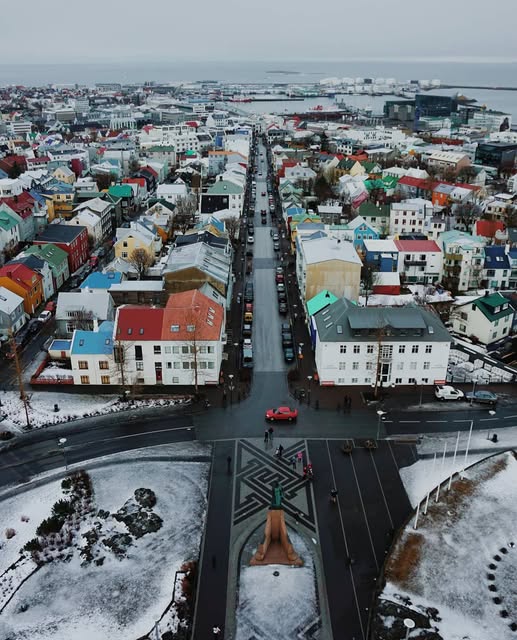
A small capital that punches far above its size
Reykjavik is home to a little over a third of Iceland's entire population, and it shows in the scale: this is a capital you can walk across in under half an hour, with a skyline low enough that Hallgrímskirkja's spire is visible from most of downtown. What it lacks in size it makes up for with a disproportionate concentration of good, if expensive, restaurants, a genuinely lively live-music and bar scene for a city this small, and its position as the near-total gateway to everything else in the country.
Most visitors treat Reykjavik as a launch pad rather than a destination in itself, and there's some truth to that: the Golden Circle, the South Coast and the Blue Lagoon all pull day-trippers out of the city constantly. But the city holds up well on its own terms for a day or two, especially around the Old Harbour and the geothermal pools that locals, not tourists, actually use daily.
The honest complications
Reykjavik is genuinely expensive, on par with or above Oslo and Zurich for food and drink, and a casual night out for two with dinner and a couple of drinks can easily clear $150. Weather changes fast even within the city, wind and rain can turn a pleasant walk unpleasant within twenty minutes, so pack real layers regardless of season. And because so much of the country's tourism industry funnels through here, July and August see the city's modest hotel inventory book out weeks ahead; if you're planning a Golden Circle or South Coast day trip from the city, book the tour or rental car well before you land.
A walkable capital, three areas that matter
Reykjavik rewards staying central. Nearly everything a first-time visitor wants sits inside the 101 postal code, and the choice of base comes down mostly to how close you want to be to the harbour versus the main shopping street.
101 Downtown & Laugavegur
The "101" postal code gives downtown its informal name, and it's the compact core built around Laugavegur, the main shopping and nightlife street, and Austurvöllur square in front of the Parliament House. This is where most restaurants, bars and boutique shops cluster, and it's an easy base for reaching everything else in the city on foot.
The Old Harbour
At the northern edge of downtown where the city meets Faxaflói Bay, the Old Harbour is a working fishing harbour turned waterfront dining and tour hub: whale watching boats depart from here in summer, alongside some of the city's best casual seafood. Harpa concert hall's glass facade anchors the harbour's eastern end.
Vesturbær & the Pond (T&jacute;örnin)
West of downtown, past T&jacute;örnin, the pond that freezes over for skating in winter and hosts nesting birds in summer, Vesturbær is a quieter, more residential slice of the city with its own well-loved local pool, Vesturbæjarlaug. A pleasant twenty-minute walk from Laugavegur rather than a separate base for most visitors.
From a design hotel on the harbour to a converted biscuit factory
Reykjavik's hotel inventory is small relative to demand, especially in summer, and prices run high across every bracket. These picks cover the range, from the city's most talked-about design opening to the hostel that consistently wins on value.
At the top, The Reykjavík EDITION sits directly on the Old Harbour with a design-forward interior and the city's best waterfront views, from around $450 a night. In the boutique bracket, Apotek Hotel, inside a beautifully restored early-20th-century pharmacy building on Austurstræti in the heart of downtown, pairs original apothecary details with a contemporary interior, from roughly $250-320.
In the mid-range, Canopy by Hilton Reykjavík City Centre, about 400 metres from the Sun Voyager sculpture in the 101 district, is a reliable, well-located chain option from around $220-280.
At the budget end, KEX Hostel, housed in a former biscuit factory on the Old Harbour waterfront, is the pick most repeat visitors mention first: industrial-chic interiors, a lively bar and restaurant, and dorm beds that make Reykjavik's high costs briefly manageable, from around $50-70 a night.
A hot dog stand from 1937, and a Michelin-recommended tasting menu
Reykjavik eats well but not cheaply. The city's small size means its best-known spots are genuinely known by everyone, tourists and locals both, and the range runs from an unassuming harbourside hot dog cart to New Nordic tasting menus that hold their own against much larger European capitals.
Bæjarins Beztu Pylsur
Bæjarins Beztu Pylsur, a hot dog stand near the harbour operating since 1937, is Reykjavik's most enduring food landmark: a lamb, pork and beef sausage served "with everything," ketchup, sweet mustard, remoulade, raw and crispy fried onion. Former US President Bill Clinton is among its famous past customers, and the queue moves fast even at peak times.
Seægreifinn (the Sea Baron)
Sægreifinn, known to English speakers as the Sea Baron, started as a dockside fish shop where a retired fisherman began grilling fish for customers on request; the lobster soup that grew out of that habit is now a genuine city institution, thick, cream-based and lightly spiced. Rustic, informal, and right on the working pier.
Dill
Dill, chef Gunnar Karl Gíslason's original New Nordic restaurant and Iceland's best-known fine-dining address, builds its tasting menu almost exclusively from Icelandic ingredients in contemporary formats. Book well ahead, especially in summer.
Messinn
Messinn serves fresh fish, cod, haddock, arctic char, pan-fried and brought straight to the table in the cast-iron skillet it was cooked in, with seasonal sides. Informal, generous portions, without a fine-dining price tag attached.
A church spire, a sculpture, a concert hall and a harbour
Reykjavik's own sights are compact enough to cover properly in a day and a half, leaving the rest of a visit for day trips or the geothermal pools locals actually use.
Hallgrímskirkja
Hallgrímskirkja, Iceland's largest church and, at 74.5 metres, one of the tallest buildings in the country, dominates the Reykjavik skyline from almost every angle. Its distinctive facade, designed to evoke basalt lava columns, took over 40 years to complete. The tower is open to visitors for 1,400 ISK (adults) or 200 ISK (children 7-16), and the elevator ride up delivers the best panoramic view of the city and the surrounding bay.
Sun Voyager & the waterfront
The Sun Voyager (Sólfar), a gleaming stainless-steel sculpture resembling a Viking ship's skeleton, sits on the shoreline promenade between downtown and Harpa, free to visit at any hour and one of the most photographed spots in the city, especially at sunset in summer or under aurora in winter.
Harpa Concert Hall
Harpa, the glass-fronted concert hall on the harbour with a geometric facade inspired by Iceland's basalt columns, is free to enter and wander through even without a ticket to a performance; guided architecture tours run from around $35 for those who want the full story behind the building.
Perlan
Perlan, a glass-domed museum built atop the city's hot water storage tanks, houses an indoor ice cave exhibit, a planetarium show and an observation deck with 360-degree views, all-access tickets run from around $55 for adults, $38 for children 6-17.
The Old Harbour & whale watching
Whale watching tours depart from the Old Harbour spring through autumn, with minke whales, white-beaked dolphins and harbour porpoises the most commonly sighted, and sightings rates approaching certainty in peak summer. Tours run $91-309 depending on boat type and length. The harbour itself is worth a slow wander regardless, with cafes and seafood restaurants overlooking the working docks.
One, two or three days, planned street by street
Two full days cover Reykjavik itself properly. A third day is really the Golden Circle, and worth adding for nearly everyone who makes it this far north.
- Morning
Hallgrímskirkja and Laugavegur. The church tower for the view, then a wander down the main shopping street.
- Midday
Bæjarins Beztu Pylsur, then the Sun Voyager and the waterfront promenade toward Harpa.
- Afternoon
Old Harbour. A wander around the docks, maybe a whale watching tour if the timing lines up.
- Evening
Dinner at Messinn or Sægreifinn, then a neighbourhood pool if you have energy left.
- Day 1
The one-day route: Hallgrímskirkja, Laugavegur, the Sun Voyager, Old Harbour, dinner.
- Day 2 morning
Perlan and Harpa. The ice cave exhibit and observation deck, then Harpa's public spaces.
- Day 2 afternoon
Vesturbær and T&jacute;örnin. A slower walk west of downtown, ending at a neighbourhood pool.
- Day 2 evening
Dill, if you booked ahead, or a livelier Laugavegur dinner and bar crawl.
- Days 1-2
The two-day route above, at a gentler pace.
- Day 3
The Golden Circle. Self-drive or organized tour to Thíngvellir, Geysir and Gullfoss, back in Reykjavik by evening, ideally with a Blue Lagoon or Sky Lagoon stop worked in.
Walkable in the city, essential to rent a car beyond it
Keflavík International Airport (KEF) sits about 45km southwest of the city, the country's near-total gateway for international arrivals. The Flybus runs to the BSÍ bus terminal downtown in about 45 minutes for roughly 3,999 ISK one-way, departing 30-60 minutes after each flight; a cheaper public bus (route 55) covers the same route for about 2,400 ISK. Neither Uber nor Lyft operates in Iceland; local taxi firm Hreyfill covers the city and airport runs for visitors who need one.
The city centre itself is entirely walkable, and that's the best way to see it: Hallgrímskirkja, Laugavegur, the Sun Voyager and the Old Harbour are all within fifteen to twenty minutes of each other on foot. A rental car is unnecessary for the city but close to essential for the Golden Circle, South Coast or any other day trip, since public transport outside Reykjavik is minimal.
Best time to visit
Reykjavik works as a city break year-round. June through August brings near-24-hour daylight and the mildest weather but the highest prices and busiest hotels; September through March offers real odds at the Northern Lights and noticeably lower prices, with as little as 4-5 hours of daylight in December. Iceland does not observe daylight saving time.
One of Europe's more expensive capital cities
Reykjavik is expensive by any European benchmark, on par with Oslo or Zurich for food and drink. The biggest cost lever is accommodation and rental cars; self-catering even partially is the most effective way to bring daily costs down.
- Hostel dorm bed $50-70
- Self-catered meals + pylsur
- Walking plus the occasional bus fare
- Free sights: Sun Voyager, Old Harbour, church exterior
- Boutique or chain hotel $220-320
- Restaurant dinners $30-50/person
- Rental car for a Golden Circle day trip
- Perlan or Hallgrímskirkja tower entry
- The Reykjavík EDITION from ~$450
- Tasting menu at Dill
- Private Golden Circle or South Coast tour
- Whale watching or Northern Lights charter
About as safe as a capital city gets
Reykjavik is safe for tourists, full stop. Violent crime against visitors is essentially unheard of, the city is comfortable to walk at any hour of the day or night, and there is no neighbourhood in the centre that warrants particular caution. The practical risks in and around the city are weather and road conditions on day trips, not crime.
The few things actually worth knowing: weather changes fast, even within the city, so pack a real rain layer regardless of season; Friday and Saturday nightlife downtown gets loud and crowded on Laugavegur in the small hours, ordinary big-night-out awareness applies rather than any specific danger; and day trip driving is where the real risk sits, check road.is and vedur.is before any Golden Circle or South Coast drive and never push through a weather warning. Reykjavik is an excellent choice for solo female travellers, consistently rated among the best cities in the world on that measure.
Emergency numbers match the rest of Iceland: 112 covers police, ambulance and fire, with English-speaking operators, and the free 112 Iceland app lets you register your location before any remote day trip.
The Golden Circle, and everything else within reach
Reykjavik's position in the southwest corner of the island makes it a genuinely strong base for day trips, more so than almost any other capital relative to its country's highlights.
The Golden Circle
Thíngvellir National Park, the Geysir geothermal field with its reliably active Strokkur, and Gullfoss waterfall make up Iceland's most-visited single route, entirely doable as a self-drive or organized tour day trip from the city.
The South Coast
Seljalandsfoss, Skógafoss and the black sand beach at Reynisfjara near Vík pack an extraordinary run of landmarks into a single road, feasible as a long day trip if you start early, roughly 7am, and stay disciplined about time at each stop.
Blue Lagoon & Sky Lagoon
The Blue Lagoon, near Grindavík, remains open with extended summer hours as of this writing, though its schedule can shift on short notice given ongoing volcanic activity on the Reykjanes Peninsula; Sky Lagoon, a shorter drive from the city itself with an infinity-edge sea view, is many locals' preferred alternative and isn't affected by the same closures. Book either well ahead in summer.
Snæfellsnes Peninsula
Kirkjufell mountain, black and golden beaches and the Snæfellsjökull glacier volcano make this "Iceland in miniature" peninsula a demanding but rewarding full-day trip for visitors with more than a couple of days in the region.
Reykjavik FAQ
Is Reykjavik safe for tourists?
Yes, extremely. Violent crime against visitors is essentially unheard of and Reykjavik is comfortable to walk at any hour. The practical risks in and around the city are weather and road conditions on day trips, not crime.
How many days do I need in Reykjavik?
Two full days covers the city itself well: Hallgrímskirkja, the Old Harbour and downtown on one day, museums and neighbourhood exploring on the other. Most visitors add at least one more day for the Golden Circle.
How much does Reykjavik cost per day?
Budget travellers manage on $130-170 a day with hostel beds and some self-catering; mid-range runs $250-350. Reykjavik is one of the more expensive capital cities in Europe.
When is the best time to visit Reykjavik?
June to August for near-24-hour daylight and the mildest weather, or September to March for a real chance at the Northern Lights, with much shorter days. Reykjavik works as a city break year-round.
What is the 101 district?
101 is the postal code that gives downtown Reykjavik its informal name: the compact core around Laugavegur, Austurvöllur square and the Old Harbour, and the best base for a first visit.
Do I need a car to visit Reykjavik?
No, not for the city itself, which is entirely walkable. You do need a rental car or an organized tour for the Golden Circle, South Coast and any other day trip beyond the capital.
How do I get from Keflavik airport to Reykjavik?
The Flybus runs from Keflavík International Airport (KEF) to the BSÍ bus terminal in about 45 minutes for roughly 3,999 ISK one-way, departing 30-60 minutes after each flight. A cheaper public bus (route 55) also covers the route.
What is the best area to stay in Reykjavik?
Downtown 101, around Laugavegur or the Old Harbour, for first-timers: central, walkable, and close to the best restaurants. Everything in the city centre is within a 15-20 minute walk.
Can I see the Northern Lights from Reykjavik?
Sometimes, on a clear, dark night away from streetlights, roughly late August through April. Most serious sightings involve a short drive or a dedicated night tour out of the city's light pollution.
Is Uber available in Reykjavik?
No, Uber does not operate in Iceland. Hreyfill and other local taxi companies, plus a small number of ride-hailing style apps, cover the same ground; the city centre itself is walkable enough that taxis are mainly for airport transfers and late-night trips.
What Stays With You
Reykjavik does not have the grandeur of a European capital ten times its size, and it isn't trying to. What it has is a church spire you can navigate by from almost anywhere, a hot dog stand that a former US president stopped at, and a harbour where whale watching boats and working fishing vessels share the same dock. It's a city built at a genuinely human scale, in a country that decided a very long time ago it didn't need to be bigger to matter.
Spend your last evening at a neighbourhood pool, not a tourist attraction, shoulder-deep in hot water with steam rising into cold air and Icelanders around you having completely ordinary conversations. It's the most honest version of the city, and the one most visitors wish they'd found on day one instead of day two.