
What You're Actually Dealing With
The Scams That Actually Catch People
Iceland's scam profile is almost entirely about rentals, insurance, and tour operators overpromising experiences that depend on weather they can't control. Nobody is going to pickpocket you. These are the ones that actually cost people money.
This is the one that costs visitors the most money. Basic rental rates look reasonable but include only minimal third-party liability. At the counter, you'll be offered a cascade of additional coverage: Collision Damage Waiver (CDW), Gravel Protection (GP), Sand and Ash Protection (SAAP), and Theft Protection. Declining them all leaves you exposed to excesses of 250,000-500,000 ISK on any damage. Some companies bundle coverage that your existing travel insurance or credit card already provides, charging you twice for the same protection.
- Before you book, check whether your travel insurance or credit card includes rental car CDW coverage in Iceland. Many premium cards do — read the fine print, because "Iceland" is sometimes excluded from volcanic or ash damage clauses.
- Sand and Ash Protection (SAAP) is worth considering if you're driving near Mýrdalsjökull, Katla, or the south coast where black sand storms are genuinely damaging. It's not a scam to add it — it just shouldn't be a surprise at the counter.
- At the counter, ask the agent to walk you through exactly what each optional coverage adds and what your baseline excess is without it. Write the numbers down. Read what you sign.
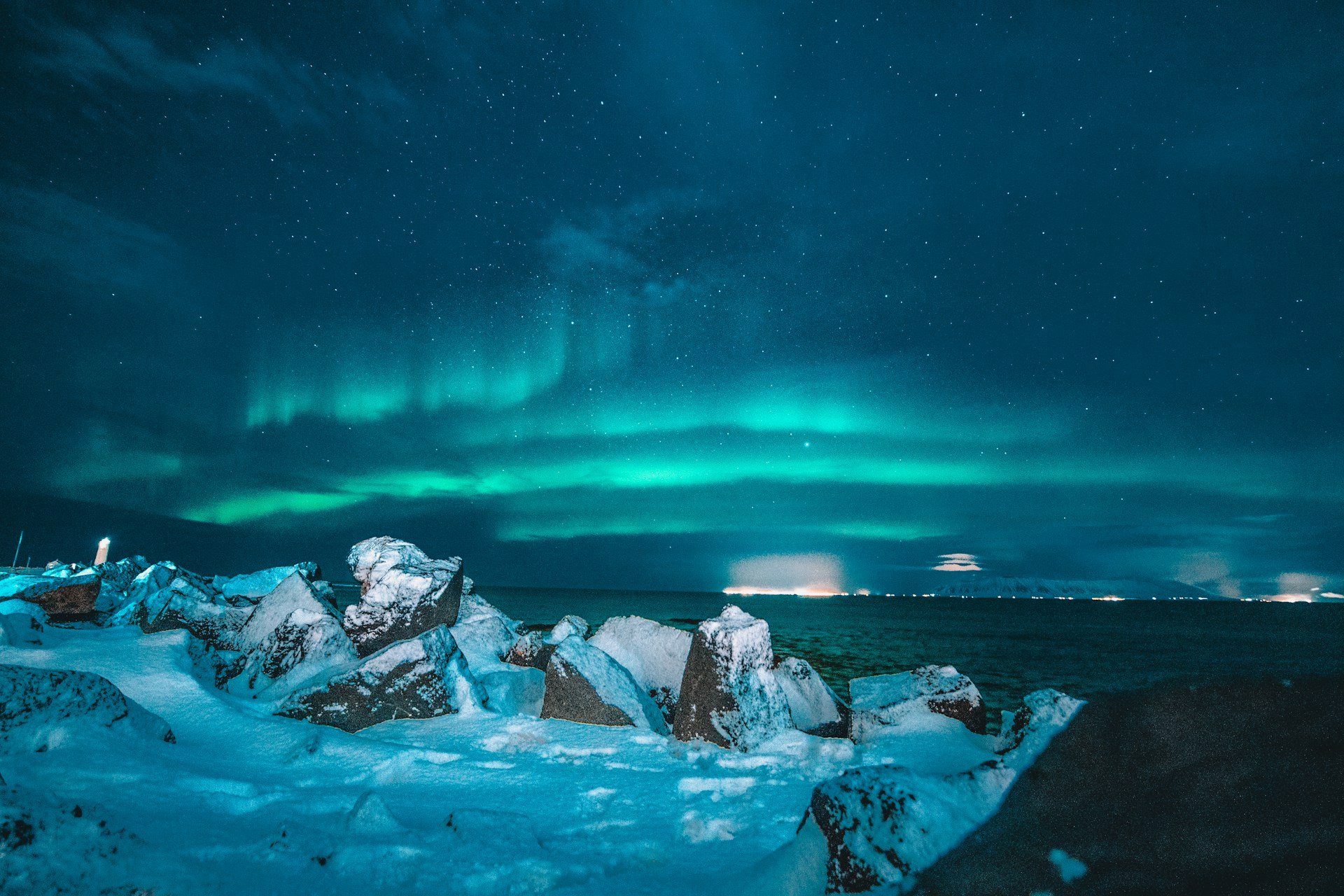
No tour operator can guarantee Northern Lights. No one. The aurora requires three things: darkness (unavailable May to August), clear skies (notoriously unpredictable in Iceland), and solar activity (forecasted but not controllable). Operators who imply you will see the lights are misleading you. What you're actually buying is a guided drive away from Reykjavik's light pollution on a cloudy night where the driver parks on a gravel road and you wait for 90 minutes before going home disappointed and 12,000-18,000 ISK poorer.
- Check vedur.is the evening you plan to go. Look at the cloud cover map and the aurora forecast together. If cloud cover is above 50% in your area, no tour is going to help.
- Book only with operators who offer a free repeat tour if you don't see the lights — most reputable companies (like Arctic Adventures and Reykjavik Excursions) do this. If yours doesn't, that's a signal.
- With a rental car and a clear night, you can drive yourself to the Vatnsnes peninsula or east along the south coast and see exactly what a guided tour shows you, for the cost of petrol.
F-roads are highland mountain tracks marked with an F on Icelandic road signs and maps. They are legally restricted to 4WD vehicles. Taking a 2WD car onto an F-road voids your rental insurance entirely — the contract almost always has specific language about this. Then there are river crossings. Some F-roads have unbridged glacial rivers that must be forded. Getting this wrong doesn't just damage the car; it can total it. Damage to a rental vehicle on an F-road without proper 4WD and coverage has cost visitors 3-5 million ISK (€20,000+) in some documented cases.
- If you want to drive F-roads, rent a 4WD vehicle specifically rated for it (high clearance, not just all-wheel drive). Ask the rental company explicitly: "Can this car cross F-roads and river fords?" Get written confirmation.
- Check safetravel.is for current F-road conditions and opening status before departing. Roads that are "open" in theory may have fords running at dangerous levels after rain.
- For Landmannalaugar and Þórsmörk, guided day tours from Reykjavik in purpose-built vehicles are the lower-risk alternative to self-driving. The 8-hour round trip costs around 15,000-20,000 ISK but the bus operator knows the river levels.
Iceland is expensive everywhere, but the tourist zone amplifies it further. A bowl of fish soup at the Old Harbour costs 4,200 ISK; the same dish at a locals' restaurant on Snæbraut (five minutes' walk inland) costs 2,800 ISK. Whale watching from the Old Harbour costs 12,000-14,000 ISK; the same tour from Húsavík on the north coast costs 10,000-12,000 ISK and uses a wooden schooner on a bay with one of the world's highest whale concentration rates. The Golden Circle tour stops have gift shops and cafés specifically designed to extract money from people who've just seen something amazing and aren't thinking clearly about prices.
- The supermarket is your friend in Iceland. Bónus (the yellow pig logo) is the cheapest nationwide chain. Buying lunch supplies in the morning and eating from a parked car by a waterfall costs a fraction of café pricing and often comes with a better view.
- For whale watching, Húsavík's North Sailing operates the most respected tours in Iceland. It's 5 hours from Reykjavik but worth planning around.
- At Golden Circle stops like Geysir and Gullfoss, the natural phenomena are free. The gift shops are not obligatory.
Iceland's accommodation boom has not always been matched by quality control. Some guesthouses and farm stays list photos that represent a best-case version of the space. "Mountain view" guesthouses near popular sites have in some cases raised prices to 35,000-50,000 ISK per night for rooms that were €80 options three years ago. Booking platforms don't always reflect Iceland's remote reality: a guesthouse that looks perfectly positioned on the map might be 20km of gravel road from the nearest food or petrol.
- Email guesthouses directly and ask specific practical questions: nearest petrol station, nearest supermarket, whether meals are available on site.
- For Ring Road travel, plan your accommodation and petrol stops in sequence before you drive — Iceland's distances are deceptive and running low on fuel 80km from the next station is a real scenario.
- Camping is excellent and significantly cheaper. The Ferðafélag Íslands (Touring Association) maintains huts and campsites throughout the interior and south coast.
Reynisfjara near Vík is Iceland's most famous black sand beach and one of the most dangerous tourist sites in the country. Sneaker waves — powerful, unpredictable waves that surge much further up the beach than expected, with almost no warning — have killed multiple tourists in the past decade. The waves at Reynisfjara look manageable from a distance. They are not. People have been swept to their deaths standing where they thought was safe. This is not a scam; it's a safety issue that tour guides don't emphasise strongly enough.
- At Reynisfjara and Diamond Beach, stay at the top of the beach well above the wet sand line. The rule is simple: if the sand is wet from wave action, you are too close.
- Never turn your back on the ocean at any Icelandic black sand beach.
- Children should be held by an adult hand whenever near the wave line on any Icelandic beach.
The Destinations — Honest Takes
Iceland is bigger than it looks on a map and smaller than it feels when you're driving it. The Ring Road is 1,332km. Most visitors see the Golden Circle and the south coast and call it done. The north is better.
Reykjavik is the world's northernmost capital and holds roughly 230,000 people, which is about two-thirds of Iceland's entire population, in a city you can walk across in 40 minutes. The coloured corrugated iron houses, the Hallgrímskirkja church that towers over everything and has a free elevator to the top (1,000 ISK, worth it), the Harpa concert hall on the harbour whose glass facade throws light in every direction at sunset, and a bar and restaurant scene that punches far above its size. Laugavegur is the main street and worth walking once. The streets off it, particularly toward Skólavörðustígur and the area around Grandagarður on the old harbour, are where the food and drink gets genuinely good. Skál on Grandagarður has natural wines and small plates and is packed with Icelanders, which is always the quality signal.
- Most scams and overpricing concentrate around the Old Harbour tourist area and Laugavegur — walk one street off either and prices drop
- The Hallgrímskirkja tower (1,000 ISK) and the National Museum of Iceland (2,500 ISK) are both genuinely worth the entry — most other "must-do" Reykjavik experiences are optional
- Reykjavik's bar scene gets going after midnight and doesn't stop until 4-5am on weekends — this is not exaggeration, it's the social calendar
- The BSÍ bus terminal near the domestic airport is where most Ring Road and Golden Circle buses depart — get there 15 minutes early in summer
The Golden Circle is a 300km route from Reykjavik that hits three sites: Þingvellir National Park (where the Viking parliament met from 930 AD and where you can walk between the North American and Eurasian tectonic plates in a rift valley), Geysir (where Strokkur erupts every 5-10 minutes and never once disappoints), and Gullfoss (a two-tiered waterfall in a glacial canyon so large it doesn't seem real until you're standing next to it). Every visitor does this route. That doesn't make it less worth doing. Go on a weekday in May or September if you can manage it — summer weekends have tour bus saturation that the landscape doesn't really accommodate. The whole circuit takes about 6-8 hours from Reykjavik at a reasonable pace.
- All three main sites are free to enter — you're paying only for petrol and whatever you buy at the gift shops (optional)
- Þingvellir deserves two hours minimum. Most people spend 45 minutes there, which is not enough for the historical significance of the site
- The Geysir geothermal area has 22 hot springs beyond Strokkur — walk the full loop rather than just watching one eruption and leaving
- The Fontana geothermal bakery at Laugarvatn bakes bread underground in geothermal heat and serves it with Icelandic butter — 2,500 ISK and genuinely worth stopping for
The south coast between Selfoss and Höfn is the most visited stretch of Iceland outside the Golden Circle, and it earns it. Seljalandsfoss (the waterfall you can walk behind — bring a waterproof jacket), Skógafoss (the one that looks too perfect to be real), Reynisfjara black sand beach (see the safety note above), the Mýrdalsjökull and Eyjafjallajökull glacier tongues descending toward the road, Jökulsárlón glacier lagoon where car-sized icebergs calve from Breiðamerkurjökull and float out to sea, and Diamond Beach where those same icebergs wash up on black sand. Six hours of driving with fourteen things worth stopping for. Most visitors rush it in a day from Reykjavik. Stay somewhere between Vík and Höfn if you can and wake up with the glacier as your morning view.
- Reynisfjara: stay well above the wet sand line at all times. Read the safety section above before you go
- The cave at Vatnajökull glacier costs 8,000-12,000 ISK for a guided tour — book ahead, they fill weeks in advance in winter and summer
- Jökulsárlón lagoon is free; the boat tours (3,500-5,500 ISK) let you get among the icebergs. The zodiac boats get closer than the amphibious vehicles and cost slightly less
- Fuel up whenever you can — between Vík and Höfn there are long stretches with nothing
Akureyri is Iceland's second city, which means 20,000 people and an airport with connections to Reykjavik (45 minutes, €80-120, worth it over the 5-hour drive). It has a botanical garden at 65 degrees north latitude that shouldn't exist, a church on the hill designed by the same architect as Hallgrímskirkja, and a main street, Hafnarstræti, with the kind of independent bookshops and coffee houses that make you want to stay an extra day. Lake Mývatn, 50km east, is the other reason to come north: pseudocraters, steaming lava fields, a natural geothermal bath (Mývatn Nature Baths, 4,800 ISK) that's half the price and half the crowd of the Blue Lagoon, and Dettifoss 90km further east on Route 864 — the most powerful waterfall in Europe, tumbling 44 metres at a volume that produces a permanent rain cloud over the gorge.
- The north has almost no tourist overpricing — Akureyri operates as a normal Icelandic city and prices reflect that
- Mývatn Nature Baths (4,800 ISK weekdays) versus Blue Lagoon (79-89 EUR) — the decision makes itself
- Route 864 to Dettifoss is rough gravel on the east side (closer but bumpier) and paved on the west — the west side approach (Route 862) is the better viewpoint
- The Goðafoss waterfall between Akureyri and Mývatn is free and spectacular and half the visitors to Iceland miss it entirely
The Westfjords are the part of Iceland that the tourist industry hasn't fully figured out yet, which makes them the part most worth visiting. A dragon-claw peninsula of fjords in the northwest that requires either a 4-hour drive from Reykjavik plus 2 more hours of winding fjord roads, or a flight to Ísafjörður (1 hour, about €100). Ísafjörður is a town of 2,700 people in a fjord so narrow the winter sun doesn't reach the main street for months. Látrabjarg is a 14km sea cliff at the westernmost point of Europe, 440 metres high at its peak, with more puffins per metre than anywhere you've ever been — June to August they're so unafraid of humans you can sit down next to them. Dynjandi waterfall cascades down a 100-metre cliff in a series of drops like a lace staircase. The roads are sometimes gravel and sometimes muddy and always worth it.
- No tourist overpricing in the Westfjords — it's too remote for that economy to have developed
- Puffins at Látrabjarg are reliably present mid-June through mid-August — outside that window you're looking at empty clifftops
- Some Westfjords roads are impassable in bad weather — check the Vegagerðin (Icelandic Road Administration) website before any day of driving
- The only supermarket in the region is in Ísafjörður — stock up properly before heading to any outlying peninsula
The Blue Lagoon needs an honest word. It is not a natural phenomenon — it's a geothermal wastewater pool from the Svartsengi power plant that accumulated in the 1970s and was turned into a luxury spa in 1987. The milky turquoise colour is real (silica and algae). The 37-39°C water is real. It is also extraordinarily beautiful, extremely well-designed, and costs €79-89 for basic entry that includes one free drink and access to the pools. You must book weeks in advance in summer. None of this is dishonest — the company is transparent about the origin. What is dishonest is every travel article that presents it as an ancient natural pool rather than a very successful spa business built on industrial runoff. Go with clear expectations and you'll likely enjoy it. Mývatn Nature Baths for one-sixth the price and one-third the crowd is the alternative recommendation.
- Book online at least 4-6 weeks ahead for June to August — walk-ups are not possible and it genuinely sells out
- The basic "Comfort" tier (€79) is functionally identical to the higher tiers for the pool experience itself — the premium tiers add restaurant access and changing room upgrades
- It's 20 minutes from Keflavik Airport on Route 43, making it a logical first or last stop if you're flying through
- Silica scrub is free from dispensers on the pool edge and actually works well on your skin — it's one of the better travel skincare experiences available at any price
Before You Go — The Checklist
- ✓ Read your rental car contract before you sign anything. Understand your excess for CDW, Gravel Protection, and Sand and Ash. Check whether your travel insurance or credit card already covers these.
- ✓ Check safetravel.is every morning before driving. Road conditions, F-road openings, and river ford levels change daily. The website has a live map.
- ✓ For Northern Lights, check vedur.is for cloud cover and aurora forecast together the evening you plan to go. Only go if cloud cover is under 30% in your area.
- ✓ Do not take a 2WD car onto an F-road under any circumstances. The insurance void and damage costs are not recoverable.
- ✓ At Reynisfjara and any Icelandic black sand beach: stay above the wet sand line and never turn your back on the ocean.
- ✓ Buy lunch supplies at Bónus supermarket and eat from the car by waterfalls. You'll spend a third of café prices and often have a better experience.
- ✓ Budget at least €150-200 per person per day for accommodation, petrol, and food on a Ring Road self-drive. More if you're adding guided tours.