
What You're Actually Dealing With
The Scams That Actually Catch People
Denmark's scam profile is thin. The risks that exist are concentrated in Copenhagen, mostly minor, and disappear almost entirely outside the capital. Know the handful of specific situations and you're essentially done.
Danish taxis are licensed and regulated, but regulated doesn't mean cheap and it doesn't mean every driver is honest. The airport to city centre run in a legitimate metered taxi should cost 250-350 DKK depending on traffic and time of day. Some drivers waiting outside the official taxi rank offer fixed prices at significantly above this. Others run meters legally but take longer routes. The more specific problem: unlicensed minicabs operating around the main tourist areas that look like taxis and quote prices that seem reasonable until you realise the meter was never going to be involved. Copenhagen has also had documented cases of foreign tourist groups being charged per-person rather than per-journey, which is not how Danish taxis work.
- Use the Copenhagen Metro from the airport into the city. It takes 15 minutes to Nørreport, costs 36 DKK, runs 24 hours, and leaves you in the centre of town. This is what most Danes do and it's a better option than any taxi for most destinations.
- For taxis, use the Dantaxi or Taxa 4x35 apps, or book through your hotel. These are licensed operators with regulated meters and complaint mechanisms. Bolt also operates in Copenhagen and shows the price before you confirm.
- All licensed Copenhagen taxis must display their rate card visibly. The starting fare is around 47 DKK and the per-kilometre rate varies by time of day. If a driver can't show you a rate card, get out.
- Taxi fares are always per journey, never per person. If a driver suggests otherwise, that's not how Danish taxis work and you should decline.
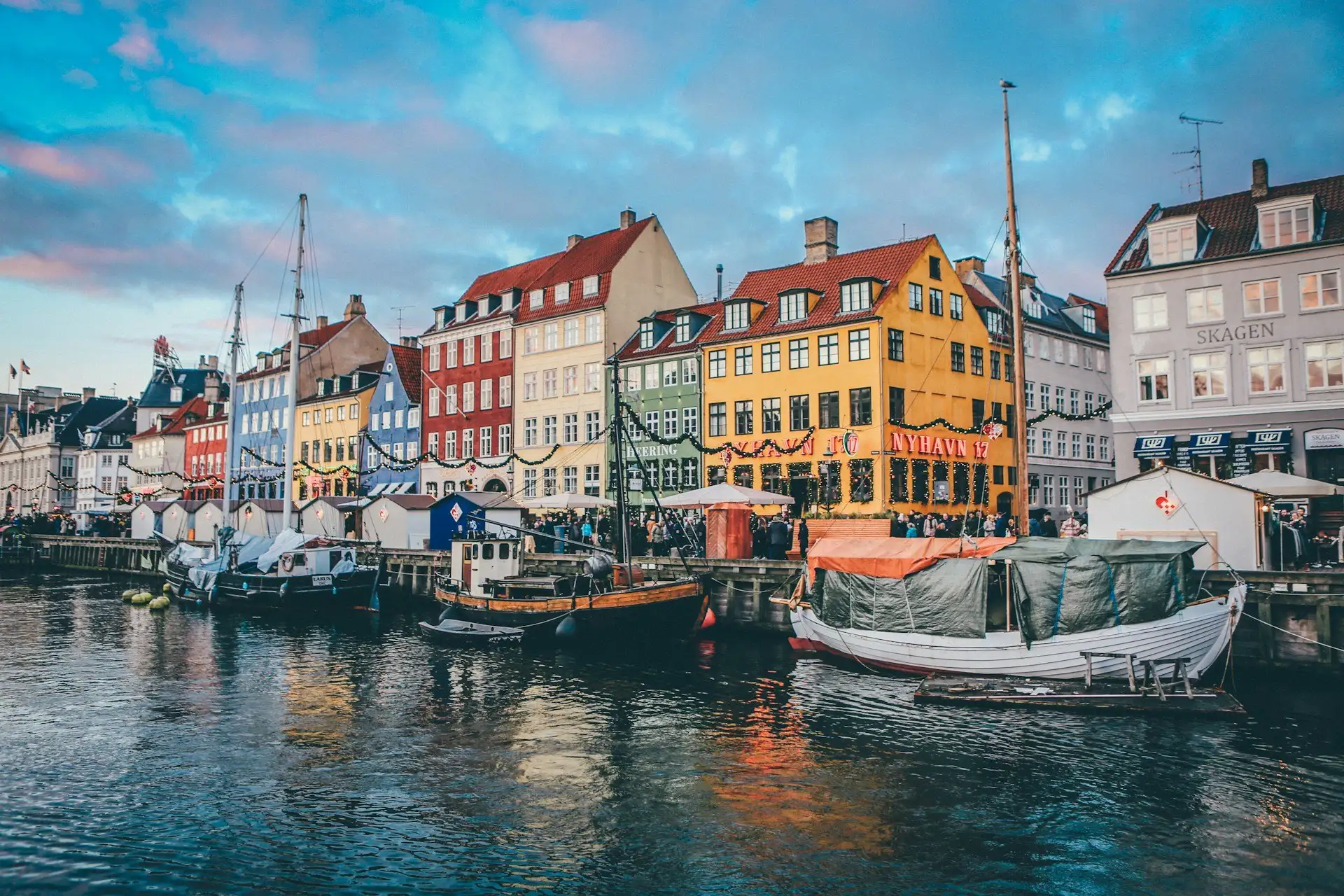
Nyhavn is the most photographed spot in Copenhagen for good reason and one of the worst places to eat for equally good reason. The canal-facing restaurants charge premium prices for food that ranges from average to actively poor, relying entirely on the view and the foot traffic to fill their tables. This isn't illegal and the prices are on the menu, so "scam" is a strong word for it — but people leave those restaurants feeling ripped off and the feeling is justified. A smørrebrød lunch there costs 180-250 DKK for what would cost 90-130 DKK two streets away from the canal. Inside Tivoli, everything costs more because you've paid 135 DKK to enter and the vendors know it.
- Eat at Nyhavn if the view is worth the premium to you — just go in knowing what you're paying for. The beer and the canal backdrop are the product, not the food.
- For actual good food at honest prices: Torvehallerne (the covered food market near Nørreport station) is where Copenhageners eat lunch. The smørrebrød at Hallernes Smørrebrød there is excellent and costs about half of what you'd pay canal-side.
- Vesterbro, Nørrebro, and Frederiksberg have the neighbourhood restaurants that Danes actually use. Walking 15 minutes from the tourist centre drops prices by 30-40% and improves the food by a similar margin.
- Check the bill for any mystery charges before paying. Danish restaurants are generally honest, but it takes ten seconds and it's always worth doing.
Pickpocketing in Denmark is minor compared to most European capitals but it exists, concentrated on the busiest tourist routes. Nørreport is Copenhagen's busiest transit hub and has had consistent pickpocket reports over the years, particularly during morning and evening rush hours when the platforms are crowded. Strøget, the long pedestrian shopping street running through the centre, attracts the same crowd-and-distraction dynamic as any busy commercial street in Europe. During Tivoli's peak summer evenings and the Christmas market season, bag and wallet theft increases with the crowd density. None of this rises to the level of organised professional teams working tourist areas — it's opportunistic and comparatively rare.
- Standard awareness is sufficient. Keep your phone in a front pocket or inner jacket pocket on crowded metro platforms and on Strøget. Don't leave bags unattended at café tables.
- Denmark is so cashless that most pickpockets who do operate here are after your card rather than cash. A card with contactless transaction limits and instant freeze capability (Revolut, Wise, or most modern bank apps) limits the damage significantly.
- Nørreport is worth a brief moment of awareness when transiting through — it's genuinely busy and the platform configuration means it's easy for someone to brush past you. That's the full extent of the caution required.
Card skimming in Denmark is low compared to many European countries but reported cases do occur, primarily at ATMs in tourist areas and at older standalone machines not directly managed by major banks. The method is standard: a device fitted over the card slot reads your card data while a small camera or overlay captures your PIN. Since Denmark is so heavily card-dependent, the consequences of a compromised card are more significant than in cash-heavy economies where you'd at least have physical money to fall back on.
- Use ATMs attached to or inside major Danish bank branches: Danske Bank, Nordea, Jyske Bank, Sydbank. These are maintained and monitored regularly. Avoid standalone machines in tourist areas, near Nyhavn, or in convenience stores.
- Cover the keypad with your other hand when entering your PIN. This defeats the camera component of most skimming setups, which can read the card electronically but still needs to capture the PIN visually.
- Since Denmark is so cashless, you may not need to use an ATM at all. A card with no foreign transaction fees used directly is both cheaper and safer than withdrawing cash.
- Enable instant transaction notifications on your card app if available. A compromised card used within minutes of skimming is something you can catch and freeze before significant damage is done.
A person approaches with a clipboard, asks you to sign a petition for a cause that sounds reasonable, and while you're distracted signing, an accomplice lifts your phone or wallet. Or they ask for a cash donation to a charity you've never heard of, for which they have no official identification. This operates on Strøget and the busier tourist streets in Copenhagen and is imported from the same playbook used across European tourist cities. It's not common by Copenhagen standards but it does occur, particularly in peak summer months when visitor numbers are highest.
- Don't sign anything on the street from someone you didn't approach yourself. Declining is socially acceptable here and Danes do it without ceremony. A brief "nej tak" (no thank you) and continuing to walk is the full interaction required.
- Legitimate Danish charities collecting on the street will have clear official identification, branded tabards, and the ability to take card donations. Anyone insisting on cash only is a red flag.
- The signing distraction and the wallet lift are simultaneous. If you've already started signing, keep your free hand on your pocket or bag.
Denmark has an enormous number of bikes and an equally significant bicycle theft problem. Copenhagen police register tens of thousands of stolen bicycles per year. This isn't a tourist-specific scam, it's a structural feature of a cycling-first culture, but it catches visitors who rent bikes and lock them with the cable lock that came with the rental, park in an unsecured area, or leave an expensive e-bike outside overnight. If a rental bike is stolen while in your care, you will typically be liable for the replacement cost under most rental agreements. Read that agreement before you take the bike.
- Always use a solid D-lock through the frame and wheel, attached to a fixed object. The flexible cable locks that come with many rentals are easily cut and provide essentially no security.
- Read your rental agreement's theft clause before signing. Some require you to report theft to police within a specific timeframe and produce a crime reference number to avoid liability.
- Park in busy, well-lit areas with other bikes. A single bike parked in an isolated spot overnight is an invitation. A bike locked among a hundred others at a busy station is considerably less so.
- The Bycyklen city bike share uses GPS-tracked bikes with integrated locking. They're not the most comfortable bikes in the world, but if one goes missing while docked correctly, it's the system's problem rather than yours.
The Destinations — Honest Takes
Denmark is compact enough to see a surprising amount of in a short time. Copenhagen is the obvious anchor, but Jutland and the islands have a quiet, specific beauty that most visitors never reach.
Copenhagen is a city that makes you feel immediately competent. The streets make sense, the signage is bilingual, everyone speaks English without making you feel bad about it, and the infrastructure is so well-considered that you start to wonder why other cities haven't figured this out. Walk from the Latin Quarter through to Nørrebro on a Saturday morning and the city reveals itself in layers: the produce market at Nørreport, the lakes with their weekend joggers and kayakers, the multicultural street food on Jægersborggade where a Vietnamese bánh mì sits next to a smørrebrød counter and nobody thinks this is unusual. The National Museum is free and extraordinary. The Louisiana Museum of Modern Art, 35km north along the coast, is one of the genuinely great modern art spaces in Europe, its sculpture park running down to the sea below it. Freetown Christiania, the self-declared autonomous neighbourhood on Christianshavn island, is worth an afternoon: the main street (Pusher Street) has an informal cannabis market that is technically illegal but tolerated, and the surrounding area of workshops, galleries, and community gardens is genuinely interesting. Don't take photos on Pusher Street — this is enforced by the community itself and the signs are clear.
- Nyhavn restaurants: the view costs a premium and the food usually doesn't justify the rest of the price; Torvehallerne market nearby is better in every respect except for the canal backdrop
- Use the Metro from the airport rather than a taxi — it's faster, cheaper, and drops you in the city centre in 15 minutes
- At Nørreport station on busy mornings, be briefly aware of your pockets — it's the one transit hub where pickpocketing has been reported with any regularity
- Validate your metro or S-tog ticket before boarding — inspectors do check, and the fine is 750 DKK on the spot
- No photography on Pusher Street in Christiania: the signs mean it and ignoring them has caused serious incidents in the past
Aarhus is Denmark's second city and its most underrated. A university town of 350,000 on the Jutland coast with a food scene that punches above its size, a Latin Quarter of cobbled streets that makes it feel older than it is, and ARoS, an art museum whose rainbow panorama walkway on the roof has become one of Denmark's most recognisable images. The old town museum (Den Gamle By) is an open-air collection of relocated historic buildings spanning several centuries of Danish urban life, and it's better than that description makes it sound. The harbour has been redeveloped in the same waterfront-to-culture format as Copenhagen but without the tourist infrastructure built up around it, which makes it feel more genuine. Street food at Aarhus Street Food market in the converted bus garage near the harbour: the æbleskiver (Danish doughnut balls with jam) and the braised short rib with pickled onion on rye bread are the things to find.
- No meaningful scam presence anywhere in Aarhus — the city simply doesn't have the tourist density that sustains the financial hustles found in Copenhagen's centre
- Aarhus Card covers public transport and museum entry and is worth calculating against your itinerary before buying
- The harbour-front restaurants are slightly pricier than elsewhere in the city but not at Nyhavn levels — reasonably good value by Danish standards
Odense is Hans Christian Andersen's birthplace and Danish cycling capital, two facts that say everything about the city's character. The Hans Christian Andersen Museum, completely rebuilt and reopened in 2021, is an extraordinary piece of architecture built into the neighbourhood around the house where Andersen was born, with exhibition design that takes the fairy tales seriously as literary and psychological works rather than children's decoration. An afternoon is enough to do it justice; a morning at the nearby Funen Village open-air museum and a lunch at one of the canal-side cafés in the old quarter makes a full day. Odense is an hour and twenty minutes from Copenhagen by train and makes a clean day trip, though a night here gives you the city after the day visitors have left, which is when it's most itself.
- Essentially zero tourist scam presence
- The Andersen museum requires timed entry — book online before arriving, particularly in summer, as it sells out on peak days
- Bikes are available to rent from the city centre for exploring the flat streets and riverside paths, and Odense takes cycling infrastructure seriously
Skagen is at the very tip of Denmark, where two seas meet — the Skagerrak and the Kattegat — and you can stand on the sandbar of Grenen with water moving around both feet in different directions. The light here is genuinely special in a way that isn't travel-writer exaggeration: the Skagen Painters came in the late 19th century specifically because of it, and the Skagen Museum holds a collection of their work in a building that feels exactly right for it. The town itself is a converted fishing village of yellow-painted houses with red tile roofs that manages to be genuinely charming rather than self-consciously pretty. The sand dune that buried the Tilsandede Kirke church — only the tower still protrudes above the sand — is one of those specific Danish things that you'd never have gone to look for and can't stop thinking about afterward. This part of Denmark requires a car or patience with train and bus connections, but it's the part that stays with you longest.
- No scam presence of any kind — this part of Denmark has low tourist density and a local economy that doesn't depend on extracting from visitors
- Accommodation in Skagen in July and August is booked months in advance by Danish families who come every summer; arrive without a booking in peak season and you'll struggle
- The drive up through North Jutland along the west coast — the Jutland ridge road, the shifting dunes, the North Sea to the left — is one of the great European coastal drives and almost entirely unknown outside Scandinavia
Bornholm is a Baltic island belonging to Denmark that sits geographically closer to Sweden and Germany than to Copenhagen, two hours by ferry east of the capital. It has a distinct character: round churches from the 12th century, a smokehouses tradition that produces the best smoked herring in the world (the røgeri in Gudhjem has been operating since 1872), rocky coastline at the northern tip around Hammershus castle — the largest medieval fortification in Scandinavia — and a cycling infrastructure that covers the whole island in well-maintained paths through forest and along clifftops. The island takes four days to explore properly by bike and rewards the kind of visitor who wants to be somewhere genuinely different rather than somewhere with a full tourist programme. The summer ferry from Copenhagen is frequently booked; plan ahead.
- No tourist scam infrastructure exists anywhere on Bornholm — the island's visitor economy is small, seasonal, and entirely locally run
- Ferry booking in advance is essential for summer travel; the route fills early with Danish holidaymakers
- Bike rental is available at the ferry port in Rønne and from several operators in Allinge and Gudhjem; book in advance in July and August when the island's cycle paths are at capacity
Denmark's castle circuit is one of those things that sounds like a tourist brochure idea and turns out to be genuinely excellent. Kronborg Castle at Helsingør — Shakespeare's Elsinore, the setting of Hamlet, a UNESCO World Heritage fortress on the sound between Denmark and Sweden — is 45 minutes by train from Copenhagen and takes a full morning to do properly. The casemates below it, where a stone Holger Danske sleeps waiting to defend Denmark in its darkest hour, are exactly as atmospheric as they sound. Frederiksborg Castle in Hillerød is the more extravagant of the two: a Dutch Renaissance palace reflected in its moat lake, now the Museum of National History, with portrait galleries that run the full span of Danish history from Viking to recent past. Both are day-trip distance from Copenhagen on a single transit ticket. Neither has meaningful tourist scam activity.
- Zero scam risk in the Danish countryside
- Kronborg and Frederiksborg can both be done in a single day if you start early; Kronborg for the morning, then train to Hillerød for Frederiksborg in the afternoon
- The Louisiana Museum of Modern Art sits between these two castle routes along the coast and makes a natural third stop if you have energy — or a full day on its own if you want to give the sculpture garden the time it deserves
Before You Go — The Checklist
- ✓ Bring a card with no foreign transaction fees and use it for everything. Denmark is effectively cashless. Wise, Revolut, and most travel-focused bank cards work well. Pay in DKK at every terminal and decline any offer to pay in your home currency instead.
- ✓ Take the Metro from Copenhagen Airport into the city. It takes 15 minutes, costs 36 DKK, and drops you in the centre. It's faster than a taxi in traffic and a fraction of the cost. The Metro runs 24 hours.
- ✓ For taxis, use Bolt, Dantaxi, or Taxa 4x35 apps rather than hailing from outside tourist hotels or the airport road. Licensed taxis have visible rate cards. Fares are always per journey, never per person.
- ✓ Validate transit tickets before boarding. The inspectors on Metro and S-tog are plainclothes and appear without warning. The fine is 750 DKK and is collected immediately. The ticket system is simple and the cost is genuinely low — there is no reason not to have one.
- ✓ If you rent a bike, use a D-lock through the frame and a fixed object. The cable lock that comes with most rentals is not security. Tens of thousands of bikes are stolen in Copenhagen annually. Read your rental agreement's theft clause before you ride away.
- ✓ Budget properly. Denmark is expensive and the prices are not a mistake or a scam. Roughly double your southern Europe daily spend as a working estimate. The quality is generally high and the service is honest — you're paying for a functional, well-run society, which turns out to cost more than a dysfunctional one.
- ✓ Don't photograph Pusher Street in Christiania. The signs are clear, the community enforces the rule, and the consequences of ignoring it range from an angry confrontation to a broken phone. The rest of Christiania is worth visiting and photography is fine elsewhere in the community.