
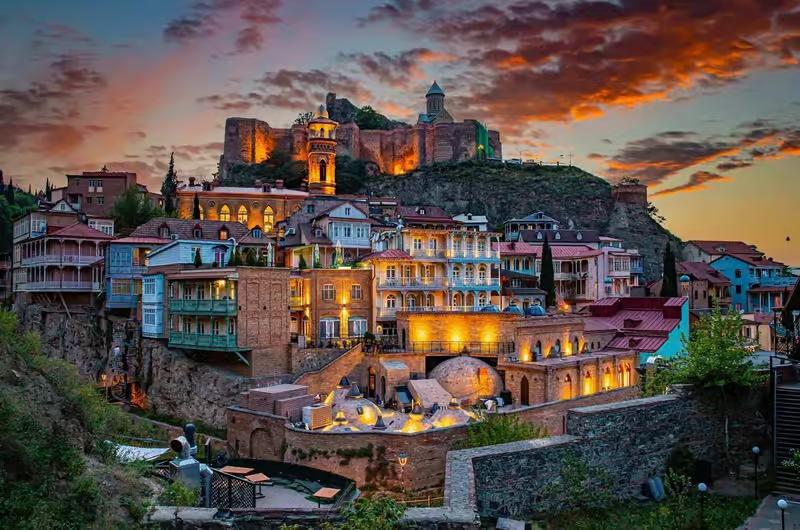
A capital named after its hot springs, and still steaming
Tbilisi sits in a river gorge on the Mtkvari (Kura) River, its name derived from "tbili," Georgian for warm, after the natural sulfur springs that surface beneath Narikala Fortress. That fortress, and the domed bathhouse district below it, are still the geographic and emotional center of the city: everything else, the balconied Old Town, the Soviet-era apartment blocks, the glass Bridge of Peace, the new wine bars in Vera, radiates outward from that hill and that water.
What surprises most first-time visitors is how lived-in the whole thing feels. This is not a city that renovated its historic core into a museum piece; crumbling and beautifully restored buildings sit on the same street, sometimes in the same building, and the wine and food scene that has made Tbilisi genuinely fashionable in the last decade coexists with khinkali houses that have not changed their menu, or their prices much, in years.
The honest complications
Tbilisi has been the site of daily pro-EU protests since November 2024, concentrated on Rustaveli Avenue near the parliament building, mostly in the evenings. This is a real, ongoing situation, and worth checking current news before you go, but it has stayed geographically contained to that stretch of one avenue and has not affected the city's underlying Level 1 safety rating. Separately, the hills around the Old Town and Sololaki are steep and the cobblestones uneven, English drops off outside the centre and tourist businesses, and the sulfur bath district, while genuinely wonderful, can feel like a tourist gauntlet around the most famous entrances; walk a block further for a calmer, cheaper bathhouse.
A river, a hill, and five neighbourhoods that matter
Tbilisi's neighbourhoods split along the Mtkvari River and up the hillside toward Narikala. Where you base yourself comes down to how central you want to be and how much hill-climbing you're willing to do.
Old Town (Kala & Sololaki)
The historic core beneath Narikala Fortress: balconied wooden houses, the Abanotubani sulfur baths, and the city's oldest churches packed into narrow, climbing lanes. It is genuinely beautiful and the most walkable base for the fortress and baths, but also the most tourist-saturated and noisiest after dark near the bar streets.
Vera
Just north of the Old Town, Vera is quieter, leafier and full of embassies, with some of the city's best design hotels and an easy 15 to 20-minute walk to everything that matters. For a first visit, this is the base that keeps the whole city within reach without the Old Town's evening noise.
Vake
West of the centre, Vake is Tbilisi's most affluent residential district: wide streets, Vake Park, and a concentration of good restaurants and cafes that skew local rather than tourist. Slightly further from the sights, best reached by taxi or a longer walk.
Chugureti & Marjanishvili (Left Bank)
Across the river from the Old Town, this district has become Tbilisi's most interesting area for independent bars, galleries and the Fabrika creative hub, a converted Soviet sewing factory turned hostel, workshop and courtyard bar scene. Fewer tourists, lower prices, and a younger, more local energy.
Mtatsminda
The mountain that rises behind the centre, reached by a historic funicular from Chonkadze Street, holds Mtatsminda Park's funfair and viewpoints, plus the Pantheon where notable Georgians are buried. A destination for an afternoon rather than a base.
From a converted publishing house to the city's best hostel courtyards
Tbilisi's design hotel scene has grown fast, converting Soviet-era industrial buildings and 19th-century townhouses into some of the more interesting stays in the wider region, while the hostel scene around Fabrika and the Old Town remains some of the best value anywhere in Europe or the Caucasus. These picks cover every budget.
At the top, Stamba Hotel in Vera occupies a vast 1950s publishing house on Merab Kostava Street, all soaring industrial ceilings, a glass-roofed atrium restaurant and curated cultural spaces, from around $180-300 a night. Close behind, Rooms Hotel Tbilisi (from around $126) is the property that arguably started the city's design-hotel wave: exposed brick, a buzzy lobby restaurant, and a fitness centre, walking distance from Vera's cafes.
In the Old Town, Qarvasla Hotel occupies a restored 19th-century caravanserai with dark corridors, soft lighting and minimalist slate-toned rooms, a few steps from the sulfur baths, while the Blue Fox Hotel offers a smaller, courtyard-centred stay in the heart of Kala.
At the budget end, Fabrika Hostel & Suites on the left bank (from around $8-46) is the city's best-known hostel, built into the same converted Soviet sewing factory as the surrounding bars and workshops, with a famously social courtyard. In the Old Town near Meidan Square, Envoy Hostel (roughly $10-25) is well-located with a rooftop terrace and a reliable pick for solo travellers.
Khinkali by the hundred, qvevri wine by the glass
Tbilisi's food scene runs from no-frills khinkali houses where the dumplings arrive by the dozen to a serious, internationally recognized natural wine scene built on the qvevri tradition. Both ends are worth your time, and neither is expensive by Western standards.
Khinkali
Hand-pleated dumplings filled with spiced meat or mushroom broth, eaten by hand: bite a small hole, sip the broth, then eat the rest, leaving the topknot. Kade is widely rated for khinkali and khachapuri from the Mtiuleti mountain region, with a wine bar downstairs; Zodiaqo and Machakhela (multiple locations, open late) are reliable standbys, and Asi Khinkali, literally "100 khinkali," serves eight different fillings including vegetarian options.
Khachapuri
Cheese-filled bread in regional styles: Imeruli is round and closed, Megruli adds cheese on top, and Adjaruli, the boat-shaped version with a raw egg and butter stirred in at the table, is the one worth ordering at least once for the ritual alone.
Qvevri & natural wine
Georgia's 8,000-year-old clay-vessel wine tradition has made Tbilisi a genuine destination for natural wine drinkers. 27 Wine Bar, tucked in the Sulico courtyard, is a good pre-dinner stop, while Barbarestan is known above all for its deep, well-curated wine list alongside 19th-century Georgian recipes.
Bread&Wine
A centrally located spot serving reliably good khachapuri and a solid wine list, useful as an easy first stop for getting oriented on both before venturing to the specialists.
A fortress, a bathhouse district, and a river to cross both ways
Tbilisi rewards wandering between its landmark sights: the best moments are often a viewpoint stumbled onto between the fortress and the river, not just the ticketed attractions. A few things benefit from advance timing, and this chapter walks through the city roughly the way a good three days would.
Narikala, the baths and the river
Start at Rike Park and cross the Bridge of Peace, the glass-and-steel pedestrian bridge that draws sharp opinions locally but photographs beautifully at night. From Rike Park, the Narikala cable car (roughly 2.5 GEL, running 10am-10pm) lifts you to Narikala Fortress, a 4th-century citadel with panoramic Old Town views and the towering Kartlis Deda (Mother of Georgia) statue beside it. Walk down into Abanotubani, the domed sulfur bath district, and book a private room, roughly $30-50 an hour, at Chreli-Abano (also called the Orbeliani Baths) for the most photogenic, colorfully tiled option, or the more traditional, less touristic Bathhouse No. 5 a few doors down.
Rustaveli Avenue and the museums
Tbilisi's grand boulevard runs past the Opera and Ballet Theatre, the Parliament building, and the Georgian National Museum, whose Archaeological Treasury holds pre-Christian gold work that alone justifies the ticket. This is also the street where evening protests concentrate near parliament; during the day it's simply the city's main thoroughfare, busy and entirely normal to walk.
The left bank and Fabrika
Cross to Chugureti and Marjanishvili for a different Tbilisi: Fabrika, the converted Soviet sewing-factory complex, is the best single stop for street art, small design shops and a courtyard full of bars that fills up on warm evenings. The Dry Bridge Market, a sprawling flea market of Soviet memorabilia, old cameras, carpets and genuine curios, rewards slow browsing and light haggling on weekend mornings.
Mtatsminda and the evening view
Take the historic funicular up Mtatsminda for Mtatsminda Park, a slightly rickety funfair with a Ferris wheel at the mountain's edge and genuinely excellent views back over the whole city and the Caucasus foothills beyond. Time it for late afternoon into sunset; the funicular and park run into the evening, and the city lighting up below is one of Tbilisi's best free experiences.
One, two or three days, planned street by street
Three full days covers Tbilisi properly; even one well-planned day delivers the essentials. These routes are walkable, account for the hills, and end each day somewhere worth being at dusk.
- Morning
Rike Park and Narikala. Cross the Bridge of Peace, take the cable car up to Narikala Fortress for the panoramic view.
- Midday
Khinkali lunch and the baths. Eat at Kade or Machakhela, then a private sulfur bath room at Chreli-Abano or Bathhouse No. 5.
- Afternoon
Old Town wander. Balconied lanes of Sololaki, Rustaveli Avenue and the National Museum's Archaeological Treasury.
- Sunset
Mtatsminda. Funicular up for the view and the funfair. Dinner back in Vera or the Old Town.
- Day 1
The one-day route: Rike Park, Narikala, khinkali, the baths, Rustaveli, Mtatsminda at sunset.
- Day 2 morning
Fabrika and the left bank. Coffee and street art at Fabrika, then the Dry Bridge Market if it's a weekend.
- Day 2 afternoon
Vake. Vake Park and a slower, local-feeling lunch away from the tourist core.
- Day 2 evening
Wine bars in Vera or Sololaki. 27 Wine Bar or Barbarestan for a proper introduction to qvevri wine.
- Days 1-2
The two-day route above, at a gentler pace.
- Day 3, option A
Mtskheta. A half-day trip to Georgia's ancient spiritual capital, 30-45 minutes away, for Svetitskhoveli Cathedral and the river confluence view from Jvari Monastery.
- Day 3, option B
Kakheti wine day. A full-day tour to Sighnaghi and two or three family wineries, returning to Tbilisi by evening.
Compact in the centre, steep enough to plan around
Tbilisi's core is walkable but genuinely hilly around the Old Town and Sololaki. From Shota Rustaveli Tbilisi International Airport (TBS), 17km southeast of the centre, bus 337 runs to Liberty Square for 1 GEL, paid by contactless card or a Metromoney card, taking 45-60 minutes and running roughly 07:00-23:00. A taxi or Bolt costs 20-30 GEL and takes 20-30 minutes; a slow twice-daily train also connects the airport to the central station for 0.50 GEL, though its schedule rarely matches flight arrivals.
In the city, Bolt and Yandex Go are cheap and reliable for anything beyond walking distance, typically 5-15 GEL for central trips. The metro is fast and cheap (1 GEL with a Metromoney card) for crossing the city on its two lines, though stations are deep, Soviet-built and not always intuitively signed for first-time visitors. The Narikala cable car and Mtatsminda funicular each handle one steep climb apiece and are worth using rather than fighting the hill on foot.
Best time to visit and practical notes
Tbilisi has a continental climate with hot summers and cold winters. May-June and September are the sweet spots: warm days, manageable crowds, and both mountain and wine day trips at their best. July-August run hot (28-36°C) but are still workable with an early-morning sightseeing strategy. Winter (November-March) is cold and quiet, with the lowest prices and Gudauri's ski season, about a 2.5-hour drive away, running December to April.
Mandatory insurance: since 1 January 2026, all tourists must carry travel or health insurance covering at least 30,000 GEL for their stay, a country-wide requirement, not specific to Tbilisi, but worth arranging before you land.
One of the best-value capitals in the wider region
Tbilisi is significantly cheaper than most European capitals. The hostel and khinkali-house end of the market is excellent value, and even the design-hotel, natural-wine end of town runs well below equivalent experiences in Western Europe.
- Hostel dorm $8-20
- Khinkali houses and bakeries $10-18
- Metro and walking $2-5
- Narikala cable car plus one paid sight
- Boutique hotel or design B&B $60-130
- Restaurant meals with wine $20-40
- Metro plus the occasional Bolt
- Private sulfur bath room, a museum
- Stamba or equivalent $180+
- Tasting menus and premium qvevri wine
- Private Kakheti or Kazbegi day tour
- Royal Apartment bath experiences
A genuinely safe capital, with one street to plan around
Tbilisi sits at Level 1 on the US State Department scale, and violent crime against tourists is rare. The city is safe to walk at night in the areas visitors spend time in, Vera, Vake, the Old Town and the left bank, with normal urban awareness. Tbilisi is also reasonably good for solo female travellers: harassment in the tourist core is uncommon, though it's more frequent in conservative outer neighborhoods and rural areas beyond the city.
The things that actually catch visitors: pickpocketing, concentrated in crowded spots like the Dry Bridge Market and busy metro carriages, so keep bags closed and in front of you; taxi overcharging, avoided entirely by using Bolt or Yandex Go instead of hailing a cab; and the Rustaveli Avenue protests, ongoing near parliament since November 2024, mostly in the evenings, easy to avoid or simply observe respectfully from a distance rather than something to fear. Emergency number is the unified 112 from any phone, covering police, ambulance and fire.
Mountains, monasteries and wine, all within a few hours
Tbilisi's location makes it an outstanding base for the rest of Georgia. Four trips are worth a day each, and all are doable by marshrutka, rental car or an organized tour.
Mtskheta
Georgia's ancient spiritual capital, a UNESCO World Heritage town at the confluence of the Mtkvari and Aragvi rivers. The 11th-century Svetitskhoveli Cathedral and the hilltop Jvari Monastery, with its sweeping view over both rivers, make this the easiest and most rewarding half-day trip from the city.
Kazbegi (Stepantsminda)
The Georgian Military Highway climbs past Ananuri fortress to the high-mountain town below Mount Kazbek, where Gergeti Trinity Church sits on its solitary hilltop against the glacier. A long day, roughly 12-14 hours round trip with time on site, but the single most dramatic scenery within day-trip range of the capital.
Kakheti wine country
Sighnaghi's hilltop views over the Alazani Valley, family qvevri wineries around Telavi and Kvareli, and Bodbe Monastery. A full-day organized tour typically covers two or three wineries with tastings and lunch included.
Uplistsikhe & Gori
A rock-hewn cave town predating Christianity in Georgia, combined with Gori's Stalin Museum, an uneven but genuinely revealing look at how the country processes its most notorious native son.
Tbilisi FAQ
Is Tbilisi safe for tourists?
Yes. Tbilisi is a Level 1 city with rare violent crime against tourists; the main concerns are pickpocketing in crowded spots and evening protests near parliament on Rustaveli Avenue, which are easy to avoid or simply observe from a distance.
How many days do I need in Tbilisi?
Three full days covers the city well: one for the Old Town and Narikala, one for Rustaveli Avenue and the left bank neighbourhoods, one for Mtatsminda and the sulfur baths at a slower pace. A fourth day fits a Mtskheta or Kakheti day trip and is worth adding.
How much does Tbilisi cost per day?
Budget travellers manage on $30-45 a day with hostels and khinkali-house meals; mid-range runs $70-120. Tbilisi is significantly cheaper than most European capitals.
When is the best time to visit Tbilisi?
May-June and September: warm days, manageable crowds, and both the mountain and wine day trips are at their best. July and August are hot; winter is cold but quiet and good value.
How do I get from Tbilisi airport to the centre?
Bus 337 runs from the airport to Liberty Square for 1 GEL, taking 45-60 minutes. A taxi or Bolt costs 20-30 GEL and takes 20-30 minutes. A slow twice-daily train also connects the airport to the central station for 0.50 GEL.
What is the best area to stay in Tbilisi?
Vera for first-timers: central, walkable to the Old Town, and quieter at night than Old Town itself. Old Town for the most atmospheric setting but expect noise near the bars. Vake for a residential, upscale pace with good restaurants.
Do I need to speak Georgian in Tbilisi?
No. English is widely spoken in hotels, restaurants and tourist areas, especially among younger Georgians. A few words, gamarjoba (hello) and madloba (thank you), are genuinely appreciated.
Is Tbilisi walkable?
Yes in the centre, but the Old Town and Sololaki climb steeply toward Narikala. Wear shoes with grip, use the Narikala cable car from Rike Park for the fortress climb, and take the Mtatsminda funicular rather than walking up that hill.
Can I drink the tap water in Tbilisi?
Yes. Tbilisi's tap water comes from mountain springs and is safe to drink, one of the better tap water systems in the region.
What should I know about the sulfur baths?
The Abanotubani bathhouses under Narikala Fortress use naturally hot, sulfur-rich spring water; private rooms cost roughly $30-50 an hour and are the more comfortable option for first-timers over the public communal halls.
What Stays With You
Tbilisi doesn't stage itself for visitors, and that's exactly why it works. The city gets on with its business, an old man in the Old Town arguing about football, a bathhouse attendant who has scrubbed the same kind of tourist for decades, a khinkali order that arrives without you needing to explain the rules, and lets you walk through the middle of it. The steam rising off the Abanotubani domes on a cold morning, the first glass of amber wine in a Vera courtyard, the fortress view that costs less than a cup of coffee at home: none of it was staged, which is why it sticks.
Go up to Narikala in the late afternoon, watch the light move across the Old Town roofs toward the river, and understand why the city built itself around a hot spring and never really stopped.