
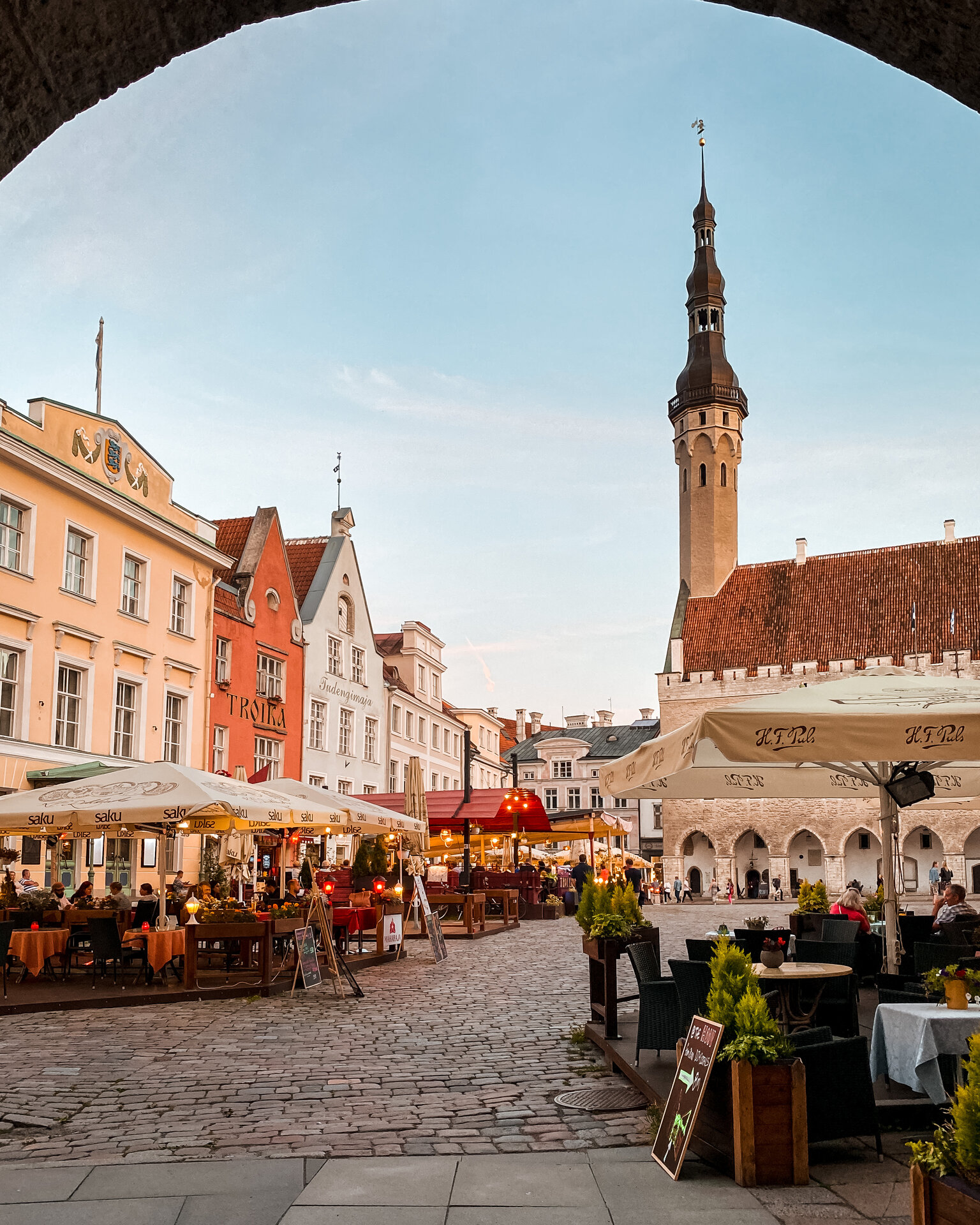
A medieval city running on modern code
Tallinn's Old Town survived the 20th century close to intact, spared the wartime bombing that forced many European city centres to be rebuilt from rubble. Walk it today and you're mostly looking at real 13th to 16th-century stone: the merchant guild houses of Hanseatic traders, the defensive walls and towers that once ringed the whole city, and a Town Hall Square that has hosted a public Christmas tree since 1441, a claim Tallinn contests good-naturedly with Riga for the honour of being first in Europe. It's a genuinely rare thing in a European capital, a historic core that isn't a careful reconstruction.
What makes Tallinn more than a museum piece is the contrast sitting right next to it. This is the country that built e-Residency and runs over 99 percent of government services online, and that efficiency shows up in small, useful ways for a visitor: near-total cashlessness, fast wifi everywhere, and a public transport system you tap into with a bank card and never think about again. Two days covers the Old Town and Kalamaja properly; a third opens up Kadriorg, the Seaplane Harbour museum, or a ferry to Helsinki and back before dinner.
The honest complications
Tallinn's Old Town is a real, working historic centre, and it shows the wear of tourism: souvenir shops selling amber and "medieval" trinkets crowd the main routes between Town Hall Square and the Viru Gate, and costumed street vendors and restaurant hawkers can be persistent along the busiest lanes in summer. The cobblestones are uneven and genuinely difficult in heels or thin-soled shoes. Winter is a serious factor too: from November to March, expect ice underfoot, short daylight hours, and several Old Town restaurants and shops running reduced hours. None of it changes the fact that this is one of the best-preserved medieval centres in Europe, but it isn't a sanitised theme-park version of one.
A compact capital, four areas that matter
Tallinn rewards staying central or a short walk outside the walls. Nearly everything a first-time visitor wants sits within twenty-five minutes on foot of Town Hall Square, and the choice of base comes down to how much Old Town atmosphere, and Old Town price, you want right outside the door.
Old Town (Vanalinn)
The UNESCO-listed medieval centre, split between the Lower Town's merchant streets and Toompea hill above it. Staying here means walking to nearly every major sight, but it also means paying Old Town prices and navigating the densest tour-group traffic in the city, especially around Town Hall Square and Viru Street. Quiet returns quickly once the day-trip crowds and cruise passengers clear out in the evening.
Kalamaja & Telliskivi
A former fishing and working-class district just northwest of the Old Town, Kalamaja's streets of colourful wooden houses now hold Tallinn's best concentration of independent cafes, bars and design shops, anchored by the converted industrial complex of Telliskivi Creative City. Accommodation here typically runs noticeably cheaper than Old Town equivalents, for a fifteen-minute walk or a short tram ride into the historic centre.
Kadriorg
Built around the Baroque palace and park Peter the Great commissioned for Catherine I in the 1710s, Kadriorg is leafy, residential and noticeably quieter than the centre, home to the KUMU art museum and several smaller museums inside the park itself. Not a typical place to base a short stay, but an easy and worthwhile tram trip from anywhere else in the city.
Rotermann Quarter
A cluster of converted 19th and early 20th-century factory buildings between the Old Town and the ferry terminals, now a pedestrian-only district of restaurants, design shops and striking contemporary architecture set against the original industrial brick. A useful, quieter alternative base a five-minute walk from Town Hall Square, and a natural stop en route to or from the Helsinki ferry.
From a restored merchant house to a €16 dorm bed
Tallinn's hotel scene ranges from centuries-old Old Town buildings to design-forward newer stays, with prices that stay noticeably below Helsinki or Stockholm across every bracket. These five picks cover the range, from heritage luxury to the hostels that make a Tallinn trip genuinely affordable.
At the top, Schlössle Hotel, a Leading Hotels of the World member set inside a restored medieval merchant house in a quiet corner of the Old Town, is the standard pick for old-world romance, with around 23 rooms from roughly €200 a night. Hotel Telegraaf, Autograph Collection, a 5-star property inside the Old Town walls, offers a larger, more polished stay with a spa and restaurant, from around €180.
In the boutique bracket, Three Sisters Hotel, set across three merged 14th-century merchant houses, is the design-forward choice, while Nunne Boutique Hotel, built into the historic city walls with 74 rooms, pairs medieval bones with modern comfort, both typically €100-160.
At the budget end, Old Town Munkenhof and Fat Margaret's are the two hostels visitors mention first, both inside or right at the edge of the Old Town, with dorm beds from around €16-20 and private rooms from roughly €40.
From a €6 lunch special to two Michelin stars
Tallinn's food scene runs from unpretentious, rye-bread-and-herring tradition to a genuinely serious fine-dining tier, with Estonia's first Michelin two-star restaurant now open inside a converted submarine factory. Skip the handful of costume-staffed tourist traps directly on Town Hall Square and the gap between cheap and excellent closes fast.
Traditional Estonian
Rataskaevu 16, tucked onto a quiet Old Town street away from the main tourist routes, has built its reputation entirely on word of mouth, with an elk stew rooted firmly in Estonian tradition. For something more theatrical, Restoran Olde Hansa, candlelit and staffed in medieval dress, leans hard into Hanseatic-era cuisine and atmosphere. Kõrts is the deliberately unpretentious choice: a traditional tavern serving blood sausage with sauerkraut and pork belly at fair Old Town prices, without the theatrics.
Fine dining
NOA Chef's Hall, a one-Michelin-star restaurant overlooking Tallinn Bay from the Pirita district, runs a seven-course tasting menu built around an open-fire kitchen and foraged local produce. 180° by Matthias Diether, holding two Michelin stars in the renovated Noblessner submarine-factory district and named for the sweeping view from its U-shaped open kitchen, is the more ambitious of the two.
Kalamaja & Telliskivi
F-hoone, one of the first restaurants to open in Kalamaja inside a converted factory building with high ceilings and stone walls, serves reliably good, unfussy food and hosts live music on weekend nights. Boheem, a crepe cafe spread through a maze of small rooms inside a traditional yellow wooden house, is the neighbourhood's cosiest breakfast and lunch stop.
Marzipan, Vana Tallinn & a €6-8 lunch
The Old Town's Town Hall Pharmacy, one of Europe's oldest continuously operating pharmacies, claims one of the earliest marzipan-selling traditions anywhere, once marketed as a cure for lovesickness; a small marzipan box makes the classic Tallinn souvenir. Pair it with a glass of Vana Tallinn, the dark, spiced, rum-based liqueur that's Estonia's best-known drink export. For an everyday lunch, look for a chalkboard offering a päevapraad, a daily lunch special typically €6-8, at almost any non-tourist cafe.
Walls, towers, a palace and a seaplane hangar
Tallinn's sights sit close enough together that two focused days cover the essentials without a single taxi ride, with the Seaplane Harbour museum the one attraction genuinely worth the tram or walk beyond the centre.
Town Hall Square and the Old Town walls
Raekoja Plats, Town Hall Square, is the natural starting point, framed by the Gothic Town Hall dating to 1404 and outdoor cafes that fill the square from spring through autumn. From there, the best free activity in the city is simply walking the perimeter of the surviving city walls and towers: Kiek in de Kök, Fat Margaret's Tower guarding the old harbour gate, and the Viru Gate, the most-photographed entry point into the Old Town. Much of this defensive circuit, remarkably, is still intact rather than reconstructed.
Toompea and the viewpoints
The hill above the Lower Town holds Toompea Castle, now Estonia's parliament building, and the onion-domed Alexander Nevsky Cathedral, built under Russian imperial rule and still a point of quiet local ambivalence given its era. The real reason to climb Toompea is the pair of viewpoints, Kohtuotsa and Patkuli, both looking out over the Lower Town's red rooftops toward the harbor and the sea, best visited early on a weekday morning before the tour groups arrive.
Seaplane Harbour (Lennusadam)
Housed in a striking early-20th-century concrete seaplane hangar on the waterfront, Estonia's maritime and aviation museum holds a full-size submarine, a seaplane and interactive exhibits that work well for kids as much as adults (adult entry €22, family ticket €40; open until 19:00 in summer, 18:00 the rest of the year). It's a fifteen to twenty-minute walk or a short tram ride from the Old Town, and consistently the top-rated single attraction in the city.
Kadriorg Palace and Kalamaja
Kadriorg Palace, commissioned by Peter the Great in 1718, and its surrounding park hold the KUMU art museum and several smaller collections; a slow walk through the park itself is worthwhile even without going inside. Back toward the centre, Kalamaja and Telliskivi Creative City reward an unhurried afternoon of wooden-house streets, street art and the Balti Jaam market beside the train station.
One, two or three days, planned street by street
Two full days cover Tallinn properly; even one focused day hits the essentials. A third day is genuinely worth adding, whether that means Kadriorg and the Seaplane Harbour, or a full day trip out of the city.
- Morning
Town Hall Square and the walls. Raekoja Plats, a slow loop of the city walls and towers, coffee at an Old Town cafe away from the square.
- Midday
Toompea. The castle, the cathedral, and the Kohtuotsa and Patkuli viewpoints, then lunch at Rataskaevu 16 or Kõrts.
- Afternoon
Kalamaja. A wander through the wooden-house streets and Telliskivi Creative City.
- Evening
Dinner in the Old Town, away from the square, with a Vana Tallinn nightcap.
- Day 1
The one-day route: Town Hall Square, the walls, Toompea, Kalamaja, dinner in the Old Town.
- Day 2 morning
Seaplane Harbour. The maritime museum on the waterfront, a fifteen-minute walk or tram from the centre.
- Day 2 afternoon
Kadriorg. The palace park and, for art lovers, the KUMU museum.
- Day 2 evening
Rotermann Quarter. Dinner among the converted factory buildings between the Old Town and the port.
- Days 1-2
The two-day route above, at a gentler pace.
- Day 3
Choose one: the Helsinki ferry there and back, or a guided day trip into Lahemaa National Park, both covered in Day Trips below.
Small, walkable, and unusually close to its airport
Lennart Meri Tallinn Airport (TLL) sits just 4km from the city centre, one of the shortest airport-to-downtown distances of any European capital. Tram T4 reaches the edge of the Old Town in about 15 minutes for a €2 single ticket bought by tapping a contactless card at the validator; buses 2 and 15 run the same route. An official taxi or a Bolt, the ride-hailing app founded in Tallinn and still the dominant local choice over Uber, costs roughly €7-15 depending on traffic and time of day.
The centre itself barely needs public transport: the Old Town, Kalamaja, Telliskivi and Rotermann are all within a twenty-five-minute walk of each other, and cobblestones make flat, sturdy shoes the better call than anything with a heel. Trams cover the longer hop out to Kadriorg in about ten minutes from the centre, and a single €2 ticket or a day pass at €5.50 covers trams, buses and trolleybuses across the whole network.
Best time to visit
June, July and August bring Tallinn's warmest weather and close to 19 hours of daylight, the easiest season for a first visit. May and September are quieter, cheaper shoulder months with comfortable walking weather. December has the Christmas market on Town Hall Square; January through March is genuinely cold, often icy underfoot, but also brings the lowest hotel prices of the year, especially in March.
Cheaper than the Nordics, pricier than the Balkans
Tallinn sits in the middle of the European price range: a genuine discount against Helsinki and Stockholm just across the water, but a step up from Southern or Southeast Europe. The main cost trap is eating on Town Hall Square itself instead of walking two minutes into the surrounding streets.
- Hostel dorm bed €16-25
- Päevapraad lunch specials €6-8
- Walking plus the occasional transit ticket
- Free sights: the walls, viewpoints, Kalamaja
- Boutique or 3-star hotel €100-160
- Restaurant dinners €18-30/person
- Tallinn Card for museums & transit
- Seaplane Harbour & Kadriorg entries
- Schlössle or Hotel Telegraaf €180-250+
- Tasting menu at NOA or 180°
- Private guided Old Town or Lahemaa tour
- Helsinki ferry business lounge
Safe by any European capital's standards
Tallinn is safe for tourists. The US State Department rates Estonia Level 1, Exercise Normal Precautions, its lowest advisory tier, most recently confirmed on 31 March 2026. Violent crime against visitors is rare, and the Old Town, Kalamaja and city centre are all fine to walk at night with normal urban awareness. The practical risks here are seasonal and environmental, not criminal.
The three things that actually catch visitors: winter ice, since pavements and cobblestones turn genuinely treacherous from November through March and falling icicles off building eaves are a real hazard after a thaw, so proper footwear matters; light pickpocketing in the most crowded Old Town lanes and around the December Christmas market, avoidable by keeping bags zipped and in front of you; and Tallinn's zero-tolerance drunk driving law, which treats even a single drink as grounds for a DUI arrest, relevant if you're renting a car for a day trip. Tallinn rates very well for solo female travellers: street harassment is uncommon, and Estonia's generally reserved social culture means strangers tend to keep a respectful distance rather than the reverse.
Emergency number for all services: 112, the single European standard number, with English-speaking operators.
A national park east, a foreign capital north
Tallinn's position makes two very different day trips equally easy: Estonian nature to the east, or a two-hour ferry hop to an entirely different country to the north.
Lahemaa National Park
Estonia's largest national park, less than an hour east of Tallinn, combines a boardwalk across the Viru bog, restored manor houses at Palmse and Sagadi, and coastal fishing villages like Käsmu and Altja largely untouched by mass tourism. Public buses reach only the park's edge at the town of Loksa, so a guided day tour, typically €45-75 per person including transport, a bog walk and lunch at a village tavern, is the simplest way to see the interior sights in a single day.
Helsinki, Finland
The ferry across the Gulf of Finland is one of the busiest passenger routes in Europe, with more than 80 sailings a week split across Tallink, Viking Line and Eckerö, and one-way economy fares starting around €19. It's an entirely realistic single-day round trip: an early morning crossing leaves a full day to explore Helsinki's own harbour, market square and design district before the return sailing, no visa or extra paperwork required since both countries share the Schengen Area.
Tallinn FAQ
Is Tallinn safe for tourists?
Yes. The US State Department rates Estonia Level 1, Exercise Normal Precautions, its lowest tier. Tallinn is safe to walk at night in the Old Town, Kalamaja and city centre with normal urban awareness. Winter ice and light pickpocketing in crowded tourist streets are the main practical risks, not violent crime.
How many days do I need in Tallinn?
Two full days covers the Old Town, Toompea and Kalamaja well. A third day fits either Kadriorg and the Seaplane Harbour museum, or a day trip to Lahemaa National Park or Helsinki, and is worth adding if you have it.
How much does Tallinn cost per day?
Budget travellers manage on €50-70 a day with hostel beds and lunch specials; mid-range runs €100-160. Tallinn is cheaper than the Nordic capitals across the gulf but pricier than Southern or Southeast Europe.
When is the best time to visit Tallinn?
June, July and August: warm, with nearly 19 hours of daylight. May and September are quieter and cheaper. December brings the Christmas market; January to March is cold but has the lowest hotel prices of the year.
What is Kalamaja?
A former fishing and working-class district just outside the Old Town, known for its colourful wooden houses and now Tallinn's creative and cafe hub, anchored by Telliskivi Creative City.
Is Tallinn's Old Town really medieval, or rebuilt?
Genuinely medieval. Unlike many European old towns rebuilt after WWII bombing, Tallinn's Old Town largely survived intact, and its city walls, towers and street layout date substantially from the 13th to 16th centuries.
How do I get from Tallinn airport to the city centre?
Lennart Meri Tallinn Airport is just 4km from the centre. Tram T4 reaches the edge of the Old Town in about 15 minutes for a €2 ticket, and an official taxi or Bolt costs roughly €7-15.
What is the best area to stay in Tallinn?
The Old Town for first-timers who want to walk everywhere; Kalamaja or Rotermann for a quieter, often cheaper base a short walk or tram ride from the sights, with a more local feel.
Can I day-trip to Helsinki from Tallinn?
Yes, easily. The ferry takes about 2 hours 15 minutes each way, with over 80 sailings a week across three operators and one-way fares from around €19, making it a comfortable single-day round trip.
Is Uber or Bolt available in Tallinn?
Both operate, but Bolt, founded in Tallinn, holds the larger market share and is generally faster and cheaper. It's the default ride-hailing app for locals and visitors alike.
What Stays With You
Tallinn doesn't have to fake its medieval credentials the way some European old towns quietly do. What you're walking through, the guild houses, the towers, the wall you can trace almost the whole way around, is substantially the real thing, standing because it was spared rather than because someone rebuilt it convincingly. That it sits inside a country that also runs its government almost entirely through code is the part that keeps surprising first-time visitors: the past here isn't in tension with the present, it's just sharing the same small, well-run city.
Climb Toompea early, before the tour groups, and look out over the red roofs toward the harbor. Then take the ferry to Helsinki and back in a single day, just to feel how strange it is that two capitals in two different countries can sit that close together.