

Paris vs London at a glance
Eleven rounds, scored honestly. Paris takes architecture and day trips; London takes nightlife outright. Art and food are split decisions. Select a category to jump to the full comparison.
| Category | ParisLondon |
|---|---|
| The eleven rounds | |
| Art & museumsParis for fine art, London for free breadth | A split decision |
| ArchitectureCoherence against layered variety | Paris wins |
| FoodClassical depth against global variety | Too close to call |
| NightlifeThe deepest live-music scene of any city | London wins, clearly |
| Day tripsVersailles alone wins the round | Paris wins |
| CostCheaper, though free museums narrow the gap | Paris wins, narrowly |
| Things to doStrolling and markets vs parks, theatre and pubs | Different strengths |
| Getting aroundA cheaper, denser Métro and walkable core | Paris wins, narrowly |
| WeatherSimilar maritime climates, both best in shoulder season | A genuine tie |
| SafetyBoth safe, with big-city petty-crime cautions | A draw |
| FamiliesFree museums, parks and no language barrier | London wins, narrowly |
| Best for | |
| Art and Impressionism loversThe Louvre, Orsay and Orangerie | Paris |
| Theatre and live-music fansThe West End and Ronnie Scott's | London |
| Romantic couplesA deliberately beautiful city built for strolling and long dinners. | Paris |
| OverallBeauty and classical depth or variety and live culture | Depends on your priorities |
Beauty vs complexity
Paris perfected itself. London never stopped adding to itself. Both approaches produced something extraordinary.
The deliberate creation of beauty at urban scale
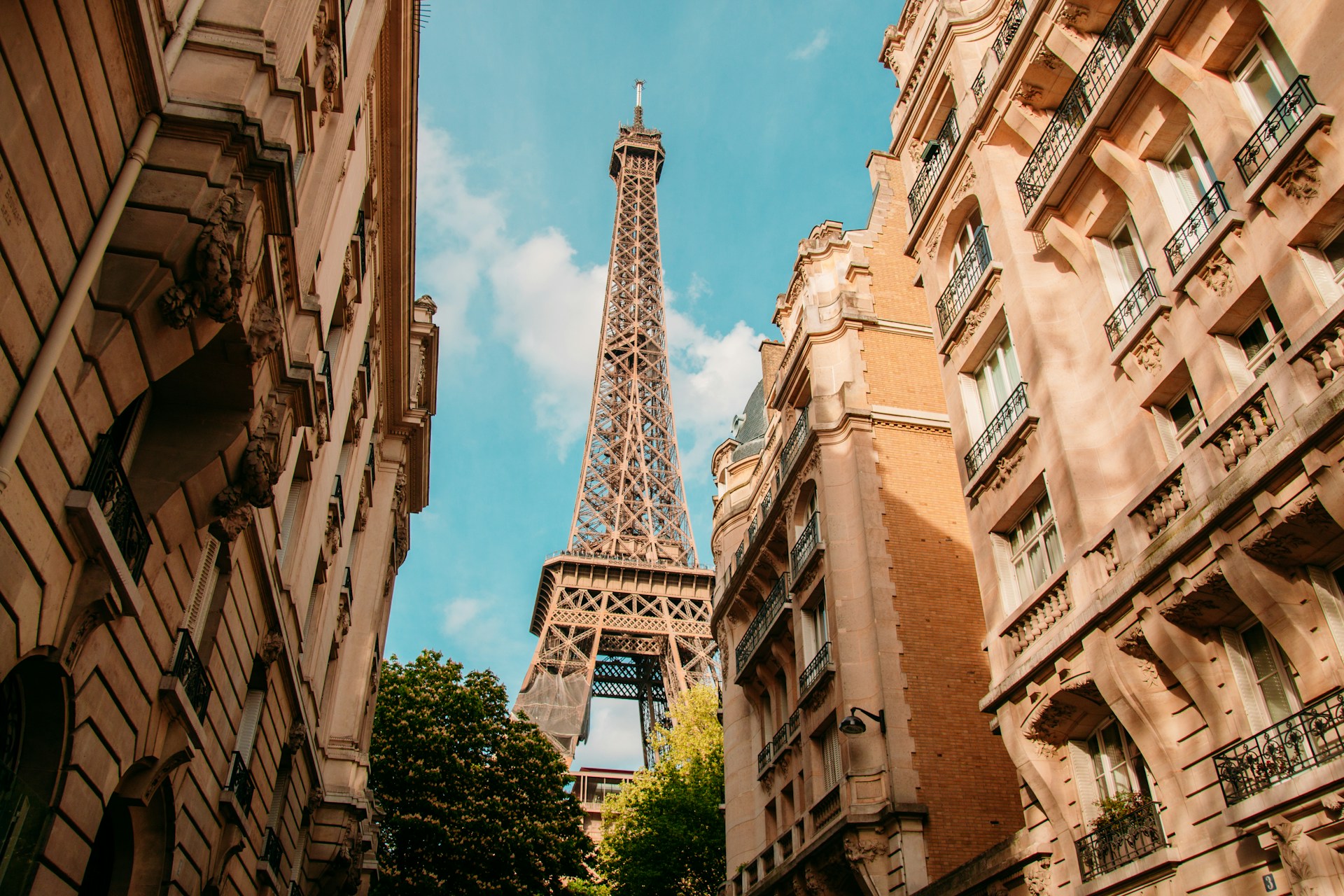
Haussmann's rebuilding between 1853 and 1870 gave Paris cream limestone façades, iron balconies and wide boulevards of remarkable coherence, with a protected skyline anchored by the Eiffel Tower, Sacré-Cœur and the restored Notre-Dame. It is also the capital of fine art, fashion and gastronomy.
Two millennia of history, unedited
Roman walls beside Norman towers, Georgian terraces beside glass skyscrapers, and 9 million people speaking 300 languages. The British Museum alone holds 8 million objects, and the food scene reflects the world in one city.
Key facts side by side
| Fact | 🗼 Paris | 🎡 London |
|---|---|---|
| Mid-range daily budget | €100–180 | £150–280 (~€175–330) |
| Currency | Euro (€) | Pound sterling (£) |
| Major airports | CDG, Orly, Beauvais | Heathrow, Gatwick, Stansted, Luton, City |
| Museum entry | Paid: Louvre €22, Orsay €16 | Free: British Museum, V&A, Tate |
| Public transport | Métro, €1.90 per trip | Tube and buses, £2.80+ per trip |
| Best season | Apr–Jun & Sep–Oct | May–Sep |
| Language | French, English-friendly in tourist areas | English, no friction |
| Day-trip headline | Versailles, 37 min by RER | Bath, Oxford, Cambridge under 2 hours |
Typical 2026 prices. The Eurostar between St Pancras and Gare du Nord takes 2h16.
Round 1 of 11
Art and museums
A split decision
Paris holds more masterpieces per square kilometre than any other city. London's museums are broader, deeper, and mostly free.
 🗼 Paris
The Louvre, Musée d'Orsay and Centre Pompidou
The Louvre's 35,000 works include the Mona Lisa and the Venus de Milo, the Orsay holds the world's definitive Impressionist collection in a converted railway station, and the Pompidou is Europe's largest modern art museum. The Orangerie and Musée Rodin add more.
- Don't miss
- The Louvre, Orsay, the Orangerie
 🎡 London
The British Museum, V&A and Tate Modern, world-class and almost entirely free
The British Museum holds 8 million objects from the Rosetta Stone to the Elgin Marbles, the V&A is the world's largest applied-arts museum, and the National Gallery, Natural History Museum and Tate Modern are all free. Free admission makes the offer uniquely democratic.
- Don't miss
- British Museum, V&A, Tate Modern
The honest call: for Western fine art, Impressionism especially, Paris is unmatched. For breadth across anthropology, design and natural history at no cost, London wins. Serious museum-goers want both.
Round 2 of 11
Architecture and streetscapes
Paris wins
Paris has architectural coherence. London has architectural depth. They are different pleasures, though Paris is the more consistently beautiful.
 🗼 Paris
Haussmann boulevards, Art Nouveau Métro entrances and Notre-Dame reborn
Cream limestone façades, iron balconies and mansard roofs give every arrondissement a consistent visual pleasure. The Eiffel Tower is the world's most recognised building, Notre-Dame reopened in December 2024 after an €845m restoration, and Sainte-Chapelle's stained glass is among medieval architecture's finest.
- Don't miss
- Sainte-Chapelle, Notre-Dame, the Haussmann boulevards
 🎡 London
St Paul's, the Tower of London and 2,000 years of unedited history
Never comprehensively rebuilt after the Great Fire and the Blitz, London mixes the Norman White Tower, Wren's St Paul's, the Gothic Revival Parliament, Georgian terraces and the Shard. Crossing the Millennium Bridge from Tate Modern to St Paul's captures the city: ancient and modern in constant dialogue.
- Don't miss
- Tower of London, St Paul's, the Houses of Parliament
Round 3 of 11
Food and eating
Too close to call
The most argued category in this comparison, and the one with the least clear winner.
 🗼 Paris
UNESCO-listed French cuisine and the best everyday bread
French cuisine is UNESCO Intangible Heritage, and Paris has more Michelin stars than any city outside Tokyo, from three-star temples to neo-bistros like Septime. The warm morning baguette and a €22 bistro lunch formule offer quality-for-price that is hard to match in London.
- Must eat
- A bistro formule, fresh baguette, a cheese course
 🎡 London
Dishoom, Borough Market and the world in one city
London's food revolution, driven by demographics, now spans Dishoom's Bombay café cooking, St. John's nose-to-tail, multi-starred British cooking at Core and the Clove Club, and Borough Market. The pub and the Sunday roast are a social institution Paris lacks.
- Must eat
- Indian and global cuisine, a Sunday roast, Borough Market
The honest call: Paris wins classical technique and everyday bread and bistro quality; London wins global variety and the democratic pub. Two different food victories.
Round 4 of 11
Nightlife, theatre and live music
London wins, clearly
London has the deepest live music scene of any city in the world. Paris has some of Europe's best nights out.
 🗼 Paris
The Opéra Garnier, Marais bars and an evolving club scene
The ornate Palais Garnier and the modern Opéra Bastille anchor Paris's high-culture side, the Philharmonie is one of Europe's finest concert halls, and Marais terraces run until 2am. Rex Club has been a key techno venue since the early 1990s. Grassroots live-music variety is thinner than London's.
- Go-to spots
- Palais Garnier, the Marais, Rex Club
 🎡 London
Ronnie Scott's, the West End, the Royal Albert Hall and Europe's deepest scene
Ronnie Scott's has hosted the jazz greats since 1959, the BBC Proms at the Royal Albert Hall are the world's largest classical festival, and the West End is second only to Broadway. Fabric, the O2, indie venues and pub open-mics add depth Paris lacks.
- Go-to spots
- Ronnie Scott's, the West End, the Proms
Round 5 of 11
Day trips
Paris wins
Paris's day-trip circuit is extraordinary. Versailles alone justifies the argument.
 🗼 Paris
Versailles, Giverny and Mont Saint-Michel
Versailles is 37 minutes by RER: the Hall of Mirrors' 357 panels and 800 hectares of Le Nôtre gardens are the template for European formal gardens. Giverny's wisteria bridge is a pilgrimage for Monet lovers, and the Loire châteaux and Mont Saint-Michel are a TGV away.
- Don't miss
- Versailles before 9am, Giverny in May
 🎡 London
Bath, Oxford, Cambridge and Stonehenge
Bath's Roman Baths and Georgian crescents are the UK's most complete historical city, Oxford and Cambridge offer collegiate beauty an hour away, and Brighton adds a Regency seaside. All are enjoyable, but none has Versailles' singular wow, and Stonehenge's visit is tightly managed.
- Don't miss
- Bath, Oxford, Cambridge
Round 6 of 11
Which is cheaper, Paris or London?
Paris wins, narrowly
London is more expensive overall, but free museums partially offset the gap.
| Typical cost | 🗼 Paris | 🎡 London |
|---|---|---|
| Budget hostel | €30–55/night | £35–65/night |
| Mid-range hotel, central | €150–280/night | £180–380/night |
| Bistro or pub dinner | €25–45/person | £35–65/person |
| Major museum entry | €14–22 each | Free at the main national museums |
| Single transport trip | €1.90 Métro | £2.80+ Tube |
| Coffee | €2–4 | £3.50–5.50 |
| Theatre ticket | €25–90 | £30–150, day seats from £25 |
Typical 2026 prices.
The museum offset: a four-day culture-heavy Paris trip (Louvre, Orsay, Pompidou, Versailles) costs about €74 in entries; the equivalent in London costs £0. That roughly cancels one extra night's hotel difference, so London is typically 15–20% dearer rather than 30–40% once free museums count.
Round 7 of 11
Things to do beyond the museums
Different strengths
Paris is best walked and lingered over; London is best sampled in layers.
| Activity | 🗼 Paris | 🎡 London |
|---|---|---|
| Strolling | The Seine, Montmartre and the Marais, consistently beautiful | The South Bank and Thames Path |
| Markets | Marché des Enfants Rouges, Marché d'Aligre | Borough Market, Portobello, Camden |
| Parks | Luxembourg Gardens, Tuileries | Hyde Park, Regent's Park, Hampstead Heath |
| River views | Seine cruises and bouquiniste stalls | Thames Clippers and the London Eye |
| Sport | Roland-Garros, Parc des Princes | Premier League, Wimbledon, Lord's |
| Shopping | Haute couture and the grands magasins | Oxford Street to Savile Row |
Honest verdict: Paris rewards a slow 3–4 day wander; London rewards a longer stay with more to choose between.
Round 8 of 11
Getting around
Paris wins, narrowly
Both have excellent transport. Paris is more compact and its Métro is cheaper.
A dense Métro and a walkable core
The Métro covers the city densely at €1.90 a trip, and central Paris is compact enough to walk between many sights. The RER connects Versailles, Disneyland and both main airports.
The Tube, buses and contactless fare caps
The Tube and extensive bus network cover a much larger city, and contactless fare caps keep daily costs predictable, but single trips start at £2.80 and distances between sights are longer. The Elizabeth line links Heathrow quickly.
Round 9 of 11
When to go: the best time for Paris and London
A genuine tie
Both have mild, changeable maritime climates. April to June and September to October are best for both.
Timing: Paris is perfect April to June with chestnut trees in bloom and 15–22°C; London is warmest May to September at 18–25°C with the full outdoor calendar, from the Proms to Notting Hill Carnival. Both are atmospheric at Christmas, and July–August is peak crowds in Paris.
Round 10 of 11
Is Paris or London safer for tourists?
A draw
Both are safe for visitors, with big-city petty crime the main concern.
🗼 Paris: what to watch
- Pickpockets at the Louvre, on the Métro and around the Eiffel Tower and Sacré-Cœur.
- Distraction scams such as petition signers and the ring trick near major sights.
- Late-night Métro Stay alert at quieter stations after dark.
- Bag security Wear bags in front in crowds.
🎡 London: what to watch
- Phone snatching by moped or bike thieves; hold your phone away from the kerb.
- Pickpockets on the Tube and in crowds around Oxford Street and tourist sites.
- Unlicensed minicabs Use black cabs or booked apps.
- Overcharging Check tourist-area restaurant bills.
Standard big-city precautions cover nearly every risk in both.
Round 11 of 11
Family travel
London wins, narrowly
Both work with children. London's free museums and parks make it easier on families; Paris's strengths are more grown-up.
Beautiful, but more adult-oriented
Carousels, the Luxembourg Gardens boats, the Eiffel Tower and Disneyland Paris all delight children, but long museum queues and formal restaurant culture are harder with young kids, and entry fees add up.
Free museums, parks and a familiar language
The Natural History and Science Museums are free and child-friendly, Hyde Park and Regent's Park are ideal for downtime, and the Harry Potter studio tour and the Thames add variety. No language barrier eases logistics for English-speaking families.
Which is better for specific trips?
Paris for art lovers, romantics and day-trippers. London for live-music and theatre fans, families and long stays.
Art and Impressionism lovers
Paris
The world's greatest concentration of fine art.
Theatre and live-music fans
London
The deepest live entertainment scene in the world.
Romantic couples
Paris
A deliberately beautiful city built for strolling and long dinners.
Museum-going on a budget
London
The big national museums are all free.
Classical French food lovers
Paris
Bistros, boulangeries and more Michelin stars than anywhere but Tokyo.
Global-cuisine explorers
London
Arguably the most varied restaurant landscape in the world.
Versailles and day-tripper
Paris
The finest day-trip circuit of any European capital.
Longer stays (5+ days)
London
It rewards more time, and still leaves things undone.
Can you combine Paris and London in one trip?
Yes, and it is one of Europe's best short itineraries. The Eurostar takes 2h16 between Gare du Nord and St Pancras.
Paris: days 1 to 4
- Day 1
Louvre. Early entry, then a walk along the Seine.
- Day 2
Orsay and Marais. The Impressionists, then a Marais evening.
- Day 3
Versailles. The palace before the crowds, back for a bistro dinner.
- Day 4
Montmartre. Sacré-Cœur, then the Eurostar to London.
London: days 5 to 8
- Day 5
South Bank. Tate Modern, the Millennium Bridge and St Paul's.
- Day 6
British Museum. Then Covent Garden and a West End show.
- Day 7
Borough Market. Food, the Tower of London and a pub dinner.
- Day 8
Day trip or parks. Bath or Oxford, or Hyde Park and a Sunday roast.
Book ahead: Eurostar tickets run £35–90 each way and sell out, especially Friday and Sunday evenings.
Verdict: Paris or London?
There's no single overall winner. The honest answer is that the question is wrong, and the Eurostar makes both possible.
Choose Paris if…
Paris, for art, beauty, food and romance
The right choice when classical fine art, architectural beauty, French cuisine, Versailles or simply the atmosphere of a deliberately beautiful city is the motivation.
- The Louvre, Orsay or Impressionism is the goal
- Architecture and street-level beauty matter
- French cuisine is the draw
- Versailles is a bucket-list item
- A romantic trip for two
- Budget is a consideration
Choose London if…
London, for diversity, live music and inexhaustible variety
The right choice when variety, live music and theatre, free museums and global food are the priorities, and you want a city that can never be exhausted.
- Free world-class museums
- Live music and the West End are priorities
- Global food diversity
- The pub as a social institution
- No language friction
- A longer stay
Weigh it for your own trip
Select everything that matters to you.
Pick what matters on this trip and the needle will move.
Paris vs London: frequently asked questions
Is Paris or London better for art and museums?
Paris wins for fine art: the Louvre, the Orsay's definitive Impressionist collection and the Centre Pompidou. London's museums are broader, the British Museum, V&A, Tate Modern and National Gallery, and almost entirely free. For Western fine art, Paris; for breadth at zero cost, London.
Is Paris or London better for food?
Too close to call. Paris has the deeper classical tradition, UNESCO-listed cuisine and more Michelin stars than anywhere outside Tokyo. London has surpassed it for diversity and dynamism, from Dishoom to Borough Market. For classical French, Paris; for the world's cuisines and a Sunday roast, London.
Is Paris or London more expensive?
London is generally 20–30% more expensive for accommodation and eating out, with a central mid-range hotel at £180–380 against €150–280. But free museums save €70–100 per person over four days, so a cultural city break is only about 10–20% dearer in London.
Is Paris or London better for a first European trip?
London has a practical edge for English speakers, with no language barrier. Paris is more immediately beautiful and offers the quintessential European city experience. For ease, London; for the classic, Paris.
Is Paris or London better for nightlife?
London, clearly. It has the deepest live-music scene in the world, with Ronnie Scott's, the Proms and the West End theatres. Paris has excellent opera and Marais bars, but fewer grassroots live-music options.
Is Paris or London safer for tourists?
Both are safe for visitors. The main issues are petty crime: pickpockets at the Louvre and on the Métro in Paris, phone snatching and Tube pickpockets in London. Standard big-city precautions cover both.
Can you combine Paris and London in one trip?
Yes. The Eurostar takes 2h16 between London St Pancras and Paris Gare du Nord, with advance tickets at £35–90 each way. A classic trip is 4 nights in Paris and 4 in London. Book well ahead, especially for Friday and Sunday evenings.
What is the best time to visit Paris and London?
Shoulder seasons for both. Paris: April–June (15–22°C, chestnut trees in bloom) and September–October. London: May to September (18–25°C) with the full outdoor calendar. Both are atmospheric at Christmas, and July–August is peak crowds in Paris.
There's no wrong answer here
Paris and London are compared so often because both are world capitals that sit two hours apart and could hardly be more different. Pick on what you want from this trip: the beauty and classical depth of Paris, or the variety and live culture of London. Better still, do both, and let each be exactly what it is.