
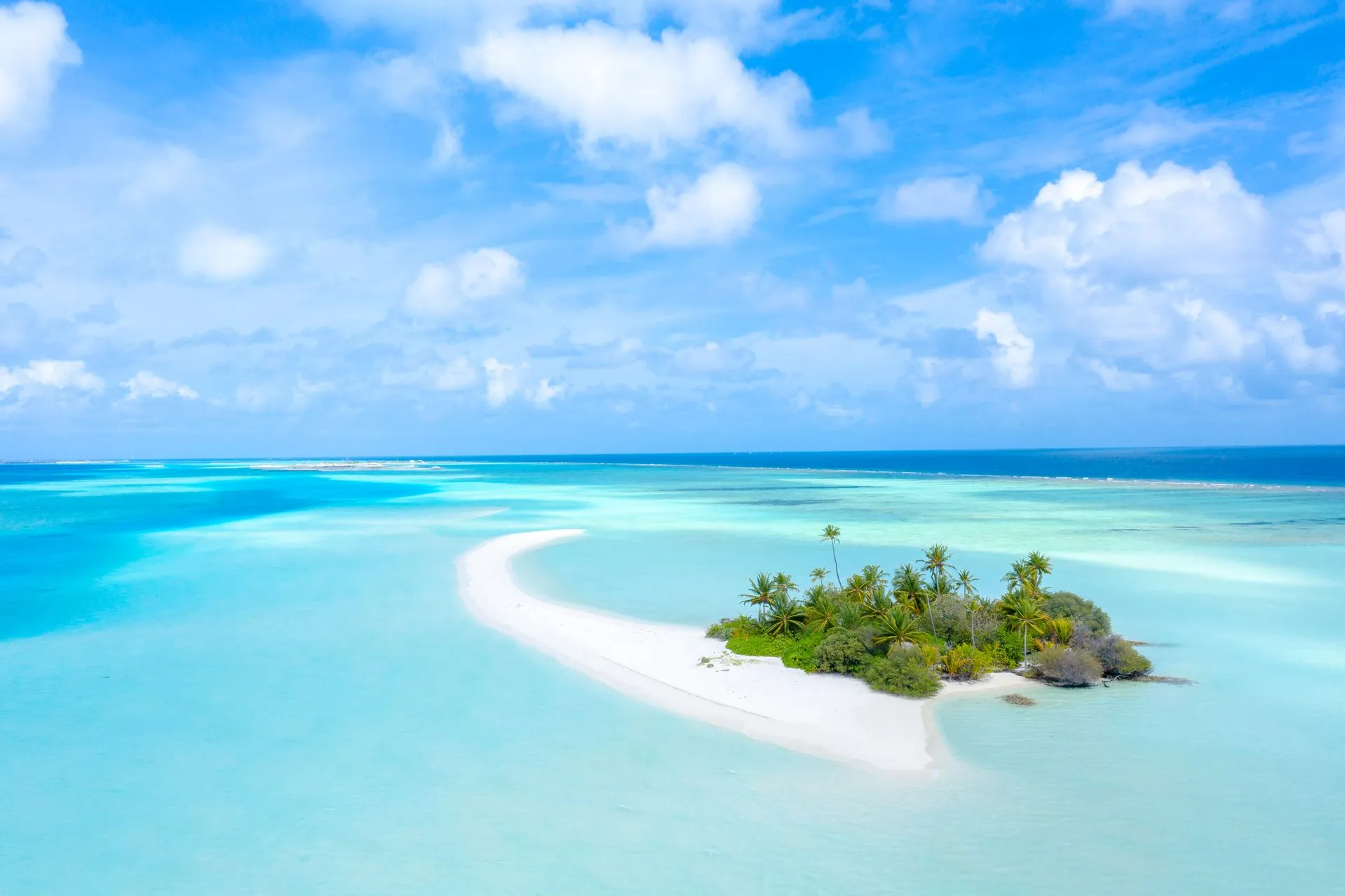
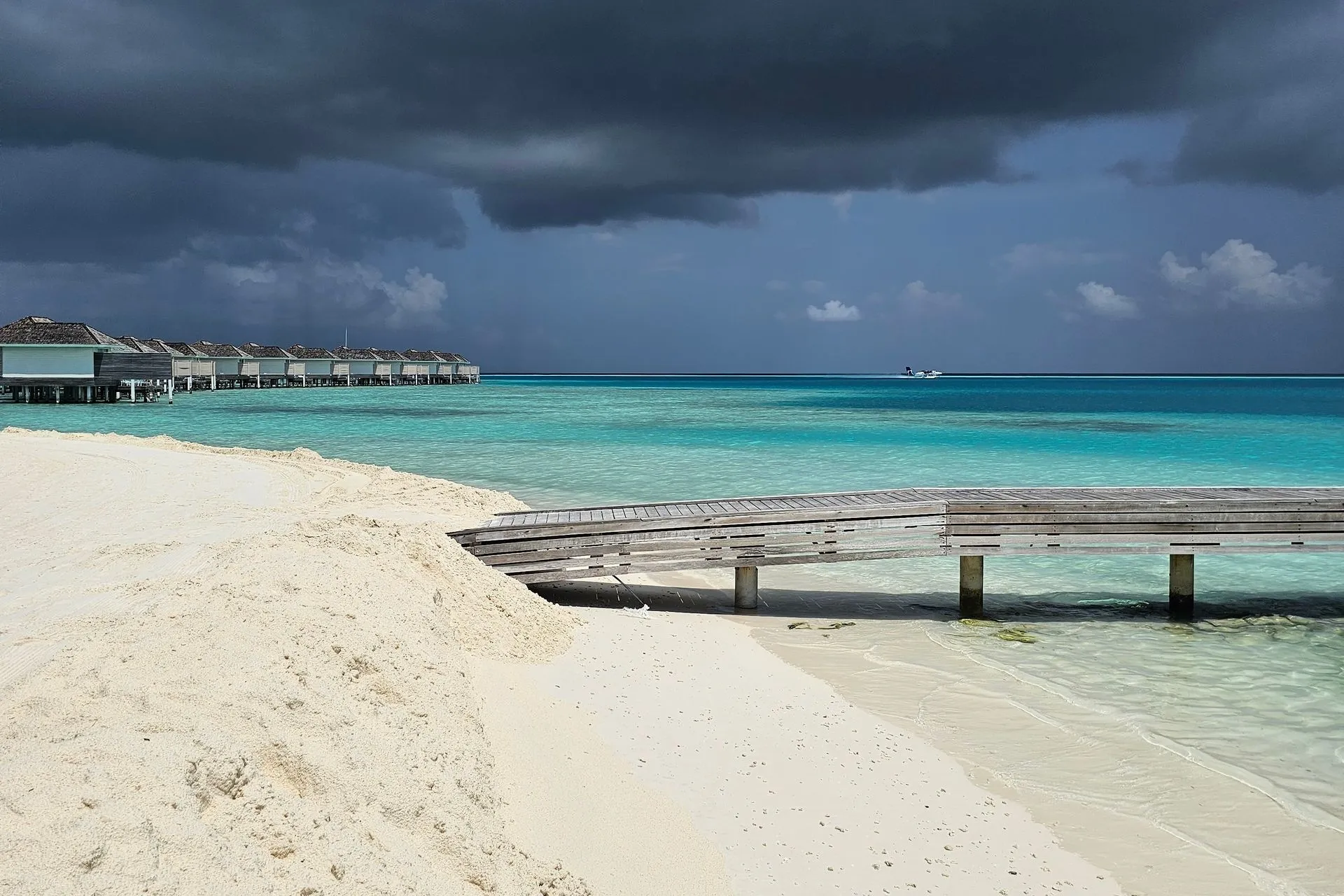
Maldives dry vs wet season at a glance
Nine rounds, scored honestly. The dry season takes weather, scenery, visibility, beaches and transfers; the wet season takes cost and mantas; resorts are a tie. Select a category to jump to the full comparison.
| Category | Dry seasonWet season |
|---|---|
| The nine rounds | |
| Weather & rainCalm and dry vs brief, heavy afternoon showers | Dry season, clearly |
| Scenery & skiesBlue lagoons vs dramatic storm light | Dry season, narrowly |
| Diving & snorkelingBest visibility vs surf and seasonal marine life | Dry season, narrowly |
| Mantas & whale sharksHanifaru Bay mantas, June to November | Wet season, narrowly |
| CostHighest resort prices vs noticeably lower rates | Wet season, clearly |
| Beaches & sandbanksCalm seas and minimal rain | Dry season, clearly |
| Resorts & romanceSame villas, same sea temperature, different price and sky | A genuine tie |
| Getting aroundSeaplanes and boats are weather-dependent | Dry season, narrowly |
| Safety & healthCalmer seas vs swell in September and October | Dry season, narrowly |
| Best for | |
| First-time visitorsCalm seas and the least rain on a trip you cannot move | Dry season |
| Budget travellersLower rates, cheapest in September and October | Wet season |
| Manta and whale shark fansHanifaru Bay from June to November | Wet season |
| OverallThe dry season for most trips, the wet season for price and mantas | Dry season, narrowly |
One sea, two monsoons
The Maldives stays between 27 and 31°C all year, so the two seasons differ by rain, price and marine-life timing, not by temperature. The lagoons, reefs and resorts are the same; the sky and the bill are not.
December to April: calm seas, minimal rain, best visibility
December through April is the northeast monsoon: calm seas, minimal rain and the best underwater visibility. It is also the season of the highest resort prices and the busiest booking calendars, so it is the one to book early.
May to November: brief downpours, lower rates, more marine life
May through November brings the southwest monsoon, with brief, intense afternoon downpours that usually clear within an hour or two, noticeably lower rates and better odds of whale sharks and mantas in Ari and Baa Atoll.
Key facts side by side
| Fact | ☀️ Dry season | 🌧️ Wet season |
|---|---|---|
| Months | December to April (northeast monsoon) | May to November (southwest monsoon) |
| Air temperature | 27–31°C | 27–31°C |
| Sea temperature | About 28–30°C | About 28–30°C |
| Rain | Minimal, calm seas | Brief, intense afternoon downpours; heaviest September and October |
| Prices | Highest resort prices | Noticeably lower; cheapest September and October |
| Hanifaru Bay mantas | Out of season | June to November, peak July and August |
| South Ari whale sharks | Sightings on 70–90% of trips | Sightings on 70–90% of trips |
| Visa | Free, 30 days on arrival | Free, 30 days on arrival |
| Currency | Rufiyaa (MVR); resorts bill in US dollars | Rufiyaa (MVR); resorts bill in US dollars |
Figures from the Atlas Guide Maldives guide (August 2026 research). Check the Maldives Immigration Department for current entry rules.
Round 1 of 9
Weather and rain
Dry season wins, clearly
This is the main practical gap. The dry season is calm and dry; the wet season is warm with brief, heavy showers that usually pass within an hour or two.
| Months | Weather | What it is good for |
|---|---|---|
| Dec–Apr | Dry, calm seas, 27–31°C | First-time visitors and diving visibility, but peak prices |
| May–Jun | Transitional, occasional showers | Turtle nesting and lower prices before the peak wet season |
| Jul–Aug | Wet season, showers clear fast | Hanifaru Bay manta season, turtle hatchlings and lower rates |
| Sep–Oct | Heaviest rain, some swell | Surfing, continued manta and whale shark season, the cheapest rates |
Why the dry season wins: if you only have a week, a dry season trip protects it. The wet season is still warm, with sea temperature around 28 to 30°C, and the rain is mostly short and heavy rather than all-day, but it is the less predictable of the two. November is part of the southwest monsoon too, though the guide gives no separate row for it.
Round 2 of 9
Scenery and skies
Dry season wins, narrowly
Same atolls, different light. Dry season gives the postcard turquoise; the wet season gives dark skies over the same water.
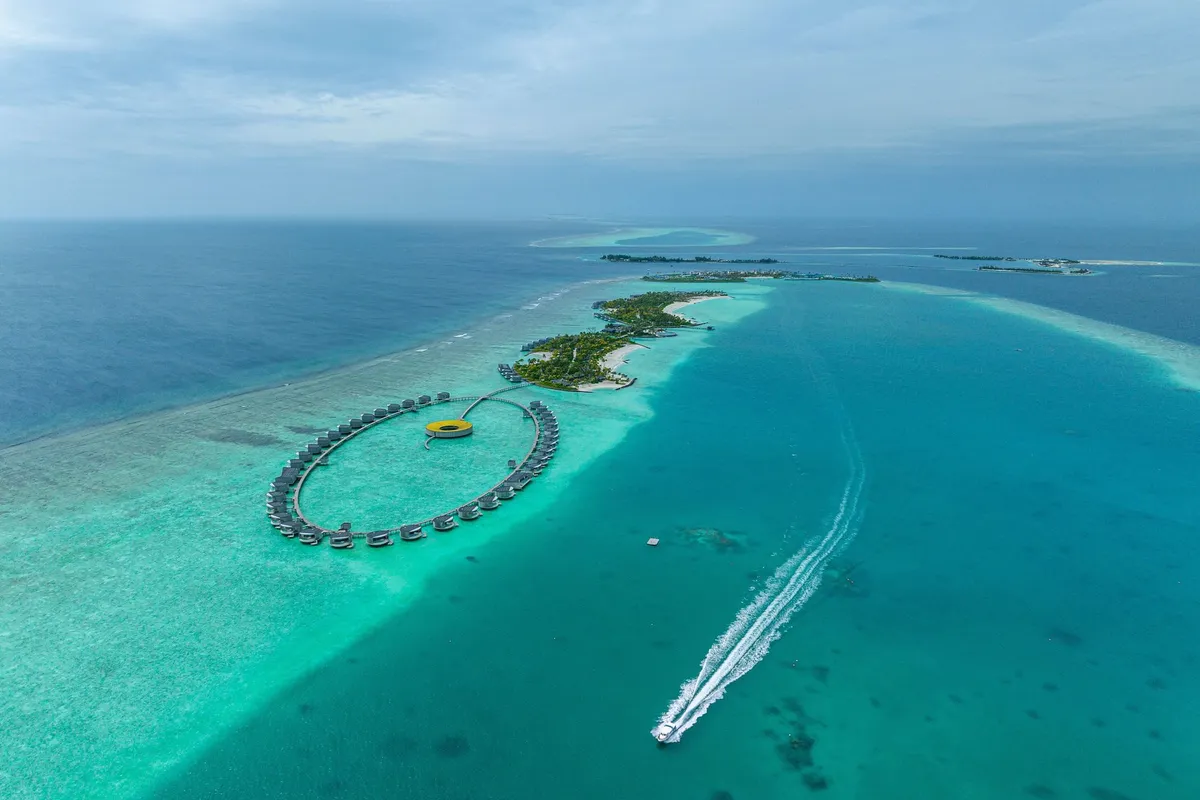 ☀️ Dry season
Clear lagoons from above
Calm seas and minimal rain are what make the atoll shapes, reef edges and lagoon colours easiest to see from a seaplane or boat. Each island is flat and ringed by a lagoon, so the sky is most of the view.
- Best for
- Seaplane views, lagoon photos
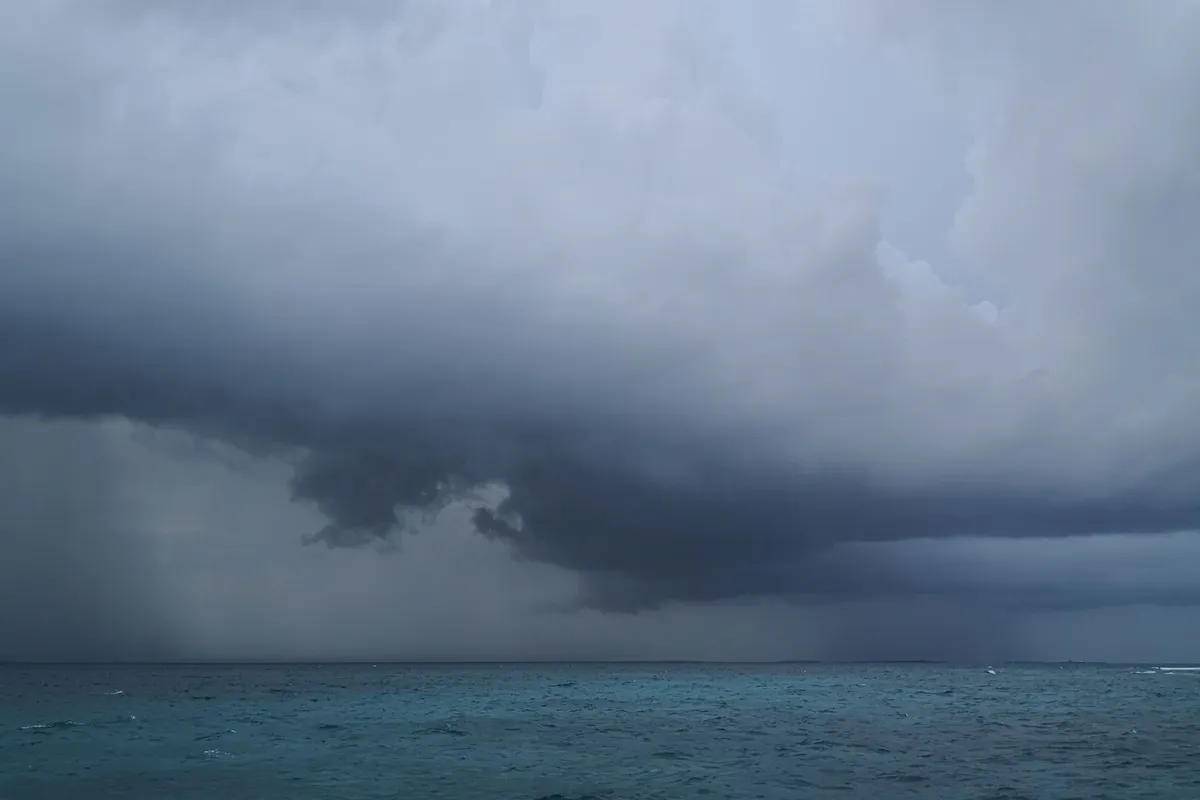 🌧️ Wet season
Storm light over the same water
In the wet season short, intense downpours roll across the water in the afternoon and clear again within an hour or two. The light is moodier and the crowds thinner, but the postcard turquoise is less reliable.
- Best for
- Moody skies, fewer people
Honest verdict: most people who photograph the Maldives want blue water under a blue sky, which is what the dry season delivers. If you like drama and can tolerate a shower, the wet season is not a bad look.
Round 3 of 9
Diving and snorkeling
Dry season wins, narrowly
The dry season has the best underwater visibility, but the wet season has the seasonal marine life. Reefs are in the water all year.
Best visibility, calm seas
December to April has calm seas and the best underwater visibility, which matters most on a first dive course or a shared snorkeling trip. A discover scuba dive costs about $150 and shared snorkeling trips $35 to $80.
- Cost
- Discover scuba ~$150, snorkeling trip $35–80
Swell, surf and manta season
September and October bring some swell, which suits surfing, while mantas and whale sharks keep the water busy. Visibility is not the headline, and the guide advises snorkeling and diving only with a guide or licensed operator in any season.
- Surf
- Thulusdhoo: Chickens and Cokes
Good to know: the guide does not quote dive prices by season, so the costs above apply to both. Never stand on coral or touch marine life in either season.
Round 4 of 9
Mantas and whale sharks
Wet season wins, narrowly
The wet season has the one big seasonal show, mantas at Hanifaru Bay. Whale sharks in South Ari are there in every month.
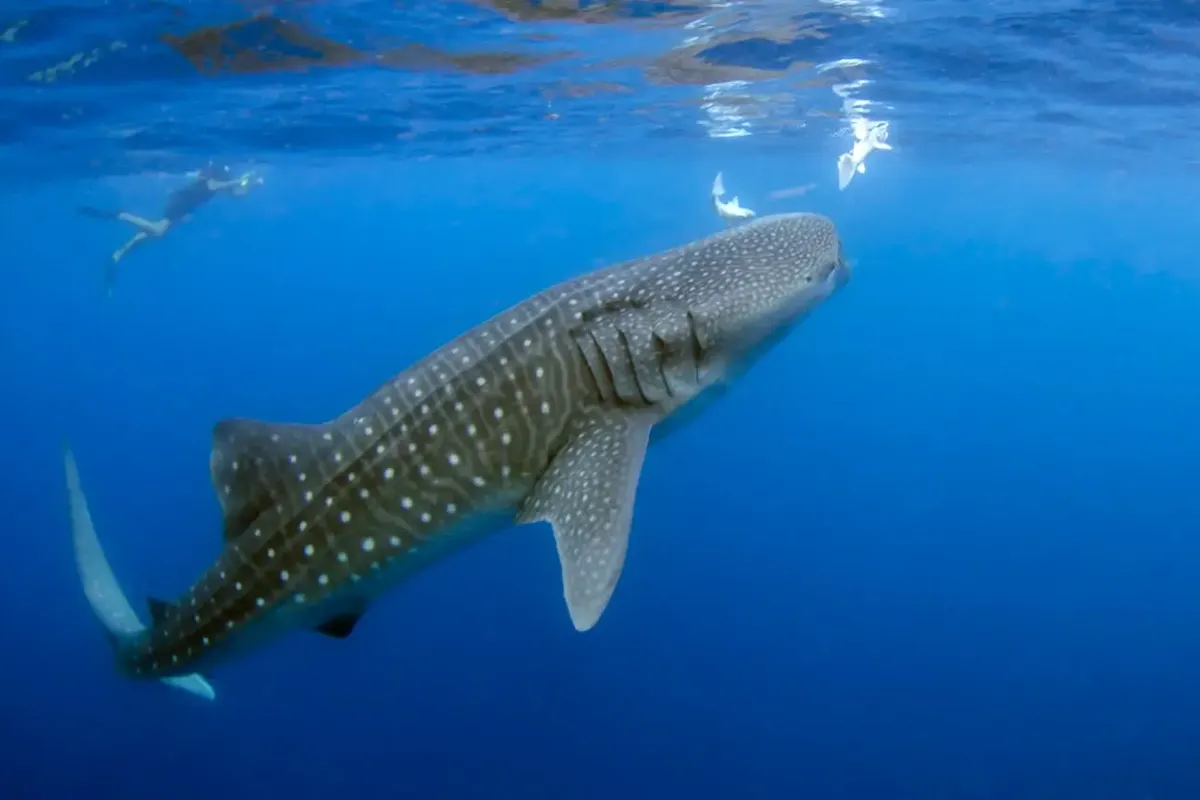 ☀️ Dry season
Whale sharks, but no Hanifaru mantas
South Ari Marine Protected Area holds the only documented resident population of juvenile whale sharks in the world, with sightings on 70 to 90 percent of trips in every month. Hanifaru Bay mantas, though, are a June to November event.
- Whale shark day trip
- $90–130
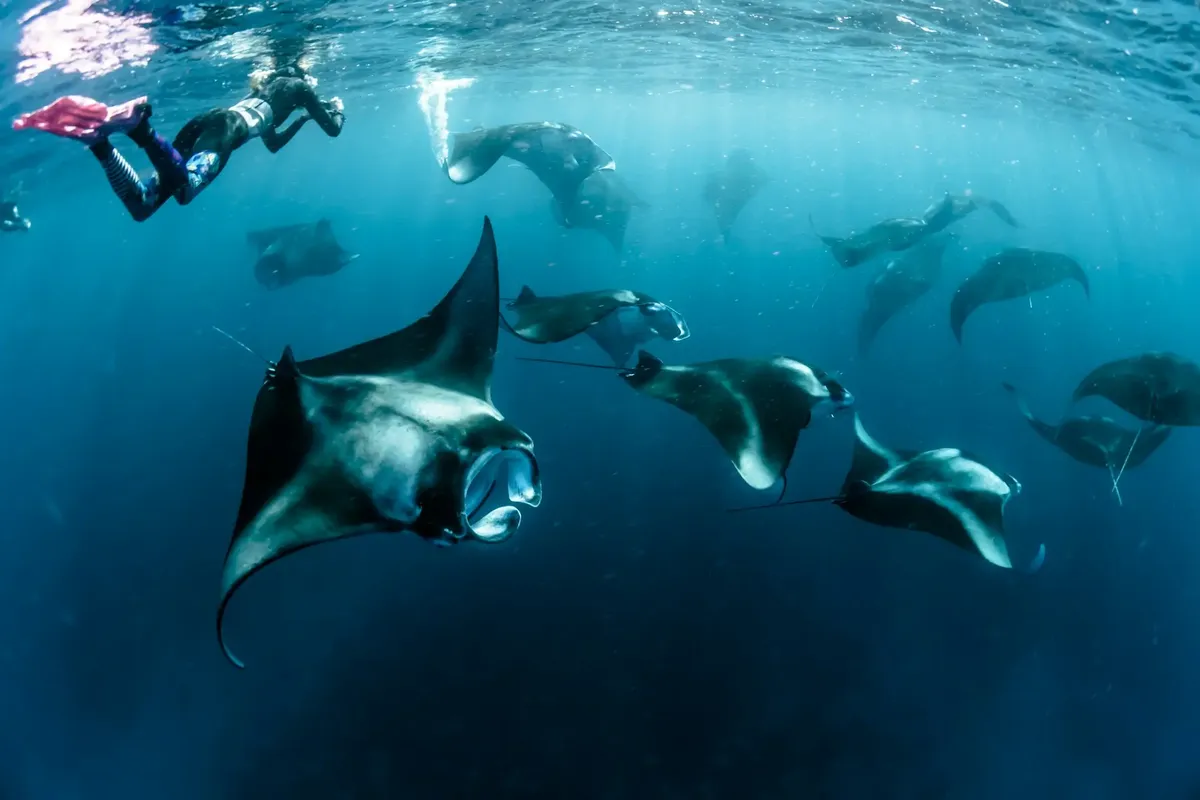 🌧️ Wet season
Hanifaru Bay, June to November
Baa Atoll is a UNESCO Biosphere Reserve, and from June to November, peaking in July and August, lunar tides push plankton into Hanifaru Bay, where reef mantas, often joined by whale sharks, sometimes over a hundred at once. Entry is snorkel-only, capped by rangers, in sessions of about 45 minutes.
- Don't miss
- Hanifaru Bay, snorkel only
Honest verdict: if mantas are the reason for the trip, go from June to November. If whale sharks are enough, you can go any month. Turtles are a May to August story, with nesting in May and June and hatchlings in July and August.
Round 5 of 9
Which is cheaper, dry or wet season?
Wet season wins, clearly
The Maldives is expensive in any season if you stay on a resort island. The wet season has noticeably lower rates, and September and October are the cheapest.
| Category | ☀️ Dry season | 🌧️ Wet season |
|---|---|---|
| Resort rates | The highest of the year, from around $400 a night | Noticeably lower; cheapest September and October |
| Guesthouse double (local island) | $25–50 a night | $25–50 a night, quoted without a seasonal change |
| Daily budget, local island | $60–100 a day | $60–100 a day, quoted without a seasonal change |
| Shared snorkeling excursion | $35–80 | $35–80 |
| Seaplane transfer | $300–600 round trip per person | $300–600 round trip per person |
The saving: the seasonal swing is in resort rooms, not guesthouses, local meals or excursions, which the guide quotes at one price. Prices reflect August 2026 research and drift with the season, so treat them as a planning baseline, not a quote.
Round 6 of 9
Beaches and sandbanks
Dry season wins, clearly
A beach day needs a clear sky. Calm seas and minimal rain make the dry season the better beach season by a distance.
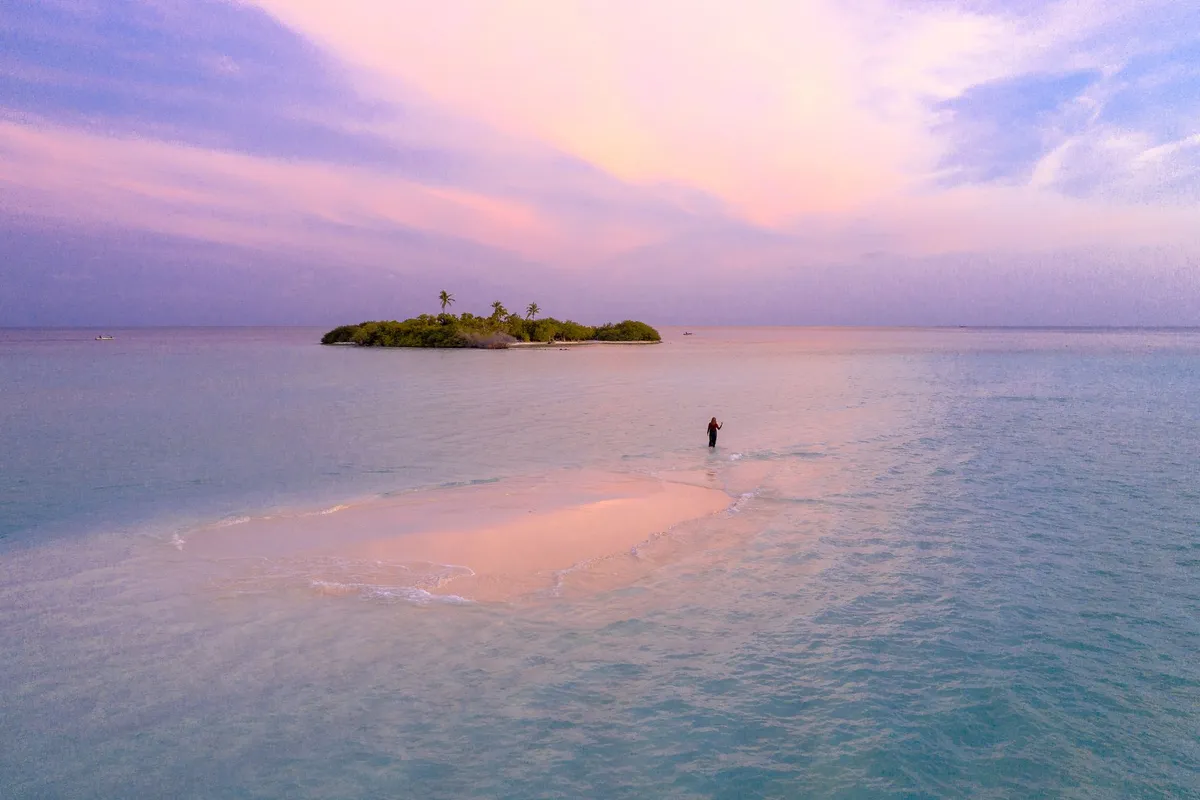 ☀️ Dry season
Calm water, long beach days
With calm seas and minimal rain, sandbank trips, snorkeling off the beach and sunset walks are easy to plan. On local islands, remember that swimwear is for the designated bikini beach only; elsewhere cover shoulders and knees.
- Good for
- Sandbank trips, sunsets
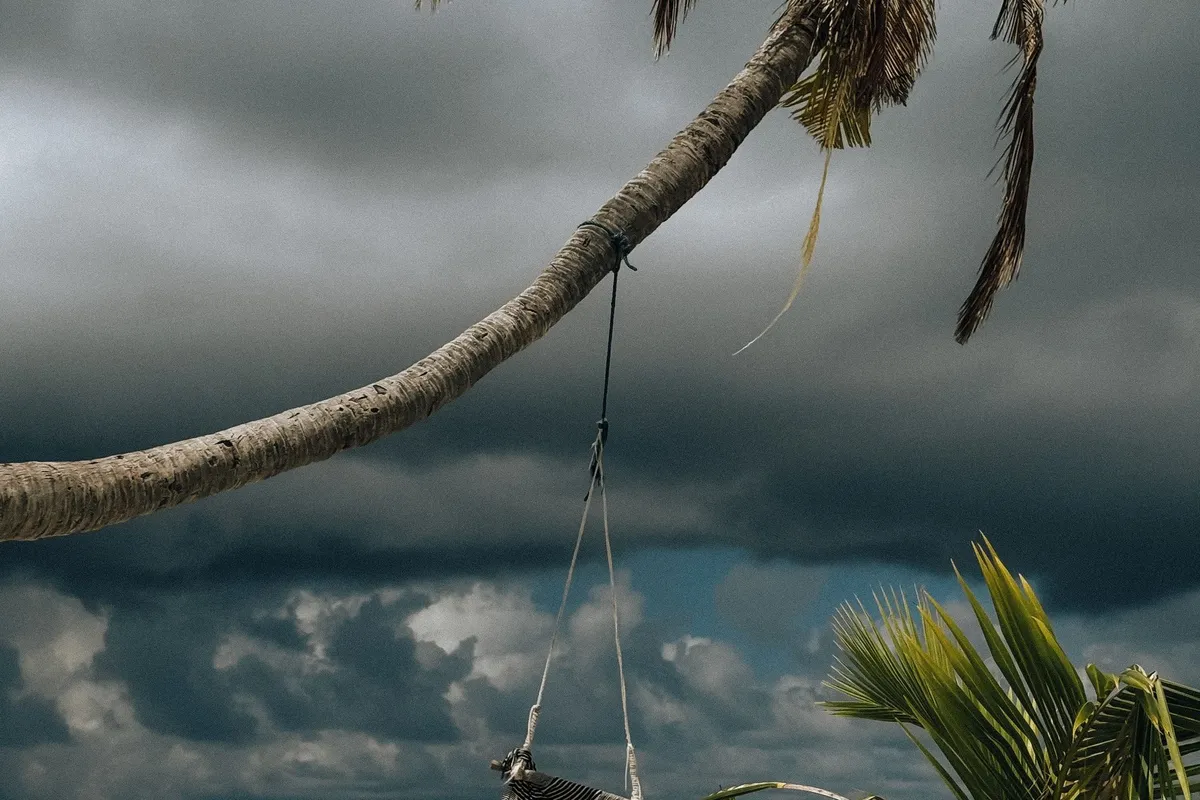 🌧️ Wet season
Beaches between the showers
The sea is just as warm, and showers usually clear within an hour or two, so beach time is possible, just less predictable. Expect to rearrange a sandbank trip around the weather.
- Good for
- Quiet beaches, flexible plans
Honest verdict: the wet season does not close the beaches, but it is the season where you check the sky before you book the boat.
Round 7 of 9
Resorts and romance
A genuine tie
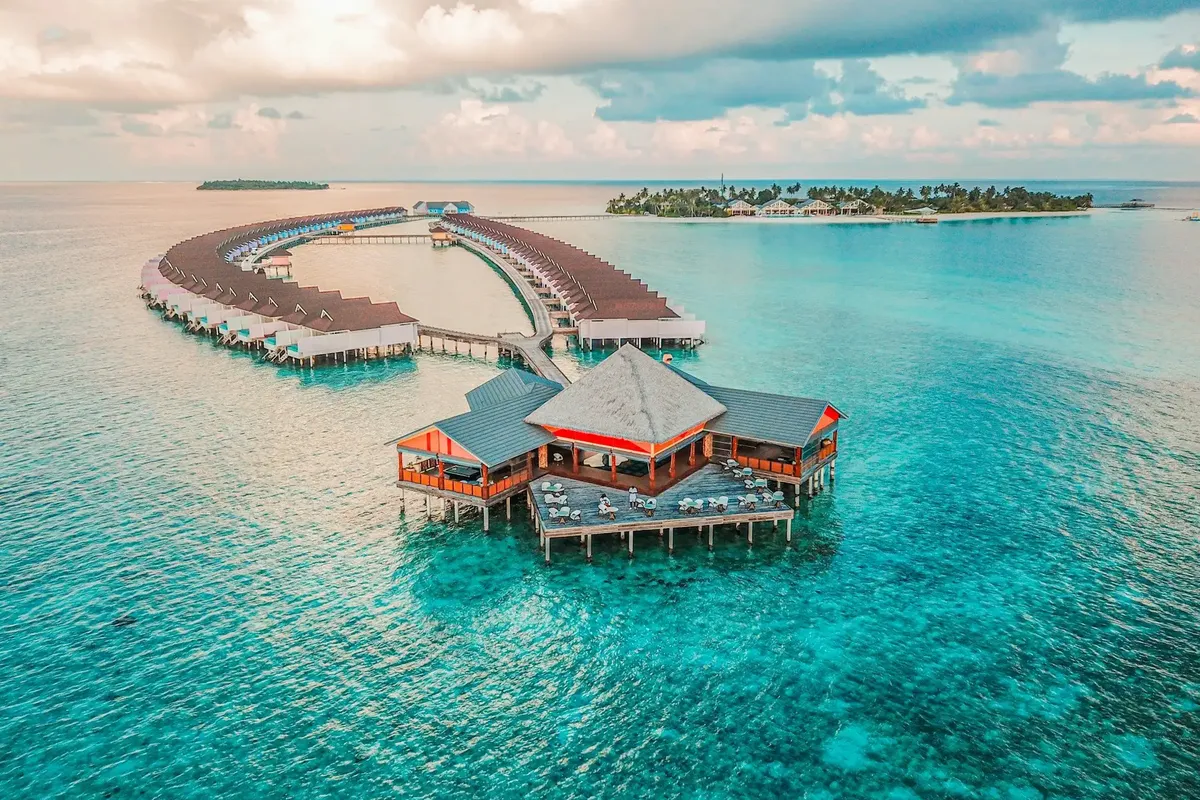
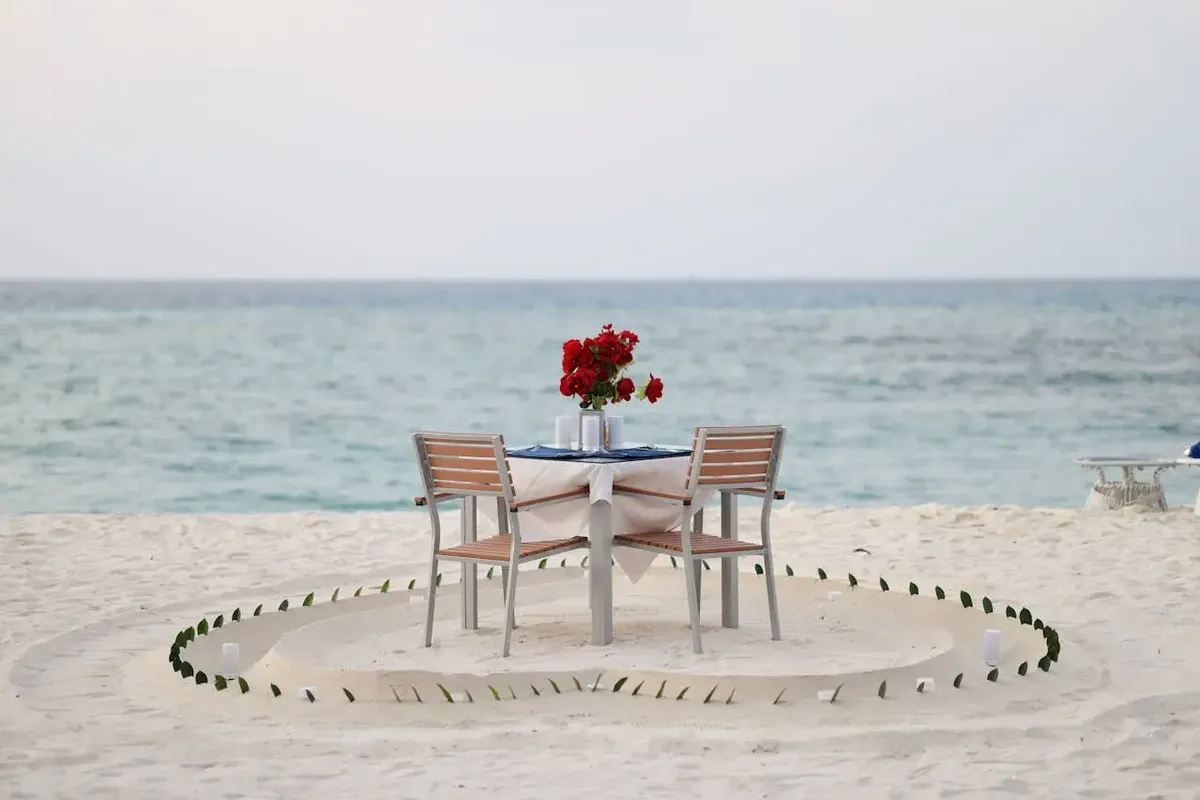
Overwater villas, private reefs and a beach dinner are there all year. The dry season gives the guaranteed sky; the wet season gives the lower bill.
 ☀️ Dry season
Peak-price villas under the best sky
About 160 resort islands are self-contained, all-inclusive properties starting around $400 a night. In the dry season you pay the most, and you are the most likely to get the calm, clear days the villa photo promises.
- From
- $400+ a night
 🌧️ Wet season
The same villa for less
The reef, the staff and the sea temperature are the same in the wet season, and the rates are noticeably lower. A shower is a reason to be on the deck, not in the airport.
- From
- $400+ a night, lower rates
Honest verdict: couples who want certainty choose December to April; couples who want a better villa for the same money choose May to November, and September and October are the cheapest of all.
Round 8 of 9
Getting around and transfers
Dry season wins, narrowly
Everything runs on boats and small planes. In the calmer season fewer plans bend to the weather.
Calm seas, easy connections
Speedboats cover nearby atolls in 30 to 90 minutes, seaplanes reach distant resorts in daylight hours, and domestic flights plus a boat reach the furthest atolls such as Addu. Calm seas and minimal rain make all of that easier to rely on.
- Typical prices
- Shared speedboat $20–30, seaplane $300–600
Plan a buffer
The same transfers run in the wet season, but seaplanes are weather-dependent and September and October bring some swell. Do not book a tight same-day connection to a flight home.
- Tip
- Leave a spare day around international flights
Practical: the public ferry costs under $5 a route but runs on limited daily schedules, so it suits flexible travellers more than a tight itinerary in either season.
Round 9 of 9
Safety and health
Dry season wins, narrowly
The Maldives is safe for tourists in both seasons, and crime is rare. The risks are water-related, and a calmer sea is the easier one to manage.
☀️ Dry season: what to watch
- Currents around channels and reef drop-offs can be strong; snorkel and dive only with a guide or licensed operator.
- Unlicensed operators: stick to registered dive centres and tour operators, especially for whale shark and manta trips.
- Medical evacuation from a remote atoll can cost thousands of dollars, so confirm your insurance covers it.
- Sun: use reef-safe sunscreen, which some resorts and marine parks now require.
🌧️ Wet season: what to watch
- Swell in September and October, with the heaviest rain; follow the boat crew's judgement on the day.
- Weather-dependent seaplanes: leave a buffer around flights.
- Currents and unlicensed operators are the same risk as in the dry season.
- Medical evacuation cover matters in every season.
In both seasons, the emergency numbers are 911 (national emergency), 102 (ambulance), 118 (fire) and 119 (police). The US State Department rates the Maldives Level 2, its standard rating for terrorism risk, not a warning against travel.
Which season is better for specific trips?
Dry season for first trips, visibility and fixed dates. Wet season for lower prices, mantas and surf.
First-time Maldives visitors
Dry season
Calm seas and the least rain on a trip you cannot reschedule.
Budget travellers
Wet season
Noticeably lower rates, cheapest in September and October.
Manta ray lovers
Wet season
Hanifaru Bay aggregations run June to November, peaking in July and August.
Divers who want visibility
Dry season
December to April has the best underwater visibility.
Surfers
Wet season
September and October swell; Thulusdhoo is the surf hub.
Honeymooners with a fixed date
Dry season
The most reliable sky for the villa photos.
Couples who want a better villa for less
Wet season
Lower resort rates for the same reef and the same warm water.
Anyone with a tight itinerary
Dry season
Calm seas and fewer weather-dependent transfer delays.
Sample itineraries for each season
Same reefs, different priorities. The guide says five to seven days covers one base well. Pick the tab for your travel window.
Dry season: 7 days on a local island
- Day 1
Arrive and transfer. Land at Velana Airport (MLE) and take a shared speedboat to Maafushi, about 30 minutes, for $20 to $30.
- Days 2–3
Learn to dive. A discover scuba dive costs about $150, and the visibility is at its best from December to April.
- Days 4–5
Reef and sandbank. A shared snorkeling excursion at $35 to $80, then time at the designated bikini beach.
- Days 6–7
Whale sharks and home. A whale shark day trip at $90 to $130, then a transfer back with a buffer before the flight.
Wet season: 7 days for mantas and savings
- Day 1
Arrive with a buffer. Land at Velana Airport (MLE) and take a shared speedboat to Maafushi; a spare night in Malé helps if weather delays a transfer.
- Days 2–3
Local island base. Guesthouse rooms cost $25 to $50 a night, and a shared snorkeling trip $35 to $80, with showers usually clearing within an hour or two.
- Days 4–5
Manta season. Add a stay in Baa Atoll for Hanifaru Bay, June to November (July and August peak): snorkel-only, ranger-capped sessions of about 45 minutes.
- Days 6–7
South Ari and home. Whale sharks are sighted on 70 to 90 percent of trips in every month; leave a spare day before your flight.
Either way: book a registered operator, confirm whether your accommodation is on a resort island or a local island, and confirm your travel insurance covers medical evacuation. Itineraries are samples, not quotes.
Verdict: Maldives in the dry or wet season?
The dry season wins narrowly. It wins six rounds to two, with one tie, and it is the safe choice for a first trip. The wet season is the better deal and the only time for Hanifaru Bay mantas.
Choose the dry season if…
Dry season, for calm seas and a clear sky
The right choice when you want the most predictable weather and the best visibility and can pay peak resort prices.
- You want the calmest seas and the least rain
- Diving or snorkeling visibility is a priority
- You have a fixed week and cannot afford a rainy day
- You want the most reliable sky for beach and villa photos
- You are happy to pay peak resort prices
- You are booking early for a first trip
Choose the wet season if…
Wet season, for lower prices and mantas
The right choice when price or marine life matters more than a guaranteed blue sky, and you can plan around a shower.
- Lower resort rates matter more than a guaranteed blue sky
- You want Hanifaru Bay mantas, June to November
- You can handle a brief afternoon downpour
- You want surf in September or October
- You can leave a buffer around transfers and flights
- You already know the Maldives in the dry season
Weigh it for your own trip
Select everything that matters to you.
Pick what matters on this trip and the needle will move.
Maldives dry vs wet season: frequently asked questions
Is the Maldives better in the dry season or the wet season?
Neither wins outright, but most first-time visitors are better off in the dry season. December to April is the dry northeast monsoon, with calm seas, minimal rain and the best underwater visibility, but also the highest resort prices and the busiest booking calendars. May to November is the wet southwest monsoon, with brief, intense afternoon downpours that usually clear within an hour or two, noticeably lower rates and better odds of whale sharks and mantas in Ari and Baa Atoll. Temperatures stay between 27 and 31°C in both.
When is the best time to visit the Maldives?
December to April has the driest weather, the calmest seas and the best underwater visibility, so it is the safe choice for a first trip or a short stay where you cannot afford a rainy day. If price and marine life matter more than a guaranteed blue sky, May to November has lower rates and the manta and whale shark season.
Does it rain all day in the Maldives wet season?
Usually not. The southwest monsoon brings brief, intense afternoon downpours that normally clear within an hour or two. May and June are transitional with occasional showers, July and August are wet but showers clear fast, and September and October are the wettest months, with the heaviest rain and some swell. Temperatures barely change, sitting between 27 and 31°C all year.
Is the Maldives cheaper in the wet season?
Yes. May to November brings noticeably lower rates, and September and October are the cheapest months. December to April has the highest resort prices. The Atlas Guide quotes one set of prices rather than a seasonal table, so treat these as a baseline: guesthouse rooms on local islands run $25 to $50 a night, resort islands start around $400 a night, and shared snorkeling trips cost $35 to $80, with the biggest saving on resort rooms.
When is manta ray and whale shark season in the Maldives?
Hanifaru Bay in Baa Atoll hosts manta feeding aggregations from June to November, peaking in July and August, and it is snorkel-only and capped by park rangers. The South Ari Marine Protected Area has resident juvenile whale sharks, and operators report sightings on 70 to 90 percent of trips in every month of the year, so whale sharks are not limited to the wet season.
Is the water warm enough all year in the Maldives?
Yes. There is no cold season anywhere in the Maldives. Air temperatures sit between 27 and 31°C all year, and the sea stays around 28 to 30°C, so the choice between seasons is about rain, price and marine-life timing rather than temperature.
Can you surf in the Maldives in the wet season?
Yes, and the wet season is when it makes sense. September and October bring the heaviest rain and some swell, which is why the guide lists surfing as the best use of that period. Thulusdhoo in North Malé Atoll is the country's surf hub, with the Chickens and Cokes reef breaks a short boat ride offshore and a handful of surf-focused guesthouses.
Is the Maldives safe to visit in the wet season?
Yes. The US State Department rates the Maldives Level 2, its standard rating for terrorism risk on dozens of mainstream destinations, not a warning against travel. The real risks are water-related: currents, marine life encounters and unlicensed operators. The wet season adds swell in September and October, so choose a registered dive centre or tour operator and listen to the crew on the day.
Do rough seas or rain affect seaplane and boat transfers?
They can. Seaplane transfers run in daylight hours only and are weather-dependent, and the Maldives is a country where plans bend to weather and departure schedules more than almost anywhere in Asia. Speedboat transfers to nearby atolls take 30 to 90 minutes. In the wet season, leave a buffer on arrival and departure days rather than booking a tight connection.
There's no wrong answer here
The Maldives in the dry and the wet season are the same lagoons under two skies. Pick on what you want from this trip: the calm, clear days of December to April, or the lower prices and the manta season of May to November. If you can, go twice.