
Bangkok vs Chiang Mai at a glance
Eight rounds, scored honestly. Bangkok takes nightlife and, narrowly, getting around; Chiang Mai takes cost and, narrowly, safety; the rest are different strengths. Select a category to jump to the full comparison.
| Category | BangkokChiang Mai |
|---|---|
| The eight rounds | |
| SightsRoyal palace and river temples against a walkable Old City of temples | Different strengths |
| Food & drinkMichelin street food against northern Thai khao soi | Different strengths |
| NightlifeRooftops, Muay Thai and Chinatown against walking streets and riverside bars | Bangkok wins, clearly |
| CostLower in every budget tier, about a third less at budget level | Chiang Mai wins, clearly |
| Getting aroundSkytrain, metro and river boats against songthaews and scooters | Bangkok wins, narrowly |
| WeatherSame best months, different problems: heat and smog against burning-season haze | Tie |
| SafetyScores of 8.5 and 7.8 out of 10 in the Atlas guides | Chiang Mai wins, narrowly |
| Day tripsAyutthaya and floating markets against mountains, Pai and Chiang Rai | Different strengths |
| Best for | |
| First-time visitors wanting the big sightsThe Grand Palace, Wat Pho and Wat Arun fit in one day. | Bangkok |
| Budget-conscious travellersBudget days of ฿800-1,200 against ฿1,200-1,800. | Chiang Mai |
| Nightlife and rooftop barsSky Bar, Muay Thai and Chinatown after dark. | Bangkok |
| OverallNo single winner: it depends on the trip, and most travellers do both | It depends |
What you're really choosing between
Bangkok and Chiang Mai share a country, a currency and a food culture, but one is a river-and-rail megacity and the other a slow, walkable northern town with mountains behind it.
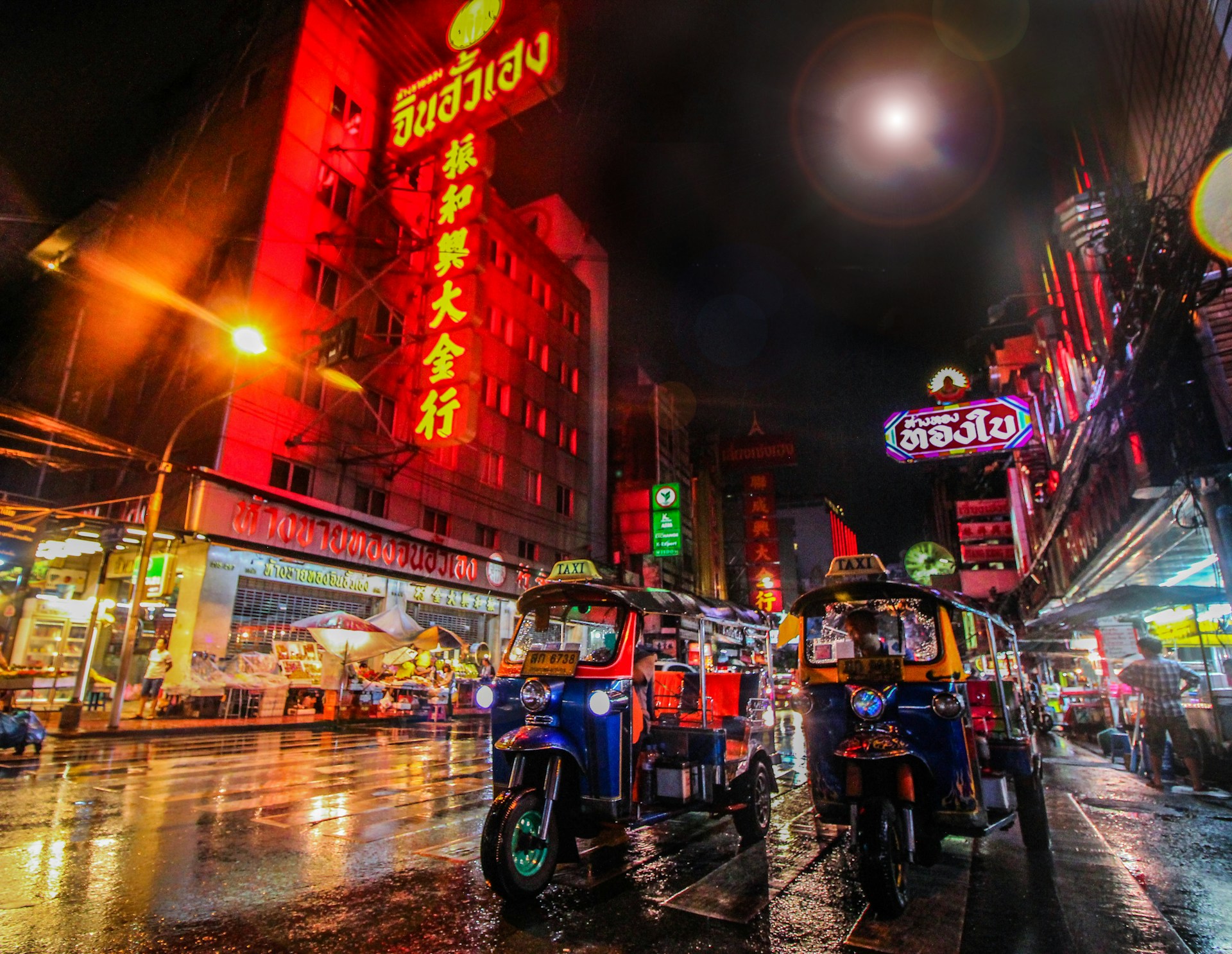
A megacity that runs on street food and river boats
The Grand Palace, Wat Pho and Wat Arun sit on the old royal island and along the river, Chinatown turns into a street-food buffet after dark, and the skytrain and subway cross the city above the traffic. The cost is relentless heat and humidity, some of the worst traffic in Asia, and scams that run on repeat around the main sights.
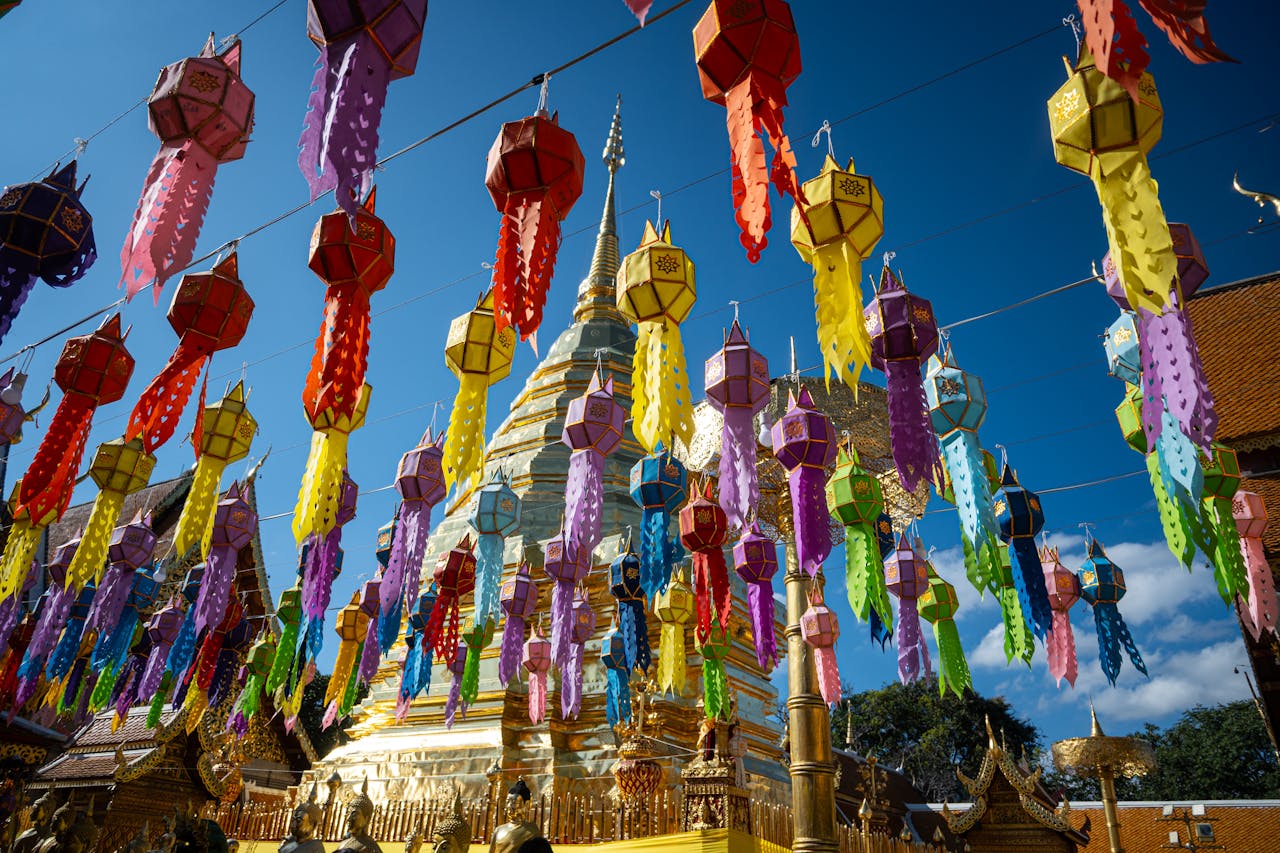
A moated Old City where the north does everything slower
The square-moated Old City holds 300+ temples in an area you can cross in about twenty minutes, with a ring of cafes, markets and mountains around it. It is cheaper, calmer and easier to walk than Bangkok, but it has no metro and it vanishes into smoke for part of March and April.
Key facts side by side
| Fact | 🏙️ Bangkok | ⛰️ Chiang Mai |
|---|---|---|
| Country | Thailand | Thailand |
| Currency | Baht (THB) | Baht (THB) |
| People | Over ten million | 1.8 million (province) |
| Main airport | Suvarnabhumi (BKK); Don Mueang (DMK) for budget airlines | Chiang Mai Airport (CNX), 5 km from the Old City |
| Budget travel, per day | ฿1,200–1,800 | ฿800–1,200 |
| Mid-range, per day | ฿3,000–5,000 | ฿2,000–3,500 |
| Days needed | 3 days | 4 to 5 days |
| Best months | Nov–Feb | Nov–Feb |
| Atlas safety score | 7.8/10 | 8.5/10 |
| Tap water | Not drinkable | Not safe: drink bottled or filtered |
| Tourist Police | 1155 | 1155 |
Typical 2026 prices as listed in the Atlas city guides. Both cities use the Thai baht.
Round 1 of 8
Landmarks and sights
Different strengths
Bangkok has the headline royal sights on a river; Chiang Mai has a temple-dense Old City you cover on foot. Different strengths, not a clear winner.
 🏙️ Bangkok
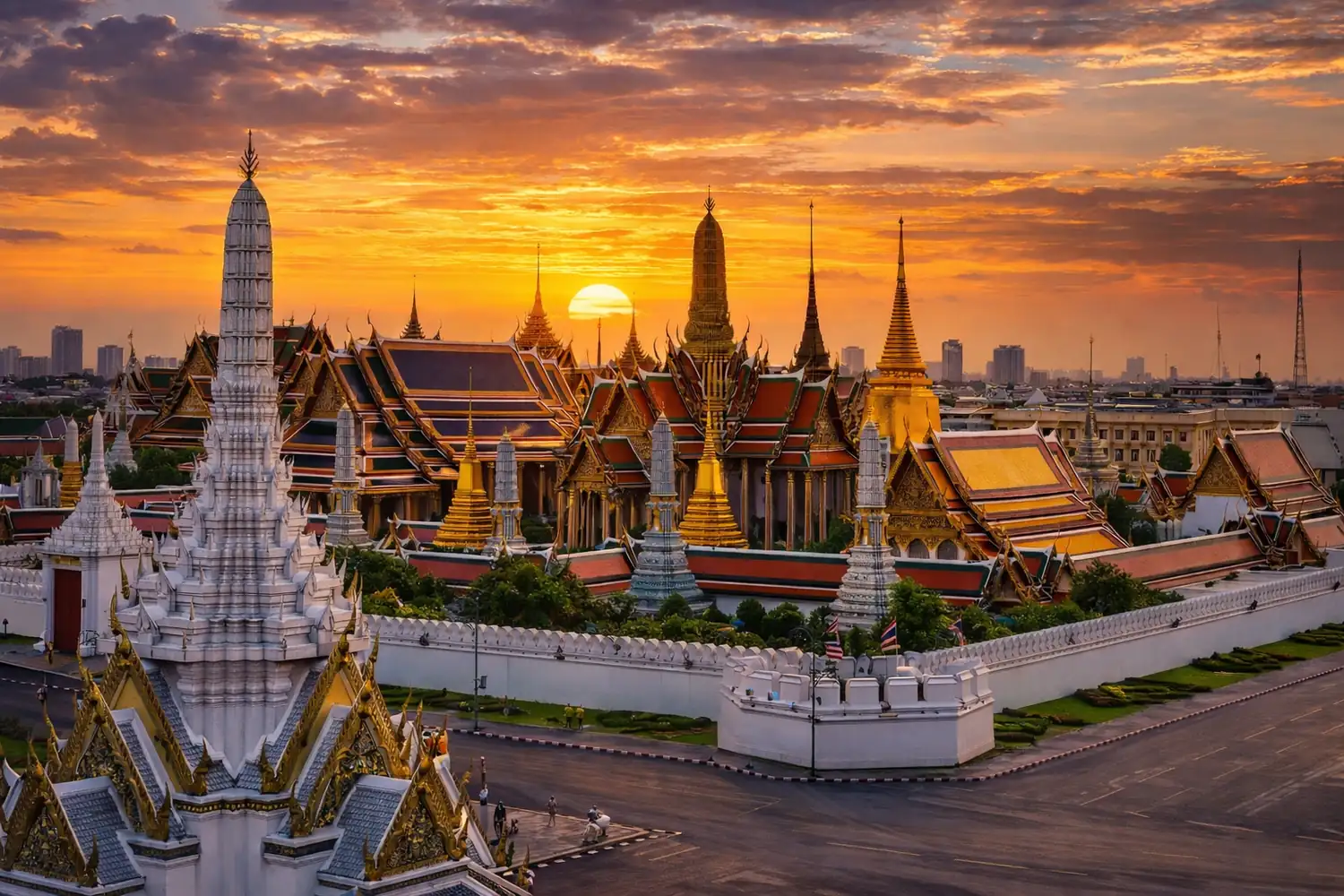
The royal island, the river and the markets
The Grand Palace (฿500, open 8:30am to 3:30pm) and the Temple of the Emerald Buddha inside it are Thailand's most sacred and most crowded site, so go at opening. Wat Pho, about ten minutes' walk south (around ฿300), houses a 46-metre gold reclining Buddha, and a cross-river ferry takes you to Wat Arun. Jim Thompson House is ฿250 and Chatuchak Weekend Market has around 15,000 stalls on Saturday and Sunday.
- Don't miss
- Grand Palace, Wat Pho, Wat Arun
 ⛰️ Chiang Mai
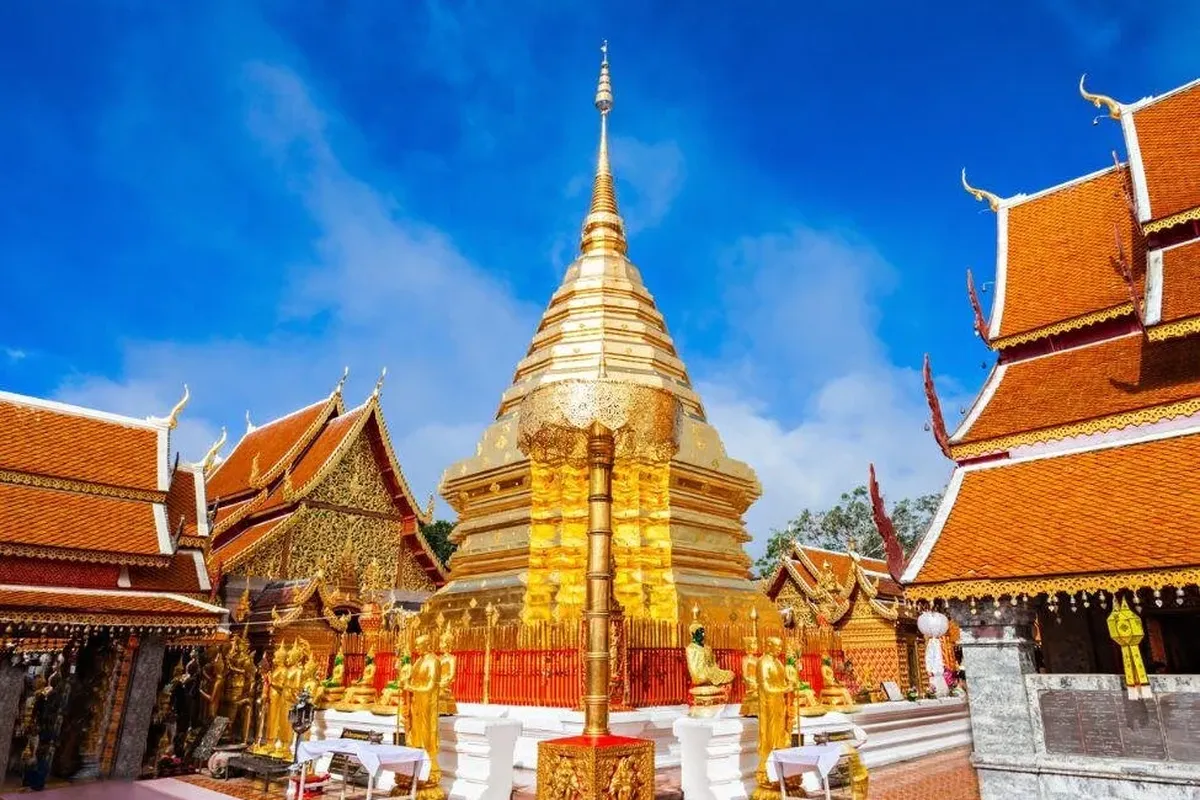
Three hundred temples inside one moat
The Old City holds the finest temples within a walkable square: Wat Phra Singh (free to ฿50) is a 14th-century Lanna masterpiece, Wat Chedi Luang is a ruined 15th-century chedi of massive scale and Wat Chiang Man is the oldest temple in the city. Doi Suthep, 15 km out, costs ฿30 to enter and is reached by 306 steps or a funicular. A morning of slow walking naturally visits six or seven temples.
- Don't miss
- Wat Phra Singh, Wat Chedi Luang, Doi Suthep
Round 2 of 8
Food and drink
Different strengths
Bangkok is the stronger street-food and Michelin city; Chiang Mai cooks a northern Thai cuisine you cannot get in the capital. Different strengths, and both are cheap.
 🏙️ Bangkok
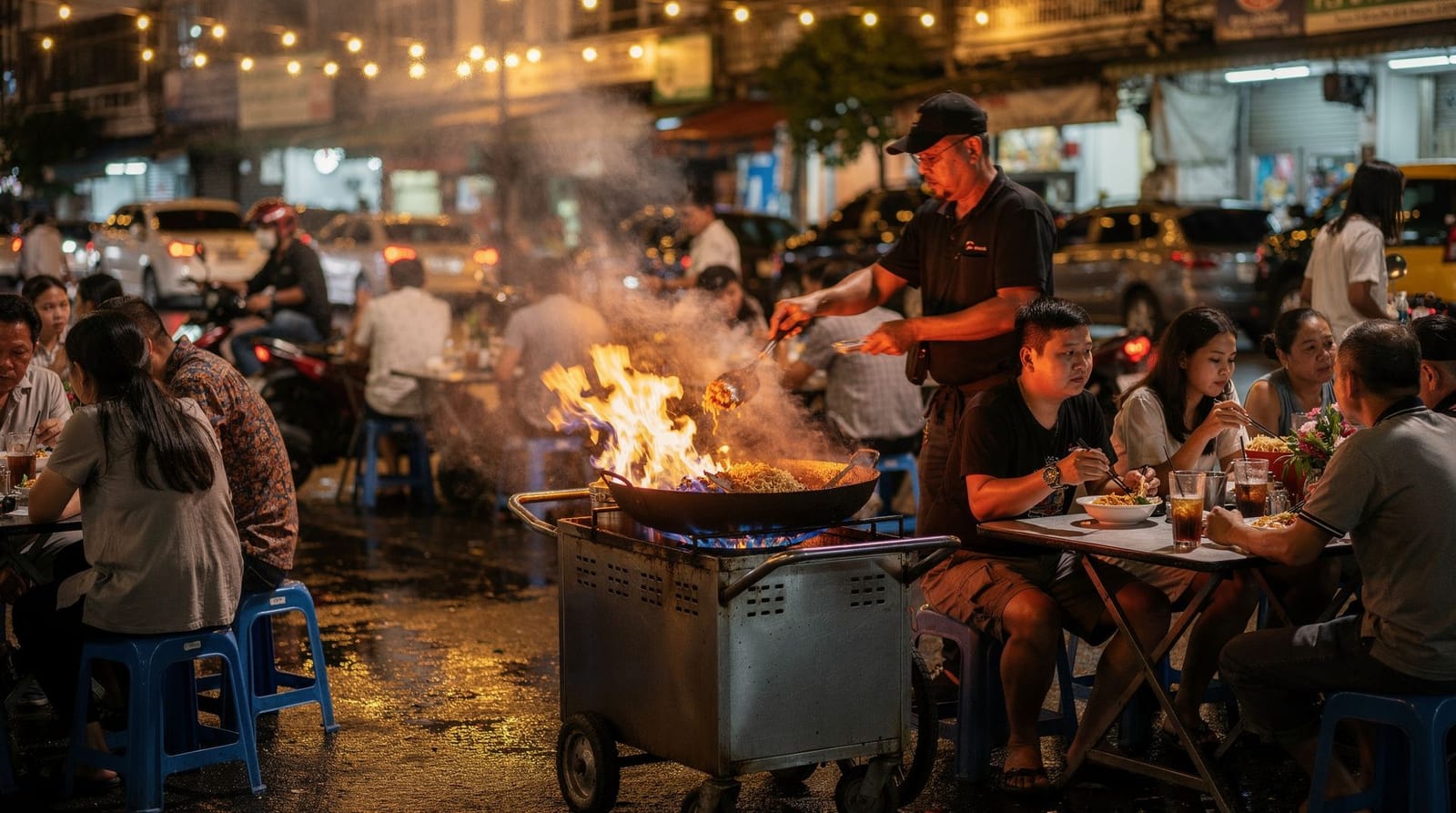
Street stalls, Michelin stars and night markets
Some of the most famous dishes cost under ฿100, cooked by vendors who have perfected a single recipe. After 6pm Yaowarat Road in Chinatown becomes a moving buffet at ฿50-200 a dish, Thipsamai has served egg-wrapped pad thai since 1966, and Jay Fai earned a Michelin star in Bangkok's first guide in 2018 (฿1,000-1,500, open only a few days a week). A pad kra pao or khao man gai from a street cart is ฿50-70.
- Don't miss
- Chinatown stalls, Thipsamai, Jay Fai
 ⛰️ Chiang Mai
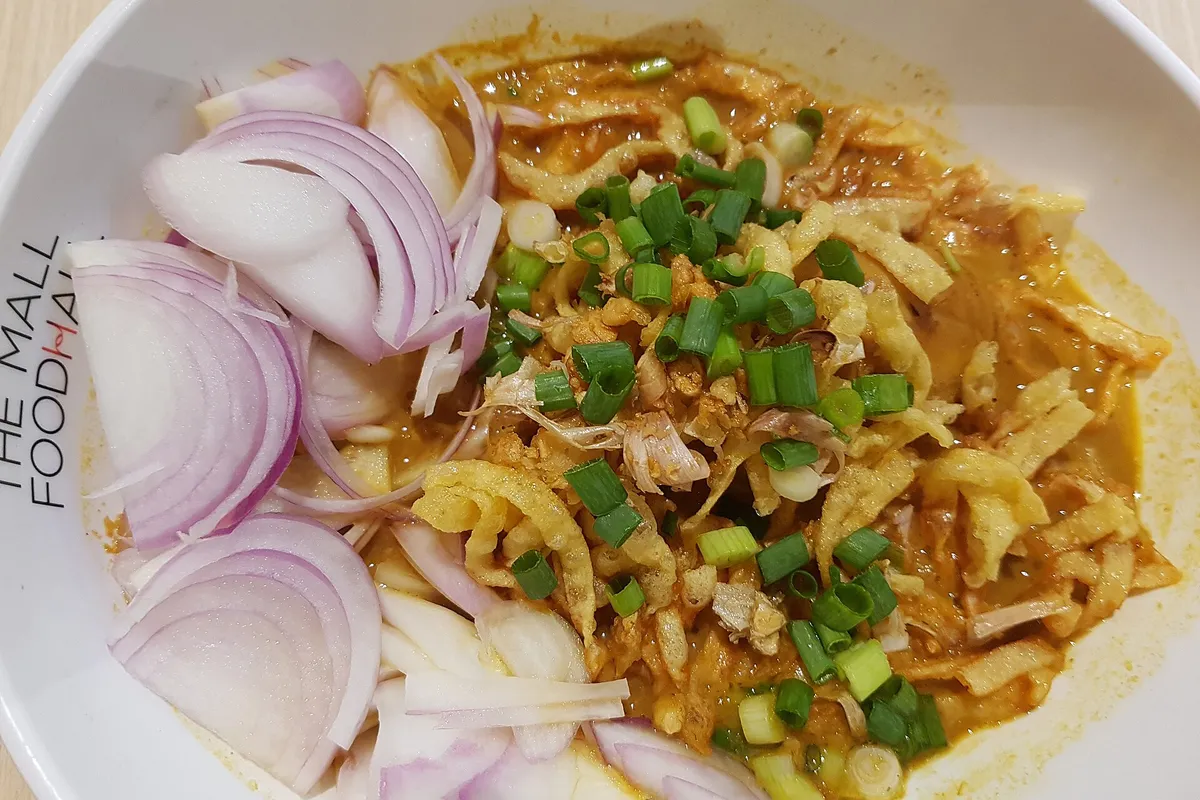
Khao soi, northern sausage and cooking schools
Northern Thai (Lanna) food is a distinct tradition: more herb-driven, built around fermented flavours, with Burmese and Yunnan Chinese influences. Khao soi, a coconut curry broth with egg noodles and crispy noodles on top, is ฿50-80; sai oua sausage is ฿30-60 a link and nam prik noom ฿40-80. Warorot Market has a basement food hall open from 4am, and a Thai cooking class with a market visit runs ฿800-1,500.
- Don't miss
- Khao soi, sai oua, Warorot Market
Round 3 of 8
Nightlife
Bangkok wins, clearly
Bangkok wins on range and scale, from rooftop bars and Muay Thai to Chinatown after dark. Chiang Mai's evenings are quieter and built around markets and live music.
 🏙️ Bangkok
Rooftops, Muay Thai and a city that stays up
Bangkok's rooftop bars are a rite of passage: Sky Bar at Lebua is the famous one, while Octave and Tichuca are more relaxed. Professional Muay Thai at Rajadamnern or Lumpinee has an atmosphere among Thai fans that is as much the show as the fights, and Jodd Fairs and the other night markets suit the evening. Check bar bills carefully around Nana, Soi Cowboy and Patpong.
- Don't miss
- Sky Bar, Rajadamnern, Yaowarat Road
 ⛰️ Chiang Mai
Walking streets, riverside bars and live music
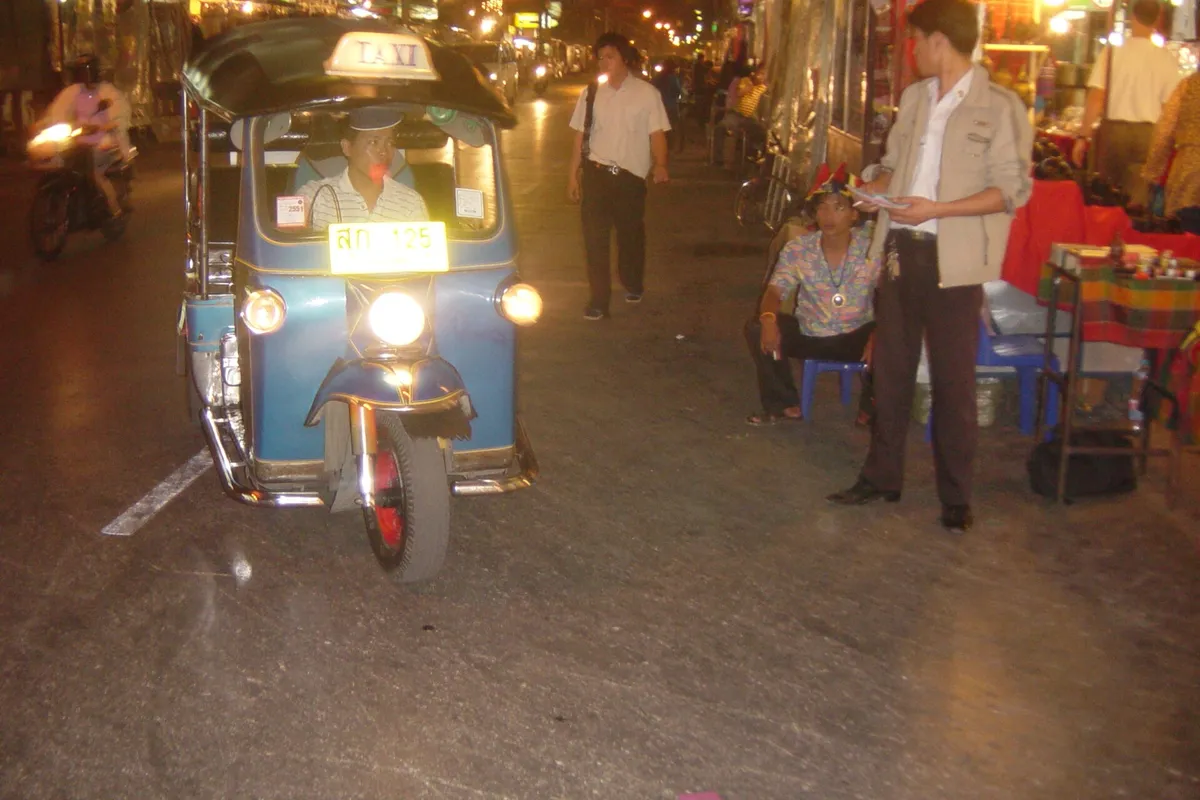
The Sunday Walking Street runs along Ratchadamnoen Road from Tha Phae Gate and is the larger of the two weekend markets; the Saturday Walking Street on Wualai Road is smaller and quieter. The Riverside along the Ping River is the most atmospheric evening area, with bars, live music and good restaurants, and the Night Bazaar is open every evening. It is a calmer night out than Bangkok.
- Don't miss
- Sunday Walking Street, Riverside bars, Night Bazaar
Round 4 of 8
Which is cheaper, Bangkok or Chiang Mai?
Chiang Mai wins, clearly
Chiang Mai is cheaper in every budget tier, about a third less at budget level, though Bangkok is already cheap by big-city standards.
| Typical cost | 🏙️ Bangkok | ⛰️ Chiang Mai |
|---|---|---|
| Budget travel, per day | ฿1,200–1,800 | ฿800–1,200 |
| Mid-range, per day | ฿3,000–5,000 | ฿2,000–3,500 |
| Comfortable, per day | ฿10,000+ | ฿5,000+ |
| Hostel dorm bed (Chiang Mai: or budget guesthouse) | ฿350–600 | ฿250–500 |
| Hotel with pool | ฿1,500–3,000 | ฿1,200–2,500 |
| Street meal | ฿50–100 | ฿50–80 (khao soi) |
| Local transport | ฿17–65 per BTS or MRT ride | ฿20–30 shared songthaew |
| Airport to centre | ฿300–450 taxi plus ฿50 surcharge (rail link ฿45) | ฿150–200 Grab or taxi |
Typical 2026 prices as listed in the Atlas guides to Bangkok and Chiang Mai, all in Thai baht (฿).
Bottom line: Chiang Mai is lower at budget, mid-range and comfortable level (฿800-1,200 a day against ฿1,200-1,800 at the bottom end). In Bangkok the bills come from rooftop bars, Western restaurants and hotel upgrades; in Chiang Mai the big-ticket item is a full day at an ethical elephant sanctuary, from ฿2,500.
Round 5 of 8
Getting around and getting there
Bangkok wins, narrowly
Bangkok's rails and river boats beat its traffic; Chiang Mai has no metro but is small enough to walk. Bangkok edges it on transport.
Use the river and the rails, not the roads
From Suvarnabhumi, the Airport Rail Link reaches Phaya Thai on the BTS in about 26 minutes for ฿45. The BTS Skytrain and MRT subway cost ฿17-65 per ride, the Chao Phraya Express Boat links the old town for a few baht, and Grab and Bolt give fixed prices. The traffic is among the worst in Asia, and tuk-tuks are fun once but cost more than a taxi.
- Best option
- BTS and MRT, plus the Express Boat
Songthaews, Grab and a rented scooter
Chiang Mai has no metro. Red songthaew shared trucks cost ฿20-30 per person on fixed routes, Grab is ฿50-150 for most journeys, and an automatic scooter is ฿150-250 a day (a valid licence is required). The airport is 5 km from the Old City, and the Old City itself is entirely walkable.
- Best option
- Songthaew in town, scooter for the mountains
Between the two: fly from Don Mueang (DMK) on AirAsia or Nok Air, about 1 hour from ฿500 with advance booking. The overnight sleeper train takes 12-13 hours from ฿600 for a second-class berth, and the bus from Mo Chit takes 10-11 hours. Flying is by far the most practical.
Round 6 of 8
When to go: Bangkok and Chiang Mai
Tie
Both are best from November to February, and both have a bad stretch: heat and smog in Bangkok, burning-season haze in Chiang Mai. Pick the season, not the city.
Hot all year, best from November to February
Bangkok is hot all year. November to February is the most comfortable period at around 25-32°C with lower humidity; March to May regularly tops 35°C, and mid-April brings Songkran, the three-day Thai New Year water fight. June to October is the rainy season, with heavy afternoon storms but lower prices. Air quality drops noticeably from December to March when smog builds up.
- Best months
- November to February
Cool and dry in winter, smoky in March and April
Chiang Mai has three seasons. The cool season from November to February is dry, clear and 15-25°C; March to May is hot, and agricultural burning in the mountains can make air quality hazardous, particularly in March and April, when readings can exceed an AQI of 300. June to October is lush and green with daily afternoon rain. The Yi Peng lantern festival falls on the November full moon, so book months ahead.
- Best months
- November to February
Round 7 of 8
Which is safer, Bangkok or Chiang Mai?
Chiang Mai wins, narrowly
Both are safe for visitors, and Thailand carries a Level 1 advisory from the US State Department. Chiang Mai scores 8.5/10 in the Atlas guides against 7.8/10 for Bangkok.
Safe, with scams and traffic to know
Violent crime against visitors is rare, and the Tourist Police (1155) have English-speaking officers. The everyday risks are traffic, petty theft in crowded markets and the classic scams: the stranger who says an attraction is closed and sends you to a gem shop, ฿20 tuk-tuk tours that end at tailors, and taxis refusing the meter. Walk away and use Grab.
- Atlas safety score
- 7.8/10
One of the safest cities in Southeast Asia
Violent crime is rare, and the Old City and Nimman are comfortable at all hours. The main risks are motorbike accidents, which are the most common cause of tourist injury, and the air quality in March and April. Check that travel insurance covers motorbike riding, and cover shoulders and knees in temples. The Tourist Police line is also 1155.
- Atlas safety score
- 8.5/10
Round 8 of 8
Day trips
Different strengths
Bangkok's day trips are about history and markets on the central plains; Chiang Mai's are about mountains, nature and ethical elephant encounters. Different strengths, not a clear winner.
 🏙️ Bangkok
Ayutthaya, floating markets and the River Kwai
Ayutthaya, the UNESCO-listed former capital, is about 90 minutes by train for ฿15-350. Maeklong's railway market and the Amphawa or Damnoen Saduak floating markets are about 90 minutes by road, Kanchanaburi (the Bridge over the River Kwai and Erawan Falls) is 2-3 hours and better as an overnight, and Khao Yai National Park is about 3 hours by road.
- Go-to trips
- Ayutthaya, floating markets, Kanchanaburi
 ⛰️ Chiang Mai
Doi Inthanon, Pai and Chiang Rai
Doi Inthanon National Park, Thailand's highest peak at 2,565 m, is about 1.5 hours away and costs ฿300 to enter. Pai is 3 hours by minivan (฿150) through 762 curves, and Chiang Rai is 3 hours by bus from ฿150 for the White Temple. Elephant Nature Park, 60 km north, is from ฿2,500 and offers no riding, no chains and no hooks.
- Go-to trips
- Doi Inthanon, Pai, Chiang Rai
Which is better for specific trips?
Bangkok for the big sights, nightlife and street food. Chiang Mai for budget, temples on foot, cooking classes and elephants.
First-time visitors wanting the big sights
Bangkok
The Grand Palace, Wat Pho and Wat Arun fit into one day.
Budget-conscious travellers
Chiang Mai
Budget days of ฿800-1,200 against ฿1,200-1,800.
Nightlife and rooftop bars
Bangkok
Sky Bar at Lebua, Muay Thai and Chinatown after dark.
Slow temple walking
Chiang Mai
300+ temples inside a moated Old City you can cross in about twenty minutes.
Street food and markets
Bangkok
Chinatown stalls from ฿50, Michelin-starred Jay Fai and Chatuchak's 15,000 stalls.
Cooking classes
Chiang Mai
Northern Thai classes with a market visit at ฿800-1,500.
Ethical elephant visits
Chiang Mai
Elephant Nature Park from ฿2,500, with no riding, chains or hooks.
Longer stays and remote work
Chiang Mai
A one-bedroom in Nimman is ฿8,000-15,000 a month.
Can you combine Bangkok and Chiang Mai in one trip?
Yes, three days in Bangkok and four in Chiang Mai works well, joined by a flight of about an hour from Don Mueang from ฿500.
Bangkok: days 1 to 3
- Day 1
Grand Palace, Wat Pho and Wat Arun. Be at the palace at 8:30am, walk to Wat Pho for the reclining Buddha, then cross the river by ferry to climb Wat Arun. Rest through the heat and finish with Chinatown street food on Yaowarat Road.
- Day 2
Markets, canals and Talat Noi. Chatuchak on a Saturday or Sunday, or Jim Thompson House on a weekday, then a longtail through the Thonburi canals and coffee in Talat Noi. In the evening, Muay Thai at Rajadamnern or Jodd Fairs.
- Day 3
Ayutthaya or the floating markets. Ayutthaya by train in about 90 minutes, exploring the ruins by bicycle or tuk-tuk, or an early start for Maeklong's train market and a floating market.
Chiang Mai: days 4 to 7
- Day 4
Fly north and walk the Old City. Take the flight of about an hour from Don Mueang, then walk the Old City temples: Wat Phra Singh, Wat Chedi Luang and Wat Chiang Man. If it is Sunday, the Walking Street starts at Tha Phae Gate.
- Day 5
Doi Suthep and a cooking class. Doi Suthep at sunrise, when the monks are chanting, then a northern Thai cooking class with a market visit.
- Day 6
Elephant sanctuary. A full day at Elephant Nature Park, 60 km north. Book weeks ahead; the visit includes lunch and transport.
- Day 7
Doi Inthanon or Chiang Rai. Either the summit chedis of Doi Inthanon at dawn, or the White Temple at Chiang Rai.
When to go: November to February suits both cities. Avoid Chiang Mai in March and April.
Verdict: Bangkok or Chiang Mai?
There's no single overall winner. Bangkok is the right choice for the big sights, nightlife and street food; Chiang Mai is the right choice for value, temples on foot and the mountains. Most travellers should see both.
Choose Bangkok if…
Bangkok, for the big sights and the nights out
The right choice for a first Thailand trip built around the royal sights, street food and a city that stays up late.
- The Grand Palace, Wat Pho and Wat Arun are the point of the trip
- Rooftop bars, Muay Thai and late nights
- Street food, Chinatown and Michelin-starred stalls
- Skytrain and river-boat transport
- Shopping at Chatuchak and the night markets
- A first visit to Thailand with only a few days
Choose Chiang Mai if…
Chiang Mai, for value and a slower pace
The right choice if your budget matters, or if temples, northern Thai food and the mountains are what you came for.
- Budget and value matter most
- You want to walk between temples in a moated Old City
- Northern Thai food and a cooking class
- An ethical elephant sanctuary day
- Mountains, Doi Inthanon and Chiang Rai on the doorstep
- A slower pace or a longer stay
Weigh it for your own trip
Select everything that matters to you.
Pick what matters on this trip and the needle will move.
Bangkok vs Chiang Mai: frequently asked questions
Is Bangkok or Chiang Mai better for first-time visitors?
Bangkok if you want the headline sights, the Grand Palace, Wat Pho and Wat Arun, plus rooftop bars and street food in one trip. Chiang Mai if you want a walkable moated Old City with 300+ temples at a slower pace. Most itineraries use both, with Bangkok first.
Is Bangkok or Chiang Mai cheaper?
Chiang Mai. Budget travellers manage on ฿800-1,200 a day against ฿1,200-1,800 in Bangkok, mid-range runs ฿2,000-3,500 against ฿3,000-5,000, and a comfortable day is ฿5,000+ against ฿10,000+. The airport run is also cheaper: ฿150-200 by Grab or taxi in Chiang Mai, against ฿300-450 plus a ฿50 surcharge by taxi in Bangkok.
Which has better nightlife, Bangkok or Chiang Mai?
Bangkok, clearly. It has rooftop bars such as Sky Bar at Lebua, Muay Thai at Rajadamnern and Lumpinee, night markets and Chinatown's street food after 6pm. Chiang Mai nights centre on the Saturday and Sunday walking streets, the Night Bazaar and riverside bars with live music.
Which has better food, Bangkok or Chiang Mai?
Different strengths. Bangkok is the stronger street-food and Michelin city, with Jay Fai's Michelin star and pad kra pao for ฿50-70. Chiang Mai serves northern Thai dishes you will not find in Bangkok, led by khao soi at ฿50-80, and is one of the best places for a Thai cooking class at ฿800-1,500.
When is the best time to visit Bangkok and Chiang Mai?
November to February for both. Bangkok is then at 25-32°C with lower humidity, and Chiang Mai is dry and cool at 15-25°C. Avoid Chiang Mai in March and April, when agricultural burning creates hazardous haze. Bangkok is hottest from March to May, and its air quality drops from December to March.
Is Bangkok or Chiang Mai safer?
Both are safe for visitors, and Thailand carries a Level 1 advisory from the US State Department. The Atlas guides score Chiang Mai 8.5/10 and Bangkok 7.8/10. Bangkok's risks are traffic, pickpocketing and well-known scams; Chiang Mai's are motorbike accidents and the March-April smoke.
How do you get from Bangkok to Chiang Mai?
Fly from Don Mueang (DMK) on AirAsia or Nok Air, about 1 hour from ฿500 with advance booking. The overnight sleeper train takes 12-13 hours from ฿600 for a second-class berth, and the bus from Mo Chit takes 10-11 hours. Flying is the most practical.
How many days do you need in Bangkok and Chiang Mai?
Three days in Bangkok and four to five in Chiang Mai. The Atlas guides plan Bangkok around the old town, the markets and a day trip to Ayutthaya or the floating markets, and Chiang Mai around the Old City temples, Doi Suthep, an elephant sanctuary day and a cooking class.
There's no wrong answer here
Bangkok and Chiang Mai are compared so often because most Thailand trips use both. Pick on what you want from the trip: Bangkok's palaces, rooftops and street food, or Chiang Mai's temples, mountains and lower prices. Or fly north once the capital is done.