
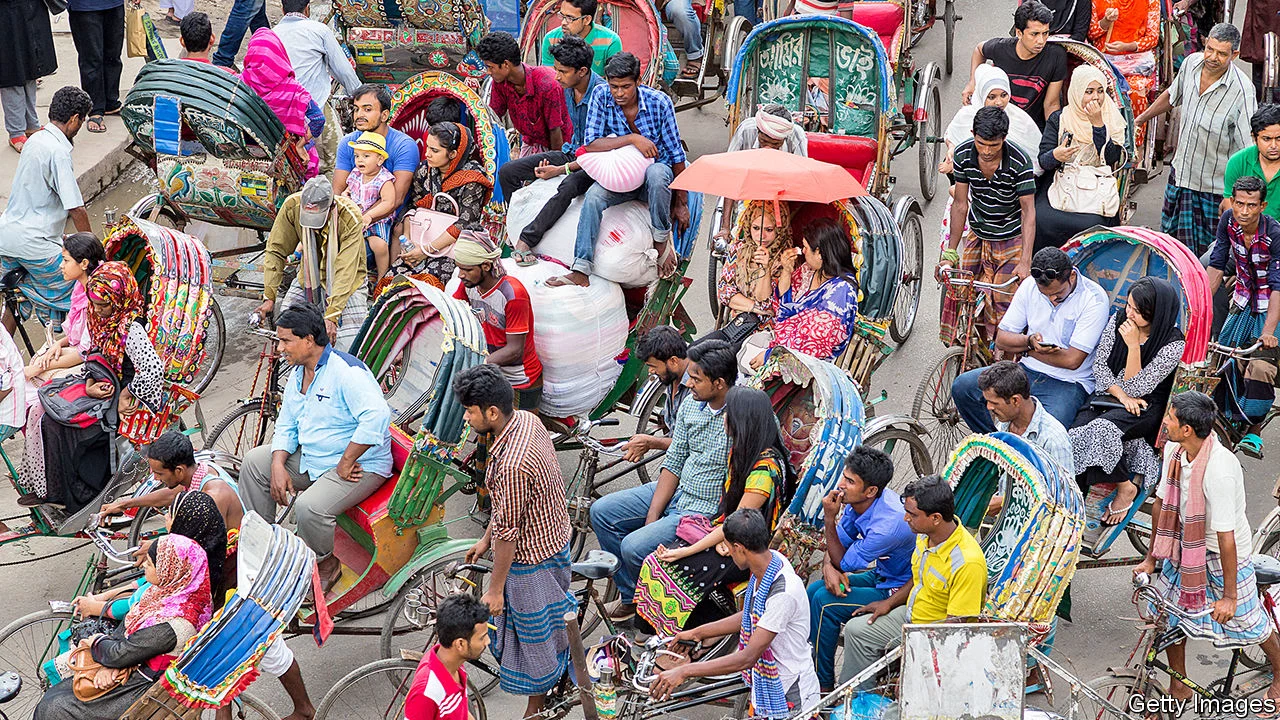
A megacity that doesn't slow down for visitors
Dhaka is home to close to 12 million people in its metropolitan area, packed into streets that were never built for this much traffic, and the result is one of the most intense urban experiences in Asia. Cycle rickshaws, hand-painted with birds and film stars and folk scenes in a tradition UNESCO recognized as intangible cultural heritage in 2023, thread between CNG auto-rickshaws and buses in a kind of organized chaos that somehow, mostly, works. It is not a city that performs calm for tourists, and it doesn't need to: the reward is some of the best and cheapest food in South Asia, a Mughal-era old town that still functions as a living neighborhood rather than a museum piece, and a level of genuine curiosity from strangers that's increasingly rare in more touristed capitals.
What changed in the last two years is the backdrop. Dhaka was the epicenter of the 2024 uprising that ended 15 years of one party's rule, and the city voted in a new government in February 2026 after 18 months under an interim administration. Both events are visible in the city's public memory, in murals and memorials, but daily life for a visitor in 2026 looks much more like ordinary Dhaka than like a city in crisis.
The honest complications
The traffic is not an exaggeration and it will shape every day you spend here: cross-city trips that should take 20 minutes can take well over an hour, especially during the roughly 7-10am and 4-9pm peaks. Air quality is poor by international standards, especially in the dry season. English thins out fast once you leave Gulshan, Banani and the international hotels, and cash, not cards, is how the city actually runs. None of this makes Dhaka a hard place to visit, but it does mean lowering your expectations for how much you'll cover in a single day and raising your tolerance for noise, heat and crowds.
Four areas that matter
Dhaka's usable geography for a visitor comes down to a north-south split: the modern diplomatic quarter in the north, and the historic, chaotic old city on the river to the south. Where you base yourself should follow how much comfort you want against how much traffic you're willing to sit in to reach Old Dhaka.
Gulshan
Gulshan has the highest concentration of five-star hotels, embassies and international restaurants in Dhaka, along with wide roads, a lakeside walking path around Gulshan Lake, and premium shopping. For a first visit, this is the base that makes hotel logistics, food and safety the least stressful part of the trip.
Banani
Directly next to Gulshan, Banani has the densest concentration of restaurants, rooftop cafes and casual dining spots in the city. If evenings out matter more to you than lake views, stay here instead; the two neighborhoods are a short ride apart.
Dhanmondi
South of Gulshan and more residential, Dhanmondi centers on Dhanmondi Lake and Satmasjid Road, a strip that has become one of the city's real restaurant hubs over the last two decades, spanning everything from budget spots to upscale Bangladeshi dining. Better value than Gulshan, still comfortable, and a reasonable middle ground.
Old Dhaka
The 17th-century Mughal old town along the Buriganga River: Lalbagh Fort, Ahsan Manzil, Sadarghat's chaotic river port, narrow lanes of spice and cloth markets. This is where you spend a day, not where you sleep; accommodation options are limited and the area is far less set up for visitors after dark than Gulshan or Banani.
International standard is real, and it's concentrated in two neighbourhoods
Dhaka's top tier is a genuine bargain by international five-star standards, and nearly all of it sits in Gulshan and Banani, a few minutes from the airport road and the embassies. Budget options exist across the city but vary hugely in quality; sticking to known names is worth the small premium.
At the top end, Pan Pacific Sonargaon Dhaka is one of the city's best-known five-star properties, spa-themed with a full-service spa, outdoor pool and international restaurants, popular with both business and leisure travelers. The Westin Dhaka and Le Méridien Dhaka, both from roughly $150 a night, round out the international chain options with rooftop pools and dependable standards for travelers who want zero surprises.
For a Banani base closer to the restaurant scene, Lakeshore Suites Banani sits about a kilometer from central Banani and roughly 10 kilometers from Hazrat Shahjalal International Airport, a practical mid-range option for travelers who plan to eat their way through the neighborhood's rooftop cafes each evening.
Kacchi biryani first, everything else after
Dhaka's food scene runs on rice, mutton and fish, with a biryani tradition distinct from the rest of South Asia's: kacchi, meaning raw, refers to marinated raw meat cooked together with the rice in a sealed pot rather than layered in afterward. A full meal at a local kacchi house costs a fraction of what the same quality would cost in Delhi or Bangkok.
Kacchi Biryani
Star Kabab, founded in 1965 at its original Thatari Bazar location and now with multiple branches across the city, is one of Dhaka's most established names for kacchi biryani and grilled kebabs. Fakruddin, which started at Gulshan-1 and now has several branches, is famous specifically for its kacchi, along with beef tehari and shahi firni. Kacchi Bhai has built a loyal following faster than either, on strong flavor and prices that undercut the older names.
Fuchka
Crisp hollow shells filled with spiced potato and chickpeas, doused in tamarind water: Dhaka's answer to panipuri, sold from carts across the city and eaten standing up, fast, before the shell goes soft.
Dhanmondi & Satmasjid Road dining
Sultan's Dine, a Bangladeshi chain built around its own kacchi biryani, has locations across Dhanmondi and the wider city and is a reliable, air-conditioned option when you want the dish without hunting down a specific old-school address.
Old Dhaka on foot, then the modern city by car
Dhaka's sights split cleanly into the Mughal-era old town on the river and a handful of standalone modern and religious landmarks elsewhere in the city. Plan Old Dhaka as a single full day, on foot and by rickshaw once you're there, and treat the rest as separate half-day stops.
Old Dhaka: forts, palaces and the river
Lalbagh Fort, an incomplete 17th-century Mughal fortress, is the anchor of the old town: the tomb of Pari Bibi, a mosque, and gardens within the walls, with foreign visitor entry at 200 BDT. A short distance away, Ahsan Manzil, the pink-painted former residence of the Nawab of Dhaka, houses a museum on the Nawabi era behind its distinctive Mughal-influenced facade. Finish at Sadarghat, one of the busiest river ports in Asia, where hundreds of boats, ferries and launches work the Buriganga River at once; a short boat ride from the ghat is the best way to take in the scale of it. Weave in the Star Mosque (Tara Masjid), decorated with blue star motifs, and the 12th-century Dhakeshwari Temple, considered Bangladesh's national Hindu temple, if time allows.
The National Parliament House
Louis Kahn's National Parliament House (Jatiya Sangsad Bhaban) in Sher-e-Bangla Nagar is one of the largest legislative complexes in the world, completed in 1982 after Kahn's death and winner of the Aga Khan Award for Architecture in 1989. Its monumental use of raw concrete and marble, set within a 200-acre complex of gardens and artificial lakes, is worth the detour even without going inside.
Rickshaw art, up close
You don't need to seek out rickshaw art specifically, it's on every street, but slowing down to actually look at the hand-painted panels, birds, film stars, folk scenes and personal messages from the artists, turns an ordinary ride into something closer to a moving gallery. UNESCO inscribed the tradition on its Representative List of Intangible Cultural Heritage in December 2023, Bangladesh's fifth listing.
One, two or three days, planned around the traffic
Two full days covers Dhaka's essentials; three adds real breathing room and the Sonargaon day trip. Group everything in Old Dhaka into a single day and everything in the north into another, rather than crossing the city more than once.
- Morning
Old Dhaka. Lalbagh Fort first, then Ahsan Manzil, then a rickshaw through the old bazaar lanes toward the river.
- Midday
Sadarghat. A short boat ride to see the river port in motion, then kacchi biryani at Star Kabab or Fakruddin nearby.
- Afternoon
North to Gulshan. Cross the city (allow real time for this), a walk around Gulshan Lake, and a late lunch or coffee.
- Evening
Banani for dinner. Rooftop dinner in Banani's densest restaurant strip.
- Day 1
The one-day route: Lalbagh Fort, Ahsan Manzil, Sadarghat, kacchi biryani, Gulshan Lake, Banani for dinner.
- Day 2 morning
National Parliament House. Louis Kahn's complex at Sher-e-Bangla Nagar, then the Star Mosque and Dhakeshwari Temple if not covered on day one.
- Day 2 afternoon
Dhanmondi. A slower afternoon around Dhanmondi Lake and Satmasjid Road.
- Day 2 evening
Gulshan or Banani. A hotel rooftop bar or a final biryani round at Kacchi Bhai.
- Days 1-2
The two-day route above, at a slightly gentler pace.
- Day 3
Sonargaon & Panam City. A full-day trip to the old capital and the abandoned merchant town of Panam Nagar, with a boat ride on the Meghna River. Book a driver or organized tour for the day.
Plan around the traffic, not the map distances
Hazrat Shahjalal International Airport (DAC) sits in the north of the city, roughly 10 kilometers from Gulshan and Banani. A taxi or ride-hailing app to the diplomatic quarter costs roughly $18-43 depending on service and time of day; airport taxis have meters but negotiating the fare before boarding is still standard practice. Ride-share pricing is dynamic, and a trip during the roughly 7-10am or 4-9pm peaks can run 50-100% more than the same trip at midnight.
Within the city, Uber and Pathao are the main ride-hailing apps and the easiest way for a visitor to get around without haggling. CNG auto-rickshaws, the small green three-wheelers, cover most trips a taxi would elsewhere, and cycle rickshaws are best for short hops within a single neighborhood rather than crossing the city. Walking works within Gulshan and Banani's wider streets but is impractical for longer distances given the heat, pollution and lack of consistent pavements elsewhere.
Best time to visit Dhaka
November to February is the clear window: dry, 12-25C, and the only realistic season for full days outdoors in Old Dhaka without heavy heat or rain. March to May turns hot, regularly over 35-40C, and June to October is the monsoon, with heavy rain that disrupts street-level movement across the city.
One of the cheapest capital-city stays anywhere
Dhaka is inexpensive for food and local transport by nearly any international measure; the only real cost jump is the international-standard hotel tier in Gulshan and Banani. As of early August 2026, one US dollar buys roughly 124 taka.
- Budget hotel or guesthouse
- Street food and local biryani $10-20
- CNG auto-rickshaws $2-5
- Old Dhaka sites under $2 entry
- Banani or Dhanmondi business hotel
- Restaurant meals $15-30
- Uber/Pathao for most trips
- A driver for a half or full day
- Gulshan 5-star (Pan Pacific, Westin, Le Méridien)
- Private guide and driver for the day
- Hotel rooftop bars and fine dining
- Organized Sonargaon day tour
Level 2, with traffic as the real everyday risk
Dhaka carries Bangladesh's national Level 2, Exercise Increased Caution rating as of August 2026, down from Level 3 earlier in the year. Violent crime against tourists is rare; the two things that actually affect a visit are petty theft in crowded areas and the city's traffic, which is a genuine daily hazard rather than a minor inconvenience.
Pickpocketing and bag-snatching happen in crowded markets, on public buses and around Sadarghat; keep bags closed and in front of you in these areas. Cross streets carefully and use footbridges where available, drivers do not reliably yield to pedestrians. Demonstrations can still form with little warning, a legacy of the 2024 uprising and the political transition since; avoid any gathering, political or otherwise, on principle, and check local news before heading into central areas on short notice. Tap water is not safe to drink; stick to bottled or filtered water throughout your stay.
Solo women should expect more attention here than in most of Southeast Asia, particularly on public transport; modest, loose-fitting clothing reduces friction, and ride-hailing apps or pre-arranged transport are safer choices than walking alone after dark outside Gulshan and Banani. The national emergency number is 999, toll-free and available even at zero phone balance, covering police, fire and ambulance.
Sonargaon is the one trip worth the extra day
Dhaka's position makes most of the country's other highlights multi-day trips rather than day trips; Sonargaon is the exception, close enough to combine with a return to the city by evening.
Sonargaon & Panam City
Bengal's old capital, with the abandoned 19th-century merchant town of Panam Nagar at its center: ornate, decaying facades that once belonged to wealthy Hindu cotton traders, now a protected site. Combine it with the Sonargaon Folk Arts and Crafts Museum, the restored Baro Sardar Bari mansion, the pre-Mughal Goaldi Mosque, and a boat ride on the Meghna River past a rural sandbank village. Organized day tours from Dhaka include a private air-conditioned vehicle, an English-speaking guide and lunch, and are the simplest way to do it without arranging transport yourself.
Dhaka FAQ
Is Dhaka safe for tourists?
Dhaka carries the same Level 2, Exercise Increased Caution rating as the rest of Bangladesh as of August 2026. Petty theft in crowded areas and the city's severe traffic are the two real everyday risks, not violent crime; avoid demonstrations on principle.
How many days do I need in Dhaka?
Two to three full days covers the city well: one for Old Dhaka's Lalbagh Fort and Sadarghat, one for the National Parliament House and Gulshan/Banani, and a third for the Sonargaon day trip if you have it.
How much does Dhaka cost per day?
Budget travellers manage on $20-35 a day outside the international hotel chains; mid-range with a Gulshan or Banani business hotel runs $45-90. Dhaka is significantly cheaper than any Southeast Asian capital for food and local transport.
What is the best area to stay in Dhaka?
Gulshan for first-timers: the diplomatic quarter, with the highest concentration of international-standard hotels, wide roads and strong security. Banani, right next door, has the densest concentration of restaurants and rooftop cafes.
How do I get from Dhaka airport to the centre?
Hazrat Shahjalal International Airport (DAC) is in the north of the city, about 10km from Gulshan and Banani. A taxi or ride-hailing app costs roughly $18-43 depending on time of day and traffic, which can double the fare during rush hour.
Is Dhaka walkable?
Not really, and the heat and traffic make it impractical for long distances. CNG auto-rickshaws, cycle rickshaws for short hops, and ride-hailing apps like Uber and Pathao are how the city actually gets around.
Do I need to speak Bangla in Dhaka?
No, but it helps outside hotels and Gulshan/Banani. English is spoken at international hotels, upscale restaurants and by younger, educated Dhakaites; it thins out quickly in Old Dhaka and on the street.
What is Dhaka's signature dish?
Kacchi biryani: marinated raw mutton and basmati rice cooked together in a sealed pot. Star Kabab, Fakruddin and Kacchi Bhai are three of the city's best-known names for it.
Can I drink alcohol in Dhaka?
Foreigners can drink legally at licensed hotel bars and clubs, mostly concentrated in Gulshan and Banani. Public drinking is illegal, and licensed venues close on Fridays and Islamic holidays.
Is the Dhaka traffic really that bad?
Yes. Cross-city trips that should take 20 minutes can take well over an hour during peak periods (roughly 7-10am and 4-9pm). Build significant buffer time into any plan that involves crossing the city.
What Stays With You
Dhaka does not slow down to explain itself. The city moves at its own pace, dense and loud and constantly rebuilding, and a visitor's job is to keep up rather than expect it to adjust. The rickshaw painted with a film star's face and half a dozen flowers, the first bite of kacchi biryani that makes every other biryani you've had feel like a rough draft, the boats stacked three deep at Sadarghat: none of it is staged, and none of it slows down for a photo.
Go in the dry season, build in more time than the map suggests, and let the city set the pace.