
Togo's only city, and it doesn't perform for visitors
Lomé sits right against the Gulf of Guinea, close enough to Ghana that the border crossing at Aflao is a short taxi ride from downtown. It is flat, hot, humid and unpretentious: a city of wide sandy streets, a beach that locals actually use, and a market economy built on the wax-print fabric trade that made the legendary "Nana-Benz" traders rich enough to buy Mercedes in the 1960s. There is no polished tourist circuit here, no queue-managed attractions, just a genuinely lived-in West African capital that rewards travelers willing to navigate it in French.
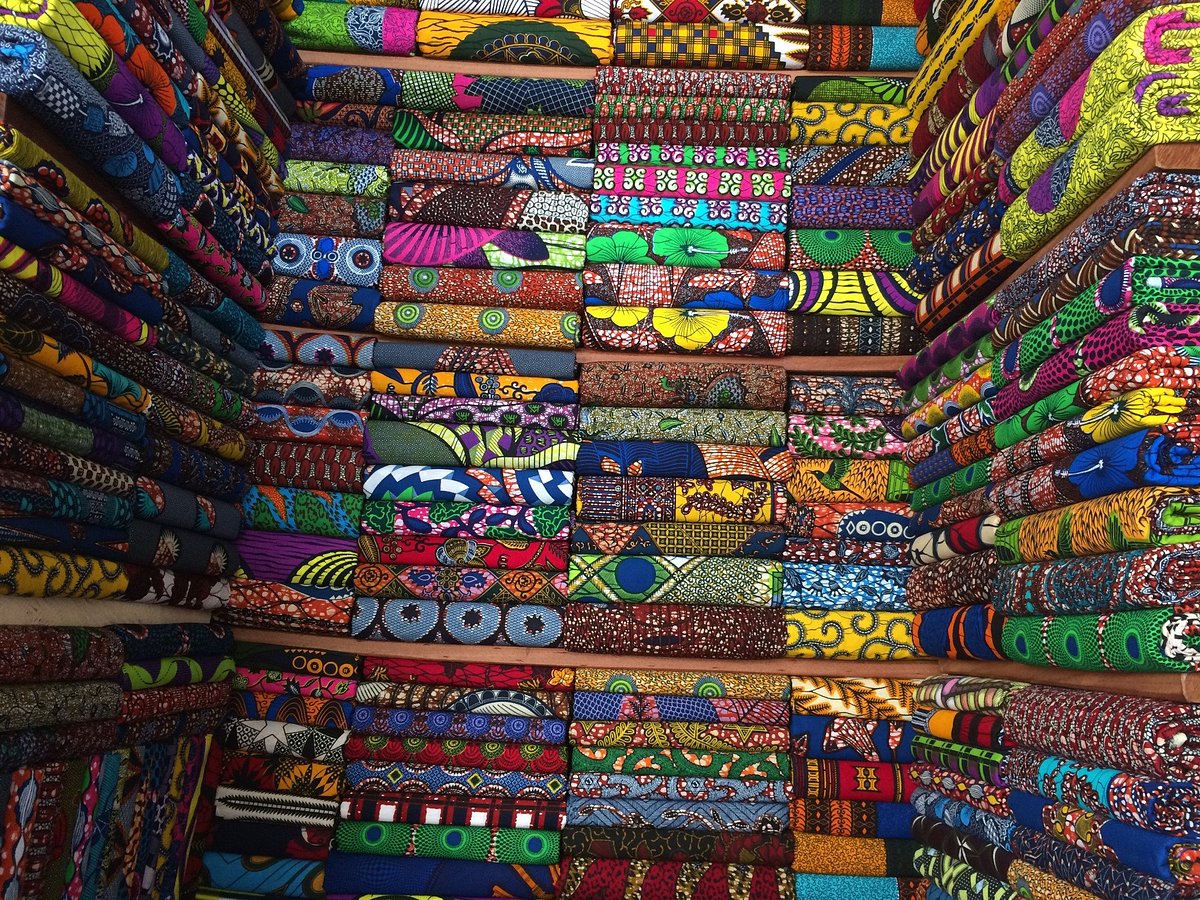
What Lomé lacks in postcard monuments it makes up for with two things few other capitals have: the Grand Marché, one of West Africa's great fabric and textile trading floors, and the Akodessewa Fetish Market, the world's largest voodoo market, both genuinely important cultural sites rather than tourist constructions. Add a beach that turns into an open-air grill scene every evening, and Lomé earns more than the couple of days most itineraries give it.
The honest complications
Tourist infrastructure is thin. English is spoken at a handful of international hotels and nowhere else reliably, so basic French matters far more here than in most African capitals travelers visit. The beach looks inviting but ocean currents are genuinely dangerous in places and rarely marked, so ask locally before swimming. And Lomé is a working city, not a resort: expect traffic, heat, and a market economy that runs at its own pace rather than a tourist-friendly one.
Five areas that matter, all close to the water
Lomé is compact and coastal: almost everything worth reaching sits within a few kilometers of the Atlantic, and the choice of base comes down to how central versus how beach-focused you want to be.
Adawlato
The First Arrondissement along the ocean, home to the Independence Monument, government buildings and the approach to the Grand Marché. This is downtown Lomé: busy, walkable in parts, and the natural base if the market and monuments are your priority.
Kodjoviakopé
A quieter, more residential strip toward the Ghanaian border at Aflao, and home to some of the city's better beachfront hotels. Families and travelers prioritizing comfort and proximity to the sea tend to land here.
Bè
A lively waterfront district with its own market rhythm, historically one of Lomé's oldest settled quarters. Fewer tourist services, more of the city's actual daily life, good for a wander rather than a base.
Tokoin
Home to Lomé-Tokoin Airport and the city's teaching hospital, Tokoin is more functional than atmospheric but convenient for early flights and increasingly home to newer mid-range hotels.
Baguida
East along the coast toward the Benin border, Baguida has a more resort-like, laid-back beach feel with properties like Marcelo Beach Club offering a pool and private beach area away from the downtown bustle.
From beachfront classics to central mid-range
Lomé's hotel scene is smaller and less segmented than a major tourist capital, but there is a genuine range from long-established beachfront hotels to newer boutique-scale properties. These picks span the categories that actually exist here.
At the top of the market, Hôtel 2 Février, the tower that has anchored Lomé's skyline for decades, is the city's landmark luxury address, central, full-service and the reference point everyone in Lomé uses to give directions. On the beach, Hotel Sarakawa is the established choice for comfort: an Olympic-size pool, tennis courts and a golf driving range on a beachfront property from around $100-160 a night, popular with business travelers and NGO staff as much as tourists.
In the upper-mid bracket, Hôtel Sancta Maria faces the beach with a pool and garden terrace, while Bio Hôtel adds a spa and wellness angle with a sauna and hot tub. CIKA Golden Hotel and Suites and El Doria Hotel both sit centrally with dining and fitness facilities and are well reviewed for the price bracket.
For a quieter, more resort-style stay east of the centre, Marcelo Beach Club in Baguida has a pool, private beach area and garden away from downtown traffic. Toward the mid-range and value end, Le Kentia offers a pool, garden and 24-hour front desk with airport transfer, a practical central option without beachfront pricing.
Beach maquis grills, French colonial holdovers, and everything between
Lomé's food scene runs on two tracks: the informal beach maquis, where the city actually eats, and a surprisingly broad set of proper restaurants left over from a French colonial dining tradition and newer international arrivals. Both are worth your time for different reasons.
Grilled fish & attiéké
The defining Lomé meal: fresh grilled fish or langoustine served with attiéké, fermented cassava couscous, at the open-air maquis grills along Coco Beach. Plastic tables in the sand, a grill going since mid-morning, and cold Flag beer at 500-1,000 CFA a bottle. This is where the city eats on weekend afternoons and evenings.
Le Galion
Lomé's longest-running French dining address, a holdover from the colonial and early independence eras that still anchors the city's more formal dining scene. The kind of place expatriates have been eating at for decades for a reason.
Restaurant Cote Sud & La Terrasse
Two of the better seafood addresses on Lomé's waterfront, La Terrasse in particular occupying one of the city's best positions on a broad terrace above the Atlantic shore. Both lean toward the higher end of Lomé's price range but deliver fresher seafood than the tourist-facing beach spots.
Pergola, Blue Turtle Bay & Dom's Restaurant
Pergola and Blue Turtle Bay both serve proper Togolese cooking, fufu and pâte with the traditional sauces, alongside more international plates; Dom's Restaurant leans further into the international side while keeping local flavors on the menu. Ci Gusta (Italian) and Alt Munchen (German) round out Lomé's small but real international dining scene for travelers wanting a change of pace.
Markets, monuments and one genuinely unforgettable site
Lomé's sights cluster into a market-and-monument core downtown, plus the beach for the evening. None of it requires advance booking, and most of it is best experienced slowly, on foot or by zemidjan, rather than rushed.
The Grand Marché and Assigamé
Start at the Grand Marché, also called Assigamé, a two-storey market building from 1967 that remains West Africa's most significant fabric and textile trading floor. The ground level is still the stronghold of traders descended from the Nana-Benz, the women whose 1960s wax-print fortunes bought the first Mercedes-Benz cars in Togo and gave the market's legendary sellers their nickname. Wander the dense color of the fabric stalls, then push further into the spice, food and crafts sections; bargaining is expected and a local guide can help you understand what you're looking at, especially for fabric quality.
Akodessewa Fetish Market
The Akodessewa Fetish Market, in the Akodessawa district, is the world's largest voodoo market: stalls of animal parts, talismans and traditional remedies that practitioners travel from across West Africa to buy, alongside Vodun priests offering blessings, fetishes and consultations. It is genuinely unflinching and not for the squeamish, but it is also one of the most culturally significant single sites in Togo, a working pharmacy and temple rather than a display for tourists. Go with a guide who can explain the practice respectfully; photograph only with explicit permission.
Independence Monument & National Museum
The Independence Monument, a stainless-steel spear thrusting some 20 meters into the sky in the administrative quarter, lights up at night in the green, yellow and red of the Togolese flag and marks the symbolic heart of the city's civic identity. Nearby, the National Museum occupies a well-renovated historic building with exhibitions on modern Togolese art and design, a compact but worthwhile stop for context on the country beyond the market and the beach.
Coco Beach at sunset
Coco Beach is Lomé's social heart in the evening: golden sand, a lively beach maquis scene, and, according to several long-time visitors, one of the more reliable spots for a swim relative to other stretches of the coast, though currents remain something to ask locals about before going in. Come for sunset, stay for the grilled fish.
One, two or three days in the city
Two to three full days covers Lomé itself properly; a third day is best spent on the Togoville crossing rather than lingering longer downtown.
- Morning
Grand Marché. Wander the fabric halls of Assigamé and pick up lunch from a market food stall.
- Midday
Independence Monument & National Museum. A short walk through the administrative quarter.
- Afternoon
Akodessewa Fetish Market. Go with a guide and allow an hour to take it in properly.
- Sunset
Coco Beach. Grilled fish and attiéké at a beach maquis as the sun goes down.
- Day 1
The one-day route: Grand Marché, Independence Monument, National Museum, Akodessewa Fetish Market, Coco Beach sunset.
- Day 2 morning
Neighbourhood wander. Bè's waterfront market rhythm, then Kodjoviakopé toward the Ghana border for a change of pace.
- Day 2 evening
A proper dinner. Le Galion or Restaurant Cote Sud instead of the beach maquis, for the other side of Lomé's food scene.
- Days 1-2
The two-day route above, at a gentler pace.
- Day 3
Togoville day trip. Drive to Agbodrafo, cross Lake Togo by pirogue, see the voodoo shrines near the old royal palace, and return to Lomé by evening. Full detail in our Togo country guide.
Zemidjans run this city
Lomé-Tokoin Airport (LFW) sits inside the city itself, about 15-20 minutes from the centre by taxi; agree a fare before getting in or arrange a fixed-price hotel pickup in advance to skip the arrivals-hall negotiation. In the city, zemidjans, motorcycle taxis, are the dominant way to get around: about 80% of urban trips in Lomé happen on the back of one. Flag a driver down, state your destination, and agree the price before climbing on; there is no metered system and negotiating upfront avoids disputes on arrival.
Shared taxis (collectifs) run fixed informal routes along the main roads and are the budget alternative to zemidjans for slightly longer hops; private taxis cost more but offer a direct door-to-door option, useful at night or with luggage. There is no metro or formal rail transit in Lomé, and traffic around the Grand Marché and the coastal road can back up badly at peak hours, when a zemidjan is often genuinely the fastest option available.
Best time to visit and climate notes
Lomé's climate follows Togo's broader pattern: November through February is the main dry season and the most comfortable window, warm and largely rainless. April to July brings the heaviest rain, with a short dry spell in August before shorter rains return in September and October. Coastal temperatures stay fairly consistent year-round, generally warm and humid.
Inexpensive outside a handful of international hotels
Lomé is cheap by almost any international comparison. The main cost trap is the small cluster of international hotels and restaurants that charge close to Western prices; everything else, from guesthouses to beach maquis meals to zemidjan rides, is genuinely affordable.
- Guesthouse room 15,000-25,000 CFA
- Beach maquis & market meals 1,000-4,000 CFA
- Zemidjan rides across town
- Free Grand Marché wandering & beach time
- 3 to 4-star hotel, 65,000-95,000 CFA
- Restaurant meals, 3,000-8,000 CFA
- Private taxi rather than zemidjan
- Guided fetish market or Togoville trip
- Hôtel 2 Février or equivalent
- Le Galion or Cote Sud for dinner
- Private driver for the whole stay
- Private guided Togoville excursion
Manageable with normal city awareness
Lomé is generally manageable for visitors who take the same precautions they'd use in any West African capital. Crime including robbery and occasional carjacking can occur, more often near crowded markets, on the beach after dark, and in urban areas generally, so keep valuables out of sight, avoid the beach once it empties out at night, and use a known driver or hotel-arranged transport after dark rather than hailing on the street.
The other genuine risk is the ocean itself: currents along this stretch of coast are strong, drownings happen most years, and dangerous stretches are rarely marked with warning signs. Swim close to shore, ask locals or your hotel which areas are considered safer that day, and don't assume a calm-looking surface means calm water underneath. Pickpocketing is a background risk at the Grand Marché during busy periods; keep bags closed and in front of you.
Togoville is the trip; Kpalimé and the coast fill out a longer stay
Lomé's position on the coast and near two borders makes it a workable base for several half- and full-day trips, all reachable by road.
Togoville
Drive to Agbodrafo on Lake Togo, then cross by pirogue (traditional dugout canoe) to Togoville, the lakeside town where the 1884 treaty founding German Togoland was signed and Togo's most significant center of voodoo practice, with shrines near the old royal palace. Full detail in our Togo country guide.
Kpalimé
Togo's green hill country, with coffee and cocoa plantations climbing Mount Agou, the country's highest point at 986 meters, and waterfalls including the Cascade de Kpimé. A long day trip or better as an overnight.
Aného
Togo's former colonial capital under both Germany and France, a quiet coastal town with faded colonial-era buildings and a long, uncrowded beach. An easy half-day combined with a look at the nearby Benin border.
Lomé FAQ
Is Lomé safe for tourists?
Lomé is manageable with normal city precautions. Crime is more common near crowded markets and the beach after dark; avoid displaying cash or phones openly and use a known driver at night rather than hailing on the street.
How many days do I need in Lomé?
Two to three full days covers the city well: one for the Grand Marché and the Akodessewa Fetish Market, one for the Independence Monument, National Museum and Coco Beach, and a third for the Togoville day trip across Lake Togo.
How much does Lomé cost per day?
Budget travellers manage on $30-45 a day with guesthouses and beach maquis meals; mid-range runs $90-150. Lomé is inexpensive outside its handful of international hotels and restaurants.
Is it safe to swim at Lomé's beaches?
Ocean currents along Togo's coast are strong and dangerous stretches are rarely marked. Swim only where locals swim, close to shore, and ask your hotel which spots are considered safer that day.
What is the Akodessewa Fetish Market?
The world's largest voodoo market, where Vodun practitioners buy animal parts, talismans and traditional medicine. It is an unflinching, genuinely important cultural site best visited with a guide who can explain what you're seeing.
How do I get from Lomé airport to the city centre?
Lomé-Tokoin Airport sits inside the city, about 15-20 minutes from the centre by taxi. Agree a fare before getting in, or arrange a fixed-price hotel pickup in advance.
What is the best area to stay in Lomé?
Kodjoviakopé and the beachfront strip near Hotel Sarakawa for comfort and proximity to the beach; the Adawlato administrative quarter for walking to the Grand Marché and Independence Monument.
Do I need to speak French in Lomé?
Yes, in practice. French is the working language everywhere outside a handful of international hotels. Basic French phrases make daily life considerably easier.
What are zemidjans?
Motorcycle taxis, the dominant way locals move around Lomé. Flag one down, state your destination, and agree the fare before climbing on; there is no metered system.
What Stays With You
Lomé doesn't dress itself up for visitors, and there's something genuinely refreshing in that. The Grand Marché runs on the same fabric trade that made the Nana-Benz famous sixty years ago, the fetish market operates as an actual pharmacy for actual believers rather than a photo opportunity, and the beach maquis at Coco Beach exists because that's where people want to eat, not because a guidebook told them to open it there. None of it was staged, which is exactly why it sticks.
Go to Coco Beach for sunset with a plate of grilled fish and cold Flag beer, and take the pirogue across to Togoville if you have a third day. That crossing, more than anything downtown, is the Lomé memory that lasts.