
A Country Still Rebuilding, Under a Live Insurgency
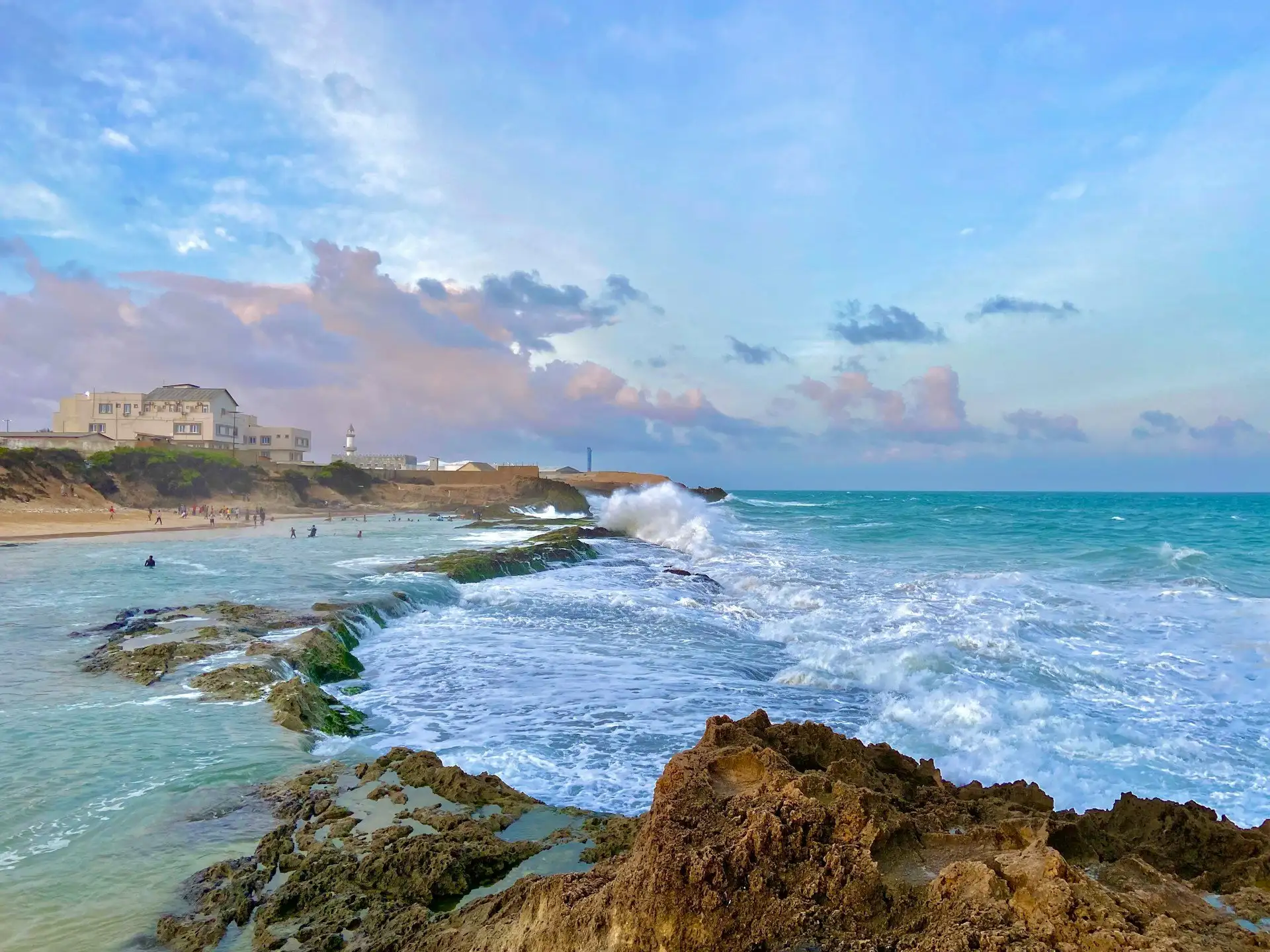
Somalia has the longest coastline in mainland Africa, over 3,300 kilometers of it, and a history that runs from an ancient trading civilization through Italian and British colonial rule to one of the most complete state collapses of the late 20th century. Since 1991, when President Mohamed Siad Barre's government fell and the country fractured into clan-based conflict, Somalia has been rebuilding its institutions in stages: a transitional government through the 2000s, a formal Federal Government from 2012, and a slow, uneven expansion of territory actually controlled by that government rather than by the armed group fighting it.
That armed group, Al-Shabaab, an Al-Qaeda-linked insurgency, still controls or contests significant rural territory and continues to carry out attacks in Mogadishu itself, including on hotels, government buildings and security forces. A separate, more recent complication sits on top of that conflict: as of mid-2026, Somalia's presidency is disputed, with constitutional amendments extending President Hassan Sheikh Mohamud's term to 2027 rejected by the political opposition, who consider his mandate to have expired in May 2026. None of this describes a country ready for casual tourism, and this guide does not treat it as one.
The honest complications
This is not a guide written to encourage a visit. Somalia carries a Level 4, Do Not Travel advisory from the US State Department, the same tier as Libya, Afghanistan and Yemen, citing crime, kidnapping, terrorism, civil unrest, armed conflict, landmines, piracy and, specific to Somalia, systematic mistreatment of women and of gay and lesbian individuals. The UK FCDO advises against all travel to Somalia outright. A small number of diplomats, aid workers, journalists, security contractors and specialist tour operators do visit, almost always with a private security escort and a pre-arranged itinerary, and this guide describes honestly what that kind of visit involves rather than romanticizing a country still actively at war with an insurgency inside its own capital.
What the Advisory Actually Says
The US State Department rates Somalia Level 4, Do Not Travel, its highest-severity advisory, citing crime, kidnapping, terrorism, civil unrest, armed conflict, landmines, piracy, systematic mistreatment of women, systematic mistreatment of gay and lesbian individuals, abuse of residents in rehabilitation centers, and confiscation of passports by family members. The UK FCDO advises against all travel to Somalia, including to Somaliland outside a narrow exception for the Awdal, Maroodijeh and Sahil regions in the northwest, an exception that does not apply to Mogadishu or the rest of south-central Somalia. That FCDO advice was last updated 4 June 2026.
An active insurgency
Al-Shabaab continues to carry out attacks in and around Mogadishu, including on hotels, restaurants and government targets. Clan-based clashes have also flared inside the capital, with fighting reported on 3-4 June 2026, on top of the insurgent threat.
Kidnapping
Kidnapping of foreign nationals for ransom has occurred repeatedly and is named explicitly in the US advisory. It is the primary reason unescorted movement is not a viable option anywhere in the country.
Limited consular support
The US Embassy operates from the fortified Halane compound at Mogadishu's airport and has, at points in 2026, suspended staff movement entirely in response to specific threat warnings. It is not set up to provide routine assistance to casual travelers.
Two more things worth knowing: the disputed presidency and Halane
A disputed presidency on top of the insurgency. President Hassan Sheikh Mohamud has held office since May 2022. In 2026, constitutional amendments extending his term to May 2027 were pushed through and rejected by the political opposition, who argue his mandate lawfully ended in May 2026. Analysts have described the resulting standoff as paralyzing the government's war effort against Al-Shabaab at exactly the moment unity is most needed. This is an unresolved, live political situation as of this guide, not settled history.
Halane, the compound almost everyone stays in. Halane is a heavily fortified compound built into Mogadishu's airport perimeter, protected by blast walls and the African Union Support and Stabilization Mission (AUSSOM). It houses the United Nations, most foreign embassies including the US and UK, international aid organizations, and the hotels most foreign visitors use. The large majority of non-Somali visitors who are not on a specific city itinerary do not leave this secured zone at all during their stay.
Emergency numbers
Sources disagree on Somalia's emergency numbers: some list police as 888, others as 991; ambulance is commonly cited as 999 and fire as 555. The Somali Red Crescent operates a free general emergency line on 446, and Aamin Ambulance runs a free 24-hour ambulance service in Mogadishu. Treat all of these as inconsistently reliable and lean on your security provider or hotel, who maintain direct contacts for exactly this reason.
If something goes wrong: your security provider, not a hotline
With consular support constrained even for nationalities whose governments maintain a presence in Halane, the private security firm or organization coordinating your visit is, in practice, the primary point of contact for any problem, from a medical issue to a security incident. Confirm their emergency procedure and evacuation plan before you travel, and keep the contact details for your home country's nearest embassy, in Mogadishu if it has one there or in Nairobi otherwise, with you separately.
A History Worth Knowing
Somalia's coast hosted trading ports for over a millennium before European colonization split it between British Somaliland in the north and Italian Somaliland in the south. The two territories united at independence in 1960, giving way nine years later to a military dictatorship, and then, in 1991, to one of the most complete state collapses of the modern era: a collapse the country has spent the three and a half decades since trying, in stages, to reverse.
- 1960
Independence. British Somaliland and the Italian-administered Trust Territory of Somalia unite on 1 July to form the independent Somali Republic.
- 1969
Siad Barre's coup. General Mohamed Siad Barre seizes power in October, suspends the constitution, and rules under "Scientific Socialism" for two decades.
- 1977-1978
The Ogaden War. A disastrous war with Ethiopia over the Somali-inhabited Ogaden region shatters the economy and triggers clan-based rebellions against Barre's government.
- 1991
State collapse. Barre is deposed and flees Mogadishu in January; the state collapses into civil war, and Somaliland in the northwest declares independence, unrecognized internationally to this day.
- 1992-1995
UN and US intervention. A US-led humanitarian intervention responds to famine and warlordism; the October 1993 Battle of Mogadishu ("Black Hawk Down") leads to a US withdrawal the following year.
- 2006-2012
Al-Shabaab's rise and the Federal Government. The Al-Qaeda-linked insurgency Al-Shabaab emerges from the mid-2000s; the African Union Mission in Somalia (AMISOM) deploys in 2007, and a formal Federal Government of Somalia is established in 2012, the country's first in over two decades.
- 2025-present
AUSSOM and a disputed presidency. The African Union Support and Stabilization Mission (AUSSOM) replaces the previous peacekeeping mandate on 1 January 2025, aiming to hand full security responsibility to Somali forces by December 2029, even as a 2026 constitutional dispute over the president's term unsettles the political picture.
Read the full history: Barre, the civil war and Al-Shabaab
Siad Barre's 1969 coup installed a military government that initially pursued Soviet-aligned "Scientific Socialism," standardizing the Somali written script and expanding education, before curdling into an increasingly repressive dictatorship through the 1980s. The 1988 siege of Hargeisa, the regional capital of what is now Somaliland, killed an estimated 5,000 civilians as Barre's forces suppressed a separatist uprising, a campaign that left lasting scars on the relationship between Mogadishu and the north.
Barre's fall in January 1991 did not produce a new government so much as an absence of one: rival clan-based militias fought for control of Mogadishu and the south, plunging the country into famine and warlordism that drew a US-led UN humanitarian intervention in 1992. The October 1993 Battle of Mogadishu, in which Somali militia fighters shot down two US Black Hawk helicopters and killed 18 American soldiers, became a defining, controversial moment in US foreign policy and led to a full American withdrawal by 1994, after which international engagement with Somalia dropped sharply for over a decade.
Somalia spent much of the 1990s and 2000s without a functioning central government, governed locally by clan structures, business networks and, in parts of the south from the mid-2000s, an increasingly organized Islamist insurgency that became Al-Shabaab. The African Union Mission in Somalia (AMISOM) deployed in 2007 to support a Transitional Federal Government against the group, and Somalia's first Federal Government since the collapse was established in 2012, since when successive administrations have expanded, unevenly, the territory under government rather than insurgent control. AMISOM's successor missions, most recently AUSSOM from January 2025, continue that effort, with a formal target of full Somali security control by the end of 2029, a target the events of 2026, including renewed factional fighting in Mogadishu and a contested presidential term, have made harder to take for granted.
Mogadishu, and Not Much Else
Somalia is not a multi-stop itinerary. Mogadishu is the country's capital, its only city with functioning international flights, any hotel infrastructure to speak of, and the security apparatus, private and international, that makes a visit possible at all. It is, in practice, the only place a foreign visitor's trip to Somalia happens.
Mogadishu, the only practical base
Mogadishu is Somalia's capital, largest city and seat of the Federal Government, and it is the only city with functioning international flights, hotel infrastructure and the security coordination that makes a visit possible. Its sights include the shell of the Italian colonial-era Mogadishu Cathedral, bombed out during the civil war and left as a striking ruin, and Liido Beach on the Indian Ocean, still genuinely popular with Somali families on weekends despite a serious 2024 attack there. Read the full Mogadishu city guide for what a security-managed visit to the capital actually involves.
Somaliland and Puntland: different places, different rules
Somaliland, in the northwest, is a self-declared and internationally unrecognized republic with its own immigration system: Somalia's federal eVisa is not accepted there, and Somaliland's own visa, requiring a separate Letter of Invitation and fee, applies instead. Puntland, in the northeast, is a semi-autonomous federal member state with its own security profile, distinct from both Mogadishu and Somaliland. Neither is covered by this guide, which concerns Somalia's federal government and Mogadishu specifically; travelers researching either region should treat them as separate trips with separate rules, not an extension of a Mogadishu visit.
Culture & Etiquette
Somalia is an overwhelmingly Sunni Muslim, ethnically Somali country, with Somali and Arabic as official languages and a strong oral poetic tradition that runs through public life. Clan identity remains a central organizing structure in Somali society, shaping politics, business and daily interactions in ways a short visit will only partially glimpse.
Do
- Dress conservatively. Cover shoulders and knees for both men and women; women should carry a headscarf, and modest dress is expected in all public settings, not only religious ones.
- Follow your security team's instructions on photography. Never photograph checkpoints, security personnel, government buildings, the airport or Halane without explicit permission; this is enforced strictly.
- Expect Ramadan to change daily rhythms. Many restaurants adjust hours during the fasting month; eating or drinking in public during daylight hours is best avoided.
- Learn a few Somali or Arabic phrases. Mahadsanid (thank you in Somali) and salam alaikum (a greeting used across the Muslim world) go a long way with guides, drivers and hotel staff.
Don't
- Bring or seek out alcohol. Its production, sale and consumption is prohibited under Somalia's constitution and Islamic legal principles, and it is not available through any legitimate channel.
- Discuss clan politics or the current presidential dispute casually. Both are genuinely sensitive; let local contacts raise them if they choose to.
- Stray from your security-coordinated itinerary. Unescorted exploration, including short walks outside a secured hotel or compound perimeter, defeats the entire rationale for traveling with a security provider in the first place.
- Assume everyday khat chewing extends an open invitation. Khat is a mild stimulant leaf widely and legally chewed in Somalia, but it is not something visitors should seek out casually or purchase from unfamiliar sellers.
Food & Drink
Somali cuisine draws on East African, Arab, Persian, Indian and Italian influences from the country's long history as a trading and colonial crossroads, built around rice, pasta (a legacy of Italian colonization), goat and camel meat, and fresh seafood along the coast. Meals during a Mogadishu visit are typically eaten at the hotel or at restaurants your security provider has already vetted, since independent restaurant-hopping is not part of how a visit works.
Bariis Iskukaris
Somalia's signature spiced rice dish, cooked with cardamom, cinnamon and cumin and served with goat, chicken or camel meat. The closest thing to a national dish, found at hotel restaurants across Mogadishu.
Canjeero & Suqaar
Canjeero, a spongy fermented flatbread similar to Ethiopian injera, is the breakfast staple, often paired with suqaar, small cubes of pan-fried meat with onions, peppers and Somali spice blends.
Grilled Fish & Sambusas
Along Liido Beach, vendors and restaurants grill fresh fish and fry sambusas, a spiced meat- or vegetable-filled pastry, both genuinely popular with the local crowd on weekends.
Before You Go
December through March, the Jilaal dry season, brings Mogadishu its lowest rainfall and most comfortable coastal temperatures, roughly 25-30°C with drier air and steady ocean breezes. April through June (the Gu rains, wettest in May) and October into early December (the shorter Deyr rains) bring more humidity and disrupted road conditions. None of this changes the underlying Do Not Travel advisory: seasonal comfort is a secondary consideration to the security situation.
Climate detail and Somalia's four seasons
| Season | Months | Temps (Mogadishu) | Notes |
|---|---|---|---|
| Jilaal | Dec-Mar | 25-30°C | Driest, most comfortable; northeast monsoon |
| Gu | Apr-Jun | 27-31°C | Main rains, May wettest; roads can be affected |
| Xagaa | Jun-Sep | 26-29°C | Dry but humid, coolest months around August |
| Deyr | Oct-early Dec | 27-30°C | Shorter secondary rains |
Mogadishu's coastal location keeps temperatures unusually consistent year-round compared to inland Somalia, which can swing far hotter and drier.
Getting there & around
Aden Adde International Airport (MGQ), on Mogadishu's coast, is Somalia's main functioning international gateway and a hub for the Somali carriers Jubba Airways, Daallo Airlines and Suhura Airways. International service has been resuming gradually, with Ethiopian Airlines, Turkish Airlines, Qatar Airways, flydubai and EgyptAir among the carriers serving MGQ, connecting through Istanbul, Nairobi, Doha, Djibouti and other regional hubs. There is no independent rental car market or public transport system set up for foreign visitors: getting around Mogadishu happens in a vehicle arranged by your security provider or host organization, with a vetted driver and, for most itineraries, an armed escort.
Budget Planning
Somalia does not have a conventional per-day traveler budget, because independent travel is not realistic. Costs are dominated by security, not sightseeing: a private security escort, an armored or hardened vehicle where warranted, and secured accommodation inside or near Halane make up the bulk of what any visit actually costs.
Visa & entry costs
The eVisa costs roughly 64 USD, applied for in advance at evisa.gov.so; some guidance also references a sponsor letter as part of the process, though sources are not fully consistent on when one is required. There is no visa on arrival.
Security-driven, not daily
Specialist operators and security firms quote package or day-rate prices covering escort, driver and vehicle rather than a conventional daily traveler budget. Confirm exactly what's included (armed escort, vehicle type, accommodation) before committing, since scope varies enormously by provider.
Visa & Entry
Somalia's eVisa system became mandatory for essentially all foreign visitors, including infants and children, on 1 September 2025, replacing visa-on-arrival. Applications are submitted online at evisa.gov.so, cost roughly 64 USD, and typically take 3 to 14 business days to process. There is no visa on arrival: travelers who arrive without an approved eVisa are refused entry and returned on the next available flight.
✓ Approved eVisa before travel
Mandatory for all nationalities. Apply at evisa.gov.so at least two weeks ahead of travel to allow for processing delays; there is no exception for arrival without one.
✓ Passport valid 6 months
Required from date of entry, along with a return or onward ticket and evidence of accommodation, typically your hotel or host organization's confirmation.
✓ A pre-arranged security plan
Not a formal visa requirement, but a practical one: airlines and hotels operating in Mogadishu routinely expect visitors to have arranged ground transport and accommodation before arrival, given the security environment.
✓ Yellow fever certificate
Required if arriving from a country with risk of yellow fever transmission; not required for most Western passport holders arriving direct from home.
| Somalia | Djibouti | |
|---|---|---|
| Travel advisory | Level 4, Do Not Travel | Lower-tier caution advisory |
| Access | eVisa plus a private security escort in practice | Standard visa process, independent travel possible |
| Coastline | Africa's longest, largely inaccessible to visitors | Compact, with the Gulf of Tadjoura and whale sharks at Arta |
| US embassy presence | Operating under severe security constraints | Operating normally |
| Security situation | Active insurgency, contested presidency | Stable government, no active internal conflict |
Somalia FAQ
Is Somalia safe to visit?
No. The US State Department rates Somalia Level 4, Do Not Travel, its most severe rating, citing crime, kidnapping, terrorism, civil unrest, health risks, landmines and piracy. The UK FCDO advises against all travel to Somalia. This guide describes what a security-managed visit involves, not a recommendation to go.
Do I need a visa for Somalia?
Yes. Somalia's eVisa, mandatory since 1 September 2025, must be obtained online at evisa.gov.so before travel, costs around 64 USD, and takes roughly 3 to 14 business days to process. There is no visa on arrival, and travelers who arrive without an approved eVisa are refused entry.
Can I travel around Somalia independently?
Not safely, and not in any conventional sense. Nearly everyone who visits, from diplomats to journalists to the small number of tour operators running trips, moves with a private security escort and a vetted driver. Unescorted movement outside a hotel's secured perimeter is not advisable anywhere in the country.
Is Mogadishu currently facing conflict?
Yes. Al-Shabaab, an armed insurgent group, continues to carry out attacks in and around Mogadishu, including on hotels and government targets, and clashes between rival Somali factions have occurred in the capital as recently as June 2026. The political situation is also unsettled, with a disputed extension of the president's term contested by the opposition since May 2026.
Does the US have an embassy in Somalia?
Yes, but it operates under exceptional security constraints from within the fortified Halane compound at Mogadishu's airport, and has at times suspended staff movement entirely in response to specific threat warnings. It is not a source of routine consular support for casual travelers.
What is the currency in Somalia?
The Somali shilling (SOS), trading at roughly 570 to the US dollar as of mid-2026. US dollars in small denominations are widely accepted and often preferred for larger payments, including hotel bills and security services.
What is Halane, and why does it matter for visitors?
Halane is the fortified compound inside Mogadishu's airport perimeter that houses the UN, most foreign embassies including the US and UK, and international aid organizations. Most foreign visitors who are not on a specific city itinerary do not leave this secured zone at all during their stay.
Is alcohol allowed in Somalia?
No. Somalia's provisional constitution establishes Islam as the state religion and requires laws to comply with Islamic legal principles; alcohol production, sale and consumption is prohibited and not available through any legitimate channel.
What language is spoken in Somalia?
Somali and Arabic are both official languages. English is used in government, security and NGO circles in Mogadishu and among guides and fixers who work with foreign visitors, but is not widely spoken by the general population.
When is the best time to visit Somalia?
December through March, the Jilaal dry season, brings the lowest rainfall and the most comfortable coastal temperatures in Mogadishu, roughly 25-30°C. None of this changes the underlying Do Not Travel advisory, which applies year-round.
What This Guide Is Really For
Somalia is not a place this guide can responsibly recommend visiting, and it hasn't tried to. It exists for the small number of people, diplomatic, humanitarian, journalistic or otherwise, who have a genuine reason to go, through proper security channels, with their eyes open, and for everyone else who wants an honest answer about what a Mogadishu visit actually involves right now rather than a vague sense of danger or an equally vague sense of a country turning a corner. Both instincts miss the specific, current reality: an active insurgency, a disputed presidency, and a capital that is, in real and measurable ways, safer than it was a decade ago while still sitting under the world's most severe travel advisory.
Somalia's coastline, its history and its culture will still be there whenever that changes enough for more people to see them safely. There is no reason to rush it.