
A Riverside Capital, Under a Level 4 Advisory and a 2026 Entry Ban
Niamey grew from a small riverside village into Niger's capital and largest city only in the colonial and post-independence periods, a relatively young capital by regional standards, and it wears that in its low-rise, spread-out layout along the Niger River. Its sights are modest but genuine: the National Museum's open-air ethnographic complex, the Grand Marché's dense trading lanes, and the Grand Mosque's riverside silhouette gave the city a real, if secondary, place on West African overland routes into the 2010s.
This guide covers Niamey's neighbourhoods, named hotels and things to do the way any Atlas Guide city page would, because that infrastructure is real and worth documenting. It is not, however, a recommendation to visit. Niamey sits under the same Level 4, Do Not Travel advisory and UK FCDO advice against all travel as the rest of Niger, without a capital-city carve-out, and as of December 2025, Niger has also indefinitely barred entry to all US citizens. Read this guide with both facts in mind throughout, not just in the safety chapter below.
The honest complications
Niamey has generally been spared the sustained territorial fighting affecting Niger's borderlands, and day-to-day life in the city continues: government offices operate, the Grand Marché trades daily, and the National Museum remains open. But "generally spared sustained fighting" is a very different claim from "safe to visit," and the UK FCDO specifically flags a heightened risk of attack in Niamey itself, alongside advice to avoid walking across the bridges over the Niger River on foot at any time. Both the US and UK advisories were written with full knowledge of that distinction and still cover Niamey without exception.
The Same Advisory as the Rest of the Country, Plus an Entry Ban
Niamey is not carved out from Niger's Level 4, Do Not Travel advisory or the UK Foreign Office's advice against all travel to the entire country. Unlike some capitals under a countrywide advisory, the UK is explicit that Niamey itself carries a heightened risk of attack, not just a lower risk than the conflict-affected border regions. The advice to avoid walking across the Niger River bridges on foot, at any time of day, applies specifically within the city.
Since late December 2025, the practical question for US citizens is moot: Niger has indefinitely barred entry and visa issuance to all Americans, so the city isn't reachable through normal channels regardless of the security picture. For other nationalities still weighing essential travel, petty crime, opportunistic theft and the general caution that applies in any large, under-resourced capital apply on top of the terrorism and kidnapping risk that defines the country-wide advisory, and commercial flights through Diori Hamani International Airport can face disruption at short notice.
Emergency numbers
Emergency response, including ambulance dispatch, is more developed in Niamey than elsewhere in the country but still limited by the standards most travellers are used to, and lines frequently go unanswered outside normal working hours. Comprehensive insurance covering medical evacuation is essential for anyone here on essential business, and evacuation may still be slow.
A City Strung Along the River
Niamey's layout follows the Niger River, with the administrative and diplomatic core on the Plateau, the older commercial heart around Terminus and the Grand Marché, and quieter residential districts like Yantala further out.
Plateau
Niamey's administrative and commercial centre, home to government buildings, embassies, and most of the city's established international hotels, including the Radisson Blu on Boulevard de la République near the Palais des Congrès and the old Presidential Palace. Leafier and more developed than the rest of the city, and the default base for diplomatic and business travellers.
Terminus
The district takes its name from the old rail and bus terminus and sits at the centre of the city's daily commercial life, with the Grand Mosque and the Grand Marché both close at hand. It's the most walkable part of Niamey for seeing the city's actual sights, and the most commercially dense.
Yantala
A quieter residential district favoured for longer stays, with a smaller-scale guesthouse scene than the Plateau's international hotels, and a slower pace than the commercial centre.
A Small, Business-Oriented Hotel Scene
Niamey's hotel scene is built for business, diplomatic and NGO travellers rather than leisure tourism, and the strongest properties cluster on the Plateau.
The Radisson Blu Hotel & Conference Center, Niamey is the city's top-end anchor: 189 rooms on Boulevard de la République, close to the Palais des Congrès, the old Presidential Palace and the embassy district, with three dining spaces including the Zaxi Rooftop Lounge & Bar, a spa, a Turkish hammam and a pool. Bravia Hotel Niamey is a well-regarded 4.5-star property in the city centre aimed at the same business and diplomatic market. Hôtel Terminus, in the district of the same name, is a smaller 3-star option known for a welcoming, pet-friendly atmosphere and a more central, walkable position near the Grand Marché and Grand Mosque.
A Riverside Capital's Everyday Cooking
Niamey's food scene centres on the same Nigerien staples covered in our country guide, tuwo, riz au gras and grilled capitaine from the Niger River, served at simple local restaurants and market stalls rather than a large formal dining scene. The Plateau's international hotels round out the higher end with more conventional international menus for business and diplomatic guests.
What the City Offers, Described for Context
In ordinary times, Niamey's sights covered a comfortable day or two: a genuinely interesting national museum, a dense working market, and a riverside mosque. All of it is described below for what it is, not as a current recommendation.
Musée National Boubou Hama
Niger's National Museum is an open-air complex rather than a single building: ethnographic displays and colonial-period artifacts sit alongside dinosaur fossils, a set of life-size traditional huts built to represent Niger's different ethnic groups, a small zoo with native animals, and an artisanal centre where craftspeople work and sell directly. It's one of the more substantial and varied museum experiences in the wider Sahel, and historically the city's single best-regarded sight.
Grand Marché de Niamey
Niamey's main marketplace, and one of the larger markets in West Africa: loud, crowded and unpolished rather than built for visitors, with dense lanes selling textiles, handmade jewellery, spices and everyday goods. It offers a genuine glimpse of daily commercial life in the capital rather than a curated tourist experience.
Grand Mosque of Niamey
A landmark mosque with a minaret that, in ordinary times, offered panoramic views over the city and the Niger River to those able to climb it, historically one of the more recognisable pieces of the capital's skyline.
The Niger River
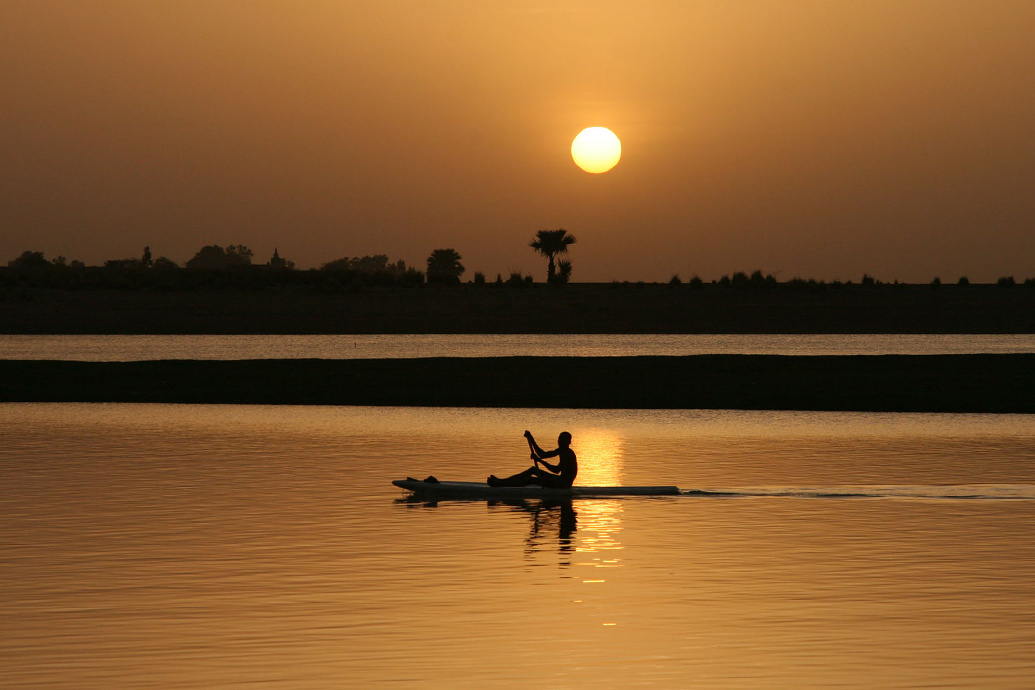
The river that defines the city's geography and, in ordinary times, its most relaxed activity: a sunset boat outing on the water, away from the traffic and heat of the streets, historically offered by local operators along the riverbank.
Diori Hamani International Airport, Then Shared Taxis
Diori Hamani International Airport (NIM) sits close to central Niamey and was historically served by carriers including Air France, Turkish Airlines, Royal Air Maroc, Ethiopian Airlines and Asky, with connections typically routed through Paris, Istanbul, Casablanca or Addis Ababa; routes, frequencies and reliability have all been affected by the wider regional instability, and the UK FCDO specifically flags possible disruption to commercial flights at short notice. Within the city, shared taxis with the fare agreed before you get in, meters aren't standard, and hotel-arranged transfers are the normal way to move between the Plateau, Terminus and Yantala.
Reference Costs for Essential Travellers
As with the country guide, these are reference figures gathered for essential (business, diplomatic, NGO) travellers, not a suggested daily budget for a leisure trip that Atlas Guide isn't recommending.
Local meals & transport
A local meal of tuwo or riz au gras runs roughly 1,000 to 3,000 XOF ($1.50-5); shared taxi fares within the city are agreed per trip rather than metered and are generally inexpensive by international standards.
Plateau & centrally located properties
The Radisson Blu, Bravia Hotel Niamey and Hôtel Terminus sit across the upper and mid business-hotel bracket in the city; confirm current rates directly given how quickly conditions and pricing can shift.
In Ordinary Times, Not Right Now
Under normal conditions, Agadez and the Air Mountains, Zinder's old sultanate quarter, and W National Park would appear here as onward trips from the capital. They're covered instead, with the same safety caveats, in the Niger country guide's destinations chapter, since none of them currently has a safety picture, or in the case of US citizens, a legal entry path, that supports treating them as a realistic add-on to a Niamey stay.
Niamey FAQ
Is Niamey safe for visitors right now?
No, not by any normal travel standard. Both the US Level 4 Do Not Travel advisory and the UK FCDO's advice against all travel cover Niamey exactly as they cover the rest of Niger, and the UK specifically flags a heightened risk of attack in the capital itself.
Can Americans currently visit Niamey?
No. As of late December 2025, Niger indefinitely barred entry and visa issuance to all US citizens, a reciprocal response to a US travel proclamation. There is currently no normal channel for a US passport holder to enter Niamey or anywhere else in the country.
What is the Musée National Boubou Hama?
Niger's National Museum, an open-air complex with ethnographic displays, dinosaur fossils, life-size traditional huts from different ethnic groups, a small zoo and an artisanal centre, one of the more substantial museum collections in the Sahel.
How many days do you need in Niamey?
In ordinary times, one to two days covered the city's core sights comfortably: the National Museum, the Grand Marché and the Grand Mosque. That's a description of the city's scale, not a current recommendation to visit.
What language is spoken in Niamey?
French is the official language of government and business, and Zarma (Songhai) is the majority local language in and around the capital, alongside Hausa, which is more widely spoken nationally.
Do I need a visa to visit Niamey?
The same national entry rules apply as for the rest of Niger: an e-visa for most eligible nationalities, a yellow fever certificate for everyone, and, as of December 2025, a complete entry ban for US citizens. See our Niger country guide for the full picture.
Is the Grand Marché de Niamey worth visiting?
In ordinary times, yes: it's one of West Africa's larger markets, genuinely chaotic and unpolished rather than built for tourists, selling textiles, jewellery and spices. Any visit today should be weighed against the same country-wide safety advisory as everything else in this guide.
What airport serves Niamey?
Diori Hamani International Airport (NIM), close to the city centre, historically served by Air France, Turkish Airlines, Royal Air Maroc, Ethiopian Airlines and Asky, though routes and frequencies have been affected by the wider regional instability and disruption at short notice is a stated UK FCDO concern.
What Stays With You
Niamey is a young capital by regional standards, built along a river rather than around an ancient citadel, and its appeal was always more modest and more human-scale than Agadez's mosque or the Air Mountains' desert. A wander through the National Museum's open-air huts, a slow evening on the Niger River, a market that made no concessions to visitors: that was the honest case for a day or two here.
The honest answer to whether to visit right now is still no, and for US citizens as of 2026 it isn't a choice at all. This page exists so that the city, and the specific, named places that earned its modest reputation, the National Museum, the Grand Marché, the river itself, aren't lost to the advisory and the entry ban that currently and correctly override every other answer about it.