
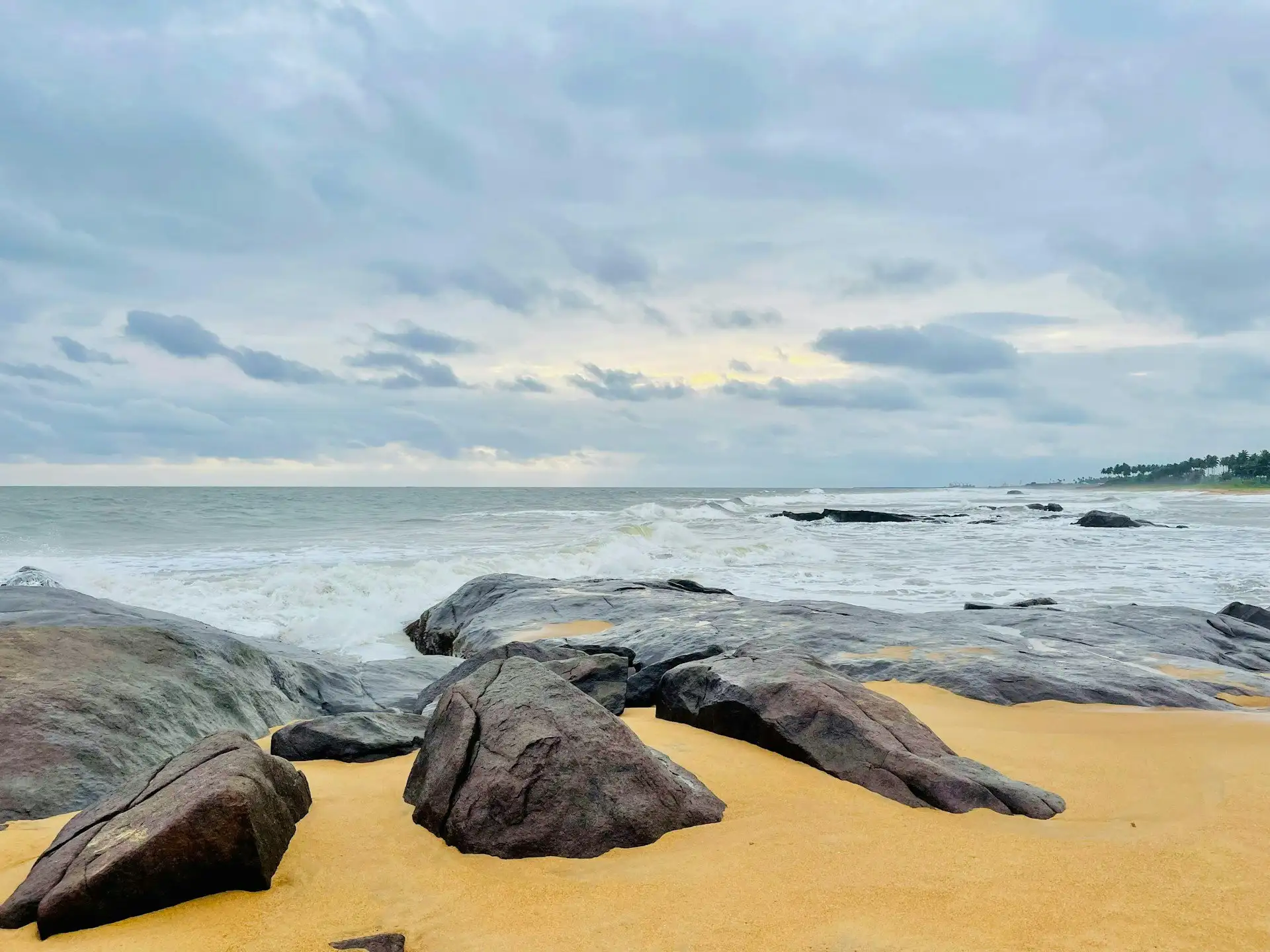
What You're Actually Getting Into
Liberia is Africa's oldest republic, founded in 1822 when the American Colonization Society began resettling freed and formerly enslaved African Americans on the West African coast. It declared independence in 1847, modeled its flag and constitution on the United States, and spent a century and a half under the control of the Americo-Liberian settler minority before two catastrophic civil wars (1989-1997 and 1999-2003) and a 2014-2016 Ebola outbreak brought it to its knees. None of that history is background scenery here: it's the reason the Ducor Hotel sits gutted on a hill above Monrovia, the reason English is the official language in a country of two dozen indigenous ones, and the reason so few travelers have been.
That absence of travelers is also Liberia's draw. Robertsport has some of the most consistent, uncrowded point breaks on the West African coast. Sapo National Park protects a genuine slice of primary Upper Guinean rainforest, with forest elephants, chimpanzees and pygmy hippos that most of the world has never heard live here. Kpatawee Waterfall, the Firestone rubber plantation, and Monrovia's own layered, difficult, fascinating history round out a country that rewards travelers who come prepared rather than travelers looking for an easy first trip to Africa.
The honest complications
Liberia is not set up for casual tourism. Tourist infrastructure outside Monrovia and Robertsport is thin: expect rough roads, unreliable power, and a genuine need to plan logistics rather than show up and figure it out. The rainy season, roughly May to October and heaviest June to September, turns unpaved roads into serious obstacles and floods parts of Monrovia. Petty and armed crime happen in urban areas and markets, and the healthcare system is under-resourced even by regional standards, so travel insurance with medical evacuation coverage isn't optional. None of this makes Liberia a place to avoid, but it does make it a place to visit with a plan, not a whim.
A History Worth Knowing
Liberia's founding is unlike any other country in Africa: a settler nation built by people returning to the continent their ancestors had been taken from, on land that was already inhabited by more than a dozen indigenous groups who had no say in the arrangement. That founding tension, between Americo-Liberian settlers and indigenous Liberians, shaped everything that followed, including the 1980 coup, the civil wars of the 1990s and early 2000s, and the long, unfinished work of reconciliation still underway today.
- 1822
Providence Island landing. The American Colonization Society begins resettling freed and formerly enslaved African Americans at Providence Island, at the mouth of the Mesurado River, the future site of Monrovia.
- 1847
Independence. Liberia declares itself Africa's first republic, adopting a flag and constitution modeled on the United States. Indigenous Liberians are excluded from full citizenship for over a century.
- 1980
The Doe coup. Master Sergeant Samuel Doe leads a military coup, ending 133 years of Americo-Liberian political control and executing much of the ruling elite.
- 1989–2003
Civil wars. Charles Taylor's rebellion in 1989 triggers two back-to-back civil wars, among the deadliest in African history, killing over 200,000 people and displacing roughly a million more before a 2003 peace agreement.
- 2005
Ellen Johnson Sirleaf. Elected president, becoming the first woman to lead an African nation, and serves two terms overseeing reconstruction.
- 2014–2016
Ebola outbreak. Liberia is among the hardest-hit countries in the West African Ebola epidemic, straining a healthcare system still recovering from war.
- 2024–present
Joseph Boakai. Sirleaf's former vice president is inaugurated as president in January 2024 after defeating incumbent George Weah in a 2023 runoff, continuing Liberia's run of peaceful democratic transfers of power.
Read the full history: the Americo-Liberian era, Charles Taylor, and the peace
The Americo-Liberian settlers who arrived from 1822 onward organized the new country along the lines of the American South they'd left, including a rigid social hierarchy that placed indigenous Liberians, whose ancestors belonged to Mande, Kwa and Mel-speaking peoples that had lived in the region for centuries, at the bottom. Indigenous Liberians didn't gain full citizenship rights until well into the 20th century, and the resentment this built up was a direct precursor to the 1980 coup.
Samuel Doe, an indigenous Krahn officer, seized power in 1980 and executed thirteen members of the previous government on a beach in Monrovia, an act that shocked the country and set a pattern of political violence that would define the next quarter century. Doe's own rule became increasingly authoritarian and ethnically favored the Krahn, laying groundwork for the resentments Charles Taylor exploited when he launched his rebellion from Ivory Coast in December 1989.
The first civil war (1989-1997) killed Doe and fractured the country among competing warlords before a 1997 election brought Taylor to power on a campaign built partly around the threat that he'd restart the war if he lost. Fighting resumed by 1999 as rebel groups backed by neighboring countries turned against Taylor, and the second war ran until a 2003 peace agreement, brokered with UN and regional pressure, forced Taylor into exile. He was later convicted by a UN-backed special court for war crimes committed in neighboring Sierra Leone and is serving a 50-year sentence in the UK. Combined, the two wars killed more than 200,000 Liberians and displaced roughly a third of the population.
Reconstruction. Ellen Johnson Sirleaf's 2005 election, with UN peacekeepers still present, began a period of relative stability that has now held through several peaceful transfers of power, including George Weah's 2018 win and Joseph Boakai's 2024 inauguration. The Truth and Reconciliation Commission's recommendations, including a proposed war crimes court for the civil war era, remain only partially implemented, and reconciliation between the Americo-Liberian and indigenous communities is an ongoing, unresolved process rather than a finished chapter.
Top Destinations
Liberia divides into four practical zones for a first trip: the capital, the surf coast northwest of it, the rainforest interior to the southeast, and the industrial/beach belt along the coast toward Buchanan. Road quality, not distance, is the real constraint: Liberia is roughly the size of Tennessee, but a 100km drive on an unpaved road in the rainy season can eat a full day.
Monrovia, the capital that carries the history
Monrovia is where almost every Liberia trip starts and ends, and it's worth two or three days on its own merits rather than treating it as a layover. Named after US President James Monroe, it sits on a peninsula between the Atlantic and the Mesurado River, with Providence Island, the site of the original 1822 settler landing, right at its heart. The gutted shell of the Ducor Hotel, once one of Africa's only five-star properties, looms over the city from its highest hill, a single building that tells the story of the civil war more directly than any museum. Our full Monrovia city guide covers neighborhoods, hotels, restaurants and a proper day-by-day plan.
Robertsport, West Africa's under-the-radar surf town
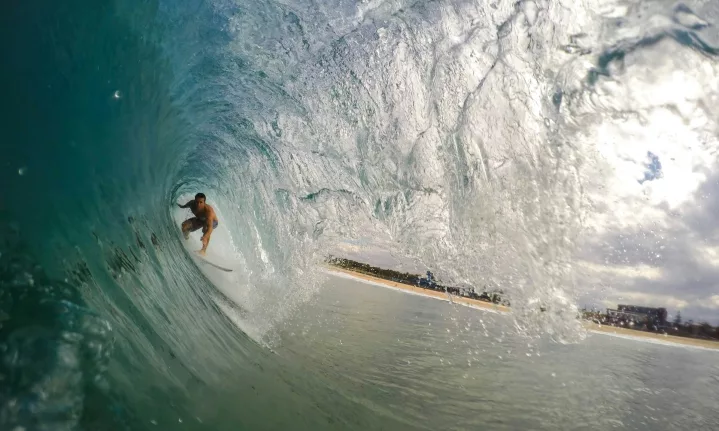
Robertsport sits about 2.5 to 3 hours northwest of Monrovia on the Grand Cape Mount peninsula, where the Atlantic wraps around a series of consistent point breaks with warm water year-round and a lineup you'll often share with a handful of people rather than a crowd. Kwepunha Surf Retreat, a sustainable surf camp on the point, is the town's best-known base: simple rooms, meals included, surf guiding, and a genuine investment in the local community through health, sanitation and education projects. Facilities are basic (bucket baths, limited electricity hours), which is part of what keeps the place unspoiled. Lake Piso, a large brackish lagoon just inland, adds paddling and birdwatching if you want a day off the board.
Sapo National Park, Liberia's only national park
Sapo, in remote Sinoe County in the country's southeast, protects roughly 1,800 square kilometers of primary Upper Guinean rainforest, one of the largest remaining tracts of this ecosystem in West Africa. It holds forest elephants, chimpanzees, pygmy hippos and over 200 recorded bird species, though this is genuine wilderness, not a game-drive park: sightings take patience and a guide, and the payoff is the forest itself as much as any single animal. Trips need to be arranged through the Sapo Ecolodge or Liberia's Forestry Development Authority in Monrovia, which organizes guides, camping and permits. Budget a minimum of three days once you factor in the travel time from Monrovia, most of it on unpaved roads.
Kpatawee Waterfall, Bong County
A more accessible rainforest experience, roughly three hours from Monrovia via Kakata and Buchanan with the final stretch on dirt road. Two cascading waterfalls, swimmable pools, and black boulders you can climb over, with a one-hour hike between the first and second falls. The Kpatawee Waterfalls Ecolodge has solar-powered, thatched-roof accommodation on site, and entry to the falls costs $5 per person.
Firestone Plantation, Harbel
An hour or so from Monrovia toward Roberts International Airport, the Firestone rubber plantation is one of the largest contiguous rubber plantations in the world, established in 1926 and still a dominant force in the local economy. Guided tours cover the tapping process and the plantation's outsized role in Liberia's 20th-century economic and political history, an uncomfortable but honest look at a company town that has shaped the country as much as any president.
Buchanan, the coastal gateway to the interior
Grand Bassa County's main town and Liberia's second-largest port, a functional stop rather than a destination in itself, but a useful staging point for reaching Kpatawee Waterfall or continuing further along the coast. Quieter beaches than Monrovia's, without the infrastructure to match.
Culture & Etiquette
Liberian culture carries two distinct threads that still shape everyday life: the Americo-Liberian settler culture, sometimes still referred to locally as "Kwi," with its Southern American-influenced customs, and the indigenous cultures of the more than sixteen ethnic groups who lived in the region long before 1822, including the Kpelle (the largest group), Bassa, Grebo, Kru, Mano, Gio and Vai. English is the official language and works for travel everywhere, but it's a first language for a minority; most Liberians grow up speaking an indigenous language at home alongside Liberian English.
Do
- Greet before you ask anything. A greeting and some small talk before getting to business is expected in shops, markets and offices alike; skipping straight to a request reads as rude.
- Carry both currencies. Hotels and upscale restaurants quote in US dollars; markets, shared taxis and small vendors run in Liberian dollars. Small USD bills and small LRD notes both matter.
- Dress modestly outside beach areas. Liberia is broadly conservative outside tourist-facing hotels and Robertsport's surf scene.
- Negotiate transport fares before you get in. Taxis, pen-pens and keh-kehs don't use meters; agree a price up front.
- Hire a local guide or fixer for anything outside Monrovia and Robertsport. Road conditions, permits and local knowledge make this worth the cost, not a luxury.
Don't
- Photograph people, government buildings or checkpoints without asking. Security and military installations especially; ask before photographing individuals as a baseline courtesy.
- Discuss the civil war casually. Nearly every adult Liberian lived through it and lost people to it. Follow their lead if the topic comes up rather than raising it yourself.
- Travel after dark outside Monrovia. Roads are poorly lit, poorly maintained, and the safety picture changes meaningfully once the sun goes down.
- Assume "Kwi" and indigenous Liberian identities are interchangeable. The settler/indigenous distinction is still a live social fact, not a historical footnote.
- Expect reliable power or water outside major hotels. Liberia's grid is genuinely inconsistent; plan for it rather than being surprised by it.
Deeper culture: the palava hut, secret societies, and lappa cloth
The palava hut. A traditional open-sided structure used across indigenous Liberian communities for public meetings, dispute resolution and community decision-making. "Palava," meaning trouble or dispute in Liberian English, is talked through openly in the hut rather than escalated, a tradition that has also fed into post-war reconciliation efforts.
Poro and Sande. Traditional initiation societies, for men and women respectively, found among several indigenous groups and central to coming-of-age traditions in parts of the country. These remain culturally significant and are not typically open to outside observation; treat the subject with the same discretion you would any closed religious or initiatory tradition.
Lappa cloth. Brightly patterned wax-print fabric worn as wrapped skirts and head ties, shared with the wider West African region but woven into distinctly Liberian styles, especially visible at church services and celebrations.
Food & Drink
Liberian food centers on rice, the genuine daily staple, built up with West African staples like cassava and palm oil alongside a Southern American influence brought by the Americo-Liberian settlers. It's a heartier, spicier cuisine than many first-time visitors to West Africa expect, and the best of it is home cooking rather than restaurant food, though Monrovia has a growing restaurant scene covering both.
Cassava Leaf & Palm Butter
Cassava leaf, pounded cassava leaves stewed with meat or fish and palm oil, and palm butter, a rich stew made from pounded palm nuts, are the two dishes most identified with Liberian home cooking, both served over rice.
Dumboy & Fufu
Dumboy is pounded cassava formed into a smooth, stretchy dough, eaten by hand with soup; fufu, made from fermented cassava, is its tangier cousin. Both are eaten across the country as a rice alternative.
Jollof Rice & Pepper Soup
Liberian jollof, part of the wider West African jollof tradition, and pepper soup, a fiery broth built around meat, fish or chicken, both showcase the Scotch bonnet heat that runs through most Liberian cooking.
Collard-Style Greens
A direct legacy of the Americo-Liberian settlers, greens cooked Southern-style alongside rice and stewed meat, a dish you won't find in most of the rest of West Africa.
Fresh Seafood
Monrovia and the coastal towns serve grilled fish and prawns fresh off the boats; expect it prepared simply, with rice and a pepper sauce on the side.
Club Beer & Ginger Beer
Club, Liberia's own lager, is the default beer everywhere. Homemade ginger beer, spicier and less sweet than the bottled version most travelers know, is a common non-alcoholic option.
When to Go & Itineraries
November through April, the dry season, is the only realistic window for a first trip. Roads are passable, Robertsport's surf is at its best, and Sapo's wildlife is easier to spot on cleared trails. May through October is the rainy season, heaviest from June to September, when unpaved roads become genuinely difficult and Monrovia itself sees regular urban flooding from poor drainage infrastructure.
Seasons compared, with rainfall
| Season | Verdict | Temps | Conditions |
|---|---|---|---|
| Nov-Apr | Best | 24-32°C | Dry, roads passable, best surf and wildlife viewing |
| May & Oct | Shoulder | 24-30°C | Rain building or easing; workable with flexibility |
| Jun-Sep | Difficult | 23-28°C | Heaviest rain, urban flooding, unpaved roads hard going |
Monrovia stays humid year-round with little temperature variation; it's rainfall, not heat, that drives the seasonal difference.
Itineraries
A week covers Monrovia and a proper Robertsport surf trip without rushing. Ten days to two weeks makes room for Sapo National Park or Kpatawee Waterfall, both of which need real travel-time budgeting on top of time on the ground.
- Days 1–2
Monrovia. Providence Island, the National Museum of Liberia, the Centennial Pavilion, and the view up to the Ducor Hotel ruin.
- Days 3–6
Robertsport. Drive or transfer from Monrovia (2.5-3 hrs), four nights at Kwepunha Surf Retreat or similar, surfing and a Lake Piso day.
- Day 7
Return to Monrovia. Buffer day for departure logistics or a last Monrovia neighborhood you missed.
- Days 1–2
Monrovia. The full capital circuit, plus a half-day at the Firestone plantation en route out of the city.
- Days 3–6
Robertsport. Four nights on the surf coast.
- Days 7–9
Kpatawee Waterfall via Buchanan. Overnight at the Kpatawee Waterfalls Ecolodge, swimming and the two-falls hike.
- Day 10
Return to Monrovia for departure.
- Days 1–2
Monrovia extended. Full capital circuit at an unhurried pace.
- Days 3–6
Robertsport. Four full days on the surf coast.
- Days 7–10
Sapo National Park. Arranged through the Forestry Development Authority or Sapo Ecolodge; budget the travel time honestly.
- Days 11–13
Kpatawee & Buchanan. The waterfall, the ecolodge, and Grand Bassa's quieter coast.
- Day 14
Return to Monrovia for departure.
Getting there & around
Roberts International Airport (ROB) near Harbel is Liberia's only international gateway, about 56km (35 miles) southeast of Monrovia, with a taxi or hotel transfer into the city taking 50 to 60 minutes and costing $40-60, negotiated rather than metered. Brussels Airlines, Air Côte d'Ivoire, Royal Air Maroc and a handful of other regional and European carriers serve ROB. There is no formal domestic flight network to speak of; travel between towns is by shared taxi, private transfer, or self-drive.
Local transport, road conditions and practical prep
| Option | Notes |
|---|---|
| Shared taxis | The main way to travel between towns; cheap but slow, and departure times aren't fixed, cars leave when full. |
| Pen-pens (motorbike taxis) | Common and affordable within towns; negotiate the fare before getting on, and factor in variable road safety standards. |
| Keh-kehs (auto-rickshaws) | A step up from pen-pens for short in-town trips; also fare-negotiated. |
| Private transfer / hired driver | The most reliable way to reach Robertsport, Sapo or Kpatawee; arrange through your hotel or a local fixer rather than showing up and hoping. |
Roads: paved roads connect Monrovia to Roberts International Airport and run partway toward Robertsport and Buchanan; beyond that, expect unpaved, rutted roads that a standard sedan struggles with even in the dry season. A 4x4 is worth the extra cost for anything past the main highway.
Practical prep: buy a local SIM at the airport or in Monrovia for data and local calls; download offline maps before heading to Robertsport, Sapo or Kpatawee, where signal is unreliable. Bring more US cash than you think you'll need, since card acceptance is limited to a handful of upscale Monrovia hotels, and ATMs are inconsistent outside the capital.
Where to stay
Robertsport surf camps
Simple, community-focused, and the reason most surf travelers make the trip. Kwepunha Surf Retreat is the best-known option, with basic rooms, included meals and surf guiding.
Monrovia hotels
The Cape Hotel and Mamba Point Hotel, both in the Mamba Point diplomatic quarter with ocean views, cover the upper end reliably. Full detail in our Monrovia city guide.
Budget Planning
Liberia is not a cheap destination by West African standards. Thin tourist infrastructure means less competition on hotels and transport, which keeps prices higher than the region's more visited countries. Cash, in both US and Liberian dollars, drives almost everything outside a handful of Monrovia hotels.
- Surf camp or guesthouse $30-50
- Local restaurants and market food
- Shared taxis between towns
- Sapo and Kpatawee entry fees
- Mid-tier Monrovia hotel
- Restaurant meals, USD-quoted
- Private transfers between towns
- A guided day at Sapo or Firestone
- Top Monrovia hotels (Cape, Mamba Point)
- Hired driver for the whole trip
- RLJ Kendeja Resort & Villas beach stay
- Private guiding throughout
Quick reference prices
| Kpatawee Waterfall entry | $5 |
| Kwepunha Surf Retreat (per night, meals incl.) | $45-75 |
| Airport taxi to central Monrovia | $40-60 |
| The Cape Hotel, Monrovia | $135-165/night |
| Mamba Point Hotel, Monrovia | $220-245/night |
| RLJ Kendeja Resort & Villas | from ~$150/night |
| eVisa on arrival | $102.50 |
Prices reflect July 2026 research and drift over time, especially hotel rates and the LRD exchange rate. Treat them as a planning baseline, not a quote.
Visa & Entry
Nearly every nationality needs a visa to enter Liberia. Since March 2025, most travelers can apply for an eVisa on arrival through the official portal at visaonarrival.lis.gov.lr, uploading a passport bio page, yellow fever certificate and return ticket, for $102.50, with approval usually instant. If a Liberian embassy or consulate exists in your home country, you may be required to apply there in advance instead of using the eVisa system, so check your specific nationality's requirement before booking flights.
✓ Passport, 6+ months validity
Valid at least 6 months beyond your intended stay, standard for the region.
✓ Yellow fever certificate
Required for entry and checked on arrival. Get vaccinated at least 10 days before travel; a single dose is valid for life under current WHO rules.
✓ Return or onward ticket
Required as part of the eVisa application and may be checked again on arrival.
✓ eVisa confirmation
Apply 7-30 days before arrival. Print or save the QR code confirmation; biometric data is collected on arrival at Roberts International Airport.
| Liberia | Ivory Coast | |
|---|---|---|
| Daily budget | $60-90 gets you by; thinner infrastructure keeps prices up | Generally cheaper mid-range, more hotel competition |
| Surf & coast | Robertsport's uncrowded point breaks | Grand-Bassam's Atlantic coast, more developed |
| Rainforest | Sapo National Park, genuine wilderness | Taï National Park, also UNESCO-listed and more established |
| Road network | Rough outside Monrovia and the main highway | More paved roads connecting major towns |
| Visa | eVisa on arrival, ~$103 | e-Visa system, generally faster processing |
Safety, Solo Women & Family
Liberia rates Level 2, Exercise Increased Caution, from the US State Department, with similar guidance from the UK and Canada. This is not a country to visit casually or without preparation, but it also isn't a country most travelers should avoid outright: the real risks are crime concentrated in specific settings, not random danger everywhere. Armed robbery occurs in urban areas, crowded markets and public beaches, and local police have limited resources to respond quickly to serious incidents.
Crime in markets & crowds
Petty theft, pickpocketing and purse snatching happen in Monrovia's busiest markets, including Waterside and Duala. Keep valuables minimal and secured, and stay alert in dense crowds.
Night travel
Avoid traveling outside Monrovia after dark; if you're on the road when night falls, finish the journey at the nearest safe town rather than pushing on.
Flooding & rainy season
Heavy rain from May to October, peaking June-September, causes urban flooding in Monrovia and can strand vehicles on unpaved roads elsewhere. Build slack into any rainy-season itinerary.
Two more things worth knowing: healthcare and checkpoints
Healthcare is severely under-resourced, even by regional standards. Serious medical issues typically require evacuation rather than local treatment; comprehensive travel insurance with medical evacuation coverage is essential, not optional.
Checkpoints on roads outside Monrovia are routine and generally not something to worry about if your documents are in order; carry printed copies of your passport, visa and yellow fever certificate to avoid handing over the originals.
Solo women travelers
Solo travel is manageable with real precautions rather than casual confidence. Avoid walking alone after dark anywhere in the country, arrange transport through your hotel or a trusted fixer rather than hailing taxis on the street at night, and dress modestly outside beach and hotel settings. Many solo women who visit Liberia travel with a local guide or fixer for at least part of the trip, particularly outside Monrovia and Robertsport, which is a reasonable and common choice rather than an overcautious one. Full detail on our Solo Woman Explorer pages.
Emergency numbers
Liberia has no landline telephone network; 911 and 355 connect to the Liberia National Police from a cellphone, though response capacity is limited outside Monrovia. Reliable, verified ambulance and fire numbers were not confirmed for this guide; contact your hotel or the nearest private clinic directly in a medical emergency.
Embassies in Monrovia
Most embassies are concentrated in the Mamba Point diplomatic quarter, including the United States, United Kingdom and the European Union delegation. Register with your embassy before travel where that service is offered, and keep their contact details accessible offline.
Family travel
Liberia isn't a typical first family destination. Limited medical infrastructure, rough roads outside Monrovia, and the general safety picture make it better suited to families with prior experience in challenging destinations than a first trip abroad with young children. Families who do visit generally stay close to Monrovia's better hotels and keep excursions short and well-planned rather than attempting the full country circuit.
Liberia FAQ
Is Liberia safe to visit?
Liberia rates Level 2, Exercise Increased Caution, from the US State Department. Armed robbery occurs in urban areas, crowded markets and public beaches, and local police have limited resources to respond. Most visitors travel without incident by sticking to daylight hours outside Monrovia, avoiding informal settlements alone, and using trusted transport.
Do I need a visa for Liberia?
Yes. Nearly all nationalities need a visa, most now handled through the eVisa on arrival system launched in March 2025 at visaonarrival.lis.gov.lr, costing $102.50 and usually approved instantly. If a Liberian embassy exists in your home country you may be required to apply there instead, so check before you travel.
How much does a trip to Liberia cost?
Liberia isn't a cheap backpacker destination. Budget travelers manage on $60 to 90 a day, mid-range runs $120 to 200. A week-long mid-range trip typically costs $700 to $1,000 excluding international flights and the visa fee.
When is the best time to visit Liberia?
November to April, the dry season. Roads are passable, Robertsport's surf breaks are at their best, and Sapo National Park's wildlife is easier to spot. May to October is the rainy season, with the heaviest rain from June to September and regular flooding in Monrovia.
Is Robertsport good for surfing?
Yes, and it's one of West Africa's best-kept surf secrets. Consistent point breaks, warm water year-round and a handful of surf camps like Kwepunha Surf Retreat, with a fraction of the crowds you'd find at comparable breaks elsewhere.
What currency does Liberia use?
Both the Liberian dollar (LRD) and the US dollar (USD) circulate as legal tender, often in the same transaction. Hotels, flights and upscale restaurants quote in USD; markets, shared taxis and small shops run in LRD. Carry both.
How many days do you need in Liberia?
A week covers Monrovia and a Robertsport surf trip comfortably. Ten days to two weeks adds Sapo National Park's rainforest interior or Kpatawee Waterfall, both of which need extra travel time on rough roads.
What language is spoken in Liberia?
English is the official language and works for travel throughout the country, though it's a first language for a minority. More than two dozen indigenous languages are spoken, including Kpelle, Bassa, Grebo, Kru and Mano.
Is Liberia safe for solo female travelers?
Manageable with real precautions. Avoid walking alone after dark anywhere in the country, use hotel-arranged or pre-booked transport rather than hailing taxis on the street at night, and dress modestly outside beach areas. Most solo women who visit travel with a local guide or fixer for at least part of the trip.
Is Liberia good for families with kids?
Not a typical first family destination. Limited medical infrastructure, rough roads and the general safety picture make it better suited to families with prior experience in challenging destinations than a first trip abroad with young children.
Do I need a yellow fever vaccination for Liberia?
Yes. Liberia requires proof of yellow fever vaccination for entry, and immigration checks it on arrival. Get vaccinated at least 10 days before you travel; under WHO rules a single dose is valid for life.
Is Liberia cheaper than neighboring Ivory Coast?
Not really, and in some categories it's pricier. Liberia's tourist infrastructure is thinner, so hotels and organized transport cost more relative to what you get. Ivory Coast has more competition among hotels and a more developed domestic transport network, which keeps mid-range costs down.
What Stays With You
Liberia doesn't perform for visitors, mostly because it doesn't have visitors in the numbers that would make performance worthwhile. What you get instead is unmediated: a point break at Robertsport with nobody else paddling out, a gutted five-star hotel on a hill that no guidebook needs to explain because the building says it plainly, and a country of people who have rebuilt twice in living memory and are doing it again.
This isn't an easy country to visit and it doesn't pretend to be. Go with a plan, a guide where you need one, and the humility to know you're a guest in a place still working through more history than most countries carry in a century.