
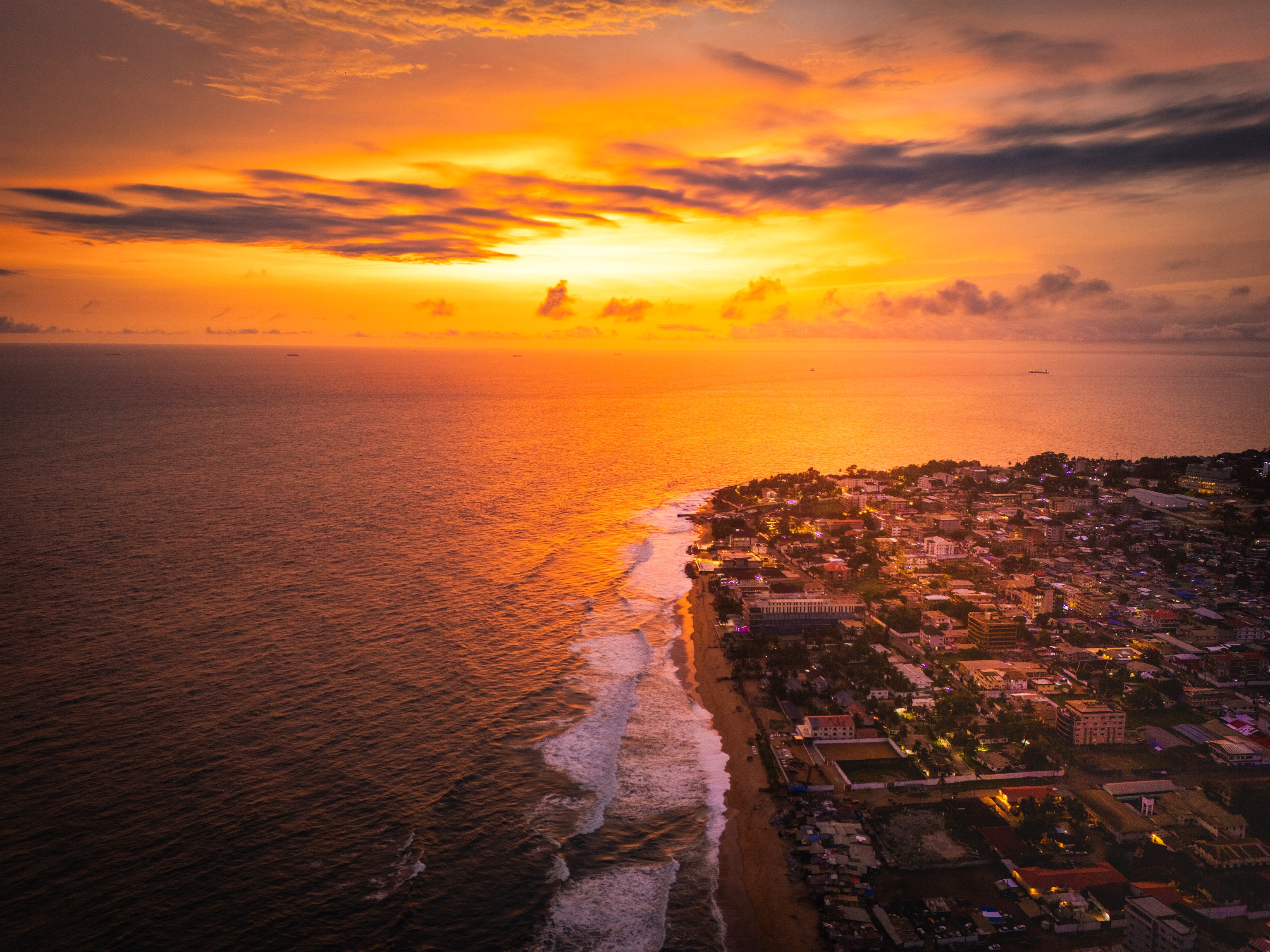
Africa's oldest capital wears its history in plain sight
Monrovia sits on a peninsula where the Mesurado River meets the Atlantic, founded in 1822 at Providence Island when the American Colonization Society began landing freed and formerly enslaved African Americans on this stretch of coast. Named after US President James Monroe, it became the capital of Africa's first republic in 1847 and has spent the two centuries since working through the tension between its Americo-Liberian founding elite and the indigenous Liberians who were already here.
That history isn't tucked into a museum. The gutted shell of the Ducor Hotel, once one of only five true five-star hotels on the continent, sits on the city's highest hill visible from most of downtown. Mamba Point's ocean-facing embassies and hotels sit a short drive from Waterside Market's dense, chaotic commerce. Monrovia is not a polished capital and doesn't pretend to be one, but it rewards visitors who come with genuine curiosity about a country that has rebuilt itself twice in living memory.
The honest complications
Infrastructure is genuinely inconsistent: power outages are routine even in central neighbourhoods, and paved roads give way to badly rutted ones a few blocks from the nicest hotels. Crime, specifically armed robbery in markets and on public beaches and petty theft in crowds, is a real consideration, not a guidebook formality, and it shapes how you should move around the city, especially after dark. The rainy season, May to October and heaviest June to September, floods parts of the city with real regularity due to poor drainage. None of this should keep a prepared traveler away, but Monrovia asks more of you than a typical capital city break.
Four areas that matter, and one to know about
Monrovia's neighbourhoods split along old lines: the diplomatic peninsula, the midtown commercial strip, the quieter southern suburbs, and the historic founding site at the city's heart. Where you base yourself should be driven by safety and proximity as much as atmosphere.
Mamba Point
Traditionally Monrovia's principal diplomatic quarter, home to the US and UK embassies and the EU delegation, Mamba Point sits on the peninsula's western tip with direct Atlantic views. It holds the city's best hotels, a genuinely more secure feel than most other neighbourhoods, and enough embassy and NGO presence that services and security around the main hotels are reliable. For a first visit, this is the base.
Sinkor
Originally a suburban residential district, Sinkor is now Monrovia's bustling midtown, running along Tubman Boulevard with the city's strongest concentration of restaurants, mid-range hotels and shops. It includes denser informal pockets like Plumkor and Fiamah alongside its more established stretches, so location within Sinkor matters more than the neighbourhood name alone.
Congo Town
At the southeastern base of the peninsula, Congo Town blends spacious residential streets with a slower pace than Sinkor or downtown. Less relevant for a short visit, but a useful reference point if you're staying with contacts or working locally.
Providence Island & Central Monrovia
The founding site of the entire country and the commercial heart of downtown, including Waterside Market and Broad Street. Essential to visit for the history and the markets, but a daytime-only area: crowded, chaotic in the way genuine working markets are, and not somewhere to wander after dark or with valuables on display.
A short list, and every name on it earns its place
Monrovia's hotel scene is small and skews toward the diplomatic and NGO crowd, which means prices sit higher than the region's more visited capitals for a comparable room. These four cover the realistic range for a visitor, from beach resort to city-centre landmark.
At the top of the ocean-view bracket, The Cape Hotel on United Nations Drive in Mamba Point has an expansive terrace over the Atlantic, a year-round outdoor pool, and themed dinner buffets on Wednesday, Friday and Sunday, from around $135-165 a night. A short walk away, Mamba Point Hotel, also on United Nations Drive in the heart of the diplomatic quarter, is the city's best-known address for business and NGO travelers, with a restaurant and terrace looking straight out over the water, from roughly $220-245 a night.
For a beach-resort alternative closer to the airport, RLJ Kendeja Resort & Villas, founded by BET's Robert L. Johnson, sits on 13 acres of Atlantic coast off the Roberts Field Highway between Roberts International Airport and downtown, with a spa, pool, and a beach bar and grill, from around $150 a night. If you're heading to the beaches northeast of the centre, Bamboo Beach Resort near ELWA offers simpler seaside rooms at a lower price point than the Mamba Point hotels.
Rice, palm oil and a genuine Lebanese thread through it
Monrovia's food scene runs on two parallel tracks: home-style Liberian cooking built around rice, cassava and palm oil, and a well-established Lebanese and international restaurant scene that dates back generations of Lebanese trading families in the city. Both are worth seeking out, and neither is expensive by the standards of the hotels you'll likely be staying in.
Cassava leaf & palm butter
The two dishes that define Liberian home cooking: cassava leaf, pounded leaves stewed with meat or fish, and palm butter, a rich stew from pounded palm nuts, both served over rice with real heat from Scotch bonnet peppers. Ask any driver or hotel staff for their favourite local spot rather than expecting a single famous address; this is neighbourhood food.
Diana Restaurant
Diana Restaurant, open daily from 8:30am to 11pm, is a long-running expat and local favourite serving Lebanese, international and Liberian dishes side by side, famed for its chicken shawarma, falafel, hummus and generous mixed grills.
Sajj House
Sajj House serves Lebanese meze, cheese-and-spinach pies, sandwiches and pizza under the awnings of a large traditional Liberian garden hut, and turns into a lively Friday-night spot with salsa dancing among the expat crowd.
FuZion D'Afrique
FuZion D'Afrique on Tubman Boulevard in Sinkor blends African cuisine with international flair and is consistently ranked among the city's best-reviewed restaurants for service and food alike.
History first, then the coast
Monrovia's sights are concentrated enough to cover properly in two focused days: the founding history downtown, then the diplomatic quarter and the coast. Nothing here needs advance booking, but a driver for the day is worth arranging through your hotel rather than improvising transport between stops.
Providence Island & the founding history
Providence Island, at the mouth of the Mesurado River, is where the first freed and formerly enslaved African American settlers landed in 1822, a site with a layered and difficult history: earlier used as a Portuguese trading post, and a documented departure point for people forcibly enslaved and taken to the Americas before it became the landing site for those returning two centuries later. Walk it with the weight of both histories in mind. From there it's a short trip to the National Museum of Liberia, housed in a historic building that once served as the presidential mansion and founded in 1958, and the adjacent Centennial Pavilion, built in 1947 for the country's centennial and still the site of every presidential inauguration, with a monument to former president William V.S. Tubman on the grounds.
The Ducor Hotel viewpoint
The Ducor Hotel, opened in 1960 as one of only five true five-star hotels in Africa and host to figures like Ethiopian Emperor Haile Selassie at its peak, closed at the outbreak of civil war in 1989 and has sat gutted and open to the elements ever since, bullet holes and all, on the city's highest hill above downtown and West Point. It's one of the most direct physical reminders of the war anywhere in the country. The site itself is best approached with a local guide rather than alone, since it has become an informal gathering spot with limited security; the view up to it from downtown, and the view it commands over the city, tell the story either way.
Mamba Point & the waterfront
An easy daytime walk along United Nations Drive takes in the diplomatic quarter's embassies and the ocean views that make The Cape Hotel and Mamba Point Hotel worth a drink on their terraces even if you're not staying there. This is also the most comfortable part of the city for an unhurried daylight stroll.
ELWA Beach
ELWA Beach, on the coast just outside the city centre, is Monrovia's most popular weekend spot for families and one of the more relaxed places to spend a beach afternoon, though the same safety guidance applies here as anywhere in the city: go in daylight, keep valuables minimal, and avoid isolated stretches.
Two days, planned around daylight and history
Two full days cover Monrovia properly. A third day is worth adding if you can fit a Firestone plantation trip on the way out of the city.
- Morning
Providence Island and the National Museum of Liberia. The founding history first, with a guide or driver who can explain what you're looking at.
- Midday
Lunch at Diana Restaurant. Shawarma, hummus and mixed grills in central Monrovia before the afternoon heat sets in.
- Afternoon
Mamba Point. A walk along United Nations Drive past the embassies, with a drink on the terrace at The Cape Hotel overlooking the Atlantic.
- Evening
Dinner at Sajj House. Lebanese meze in Sinkor's garden-hut setting, livelier if you land on a Friday.
- Day 1
The one-day route above: Providence Island, the National Museum, Mamba Point, Sajj House.
- Day 2 morning
The Centennial Pavilion and the Ducor Hotel viewpoint. A guided look at the ruin and the history it represents, from a safe vantage point.
- Day 2 afternoon
ELWA Beach. A relaxed daylight beach afternoon, one of the city's most popular weekend spots for exactly that reason.
- Day 2 evening
Dinner at FuZion D'Afrique. African and international dishes in Sinkor to close out the trip.
Plan your transport, don't improvise it
Roberts International Airport (ROB) sits about 56km (35 miles) southeast of the city centre near Harbel. A taxi or hotel transfer takes 50 to 60 minutes and costs $40-60, negotiated rather than metered; most hotels, including The Cape Hotel and Mamba Point Hotel, offer arranged pickups, which is the safer choice for a first arrival, especially at night.
Within the city, Monrovia doesn't have a formal public transport system. Shared taxis run informal routes and pick up multiple passengers along the way; pen-pens (motorbike taxis) and keh-kehs (auto-rickshaws) handle short in-town trips at lower cost but with more variable safety standards. For a visitor, arranging a driver for the day through your hotel is the most reliable option, especially for reaching Providence Island, the Ducor Hotel viewpoint, or Sinkor's restaurants after dark.
Best time to visit and practical prep
November to April is the dry season and the only realistic window for comfortable sightseeing; roads stay passable and the city avoids its worst flooding. May to October, and especially June to September, brings heavy rain and regular urban flooding from Monrovia's poor drainage infrastructure, which can make even short trips across town slow and unpredictable.
Practical prep: buy a local SIM on arrival for data and to keep in touch with your driver or hotel; card acceptance is limited to a handful of upscale hotels, so carry US cash in small, clean bills alongside some Liberian dollars for markets and street transport. Confirm your hotel's arranged airport pickup in advance rather than negotiating with taxi touts at arrivals.
Cheap food and local transport, expensive hotels
Monrovia's cost structure is lopsided: local food and transport are genuinely inexpensive, while the small pool of hotels that meet a visiting traveler's comfort and safety bar charge prices closer to a European or North American capital than a regional one.
- Guesthouse or budget hotel $30-50
- Local Liberian meals $5-10
- Shared taxis and pen-pens
- Free sights: Providence Island, waterfront
- The Cape Hotel or similar $135-165
- Restaurant meals $10-20/person
- Hired driver for the day
- National Museum and guided Ducor visit
- Mamba Point Hotel or RLJ Kendeja $150-245
- Private guide throughout
- Hotel weekend buffets
- Beach resort day at ELWA or Bamboo Beach
Real precautions, not paranoia
Monrovia sits under the same Level 2, Exercise Increased Caution guidance that applies to Liberia overall. Armed robbery occurs in crowded urban areas, markets and on public beaches, and petty theft, pickpocketing and bag snatching are routine in dense spots like Waterside Market. Local police have limited resources to respond quickly to serious incidents, which is the practical reason prevention matters more here than in most capital cities.
The precautions that actually matter: stay within daylight hours for anything outside your hotel and the immediate Mamba Point area; use hotel-arranged or pre-booked transport after dark rather than hailing a taxi on the street; keep phones, cash and bags secured and out of sight in markets and crowds; and avoid West Point and other dense informal settlements without a local guide who has genuine community ties there. None of this makes Monrovia unvisitable, it makes it a city that rewards a plan over improvisation.
Solo women should apply the same rules with extra margin: arrange transport in advance rather than negotiating with unknown drivers, dress modestly outside hotel grounds and the beach, and consider a local guide or fixer for the Providence Island and Ducor Hotel portions of a visit. Emergency contact in Liberia runs through the Liberia National Police at 911 or 355 from a cellphone; there is no landline network, and response capacity outside central Monrovia is limited. Keep your hotel's front desk as a first point of contact for anything urgent, they generally have faster local resources than emergency numbers alone.
Rubber, a rainforest waterfall, and the surf coast
Monrovia's position makes it the practical base for three very different day or overnight trips, though only one of them, Firestone, realistically fits in a single day given road conditions.
Firestone Plantation, Harbel
One of the largest contiguous rubber plantations in the world, established in 1926 and still a defining force in Liberia's economy and politics. Guided tours cover the tapping process and the plantation's outsized, complicated role in the country's 20th-century history, conveniently close to Roberts International Airport if you're timing it around a flight.
Robertsport
West Africa's under-the-radar surf town, with consistent point breaks and Kwepunha Surf Retreat as the main base. Too far for a comfortable single day trip; budget at least one overnight to make the drive worthwhile. Full detail in our Liberia country guide.
Kpatawee Waterfall, Bong County
Two cascading waterfalls with swimmable pools, reached via a partly unpaved road; the Kpatawee Waterfalls Ecolodge makes an overnight stay comfortable if you'd rather not do the full return drive in one day.
Monrovia FAQ
Is Monrovia safe for tourists?
Monrovia requires real caution. Armed robbery occurs in crowded markets and on public beaches, and petty theft is common in busy areas like Waterside Market. Stick to daylight hours, use hotel-arranged transport at night, and keep valuables minimal in crowds.
How many days do I need in Monrovia?
Two full days covers the city's key history and neighbourhoods well: one for Providence Island, the National Museum and the Ducor Hotel viewpoint, one for Sinkor's restaurants and a beach afternoon. A third day fits a Firestone plantation day trip.
How much does Monrovia cost per day?
Budget travellers manage on $60-90 a day; mid-range runs $120-200, mostly driven by hotel costs, since Monrovia's better hotels charge Western prices while food and local transport stay comparatively cheap.
When is the best time to visit Monrovia?
November to April, the dry season. Rain from May to October, heaviest June to September, causes regular urban flooding from the city's poor drainage infrastructure.
What is the best area to stay in Monrovia?
Mamba Point for first-time visitors: the diplomatic quarter, ocean views, the city's best hotels and a genuinely safer feel than most other neighbourhoods after dark. Sinkor is the alternative for proximity to the restaurant scene.
How do I get from Roberts International Airport to Monrovia?
The airport sits about 56km (35 miles) southeast of the city. A taxi or hotel transfer takes 50-60 minutes and costs $40-60, negotiated rather than metered; hotel shuttles are the safest option for a first arrival.
What is the Ducor Hotel?
A gutted five-star hotel from 1960 that once hosted heads of state, closed at the outbreak of civil war in 1989 and never reopened. It sits on Monrovia's highest hill overlooking downtown and West Point, and is best viewed from a distance or with a local guide rather than explored alone.
Do I need to speak a local language in Monrovia?
No. English is Liberia's official language and is used throughout Monrovia for business, signage and daily transactions, though Liberian English has its own rhythm and vocabulary worth listening for.
Is Monrovia walkable?
Not really, and not advisable after dark in most areas. Mamba Point and central Sinkor have walkable stretches in daylight, but the city overall is spread out and best covered by negotiated taxi, pen-pen or hotel transfer.
What currency should I use in Monrovia?
Carry both. Hotels, flights and upscale restaurants quote in US dollars; markets, shared taxis and small vendors run in Liberian dollars (LRD), often making change in whichever currency they have on hand.
What Stays With You
Monrovia doesn't ask you to forget what happened here. The Ducor Hotel stays on its hill, visible from the terrace at The Cape Hotel where the drinks come with an ocean view and a Wednesday buffet. Providence Island stays a founding site and a departure point for the enslaved, both true at once. The city doesn't resolve that contradiction for you, and it shouldn't: sitting with it is part of what a visit here actually offers.
Go with a plan, a driver you trust, and the humility to know that two days barely scratches a country still working through more history than most nations carry in a century.