
A capital that exists mostly to get you to the islands, and is worth a day regardless
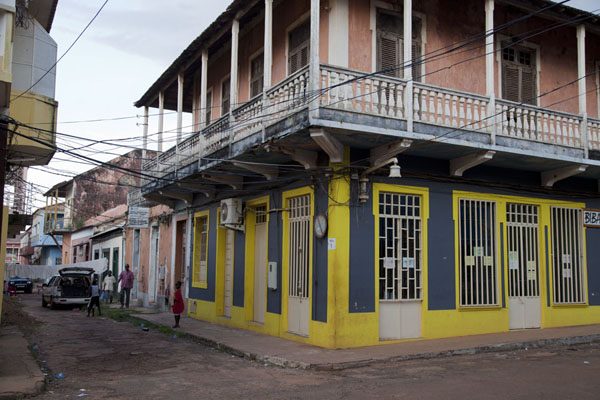
Bissau sits where the Geba River widens into the Atlantic, a compact, low-rise city of maybe half a million people built around a colonial core that Portugal never finished modernizing before independence in 1974. The arcaded buildings of Bissau Velho, the old town, sag and peel in ways that read as decay if you're rushing through and as texture if you slow down. Almost nobody arrives here planning to spend a week; nearly everyone arrives to see the Fortaleza d'Amura, Bandim Market and the old quarter, then head for the Bijagós Islands the city exists to serve as gateway to.
What that means practically: tourism infrastructure is thin. There are perhaps a dozen hotels worth naming in the whole city, a handful of restaurants that reliably serve travelers, and no tourist information office. What Bissau has instead is an unfiltered look at a small West African capital doing its own thing, cashew trucks and all, and a genuine warmth from people who are visibly surprised, in a good way, that you came.
The honest complications
Power cuts are routine and most decent hotels run on generators; expect intermittent hot water and wifi that works some of the time. Bissau is under the same Level 3, Reconsider Travel advisory as the rest of the country, and the government has been a military transitional authority since a November 2025 coup, with elections not due until December 2026. There is no US embassy here; consular support comes from Dakar, hours away. None of this makes the city unvisitable, thousands of NGO staff, business travelers and a trickle of tourists move through it every year, but it does mean planning ahead and booking through people who know the country matters more here than almost anywhere else in West Africa.
Four areas, all within walking or short-taxi distance
Bissau is small enough that where you stay matters less for logistics than it does in a bigger city, but each area has a distinct character worth knowing before you pick a hotel.
Praça / Centro
The area around the Presidential Palace and the main avenues holds most of the hotels worth staying in, the better restaurants, and the airline offices. It's the practical first-time base: central, closest to the airport, and near the hotels with the most reliable generator power.
Bissau Velho
The original Portuguese colonial quarter, arcaded buildings in every state from restored to structurally questionable, narrow streets that predate the automobile, and the closest thing Bissau has to a sightseeing district. Best explored slowly, on foot, in the morning before the heat sets in.
Bandim
Home to Bandim Market, the largest and most chaotic market in the country, and the neighbourhood that gives the truest sense of how Bissau actually lives day to day: fabric sellers, fish stalls, cassava piled by the sack, and a level of noise and negotiation that rewards a slow walk rather than a rushed one.
Airport road (Bra)
The corridor toward Osvaldo Vieira International Airport has a few newer hotels aimed at business and NGO travelers, useful if you have an early flight or late arrival, though less atmospheric than staying in Praça or Bissau Velho.
A short list, and every name on it matters
Bissau's hotel scene is small enough that a handful of properties cover almost every traveler's needs, from business-standard comfort to simple budget rooms. Book ahead regardless of your budget; there is little walk-in inventory and NGO and diplomatic travel fills rooms unpredictably.
At the top of the market, Dunia Hôtel Bissau (the Azalai 24 de Setembro property) sits close to the Presidential Palace with the most reliable generator power and a/c in the city, a pool, and proximity to the airport that makes it the default choice for business travelers and the safest bet for anyone new to the country. Ceiba Hotel Bissau and Hala Hotel & Aqua Park both compete at a similar upper tier, the latter notable for its pool and aqua park facilities, a genuine rarity in Bissau's climate. Bissau Royal Hotel covers the mid-range with clean, straightforward rooms near the centre at a noticeably lower price than the Azalai property, and is a sensible base for travelers prioritizing budget over polish. Guesthouses in the Praça area fill the true budget end, with basic fan-cooled rooms and shared bathrooms for travelers comfortable with fewer amenities.
A small scene, built around a handful of reliable addresses
Bissau doesn't have a restaurant district so much as a short list of places locals, NGO staff and the few visiting tourists all rely on. The food itself blends Portuguese technique with West African staples: rice, groundnuts and whatever the boats brought in that morning.
Caldo de Mancarra
The country's defining dish, a thick groundnut stew with meat or fish over rice, done well at Restaurante Bar Samaritana and Restaurante Papa Loca, both serving honest, unfussy Guinea-Bissauan home cooking in the centre.
Grilled fish
Fresh Atlantic fish, grilled whole and served with rice or cassava, is the most reliable order anywhere in the city; ask what came in that morning rather than ordering from a printed menu.
Chez Wou
The Chinese restaurant that NGO staff and diplomats have relied on for years, a genuine change of pace from Guinea-Bissauan and Portuguese-influenced menus elsewhere in the city, and a useful pressure valve if you've been eating similar plates for several days straight.
A Padeira
The dependable stop for bread, pastries and coffee, useful for a quick breakfast before heading out to Bissau Velho or Bandim Market while the morning is still cool.
A city best seen on foot in a single unhurried day
Bissau's sights fit comfortably into one day, walked slowly with a midday break for the worst of the heat. Nothing here needs advance booking except, sometimes, access to the fort.
Fortaleza d'Amura & Amílcar Cabral's mausoleum
The 18th-century Portuguese fort on the water holds the mausoleum of Amílcar Cabral, the independence leader assassinated months before his movement won, along with the tombs of other PAIGC revolutionaries, Cabral's car, and a Cuban-donated statue of him that was never actually raised. Access is inconsistent since the fort still has a military function; asking politely at the gate, sometimes with a small tip, is generally how visitors get in. The fort walls give a genuine panoramic view over Bissau and the Geba River regardless of whether the mausoleum itself is open that day.
Bissau Velho on foot
The old colonial quarter rewards an unhurried walk: arcaded facades in every state of repair, narrow streets laid out before cars existed, and a texture of daily life, laundry strung between balconies, small shops in ground-floor arches, that no single landmark quite captures. Go in the morning; the light and the temperature both work in your favour.
Bandim Market
The largest, loudest market in the country: produce, dried fish, fabric, cassava by the sackload, and a condensed version of how the city actually shops and eats. Keep valuables secure and expect to be one of very few foreigners there, which is precisely the point.
Pidjiguiti Memorial
A memorial to the dockworkers killed by Portuguese police in the 1959 Pidjiguiti massacre, the event that radicalized Amílcar Cabral and the independence movement toward armed struggle. A quieter, more sobering stop than the fort, and a useful piece of context for understanding the country's founding story.
Museu Etnográfico Nacional
On the university campus and open mornings only, a small but genuine collection of Bissau-Guinean wooden masks, statues, baskets and traditional clothing, including material connected to Bijagó initiation traditions you won't otherwise be able to see up close.
One day covers the city; most trips add the islands
Bissau itself is a one-day city. Almost every visitor either arrives fresh off a flight and heads to the Bijagós within a day or two, or returns from the islands for a final night before departure. These routes assume you're doing one or the other.
- Morning
Bissau Velho. Walk the old town while it's cool, coffee and pastries at A Padeira.
- Midday
Fortaleza d'Amura. Ask at the gate for access to Cabral's mausoleum; take in the river views from the walls regardless.
- Afternoon
Bandim Market, then a break at your hotel during the worst heat.
- Evening
Dinner at Samaritana or Papa Loca, caldo de mancarra and a quiet night before an early Bijagós departure.
- Day 1
The one-day route above.
- Day 2 morning
Museu Etnográfico Nacional (mornings only) and the Pidjiguiti Memorial for context on Cabral and the independence war.
- Day 2 afternoon
Confirm island logistics. Reconfirm your ferry ticket or charter transfer to Bubaque or your lodge directly, and buy any remaining supplies, cash, sun protection, insect repellent, since the islands have far less available.
Small, walkable, and best moved through by arranged taxi
Osvaldo Vieira International Airport (OXB) sits about 10 to 15 minutes from central Bissau. Arrange a hotel pickup in advance rather than negotiating with the unofficial drivers who approach arrivals outside the terminal, a well-documented overcharging risk and, per the current advisory, a spot where opportunistic crime specifically targets arriving foreigners.
Central Bissau, Praça, Bissau Velho and Bandim, is compact enough to walk between in 15 to 20 minutes, though the heat makes a taxi worth it for midday moves. Shared taxis (yellow, informal routes) cost a few hundred CFA; private taxis for a full day, useful for reaching the port or covering multiple sights without walking in the heat, run 10,000 to 20,000 CFA depending on negotiation. There is no ride-hailing app equivalent to Uber or Bolt operating reliably in Bissau; hotels can call a known driver for you, which is the safer option after dark.
Best time to visit
December to February is coolest and most comfortable, with the dry season running November through May overall. The June to October rains make travel outside the city difficult and can disrupt the Bijagós ferry schedule; plan around the dry season if the islands are part of your trip.
Inexpensive by international standards, cash-only in practice
Bissau itself is one of the more affordable capitals in West Africa; the real cost escalation in a Guinea-Bissau trip comes from the Bijagós leg, covered in our Guinea-Bissau country guide. This is a cash economy: bring CFA or euros, since ATMs are unreliable even here.
- Guesthouse room, fan-cooled
- Local restaurant meals
- Shared taxis
- ~$25-40/day
- Hotel with generator & a/c
- Restaurant meals incl. Chez Wou
- Private taxi for the day
- ~$65-115/day
- Dunia Hôtel Bissau or equivalent
- Private driver throughout
- Pre-arranged airport transfers
- ~$150+/day
The same Level 3 advisory as the country, with three things specific to the capital
Bissau carries the same Level 3, Reconsider Travel rating the US State Department applies to Guinea-Bissau as a whole, with a Civil Unrest indicator that specifically calls out the capital as where demonstrations concentrate and can turn violent under the current transitional government. Violent crime targeting tourists specifically is uncommon, but this is not a city to treat casually.
Three things that actually matter in Bissau: airport-exit overcharging and theft, where street criminals and unofficial drivers specifically target arriving foreigners, so arrange pickup in advance; Bandim Market pickpocketing, common in crowded, cash-heavy environments anywhere, so carry only what you need and keep it secured; and political demonstrations, which can appear with little warning near government buildings in Praça and should be avoided entirely, leave the area rather than observe. Emergency numbers are Police 117, Fire 118 and Ambulance 119, though reliability and English-language support are both limited; for anything serious, contact your hotel and the US Embassy in Dakar (+221 33-879-4000) simultaneously.
Nothing near Bissau is really a day trip, and that's the point
Unlike most city guides, this chapter isn't a menu of easy half-day excursions, because there aren't any. The one place worth leaving Bissau for, the Bijagós Archipelago, requires an overnight commitment at minimum, so plan it as an extension of your trip rather than a side trip from your hotel.
The Bijagós Archipelago
The UNESCO Biosphere Reserve of 88 islands is reached by a once-weekly public ferry to Bubaque (Friday out, Sunday back, about 4 hours, roughly 2,500 CFA, sells out in advance) or, more practically for most visitors, a charter boat or light-aircraft transfer arranged directly through a Bijagós lodge. Orango Island's saltwater hippos and Rubane's Ponta Anchaca eco-lodge are the two most-visited draws; full detail on lodges, permits and what to expect is in our Guinea-Bissau country guide.
Cacheu
The old Portuguese trading post north of Bissau, with a ruined fort predating the capital's own colonial architecture and a direct connection to the Atlantic slave trade. Reachable with a hired driver; there is no public transport infrastructure set up for visitors.
Bissau FAQ
Is Bissau safe for tourists?
Bissau carries the same Level 3, Reconsider Travel rating as the rest of Guinea-Bissau. Violent crime against tourists specifically is uncommon, but opportunistic theft around the market and airport is real, and political demonstrations under the current transitional government can turn volatile with little warning.
How many days do I need in Bissau?
One full day covers the city itself: Bissau Velho, the Fortaleza d'Amura and Bandim Market. Most visitors treat Bissau as a one-to-two night staging point before or after the Bijagos Islands rather than a standalone destination.
How do I get from Bissau airport to the city centre?
Osvaldo Vieira International Airport sits about 10-15 minutes from central Bissau. Arrange a hotel pickup in advance; unofficial drivers approaching arrivals outside the terminal are a known overcharging risk.
How much does Bissau cost per day?
Budget travellers manage on roughly 15,000-25,000 CFA (about $25-40) a day with guesthouse rooms and local restaurants; a hotel with reliable generator power and air conditioning runs the daily cost closer to 40,000-70,000 CFA ($65-115).
What is the best area to stay in Bissau?
The Praça/Centro area around the Presidential Palace and the main hotels is the practical first-time base: central, closest to the airport, and near the hotels with reliable generator power.
How do I get from Bissau to the Bijagos Islands?
A public ferry to Bubaque runs once a week, Friday out and Sunday back, about 4 hours for roughly 2,500 CFA, and regularly sells out, so buy tickets in advance at the port. Most lodges instead arrange a charter boat or light-aircraft transfer, which costs more but runs on your schedule.
Do I need a car in Bissau?
No. Central Bissau is small enough to walk, and shared or private taxis cover everything else cheaply. A car only becomes useful for day trips outside the city, and a hired driver is the practical way to do that rather than self-driving.
Is English spoken in Bissau?
Rarely outside the largest hotels and tour operators. Portuguese is the official language and Guinea-Bissau Kriol is what most people actually speak; a few Portuguese or Kriol phrases go a long way.
What Stays With You
Bissau doesn't ask you to be impressed, which somehow makes the moments that do land, the light through the arcades in Bissau Velho, the fort walls over the river where a revolution's leader is buried, the sheer scale and noise of Bandim Market, feel earned rather than staged. It is a small, imperfect, unresolved capital in a country still working out its own government, and it knows it. Spend your one or two days here honestly, take the safety context seriously, and let the city be exactly as much or as little as it is.
Then go to the islands. That's where Guinea-Bissau actually shows you what it has.