
West Africa's most accessible capital
Accra is Ghana's political and economic center and, by most counts, its largest city, home to somewhere between 2.5 and 5 million people depending on how you draw the metro boundary. It sprawls rather than concentrates: there is no single dense old town to wander for a full day, instead a series of distinct neighbourhoods, historic Jamestown down by the sea, leafy Cantonments and Airport Residential, the restaurant strip of Osu, connected by roads that are genuinely congested at rush hour. The upside of that sprawl is variety within a short drive: colonial-era fishing harbours, Cold War-era Pan-African monuments, and a nightlife scene that runs past 2am on weekends all sit within twenty minutes of each other.
What pulls a growing number of visitors here specifically is heritage. Since the government's 2019 Year of Return campaign, Accra has become a genuine pilgrimage site for the African diaspora, particularly African-Americans and Caribbean visitors tracing ancestry, with Kwame Nkrumah's mausoleum and the W.E.B. Du Bois Memorial Centre as the city's clearest touchpoints before heading further west to Cape Coast and Elmina.
The honest complications
Accra's traffic is a real planning constraint, not a minor inconvenience: a cross-town trip that looks like 20 minutes on a map can take an hour during rush hour, so build slack into any day with more than two stops. The heat and humidity are constant and can wear visitors down faster than expected, especially outside the November-March dry season. Tap water is not reliably safe to drink. And while Accra is generally safe, it is still a large, unevenly developed city, so the same street-smart habits that apply in any major capital, securing bags in markets, using ride-hailing after dark, apply here too.
A sprawling city, five neighbourhoods that matter
Accra doesn't have a single walkable center the way many older world capitals do. Where you base yourself comes down to how much you value proximity to restaurants and nightlife versus a quieter, more residential pace.
Osu
Osu, and specifically Oxford Street, is Accra's social heart: the highest concentration of restaurants, bars and shops in the city, walkable in a way few other Accra neighbourhoods are, and close to Osu Castle and the coast. It's touristy by Accra standards and can be noisy at night, but for a first visit it puts everything within a short ride.
Airport Residential Area
A leafy, upmarket district minutes from Kotoka International Airport, popular with business travellers and diaspora visitors for its quiet streets and boutique hotels, including Villa Monticello. Slightly less central for sightseeing than Osu, but the tradeoff of quiet and easy airport access suits many first-time visitors well.
Cantonments & Labone
Adjacent to Osu, Cantonments and Labone are quieter, more residential, and home to most of Accra's foreign embassies and the W.E.B. Du Bois Memorial Centre. A good middle ground between Osu's energy and a fully residential pace.
East Legon
A newer, more suburban district popular with returning diaspora and longer-term visitors, with modern apartments and some of the city's best restaurants, but a real drive from the coast, the airport and central sights. Better suited to longer stays than a short first visit.
Jamestown
Accra's oldest quarter, a working fishing community with a 19th-century lighthouse, colonial-era buildings and a genuine, lived-in energy that the newer districts don't have. Best visited during the day with a guide or on a walking tour rather than as a place to base yourself; accommodation options are limited.
From five-star business hotels to Osu guesthouses
Accra's hotel scene skews toward business travel, so the top end is strong and international-standard, while the budget end is smaller and more basic than in more backpacker-heavy cities. These picks cover the range that actually gets booked by first-time visitors.
At the top, the Kempinski Hotel Gold Coast City downtown is Accra's best-known five-star address, opened in 2015, with a rooftop terrace, an art gallery, two restaurants and the well-regarded Japanese restaurant Santoku on site, from around $200 a night. In the Airport Residential Area, Villa Monticello (from around $180) is a 16-suite boutique property close to Kotoka with a courtyard fitness room and consistently strong guest reviews, a good pick for travellers who want quiet and personal service over scale.
In the mid-range, Osu and Labone both have a reasonable spread of business and boutique hotels within walking distance of Oxford Street's restaurants; booking ahead matters more than in most cities because Accra's hotel supply is tighter relative to demand than a typical tourist capital. Budget travellers have fewer options than in backpacker-heavy destinations, but East Legon and Osu both have guesthouses and serviced apartments from roughly $30-50 a night, generally booked through local listings or Booking.com rather than an established hostel scene.
Jollof, waakye and the best chop bars in the country
Accra has the widest food scene in Ghana, from street-side chop bars serving lunch for under $2 to internationally trained chefs putting a modern spin on Ghanaian staples. The best introduction is still the street food, and the best modern cooking is in Osu.
Waakye & Jollof
Rice-and-beans waakye is Accra's default lunch, built to order with fish, egg, gari and shito, sold from covered basins at informal stalls near any market or trotro station. Buka Restaurant on 10th Street in Osu, just off Oxford Street, does an excellent sit-down version of jollof and other West African staples for visitors who want the flavours without hunting down a street stall on their first day.
Chop bar classics
Banku with grilled tilapia and pepper sauce, fufu with light or groundnut soup, and red red are the dishes to look for at a proper chop bar rather than a hotel restaurant. Republic Bar & Grill in Osu, a small, lively spot decorated with album covers and music memorabilia, does approachable Ghanaian and pan-African plates alongside cheap local beer and regular live music and karaoke nights.
Kelewele & street snacks
Spiced fried plantain, sold from roadside stalls after dark across the city, is Accra's most reliable late-night snack. Follow the smoke and the queue of locals rather than the closest option to your hotel.
Modern & international dining
Santoku, the Japanese restaurant at the Kempinski Hotel Gold Coast City, is consistently cited as one of Accra's best fine-dining rooms. For a broader spread of upscale options, Airport Residential and Cantonments have the city's highest concentration of international restaurants.
Heritage sites, markets and a coastline that works hard
Accra's sights split naturally into heritage and history, market chaos, and the coast. None of it is walkable end to end, so plan around neighbourhoods rather than trying to cover the city geographically in one sweep.
Jamestown, the historic core
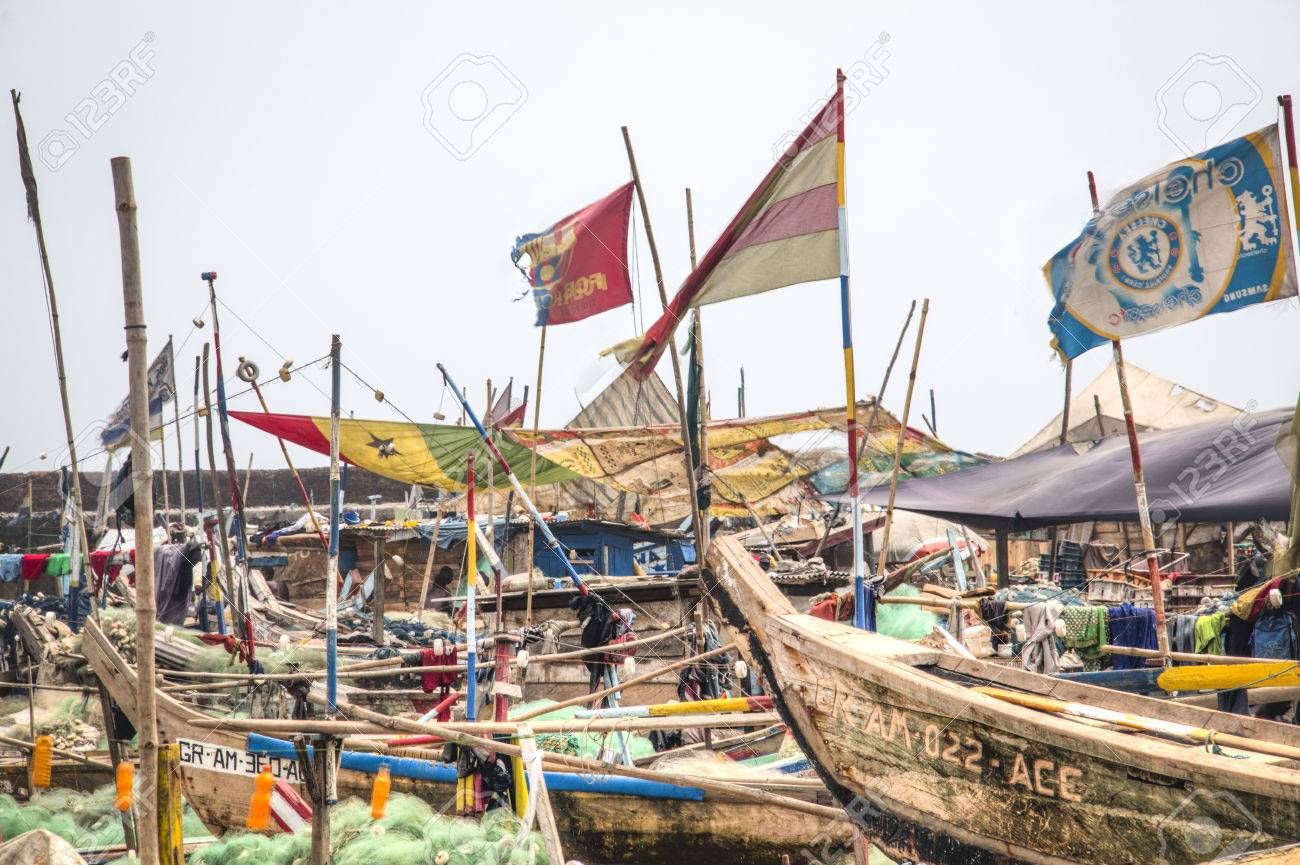
Start at the Jamestown Lighthouse, a 28-metre red-and-white tower built in 1871 and rebuilt in the 1930s, climb it for a panoramic view over the fishing village and the Atlantic, then walk down to the beach where painted wooden fishing canoes are pulled up between trips. The neighbourhood's colonial-era buildings and boxing gyms, Jamestown has produced several of Ghana's national boxing champions, reward slow wandering with a local guide rather than a rushed pass-through; a guided walking tour is worth arranging through your hotel.
Kwame Nkrumah Memorial Park & the Du Bois Centre
Kwame Nkrumah Memorial Park, on the site where Nkrumah declared Ghana's independence in 1957, holds his mausoleum and a museum of photographs, personal artefacts and speeches tracing the independence movement and his Pan-Africanist politics. A short drive away in Cantonments, the W.E.B. Du Bois Memorial Centre for Pan-African Culture is built around the home and mausoleum of the African-American historian and Pan-Africanist, who became a Ghanaian citizen in his final years at Kwame Nkrumah's invitation; the site includes his personal library and is one of Accra's clearest touchpoints for diaspora heritage travel.
Makola Market
Accra's largest and most chaotic open-air market, a genuine sensory overload of textiles, produce, household goods and street food stalls spread across several city blocks. Go with a Ghanaian friend or guide if you want to buy rather than just look, prices for visitors are rarely the same as for locals, and keep bags zipped and to the front; it's one of the city's known pickpocketing hotspots.
The coast: Labadi, Bojo & Kokrobite
Labadi Beach (also called La Pleasure Beach) is Accra's most central and lively beach, with music, food stalls and a real weekend-crowd energy rather than a quiet escape. For calmer water, Bojo Beach, about 30 minutes west, is a clean strip of sand split by the Densu River, with an entrance fee covering a short boat transfer, loungers and a beachside restaurant. Kokrobite, a little further on, is Accra's bohemian beach town, popular with backpackers and known for its live drumming circles and laid-back surf.
Independence Square & National Museum
Independence Square (also called Black Star Square), with its Independence Arch and Black Star Gate, is Accra's ceremonial heart, used for state events and worth a stop for the scale alone. The National Museum of Ghana, nearby, covers the country's pre-colonial, colonial and post-colonial history through artefacts and exhibits, a useful primer before heading to Cape Coast.
One, two or three days, planned neighbourhood by neighbourhood
Two to three full days covers Accra properly before heading onward to Cape Coast or Kumasi. These routes group stops by neighbourhood to minimize the traffic tax on your day.
- Morning
Jamestown. The lighthouse, the fishing harbour, a guided walk through the historic core before the midday heat sets in.
- Midday
Kwame Nkrumah Memorial Park. The mausoleum and independence museum, then lunch at Buka Restaurant in Osu.
- Afternoon
Makola Market. An hour of purposeful wandering, then back to Osu to decompress.
- Evening
Oxford Street. Dinner and drinks at Republic Bar & Grill or one of Osu's other restaurants.
- Day 1
The one-day route: Jamestown, Kwame Nkrumah Memorial Park, Makola Market, Osu for dinner.
- Day 2 morning
Cantonments. The W.E.B. Du Bois Memorial Centre, then Independence Square and the National Museum.
- Day 2 afternoon
The coast. An afternoon at Labadi Beach or, for calmer water, the drive out to Bojo Beach.
- Day 2 evening
Airport Residential. Dinner at Santoku or another upscale option for a change of pace from Osu.
- Days 1-2
The two-day route above, at a gentler pace.
- Day 3, option A
Cape Coast & Elmina, long day trip. Kakum's canopy walk at sunrise, Cape Coast Castle, and Elmina Castle before the drive back (roughly 3 hours each way; an overnight in Cape Coast is a better use of the same time if your schedule allows it).
- Day 3, option B
Kokrobite. A slower beach day west of the city, live drumming and a laid-back close to your Accra stay.
Sprawling and traffic-heavy; ride-hailing is the answer
Accra's neighbourhoods are spread far enough apart that walking between them isn't realistic, and the city's traffic is a genuine daily constraint rather than an occasional annoyance. From Kotoka International Airport (ACC), Uber or Bolt costs roughly GHS 30-90 ($3-8) to Osu or Cantonments, 20-30 minutes in light traffic; request from inside the terminal and confirm the driver's plate before getting in. Official airport taxis run GHS 120-220 with a negotiated, unmetered fare, agree the price first.
Inside the city, Uber and Bolt are the practical default for visitors: fixed prices shown before you accept, no haggling, and drivers who generally know the main neighbourhoods well. Tro-tros, shared minibuses running fixed routes, are the budget option locals rely on daily, but the route logic takes time to learn and isn't worth the friction for a short visit. Taxis exist outside the apps but require negotiation and are best avoided by first-time visitors.
Best time to visit and getting further afield
November through March, Ghana's dry season, is the easiest time to visit Accra: minimal rain and, during the Harmattan (roughly December-February), a dry, hazy heat that's genuinely more comfortable than the humidity of the rainy months. April through October brings the rains, heaviest April-June, when flash flooding on some city roads is a real possibility after heavy storms.
Heading onward: STC and VIP buses run from Accra to Kumasi (4-5 hours) and Cape Coast (around 3 hours) from dedicated terminals; book ahead on popular routes. Domestic flights on Africa World Airlines or PassionAir connect Accra to Kumasi and Tamale (for Mole National Park) in under an hour, the practical option if the north is on your itinerary.
Good value outside the international hotels
Accra is inexpensive for food and local transport by international standards, though its top-end hotels charge prices comparable to other African business capitals. The main cost trap for visitors is assuming Osu's tourist-facing restaurants reflect what locals actually pay for the same dishes elsewhere in the city.
- Guesthouse or budget hotel $20-35
- Chop bar meals and street food $5-10
- Tro-tros and occasional Uber/Bolt
- Free beaches, Makola Market, Jamestown
- Mid-range hotel in Osu or Labone $50-90
- Restaurant meals $15-30/person
- Uber/Bolt for most trips
- Guided Jamestown walk, museum entries
- Kempinski or Villa Monticello $180+
- Fine dining at Santoku and similar
- Private driver for the day
- Day trip to Cape Coast with a private guide
Generally safe, with the usual big-city habits
Accra carries the same US State Department Level 1 rating as most of Ghana, exercise normal precautions, for the areas visitors actually spend time in. Violent crime against tourists is uncommon, and the city is walkable in the daytime in neighbourhoods like Osu and Jamestown. Accra is also reasonable for solo female travellers: street harassment is less pronounced than in many capitals, and the safest, most tourist-used neighbourhoods, Osu, Cantonments, Airport Residential and East Legon, are comfortable to move around in during the day and with normal caution at night.
The three things that actually catch visitors: pickpocketing and bag theft, concentrated in Makola Market, Kejetia-bound bus stations and other crowded transit points, so keep bags zipped and to the front; unsolicited "guides" who approach at the airport or major markets offering help and then demand payment, politely decline and use official guides at ticketed sites instead; and night travel, where using Uber or Bolt rather than an unmarked taxi is the single most useful habit to build. Emergency number is the unified 112 from any phone, covering police, fire and ambulance.
The Heritage Coast alone justifies extending your stay
Accra's position makes it a workable base for Ghana's most important historical sites and a couple of easy beach escapes. Three trips are worth the drive; the first is genuinely worth an overnight rather than rushing there and back.
Cape Coast & Elmina
Ghana's two UNESCO-listed former slave-trading castles, plus Kakum National Park's rainforest canopy walk, sit within a short drive of each other around three hours west of Accra. It's possible as a very long single day, but most visitors get far more out of an overnight in Cape Coast town, which allows an unhurried morning at Kakum before the heat and crowds build. See our Ghana country guide for the full breakdown.
Bojo Beach & Kokrobite
The closest good beaches to Accra, easily combined into a single relaxed day: Bojo for calmer, cleaner water and a small entrance fee, Kokrobite a little further for a livelier, more bohemian scene with live drumming.
Akosombo & Lake Volta
The Akosombo Dam, which created Lake Volta, one of the largest reservoirs by surface area in the world, makes for a straightforward day trip east of the city, often paired with Boti Falls near Koforidua for travellers with a little extra time.
Accra FAQ
Is Accra safe for tourists?
Accra rates Level 1 with the US State Department, exercise normal precautions, for the vast majority of a typical visit. The main concerns are petty theft in crowded markets and transport hubs, and using ride-hailing apps rather than unmarked taxis at night.
How many days do I need in Accra?
Two to three full days covers the city well: one for Jamestown and the historic core, one for Osu, Labone and the memorial sites, and a third if you want a beach day at Bojo or Kokrobite before heading onward to Cape Coast.
How much does Accra cost per day?
Budget travellers manage on $30-50 a day with guesthouses and chop bar meals; mid-range runs $70-120. Accra is noticeably cheaper than most Western capitals for food and local transport, though international-standard hotels charge international prices.
When is the best time to visit Accra?
November through March, the dry season, is easiest: minimal rain and comfortable, low-humidity heat during the Harmattan (December-February). April through October is rainy, heaviest April-June.
What is the best area to stay in Accra?
Osu for first-timers who want restaurants and nightlife within walking distance. Airport Residential Area and Cantonments for a quieter, more upmarket base close to Kotoka Airport. East Legon for longer stays and diaspora visitors who want a residential feel.
How do I get from Kotoka Airport to central Accra?
Uber or Bolt from the terminal costs roughly GHS 30-90 ($3-8) to Osu or Cantonments, 20-30 minutes in light traffic. Official airport taxis run GHS 120-220 with a negotiated fare; confirm the price before getting in.
Do I need to speak a local language in Accra?
No. English is Ghana's official language and is used everywhere in Accra, on signage, in business and by officials. A few words of Twi, Akwaaba (welcome) and Medaase (thank you), are appreciated but never required.
Is Accra walkable?
Parts of it. Osu's Oxford Street and Jamestown's historic core are walkable in short stretches, but Accra is a sprawling, traffic-heavy city overall, and Uber or Bolt is the practical way to move between neighbourhoods.
Can I visit Cape Coast Castle as a day trip from Accra?
Yes, but it's a long day: about three hours each way by road. Most visitors get more out of an overnight stay in Cape Coast town, combining the castle, Elmina Castle and Kakum National Park's canopy walk without rushing.
What is the Year of Return and where do I experience it in Accra?
Ghana's 2019 initiative inviting the African diaspora to reconnect with their heritage. In Accra, the Kwame Nkrumah Memorial Park, the W.E.B. Du Bois Memorial Centre, and Jamestown's history as one of the city's oldest quarters are the main touchpoints, alongside the wider Cape Coast and Elmina heritage sites a few hours west.
What Stays With You
Accra doesn't hand you its highlights on arrival, you have to drive to most of them, sit in traffic to reach the next one, and take the heat as part of the deal. But the city rewards that patience: a fishing canoe pulled up on Jamestown's sand exactly as it has been for generations, the quiet gravity of Nkrumah's mausoleum, the particular joy of a plate of waakye eaten standing up at a street corner because a stranger told you it was the best in the neighbourhood.
Go to the Kwame Nkrumah Memorial Park on a quiet morning before the day heats up, and understand why so much of the African diaspora has chosen this city, not Cairo, not Lagos, not Nairobi, as the place to call home again.