
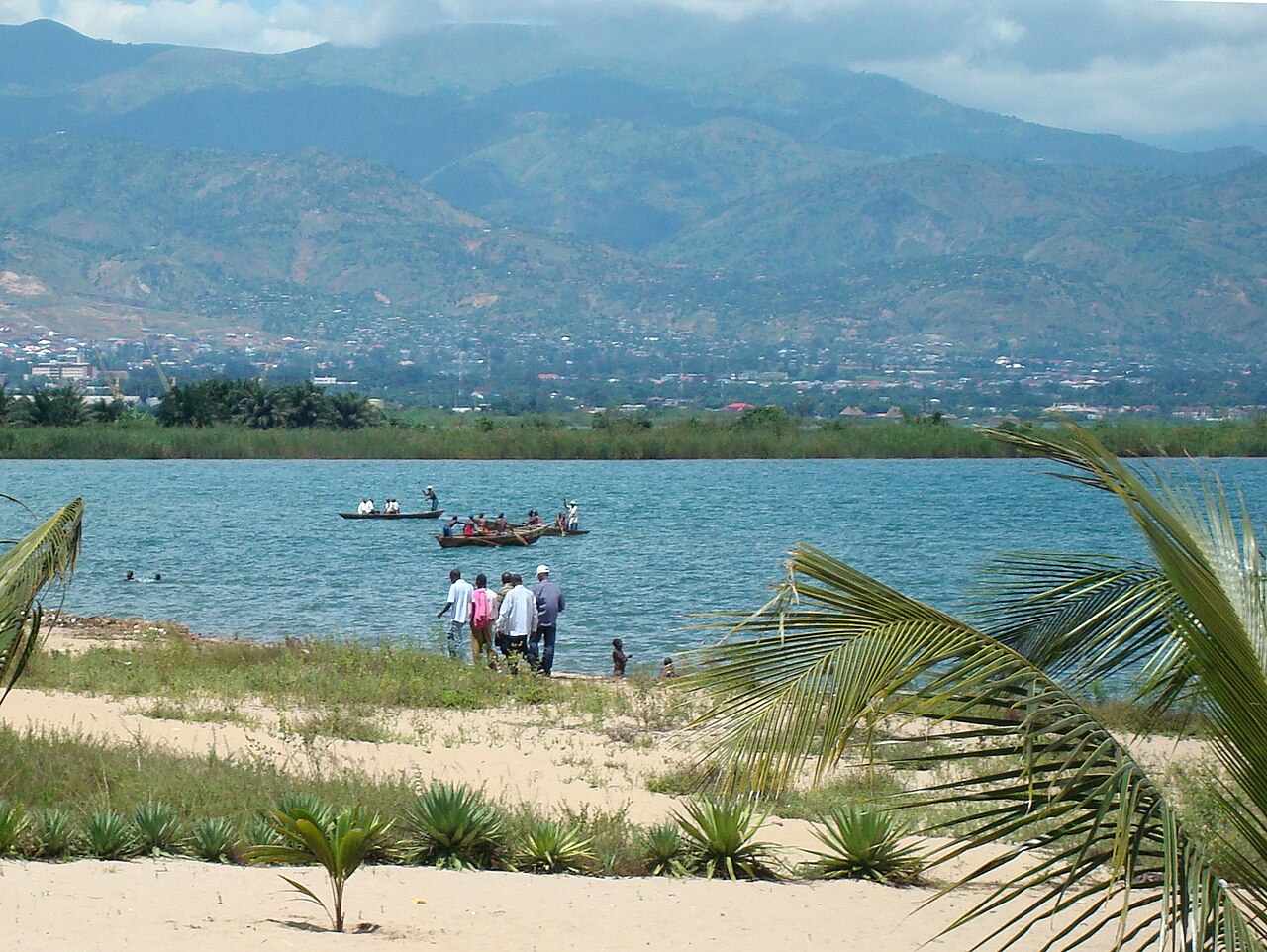
Burundi's economic capital, on the water
Bujumbura lost its status as Burundi's official capital to Gitega in 2019, but nothing else changed: it remains the largest city, the economic heart of the country, the seat of the diplomatic community, and the place essentially every visitor arrives in and stays. The setting is the city's best feature by a wide margin, hills rising sharply behind a curve of lakefront that catches genuinely spectacular sunsets over the water toward the Democratic Republic of Congo's mountains on the far shore.
What Bujumbura is not is a polished, tourist-ready capital. Hotel and restaurant infrastructure is real but thin compared to regional peers like Kigali, English is not widely spoken outside the top hotels, and the current US State Department Level 3 advisory shapes how a responsible visit here actually looks: shorter, more guided, and more deliberate than a typical East African city break.
The honest complications
The former Central Market, on Chaussée Prince Louis Rwagasore in the city center, is specifically rated Level 4, Do Not Travel, by the US State Department due to violent crime risk, and this guide does not route visitors there. Checkpoints appear around the city with little warning and can restrict movement temporarily. Walking after dark, even short distances between a hotel and a nearby restaurant, is not recommended anywhere in the city; use a car for every trip once the sun is down. None of this rules out a good visit, but it does mean Bujumbura rewards a planned, guided approach far more than spontaneous wandering.
Hills, embassies and the lake: four areas that matter
Bujumbura's useful geography for visitors is simple: a handful of hillside and lakeside neighbourhoods hold nearly all the hotels, restaurants and diplomatic presence, while the rest of the city, including the flagged former Central Market, is not where a first visit should spend unguided time.
Kiriri
Perched on the hills above the city with views over Lake Tanganyika and the mountains beyond, Kiriri concentrates embassies, international organizations, luxury villas and Bujumbura's best hotels. It's the choice for diplomats and senior visitors for a reason: quiet, secure, and about as close to a worry-free base as the city offers.
Rohero
Rohero is Bujumbura's trendiest central district, with the best concentration of restaurants, cafes and bars, plus embassies close by. Widely considered one of the safer neighbourhoods in the city, and central enough that most things are a short drive away.
Kinindo
Southeast of the centre in the Muha commune, Kinindo is a favourite for a quieter, more residential base without Kiriri's price tag, with a genuine mix of apartments, townhouses and small hotels, including Kira Hospital, the city's most recommended private medical facility for foreign visitors.
The lakefront & Saga
The stretch of Lake Tanganyika shoreline northwest of the centre, anchored by Saga Beach, is where Bujumbura actually relaxes: restaurants and bars along the sand, clear water, and the city's best sunset views. It's a destination in itself rather than a place to stay overnight.
A short list, but a real one
Bujumbura's hotel scene is small compared to regional capitals, which makes the good options easier to recommend with confidence. These picks span the realistic range, from the city's best address to simple guesthouse comfort.
At the top, Hotel Club du Lac Tanganyika is Bujumbura's best-known luxury property, set in the hills overlooking the city and the lake about 2 miles from the airport, with large rooms, reliable air conditioning and a genuine sense of security that matters here as much as comfort does. In the upper-mid bracket, Roca Golf Hotel, a 4-star property a few miles out, and New Agena Hotel, set on a quiet hilltop with good wifi, air conditioning and consistently praised service, are the two names that come up most often from visitors who wanted reliability over flash. Botanika Hotel is a well-reviewed mid-range option worth checking directly for current rates.
At the simpler end, Maison d'Accueil, Fondation San Filippo Neri is a well-regarded guesthouse option for travelers who don't need a full hotel, from around $20-30 a night. Whichever you choose, arrange an airport pickup through the hotel in advance rather than taking an unmarked taxi on arrival.
Lake fish, brochettes and unhurried lakefront dinners
Bujumbura's food scene is built around Lake Tanganyika's daily catch and simple, well-grilled meat, served in a handful of genuinely good restaurants rather than a dense dining district. It rewards seeking out a specific address rather than wandering, which given the current safety picture is exactly the right approach anyway.
Fresh lake fish
Restaurant Tanganyika, about 2km from the centre right on the lakeshore, is widely considered to have some of the best fish in the country, with indoor and outdoor seating; note it closes on Sundays. Atrium Restaurant, also on the lakefront, pairs fine dining with genuinely striking Lake Tanganyika views and is the pick for a special dinner.
Brochettes
Skewered, marinated beef, goat or chicken grilled over charcoal is Bujumbura's default street food, sold at stalls across the city. Ask your hotel or guide for a currently trusted stall rather than picking one at random after dark.
Cafes & casual dining
Cafe Gourmand, Harry's Grill House and Bujacafe are all conveniently located, well-regarded options for a more casual meal or coffee, popular with the city's diplomatic and NGO community, which is a reasonable proxy for consistency and comfort in a small dining scene.
A lake city, best seen by daylight
Bujumbura's attractions are concentrated and manageable in two to three days: the lakefront beaches, a couple of markets and museums with a guide, and the sunset that shows up on nearly every visitor's photos regardless of how the rest of the trip went.
The Lake Tanganyika beaches
Saga Beach, about 5km northwest of the centre and formerly known as Plage des Cocotiers (Coconut Beach), is Bujumbura's best-known stretch of sand: clear, warm water with striped cichlid fish visible near shore, no entry fee, and a handful of restaurants and bars where you simply pay for what you order. Bora Bora Beach, nearby, offers similar swimming plus volleyball, kayaking and paddleboarding for a livelier day out. Water quality can vary with rainfall and runoff, so ask your hotel about current conditions before swimming, and treat any water immediately after a heavy storm with caution.
Markets and city life, with a guide
Bujumbura's markets are genuinely vibrant, but this is exactly the part of the city where a local guide earns their fee: the former Central Market itself is a flagged Level 4 zone, and knowing which markets and streets are currently fine to walk changes day to day. Arrange a guided walk through your hotel rather than exploring independently.
Sunset on the lakefront
The single best free thing to do in Bujumbura: a drink or dinner at a lakefront restaurant as the sun drops behind the DR Congo mountains across the water. Saga Beach and the Restaurant Tanganyika area are both well positioned for it.
One, two or three days
Bujumbura itself doesn't need much time; the question is how many guided day trips you build around it. These routes assume hotel-arranged transport throughout and a local guide for anything beyond the immediate hotel and lakefront area.
- Morning
Kiriri & the hills. Settle in, arrange your driver for the day, and take in the lake and mountain views from the Kiriri ridge.
- Midday
Saga Beach. A few hours by the water, lunch at one of the beachside spots.
- Evening
Lakefront dinner. Fresh fish at Restaurant Tanganyika or Atrium Restaurant, timed for sunset.
- Day 1
The one-day route: Kiriri, Saga Beach, sunset dinner on the lakefront.
- Day 2
Rusizi National Park. A half-day boat safari through the Rusizi delta for hippos, crocodiles and birds, arranged through a Bujumbura tour operator, back in the city by afternoon.
- Days 1-2
The two-day route above, adding a guided walk through Rohero's cafes and a visit to Bora Bora Beach.
- Day 3
Gitega day trip. The National Museum of Gitega and a Royal Drummers performance at the Gishora Drum Sanctuary, roughly two hours each way with a driver-guide.
Arrange transport before you land, not after
Melchior Ndadaye International Airport (BJM) sits close to central Bujumbura, roughly a 15-20 minute drive. Arrange a hotel pickup or a pre-booked driver in advance; don't rely on finding a trustworthy taxi on arrival. Brussels Airlines runs limited direct service from Brussels, while RwandAir (via Kigali), Ethiopian Airlines (via Addis Ababa), Kenya Airways (via Nairobi) and Uganda Airlines (via Entebbe) all connect from further afield; there are no direct flights from North America.
Inside the city, hotel-arranged drivers or a trusted, pre-booked private driver are the standard and recommended way to move around, day or night. Metered taxis are essentially nonexistent; agree any fare before getting in if you do use an independent taxi. For anything beyond the hotel and lakefront area, walk only in daylight within your immediate neighbourhood, and treat a car as the default for every other trip.
Best time to visit and practical prep
June to August, the long dry season, gives the clearest lake conditions, driest roads and most comfortable temperatures, roughly 20-27°C. December and January form a shorter secondary dry season. Avoid February to May if your dates are flexible: it's the heaviest rainy season and can complicate any day trip outside the city.
Practical prep: get a local SIM or eSIM at the airport or in advance; signal and data reliability drop noticeably outside central Bujumbura. Standard travel insurance with medical evacuation coverage is genuinely important given the city's limited hospital capacity; Kira Hospital in Kinindo is the most recommended private facility for foreign visitors. Carry a printed copy of your visa approval and yellow fever certificate at all times, since checkpoints can appear with little notice.
Cheap by any regional comparison
Bujumbura is inexpensive: street food, guesthouses and local transport all cost a fraction of Nairobi or Kigali. The real line item to budget for is a reliable driver-guide, which given the current advisory is worth treating as a core trip cost rather than an optional extra.
- Guesthouse (Maison d'Accueil or similar)
- Brochettes and market meals
- Hotel-arranged shared transport
- Free entry at Saga & Bora Bora beaches
- Roca Golf Hotel or New Agena Hotel
- Restaurant meals with fresh lake fish
- Private driver-guide for the day
- Rusizi National Park boat safari
- Hotel Club du Lac Tanganyika
- Private guide for the full stay
- Gitega day trip with a Gishora drum performance
- Medical evacuation-inclusive insurance
A city inside a Level 3 advisory, and what that means day to day
Bujumbura sits within Burundi's countrywide Level 3, Reconsider Travel advisory from the US State Department, cited for political violence and crime including carjacking, home invasion and armed robbery. One specific zone within the city, the former Central Market on Chaussée Prince Louis Rwagasore, carries the more serious Level 4, Do Not Travel rating for violent crime, and this guide routes visitors away from it entirely.
The practical version: stay in Kiriri, Rohero or Kinindo, use hotel-arranged or pre-booked drivers for every trip rather than walking or taking unmarked taxis, avoid the flagged former Central Market area, don't move around after dark outside your immediate hotel block, and keep your passport, visa approval and yellow fever certificate accessible for the checkpoints that appear around the city without much warning. None of this is unusual advice for a Level 3 destination; it's just genuinely necessary here rather than a formality.
Emergency response is limited: police (117) service is inconsistent, and there is no dependable public ambulance system. For a real emergency, contact your hotel or Kira Hospital in Kinindo directly (+257 22 255 000, ambulance +257 71 610 610) rather than relying on 117 or the general medical line 112. The US Embassy in Bujumbura can be reached at +257 22 207 000, or +257 22 207 318 after hours. Full detail, including the countrywide Do Not Travel zones outside the city, is in the Burundi country guide's Safety chapter.
Solo travelers, and especially solo women, should treat Bujumbura as a guided destination rather than one for independent exploration: a vetted local guide for anything beyond the hotel and lakefront, no walking after dark under any circumstances, and a trusted contact kept aware of your daily plans.
Three trips, all worth arranging through a local operator
Bujumbura's position makes it the base for everything worth seeing in Burundi. All three trips below should be booked through a reputable Bujumbura-based guide or tour operator rather than attempted independently, given both the road conditions and the current security picture.
Rusizi National Park
A short drive north of the city, where the Rusizi River fans into a delta before entering Lake Tanganyika, Rusizi National Park offers boat safaris that put you close to hippos, Nile crocodiles and a strong variety of waterbirds. The easiest, most self-contained day trip from Bujumbura.
Gitega & the Gishora Drum Sanctuary
Burundi's political capital since 2019 holds the National Museum of Gitega, the country's largest public museum with a single-room collection of royal regalia, and nearby, the Gishora Drum Sanctuary, where the Royal Drummers perform the sacred Karyenda drumming tradition, dancers leaping around a semicircle of drums in a ritual UNESCO recognized as intangible cultural heritage in 2014. One of the most distinctive cultural experiences available anywhere in the Great Lakes region.
Karera Waterfalls & the Nile source
Southeastern Burundi's Chutes de la Karera, a series of six waterfall branches near Rutana, and the pyramid monument at Rutovu marking the Nile's southernmost source, erected in 1938, are usually combined into one long day trip. Minimal formal infrastructure at either site makes a driver-guide essential rather than optional here.
Bujumbura FAQ
Is Bujumbura safe for tourists?
Bujumbura sits within Burundi's Level 3, Reconsider Travel advisory, and the former Central Market on Chaussée Prince Louis Rwagasore is specifically rated Level 4, Do Not Travel, due to violent crime. Most visitors stay in the Rohero, Kiriri or Kinindo areas, use hotel-arranged transport, and avoid the flagged zone and travel after dark; a local guide for anything beyond your hotel and the lakefront is strongly recommended.
How many days do I need in Bujumbura?
Two to three days covers the city itself well: a day for the lakefront and beaches, a day for the markets and neighbourhoods with a guide, and a day trip to Gitega or Rusizi National Park. Most visitors combine it with day trips rather than staying much longer in the city proper.
How much does Bujumbura cost per day?
Budget travellers manage on $25-40 a day with a simple guesthouse and local meals; mid-range with a good hotel and a private driver runs $70-130 a day. A driver-guide for day trips outside the city is the main cost most visitors should budget for.
When is the best time to visit Bujumbura?
June to August, the long dry season, gives the clearest lake conditions and easiest travel. December and January form a shorter dry window. Avoid February to May if possible, the heaviest rainy season.
Is Bujumbura better than Gitega?
For visitors, yes, decisively. Bujumbura has the airport, nearly all the hotels and restaurants, and the lakefront; Gitega, the political capital since 2019, has the National Museum and the Gishora Drum Sanctuary nearby but very limited tourist accommodation, so it works as a day trip from Bujumbura rather than a base.
How do I get from Bujumbura airport to the centre?
Melchior Ndadaye International Airport is close to the city centre, roughly a 15-20 minute drive. Arrange a hotel pickup or a pre-booked driver in advance rather than taking an unmarked taxi on arrival.
What is the best area to stay in Bujumbura?
Kiriri, on the hills above the city, for the best hotels, views and security, popular with diplomats. Rohero for central restaurants and cafes with embassies nearby. Kinindo for a quieter, more residential and affordable base.
Can I swim at Bujumbura's beaches?
Saga Beach and Bora Bora Beach, both on Lake Tanganyika a short drive from the centre, are the city's established swimming spots and popular with residents on weekends. Water quality can vary, so ask your hotel about current conditions before swimming, and avoid the water immediately after heavy rain.
Do I need a guide in Bujumbura?
For the immediate hotel and lakefront area, not strictly, though a driver is still recommended after dark. For markets, neighbourhoods beyond your hotel district, and any day trip out of the city, yes, a local guide or tour operator is strongly recommended given the current advisory and checkpoint situation.
What currency is used in Bujumbura?
The Burundian franc (BIF). Bujumbura is largely a cash economy outside the top hotels, and the exchange rate has a real gap between official and parallel-market rates, so use bank ATMs or official exchange counters rather than street offers.
What Stays With You
Bujumbura doesn't try to be a polished capital, and given everything the last sixty years have thrown at it, that it functions at all, with genuine warmth toward the rare visitor who shows up, says something. The lake does the rest: striped fish visible near your ankles at Saga Beach, the mountains of another country turning gold across the water at dinner, and a drumming tradition a two-hour drive away that has been announcing the same sacred rhythms since long before anyone here had heard of a State Department advisory.
Come with a plan, a guide, and respect for a place that has earned the right to be taken seriously rather than romanticized.