
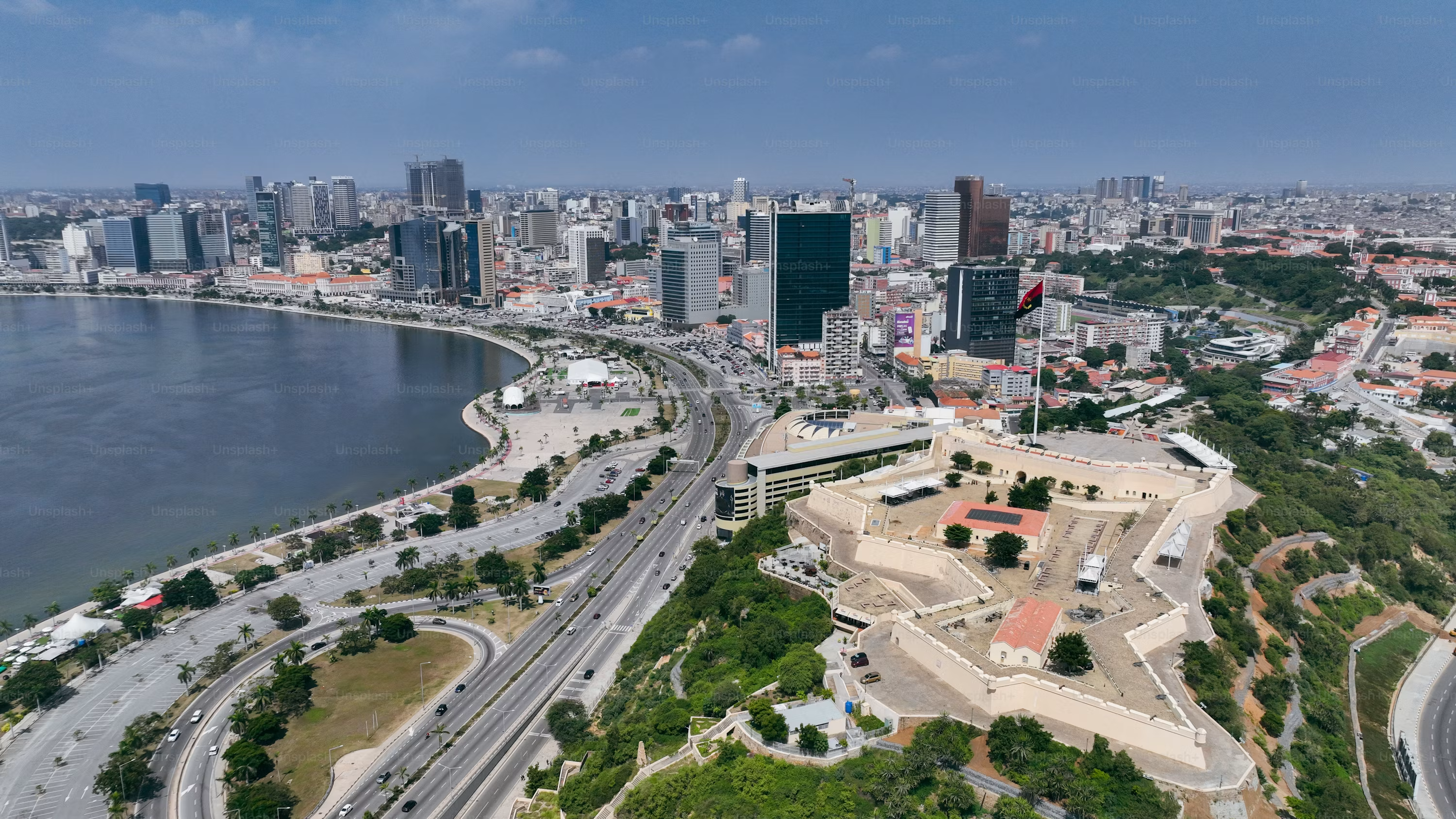
Angola's capital rebuilt itself faster than it could be photographed
Luanda sits on a curving bay on the South Atlantic, a fortress town founded by the Portuguese in the 16th century that oil revenue has, since the civil war ended in 2002, turned into a genuine skyline: new towers, an expanding Marginal promenade, and hotel and restaurant prices that regularly surprise visitors expecting an African capital to be a budget destination. It is not one. Luanda is routinely counted among the most expensive cities on the continent, a direct result of an economy built on imported goods.
What that money hasn't erased is the gap between the rebuilt center and the musseques, the dense informal settlements that ring much of the city and that most visitors will only see from a car window, if at all. That gap is also why the US government specifically flags greater Luanda for crime risk, a step above its general caution for the rest of Angola. None of this makes Luanda impossible to visit well; it makes it a city where the plan matters more than the impulse.
The honest complications
Entry requires an e-visa arranged in advance and a yellow fever certificate checked at the border, not something you sort out on the ground. Prices for hotels, restaurants and even taxis run high by African standards, driven by heavy reliance on imports. English is limited outside international hotel staff and tour operators; Portuguese carries you much further. And the specific US advisory about armed robbery, assault and carjacking risk in the greater metropolitan area is worth taking seriously rather than dismissing as generic caution, particularly regarding walking alone after dark or venturing into unfamiliar neighborhoods.
A city that reads very differently block by block
Luanda's geography runs along the bay and up onto the peninsula that shelters it, with a sharp contrast between the rebuilt center and the neighborhoods further out. Where to base yourself comes down almost entirely to proximity to the Marginal and the sights around it.
Ingombota
Luanda's downtown district holds the Fortaleza de São Miguel, the National Slavery Museum, and the bulk of the city's international-standard hotels and restaurants. For a first visit, Ingombota is the base that puts the essential sights and the Marginal waterfront within a short walk or a quick taxi ride.
The Marginal
The bayfront promenade that curves along central Luanda functions as the city's social heart: joggers and families by day, restaurants and bars filling up as the sun drops toward the Atlantic. Much of Ingombota's hotel scene sits within easy reach of it.
Miramar
South of the centre, Miramar mixes embassies, upscale residences and some of Luanda's best hotels, including the InterContinental Luanda Miramar, making it a favored base for business travelers and anyone who wants quiet over walkability.
Ilha do Cabo
A narrow peninsula stretching into the bay, lined with beach clubs, restaurants and bars that fill up for sunset and stay busy well into the night. It's Luanda's most concentrated nightlife strip and a genuinely pleasant place for a beach afternoon closer to the city than Ilha do Mussulo.
Talatona
A newer, purpose-built business district south of the centre, home to convention hotels and corporate offices. Practical for business travel; less convenient than Ingombota for sightseeing on foot.
A small, pricey hotel scene, improving fast
Luanda's hotel stock is smaller than a comparably sized capital elsewhere, and it leans toward international five-star chains and business hotels rather than a wide spread of independent guesthouses, though that budget scene is growing. These picks cover the realistic range.
For a central, full-service base, the EPIC SANA Luanda Hotel sits on Rua da Missão in Ingombota, downtown Luanda, on the South Atlantic coast about 4.5 km from the airport, with four restaurants, indoor and outdoor pools and extensive wellness facilities; rates typically run from roughly $150 to $280 a night depending on season and booking window. In Miramar, the InterContinental Luanda Miramar is a five-star property aimed at business and diplomatic travelers, with a state-of-the-art conference centre and rates generally starting upward of $295 a night, reflecting Luanda's position as one of Africa's priciest hotel markets.
At the budget end, Luanda City Hostel, in the Marçal area of Rangel, is one of the few dedicated backpacker-style options in the city, with rates from around $29 a night and amenities including a shared lounge, terrace, bar, free WiFi and a shared kitchen, a genuinely useful base for travelers keeping costs down in an otherwise expensive city.
Muamba, calulu, and grilled fish along the bay
Luanda eats like a coastal Angolan city with a strong dose of Portuguese technique: palm-oil stews, funge as the everyday starch, and fresh Atlantic seafood grilled along the Marginal and Ilha do Cabo. The best of it is not in the hotel dining rooms; it's in the neighborhood tascos where the same family has been cooking the same dishes for years.
Muamba de galinha & calulu
Angola's national dish and its everyday fish stew, both served over funge. Chitaka, in the Rangel district, offers one of the most authentic Angolan dining experiences in the city, the kind of place where locals go for dishes passed down through generations, specializing in muamba, funge and grilled fish rather than a tourist-facing menu.
Fresh fish & seafood
With the Atlantic on its doorstep, Luanda's seafood is a genuine highlight. Lookal Mar, on the oceanfront, is known for fresh fish, lobster and traditional dishes like calulu and moamba, served with a sophisticated setting and reliably good sunset views; the associated Lookal Beach Club on Ilha do Cabo combines restaurant, beach and bar service for a full afternoon-into-evening stretch by the water.
Funge, kizaca & Cuca beer
Funge, the cassava porridge that anchors nearly every Angolan meal, and kizaca, pounded cassava leaves cooked with palm oil and peanuts, both show up constantly as sides. Cuca, Angola's dominant lager, is the standard order with dinner across the city.
A handful of essentials, plus a waterfront worth wandering
Luanda doesn't have a dense circuit of paid attractions; what it has are a few genuinely substantial sights, each worth building half a day around, and a waterfront that rewards slow walking more than any single stop does.
Fortaleza de São Miguel
Built by the Portuguese in 1576, the Fortaleza de São Miguel is the oldest surviving colonial building in Luanda and now houses the Central Armed Forces Museum, tracing Angola's military history from the colonial era through the civil war. The fort's walls give panoramic views over the bay and the city's skyline, a striking way to see old and new Luanda in the same frame.
National Slavery Museum
Housed in a 17th-century building that once served as a holding facility for enslaved Africans before they were shipped across the Atlantic, mostly to Brazil, the Museu Nacional da Escravatura confronts Angola's central role in the transatlantic slave trade directly, with a preserved baptism font, where enslaved people were forcibly baptised before departure, and hundreds of artefacts. A sobering, essential stop rather than an easy one.
The Marginal
Luanda's bayfront promenade is the city's default answer to "what do you do in the evening": a long waterfront walk with the skyline behind you and the bay in front, busiest and most atmospheric as the light drops toward sunset.
Ilha do Cabo
The narrow peninsula stretching into the bay has Luanda's best concentration of beach clubs, restaurants and nightlife, worth an afternoon for the beach and an evening for the sunset and the bars that follow it.
One, two or three days, planned realistically
Two to three full days covers Luanda properly; even a single well-planned day delivers the essentials. Arrange a registered taxi or driver in advance rather than trying to flag one down casually.
- Morning
Fortaleza de São Miguel. Start early with the fort and its views over the bay before the day heats up.
- Midday
National Slavery Museum, then lunch. The museum, followed by muamba de galinha at Chitaka in Rangel or a hotel restaurant nearer the centre.
- Afternoon
The Marginal. A slow walk along the waterfront as the city's energy builds toward evening.
- Evening
Ilha do Cabo. Sunset and dinner at Lookal Mar or Lookal Beach Club on the peninsula.
- Day 1
The one-day route: the fort, the museum, the Marginal, Ilha do Cabo at sunset.
- Day 2
Kissama National Park. A full-day trip south of the city for wildlife, baobabs and a genuine change of pace from urban Luanda.
- Days 1-2
The two-day route above, at a gentler pace.
- Day 3
Ilha do Mussulo. A boat trip out to the peninsula for calmer swimming beaches and a full day away from the city.
Plan your rides, don't improvise them
Dr. António Agostinho Neto International Airport (NBJ) sits about 40 km southeast of central Luanda. A registered taxi or a ride-hailing app is the recommended way in; public transport from the airport is impractical for visitors with luggage and isn't really set up for it. Within the city, candongueiro minibuses, easy to spot in their pale blue and white paint, charge around 200 kwanza (under $1) a hop and stick to routes along the Marginal and Avenida Revolução, but they're built for locals who know the routes, not for tourists working them out on the fly.
Ride-hailing apps including Yango and the local app Kubinga are widely used and the most practical option for visitors, offering tracked rides and transparent pricing without needing to navigate van routes or a language barrier; note that pricing can surge noticeably at rush hour, around 7 and 9am and 5 and 7pm. Traditional taxi operators including Macon Taxi and Auto Taxi do Palanca are also reliable choices for point-to-point trips arranged through your hotel.
Best time to visit and practical prep
Luanda has a moderately tropical climate. June to September is the dry season, cooler and less humid; October to May is hotter and more humid with heavier rain, though it rarely disrupts city sightseeing the way it complicates travel further inland.
Practical prep: buy a local SIM (Unitel or Movicel, available at the airport) on arrival, carry both US dollars and kwanza, and keep your hotel's address and a driver's contact saved before heading out for the day. A yellow fever vaccination certificate is required at the border.
One of Africa's most expensive capitals, and it shows
Luanda's prices, especially for hotels and restaurants, catch first-time visitors off guard. Heavy reliance on imported goods pushes costs well above what a comparably sized African capital typically charges, and the gap between the tasco scene and the hotel dining rooms is where most of the potential savings live.
- Luanda City Hostel or similar guesthouse
- Tasco meals (muamba, calulu) $5-15
- Candongueiro minibuses
- Free sights: the Marginal, the fort's exterior
- EPIC SANA Luanda Hotel (roughly $150-280)
- Restaurant meals at Chitaka or Lookal Mar
- Ride-hailing apps (Yango, Kubinga)
- A guided day trip to Kissama National Park
- InterContinental Luanda Miramar ($295+)
- Private driver for the day
- Fine dining and beach club days on Ilha do Cabo
- A private guide for Kissama or Miradouro da Lua
Take the advisory seriously, plan around it, and it's manageable
The US State Department specifically advises reconsidering travel to the greater Luanda metropolitan area because of a high risk of armed robbery, assault and carjacking, a more serious designation than the general Level 2 caution covering the rest of Angola. This isn't a reason to cancel a trip, but it is a reason to plan Luanda differently than a typical city break: fewer casual evening walks in unfamiliar areas, more use of registered transport, and less improvising after dark.
The three things that actually catch visitors: armed robbery and carjacking risk, which rises sharply after dark and away from central, well-lit districts like the Marginal and Ingombota, so use registered taxis or ride-hailing apps rather than walking or hailing a car casually at night; the musseques, dense informal settlements ringing much of the city that carry more risk and aren't set up for casual sightseeing, best avoided entirely without a trusted local guide who has an existing relationship there; and displaying valuables, since visible jewelry, phones and cameras draw unwanted attention in crowded areas and taxi queues. Emergency numbers are 113 for police, 112 for ambulance and Red Cross, and 115 for fire, with response strongest in Luanda itself compared with the rest of the country.
Kissama alone justifies a day out of the city
Luanda's position on the coast, with genuine savanna and desert landscape starting just an hour or two south, makes it a strong base for day trips that feel like an entirely different country.
Kissama National Park
Roughly 75 kilometers south of Luanda, Kissama's baobab-dotted savanna is a genuine post-war conservation success, home to giraffes, zebras, elephants, ostriches and several antelope species reintroduced or recovered after decades of war-era poaching hollowed out the park's wildlife. An easy day trip by private driver or organized tour, with the option to extend into an overnight for a fuller wildlife-viewing schedule.
Miradouro da Lua
A set of ochre cliffs eroded by wind and rain into a landscape that genuinely resembles the moon, or Mars depending on the light, easily combined with a Kissama trip as a stop along the same coastal road south of the city.
Ilha do Mussulo
A sandy peninsula reached by a short boat trip from Luanda, with calmer swimming beaches than the mainland and a noticeably slower pace, including a Portuguese-era chapel now recognized as historical-cultural heritage. The closest thing to a full day off from the city itself.
Luanda FAQ
Is Luanda safe for tourists?
It requires genuine caution. The US State Department specifically advises reconsidering travel to the greater Luanda metropolitan area because of armed robbery, assault and carjacking risk, a step above the general caution that applies to the rest of Angola. Central, well-lit areas like the Marginal and Ingombota are reasonably safe by day; stick to registered taxis or ride-hailing apps after dark and avoid the musseques without a trusted local guide.
How many days do I need in Luanda?
Two to three full days covers the city well: one for Fortaleza de São Miguel and the National Slavery Museum, one for the Marginal and Ilha do Cabo, and a third for a day trip to Kissama National Park or Miradouro da Lua.
How much does Luanda cost per day?
Budget travellers manage on $60-90 a day with a guesthouse and tasco meals; mid-range runs $150-280. Luanda has a reputation as one of the most expensive capitals in Africa, driven by heavy reliance on imported goods.
When is the best time to visit Luanda?
June to September, Angola's dry season (cacimbo): cooler, less humid and with clearer skies. The wet season, October to May, is hotter and more humid, though it rarely disrupts a city-based trip the way it complicates travel further inland.
Do I need a visa to visit Luanda?
Yes. Nearly all nationalities, including the US, UK, EU, Canada and Australia, need a 30-day tourist e-visa arranged online before arrival, along with a yellow fever vaccination certificate checked at the border. See our Angola country guide for full visa details.
How do I get from Luanda airport to the city centre?
Dr. António Agostinho Neto International Airport sits about 40 km southeast of central Luanda. A registered taxi or ride-hailing app is the recommended option; agree the fare or confirm the in-app price before the ride, since public transport from the airport is impractical for visitors with luggage.
What is the best area to stay in Luanda?
Ingombota, the city centre, for first-timers: central, close to the Marginal and Fortaleza de São Miguel, with Luanda's best hotel stock. Miramar for a quieter, more residential base with strong hotel options and easy access to embassies and upscale restaurants.
Do I need to speak Portuguese in Luanda?
It helps enormously. Portuguese is the working language of hotels, restaurants and taxis; English is limited outside international hotel staff and some tour operators. A few Portuguese phrases go a long way.
Is it safe to visit the musseques?
Not independently. Luanda's musseques, dense informal settlements that ring much of the city, carry more risk and aren't set up for casual sightseeing. Visit only with a trusted local guide who has an existing relationship with the community, if at all.
What Stays With You
Luanda is a capital still rebuilding itself in plain view, and that's exactly what makes it interesting rather than polished. The fort at São Miguel has watched the city change shape for four and a half centuries and is still standing above towers that went up in the last twenty years. The Marginal at sunset, with the bay turning gold and the skyline lighting up behind it, doesn't perform for the small number of outside visitors who see it; the city built it for itself.
Go with the visa sorted, the crime advisory taken seriously rather than dismissed, and a driver arranged for anything after dark. What's left is one of the most striking, least-explained capitals on the continent.