
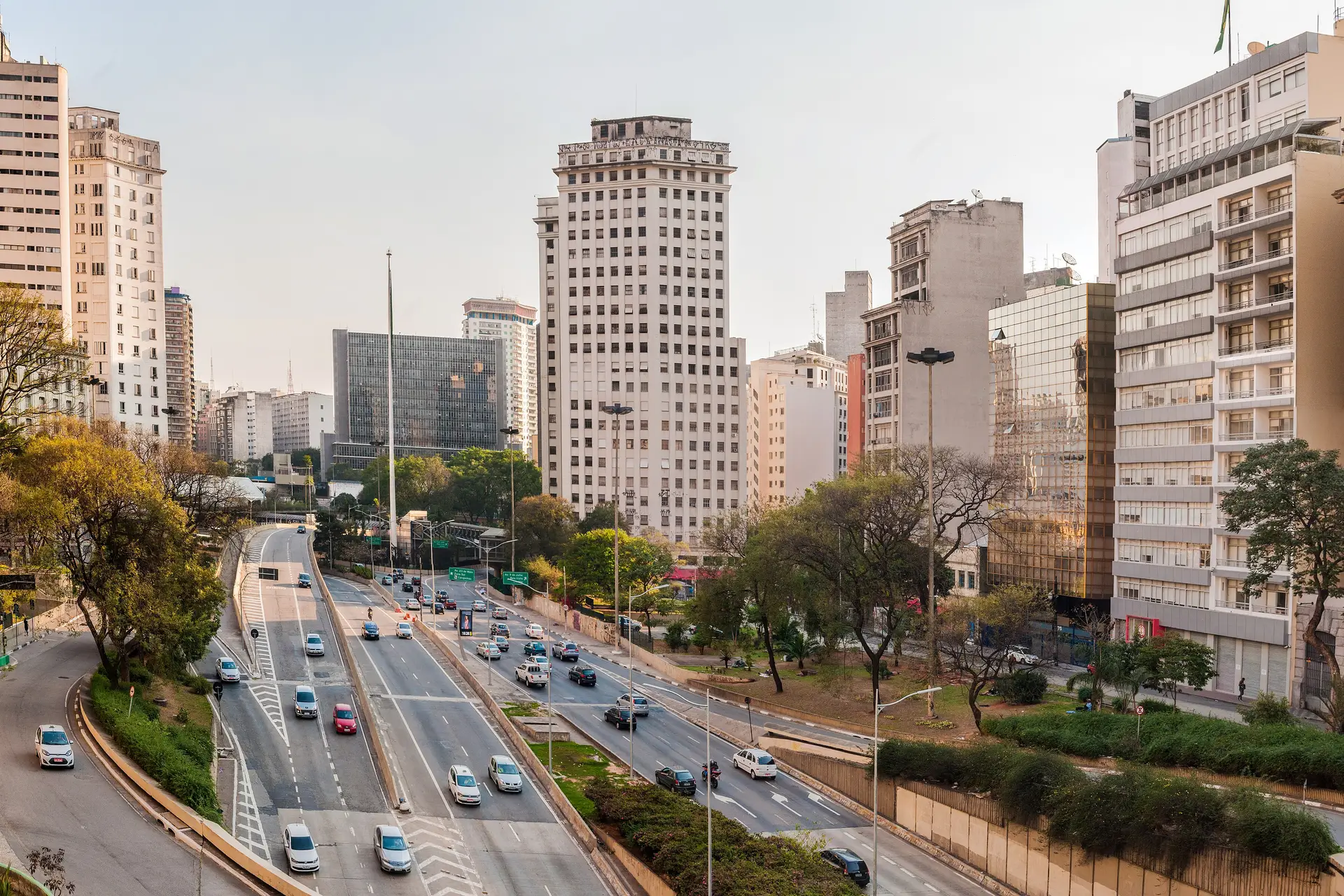
A city of museums and meals, not a postcard
São Paulo is the largest city in Brazil: the 2022 census counted about 11.4 million people in the municipality alone. It has no beach and no single skyline moment, and that's the point. What it has is Avenida Paulista and its museums, a market hall famous for its sandwiches, a Japanese-Brazilian district, a huge park designed around Oscar Niemeyer's buildings, and a restaurant scene that the Michelin Guide placed at the top of the country in April 2026.
It also matters for planning: São Paulo state was Brazil's leading point of entry for foreign visitors in 2024, ahead of Rio de Janeiro state. In one 2024 ranking of Brazil's most-visited cities, São Paulo came second behind Rio de Janeiro. Many people simply pass through on the way to Rio or Iguazu; spending a few days here repays you with the part of Brazil that Rio's beaches don't show.
The honest complications
This is a very large city and the tourist sights are spread out, so choose a base and plan routes by metro rather than trying to walk between neighbourhoods. Crime is real here too: Canada's travel advice names São Paulo among Brazil's high-crime cities and lists specific central areas, including Avenida Paulista, the area around the cathedral, the historic downtown, the Municipal Market, the Pinacoteca, Princess Isabel Square and Luz station, as places where tourists are mostly hit by theft but can face violent crime. That doesn't mean skipping them, it means going by day, travelling light and having a plan for getting home. The safety chapter below has the detail.
Check opening days. The rhythm here is museum hours, restaurant reservations and getting across town on the metro. MASP and the Museu do Ipiranga are closed on Mondays and the Pinacoteca on Tuesdays, so build the week around that.
Six areas that matter
São Paulo is a city of districts rather than a single centre. Where you sleep and where you spend the day can be different areas, and the metro makes that practical.
Avenida Paulista & Bela Vista
Built in 1891 and about 2.8 km long, Avenida Paulista is the city's financial and cultural spine and home to MASP, one of South America's leading art museums. The Trianon-MASP station on the Green Line sits right at the museum, and on Sundays and holidays the avenue is closed to cars and opened to pedestrians. The Rosewood São Paulo is on the Bela Vista side, a short walk away. As with any busy avenue, keep your phone out of sight: Canada's advice lists Avenida Paulista among the areas where robbery occurs.
Jardins & Rua Oscar Freire
South of Paulista, the Jardins is the polished residential-and-shopping district, with Rua Oscar Freire as its best-known street. The Hotel Emiliano sits on Rua Oscar Freire, and the Hotel Fasano São Paulo looks over the Jardins from Rua Vittorio Fasano. It is a practical, comfortable base with restaurants on the doorstep.
Vila Madalena
West of Paulista, Vila Madalena is the city's bohemian neighbourhood of bars and street art. Its best-known sight is the Beco do Batman, an alley of street art that began in the 1980s with a single Batman drawing and is repainted often, so every visit looks different. It's free to walk and best done by day.
Centro: Sé, Luz & the Mercado
The historic downtown holds the cathedral, the Theatro Municipal, the Pinacoteca at Praça da Luz and the Mercado Municipal on Rua da Cantareira. It's rewarding by day and a place to keep your guard up: Canada's travel advice specifically names the cathedral area, the historic downtown, the Municipal Market, the Pinacoteca, Princess Isabel Square and Luz station as places where violent theft occurs. Go in daylight, take only what you need and leave by app, not on foot after dark.
Liberdade
Liberdade is the district shaped by São Paulo's large Japanese-Brazilian community, with the Feira Oriental da Liberdade held in Praça da Liberdade at weekends. It's an easy, atmospheric add-on to a day in the centre.
Ibirapuera & the south
Parque Ibirapuera opened in 1954 and is the city's best-known park, with buildings by Oscar Niemeyer and several museums inside it, including the Museu de Arte Moderna (MAM) and the Museu Afro Brasil. Check each museum's opening days before you go. In the district of Ipiranga, the Museu do Ipiranga sits on Rua dos Patriotas.
From a landmark maternity hospital to a 60-room Jardins classic
We list only properties we could confirm on their own websites, and we leave out nightly rates because they change daily. Check current prices on the booking links at the top of the page or in the map below.
Rosewood São Paulo occupies the Cidade Matarazzo complex at Rua Itapeva 435 in Bela Vista, a seven-acre green enclave next to Avenida Paulista. It combines the original 1904 maternity hospital building with a new tower designed by Jean Nouvel, and it keeps a permanent contemporary Brazilian art collection. It's the obvious luxury choice if Paulista is your base.
Hotel Fasano São Paulo, at Rua Vittorio Fasano 88 in the Jardins, has 60 rooms in five categories, with views over the neighbourhood and Italian-inflected interiors. It has a trattoria, Nonno Ruggero, on its first floor, open daily for breakfast, lunch and dinner. The Hotel Emiliano is on Rua Oscar Freire in the heart of the Jardins, between Avenida Paulista and Avenida Faria Lima, and is a good fit if shopping streets and restaurants matter more to you than a landmark address.
Michelin stars, market sandwiches and baião de dois
São Paulo eats at every level. In April 2026 the Michelin Guide Rio de Janeiro and São Paulo awarded Brazil's first three-star ratings, and both went to São Paulo restaurants. The same city is where a market-hall mortadella sandwich counts as a landmark.
Michelin-starred São Paulo
Tuju and Evvai were announced as Brazil's first three-star restaurants in the 2026 Michelin Guide; Tuju is a seasonal, three-floor space with an open kitchen, bar and garden run by Ivan Ralston, and Evvai, from Luiz Filipe Souza and Bianca Mirabilli, builds its Oriundi menu on Brazilian and Italian influences. D.O.M. kept its two stars. These are tasting-menu restaurants, so check each one's own website for reservations, menus and prices before you plan around them.
Mocotó
Mocotó is the informal, inclusive opposite of a tasting menu: the original is at Avenida Nossa Senhora do Loreto 1100 in Vila Medeiros, with branches in Vila Clementino and Vila Leopoldina. Classics on its menu include dadinhos de tapioca (fried tapioca cubes), baião de dois and torresmo, and the restaurant says it received a Michelin Bib Gourmand in 2024. The Vila Leopoldina branch is closed on Mondays; check the hours for each branch on its site.
The Mercado Municipal sandwich
The Mercado Municipal de São Paulo, known as the Mercadão, is the place for the famous mortadella sandwich, piled with mortadella and melted cheese on French bread; Bar do Mané and Hocca Bar are the names most guides point to. It's a tourist attraction in its own right, so go by day and keep an eye on your phone and bag.
Terraço Itália
Terraço Itália sits at the top of the Edifício Itália and pairs Italian cooking with what it calls São Paulo's most iconic view. Tables are booked through its website.
Museums first, then parks and murals
São Paulo's headline sights are museums and neighbourhoods, and several of them close on Mondays, so plan the week around that.
MASP and Avenida Paulista
MASP (Museu de Arte de São Paulo, Avenida Paulista 1578) is open Tuesday 10am-8pm, Wednesday and Thursday 10am-6pm, Friday 10am-9pm and weekends 10am-6pm; it is closed on Mondays, and on 24 and 25 December, 31 December and 1 January. Full admission is R$85 and the concession ticket is R$42. Entry is free for everyone on Tuesdays, and free from 6pm to 9pm on Fridays. Online booking is required even on free days, so book ahead at masp.org.br. Afterwards, walk the avenue; it is closed to cars on Sundays and holidays.
The Pinacoteca and Luz
The Pinacoteca do Estado de São Paulo, at Praça da Luz 2, is open Wednesday to Monday from 10am to 6pm, with last entry at 5pm. It sits in the historic downtown, so combine it with the nearby Theatro Municipal and go by day, using the safety advice below.
Ibirapuera Park
Parque Ibirapuera opened in 1954 and is the city's best-known green space, with buildings by Oscar Niemeyer. Several museums sit inside it, including MAM and the Museu Afro Brasil, each with its own days and prices, so check before you go.
Museu do Ipiranga
The Museu do Ipiranga, on Rua dos Patriotas 100, is open Tuesday to Sunday from 10am to 5pm, with last entry at 4pm, and closed on Mondays. Admission is free on Wednesdays and on the first Sunday of each month, when tickets are handed out from 10am on the day. On other days tickets are bought on the museum's website or at its ticket office.
Vila Madalena and Liberdade
Walk the murals of the Beco do Batman in Vila Madalena, which is free, then spend a weekend morning in Liberdade at the Feira Oriental in Praça da Liberdade. Both are casual, on-foot outings rather than ticketed sights.
One, two or three days, by metro and on foot
These routes keep to the venues confirmed above. MASP and the Museu do Ipiranga are closed on Mondays and the Pinacoteca on Tuesdays, so check opening days before you lock in a date.
- Morning
MASP. Booked online, then a walk along Avenida Paulista.
- Midday
Lunch in the Jardins. Rua Oscar Freire and the streets around it, a short ride from Paulista.
- Afternoon
Ibirapuera Park. A walk among the Niemeyer buildings, with one museum if its days suit.
- Evening
Dinner at Mocotó (the Vila Clementino branch is open Monday to Saturday from 11:40am to 10pm), or a table in the Jardins; travel home by app.
- Day 1
The one-day route: MASP, the Jardins, Ibirapuera and dinner.
- Day 2 morning
The centre by day. The Pinacoteca at Praça da Luz and the Theatro Municipal, keeping bags zipped and leaving by app.
- Day 2 midday
The Mercado Municipal. The mortadella sandwich, taken early and without a visible phone.
- Day 2 afternoon
Liberdade. The Japanese-Brazilian district; the Feira Oriental runs at weekends.
- Day 2 evening
Vila Madalena. The Beco do Batman at dusk if you go with others, then dinner nearby.
- Days 1-2
The two-day route above, at a gentler pace.
- Day 3, option A
Museu do Ipiranga. On a Wednesday or the first Sunday of the month, when it is free, or any other day from Tuesday to Sunday with a ticket.
- Day 3, option B
A table at Terraço Itália or one of the starred kitchens, booked in advance, as the day's main event.
Two airports, one metro, and apps for the rest
São Paulo is served by Guarulhos International (GRU) and the city airport Congonhas (CGH). The metro is the backbone for tourist trips; for everything else, use Uber or 99.
From Guarulhos (GRU). The Airport Bus Service sells tickets at Terminal 2's east arrivals bus terminal and runs to Congonhas (line 258), the Barra Funda bus station (472), the Tietê bus station (472EX1) and a Paulista Avenue hotel circuit (316); the counter is open 6am-10pm and there are self-service totems. EMTU line 257 goes to Tatuapé metro station. By rail, the free AeroGRU people mover links Terminals 1, 2 and 3 with the CPTM station, daily from 4am to midnight; the Line 13-Jade runs from the airport station to Engenheiro Goulart, where Line 12-Safira continues to Tatuapé, Brás and Luz. Line 13-Jade runs 4am to midnight Sunday to Friday and until 1am on Saturday. The airport's official taxi cooperative is Guarucoop, and Uber and 99 have designated pickup zones outside arrivals.
From Congonhas (CGH). Metro Line 17-Gold now has an Aeroporto de Congonhas station on Avenida Washington Luís, with a covered tunnel to the terminal. The first stretch opened on 31 March 2026 and links the airport with Morumbi (Line 9-Emerald) and Campo Belo (Line 5-Lilac). It is still in transitional operation, free of charge, and since 30 September 2026 has run from 6am to 10pm Monday to Saturday, with no service on Sundays; schedules can change, so check the Metro's channels before you rely on it. Uber and 99 also serve the airport.
In the city. The basic fare on the Metro, CPTM and ViaMobilidade rail network is R$5.40 (since 6 January 2026), municipal buses cost R$5.30, and the integrated bus-rail ticket with a regular Bilhete Único is R$9.38. MASP is at Trianon-MASP on the Green Line. Outside the metro, use Uber or 99 and avoid hailing street taxis, for the safety reasons in the safety chapter.
Staying connected and paying
An eSIM before landing means you can book an Uber or 99 the moment you clear arrivals, which is the safest way to leave the airport.
Brazil's Pix instant-payment system is widely accepted in São Paulo, and using it or a card cuts the number of ATM visits you need; see the Brazil scam guide for ATM habits.
The prices we could confirm
We only quote prices that appear on official sources or in current reporting, and we don't add them up into a daily budget. Hotel and restaurant prices change too fast to print, so check them yourself before you commit.
- Metro, CPTM and ViaMobilidade basic fare R$5.40
- Municipal bus R$5.30
- Integrated bus-rail with Bilhete Único R$9.38
- AeroGRU people mover free
- MASP full ticket R$85, concession R$42
- MASP free Tuesdays, and Fridays 6pm-9pm
- Museu do Ipiranga free Wednesdays and first Sunday of the month
- Beco do Batman free
- Congonhas Line 17-Gold currently free, in transitional operation
- Airport Bus Service and taxi fares: check current prices at the counters
- Uber and 99 for door-to-door rides
A Level 2 country with a specific city picture
The US State Department's advisory for Brazil is Level 2, Exercise Increased Caution (updated August 2026), citing crime and kidnapping. Canada advises a high degree of caution. The UK's "against all but essential travel" warnings cover remote river areas of Amazonas State, not São Paulo, but its advice still warns of petty theft, express kidnapping and card cloning.
Canada's advice names São Paulo among Brazil's high-crime cities and lists these areas where tourists are mostly hit by theft but could also face violent crime: the area around the cathedral, Avenida Paulista, the historic downtown, the Municipal Market, the Pinacoteca, Princess Isabel Square and Luz station. It also reports drive-by snatching by armed thieves on motorcycles as a regular occurrence in São Paulo, and drink-spiking used to force card or ATM withdrawals in crowded São Paulo restaurants and bars. In practice: keep your phone out of sight on the street, carry little, go to these places by day and leave by app.
Express kidnapping, where a victim is driven to ATMs and forced to withdraw cash, is the best-documented risk with taxis: the UK warns about unlicensed taxis and cars using fraudulent ride-hailing accounts, so check the driver and plate shown in the Uber or 99 app before you get in, and never hail a taxi on the street. Withdraw cash only from machines inside bank branches, and if someone claiming to be a police officer asks to inspect your wallet, refuse and say you will call 190. Our Brazil scam guide covers these in more detail. Emergency numbers: 190 for police, 192 for an ambulance (SAMU) and 193 for firefighters, all free from any phone.
Two simple escapes from the city
We only describe the routes we could confirm. Check each operator's current timetable and fares before you travel, as they change.
Santos
The port city of Santos is reached by long-distance bus from São Paulo's Jabaquara bus terminal, which is served by operators including Viação Cometa and Expresso Luxo. Viação Cometa also runs buses to Santos from Guarulhos airport. Confirm times and fares with the operator on the day you plan to travel.
Paranapiacaba
The old railway village of Paranapiacaba is reached by taking CPTM Line 10-Turquesa to Rio Grande da Serra, the last station, and continuing by bus. The link from Rio Grande da Serra to Paranapiacaba itself is a freight line, which is why you change to a bus. A weekend-only tourist train also runs from Luz; check the current timetable first.
São Paulo FAQ
Is São Paulo safe for tourists?
Brazil carries a US Level 2 Exercise Increased Caution advisory, and Canada advises a high degree of caution. In São Paulo the real risks are phone and bag snatching, express kidnapping from street taxis and robbery near ATMs, so use Uber or 99, keep your phone out of sight and use machines inside bank branches.
Is São Paulo worth visiting?
Yes, if you want museums, restaurants and a big-city atmosphere rather than beaches. MASP, the Pinacoteca, Ibirapuera Park and the Museu do Ipiranga are the core, and Brazil's first three-star Michelin restaurants, Tuju and Evvai, are both here.
How do I get from Guarulhos Airport (GRU) to the centre?
The Airport Bus Service runs from Terminal 2 to Congonhas (line 258), Barra Funda (472), Tietê (472EX1) and the Paulista Avenue hotel circuit (316). By rail, the free AeroGRU people mover links the terminals to the CPTM Line 13-Jade station, and Engenheiro Goulart connects to Line 12-Safira. Uber, 99 and the official Guarucoop taxis also serve the airport.
How do I get from Congonhas Airport (CGH) to the city?
Congonhas has its own station on Metro Line 17-Gold, opened in March 2026. It is still in transitional operation, free of charge, from 6am to 10pm Monday to Saturday since 30 September 2026, and the schedule may change, so check the Metro's channels before you rely on it. Uber and 99 also serve the airport.
What is the best area to stay in São Paulo?
Avenida Paulista and the Jardins are the most practical bases for first-timers: MASP and the Trianon-MASP metro station are on Paulista, and Rua Oscar Freire is in Jardins. Vila Madalena suits a younger, bar-and-street-art stay.
How much is the metro in São Paulo?
The basic fare on the Metro, CPTM and ViaMobilidade rail network has been R$5.40 since 6 January 2026. Municipal buses cost R$5.30, and the integrated bus-rail ticket with a regular Bilhete Único is R$9.38.
Which São Paulo museums are free?
MASP is free for everyone on Tuesdays and from 6pm to 9pm on Fridays, with online booking required even on free days. The Museu do Ipiranga is free on Wednesdays and on the first Sunday of each month.
Do I need to speak Portuguese in São Paulo?
Portuguese, not Spanish, is the language. English is spoken in international hotels and tourist zones but is not widespread, so a few Portuguese phrases and an offline translation app help a lot.
Should I take a taxi or an app in São Paulo?
Use Uber or 99 and avoid hailing taxis on the street. The UK government and our Brazil scam guide both warn about express kidnappings from unlicensed taxis, and the airport has an official taxi cooperative at the terminals.
What are the emergency numbers in São Paulo?
Dial 190 for police, 192 for an ambulance (SAMU) and 193 for firefighters. All are free from any phone.
What Stays With You
São Paulo doesn't flatter you the way Rio does, and it doesn't try to. It rewards the visitor who turns up with a list of museums, a reservation or two and the patience to cross a very large city on the metro, and it pays that effort back with Brazil's best tables and an avenue that belongs to pedestrians on Sundays.
Spend a Sunday on Avenida Paulista with no cars on it and you'll understand how a city of this size keeps its sense of humour.