
Saint Lucia Travel Scams
Saint Lucia is one of the Caribbean's safer, more welcoming islands, with only minor tourist traps to watch for. This page covers taxi overcharging, the currency mix-up trick, and jet ski damage claims, with real prices to check against.
Saint Lucia Scam Overview 2026
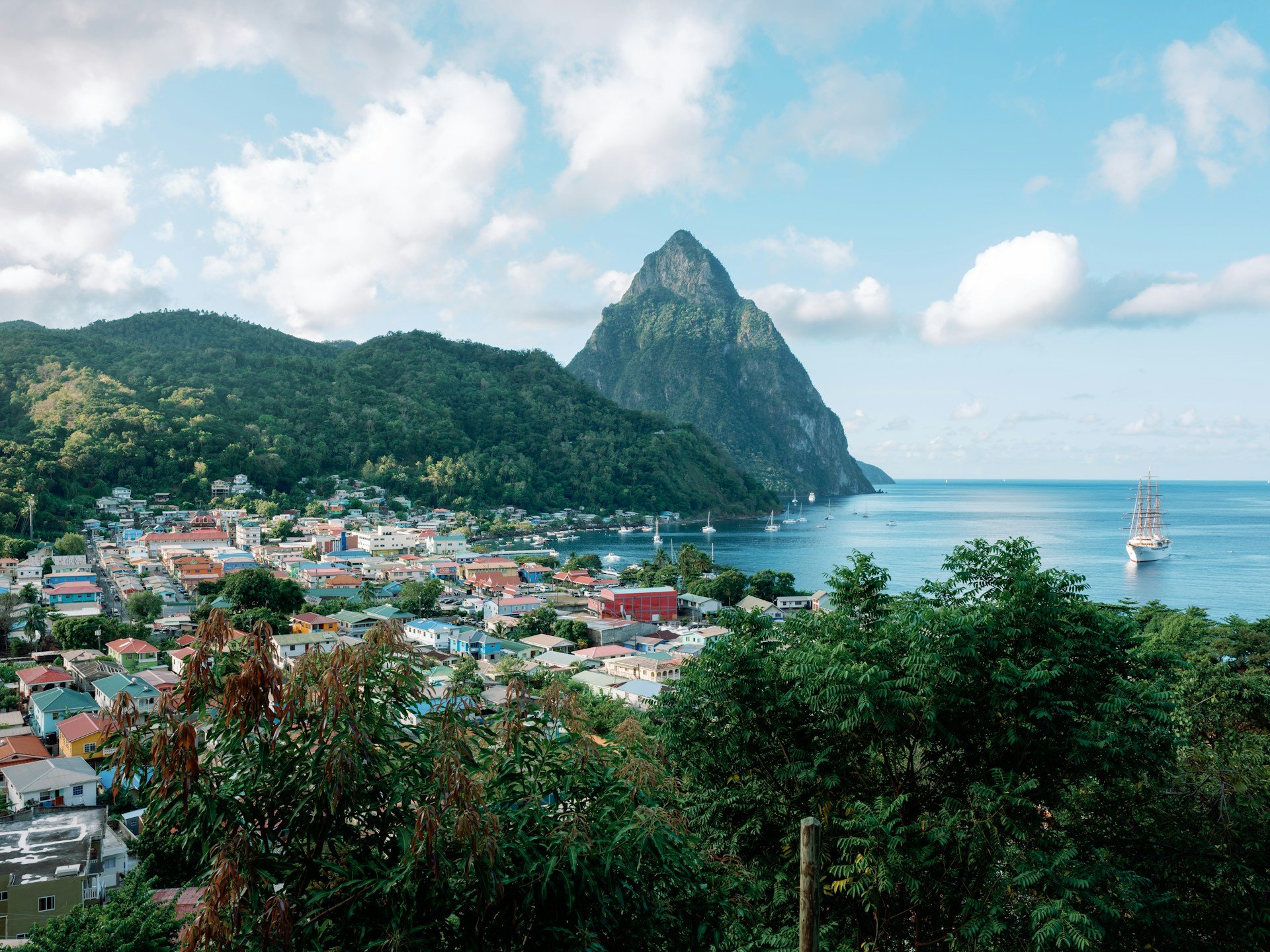
Most visitors split their time between Rodney Bay and Gros Islet in the north, the social and nightlife hub, and the Soufriere and Pitons corridor in the south, home to the island's most photographed scenery: the twin volcanic peaks, Sulphur Springs, and a string of waterfalls. Castries, the capital and main cruise port, is busier and more functional than scenic, and it's where the bulk of the country's modest scam and petty-crime activity concentrates.
Saint Lucia's tourist scams fall into four categories. The first is transport overcharging, the most consistently reported issue, since fares are negotiated rather than metered. The second is a distinctive local pattern: prices quoted ambiguously in either Eastern Caribbean dollars or US dollars, with the difference settled in whoever's favor once you've already agreed. The third is unofficial guides offering to lead you to a waterfall or a parking spot, then demanding an exorbitant fee. The fourth is the jet ski damage claim, a pattern common across the Caribbean. All four are minor, well-documented, and easy to avoid with the right preparation.
Concentrated in specific Castries neighborhoods. Resort areas, Rodney Bay, Soufriere, and Marigot Bay are well-patrolled and calm.
The most commonly reported scam, since fares aren't metered. Easy to avoid by agreeing the price and currency in advance.
A price quoted without specifying XCD or USD can be charged in whichever currency produces a higher bill.
Offers to lead you to a waterfall or parking spot, followed by a demand for an inflated fee once the favor's been "done."
Saint Lucia Safety at a Glance
Castries Scams
Castries is the island's main cruise port and commercial center, busy and functional rather than a place most visitors linger. The central market, cruise terminals, and the weekly Friday Night Street Party in Gros Islet draw the heaviest crowds, and with them, the country's main pickpocketing risk.
👷 Market & Cruise Terminal Pickpocketing
Bag snatching and pickpocketing occur in Castries' busiest high-traffic areas, particularly the central market and around the cruise terminals where large numbers of disembarking passengers create easy cover.
Keep bags zipped and worn across your body in market crowds, and avoid displaying jewelry, cameras, or large amounts of cash. The risk drops sharply once you're outside the immediate market and terminal area.
⚠️ Specific Higher-Crime Neighborhoods
Not a scam, but worth naming directly: violent crime, including gang activity, concentrates in specific lower-income Castries neighborhoods, named consistently across sources. These are not places tourists typically wander into, but it's worth knowing the names so you recognize them if a route or recommendation takes you near one.
Stick to the main tourist circuit, well-lit and well-traveled streets, and avoid wandering into unfamiliar residential areas, especially after dark. If a street or area looks like tourists clearly don't go there, that's a reliable signal to stay away.
Rodney Bay, Gros Islet & Soufriere Scams
Rodney Bay and Gros Islet in the north are Saint Lucia's nightlife and resort hub, while Soufriere in the south anchors the Pitons, Sulphur Springs, and the island's waterfall circuit. Both are described consistently as calm and well-patrolled, with the scam risk here being almost entirely about unofficial guides and pricing rather than crime.
🏆 The Unofficial "Hidden Waterfall" Guide
Someone offers to lead you to a "hidden" waterfall or help you find a parking spot near a popular attraction, then demands an exorbitant fee once the favor has already been done, when you're less likely to refuse.
Use official tour operators or guides recommended by your hotel rather than accepting an offer from someone who approaches you unsolicited. If you do accept help, agree on a price clearly before anything is done, not after.
🎁 Pushy Beach & Souvenir Vendors
Vendors selling souvenirs, jewelry, or excursions on popular beaches can be persistent, occasionally using pressure tactics to push a sale or a tour you didn't ask for.
A polite but firm "no, thank you" is usually enough to deter further pressure. There's no need to feel obligated to explain a decline in detail.
Booking through GetYourGuide means a credentialed guide and a fixed price agreed before you go, removing the guesswork around informal offers near Soufriere's waterfalls.
Taxi & Transport Scams
Public transportation in Saint Lucia is limited to a small minibus network, which makes licensed taxis the practical default for most visitors, especially for the long airport transfer between Hewanorra in the south and the resort hub of Rodney Bay in the north.
🚕 Unagreed Taxi Fares
Taxi fares in Saint Lucia are negotiated rather than metered, and unlicensed or informal drivers quote arriving travelers a price well above the standard fare, especially during festivals and busy periods when demand gives drivers more leverage.
Use only authorized taxis identified by their TX-prefixed plates, and agree on the fare, and explicitly the currency, before the journey starts. Booking an airport transfer through your hotel in advance removes the negotiation entirely.
🚌 Minibus Navigation
Not a scam, but a real source of confusion for visitors: minibuses don't always stop at marked bus stops outside towns, you often need to wave one down, and getting off requires calling out "stopping, driver!" rather than relying on a stop announcement.
Ask locals or your hotel which of the three main routes (Vieux Fort-Soufriere, Soufriere-Castries, Castries-Vieux Fort) serves your destination, and don't be shy about waving a bus down or calling out when you want to disembark.
Money Scams
Saint Lucia uses the Eastern Caribbean Dollar (XCD), but US dollars are widely accepted at hotels, tours, and many restaurants. This dual-currency setup, convenient most of the time, creates a specific and fairly distinctive local scam worth understanding.
💰 The XCD-vs-USD Currency Mix-Up
Some vendors and drivers quote a price without specifying whether they mean Eastern Caribbean dollars or US dollars, then charge in whichever currency produces the higher bill once you've verbally agreed. With the exchange rate running roughly 2.7 XCD to 1 USD, the difference between paying "40" in XCD versus USD is substantial.
Always clarify the currency explicitly before agreeing to any price, asking directly "is that EC or US dollars?" if it isn't stated. Most tourist businesses accept USD at roughly the standard rate, but paying in XCD withdrawn from an ATM often works out marginally better than handing over USD cash.
🔜 ATM Skimming
ATMs occasionally have skimming devices fitted to card slots, particularly standalone machines away from bank branches. This is a low-frequency but real risk, the same as in most tourist destinations.
Use bank-affiliated ATMs rather than standalone machines, check the card slot for tampering before inserting your card, and cover the keypad when entering your PIN.
📞 Fake Bank Customer Service Calls
Phishing scams and unpermitted card transactions have become more common in Saint Lucia, with scammers sometimes posing as customer service employees of local banks to extract card details or one-time passcodes over the phone.
Never share a card PIN, full card number, or one-time passcode over the phone, regardless of who the caller claims to be. If your bank genuinely needs to reach you, they will not ask for these details over an unsolicited call; hang up and call the number on the back of your card instead.
Beach & Water Sports Scams
🏃 The Jet Ski "Pre-Existing Damage" Claim
This scam occurs across the Caribbean, and Saint Lucia is no exception: you return a rented jet ski, and the operator points to a scratch or scuff on the hull, demanding cash on the spot for damage that may well have been there before you took it out.
Photograph the jet ski thoroughly from all angles, including the hull, before and after the rental. Use only operators recommended by your hotel rather than an informal stand on the beach, and get any damage assessment in writing before signing or paying anything.
🏖 Unattended Item Theft
This isn't a deceptive scam so much as the single most common tourist safety incident on Saint Lucia's beaches: bags, phones, cameras, and other valuables left unattended while swimming or snorkeling are taken, even during a brief absence.
Never leave bags, phones, or cameras unattended on the beach, even for a few minutes. Lock valuables in your hotel safe before heading out, and bring only what you genuinely need for the day.
Universal Prevention Guide
Almost everything documented on this page is avoidable with a small amount of preparation. Saint Lucia's specific risk profile is mild and financial: agree fares and currencies up front, document any rental equipment, and avoid leaving valuables unattended.
Use TX-Plated Taxis & Agree the Fare First
Authorized taxis have light blue plates with a "TX" prefix. Confirm the price and currency before getting in, every time, especially from the airport or cruise terminal.
Save Emergency Numbers Before You Go
Saint Lucia emergency: 911, covering police, fire, and ambulance. For non-emergency matters, the police headquarters in Castries is +1 758-456-3710. There's no dedicated tourist police unit; the Saint Lucia Tourism Authority handles tourist-specific disputes.
Clarify XCD or USD Before Every Price
Ask directly whether a quoted price is in Eastern Caribbean dollars or US dollars before agreeing to anything. The roughly 2.7:1 exchange rate means the difference is significant.
Document Rentals Before & After
Photograph any jet ski or water sports equipment from every angle before and after use, and rent only through your hotel or an established operator.
Never Leave Valuables Unattended at the Beach
This is the single most common tourist incident on Saint Lucia's beaches. Lock anything valuable in your hotel safe before heading out.
Book Guides Through Your Hotel
Use official tour operators or guides recommended by your accommodation rather than accepting an unsolicited offer near a waterfall or parking area.
Solo Women Travelers
Saint Lucia is generally safe for women traveling solo or in groups, particularly around resorts and organized tours, with serious harassment described as uncommon. The main concerns mirror the rest of this page: petty theft and scams in crowded markets or tourist spots, with solo travelers sometimes perceived as easier targets.
Be cautious when using ATMs and avoid displaying valuables openly, especially if you appear unfamiliar with the area. Avoid walking alone at night, particularly outside the well-lit, well-traveled resort circuits of Rodney Bay, Soufriere, and Marigot Bay. Sticking with organized tours or guides recommended by your accommodation, rather than wandering off independently into unfamiliar areas, is a sensible approach here.
Same-sex sexual activity carries legal and social risk in Saint Lucia, and the social climate remains conservative. LGBTQ+ travelers should research current, ground-level guidance and exercise discretion regarding public displays of affection. As with anywhere, share your itinerary with someone you trust.
Reporting Scams in Saint Lucia
If you are the victim of a scam or theft, reporting it creates a record that supports insurance claims and card disputes. There's no dedicated tourist police unit, so the Saint Lucia Tourism Authority is a practical first point of contact for tourism-specific disputes.
Step-by-step: What to Do if You're Scammed
Saint Lucia is Worth It. Confirm the Currency and the Fare.
Most visitors to Saint Lucia come away talking about the Pitons, the rum, the Friday night street party in Gros Islet, not about anything on this page. The scams documented here are financial rather than physical, and every one is avoidable: agree the taxi fare and currency before you ride, photograph any rental equipment, and book guides through your hotel rather than off the street.
Saint Lucia rewards a traveler who pays attention to the small print on pricing. Go, climb to a waterfall with a proper guide, and keep your wits about you at the airport taxi rank; that's really the whole story.