
What You're Actually Getting Into
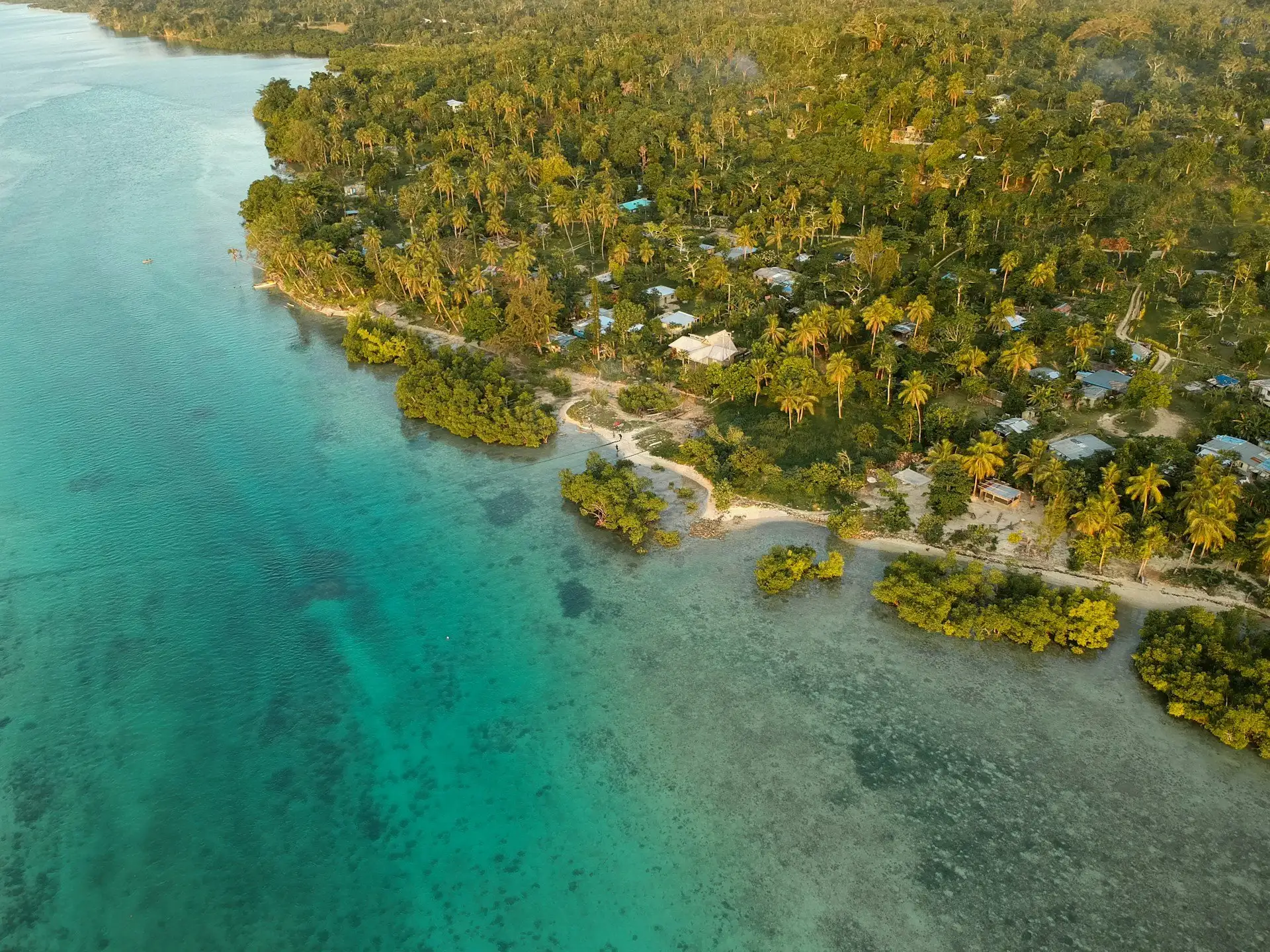
Vanuatu is a Y-shaped chain of 83 volcanic islands in the South Pacific, about 1,750 km east of Australia. Around 330,000 people speak over 100 local languages, making it one of the most linguistically diverse countries on earth per person, held together by Bislama, a creole, along with English and French, a legacy of the unusual Anglo-French Condominium that ruled until independence in 1980. Most ni-Vanuatu still live in villages, and customary land, chiefs and kastom ceremonies remain central to life.
For travelers, Vanuatu offers an unusually wide range of experiences for a small country. Efate, with the capital Port Vila, has cascading waterfalls, lagoons and easy island resorts. Tanna has Mount Yasur, one of the world's most accessible active volcanoes, and traditional kastom villages. Espiritu Santo has some of the Pacific's most beautiful beaches, jungle blue holes and the famous wreck dive of the SS President Coolidge. On Pentecost, men leap from wooden towers with vines tied to their ankles in the land-diving ritual that inspired bungee jumping.
The honest complications
Vanuatu sits on the Pacific Ring of Fire and in the cyclone belt. A magnitude 7.3 earthquake struck near Port Vila in December 2024, killing more than a dozen people and damaging buildings in the town centre; most tourist businesses have reopened, but some buildings and roads were still being repaired. Severe cyclones hit in 2015 and 2023. Inter-island flights on Air Vanuatu were heavily disrupted after the airline entered liquidation in 2024, and schedules can still be unreliable, so build in buffer days. Outside Efate and Santo, accommodation is simple and infrastructure basic.
A History Worth Knowing
Vanuatu's islands were settled by the Lapita people around 3,000 years ago. European explorers arrived from the 17th century, followed by missionaries, traders and the brutal "blackbirding" labour trade. Britain and France then ran the islands jointly as the New Hebrides Condominium until independence as Vanuatu in 1980.
- c. 1000 BC
The Lapita settlers. Austronesian seafarers known for their distinctive pottery settle the islands; the Teouma cemetery on Efate is one of the oldest Lapita sites ever found.
- 1606-1774
European explorers. Portuguese navigator Pedro Fernandes de Queirós lands on Espiritu Santo in 1606; James Cook charts the islands in 1774 and names them the New Hebrides.
- 1860s-1900s
Blackbirding. Tens of thousands of ni-Vanuatu are recruited, often by deception or force, to work on plantations in Queensland, Fiji and New Caledonia.
- 1906-1980
The Condominium. Britain and France rule jointly, with two police forces, two legal systems and two school systems, a system locals nicknamed the "Pandemonium".
- 1942-1945
World War II. The US builds major bases on Espiritu Santo and Efate; up to 100,000 troops pass through, and the SS President Coolidge sinks off Santo in 1942.
- 1980-present
Independence. Vanuatu becomes independent on 30 July 1980, after a short-lived secessionist rebellion on Santo, and develops as a parliamentary democracy.
Read the full history: the Condominium, cargo cults and Cyclone Pam
The Anglo-French Condominium was one of the strangest colonial arrangements in history. British and French residents lived under their own laws, there were two currencies, two prisons and even two sets of road rules at times, while ni-Vanuatu were for decades citizens of neither power. The legacy survives today in a country where some schools teach in English and others in French.
The arrival of huge quantities of American goods during WWII strengthened "cargo cults" on several islands. On Tanna, followers of the John Frum movement believe a mysterious American figure will return bearing gifts; they still raise the US flag and hold parades every 15 February at Sulphur Bay. The movement is also a form of resistance to missionaries and a defence of kastom.
In March 2015, Cyclone Pam, one of the strongest storms ever recorded in the South Pacific, devastated Vanuatu, damaging or destroying the majority of homes in the southern islands. The country has rebuilt with remarkable resilience, and its government has become one of the world's leading voices on climate change, bringing a case on climate obligations to the International Court of Justice.
Top Destinations
Most visitors base themselves on Efate and take short flights to Tanna and Espiritu Santo, the two most rewarding outer islands. Inter-island flights are small and schedules change, so book directly with the domestic carrier or through your accommodation and allow spare days.
Port Vila and Efate
Efate, the main island, is home to Port Vila, a small harbour capital with markets, waterfront cafés and the National Museum. Around the island, swim beneath the tiered Mele Cascades, snorkel the marine sanctuary at Hideaway Island and post a waterproof postcard at its underwater post office, float in the Blue Lagoon and Eton Blue Hole, and drive the 130 km ring road to quiet beaches and villages at Havannah Harbour. Budget three or four days. See our Port Vila city guide.
Tanna and Mount Yasur volcano
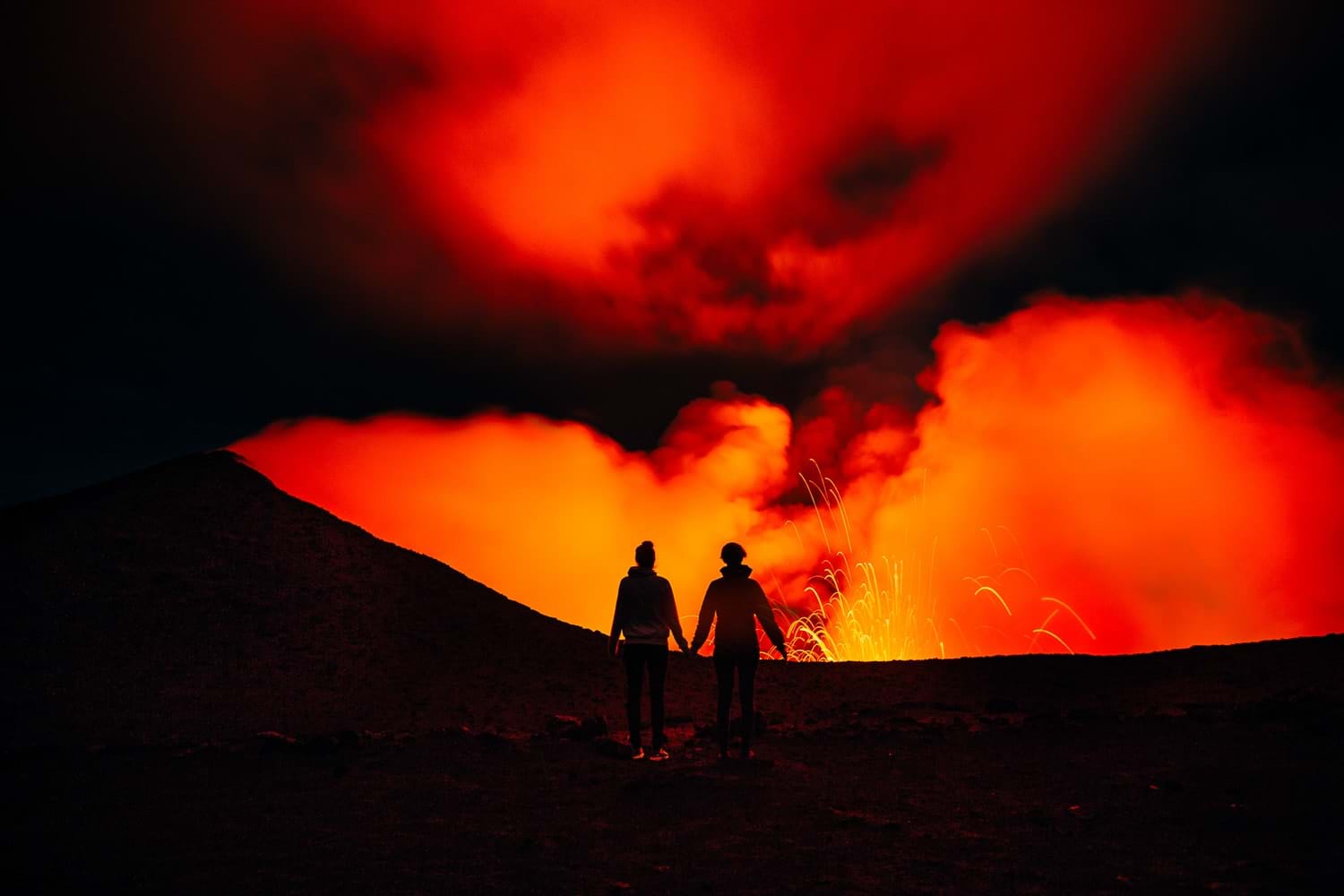
Tanna, a 40-minute flight south of Port Vila, is home to Mount Yasur, an active volcano that has been erupting almost continuously for centuries. Tours drive up at dusk and walk the last stretch to the crater rim, where you can watch lava bombs explode out of the vent a few hundred metres below, an unforgettable experience. The volcano's alert level changes, so the rim may sometimes be closed. Tanna also has strong kastom traditions, villages like Yakel where people live as their ancestors did, and the John Frum movement at Sulphur Bay.
Espiritu Santo, beaches, blue holes and wrecks
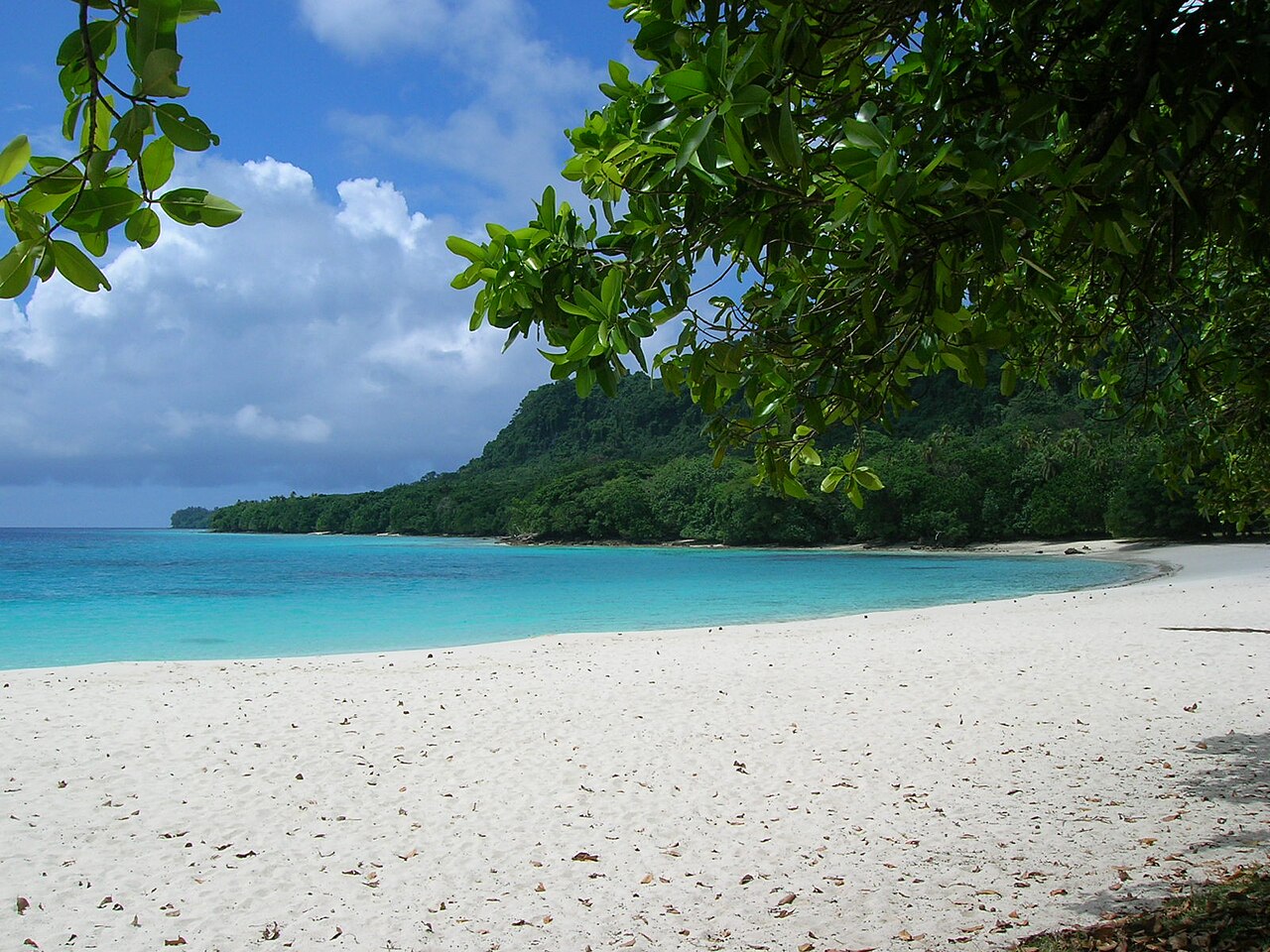
Espiritu Santo, the largest island, has some of the most beautiful beaches in the Pacific, including Champagne Beach and Port Olry, and spring-fed blue holes like Matevulu, Nanda and Riri, perfect for swimming and rope swings. Off the main town, Luganville, lies the SS President Coolidge, a 200-metre luxury liner turned troopship that sank in 1942 and is one of the world's best wreck dives. Nearby, Million Dollar Point is where the US military dumped vast amounts of equipment into the sea after the war.
Pentecost land diving and Malekula
On the south of Pentecost, from roughly April to June, men and boys perform the Nagol or land dive, leaping head-first from wooden towers up to 30 metres high with only liana vines tied to their ankles, to bless the yam harvest. It is the ancestor of bungee jumping and one of the most extraordinary ceremonies in the Pacific; visits are usually arranged as day trips from Port Vila or Santo. Malekula, the second-largest island, is known for the cultures of the Big Nambas and Small Nambas and the marine reserves of the Maskelyne Islands.
Ambrym, the Banks and Torres islands
Ambrym, the island of black magic in local lore, has twin volcanoes, Marum and Benbow, whose lava lakes drew adventurous trekkers for years (their activity changed after a major eruption in 2018), as well as the masked Rom dance and the Back to My Roots festival. In the far north, the remote Banks and Torres islands have water music performed by women in the sea, waterfalls and very few visitors. These islands require time, flexibility and simple accommodation.
Hidden gems beyond the main circuit
Efate, Tanna and Santo cover a first trip well. With extra days, these places rarely make the standard itineraries but reward the detour.
Pele and Nguna islands
Small islands off Efate's north coast with village bungalows, marine reserves and turtles.
Port Olry
A French-speaking fishing village on a white-sand bay with simple beachfront bungalows and lobster dinners.
Aneityum and Mystery Island
The southernmost inhabited island and a tiny, uninhabited islet with perfect sand, visited mainly by cruise ships.
Maskelyne Islands
Low-lying islands off Malekula with community-run giant clam reserves and mangroves.
Millennium Cave
A full-day jungle trek through a huge cave and down a river canyon, one of Vanuatu's great adventures.
Epi
A quiet island where you can swim with dugongs in Lamen Bay.
Culture & Etiquette
Ni-Vanuatu are famously warm and welcoming; Vanuatu has been called one of the happiest countries in the world. Daily life is shaped by kastom, traditional culture and law upheld by chiefs, and by Christianity, which most people practise alongside customary beliefs. Land is almost all owned by customary groups, and the village, the family and the nakamal (men's meeting house and kava bar) are at the centre of community life.
Do
- Learn a few words of Bislama. "Halo" (hello), "tangkyu tumas" (thank you very much) and "lukim yu" (see you) are appreciated everywhere.
- Dress modestly in villages. Cover shoulders and knees away from resorts, and women should avoid swimwear in villages and towns.
- Ask before photographing. Always ask permission, especially at kastom villages and ceremonies, where fees may apply.
- Pay kastom fees. Small fees for beaches, waterfalls and village visits go to the landowners.
- Embrace island time. Things move slowly; patience and a smile go further than complaints.
Don't
- Wander onto land or into villages uninvited. All land belongs to someone; ask before entering, swimming or walking through.
- Tip or bargain aggressively. Tipping and haggling are not part of the culture and can cause embarrassment.
- Take photos of land diving without permission. Ceremonies like the Nagol charge filming and photography fees set by the community.
- Order coconut crab or turtle. Coconut crabs are overharvested and turtles are protected; choose other seafood.
- Swim on Sundays near villages without checking. Many communities observe Sunday as a day of rest and prefer no swimming or noise.
Deeper culture: kastom, sand drawing and the nakamal
Kastom. The word covers traditional law, land rights, ceremonies, dances, exchange of pigs and mats, and knowledge passed down through generations. Chiefs resolve disputes in many communities, and the Malvatumauri National Council of Chiefs advises the government on custom and land.
Sand drawing. Vanuatu's sand drawings, intricate geometric figures traced in one continuous line in sand or ash, are on UNESCO's list of intangible heritage. They were used to communicate between language groups, record stories and pass on knowledge.
The nakamal. Traditionally a men's house where chiefs met and kava was prepared, the nakamal today also means a kava bar. In Port Vila and Luganville, visitors are welcome at most of them; in villages, they may be reserved for men, so ask first.
Food & Drink
Vanuatu's food is fresh, simple and organic by default: root crops like taro, yam and manioc, fresh fish and seafood, coconut in everything, tropical fruit, and some of the best beef in the Pacific, raised on Espiritu Santo's coconut plantations. Port Vila has a surprisingly good French-influenced restaurant scene, a legacy of the Condominium.
Lap lap VT 300-800
The national dish: grated yam, taro or banana, mixed with coconut cream, wrapped in banana leaves and baked in an earth oven, often with chicken or pork.
Santo beef VT 2,500-4,500
Grass-fed, organic beef from cattle grazing under coconut palms on Espiritu Santo, served as steaks in Port Vila and Luganville restaurants.
Simboro and tuluk VT 200-600
Simboro is grated manioc or banana wrapped in island cabbage leaves and cooked in coconut milk; tuluk is a lap lap stuffed with pork.
Fresh seafood VT 1,500-4,000
Reef fish, lobster, prawns and poulet fish, grilled or cooked in coconut milk; avoid coconut crab, which is overharvested.
Kava VT 50-200 a shell
The ceremonial and social drink of Vanuatu, served at nakamals from late afternoon.
Tanna coffee and Tusker VT 300-800
Organic coffee grown on Tanna's volcanic soil, and Tusker, the local beer.
When to Go & Itineraries
The dry season from May to October is the best time to visit Vanuatu: cooler, less humid, sunny and outside cyclone season, with good diving visibility. November to April is the wet and cyclone season, hot and humid with heavy rain and a real risk of tropical cyclones, especially from January to March. The Nagol land diving on Pentecost takes place from roughly April to June.
All seasons compared, with temperatures
| Season | Verdict | Temps | Prices & crowds |
|---|---|---|---|
| May-Oct | Best | 20-27°C | Dry, cooler, best diving; Nagol until June |
| Apr & Nov | Shoulder | 23-29°C | Warmer, some rain |
| Dec-Mar | Cyclone season | 25-31°C | Hot, humid, cyclone risk; lowest prices |
| Jul-Aug | Peak | 20-26°C | Australian school holidays; book ahead |
Vanuatu is in an active earthquake and volcanic zone. Check volcanic alert levels for Mount Yasur and other volcanoes before visiting, and follow local guidance.
Itineraries
Plan around inter-island flights, which are small, infrequent and sometimes disrupted. A week covers Efate and Tanna; ten days adds Santo.
- Days 1-3
Efate. Port Vila's market and museum, Mele Cascades, Hideaway Island and the Blue Lagoon.
- Days 4-5
Tanna. Fly south; Mount Yasur at dusk, a kastom village and Port Resolution.
- Days 6-7
Efate. The ring road, Havannah Harbour and a kava evening before flying home.
- Days 1-3
Efate. As above.
- Days 4-5
Tanna. The volcano and kastom villages.
- Days 6-9
Espiritu Santo. Champagne Beach, blue holes, the SS President Coolidge and Million Dollar Point.
- Day 10
Port Vila. A final market visit before flying home.
- Days 1-3
Efate. Port Vila and the island highlights.
- Days 4-6
Tanna. Volcano, villages and a night at Port Resolution.
- Days 7-10
Espiritu Santo. Beaches, blue holes, diving and the Millennium Cave trek.
- Days 11-12
Malekula or Pentecost. Kastom culture or land diving in season.
- Days 13-14
Efate. Pele or Nguna island for village bungalows and turtles.
Getting there & around
Bauerfield International Airport (VLI) in Port Vila has direct flights from Brisbane (Qantas and Virgin Australia), Sydney (Jetstar), Auckland and Christchurch (Solomon Airlines), Nadi (Fiji Airways) and Nouméa (Aircalin). Schedules have changed often since Air Vanuatu stopped international flying in 2024, so check current routes before booking. Pekoa International (SON) on Espiritu Santo also receives some flights from Australia. Domestic flights link Port Vila with Tanna, Santo and smaller islands; after Air Vanuatu's 2024 collapse, domestic services have been rebuilt but can still be irregular. Cargo boats and ferries serve the islands slowly and cheaply. On Efate and Santo, minibuses, taxis and rental cars are easy to find.
All transport options with prices: flights, buses, taxis and boats
| Option | Price | Notes |
|---|---|---|
| Airport to Port Vila taxi | VT 1,500-2,000 | About 10 minutes; buses are cheaper. |
| Port Vila minibus ("B" plate) | VT 150-200 | Flat fare within town; flag one down anywhere. |
| Port Vila-Tanna flight | VT 15,000-25,000 one way | About 40 minutes; check schedules carefully. |
| Port Vila-Santo flight | VT 15,000-25,000 one way | About 50 minutes. |
| Car rental on Efate | VT 7,000-12,000/day | Drive on the right; good for the ring road. |
| Inter-island ferry | VT 5,000-12,000 | Slow, basic and weather-dependent. |
Island time: domestic flights and ferries can be cancelled or rescheduled because of weather, maintenance or demand. Always reconfirm, and avoid scheduling an outer-island flight on the same day as your international departure.
Practical prep: Digicel and Vodafone (TVL) sell SIM cards at the airport and in town; check whether an eSIM covers Vanuatu. Coverage is good on Efate and Santo but patchy on outer islands.
Where to stay
Efate resorts
Island and lagoon resorts like Iririki Island Resort in Port Vila harbour and the adults-only Havannah on Efate's northwest coast.
Mid-range and bungalows
Lagoon-side hotels around Port Vila and beach bungalows on Santo and Tanna.
Budget and guesthouses
Backpacker hostels in Port Vila and Luganville, and simple village bungalows on outer islands.
Tanna volcano lodges
Treehouses and bungalows near Mount Yasur, often including volcano tours and meals.
Budget Planning
Vanuatu is moderately expensive, as much is imported, and flights to outer islands add up quickly. Staying in guesthouses and village bungalows, eating at markets and using minibuses keeps costs down. 1 US dollar buys roughly VT 115-120; 1 Australian dollar about VT 75-80.
- Hostel or guesthouse VT 3,000-6,000
- Market meals VT 500-800
- Minibuses and shared tours
- Free beaches and town walks
- Mid-range hotel or bungalow
- Restaurant meals VT 2,000-4,000
- Tours, dives and kastom fees
- Domestic flights
- Island and boutique resorts
- Fine dining in Port Vila
- Private tours and charters
- Multiple inter-island flights
Quick reference prices: food, activities, transport
| Market meal | VT 500-800 |
| Shell of kava | VT 50-200 |
| Tusker beer at a bar | VT 400-700 |
| Mount Yasur entry fee plus transport | ~VT 10,000+ |
| Mele Cascades entry | ~VT 2,000-2,500 |
| Two-tank Coolidge dive | ~VT 15,000-20,000 |
| Port Vila minibus | VT 150-200 |
| Domestic flight | VT 15,000-25,000 |
| Mid-range hotel double | VT 12,000-25,000/night |
Prices reflect October 2026 research and drift over time; domestic flight prices especially. Treat them as a planning baseline, not a quote.
Visa & Entry
Citizens of Australia, New Zealand, the UK, the EU, the US, Canada and many other countries do not need a visa for Vanuatu and receive a free 30-day visitor permit on arrival, which can be extended up to 120 days in total within a year. You need a passport valid for at least six months, a return or onward ticket and proof of sufficient funds.
✓ Valid passport
At least 6 months validity beyond your arrival date.
✓ Visitor permit
Free 30-day permit on arrival for most Western nationalities, extendable at the immigration office.
✓ Return ticket
Proof of onward or return travel is required.
✓ Arrival card
Complete the arrival and customs declaration; some forms are moving online.
| Vanuatu | Fiji | |
|---|---|---|
| Daily budget | VT 9,000-12,000 ($75-100) for budget travelers | Similar; more budget options |
| Highlights | Active volcano, blue holes, WWII wrecks, kastom villages | Islands, resorts, coral reefs, Fijian villages |
| Development | Less developed, more adventurous | More resorts and infrastructure |
| Culture | Strong kastom traditions, land diving, sand drawing | Village culture, kava and meke dance |
| Flights | Fewer international and domestic flights | Major hub, many connections |
Safety, Solo Women & Family
Vanuatu is generally a safe and very friendly country, with low rates of crime against tourists, though petty theft and occasional burglaries occur in Port Vila and Luganville. The bigger risks are natural: earthquakes, volcanic eruptions, cyclones, strong currents and limited medical care. The US State Department rates Vanuatu Level 1, "Exercise Normal Precautions" (lowered in May 2025 as earthquake recovery progressed). Check current advisories and volcanic alert levels before you go.
Natural hazards
Earthquakes (including the December 2024 Port Vila quake), active volcanoes, cyclones from November to April and tsunami risk. Know the tsunami evacuation routes near your accommodation.
Petty crime
Theft from hotel rooms, cars and beaches in Port Vila and Luganville. Lock doors and keep valuables out of sight.
Water safety
Strong currents on some beaches and reefs; snorkel and dive with reputable operators and never alone.
One more thing worth knowing: volcano safety on Tanna
Mount Yasur's activity level is monitored by the Vanuatu Meteorology and Geo-Hazards Department on a scale of 0 to 5. At higher alert levels, access to the crater rim is restricted or closed. Always visit with an authorized guide, stay behind the marked lines and follow instructions; lava bombs can land outside the crater during stronger eruptions.
The 3 scams to actually know about
Vanuatu has very few scams, but three issues can catch visitors. The full country list lives on our Vanuatu travel alerts page.
Unclear kastom fees
Occasionally more than one family claims a beach or waterfall, or fees are not posted. Ask your accommodation or guide what to expect.
Taxi overcharging
Taxis have no meters in many cases; agree the fare before getting in, or use minibuses.
Tour and flight changes
Tours and domestic flights can be changed at short notice. Book through reputable operators and reconfirm the day before.
Solo women travelers
Vanuatu is generally safe for solo women, with low levels of harassment and welcoming communities. Dress modestly away from resorts, avoid walking alone at night in Port Vila and Luganville, and arrange transport through your accommodation after dark. In villages, women may not be welcome in some nakamals; follow local guidance. Full detail on our Solo Woman Explorer pages.
Emergency numbers
Embassies and high commissions in Port Vila and practical health notes
Emergency services are limited, especially outside Port Vila and Luganville. Australia, New Zealand, France, the UK and the US have diplomatic missions in Port Vila; check your embassy's website for current details.
- Australia
- +678-22777
- New Zealand
- +678-22933
- France
- +678-28700
Health: tap water in Port Vila is generally treated, but bottled or boiled water is recommended, especially on outer islands and after cyclones or earthquakes. Malaria is present on many islands outside Port Vila, so seek advice on antimalarials, and dengue occurs, so use repellent. Medical care is basic; serious cases are evacuated to Australia or New Zealand, so travel insurance with evacuation cover is essential.
Family travel & pets
Vanuatu is a good destination for families who like nature and adventure: calm lagoons, waterfalls, snorkelling at Hideaway Island, friendly villages and family-friendly resorts on Efate. Tanna's volcano is unforgettable for older children who can follow safety rules.
Practical family notes and bringing pets
With kids: Efate's lagoon resorts are the easiest base with young children. Bring all medications, reef-safe sunscreen and repellent, and consider malaria risk carefully before visiting outer islands with small children.
Pets: importing pets requires an import permit from the Biosecurity Department, vaccinations and health certificates; animals from some countries may face quarantine. Tourists rarely bring pets.
Vanuatu FAQ
Is Vanuatu safe to visit?
Yes. Vanuatu is generally safe and friendly, with low crime against tourists. The main risks are natural: earthquakes, volcanoes, cyclones from November to April and strong currents.
How many days do you need in Vanuatu?
A week covers Efate and Tanna's volcano. Ten days to two weeks lets you add Espiritu Santo and possibly Malekula or Pentecost.
How much does Vanuatu cost per day?
Budget travelers manage on VT 9,000-12,000 (about $75-100) a day; mid-range runs VT 20,000-30,000. Domestic flights add significantly to costs.
Do I need a visa for Vanuatu?
Not for Australian, New Zealand, UK, EU, US or Canadian passports. You receive a free 30-day visitor permit on arrival, extendable up to 120 days.
When is the best time to visit Vanuatu?
May to October, the dry season, outside cyclone season. The Pentecost land diving takes place from roughly April to June.
Can you really stand on the rim of Mount Yasur?
Yes, when the volcano's alert level allows. Guided tours drive up at dusk and walk to the crater rim to watch the eruptions. Access is restricted at higher alert levels.
Has Port Vila recovered from the 2024 earthquake?
Largely. The December 2024 magnitude 7.3 earthquake damaged buildings in Port Vila's centre; most hotels, restaurants and tours have reopened, but some repairs were ongoing. Check your accommodation before booking.
What is the SS President Coolidge?
A US luxury liner turned troopship that sank off Espiritu Santo in 1942 after hitting a friendly mine. Lying in 20-70 metres of water, it is one of the world's best and most accessible wreck dives.
Is Vanuatu safe for solo female travelers?
Generally yes. Dress modestly away from resorts, avoid walking alone at night in towns and arrange transport through your accommodation.
Is Vanuatu good for families with kids?
Yes, especially on Efate, with calm lagoons, waterfalls and snorkelling. Consider malaria risk and limited medical care before visiting outer islands.
What currency is used in Vanuatu?
The Vanuatu vatu (VT, VUV). Cards work in Port Vila and Luganville, but carry cash for markets, outer islands and kastom fees.
What is Vanuatu known for?
Mount Yasur volcano, Pentecost land diving, the SS President Coolidge wreck, blue holes and Champagne Beach, kava, sand drawing, kastom culture and being one of the happiest countries in the world.
What Stays With You
Vanuatu stays with you through its contrasts: the roar and glow of Mount Yasur at nightfall and the silence of a blue hole at dawn, the heart-stopping leap of a land diver and the slow calm of a shell of kava in a nakamal lit by a single lantern. Above all, it stays with you through its people, who greet strangers with a warmth that has survived cyclones, earthquakes and centuries of outsiders.
Slow down to island time, pay the kastom fee with a smile, and you will understand why a country so small and so often battered by nature keeps being called one of the happiest places on earth.