
What You're Actually Getting Into
The Solomon Islands is a Melanesian archipelago of roughly 990 islands stretching about 1,500 kilometers through the South Pacific between Papua New Guinea and Vanuatu, of which fewer than 350 are inhabited. Most of the world knows it, if at all, for one thing: Guadalcanal, where the Pacific War turned in 1942 and 1943 in one of the war's longest and bloodiest campaigns. That history is still physically present, rusting jeeps and beached transport ships and gun emplacements in the jungle, not curated into a theme park but simply left where it fell.
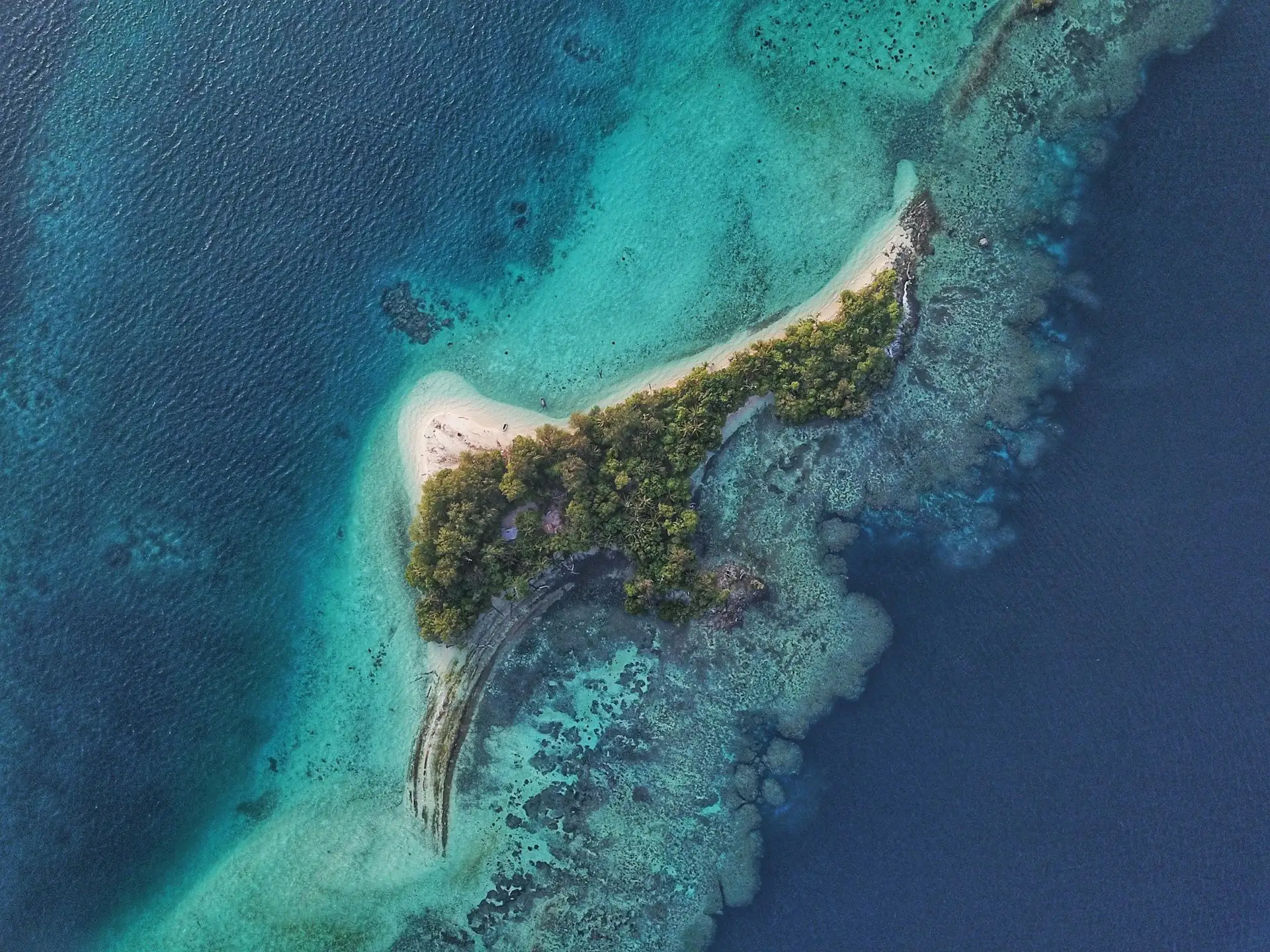
What draws the travelers who do make it here is the combination of that history with some of the least-dived reef and wreck diving left on the planet. Marovo Lagoon in the Western Province is the largest double-barrier enclosed lagoon in the world, over 700 square kilometers of clear, warm water ringed by raised barrier reefs, and Iron Bottom Sound off Guadalcanal holds enough sunken WWII ships and aircraft to have earned its name. None of it is built out for mass tourism: flights are limited, infrastructure outside Honiara is thin, and this is a country you plan for rather than book on a whim.
The honest complications
The Solomon Islands is not an easy first Pacific trip. Domestic flights between provinces are infrequent and weather-dependent, internet and card payment outside Honiara and the dive resorts is unreliable, and the country is one of the few in the Pacific where malaria is present nationwide, which most itineraries should plan around with prophylaxis. Honiara itself has had real political volatility in recent years: a 2021 riot that burned parts of the city's Chinatown, and as recently as September 2026 a prime minister survived a no-confidence motion that briefly pulled him out of a regional summit. None of this makes the country unvisitable, most visitor time, especially at Western Province dive lodges, passes without any of it being visible, but it is a reason to read the safety chapter below rather than assume this behaves like Fiji.
A History Worth Knowing
Solomon Islanders trace their own origins to within the islands rather than an outside arrival, and the earliest confirmed human habitation, carbon-dated from a cave on Guadalcanal, goes back to 1300-1000 BCE. Spanish explorer Álvaro de Mendaña sighted the islands in 1568 and named them for the biblical King Solomon's gold, hoping for riches that never quite materialized for Europeans. Britain declared a protectorate in 1893, WWII's Guadalcanal Campaign devastated and then rebuilt Honiara from wartime infrastructure, and independence came in 1978. The four decades since have been shaped by a near-civil-conflict in the late 1990s, an Australian-led regional intervention, and, more recently, a diplomatic pivot from Taiwan to Beijing that triggered real unrest.
- 1568
European contact. Mendaña names the islands after King Solomon's biblical riches. Missionaries, traders and colonial administrators follow over the next three centuries.
- 1893
British protectorate. Britain declares a protectorate over parts of the islands in response to German annexation nearby; by 1900 Germany cedes its remaining interests and the Solomons come fully under British rule.
- 1942–1943
The Battle of Guadalcanal. US Marines land at dawn on 7 August 1942; six months of brutal jungle and naval combat around Bloody Ridge, Red Beach and Henderson Field follow before Japan withdraws in early 1943.
- 1978
Independence. Rising post-war nationalist sentiment leads to full independence from Britain, with Honiara, built up from wartime American infrastructure, as capital.
- 1998–2003
The Tensions and RAMSI. Tribal and land-rights conflict, centered on Guadalcanal and Malaitan settlers, escalates into armed unrest; in 2003 the Regional Assistance Mission to Solomon Islands (RAMSI), led by Australia with all 15 Pacific Islands Forum states, restores order.
- 2019–2021
The China switch and the Chinatown riots. The government switches diplomatic recognition from Taiwan to Beijing in 2019; economic grievance and anger over the switch erupt into riots in November 2021 that burn much of Honiara's Chinatown.
Read the full history: settlement, the Tensions, and 2026's political near-miss
Some researchers place initial human dispersal into parts of the Solomons as early as 25,000-30,000 BCE via a slow migration through Southeast Asia, though the earliest confirmed occupation, from cave remains on Guadalcanal, dates to 1300-1000 BCE. Each island group has its own origin traditions, generally holding that people originated within the archipelago rather than arriving from elsewhere.
Guadalcanal was the site of one of the Pacific War's longest campaigns. Japan invaded in July 1942 to build an airfield threatening supply lines to Australia; the US Navy and Marines struck back at dawn on 7 August 1942, catching Japanese forces by surprise. What followed was six months of attritional combat on land, at sea and in the air, Japanese forces used the island's honeycombed hills and caves for machine-gun positions against advancing Marines, before a complete Japanese withdrawal in early 1943. Key sites from the campaign, Bloody Ridge, Red Beach, Skyline Ridge and Henderson Field (the airfield around which the whole campaign was fought, and now Honiara's international airport), remain visitable today.
The 1998-2003 period known locally as "the Tensions" grew from land and resource disputes between indigenous Guadalcanal people and settlers from Malaita, escalating into armed militia conflict that paralyzed the government and economy. Prime Minister Allan Kemakeza requested outside help in 2003, and RAMSI, the Regional Assistance Mission to Solomon Islands, deployed personnel from across the Pacific Islands Forum under Australian leadership to restore law and order and rebuild state institutions, a mission that formally wound down in 2017 but left a lasting security relationship with Canberra.
Recent politics. A 2006 election dispute triggered riots that damaged Chinese-owned businesses in Honiara; the country switched diplomatic recognition from Taiwan to China in September 2019, a move championed by then-Prime Minister Manasseh Sogavare but unpopular in Malaita and elsewhere; and in November 2021, economic grievance and anger over the China switch combined to produce riots that burned much of Honiara's Chinatown. As recently as September 2026, a no-confidence motion against Prime Minister Matthew Wale forced him to abruptly leave a Pacific Islands Forum summit in Palau to defend his government; the motion was withdrawn at the last minute and parliament was adjourned, but it's a reminder that Solomon Islands politics, often read as a proxy for wider US-China competition in the Pacific, remains genuinely unsettled.
Top Destinations
Nearly all first-time visitors build a trip around two zones: Guadalcanal, where Honiara and the WWII battlefield sites sit, and the Western Province, the country's diving heartland around Gizo, Munda and Marovo Lagoon. Malaita and the far-flung Rennell add real depth for a second trip. Domestic flights between provinces are limited and often weather-dependent, so build in flexibility rather than a tight multi-island itinerary.
Honiara and the Guadalcanal battlefields
Honiara, the capital, is where nearly every visit starts and ends, since it holds the country's only significant international airport. On its own it's a working, unpolished Pacific capital rather than a resort town, but it's the gateway to the WWII sites that draw history travelers specifically: the open-air Vilu War Museum west of the city with Japanese field guns and downed aircraft, the beached Bonegi wrecks that snorkelers can reach straight off the beach, and the memorials at Skyline Ridge and Mount Austen. The full Honiara city guide below covers hotels, food and a day-by-day plan.
Marovo Lagoon, Gizo & Munda
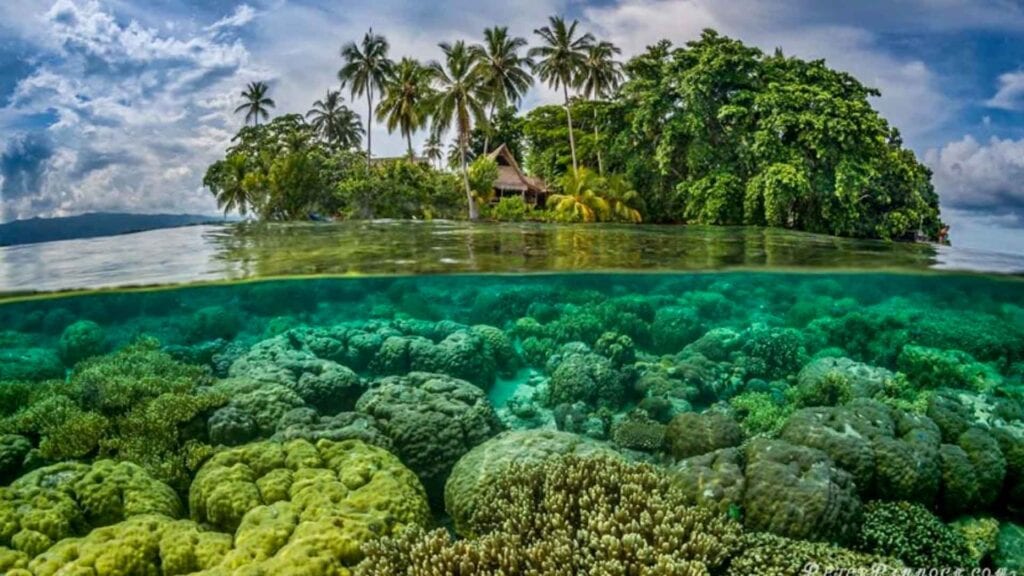
The Western Province is the reason serious divers put the Solomon Islands on a list at all. Marovo Lagoon, the largest double-barrier enclosed lagoon in the world at over 700 square kilometers, has warm, exceptionally clear water and dive sites like Uepi Point, a drift dive on the outer edge where the lagoon meets the WWII-era "Slot," and the sunlit swim-throughs of the Mbulo Caves. Gizo, the provincial capital, adds surfing, snorkeling and kayaking alongside its diving, and wreck dives like the Toa Maru in Kolombangara's Kololuka Bay and the Grand Central Station site near Gizo are locally famous. Munda, on New Georgia Island beside Roviana Lagoon, reopened for land-based diving in 2025 and is the quieter, less-developed alternative base.
Langa Langa Lagoon's artificial islands
Malaita's Langa Langa Lagoon, near the provincial capital Auki, holds a genuinely unusual sight: small artificial islands built up by hand on coral and rock foundations, originally settled by "saltwater people" fleeing headhunting raids from the Malaitan interior generations ago. Laulasi Island has welcomed visitors since the early 1970s, with shell-money minting demonstrations, since Langalanga remains the main source of the shell money still used across the Solomons to settle disputes and pay bride price. It's a full day trip from Honiara via Auki, not a casual add-on, and best arranged through a local tour operator rather than independently.
East Rennell, the hardest-to-reach highlight
Rennell Island, 250km south of Honiara, is the largest raised coral atoll in the world, and its southern portion, East Rennell, has been a UNESCO World Heritage Site since 1998 for Lake Tegano, the largest lake in the insular Pacific and home to species found nowhere else. It's been on UNESCO's List of World Heritage in Danger since 2013 due to logging pressure and rising, increasingly saline water levels. Access is by infrequent light aircraft with minimal tourist infrastructure on arrival: a serious detour for travelers who specifically want it, not a stop to add casually to a first itinerary.
Culture & Etiquette
Solomon Islanders are about 95% Melanesian, with smaller Polynesian, Micronesian, Chinese and European communities, and more than 90% identify as Christian, a legacy of 19th and early 20th-century missionary activity layered over much older traditions. Two Pijin words explain most of how the country actually works day to day: kastom, meaning traditional custom or the accepted way of doing things, and wantok ("one talk"), the deep sense of obligation between people who share a language or clan. Wantok networks are why individual Solomon Islanders can usually count on support from their extended community, and why local social structures can look opaque to an outsider used to more individualistic norms.
Do
- Learn a little Pijin. "Halo" (hello) and "Tank yu tumas" (thank you very much) go a long way; Pijin is the everyday bridge language across the country's 63 distinct local languages.
- Ask before photographing people, particularly in villages and at custom ceremonies. Some sites and performances also carry a small customary fee for photography, agree it upfront.
- Dress modestly, especially outside Honiara: shoulders and knees covered is a safe default in villages and at churches.
- Carry small SBD notes and coins. Outside Honiara's hotels and larger restaurants, this is a cash economy; card acceptance and ATMs are rare in the provinces.
- Respect kastom land rules. Most land in the Solomons is customarily owned; visiting a reef, forest trail or WWII site on someone's customary land is often technically their call to grant, and a small permission fee is normal, not a scam.
Don't
- Touch or remove WWII relics. Rusted ordnance can still be live decades on, and removing artifacts from battle sites and wrecks is illegal as well as dangerous.
- Assume Sunday is a normal travel or business day. Church attendance is central to Solomon Islands life, and many shops, transport options and even some tours pause on Sundays, especially outside Honiara.
- Expect fast, dependable domestic transport. Inter-island flights and boats run on island time and are weather-dependent; build slack into any multi-stop itinerary.
- Wade into current politics uninvited. The Taiwan-China switch and related unrest are recent and genuinely sensitive; let locals raise it if they want to discuss it.
- Wander unmarked jungle away from established trails, particularly around former battle sites, because of both unexploded ordnance and the ease of getting lost off-trail.
Deeper culture: shell money, the wantok system, and 63 languages
Shell money. Malaita's Langa Langa Lagoon is the main source of the shell money (tafuliae) still circulated across the Solomons, strung discs of clam and other shells used to settle disputes and, traditionally, as bride price paid by a groom's family to the bride's. It coexists with the Solomon Islands dollar rather than having been replaced by it.
Kastom and wantok. Kastom, from the English "custom," covers the whole fabric of traditional practice, land tenure, ceremony, dispute resolution, that still structures village life more than formal state institutions do in many areas. Wantok, "one talk," describes the mutual obligation between people who share a language or kin group: a wantok is expected to help a wantok, in ways that shape everything from politics to who gets hired.
Linguistic diversity. With 63 distinct local languages spoken across under a million people, spread over hundreds of islands, the Solomons is one of the most linguistically dense countries on earth relative to its population. English is the official language of government and education, but Solomon Islands Pijin is what actually gets spoken between people from different language groups.
Food & Drink
Solomon Islands food centers on what the sea and the garden provide: fish above all, plus coconut, taro, cassava and sweet potato, cooked simply. It's not a cuisine built around restaurants, the best introduction is the Central Market in Honiara and, if you're invited, a village meal, but Honiara has enough variety, Japanese, Australian-style cafes, steakhouses, to eat well for a week without repeating.
Poi
The country's national dish: taro root, pounded into a fermented paste with a distinctive tangy flavor. Traditionally eaten as a starchy side alongside fish or meat, closer in spirit to the Hawaiian dish of the same name than to a Western starch.
Fresh reef & deep-sea fish
Fish is the staple protein nationwide, grilled or simmered in coconut cream, and Honiara's Central Market and waterfront restaurants serve it about as fresh as it gets, often the same morning's catch.
Kava
The national drink: a mildly sedative infusion made from the kava root, shared socially much as it is across the wider Pacific, with its own etiquette around how it's prepared and passed.
Cassava pudding
Grated cassava mixed with coconut cream and sugar and baked until firm and slightly chewy, a common dessert at celebrations, weddings and church holidays, and increasingly on Honiara restaurant menus.
Palusami-style greens
Taro or slippery cabbage leaves cooked in coconut cream, sometimes with tinned meat or fish added, a homestyle dish more often found at a village meal than a restaurant.
Market fruit
Papaya, pineapple, bananas and other tropical fruit arrive daily at the Central Market from outer-island growers, cheap, genuinely fresh, and worth building a breakfast around.
When to Go & Itineraries
The Solomon Islands runs hot and humid year-round, averaging around 27°C, with two clear seasons: a dry season from May to October and a wetter one from November to April. Honiara gets roughly 70% of its annual rainfall in the wet season, when monthly totals can triple the dry season's, though rain typically passes through quickly rather than settling in for days. Cyclones are uncommon but not impossible in the wet season. May to October, when rainfall, humidity and seas are calmest, is the best all-round window, especially for diving visibility and inter-island boat travel.
Both seasons compared
| Season | Verdict | Conditions |
|---|---|---|
| May-Oct (dry) | Best | ~100mm/month rain in Honiara, calmer seas, best diving visibility |
| Nov-Apr (wet) | Good, wetter | Up to 300mm+/month in Honiara, brief but heavy showers, small cyclone risk |
Temperatures stay close to a 27°C average year-round; the seasonal difference is almost entirely about rainfall and sea conditions, not heat.
Itineraries
A week covers Honiara's WWII sites plus a few days at a Western Province dive lodge. Two weeks allows a genuinely unhurried Marovo Lagoon or Gizo stay, or room to add Malaita. Inter-island transport is infrequent, so plan around the flight or boat schedule rather than against it.
- Days 1-3
Honiara & Guadalcanal. Central Market, the National Museum, Vilu War Museum, the Bonegi wrecks and the Skyline Ridge memorial.
- Days 4-7
Western Province dive lodge. Fly to Gizo or Munda for reef and wreck diving, or a Marovo Lagoon lodge for the lagoon itself.
- Days 1-3
Honiara & Guadalcanal, as above, at a more relaxed pace.
- Days 4-5
Malaita. Fly or ferry to Auki, day trip to Langa Langa Lagoon's artificial islands and a shell-money demonstration.
- Days 6-10
Marovo Lagoon. A lagoon-based lodge for reef diving, snorkeling and the Mbulo Caves.
- Days 11-14
Gizo & Munda. Surfing, wreck diving at the Toa Maru and Grand Central Station, and a slower finish before flying home via Honiara.
Getting there & around
Honiara International Airport (HIR), built on the WWII-era Henderson Field, is the only meaningful international gateway, with non-stop flights to Brisbane on Solomon Airlines, Qantas and Nauru Airlines, and to Nadi on Solomon Airlines, Fiji Airways and Air Niugini. From there, Solomon Airlines' domestic network reaches the Western Province and outer islands, though schedules are limited and weather-dependent, book provincial flights as early as you can. Boats and ferries connect closer islands, notably the hour-long crossing from Honiara to Tulagi.
Where to stay
Capital hotels
From beachfront four-star comfort to simple guesthouses; see the full Honiara city guide for specific picks and prices.
Dive lodges
Marovo Lagoon, Gizo and Munda run mostly on small, purpose-built dive lodges rather than hotel chains, typically booked as multi-night dive packages including meals and boat transfers.
Budget Planning
The Solomon Islands isn't a cheap Pacific destination once diving or provincial flights enter the picture, but Honiara itself is manageable on a modest budget. The Solomon Islands dollar (SBD) traded at roughly 8 to the US dollar as of September 2026.
- Guesthouse or resthouse in Honiara
- Market meals and local eateries
- Shared minibus (PMV) transport
- Free WWII sites and Central Market
- 3-4 star Honiara hotel
- Restaurant meals, taxis
- Guided WWII or market tours
- Entry-level dive lodge package
- Beachfront Honiara hotel
- Multi-night Marovo or Gizo dive package
- Domestic flights over ferries
- Private guided tours
Quick reference prices
| Central Market meal | $3-6 |
| Honiara cafe lunch | $8-15 |
| Mid-range Honiara dinner | $15-30 |
| PMV minibus fare, central Honiara | ~$0.40 (3 SBD) |
| Airport taxi to central Honiara | $13-19 (100-150 SBD) |
| Vilu War Museum entry | ~$12 (100 SBD) |
| Chester Resthouse, Honiara | from ~$55/night |
| King Solomon Hotel, Honiara | from ~$109/night |
Prices reflect September 2026 research and drift over time, especially dive packages and provincial flights. Treat them as a planning baseline, not a quote.
Visa & Entry
Most tourists are granted a visitor's permit on arrival. Citizens of the United States and most Commonwealth and European Union countries do not need to arrange a visa in advance: with a passport valid at least six months beyond your entry date and a return or onward ticket, you're issued a visitor's permit valid for three months at the airport. Rules do change; the Solomon Islands Ministry of Commerce, Industry, Labour and Immigration is the authoritative source.
✓ Valid passport
At least 6 months' validity from your date of entry, with blank pages for stamps.
✓ Return or onward ticket
Required to be shown on arrival; onward tickets to another Pacific destination are accepted.
✓ Proof of funds
Immigration can ask for evidence you can support yourself during your stay.
✓ Other-country visas if required
If your onward itinerary needs a visa for the next country, immigration may ask to see it before granting entry.
| Solomon Islands | Papua New Guinea | |
|---|---|---|
| Visa | Visa-free on arrival for most Western passports, 3 months | Apply ahead for most nationalities |
| Daily budget | $50-70 gets by; diving and provincial flights add up fast | Higher baseline, $50-80 budget tier but less goes further |
| Diving & WWII history | Marovo Lagoon, Iron Bottom Sound, Guadalcanal's battlefields | Kokoda Track, Milne Bay wrecks, similarly under-visited reefs |
| Safety rating | US State Dept Level 2, Exercise Increased Caution | US State Dept Level 3, Reconsider Travel |
| Best time | May-October dry season | May-October dry season, same window |
Safety, Solo Women & Family
The US State Department rates the Solomon Islands Level 2, Exercise Increased Caution, citing petty and occasional violent crime concentrated in Honiara, leftover WWII unexploded ordnance, and periodic civil and political unrest. That's a meaningfully different picture from a resort-built Pacific destination like Fiji, but it's not a country to avoid: most visitor time, especially at Western Province dive lodges and on organized WWII tours, passes without incident. The real risks are practical rather than dramatic: petty theft, road conditions, and the country's uniquely Pacific combination of malaria and dengue risk.
Crime in Honiara
Petty theft, break-ins and occasional violent incidents targeting foreigners are more common in Honiara than elsewhere in the country. Use hotel transport or a booked taxi after dark, and keep valuables secured, especially around the Central Market and bus interchanges.
Unexploded ordnance
WWII ordnance is still discovered regularly, including outside marked battle sites. Stay on established paths at WWII sites, never touch or move any metal object you find, and only visit battlefield areas with a local guide.
Malaria & dengue
The Solomons is one of the few Pacific nations with nationwide malaria risk, alongside dengue. Antimalarial prophylaxis is recommended for most itineraries; discuss atovaquone/proguanil, doxycycline or mefloquine with a travel clinic before departure, and use repellent and cover up at dawn and dusk.
Political unrest and how it actually affects a visit
Honiara has seen real unrest in recent years: riots in 2006 and again in November 2021, the latter burning parts of the city's Chinatown over grievances tied to the 2019 Taiwan-to-China diplomatic switch and economic conditions. As recently as September 2026, a no-confidence motion against the prime minister created a few tense days before being withdrawn. This kind of event, when it happens, is concentrated in specific parts of central Honiara around Parliament and Chinatown, not spread across the country. If you're in Honiara during a period of political tension, avoid crowds and demonstrations, monitor local media, and follow your hotel's and embassy's guidance rather than assuming normal sightseeing plans hold.
Solo women travelers
Solo women should apply more caution here than in Fiji or the Cook Islands: Honiara's crime profile includes reported incidents targeting foreign women specifically, so avoid walking alone after dark, use hotel-arranged or pre-booked transport, and dress modestly, which also matters culturally outside the capital. Outside Honiara, at organized dive lodges and on guided tours, the picture is considerably more relaxed, since most Western Province operations are small, established businesses used to hosting solo travelers of all kinds.
Emergency numbers
Hospitals and practical health notes
The National Referral Hospital in Honiara is the country's main hospital, with over 300 beds and around 50 doctors, and receives referrals from smaller provincial and church-run hospitals across the country. Outside Honiara, medical facilities are basic; serious injuries or illness in the provinces typically mean evacuation to Honiara or further to Australia, so comprehensive travel insurance with medical evacuation cover is essential, not optional, for any dive or provincial itinerary.
Tap water is not reliably safe to drink even in Honiara; stick to bottled or boiled water. Power is 230V/50Hz on Type I plugs, the same standard used in Australia and New Zealand.
Family travel
The Solomon Islands works better for families with older children genuinely interested in WWII history or snorkeling than for a beach-and-pool family holiday: infrastructure, medical care and predictable transport are all thinner than at a purpose-built family resort elsewhere in the Pacific. The malaria risk in particular is worth discussing with a pediatric travel doctor well before booking, since prophylaxis options and dosing differ for children.
Solomon Islands FAQ
Is the Solomon Islands safe to visit?
Mostly, with normal caution. The US State Department rates it Level 2, Exercise Increased Caution, for petty and occasional violent crime, mainly in Honiara, plus leftover WWII unexploded ordnance and periodic political unrest. Most visitor time outside Honiara, especially in the diving lodges of the Western Province, passes without incident.
Do I need a visa for the Solomon Islands?
Most Western passport holders, including the US, UK, EU, Australia and Commonwealth citizens, do not need a visa in advance. You get a visitor permit on arrival valid for three months, provided your passport has six months' validity, you hold a return or onward ticket, and you can show sufficient funds.
What is the best time to visit the Solomon Islands?
May to October, the dry season, when rainfall and humidity are lowest and the seas are calmest for diving and island-hopping. November to April is the wet season, still visitable but with heavier rain and a small chance of cyclones.
How many islands does the Solomon Islands have?
Around 990 islands spread across roughly 1,500 kilometers of the South Pacific, of which fewer than 350 are inhabited. Only a handful, Guadalcanal, Malaita, the Western Province islands and a few others, see meaningful tourist infrastructure.
Is the Solomon Islands good for diving?
Yes, it's one of the world's great under-visited dive destinations: WWII wrecks in Iron Bottom Sound and at Bonegi, and pristine reef diving in the Western Province's Marovo Lagoon, the largest double-barrier lagoon on earth, plus wreck diving off Gizo.
What currency does the Solomon Islands use?
The Solomon Islands dollar (SBD), trading at roughly 8 SBD to 1 US dollar as of September 2026. Honiara has ATMs and card acceptance at hotels and larger restaurants; outer islands and dive lodges are cash-only.
Is malaria a risk in the Solomon Islands?
Yes, it's one of the few Pacific nations where malaria is present nationwide, along with dengue. Antimalarial prophylaxis (atovaquone/proguanil, doxycycline or mefloquine) is recommended for most itineraries; discuss options with a travel doctor before you go.
How many days do you need in the Solomon Islands?
A week covers Honiara and Guadalcanal's WWII sites plus a few days at a Western Province dive lodge. Two weeks allows an unhurried Marovo Lagoon or Gizo stay, or adds Malaita's Langa Langa Lagoon.
What language is spoken in the Solomon Islands?
English is the official language, but Solomon Islands Pijin is the everyday lingua franca across the country's 63 distinct local languages. Most people in tourist-facing roles speak English.
Is the Solomon Islands part of Papua New Guinea?
No, they're separate countries, though geographically and culturally close: Bougainville, PNG's easternmost province, sits just northwest of the Solomon Islands' Western Province, and both share a Melanesian culture and WWII history.
What Stays With You
The Solomon Islands doesn't try to be Fiji, and it shouldn't. It's a country where the pivotal battle of the Pacific War is still legible in the landscape rather than fenced off behind a museum ticket, where a lagoon larger than some small countries sits almost entirely to itself, and where getting there and moving around takes more patience and planning than a beach-resort Pacific trip. That's precisely why the divers, history travelers and genuinely curious visitors who make the effort tend to come back talking about it differently than they talk about anywhere else in the region.
Go with realistic expectations about infrastructure and a plan for malaria prophylaxis, and the Solomons rewards you with something increasingly rare: a Pacific destination that hasn't been smoothed out for tourism yet.