
What You're Actually Getting Into
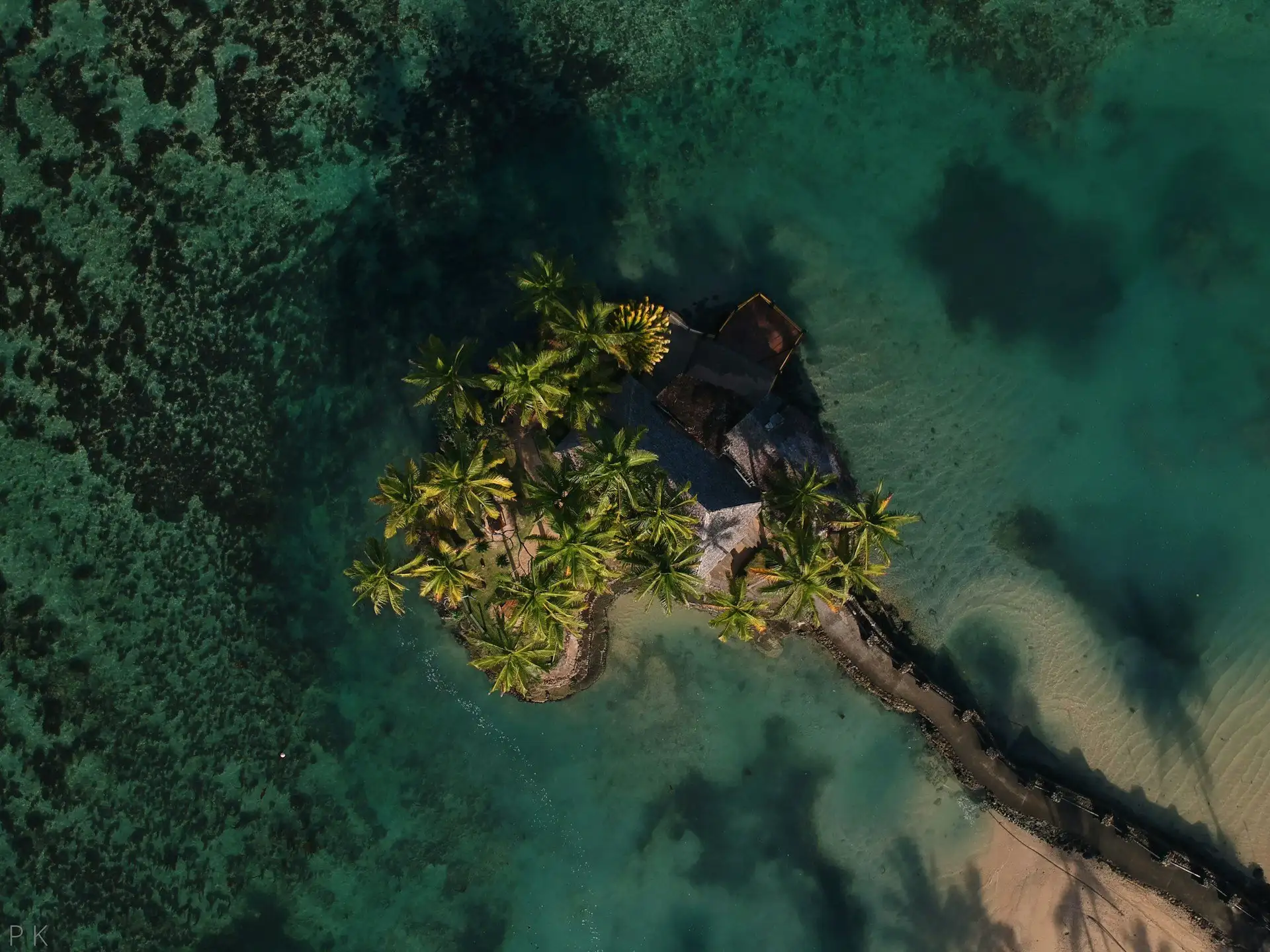
Fiji is an archipelago of more than 330 islands, only around a third of them inhabited, scattered across a stretch of the South Pacific roughly the size of Portugal. Most visitors see only a fraction of it: Viti Levu, the main island, holds Nadi and the capital Suva, while the Mamanuca and Yasawa chains just offshore supply the postcard lagoons. What consistently surprises first-time visitors is not the water, which is exactly as clear as advertised, but the warmth of the welcome: "bula" is shouted from passing trucks and market stalls with a sincerity that a decade of tourism marketing hasn't worn thin.
Fiji's economy runs substantially on that welcome. Tourism is the country's largest industry, and the resort infrastructure, from backpacker dorms to overwater-adjacent luxury, is genuinely excellent for a country of under a million people. Village life away from the resorts still runs on kava ceremonies, communal land ownership and a slower relationship with the clock that locals call, without much irony, Fiji time.
The honest complications
Getting between islands costs real money and real time: ferries and light aircraft aren't cheap, and a poorly planned itinerary can burn a full day on transfers. Cyclone season runs November to April, peaking January to March, and while most trips are unaffected, it's worth checking forecasts if you're traveling in that window. Fiji's political history includes three coups since 1987, rooted in tension between indigenous Fijian and Indo-Fijian communities; the country has been a stable parliamentary democracy for years now and this has no bearing on a normal visit, but it's context worth having rather than discovering by accident. And outer-island resorts often bundle meals into a mandatory package on top of the room rate, which can make a cheap-looking nightly rate considerably more expensive once you add it up.
A History Worth Knowing
Fiji's first settlers, the Lapita people, arrived roughly 3,500 years ago and developed the pottery, seafaring and social structures that indigenous Fijian, or iTaukei, culture still draws on today. Britain annexed Fiji as a colony in 1874, brought over 60,000 indentured laborers from India to work sugar plantations between 1879 and 1916, and left behind a demographic split between indigenous Fijians and Indo-Fijians that has shaped the country's politics ever since. Independence came in 1970; three military coups in 1987, 2000 and 2006 followed, each rooted in that same unresolved ethnic and political tension, before Fiji returned to elected government and has held stable, internationally recognized elections since.
- ~1500 BCE
Lapita settlement. The first Pacific voyagers reach Fiji, bringing pottery and seafaring traditions that underpin iTaukei culture.
- 1874
Cession to Britain. Fijian chiefs cede the islands to Britain, beginning a colonial administration that governs through existing chiefly structures.
- 1879–1916
Indentured labor. Britain brings over 60,000 laborers from India to work sugar plantations, founding the Indo-Fijian community.
- 1970
Independence. Fiji becomes independent on 10 October, with Ratu Sir Kamisese Mara as first Prime Minister.
- 1987, 2000, 2006
Three coups. Each reflects unresolved tension between indigenous Fijian and Indo-Fijian political interests.
- 2014–present
Democratic stability. Elected government resumes, tourism grows into the country's largest industry.
Read more: the Lapita legacy, colonial land structure and the coups
Around 87 percent of land in Fiji remains under indigenous communal ownership (iTaukei land), administered through clan and chiefly structures that predate colonization and were deliberately preserved by British administrators rather than sold off, unlike in many other colonized Pacific territories. This is a large part of why village life and chiefly protocol, including the kava-based sevusevu ceremony, remain genuinely intact rather than performed for tourists.
The Indo-Fijian community, descended from indentured laborers brought over between 1879 and 1916, built much of Fiji's commercial and agricultural economy, particularly the sugar industry, while land ownership stayed with indigenous Fijians. That structural split, land versus commerce, is the throughline connecting the 1987, 2000 and 2006 coups, each of which followed elections that indigenous nationalist factions viewed as threatening their political and land interests. Significant Indo-Fijian emigration followed each coup, and the community's share of the population has fallen from roughly half at independence to well under half today.
Since 2014, Fiji has held three general elections judged credible by international observers, and the political situation has been calm throughout the tourism boom of the last decade. None of this history affects a standard visit, but the demographic mix it produced (indigenous Fijian villages, Indo-Fijian-run shops and curry houses, both communities visible everywhere in Nadi and Suva) is part of what you're actually seeing.
Top Destinations
Fiji divides into five practical zones: Viti Levu (Nadi and Suva, the transport hubs), the Mamanuca Islands (the easy day-trip cluster), the Yasawa Islands (further out, wilder, cheaper at the budget end), the Coral Coast (a resort strip on Viti Levu's south shore) and Taveuni with the outer islands (real diving and rainforest, real logistics). A week covers Nadi plus one island group well; two weeks lets you combine two zones without rushing.
Nadi, the gateway
Nadi holds Fiji's only major international airport and is where most visitors land, base themselves for a few nights, or pass through en route to an island. It's a working town rather than a resort, with the Sri Siva Subramaniya Temple, the largest Hindu temple in the Southern Hemisphere, at its center, plus a produce market and a genuine Indo-Fijian curry house scene. Denarau Island, a purpose-built resort strip 20 minutes from the airport, is where most of the international hotel brands sit, with Port Denarau as the departure point for every island ferry. See our full Nadi city guide for neighborhoods, hotels and restaurants.
Suva, the real capital
Suva, three to four hours from Nadi by road, is Fiji's political and commercial capital and barely visited by tourists, which is part of its appeal if you want a genuinely local city: a colonial-era waterfront, the Fiji Museum, and a much larger, cooler, wetter city than the resort coast prepares you for.
The easiest lagoons in Fiji
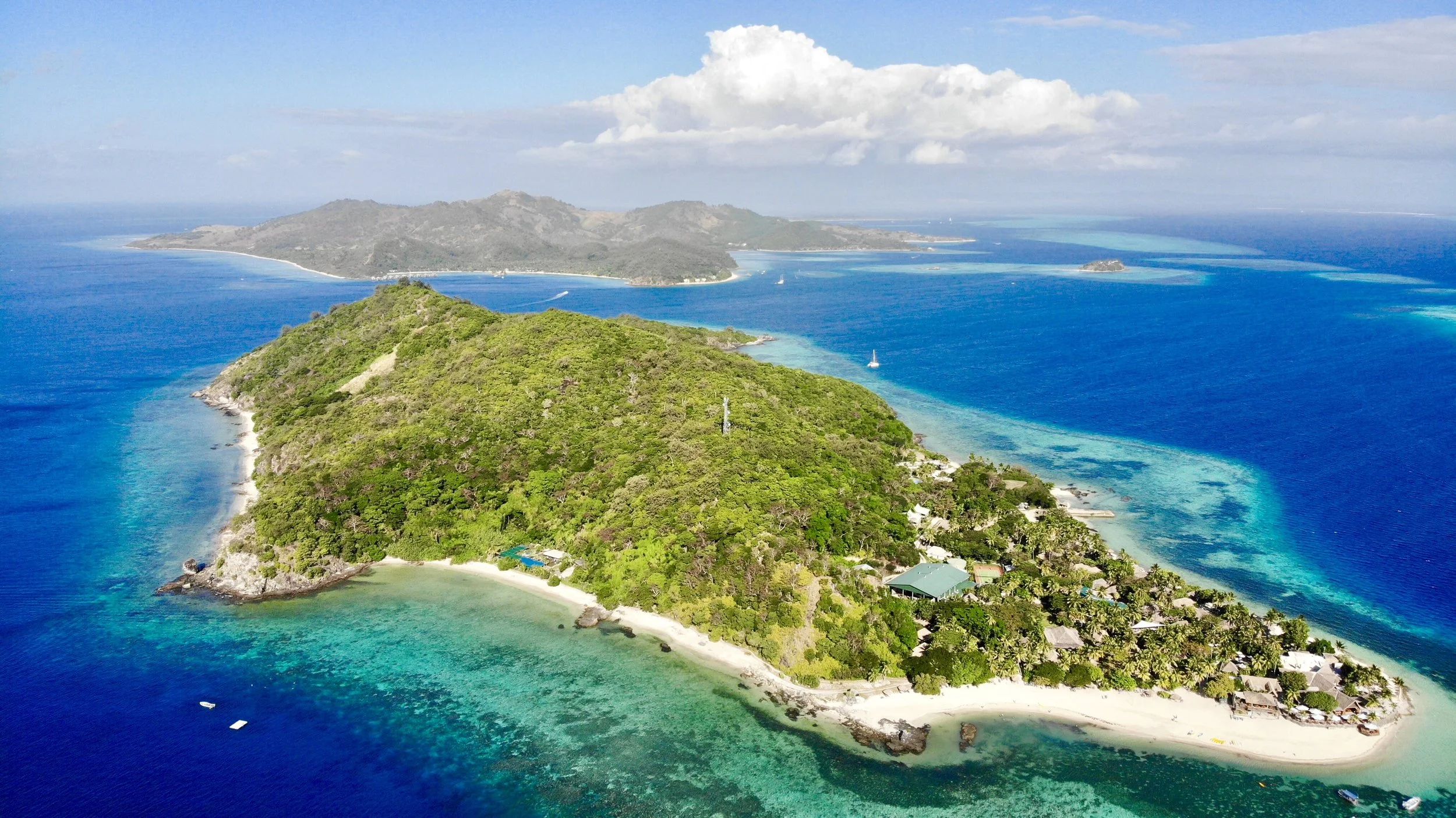
The Mamanucas are a compact cluster of coral and volcanic islets 30 minutes to an hour off Nadi by boat, and the most popular day-trip and short-stay destination in the country. South Sea Cruises runs the Malolo Cat and other high-speed catamarans out of Port Denarau to resort islands including Malolo, Castaway, Mana, Treasure Island, Matamanoa, Tokoriki, Beachcomber and South Sea Island, most sailings under an hour. The snorkeling is easy and reliable, family resorts dominate the mid-range, and Cloudbreak, off Tavarua Island, is one of the Pacific's most famous surf breaks for experienced surfers.
Further out, wilder, cheaper
The Yasawas are a volcanic island chain running northwest of the Mamanucas, reached via the Yasawa Flyer, a single daily catamaran from Port Denarau that departs at 8:30am and takes up to 4.5 hours to reach the furthest resorts, dropping and picking up passengers at each island along the way. The scenery is more dramatic than the Mamanucas: sheer volcanic cliffs, blue lagoons and beaches that empty out fast once you're a few islands north. The Yasawas are unusual in spanning both ends of the budget, from backpacker dorms and family-run homestays to genuinely upscale small resorts, and manta ray encounters are a seasonal highlight (roughly June to September) around the Naviti Island area.
The mainland resort coast
The Coral Coast runs along Viti Levu's south shore between Nadi and Suva, a two-to-two-and-a-half-hour drive from the airport, and is Fiji's older, more established resort strip: fewer overwater fantasies, more established mid-range and family hotels directly on the beach, with the reef close enough to shore for easy snorkeling. Natadola Beach, generally considered the best swimming beach on the Fijian mainland, sits at its western end and is a popular day trip from Nadi in its own right.
Taveuni, the Garden Island
Taveuni, Fiji's third-largest island, requires a domestic flight or a long ferry-and-road combination from Nadi and rewards the effort with genuine rainforest, waterfalls and some of the best diving in the country. Bouma National Heritage Park protects the Tavoro Waterfalls, reachable on an easy marked trail, and Rainbow Reef, in the Somosomo Strait between Taveuni and Vanua Levu, is internationally rated for soft coral diving.
Beqa Lagoon & Levuka
Beqa Lagoon, off the south coast of Viti Levu near Pacific Harbour, is one of the world's premier shark diving destinations, with resident bull, tiger, lemon and reef sharks encountered year-round rather than seasonally. Levuka, Fiji's first colonial capital on the island of Ovalau, is a UNESCO World Heritage-listed 19th-century port town, wooden storefronts and all, that most visitors never reach and few regret visiting.
Hidden gems beyond the main circuit
The zones above cover a first or second trip well. With extra days or a taste for the road less traveled, these reward the detour.
Savusavu
A yachting town on Fiji's second-largest island, built around a natural hot-spring harbor, with a small but excellent organic chocolate and vanilla scene and none of the resort-strip feel of Nadi or the Coral Coast.
Kadavu & the Great Astrolabe Reef
One of the world's largest barrier reefs, largely undived compared to the Mamanucas, with excellent birdwatching on Kadavu island itself between dives.
Beqa Lagoon shark dive
A single-day trip from Nadi or Suva puts you in the water with up to eight shark species, including resident bull sharks, on dives that run year-round regardless of season.
Culture & Etiquette
Fijian hospitality is built around kava, known locally as yaqona: a mildly sedating drink made from a ground pepper-plant root mixed with water, drunk from a shared coconut-shell cup called a bilo. Kava is central to welcome ceremonies, everyday village socializing and the sevusevu protocol, presenting kava root to a village chief before entering a traditional village, which functions as both formal courtesy and genuine cultural gatekeeping. Fiji's other defining cultural fact is Fiji time: a genuinely relaxed relationship with schedules that visitors either embrace or find mildly maddening, and that locals will cheerfully acknowledge either way.
Do
- Learn the kava etiquette. Clap once, say "bula," drink the bilo in one go, then clap three times. Showing distaste for the flavor (it's mildly numbing and earthy) is considered rude.
- Dress modestly in villages. Cover shoulders and thighs, remove hats and sunglasses when addressing a chief or elder, and never touch anyone's head, considered sacred in Fijian culture.
- Say "bula" to everyone. It means both "hello" and "life," and using it liberally is genuinely appreciated rather than performative.
- Ask before entering a village. If you're not on an organized tour, someone in your group should present sevusevu to the village headman before wandering in.
- Tip only if you want to. Tipping isn't customary in Fiji; resorts sometimes have a discretionary staff fund instead, which is worth asking about.
Don't
- Wear a hat or sunglasses in a village without removing them when greeting people, especially elders; it reads as disrespectful.
- Show up empty-handed to a village. Kava root or powder, bought at any Nadi market, is the standard sevusevu gift and costs very little.
- Expect Fiji time to match your itinerary. Boat transfers, tours and even restaurant service run on a looser clock than most visitors are used to; build in buffer time.
- Photograph people or villages without asking, particularly during ceremonies.
- Swim or sunbathe topless anywhere outside a resort's private beach; Fiji is culturally conservative about dress on public and village beaches.
Deeper culture: communal land, church and the multi-ethnic mix
iTaukei land. Around 87 percent of Fijian land is held communally by indigenous clans (mataqali) rather than owned individually, a structure preserved from before colonization. This underpins why village protocol, including sevusevu, remains a genuine gatekeeping custom rather than a tourist reenactment.
Church and community. Methodist and other Christian denominations are central to indigenous Fijian village life; Sundays are widely observed as a day of rest, and many village shops and even some Nadi businesses close or reduce hours.
The Indo-Fijian community. Descended from indentured laborers brought over between 1879 and 1916, Indo-Fijians are predominantly Hindu or Muslim and run much of the commercial economy you'll encounter as a visitor, from Nadi's curry houses to its market stalls. The Sri Siva Subramaniya Temple in Nadi, the largest Hindu temple in the Southern Hemisphere, is the clearest visible expression of this community's presence and history.
Food & Drink
Fijian food reflects the same dual heritage as the culture at large: indigenous Fijian dishes built around fresh fish, root vegetables and coconut cream, and an entire parallel Indo-Fijian food culture of curries, roti and biryani that's just as central to how the country actually eats day to day. Resort buffets tend to blend both; the best individual versions of each are found away from the resorts, in Nadi's market stalls and family-run curry houses.
Kokoda FJ$15-25
Fiji's answer to ceviche: raw white fish, usually mahi-mahi or walu, marinated in lime or lemon juice until it "cooks," then mixed with coconut cream, onion, tomato and chili and served in a coconut shell. Order it fresh, not pre-made.
Lovo
The traditional feast: meat, fish and root vegetables wrapped in banana leaves and cooked for hours in an underground earth oven. Usually reserved for special occasions and cultural shows rather than everyday menus, so book one deliberately if you want it.
Kava (Yaqona) Ceremonial, not sold by the glass
A mildly numbing, earthy drink made from pounded pepper-plant root, central to welcome ceremonies and village social life. Approach street "kava ceremony" offers in Nadi town with some skepticism; the genuine version happens in villages, not on the sidewalk.
Rourou
Taro leaves stewed slowly in coconut milk into a soft, comforting side dish, often served alongside fish or lovo meats. One of the most common items on an indigenous Fijian home-cooked plate.
Curry & Roti FJ$8-15
Indo-Fijian curry houses in Nadi serve fish, lamb and vegetable curries with roti or rice, milder and more coconut-forward than Indian subcontinent curries but unmistakably descended from them.
Tropical Fruit
Papaya, pineapple and small, sweet Fijian bananas are sold everywhere, cheaply, and are noticeably better than supermarket equivalents most visitors are used to at home.
When to Go & Itineraries
May through October is Fiji's dry season and the best time to visit, with June to September the most reliable stretch of all: lower humidity, minimal rainfall and no cyclone risk. November through April is the wet, cyclone-risk season, peaking January to March; most trips in these months go entirely unaffected, but it's worth watching forecasts and accommodation is markedly cheaper as a result.
All seasons compared, with temperatures
| Season | Verdict | Temps | Prices & crowds |
|---|---|---|---|
| Jun-Sep | Best | 22-27°C, low humidity | Peak prices, busiest resorts |
| May & Oct | Good | 23-28°C | Shoulder pricing, fewer crowds |
| Nov-Dec & Mar-Apr | Caution | 26-31°C, humid | Lower prices; rising cyclone risk toward Jan |
| Jan-Feb | Peak cyclone risk | 27-32°C, humid | Cheapest rates; watch forecasts closely |
Year-round averages: Nadi 25°C, Suva 24°C (wetter, cooler than Nadi), Taveuni 24°C (wettest region in Fiji). Water temperature stays a swimmable 24-28°C all year.
Itineraries
Seven days covers Nadi and one island group at an unhurried pace. Two weeks lets you combine a second island group or the Coral Coast without every day being a transfer day.
- Days 1–2
Nadi. Settle in, Sri Siva Subramaniya Temple, the Sabeto mud pool and Garden of the Sleeping Giant, dinner at a Nadi curry house.
- Days 3–6
Mamanuca Islands. South Sea Cruises out to a resort island for four nights: snorkeling, one Cloudbreak surf-watching sunset if you're near Tavarua, and at least one lovo night.
- Day 7
Return to Nadi. Morning ferry back, last-minute market shopping, evening flight out.
- Days 1–2
Nadi. Temple, Sabeto Valley, market, one restaurant crawl through Martintar.
- Days 3–7
Yasawa Islands. The Yasawa Flyer north, island-hopping between two or three stops for a mix of budget and mid-range stays, manta ray season permitting (roughly Jun-Sep).
- Days 8–11
Coral Coast. Drive or transfer south, Natadola Beach, a resort stay with easier reef access than the outer islands.
- Days 12–14
Suva & return. A day in the real capital, Fiji Museum and colonial waterfront, before heading back to Nadi for departure.
- Days 1–3
Nadi extended. Full temple, market and Sabeto circuit, plus a Beqa Lagoon shark dive day trip from Nadi or a transfer to Pacific Harbour.
- Days 4–9
Mamanucas & Yasawas combined. A few nights in each chain via South Sea Cruises and the Yasawa Flyer.
- Days 10–13
Coral Coast. Natadola Beach, established mid-range resorts, easier pace after island-hopping.
- Days 14–18
Taveuni. Fly out for Bouma National Heritage Park's Tavoro Waterfalls and Rainbow Reef diving.
- Days 19–21
Suva & return. The real capital and colonial Levuka on Ovalau if time allows, before flying home from Nadi.
Getting there & around
Nadi International Airport (NAN) is Fiji's main international gateway, with direct flights from Australia, New Zealand, the US West Coast and increasingly Asia. Suva's Nausori Airport handles mostly domestic and regional routes. From Nadi, Denarau Island is 20 minutes by taxi or hotel shuttle; the Coral Coast is 2-2.5 hours by road; Suva is 3-4 hours. Sunbeam Transport and Pacific Transport run budget-friendly express coaches along the Queens Road between Nadi and Suva (around FJ$20, roughly 5 hours) for travelers not renting a car.
All transport options with prices: ferries, buses, rental cars, taxis
| Option | Price | Notes |
|---|---|---|
| Yasawa Flyer | Varies by stop | One daily catamaran from Port Denarau, departs 8:30am, up to 4.5 hrs to the furthest Yasawa resorts. |
| South Sea Cruises (Mamanucas) | Varies by island | Multiple daily high-speed catamaran departures from Port Denarau, most under an hour. |
| Sunbeam/Pacific Transport buses | ~FJ$20 Nadi-Suva | Express coaches along the Queens Road via the Coral Coast, about 5 hours end to end. |
| Rental car | FJ$75-100/day | Avis, Hertz and Budget all operate from Nadi Airport; drive on the left. |
| Taxis (Nadi) | FJ$100-120 airport to Coral Coast | Use official yellow airport taxis or confirm the meter (LT plates) or agree a fare upfront (LH plates). |
Domestic flights: Fiji Airways and Fiji Link connect Nadi and Suva to Taveuni, Savusavu and other outer islands; book ahead, schedules are limited and weather-dependent in wet season.
Practical prep: pick up a local SIM or an eSIM before you land since coverage thins out fast on outer islands; pack reef shoes for rocky lagoon entries, and bring cash in small denominations for markets and kava purchases, since card acceptance drops sharply outside resorts.
Where to stay
Backpacker hostels
Concentrated around Wailoaloa Beach in Nadi and scattered through the Yasawas, with dorms and simple private rooms. See our Nadi guide for specific picks.
Mid-range island resorts
The bulk of the Mamanuca and Coral Coast market: reliable beachfront rooms, a pool, a restaurant and usually a kids' club, without the overwater-bungalow price tag.
Denarau & luxury resorts
International hotel brands cluster on Denarau Island; smaller luxury outer-island properties on Vanua Levu and in the Yasawas run at similar or higher rates with far more privacy.
Outer-island meal plans
Remote resorts on islands with no other food options frequently require a meal package on top of the room rate. Always confirm what's included before comparing prices across properties.
Budget Planning
Fiji spans a wider price range than most destinations its size: mainland Nadi and hostel-based island-hopping can be genuinely affordable, while remote outer-island resorts, especially those with mandatory meal plans, climb fast. The main cost trap is underestimating inter-island transport and bundled meal packages, not daily spending on the mainland.
- Hostel dorm FJ$40-70
- Curry house & market meals FJ$8-15
- Local buses between towns
- Free beaches, temple visits & markets
- Mid-range Mamanuca or Coral Coast resort
- Restaurant dinners FJ$25-45/person
- One island day cruise or dive trip
- Rental car FJ$75-100/day
- Denarau or outer-island luxury resort
- Meal plans and premium dive/tour packages
- Domestic flights to Taveuni or Vanua Levu
- Private transfers throughout
Quick reference prices: coffee, ferries, market food
| Coffee (cafe) | FJ$6-9 |
| Curry & roti, local eatery | FJ$8-15 |
| Kokoda, sit-down restaurant | FJ$15-25 |
| Local bus, short hop | FJ$1-2 |
| Nadi-Suva express bus | ~FJ$20 |
| Rental car, per day | FJ$75-100 |
| Hostel dorm bed | FJ$40-70/night |
| Denarau 5-star resort | FJ$500-1,200+/night |
| Garden of the Sleeping Giant entry | ~FJ$20 |
Prices reflect August-September 2026 research and drift over time, especially outer-island resort rates. Treat them as a planning baseline, not a quote.
Visa & Entry
Fiji has a permissive visa-free regime for major passports: US, UK, Australian, Canadian and New Zealand citizens are issued a free entry permit stamped on arrival at Nadi International Airport or any other official port, valid for up to 4 months, with a possible discretionary extension to 6 months. Rules do change; the Fiji Ministry of Immigration is the authoritative source, not third-party paid "e-visa" sites.
✓ Valid passport
Valid at least 6 months beyond your intended stay.
✓ Return/onward ticket
A confirmed ticket out of Fiji, checked at check-in and sometimes again on arrival.
✓ Proof of funds
Evidence of sufficient money to cover your stay; rarely checked in practice but technically required.
✓ Arrival card
A completed passenger arrival card, distributed on the incoming flight or at the terminal, is required of every arriving passenger including children.
| Fiji | Vanuatu | |
|---|---|---|
| Flight access | More international routes, easier to reach from the US and Asia | Fewer direct routes, mostly via Australia/NZ |
| Resort infrastructure | Larger, more developed, wider price range | Smaller and more intimate, less choice at the budget end |
| Culture | Kava, sevusevu, strong Indo-Fijian influence on food | Distinct Melanesian culture, active volcano tourism (Mount Yasur) |
| Diving | Beqa Lagoon sharks, Rainbow Reef soft coral | SS President Coolidge wreck dive, among the world's best |
| Budget | FJ$100-220/day gets you far | Broadly comparable, slightly pricier on inter-island transport |
Safety, Solo Women & Family
Fiji sits at Level 1, exercise normal precautions, the US State Department's safest advisory rating. Violent crime against tourists is uncommon; the real risks are opportunistic and property crime, robbery, burglary and street pickpocketing, concentrated in tourist-heavy areas, plus one specific hotspot worth knowing about: Colo-i-Suva Forest Park near Suva, where bag and phone snatching on the trails is frequent enough that the State Department calls it out by name.
Petty theft
Street robbery and pickpocketing target visitors in tourist towns, day and night. Don't display jewelry, phones or bags carelessly, and don't physically resist a robbery attempt.
Colo-i-Suva Forest Park
Bag and phone snatching on the trails near Suva is frequent enough to warrant specific caution. Hike with a group and don't carry valuables in the open.
Night travel
Use caution walking or driving after dark, particularly in Suva and Nadi town. Hotel-arranged or pre-booked transport is the safer default at night.
The 3 scams to actually know about
Fiji is not a high-scam destination and most operators are genuinely straightforward, but three patterns catch uninformed visitors, mostly around Nadi. The full country list lives on our Fiji travel alerts page.
Airport taxi overcharging
Unofficial drivers at Nadi Airport quote a flat fare, then demand more on arrival or take a longer route. Use official yellow airport taxis, confirm the meter is running on LT-plate cabs, or agree a fixed price upfront on LH-plate cabs.
The sidewalk "kava ceremony"
Locals invite tourists to an impromptu "traditional market" or kava ceremony down a side street, then charge inflated prices, sometimes FJ$20 or more for a single bowl. A genuine kava ceremony happens in a village with sevusevu, not on a Nadi sidewalk.
Fake "black pearls"
Street vendors sell dyed or synthetic pearls as genuine black pearls at a fraction of real value but a premium price. Buy pearls only from established jewelers who can show provenance.
Solo women travelers
Fiji rates reasonably well for solo women overall, especially in resort areas and the Yasawas, where small properties and a strong backpacker network make meeting other travelers easy. Locals are typically friendly and welcoming, and violent crime against tourists is low. That said, the US State Department has specifically noted an increase in reported sexual assaults against female tourists, so normal precautions matter here more than the low headline crime rate might suggest: avoid walking alone late at night in Nadi or Suva, use hotel-arranged or pre-booked transport after dark, and trust your instincts around any situation that feels off. Full detail on our Solo Woman Explorer pages.
Emergency numbers
Embassies in Suva and mountain/marine emergency notes
Fiji's emergency numbers (police 917, ambulance 911, fire 910) differ from both the US 911-for-everything convention and the European 112 standard, so it's worth noting them before you need them. Most embassies sit in Suva, three to four hours from Nadi by road, not in the resort areas.
- USA
- +679-331-4466
- UK
- +679-3229-100
- Australia
- +679-338-2211
- New Zealand
- via Suva High Commission
Marine and remote-island emergencies: resort dive operators and boat crews are the fastest first responders on outer islands; confirm your resort's evacuation and medical transfer protocol at check-in, particularly for scuba diving, since the nearest hyperbaric chamber is in Suva.
Family travel & pets
Fiji is an excellent family destination: resorts on Denarau and throughout the Mamanucas run dedicated kids' clubs, calm lagoons suit young swimmers, and the flight from Australia or New Zealand is short enough (around 3 hours, no jet lag from New Zealand) to make it an easy first big international trip. Shallow reef snorkeling, the Garden of the Sleeping Giant and a lovo-and-meke dance night all land well with kids.
Resort kids' clubs, reef safety for children, and bringing pets
Kids' clubs: most mid-range and luxury resorts on Denarau, the Mamanucas and the Coral Coast run supervised kids' clubs, typically for ages 3 to 12, freeing up parents for a dive trip or a spa afternoon. Confirm minimum ages and hours when booking, since smaller boutique resorts may not offer one at all.
Reef safety: reef shoes are worth packing for any child swimming over coral or rocky lagoon entries, and reef-safe sunscreen is both better for the coral and increasingly required by resorts.
Pets: Fiji has strict quarantine requirements for incoming pets, including a mandatory quarantine period on arrival in most cases; this is not a casual pet-travel destination, and anyone considering it should contact Fiji's Biosecurity Authority directly well in advance.
Fiji FAQ
Is Fiji safe to visit?
Yes. Fiji sits at Level 1, exercise normal precautions, the US State Department's safest rating. The real risks are opportunistic theft and pickpocketing in tourist areas, not violent crime, and the biggest exception is Colo-i-Suva Forest Park near Suva, where bag snatching on the trails is common.
Do I need a visa for Fiji?
No. Citizens of the US, UK, Australia, Canada and New Zealand get a free entry permit stamped on arrival, valid for up to 4 months, provided you hold a passport valid 6 months beyond your stay, a return or onward ticket and proof of sufficient funds.
How much does Fiji cost per day?
Budget travelers manage on FJ$100-220 a day using dorms and local curry houses; mid-range runs FJ$350-550. Remote outer-island resorts often bundle meals into the room rate at FJ$150-250 per person per day on top, so check what's included before booking.
When is the best time to visit Fiji?
May through October, the dry season, with June to September the most reliable stretch: lower humidity, minimal rain and no cyclone risk. November to April is cyclone season, peaking January to March, though accommodation is markedly cheaper.
How many days do you need in Fiji?
Seven days covers Nadi and one island group well. Two weeks lets you combine the Mamanucas or Yasawas with the Coral Coast or a flight out to Taveuni without feeling rushed.
What is a kava ceremony and do I have to drink it?
Kava, or yaqona, is a mildly sedating drink made from a pepper-plant root and central to Fijian social and welcome ceremonies. Clap once, say bula, drink the bilo in one go, then clap three times. You can decline by saying vinaka; nobody will press you.
Which Fiji island group should I choose?
The Mamanucas for an easy day trip or short resort stay close to Nadi; the Yasawas for dramatic, quieter scenery and a wider budget range; the Coral Coast for a resort base with mainland access; Taveuni for diving, waterfalls and rainforest with real logistics involved.
Is Fiji in the European Union or does it use the euro?
No. Fiji is an independent Pacific island nation with its own currency, the Fijian dollar (FJD), and isn't affiliated with the EU or Schengen area.
What language is spoken in Fiji?
English, iTaukei (Fijian) and Fiji Hindi are all official languages. English is used in business, government and virtually all tourist interactions, so day-to-day communication is easy.
Is Fiji safe for solo female travelers?
Generally yes, with locals typically friendly and welcoming and violent crime low, though the US State Department has noted an increase in reported sexual assaults against female tourists. Normal precautions apply: avoid walking alone late at night and use hotel-arranged transport after dark.
Is Fiji good for families with kids?
Yes, especially the Mamanucas and Denarau, where resorts run kids' clubs, calm lagoons and shallow reefs. It's a 3-hour flight from Australia or New Zealand with no jet lag from the latter, which makes it an easy first international trip with children.
What Stays With You
What sticks after Fiji is rarely the single most photographed lagoon, though there will be one. It's the shouted "bula" from a passing truck that has no reason to be that genuinely happy to see you, the bilo passed around a kava circle with a rhythm that predates the resort next door by centuries, and the particular blue of water that every single travel photo of this country somehow still undersells.
Fiji time will test your itinerary and, if you let it, improve your trip. Go slower than you planned; almost nobody who does regrets it.