
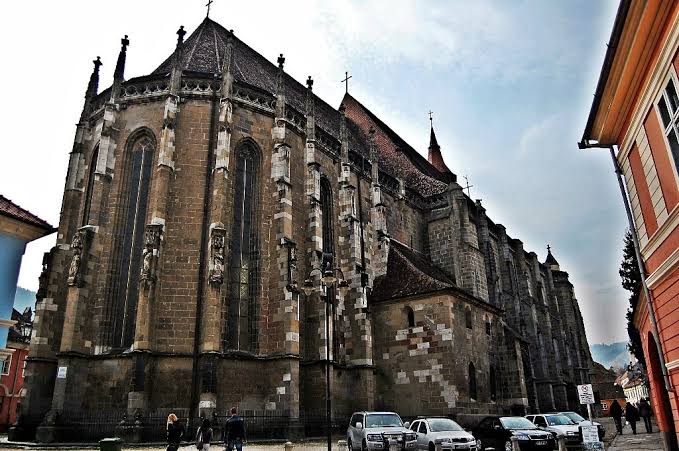
A Saxon town with mountains at the end of every street
Brașov was founded by German-speaking Saxon settlers as Kronstadt (Crown City) in the 13th century and grew rich as a trading town on the routes between Central Europe and the Ottoman lands. Its medieval walls, bastions and Gothic church survive, and the old town is pressed right against the slopes of Tâmpa mountain, so forest trails start just a few minutes' walk from the main square.
Brașov is also Romania's most practical base. Bran Castle and the Râșnov fortress are 30-60 minutes away, Peleș Castle in Sinaia is an hour by train, the ski slopes of Poiana Brașov are 20 minutes up the mountain, and Sighișoara is a two-and-a-half-hour train ride. It is well set up for visitors, without feeling overrun, and the cafés around the square fill with locals as much as tourists.
The honest complications
Brașov's old town is small, and in July and August and on weekends it fills with day-trippers from Bucharest. Getting here involves either a Bucharest flight and a three-hour train or road journey, or the new Brașov-Ghimbav airport, which is growing fast (Wizz Air opens a base there in December 2026). The weather changes fast in the mountains, and winters are cold.
The restaurants directly on Council Square are mostly average and overpriced. The setting is lovely for a coffee or a beer, but eat in the streets around it, or in the Schei district, for better Romanian food at local prices.
Five areas that matter
Brașov's historic centre is compact, and almost everything a visitor needs is inside or just outside the old walls. Staying in the old town is worth the small premium.
Old Town (Centrul Istoric)
The medieval core around Piața Sfatului (Council Square) and Strada Republicii, the pedestrian main street. Pastel houses, the Black Church, cafés and most of the hotels and restaurants are here.
Schei
Outside the old walls to the southwest, this was where Romanians were made to live in Saxon times. It has the First Romanian School, St Nicholas Church and steep, quiet residential streets.
Along the walls
The promenades beneath Tâmpa, along the Weavers' Bastion and the White and Black Towers, offer the best views back over the red roofs.
Bartolomeu and the station area
The modern city around the railway station has cheaper hotels and big supermarkets but little atmosphere; a 10-minute bus ride to the old town.
Poiana Brașov
Romania's best-known ski resort sits on the plateau above the city, with hotels, slopes and hiking trails in summer. Best if skiing is the point of the trip.
From a historic palace hotel to Saxon-house hostels
Brașov offers excellent value, with boutique hotels in restored medieval houses for the price of a chain hotel elsewhere in Europe. Book ahead for summer weekends and the Christmas market season.
At the top, Aro Palace is the grand historic hotel on the edge of the old town, with a spa and mountain views, from around 600 lei a night. Casa Wagner (from 450 lei) occupies a 1477 building, once a German bank, on Council Square, and Hotel Bella Muzica (from 400 lei) has stone-vaulted rooms in a 400-year-old house.
For something modern, Kronwell Brașov Hotel (from 450 lei) is a sleek design hotel with a pool and spa, opposite the railway station rather than in the old town. On a budget, Kismet Dao Hostel (dorms from 70 lei) is a friendly, long-running hostel in the newer part of town, about a 10-15 minute walk from the old town, with private rooms too.
Transylvanian cooking, papanași and mountain cheese
Brașov's food is hearty Transylvanian fare with Saxon and Hungarian influences: soups in bread bowls, sarmale, grilled meats, polenta with sheep's cheese and the excellent fried-cheese doughnuts called papanași. Prices are low by Western standards, even in the old town.
Traditional Romanian at Sergiana
Sergiana, a huge cellar restaurant just off Strada Republicii, is the classic place for Transylvanian food: ciorbă in bread bowls, sarmale, roast pork and polenta, with generous portions.
Home-style cooking at La Ceaun
La Ceaun (the cauldron) serves straightforward Romanian dishes at fair prices, with a daily soup and stew menu popular with locals.
Papanași
The fried cheese doughnuts with sour cream and jam are the dessert to try in Brașov; almost every restaurant makes them, and portions are big enough to share.
Cafés on Strada Republicii
Brașov has a strong café culture, with specialty coffee shops and cake houses along the pedestrian main street and in the side alleys.
Mountain cheese and market food
Look for brânză de burduf, sheep's cheese aged in fir bark, and mici from the grill at local markets and at Bran's stalls.
Old town, mountain and walls
Brașov's sights are small and close together, so a day covers the old town comfortably. The rest of your time is best spent in the mountains above and the castles around it.
Council Square and the Black Church
Piața Sfatului (Council Square), with the old Town Hall in its centre, is the heart of the city. Next to it, the Black Church (around 25-30 lei), the largest Gothic church between Vienna and Istanbul, got its name from the soot left by the Great Fire of 1689. Inside are a remarkable collection of Ottoman carpets donated by Saxon merchants and a 4,000-pipe organ played in summer concerts.
Tâmpa Mountain
Take the cable car, reopened in 2025 after a major modernization (30 lei one way, 45 lei return) or hike 45-60 minutes through the forest to the top of Tâmpa for the view over the city and the BRAȘOV sign. The trail is steep but well marked; bears occasionally roam the area, so stick to the paths and avoid going at dusk.
Walls, towers and Rope Street
Walk the promenade below the old walls to the Weavers' Bastion and climb up to the White and Black Towers for views over the rooftops. Strada Sforii (Rope Street), barely more than a metre wide, is one of the narrowest streets in Europe. The Catherine's Gate is the only original medieval city gate to survive.
Schei and the First Romanian School
In the Schei district, the First Romanian School museum displays the first books printed in Romanian, next to the Orthodox St Nicholas Church. A walking tour brings the Saxon and Romanian history of the city to life.
One, two or three days in and around Brașov
One day covers Brașov itself; two or three days let you visit the castles and hills around it. These plans use buses, trains or a short taxi ride.
- Morning
Council Square and the Black Church. Arrive at opening, then walk to Rope Street and the Catherine's Gate.
- Midday
Lunch in the old town. Ciorbă in a bread bowl and papanași at a cellar restaurant.
- Afternoon
Tâmpa. Cable car or hike up for the view; walk down past the bastions.
- Evening
The Black and White Towers. Sunset over the roofs, then dinner and a drink on Strada Republicii.
- Day 1
The one-day route: old town, Black Church, Tâmpa and the towers.
- Day 2 morning
Bran Castle. Early bus to Bran (about an hour) to beat the crowds.
- Day 2 afternoon
Râșnov Citadel. The hilltop fortress on the way back, with views of the Carpathians.
- Day 2 evening
Schei and dinner. A wander through the Schei district before dinner.
- Days 1-2
The two-day route above, adding the Libearty Bear Sanctuary near Zărnești.
- Day 3, option A
Sinaia and Peleș Castle. One hour by train; Romania's most beautiful royal castle (closed Mondays and Tuesdays).
- Day 3, option B
Sighișoara and Viscri. A long day trip by car or tour to the medieval citadel and a Saxon fortified church.
Small, walkable and well connected
Most international travellers fly to Bucharest Henri Coandă (OTP) and take a train (about 2.5-4 hours, 40-100 lei) or a shuttle bus to Brașov. The new Brașov-Ghimbav International Airport (GHV), about 15 km from the centre, has a growing list of flights from European cities; a taxi or Bolt to town takes around 20 minutes.
The old town is entirely walkable. Local RATBV buses connect the railway station with the centre and run to Poiana Brașov (a few lei per ticket, bought from kiosks or by contactless card on board). Buses to Bran and Râșnov leave from Autogara 2, about 2 km from the centre. For Peleș Castle, take a train to Sinaia; for Sighișoara, trains take around 2.5-3 hours. Taxis are cheap if you use Bolt or Uber.
Best time to visit and the winter season
May, June, September and October are ideal, with mild weather for hiking and fewer crowds. July and August are busy with Romanian and foreign visitors and are the time for the Transfăgărășan road. December brings a Christmas market on Council Square, and from December to March Poiana Brașov becomes a ski resort.
Practical prep: an eSIM before landing saves the airport queue, and EU roaming covers Romania. Peleș Castle is closed on Mondays and Tuesdays and Bran Castle is busiest on weekends, so plan day trips accordingly.
Transylvania's best value base
Brașov is one of the cheapest attractive cities in the EU. Even in the old town, a full meal with wine costs well under what you would pay for a sandwich in Western Europe, and day trips by bus or train cost only a few euros.
- Hostel dorm 70-120 lei
- Daily menus and street food 30-50 lei
- Buses to Bran and Râșnov
- Free trails, walls and squares
- Boutique hotel in the old town
- Restaurant meals with wine 80-150 lei
- Bran, Peleș and Black Church entries
- Tâmpa cable car and a guided tour
- Aro Palace or a top boutique hotel
- Wine tastings and fine dining
- Private driver for castle day trips
- Bear-watching tours
A safe, relaxed city, with bears on the hills
Brașov shares Romania's Level 1 "Exercise Normal Precautions" rating and is one of the safest cities in the country, with very little crime against visitors. Normal precautions against pickpocketing apply on crowded summer evenings and on buses.
The unusual risk in Brașov is wildlife: brown bears live in the forests around the city and occasionally come into the outskirts, and even the Tâmpa trails, in search of food. Stick to marked trails, avoid hiking at dusk, never feed bears, make noise when walking in the forest and follow any local warnings. Use Bolt or Uber rather than hailing taxis at the station to avoid overcharging. Emergency number is the EU-standard 112, which also connects to Salvamont mountain rescue.
Castles, citadels and the bears
Brașov sits at the centre of some of Romania's best sights, most of them within an hour by bus, train or car. Organized tours can combine several in one day.
Bran Castle
Marketed as Dracula's Castle, Bran is a small, picturesque fortress on a rock, with rooms furnished by Queen Marie of Romania, who lived here in the 1920s. Go early or late to avoid the queues. A castles day tour combines Bran with Peleș and Râșnov.
Râșnov Citadel
A 13th-century peasant fortress on a hilltop, built by Teutonic Knights and local villagers as a refuge from invaders, with superb views over the Bârsa plain.
Peleș Castle, Sinaia
A neo-Renaissance royal palace built for King Carol I in the 1870s-1910s, with lavish interiors and electric lighting before most of Europe. Closed Mondays and Tuesdays; the smaller Pelișor Castle is next door.
Sighișoara
A UNESCO-listed, still-inhabited medieval citadel with a clock tower, covered staircase and the house where Vlad the Impaler was born. Combine with the fortified church at Viscri if driving.
Libearty Bear Sanctuary, Zărnești
Around a hundred rescued brown bears roaming forest enclosures, a responsible way to see bears up close. Guided visits only, at set times; book ahead.
Brașov FAQ
Is Brașov safe for tourists?
Yes, very. Crime against visitors is rare. The main precautions are watching your belongings on busy evenings and following bear safety advice on the forest trails around the city.
How many days do I need in Brașov?
One day covers the old town, but two to three days lets you add Bran, Râșnov, Peleș Castle or Sighișoara as day trips.
How much does Brașov cost per day?
Budget travellers manage on 250-350 lei (about €50-70) a day; mid-range runs 500-800 lei. It is very good value for a European city.
When is the best time to visit Brașov?
May-June and September-October for mild weather and fewer crowds. December has a Christmas market, and winter brings skiing at Poiana Brașov.
How do I get to Brașov from Bucharest?
By train (about 2.5-4 hours, 40-100 lei) from Gara de Nord or the airport, or by shuttle bus or car. Brașov's own airport, GHV, also has some European flights.
How do I get from Brașov to Bran Castle?
Buses leave from Autogara 2 roughly hourly (about 14 a day), take about 50-60 minutes and cost around 15 lei. Taxis, Bolt and tours are also available.
Is Bran Castle worth visiting?
Yes for an hour or two, especially early in the day, but know that its Dracula link is mostly marketing. Peleș Castle is more impressive inside.
Are there bears in Brașov?
Yes. Brown bears live in the surrounding forests and sometimes enter the outskirts. Stay on marked trails, avoid dusk hikes and never feed them.
What is the best area to stay in Brașov?
The old town, near Council Square, for walkability and atmosphere. Poiana Brașov is best for a ski trip.
Can I visit Sighișoara from Brașov?
Yes, as a long day trip by train (about 2.5-3 hours each way) or by car, ideally stopping at Viscri's fortified church on the way.
What Stays With You
Brașov is the kind of place that turns a plan to pass through into a longer stay. The square glows in the evening as the mountain darkens behind it, the Black Church's tower stands against the forest, and somewhere on the slopes above a bear is probably heading for someone's bins.
Climb Tâmpa on your last afternoon and look down on the red roofs, the walls and the plain stretching towards Bran, and you will understand why the Saxons called it the Crown City.