
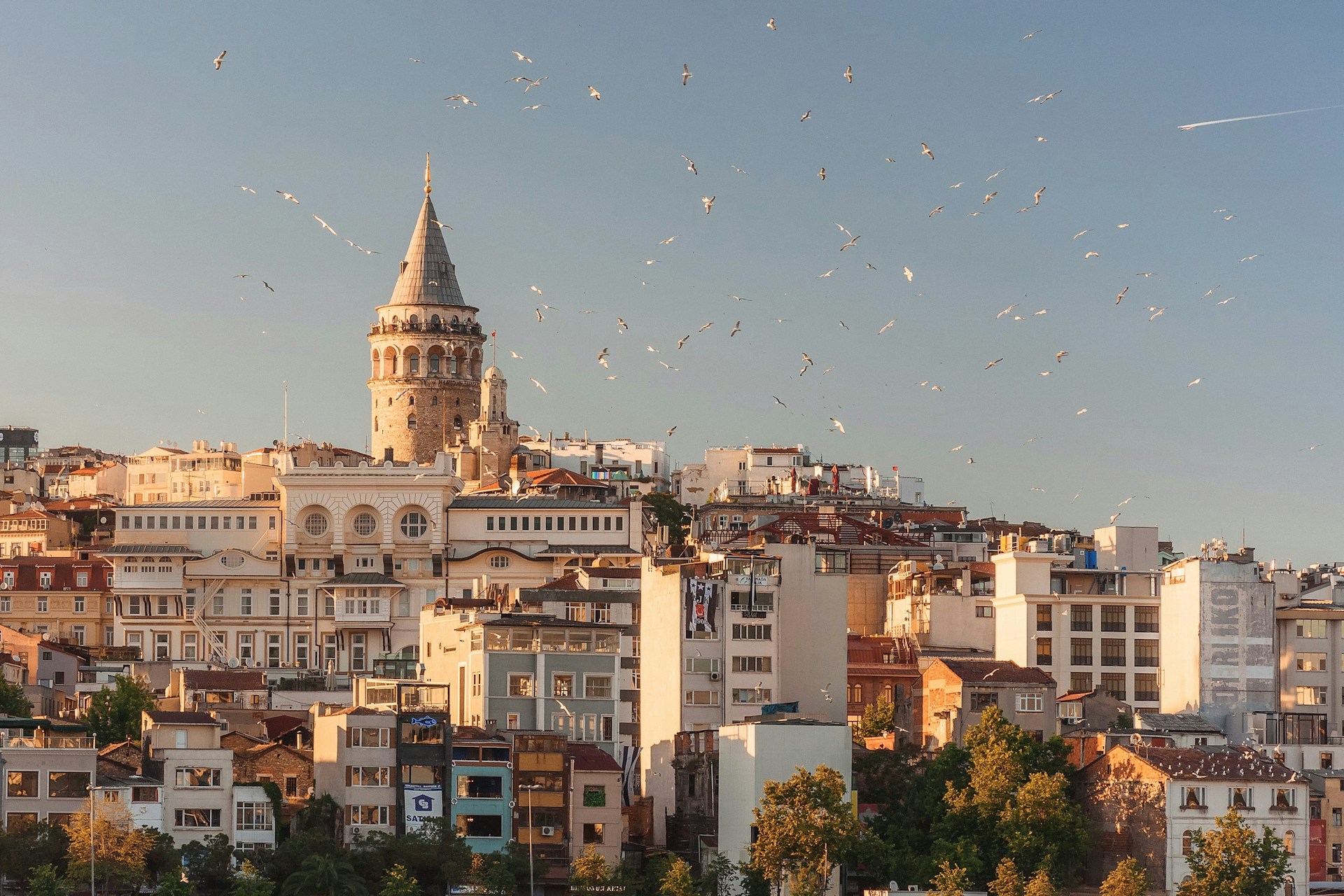
The only city on two continents plays that fact for everything it's worth
Istanbul sits on the Bosphorus, the strait that separates Europe from Asia, and roughly a third of its more than 15 million residents live on the Asian side and commute across by ferry every day, a detail so normalized to Istanbullus that visitors are usually the only ones taking photos of it. The historic peninsula holds the sights everyone comes for, Hagia Sophia, the Blue Mosque, Topkapı Palace, but the city that surrounds them is enormous, modern and, since the lira's sustained slide against the dollar and euro, one of the best-value major cities left in either Europe or Asia.
What surprises first-time visitors most is how lived-in it all feels. Sultanahmet performs for tourists to some degree, carpet touts and inflated-menu restaurants included, but walk fifteen minutes in almost any direction and you're in a neighborhood that belongs entirely to the people who live there: a çay garden of retired men playing backgammon, a market selling nothing aimed at a visitor, a mosque mid-call-to-prayer with nobody outside stopping to film it.
The honest complications
Sultanahmet's density of major sights means it's also the densest concentration of tourist-targeted hassle in the country: the carpet shop invitation and inflated taxi fares covered fully in the Safety chapter both originate here more than anywhere else in Turkey. The city is genuinely huge and traffic is often gridlocked, so cross-town trips that look short on a map can eat an hour; plan around the ferries and metro rather than taxis wherever the route allows it. And inflation has made prices at museums and tours less stable than in most cities this site covers, quoted in dollars or euros by operators specifically because the lira itself moves too fast to price against reliably, so treat every figure in this guide as a baseline rather than a quote.
Four neighbourhoods, two continents, one very long tram line
Istanbul's neighbourhoods split first by continent, European or Asian side, and then by character. Where you base yourself decides how much you're walking to Hagia Sophia versus how much you're crossing the water to get anywhere.
Sultanahmet
The old imperial peninsula holds Hagia Sophia, the Blue Mosque, Topkapı Palace, the Basilica Cistern and the Grand Bazaar within a walkable cluster, which is exactly why it's also the most tourist-saturated few streets in the country. Staying here means rolling out of bed into the sights, at the cost of restaurant menus pitched at visitors and the carpet-shop hassle covered in the Safety chapter. Still the right call for a first visit.
Beyoğlu & Galata
North across the Golden Horn, Beyoğlu is Istanbul's 19th and 20th-century European face: the pedestrian İstiklal Street, the historic Pera district with the Pera Palace Hotel, and a nightlife and gallery scene that runs late. Galata, its southern edge around the medieval Galata Tower, has become the city's design-hotel and specialty-coffee neighborhood.
Karaköy
Below Galata on the water, Karaköy was a working port district that's become one of Istanbul's most interesting neighborhoods to eat and stay in, restored 19th-century bank buildings turned boutique hotels, a strong café and restaurant scene, and the ferry terminals and Galata Bridge connecting it to everywhere else within minutes.
Kadıköy
A twenty-minute ferry from the European side, Kadıköy is where a lot of Istanbullus actually eat, drink and live: a produce market, a concentration of independent restaurants including some of the city's best, and the bohemian Moda district along the water. Fewer tourists, better prices, and the ferry ride there is itself one of the best free things to do in the city.
From a converted Ottoman bank vault to an award-winning hostel
Istanbul's hotel scene runs from restored Ottoman-era buildings at the top end to a hostel scene that regularly wins international awards at the bottom. These five picks cover every budget and each earns its place.
At the top, Four Seasons Hotel Istanbul at Sultanahmet occupies a converted neoclassical prison building steps from the Blue Mosque, with a walled garden courtyard that makes it easy to forget you're in the middle of the old city, from roughly $600 a night and the single best-located luxury stay in Sultanahmet. Just across the Golden Horn, Pera Palace Hotel has been Istanbul's grand historic address since 1892, built for Orient Express passengers, with Agatha Christie's favored Room 411 preserved as a small museum piece and rates commonly running $200-400 depending on season.
In Sultanahmet's boutique bracket, Hotel Ibrahim Pasha is a small design hotel two minutes from the Museum of Turkish and Islamic Arts, with a rooftop terrace looking straight at the Blue Mosque and rooms from around $120 to $220 depending on category. Across the water in Karaköy, Vault Karaköy, The House Hotel occupies a restored 1863 Ottoman bank building on Bankalar Caddesi, some rooms built directly into the old bank vaults, with a rooftop bar looking back across the Golden Horn to the old city.
At the budget end, Cheers Hostel in Sultanahmet has repeatedly been named Turkey's best hostel and Istanbul's most popular by Hostelworld, five minutes on foot from the Blue Mosque, Hagia Sophia and Topkapı, with a sociable rooftop bar and dorm beds that undercut a mid-range hotel room many times over.
Kebabs are the headline; the meze and the market food are the real story
Istanbul's food scene ranges from Ottoman palace cuisine to a Kadıköy market stall selling the best midye dolma (stuffed mussels) you'll eat all trip. The pattern that holds everywhere: the busiest place with the shortest English menu is usually the best one.
Balıkçı Sabahattin
A Sultanahmet institution serving meze and fresh fish in a garden courtyard within sight of Hagia Sophia. Not cheap by local standards, but the setting and the seafood both deliver, and it's proof that Sultanahmet does have restaurants worth the walk from your hotel rather than just tourist traps.
Karaköy Lokantası
An industrial-chic dining room serving meze, fresh seafood and confident modern takes on classic Turkish dishes, popular with locals and visitors alike and one of the anchor restaurants of Karaköy's rise as a food neighborhood.
Çiya Sofrası
A daily-changing menu of regional Anatolian dishes, many close to forgotten elsewhere in Turkey, served cafeteria-style: point at what looks good. Worth the ferry to Kadıköy on its own, and one of the most highly regarded restaurants in the city among Istanbullus rather than guidebooks.
Street food & simit
Simit, the sesame-crusted bread ring sold from carts on every corner, is the city's default breakfast. A good döner from a busy stall, not a tourist-strip storefront, remains one of the best cheap meals in Istanbul, and roasted chestnuts and corn from street carts are a fixture in cooler months.
The headline sights, and the ferry rides that beat half of them
Istanbul rewards both the checklist and the wander. A handful of sights genuinely need advance planning around dress codes, timed entry and queues; the rest of the city rewards simply getting on a ferry and seeing where it takes you.
Sultanahmet's headline sights
Hagia Sophia, Byzantine cathedral turned Ottoman mosque turned museum turned mosque again, costs around $25-30 for the upper gallery where the Byzantine mosaics are, and requires covered shoulders and knees plus a headscarf for women; go at opening to beat both the crowds and the heat. The Blue Mosque across the square is a still-active mosque and free to enter outside prayer times, with the same dress code. Topkapı Palace, the Ottoman sultans' residence for four centuries, and the underground Basilica Cistern, a sixth-century Byzantine water reservoir turned atmospheric walk-through attraction, both charge significantly more than Hagia Sophia; prices at both have risen quickly with inflation, so confirm the current fee before you go rather than relying on any number printed here.
The bazaars
The Grand Bazaar, one of the world's oldest and largest covered markets with thousands of shops under vaulted stone ceilings, is free to enter and worth an unhurried wander even if you buy nothing; bargaining is expected and part of the experience. The Spice Bazaar near the Galata Bridge, smaller and food-focused, runs roughly 9am to 7pm and is the better stop for edible souvenirs, Turkish delight, spices and tea.
The Bosphorus
A Bosphorus cruise combined with a Spice Bazaar visit (roughly $50-60, a few hours) is the standard way to see the waterfront palaces, fortresses and Bosphorus bridges from the water, but the cheap version works nearly as well: a public ferry from Eminönü up toward the Bosphorus villages and back costs a few lira with an Istanbulkart and delivers most of the same view.
Galata Tower & İstiklal Street
The medieval Galata Tower, visible from most of the old city, has an observation deck with 360-degree views across both continents; go near sunset. From its base, İstiklal Street runs the length of Beyoğlu past the historic Tünel funicular, Istanbul's second-oldest underground railway, and into the bar and gallery streets around Nevizade.
A hammam
A Turkish bath is a genuine local institution as well as a memorable tourist experience: a scrub-and-steam ritual in a centuries-old domed bathhouse. Several historic hammams operate in and around Sultanahmet with both tourist-oriented and more traditional sessions available; ask your hotel for a current recommendation, as quality and pricing vary considerably between them.
One, two or four days, planned around the sights and the ferries
Four full days covers Istanbul properly, including the Asian side. Even one well-planned day delivers Sultanahmet's essentials, if at a rushed pace.
- Morning
Hagia Sophia at opening, then the Blue Mosque and the Basilica Cistern, all within a few minutes' walk of each other in Sultanahmet.
- Midday
Topkapı Palace, then lunch at Balıkçı Sabahattin or a Sultanahmet lokanta.
- Afternoon
The Grand Bazaar and Spice Bazaar, walking down toward the Galata Bridge.
- Sunset
Galata Tower, then dinner in Karaköy or Galata.
- Day 1
The one-day route: Hagia Sophia, Blue Mosque, Basilica Cistern, Topkapı, the bazaars, Galata Tower at sunset.
- Day 2 morning
Bosphorus cruise and Spice Bazaar tour, or the public ferry route for less money and a similar view.
- Day 2 afternoon
İstiklal Street and Beyoğlu, ending at a hammam or a rooftop bar in Karaköy.
- Days 1-2
The two-day route above, at a gentler pace with time for a hammam.
- Day 3
Kadıköy and the Asian side. Ferry across mid-morning, the produce market, lunch at Çiya Sofrası, and an afternoon in Moda before the ferry back for sunset.
- Day 4
Princes' Islands or flexible day. A ferry out to Büyükada for a car-free island afternoon, or extra time for whatever the first three days didn't fit.
Huge, split by water, and easier to cross by ferry than by taxi
Istanbul Airport (IST) is the main gateway; the M11 metro line runs directly from the airport to Gayrettepe on the European side in about 35 minutes for roughly 35 lira with an Istanbulkart, the cheapest and often fastest option once you're through immigration. The Havaist shuttle bus runs 24/7 to major hubs including Sultanahmet and Taksim but costs considerably more and takes longer in traffic; taxis are the priciest option and the one most associated with the meter and route scams covered in the Safety chapter, so use the BiTaksi app if you take one.
Get an Istanbulkart as soon as you arrive: about 165 lira for the card itself from machines at any metro or airport station, plus separate credit loaded on top. It covers the metro, trams, buses, ferries and both funiculars, and pays for itself within a handful of rides. The historic tram along Sultanahmet's main street and the ferries across the Bosphorus and Golden Horn are both genuinely useful transport as much as sightseeing in their own right. Uber and BiTaksi work throughout the city and are the more reliable option for late-night or cross-town trips traffic makes impractical any other way.
Best time to visit and what the seasons feel like
Istanbul has a temperate climate with real seasons. April-June and September-October are the sweet spots: warm days around 18-27°C, cooler nights, manageable humidity. July and August push past 29°C with high humidity and the year's biggest crowds. Winter, December through February, is cold, grey and rainy (9-11°C) but genuinely atmospheric, with the lowest prices and thinnest crowds of the year at the major sights.
One of the better-value major cities left in Europe or Asia
The Turkish lira's sustained weakness against the dollar and euro has made Istanbul noticeably cheaper for foreign visitors than it was a few years ago, even as locals feel the same inflation as a real cost-of-living problem. Prices below are in US dollars since the lira moves too fast to price reliably against foreign currency for long.
- Hostel dorm $15-25
- Lokantas, street food and the market $15-25
- Istanbulkart transit $3-6
- Free mosques plus one paid sight
- Boutique hotel $100-200
- Restaurant meals $30-50
- Istanbulkart plus the occasional taxi
- Bosphorus cruise, a hammam, a museum
- Four Seasons or Pera Palace $250+
- Fine dining across the city
- Private guides and drivers
- Suite hammam experiences
Safe by any reasonable standard, with three scams worth knowing
Istanbul sees tens of millions of visitors a year without incident beyond ordinary petty crime, and violent crime against tourists is rare. The three things that actually catch visitors, all covered in more depth in the Turkey country guide's Safety chapter, are worth repeating here because Sultanahmet is where nearly all of them concentrate: the carpet-shop tea invitation, taxi meter and route tricks (use BiTaksi or the metro instead), and the shoe-shine drop-and-overcharge routine. None of these are dangerous, just designed to separate a distracted first-time visitor from money they didn't mean to spend.
Pickpocketing is the more ordinary risk, concentrated in the Grand Bazaar, crowded trams and the M2 metro at rush hour; keep bags zipped and in front of you in dense crowds. Istanbul is generally good for solo female travellers in the main tourist areas, though street attention and occasional catcalling are more common than in Western Europe; dress modestly around mosques, and use BiTaksi or Uber rather than hailing a taxi on the street after dark. Emergency number is the nationwide 112 from any phone, and Istanbul's Tourist Police, with English-speaking officers in Sultanahmet, Sirkeci and Taksim, are reachable at +90 212 527 4503 for non-emergency help.
Islands without cars, an old capital, and Cappadocia if you have the time
Istanbul's position makes it a strong base for a few different day trips, from a short ferry ride to a short flight.
Princes' Islands (Adalar)
Nine islands in the Sea of Marmara, reached by ferry from Kabataş or Kadıköy, where motor vehicles have been banned for over a century: transport is on foot, by bicycle, or by horse-drawn carriage on the two largest, Büyükada and Heybeliada. A genuinely different pace from the city, with Ottoman-era wooden mansions, pine forests and simple seafood restaurants near the ferry docks.
Bursa
The Ottoman Empire's first capital before Constantinople fell, with the Grand Mosque and the silk-trading Koza Han caravanserai still standing in its old center. A fast ferry across the Sea of Marmara followed by a short bus ride makes it a workable, if long, day trip from Istanbul.
Cappadocia
Technically reachable as a very long single day by flight, Cappadocia's balloon flights depart at dawn, which makes an overnight trip (covered in the main Turkey country guide) far more realistic than a day trip. Worth knowing about if your Istanbul stay has room to extend rather than squeeze into one exhausting day.
Istanbul FAQ
Is Istanbul safe for tourists?
Yes. Violent crime against tourists is rare; the real risks are pickpocketing in crowded spots like the Grand Bazaar and trams, and a small set of well-known scams around Sultanahmet, not violent crime. Standard city awareness covers nearly all of it.
How many days do I need in Istanbul?
Four full days covers the city well: one for Sultanahmet's core sights, one for Beyoğlu and Galata, one for the Bosphorus and the Asian side, and one flexible day for a hammam, the bazaars, or a Princes' Islands trip. Three days works at a faster pace.
How much does Istanbul cost per day?
Budget travellers manage on $50-70 a day with hostels and lokanta meals; mid-range runs $100-160. The weak Turkish lira has made Istanbul one of the better-value major cities in the region.
When is the best time to visit Istanbul?
April-June and September-October: warm days, cool nights, manageable crowds. July and August are hot and busy; winter is cold and grey but atmospheric and cheap.
How do I get from Istanbul Airport to the centre?
The M11 metro runs from the airport to Gayrettepe in about 35 minutes for around 35 lira with an Istanbulkart. The Havaist shuttle bus reaches Sultanahmet and Taksim directly but costs considerably more; taxis and ride apps are the priciest option and prone to overcharging.
What is the best area to stay in Istanbul?
Sultanahmet for first-timers who want the sights outside their door. Beyoğlu or Karaköy for nightlife, design hotels and a more contemporary base. Kadıköy on the Asian side for local food and a quieter, less touristy pace.
Do I need to speak Turkish in Istanbul?
No. English is widely spoken in hotels, restaurants and tourist areas, though less so once you're away from the main sights. A few words, teşekkürler (thank you), lütfen (please), are genuinely appreciated.
What is the Istanbulkart and do I need one?
Istanbul's reloadable transit card: about 165 lira for the card itself, then load credit separately. It works on the metro, trams, buses, ferries and funiculars, and is essential if you're using public transport more than once or twice.
Is Istanbul walkable?
Sultanahmet and Beyoğlu are walkable with some hills and cobbled streets. The city overall is huge and split by water, so ferries, the tram and the metro handle the longer hops between neighbourhoods and the Asian side.
What Stays With You
Istanbul does not need to perform for visitors, and it barely tries to. The city gets on with being what it's been for sixteen centuries under one name or another, ferries crossing constantly, tea glasses refilled without being asked, a mosque's call to prayer overlapping the ordinary noise of a Tuesday, and lets you walk through the middle of all of it. The first sight of Hagia Sophia's dome, the ferry ride to Kadıköy nobody photographs but everybody should, the $2 glass of tea that outlasted the $40 dinner in memory: none of it was staged, which is why it sticks.
Take the sunset ferry back across the Bosphorus on your last evening, watch the two continents you've been walking between all week light up on either side, and understand why Istanbullus never describe their city as belonging to just one of them.