
Tajikistan's calm, green capital
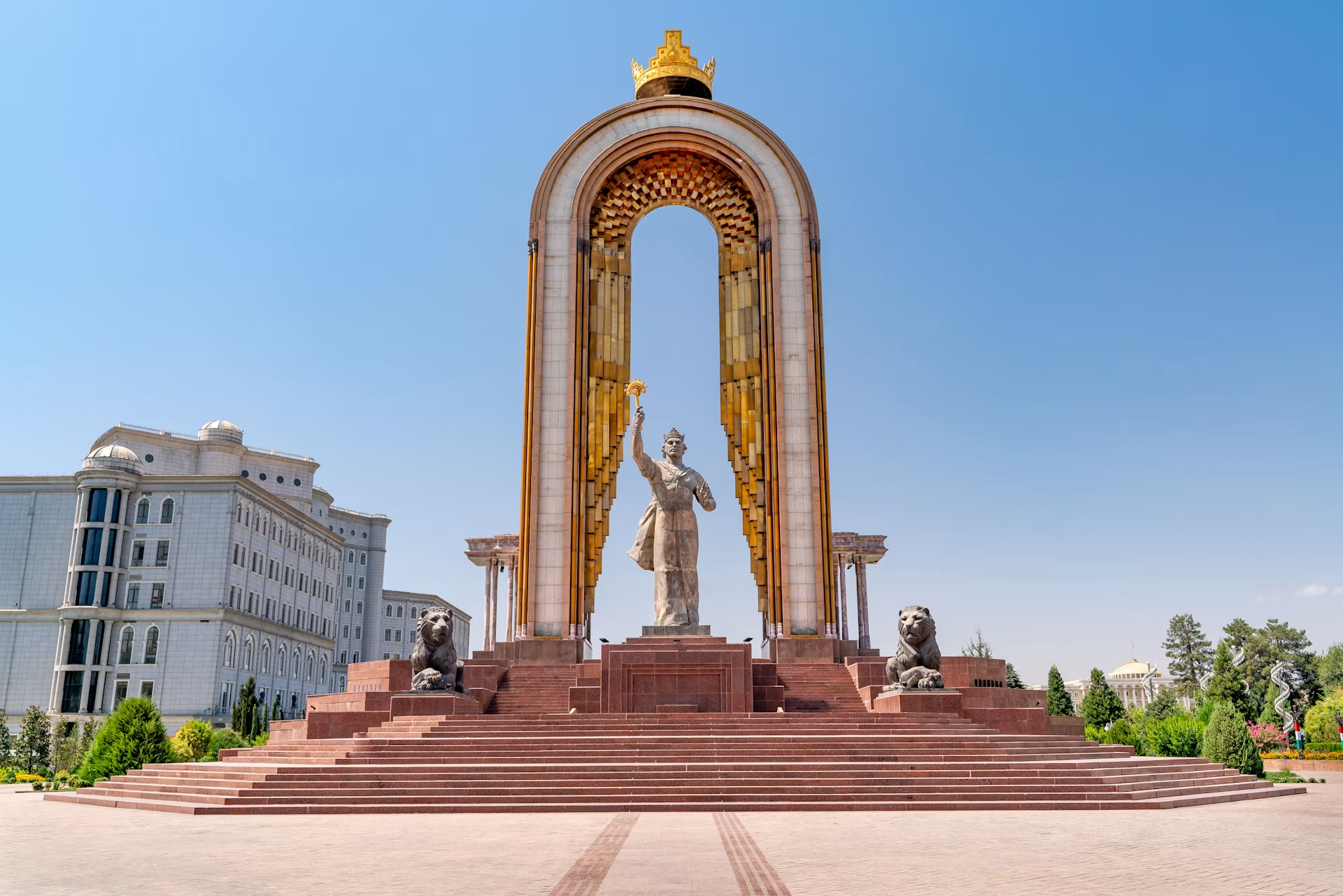
Dushanbe sits in a broad valley at about 800 meters, ringed by foothills that turn snow-capped by late autumn. It is a Soviet-planned city at its core, wide boulevards, generous parks, low-rise apartment blocks, remade since independence with a run of oversized national monuments: a gilded statue of the Samanid dynasty's founder, a flagpole that briefly held the world height record, and a museum built specifically to house a single, extraordinary Buddhist statue. None of it is subtle, and that's part of the point: this is a young country using architecture to tell its own history on its own terms.
What changed in the last few years is that the world started passing through on the way to somewhere else. Dushanbe is now firmly established as the standard starting point for the Pamir Highway, and the hostels and travel agencies that have grown up around that traffic make it noticeably easier to plan a Central Asia trip here than it would have been a decade ago. But go a few streets off Rudaki Avenue and it is still a quiet, unhurried capital that most of its residents would tell you nothing much happens in, meant, mostly, as a compliment.
The honest complications
English is limited outside hotels and the handful of restaurants that cater to travelers; Russian is the more useful fallback. Summer heat is real, regularly above 35°C in July and August, and the city's charm leans heavily on shaded parks and evening hours rather than daytime sightseeing in that window. Dushanbe is also, frankly, a stopover for most visitors rather than a destination in its own right, so don't arrive expecting a city built for tourism the way Samarkand or Istanbul are; it rewards a curious two days more than it does a checklist.
Four districts, one that matters most for visitors
Dushanbe is divided into four administrative districts. For a short stay, where you base yourself comes down almost entirely to distance from Rudaki Avenue, the central spine that most sights sit along or near.
Ismoili Somoni District
The heart of the city and the district most visitors never leave: the Ismoili Somoni monument, the National Museum of Tajikistan, the flagpole park, government buildings and the best concentration of hotels and restaurants all sit here, most of it walkable along or just off Rudaki Avenue. This is the district to base yourself in for a first visit.
Shohmansur District
East of the center, Shohmansur holds Dushanbe's market culture, including Mehrgon Market, the covered bazaar that replaced the historic Shohmansur open-air market. Older, less manicured streets than Ismoili Somoni, and the district where the city's day-to-day commerce actually happens.
Sino District
Home to the train station and Dushanbe International Airport, Sino is mainly residential and useful chiefly for its proximity to transport links rather than as a base for sightseeing.
Firdavsi District
A mixed residential and light-industrial district west of the center, rarely visited by travelers unless connecting onward toward Hisor.
From international chains to Pamir-trip hostels
Dushanbe's accommodation scene splits cleanly into two: a small set of genuinely good international hotels, and a growing hostel scene built specifically around helping independent travelers plan the Pamir Highway. Both ends are reliable; the middle is thinner than in most capitals.
At the top, Hyatt Regency Dushanbe sits on the grounds of City Park next to Komsomol Lake, with 209 rooms and the most consistent international-standard service in the city, from around $105 a night. Dushanbe Serena Hotel matches it for comfort with an outdoor pool, spa and Turkish bath, popular with business and diplomatic travelers, while Hilton Dushanbe rounds out the top tier with an indoor pool and full spa, both generally in a similar $105-140 range.
For independent travelers, especially anyone planning the Pamir Highway, the hostel scene is the more useful starting point. Green House Hostel and Topchan Hostel both specialize in helping guests arrange drivers, GBAO permits and Pamir logistics alongside a bed, dorms from around $4-10 a night and private rooms up to about $20; Hello Dushanbe Hostel is a well-reviewed alternative closer to the center with a garden and small pool.
Qurutob, green tea and one genuinely spectacular teahouse
Dushanbe's food culture runs on teahouses, chaikhana, more than restaurants in the Western sense, and the national dish, qurutob, is built to be shared and eaten by hand. Prices are low even at the nicer end, and the standout experiences here are as much about the room as the plate.
Qurutob
Torn fatir flatbread mixed tableside with a tangy qurut yogurt sauce, onions, tomatoes and herbs, eaten by hand from a shared plate. Toqi Teahouse does a well-regarded version alongside its kebabs, in a relaxed, mixed traditional-and-modern dining room.
The grand chaikhana experience
Kohi Navruz, a purpose-built cultural and entertainment complex opened in 2014, is described locally as the most luxurious teahouse in Central Asia, with hand-carved wood interiors, Florentine stone mosaics and painted ceilings that make it feel more like a royal reception hall than a restaurant. Chaykhona Rokhat, built in 1958 and one of the city's genuine classics, is the older, more atmospheric alternative: tall columns, an ornate ceiling, and a courtyard that fills with live music and locals drinking Sim-Sim, the local beer, in summer.
Central Asian and regional cuisine
Bukhoro Restaurant serves an upscale, oriental-interior take on Central Asian and Tajik dishes with live music, while Merve Restaurant blends Tajik and Turkish traditions, its osh, tender meat with finely chopped vegetables, a standout alongside fresh-baked flatbreads.
A capital that fits comfortably into two unhurried days
Dushanbe's sights cluster tightly enough that most of them can be walked between, with two clear anchor points: the monument park around the flagpole, and the National Museum of Antiquities across town.
The monument park
Start at the gilded Ismoili Somoni Monument, an Art Deco-style tribute to the founder of the Samanid dynasty that gives the national currency its name, standing near the Dushanbe Flagpole, which briefly held the record as the world's tallest free-standing flagpole at 165 meters. The National Museum of Tajikistan sits inside the same park, its bottom floor devoted to Tajik nature, the middle to archaeology, and the top to art both ancient and contemporary. A short walk away, the tree-lined paths, fountains and public art of Rudaki Park make an easy, shaded place to slow down between sights.
The National Museum of Antiquities
The single best reason to give Dushanbe a proper day: the National Museum of Antiquities holds a 13-meter, 5-tonne reclining Buddha in Nirvana, discovered in 1959 at the Ajina Tepa Buddhist monastery near Bokhtar and painstakingly restored from 43 recovered fragments. It is the largest such statue in Central Asia and one of the region's most important Buddhist artifacts, a striking reminder that this staunchly Muslim country was, 1,300 years ago, a center of Buddhist worship.
The Istiqlol Complex
Opened in 2022 for the 31st anniversary of independence, the Istiqlol Complex, between Rudaki Avenue and the Varzob River north of the center, centers on a 121-meter tower topped with a large crown, surrounded by a park and parade square. It's the newest addition to Dushanbe's habit of building monuments at a scale disproportionate to the city around them, and worth the walk or a short taxi ride for anyone who has already done the older monument park.
Markets and evenings
Mehrgon Market covers the practical, everyday version of the city; the grand chaikhana evenings at Kohi Navruz or Chaykhona Rokhat cover the other end. Between the two, an evening stroll down Rudaki Avenue past the fountains and government buildings, lit up after dark, is one of the simplest and most consistently recommended things to do in the city.
One, two or three days, planned street by street
Two full days covers Dushanbe properly; a third fits a day trip without feeling rushed.
- Morning
The monument park. Ismoili Somoni Monument, the flagpole, and the National Museum of Tajikistan, then a slow walk through Rudaki Park.
- Midday
Qurutob at Toqi Teahouse. The national dish, done properly, before the afternoon museum visit.
- Afternoon
National Museum of Antiquities. The reclining Buddha, unhurried; give it at least an hour.
- Evening
Dinner at Chaykhona Rokhat or Kohi Navruz. Rudaki Avenue lit up after dark on the walk back.
- Day 1
The one-day route: monument park, National Museum of Antiquities, dinner at a grand chaikhana.
- Day 2 morning
The Istiqlol Complex. The 121-meter independence tower and its surrounding park, then Mehrgon Market for fresh bread and dried fruit.
- Day 2 afternoon
Free time or planning. Confirm Pamir Highway logistics with your hostel or agency if that's next, or simply slow down in Rudaki Park.
- Day 2 evening
A second dinner circuit. Bukhoro or Merve for a different angle on Central Asian food.
- Days 1-2
The two-day route above, at a gentler pace.
- Day 3, option A
Hisor Fortress. The restored 17th-century summer residence of the Bukharan emirs, 30 to 40 minutes from the city.
- Day 3, option B
Varzob Gorge. Hiking trails, hot springs and roadside trout restaurants above the Varzob River, less than an hour north.
Compact enough to walk, taxis for everything else
Dushanbe International Airport (DYU) sits about 4km from the center; a licensed taxi into town costs roughly $5-8 and takes 10-15 minutes, though agreeing the fare before getting in matters here more than almost anywhere else in the city, since the airport rank is the single most common spot for tourist overcharging. Somon Air, the national carrier, runs the most routes through DYU, alongside Turkish Airlines, flydubai, Air Astana and others; Istanbul is the most common long-haul connection at around 4.5 hours nonstop.
Inside the city, taxis are cheap and the easiest way to get around beyond the walkable central core: $2-4 for most trips within Ismoili Somoni district, more to Sino or the airport. Agree the price before you get in every time, since meters are inconsistently used. Marshrutka minibuses cover fixed routes for pennies but require knowing the system; taxis are the more practical choice for a short visit.
Best time to visit and the summer heat
Dushanbe has a continental climate with genuinely hot summers. May-June and September-October bring warm, comfortable days in the high teens to high twenties Celsius, the best window for walking the city without retreating indoors by midday. July and August regularly pass 35°C and can exceed 40°C, when locals shift their own routines toward early mornings and evenings, a pattern worth copying. Winter is cold but mild by Central Asian standards, and the city is quiet and largely tourist-free.
One of Asia's more affordable capitals
Dushanbe is inexpensive even by regional standards. The main cost decision most travelers face isn't the city itself but whether to book a Dushanbe business hotel or lean into the hostel scene built around Pamir Highway logistics.
- Hostel dorm $4-10
- Market meals and teahouse dishes $3-6
- Taxis $2-4 per ride
- Free monument park plus one museum
- Private room or business hotel $50-80
- Restaurant meals with tea $10-20
- Taxis around town
- National Museum of Antiquities plus a day trip
- Hyatt Regency, Serena or Hilton $105-140+
- Kohi Navruz dinner and grand chaikhana evenings
- Private driver for day trips
- Full flexibility on Pamir Highway planning
The calmest part of the country, with three things to know
Dushanbe is the safest, most predictable part of Tajikistan to visit. Violent crime against tourists is uncommon, the central Ismoili Somoni district is comfortable to walk in the evening, and the city sits well outside the higher-advisory GBAO and Afghan border zones covered in the full Tajikistan guide.
The three things that actually catch visitors here: taxi overcharging, concentrated at the airport rank and around major hotels, so agree the fare before getting in every time; unofficial "Pamir Highway guides" who approach travelers near hostels offering inflated trip packages, best avoided by booking through an established hostel or agency instead; and currency exchange, where street changers occasionally shortchange or pass worn notes, so use a bank branch or authorized exchange office. Emergency numbers are 101 for fire, 102 for police and 103 for ambulance from any phone.
Two easy escapes, and the start of something bigger
Dushanbe's position at the edge of the mountains makes it a genuinely useful base for short trips, and the natural launch point for the much longer Pamir Highway if that's next on your route.
Hisor Fortress
The restored 17th-century summer residence of the emirs of Bukhara, on a hilltop west of the city, with a small museum and a working bazaar in the old town below it. A straightforward half-day trip and an easy contrast to Dushanbe's Soviet-era architecture.
Varzob Gorge
A river gorge running north into the mountains, with hiking trails, natural hot springs and a string of roadside restaurants serving fresh trout above the water. The place Dushanbe residents go to escape summer heat, and worth timing your visit the same way, an afternoon rather than a rushed morning.
The Pamir Highway
Dushanbe is the standard starting point for the M41 to Khorog, the Wakhan Valley and on to Osh in Kyrgyzstan. Hostels here, including Green House Hostel and Topchan Hostel, routinely help arrange drivers and confirm GBAO permits for onward travelers. See the full Tajikistan guide for the safety advisory and permit details before committing dates.
Dushanbe FAQ
Is Dushanbe safe for tourists?
Yes. Dushanbe is the calmest, most predictable part of Tajikistan to visit, with low rates of violent crime against tourists. Normal city awareness covers it: agree taxi fares up front, use licensed cabs at night, and keep valuables secure in crowded markets.
How many days do I need in Dushanbe?
Two full days covers the city itself: one for the monuments and National Museum of Antiquities, one for Rudaki Park and a market visit. A third day fits a Hisor Fortress or Varzob Gorge day trip and is worth adding.
How much does Dushanbe cost per day?
Budget travelers manage on $20-35 a day with a hostel bed and market meals; mid-range with a business hotel and restaurant dinners runs $70-110. Dushanbe is inexpensive by international standards even at the top end.
When is the best time to visit Dushanbe?
May-June and September-October: warm days, manageable heat, and the shoulder seasons either side of Dushanbe's genuinely hot July-August summer, when temperatures regularly pass 35°C.
Is Dushanbe a good base for the Pamir Highway?
Yes, it's the standard starting point. Drivers and 4x4 vehicles for the Pamir Highway are arranged here (or in Khorog going the other direction), and most hostels catering to independent travelers can help book the trip and confirm your GBAO permit is in order before you leave.
How do I get from Dushanbe airport to the centre?
Dushanbe International Airport (DYU) is about 4km from the centre. A licensed taxi costs roughly $5-8 and takes 10-15 minutes; agree the fare before getting in, since the airport rank is a common spot for overcharging.
What is the best area to stay in Dushanbe?
Ismoili Somoni district, the central area around Rudaki Avenue, for first-timers: walkable to the main monuments, museums and restaurants. Sino district, further south, suits travelers who want to be closer to the airport or train station.
Do I need to speak Russian in Dushanbe?
Not strictly, but it helps more than English does outside hotels and tourism-focused restaurants. A translation app and a few basic Tajik or Russian phrases go a long way with taxi drivers and market vendors.
Is Dushanbe walkable?
Yes. The central Ismoili Somoni district is flat, tree-lined and easy on foot, with most major sights within a 20 to 30 minute walk of each other along or near Rudaki Avenue.
Can I drink tap water in Dushanbe?
Bottled or filtered water is the safer default for visitors, even though locals often drink tap water in the capital. Bottled water is cheap and widely available at any market or shop.
What Stays With You
Dushanbe does not try to be the reason you came to Tajikistan, and that honesty is part of its appeal. It gives you two calm, walkable days: a gilded monument to a thousand-year-old empire, a Buddha that survived an Arab conquest in pieces and got put back together, a market that runs on somoni and haggling rather than tourist pricing, and a teahouse or two that make the wait for your Pamir Highway driver feel like part of the trip rather than a delay before it.
Sit in Rudaki Park on your last evening with a pot of green tea, watch the city go about its unhurried business, and understand why Dushanbe residents are in no rush to convince you it's more than it is.