
Jordan's practical, unglamorous, genuinely likeable capital
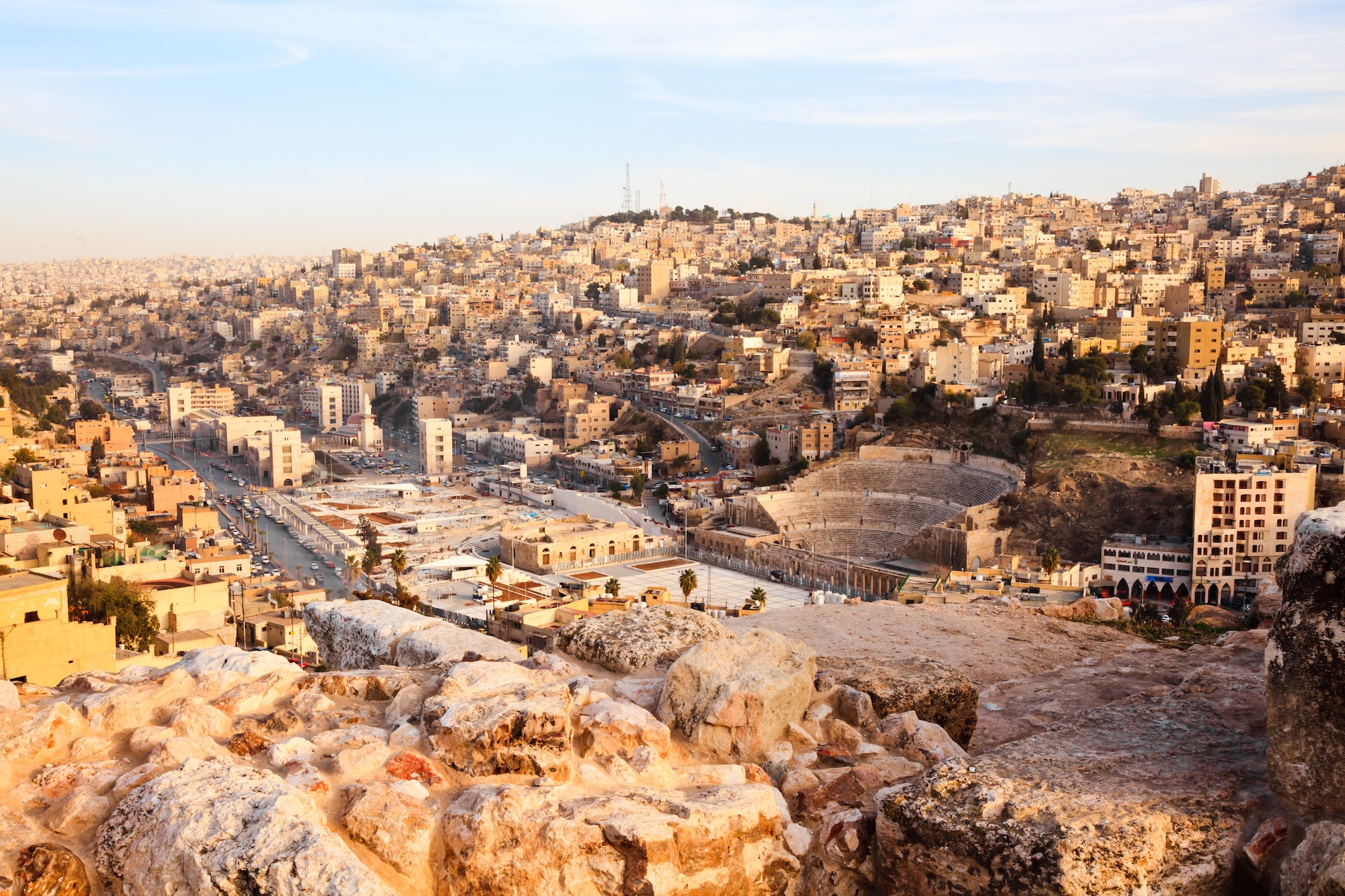
Amman doesn't audition for your affection the way Petra or Wadi Rum do. It's a working capital of concrete apartment blocks climbing seven hills, with a 2nd-century Roman theatre wedged into the valley floor and a hilltop Citadel that has been fortified, in one form or another, since roughly 1650 BCE. What Amman actually offers is a genuinely good couple of days: excellent, cheap food, art galleries in a hillside neighbourhood most guidebooks undersell, and a hospitality culture that turns up in small, specific ways, a shopkeeper who insists you sit for tea, a stranger who walks you three blocks to make sure you find the right alley.
Most visitors treat Amman as a 1-2 night bookend before or after Petra and Wadi Rum, and that's a reasonable way to do it. But rushing straight through skips a city that rewards a slower look, particularly Jabal al-Weibdeh's gallery scene and the version of downtown that exists after the tour groups have moved on for the day.
The honest complications
Amman is genuinely hilly, not "charming incline" hilly but "steep enough that a ten-minute map route is a real climb" hilly, and there's no integrated metro or tram to soften it; taxis and ride-hailing apps are cheap and used constantly, even by residents, for exactly this reason. Traffic is heavy and driving assertive, which matters if you're renting a car here rather than picking it up on the way south. And Amman itself, while low-crime, sits inside the wider 2026 regional context covered in the Jordan country guide's Safety chapter, worth a read before you book, even though it has no bearing on a normal day walking around the city.
Seven hills, five neighbourhoods that matter
Amman's neighbourhoods (jabal, meaning "hill" or "mount," in most of their names) are defined by which hill they sit on and how far that puts them from downtown. Where you base yourself comes down to how much climbing you're willing to do versus how central you want to be.
Downtown (Al-Balad)
The valley-floor old city: the Roman Theatre, gold and spice souks, Hashem Restaurant and Habibah Sweets within a few minutes' walk of each other. Busy, loud and the most atmospheric part of Amman by day; quieter and less useful after dark, when most restaurants and shops close early.
Jabal Amman (Rainbow Street)
Amman's most tourist-friendly hill, centered on Rainbow Street and First Circle, with the city's best concentration of cafes, restaurants and small hotels, plus panoramic sunset views over old Amman. A 15-20 minute uphill walk from downtown, or a short taxi ride; the practical first-time base.
Jabal al-Weibdeh
Adjacent to Jabal Amman and connected to downtown, Weibdeh is Amman's low-key arts district: independent galleries, the Jordan National Gallery of Fine Arts, and tree-lined streets with none of Rainbow Street's tourist density. The neighbourhood most first-time visitors skip and most repeat visitors specifically return for.
Abdoun
Amman's wealthiest district, home to most foreign embassies, the Four Seasons Hotel Amman, and a cluster of upscale restaurants and malls. Quiet, spread out and car-dependent rather than walkable, best for travellers prioritising comfort over atmosphere.
Shmeisani
Amman's commercial and banking hub, with a cluster of mid-range and business hotels and a more contemporary, less historic feel. Practical rather than charming, useful mainly for business travellers or as a hotel-price alternative to Jabal Amman.
From downtown backpacker houses to a hotel every head of state has passed through
Amman's hotel scene runs from long-running downtown backpacker houses to serious international five-stars on the hill above Abdoun. These picks cover every budget, and each one earns its place.
At the top, Four Seasons Hotel Amman, set atop the city's tallest hill in the leafy Abdoun district, has 192 rooms and suites with panoramic city views and an award-winning spa, from around $176 a night. Grand Hyatt Amman, with its distinctive carved pink-stone facade on one of the city's most prominent hills, has 311 rooms including 16 private suites and sweeping 360-degree views, while the InterContinental Amman, a Jordanian institution since 1963, has hosted every visiting head of state and major regional negotiation for six decades and remains a genuinely historic stay rather than just a business hotel.
In the boutique bracket, The House Boutique Suites, 500 yards from Rainbow Street, pairs spacious modern suites with a calm pool area, and Khan Khediwe Hotel, a character-filled 4-star right in downtown, puts you minutes on foot from Rainbow Street and the souks. Zaman Ya Zaman Boutique Hotel, three minutes from the Citadel in Downtown, is a smaller, well-reviewed 3-star option in the same area.
At the budget end, Farah Hotel in Downtown has been a fixture of Amman backpacking for years, cheap, sociable and close to everything in the old city, while Sydney Hotel, on a quieter downtown street a short walk from Rainbow Street, is the other long-running budget favourite.
Mansaf, menu-less mezze, and knafeh worth queuing for
Amman's food scene runs from Rainbow Street's mid-range restaurants to downtown institutions that have not changed their menu, or in one case bothered printing one, in decades. Both ends are worth your time.
Mansaf at Sufra
Sufra occupies a converted historic villa on Rainbow Street with an outdoor terrace looking over the city, and serves mansaf, Jordan's lamb-and-jameed national dish, alongside a full mezze spread in a setting considerably more polished than the dish's Bedouin origins. A reliable, if slightly touristy, first taste of the real thing.
Hashem Restaurant
An Amman institution with no menu: servers simply bring hummus, mutabbal, foul medames, falafel and fresh bread to your table, and you eat until you're done. Fast, cheap and exactly the kind of place a "must-visit" reputation hasn't managed to ruin.
Habibah Sweets
The reference point for knafeh in Amman, and by some rankings in the wider Arab world: shredded pastry over sweet cheese, soaked in syrup, served warm. The original location near the Arab Bank downtown, two minutes from Hashem, gets a queue most evenings; it moves fast and is worth it.
A Roman theatre still in use, a Citadel above it all, and a hill of galleries
Amman's sights cluster into two walkable, if hilly, pockets: the downtown valley floor and the Jabal Amman/Jabal al-Weibdeh hills above it. This chapter walks through both roughly the way a good day or two actually unfolds.
The Citadel and downtown
Start at the Amman Citadel (Jabal al-Qal'a), continuously occupied since the Bronze Age, for the Temple of Hercules, the striking blue-domed ruins of the Umayyad Palace, and the Jordan Archaeological Museum, all covered by a single ~3 JOD ticket, plus a genuinely excellent view over downtown and the Roman Theatre below. Walk (or taxi, it's a steep descent) down into the valley to the Roman Theatre, a restored 6,000-seat 2nd-century amphitheatre still used for events today, whose ~2 JOD ticket also covers the adjoining Jordan Folklore Museum and Museum of Popular Traditions. The Jordan Museum, a short taxi ride away in Ras al-Ain, houses the Ain Ghazal statues, among the oldest human statues ever made at roughly 9,000 years old, and a fragment of the Dead Sea Scrolls' Copper Scroll, the only one of the scrolls written on metal rather than parchment.
Rainbow Street & Jabal al-Weibdeh
Climb (or taxi) up to Rainbow Street for the city's best cafe culture and, at First Circle, some of Amman's best sunset views over the old city's rooftops. From there it's a short, mostly flat walk into Jabal al-Weibdeh, home to the Jordan National Gallery of Fine Arts and a cluster of independent galleries in restored early-20th-century houses, the neighbourhood most first-time visitors skip and shouldn't.
King Abdullah I Mosque
Amman's landmark blue-domed mosque, in the Abdali area, welcomes non-Muslim visitors outside prayer times (roughly 8am-11am and 12:30pm-2pm, Saturday to Thursday; closed to tourists Fridays) for a small entry fee of around 2 JOD. Modest dress is required; robes and headscarves are provided free at the entrance for anyone not already covered appropriately.
One, two or three days, planned hill by hill
One full day covers Amman's essentials; two lets you properly add Jabal al-Weibdeh and a slower evening. Most itineraries use Amman as a 1-2 night bookend around Petra and Wadi Rum, so these routes are built to work either as a full visit or a compressed stopover.
- Morning
The Citadel. The Temple of Hercules, Umayyad Palace and the museum, plus the best overview photo of the city.
- Midday
Down to the Roman Theatre, then lunch at Hashem in downtown, mezze with no menu.
- Afternoon
Habibah Sweets for knafeh, then the climb (or taxi) up to Rainbow Street.
- Sunset
First Circle, Rainbow Street. The best sunset view over old Amman. Dinner nearby or back downtown.
- Day 1
The one-day route: Citadel, Roman Theatre, Hashem, Habibah, Rainbow Street at sunset.
- Day 2 morning
The Jordan Museum in Ras al-Ain for the Ain Ghazal statues and Dead Sea Scrolls fragment.
- Day 2 afternoon
Jabal al-Weibdeh's galleries, a slow wander through the Jordan National Gallery of Fine Arts and the neighbourhood's independent spaces.
- Day 2 evening
Sufra on Rainbow Street for a proper sit-down mansaf.
- Days 1-2
The two-day route above, at a gentler pace.
- Day 3, option A
King Abdullah I Mosque in the morning (check visiting hours), then a full day trip to Jerash's Roman ruins.
- Day 3, option B
Madaba, Mount Nebo and the Dead Sea, a full day out and a float before returning to Amman for departure.
Seven hills, no metro, and taxis that everyone uses
Queen Alia International Airport (AMM) sits 35-55 minutes south of central Amman depending on traffic. The fixed official taxi tariff into the city runs roughly 20-22.50 JOD; Uber, Careem and the local Petra Ride app charge similar fares with upfront pricing and card payment. There's no integrated metro or tram system in Amman: getting around means licensed metered taxis (cheap and the default choice for most visitors), ride-hailing apps, or serveeces, shared taxis running fixed routes for a flat fare, recognisable by the route number painted on the doors. A limited Bus Rapid Transit (BRT) network has opened in stages since 2021, connecting Sweileh, Ras al-Ain near downtown and the Mahatta terminal, useful if your route happens to align with it, but not a substitute for taxis for most visitor itineraries.
Downtown functions as the informal transport hub, with most bus and serveece routes radiating out from there. For a short visitor stay, walking within neighbourhoods (Rainbow Street to Jabal al-Weibdeh, or around downtown itself) combined with taxis or ride-hailing between hills is the practical approach; Amman's hills make walking the full distance between, say, downtown and Abdoun, an unrealistic afternoon rather than a pleasant stroll.
Best time to visit and getting to Petra/Wadi Rum/the Dead Sea from here
Amman has a semi-arid climate with genuinely hot, dry summers and cool, occasionally cold and wet winters. March to May and September to November are the sweet spots: warm days, cool evenings and none of summer's midday heat. Winter nights can drop below freezing.
Onward travel: the JETT tourist bus runs from Amman's Tabarbour terminal to both Petra and Aqaba for about 11 JOD each; book ahead at jett.com.jo in high season (March-May, September-November). A rental car takes about 3 hours to Petra via the Desert Highway. Full details, including the King's Highway scenic route and Wadi Rum connections, are on the Jordan country guide.
Cheaper than Petra day, still pricier than a lot of the region
Amman itself is more affordable than the Petra or Wadi Rum legs of a Jordan trip, no big entrance fees, cheap downtown food, but still costs more day to day than most Southeast Asian or Egyptian cities. The main savings lever is food: downtown stalls and Hashem-style spots cost a fraction of Rainbow Street's restaurant prices for a comparably good meal.
- Downtown hostel, 8-15 JOD
- Hashem-style meals, 2-5 JOD
- Taxis/serveeces, 1-4 JOD/ride
- Citadel + Roman Theatre, ~5 JOD combined
- Boutique hotel, Jabal Amman or downtown
- Restaurant meals, 10-20 JOD
- Uber/Careem for most trips
- The Jordan Museum, a gallery or two
- Four Seasons or Grand Hyatt
- Fine dining in Abdoun
- Private guided city tour
- Airport transfers pre-booked
A genuinely low-crime capital, inside a live regional story
Amman has low rates of violent crime against visitors, and normal city awareness, watching traffic, keeping bags zipped in crowded souks, is realistically all most travellers need day to day. The city's specific hazards are traffic (assertive driving, inconsistent pedestrian right of way) and the hills themselves: uneven downtown pavements and steep, sometimes poorly lit stairways between neighbourhoods are a more common source of minor injury than crime.
The wider 2026 context, a US State Dept Level 3 (Reconsider Travel) advisory tied to regional Iran-Israel-US tensions, and periodic flight disruptions, is a real, active situation covered in full on the Jordan country guide's Safety chapter. It reflects regional risk and potential travel disruption, not a change in conditions on Amman's own streets; check your government's current advisory close to your travel date regardless.
Amman is a reasonable choice for solo women, with the same general caveats as the rest of Jordan: dress modestly, expect occasional catcalling rather than physical danger, and use licensed taxis or ride-hailing apps rather than unmarked cars at night. Emergency number: 911 (unified since being verified in January 2026); older numbers 191 (police), 192 (fire) and 193 (ambulance) may still work if 911 doesn't connect.
Roman ruins, mosaics and the Dead Sea, all within about an hour
Amman's location makes it a genuinely useful day-trip base for northern and central Jordan. Petra and Wadi Rum, 3-4 hours south, are better done as overnight extensions (see the Jordan country guide's itineraries) rather than rushed same-day trips; the three below are true day trips.
Jerash
One of the best-preserved Roman provincial cities anywhere: a colonnaded main street, an oval forum and two amphitheaters largely intact. Half a day is enough for the ruins themselves; the Jerash Festival in July adds live performance staged directly in the ancient theatres.
Madaba & Mount Nebo
Madaba's Greek Orthodox Church of St. George holds a 6th-century mosaic map of the Holy Land, the oldest surviving original cartographic depiction of the region. Ten minutes further, Mount Nebo is where tradition holds Moses viewed the Promised Land; on a clear day the view stretches across the Jordan Valley toward the West Bank.
Dead Sea
The Jordanian shore of the lowest point on Earth's surface, at roughly 430 meters below sea level, with salinity above 30 percent, effortless floating and the black mineral mud most day-trippers come to try. Resort hotels sell day access to their private beaches and shower facilities; combine it with Madaba and Mount Nebo for a full, efficient day out.
Amman FAQ
Is Amman safe for tourists?
Yes. Amman has low rates of violent crime against visitors, and the specific risks are more mundane, traffic, uneven pavements downtown, than crime. The wider regional context in 2026 (see the Jordan country guide) is worth checking before you travel, but doesn't reflect conditions on Amman's streets.
How many days do I need in Amman?
One full day covers the Citadel, Roman Theatre and downtown; two lets you add Jabal al-Weibdeh's galleries and a slower Rainbow Street evening. Most visitors use Amman as a 1-2 night base before or after Petra and Wadi Rum.
How much does Amman cost per day?
Budget travellers manage on 40-55 JOD a day with hostels and downtown food stalls; mid-range runs 90-140 JOD. Amman is cheaper than a Petra or Wadi Rum day but still pricier than most Southeast Asian or Egyptian cities.
What is the best area to stay in Amman?
Jabal Amman (Rainbow Street/First Circle) for first-timers: walkable to the Citadel and downtown, with the best cafe and restaurant density. Downtown (Al-Balad) for budget stays close to the souks. Abdoun for upscale quiet near the embassies.
How do I get from Amman airport to the city?
Queen Alia International Airport is 35-55 minutes from central Amman depending on traffic. The fixed official taxi tariff is roughly 20-22.50 JOD; Uber, Careem and the local Petra Ride app charge similar fares.
Can I walk between the Citadel, Roman Theatre and Rainbow Street?
Yes, though Amman's hills make it a workout. The Citadel and Roman Theatre in the downtown valley are a steep 15-20 minute walk apart, and Rainbow Street sits atop the adjacent hill, roughly another 15-20 minutes of climbing from downtown.
What is the must-try food in Amman?
Mansaf, Jordan's national dish of lamb in jameed yogurt sauce over rice, and a downtown pairing of Hashem Restaurant's menu-less mezze spread followed by knafeh from Habibah Sweets, a combination locals have been doing for decades.
Is Amman walkable?
Central neighbourhoods are walkable but genuinely hilly; Amman is built across seven hills and some downtown-to-Rainbow-Street walks are a steady uphill climb. Taxis and ride-hailing apps are cheap and used constantly, even by locals, for exactly this reason.
What day trips can I take from Amman?
Jerash's Roman ruins (45 minutes), Madaba and Mount Nebo (about an hour), and the Dead Sea (about an hour) are all genuine day trips. Petra and Wadi Rum are 3-4 hours away and are better done as overnight extensions than rushed day trips.
What Stays With You
Amman doesn't try to be the reason you booked the flight, and travelers who give it a fair two days instead of a rushed layover tend to come away liking it more than they expected. The Roman Theatre still hosting concerts two thousand years after it was built, the specific quiet of Jabal al-Weibdeh's gallery streets after the Rainbow Street crowds have moved on, the mezze at Hashem that costs less than a coffee back home: none of it is trying to sell you anything, which is why it sticks.
Go up to First Circle on your last evening, watch the old city's lights come on across the valley, and let Amman be exactly the practical, hospitable capital it's content to be.