
The Gambia's front door, and a decent one
Kololi grew up around the Senegambia Strip, the roughly one-kilometre run of hotel entrances, bars and restaurants that has anchored The Gambia's package-tourism industry since the 1970s. It is not a Gambian village experience, and it doesn't pretend to be: it's a purpose-built resort town where the electricity is reliable, the staff speak fluent English, and a taxi to anywhere else in the country is a short conversation away. What it does have that a purely manufactured resort strip wouldn't is real wildlife two minutes from the hotel gates, a genuine fishing coastline, and an entire country's worth of heritage sites, wetlands and river islands within a half-day's reach.
The town itself is compact: the Strip, the beach behind the big hotels, Bijilo Forest Park at one end, and the calmer streets of Kotu a short walk or cheap taxi the other way. Most first-time visitors to The Gambia never seriously consider basing anywhere else, and for good reason: Kololi is simply the most complete base the coast offers.
The honest complications
The Strip runs on tourism, and tourism here means persistent, low-stakes hassle from bumsters, young men offering guiding, goods or company, concentrated exactly where you'd expect: the beach, the Strip's entrances, and outside every hotel gate. It is rarely dangerous and almost never escalates, but expect it from the first afternoon rather than being unsettled by it. Kololi's beach itself is pleasant but unremarkable by West African standards; the better sand is a short drive south at Sanyang and Tanji. And because the town exists for package tourism, prices at the big beachfront hotels run noticeably higher than the same standard of stay would cost a ten-minute taxi ride inland in Kotu or Bakau.
Five neighbourhoods, ten minutes apart by taxi
Kololi and its immediate neighbours form one continuous tourist coast, and where you base yourself comes down to how much nightlife you want outside your door versus how much quiet you want to sleep through.
Senegambia Strip
The commercial spine of Kololi: bars, restaurants, craft stalls and the entrances to the coast's biggest hotels, well-lit and busy every night of the week. Staying directly on the Strip means the widest choice of dining within walking distance and the most persistent vendor attention; both come with the territory.
Kotu
A short taxi or 20-minute walk north of the Strip, Kotu is calmer, cheaper, and sits right beside Kotu Pond and Bund Road, two of the coast's best accessible birding sites. A good choice for travellers who want Kololi's convenience without Kololi's noise.
Bijilo
South of the Strip, Bijilo is home to the forest park's monkeys and a cluster of smarter, more design-led resorts set back from the noise. The beach here is quieter than central Kololi and the walk to the Strip's restaurants is easy.
Fajara & Cape Point
A few kilometres north, Fajara and Cape Point hold the country's diplomatic quarter, its golf course, and a concentration of the coast's best independent restaurants, quieter and more residential than Kololi, with a headland setting where the river meets the Atlantic.
Bakau
An older fishing town between Fajara and Banjul, with a working harbour, the sacred Kachikally Crocodile Pool, and noticeably lower prices than the purpose-built resort strip. Less polished, more textured, and an easy taxi from Kololi.
From beachfront package resorts to Cape Point boutique
Kololi's accommodation is built for the European package-holiday market, which means large beachfront hotels with pools, gardens and all-inclusive options dominate the top end, while budget guesthouses a few streets back undercut them substantially for a similar bed. These picks cover the range.
At the top of the Strip, Kairaba Beach Hotel and Senegambia Beach Hotel are the two hotels most people mean when they picture Kololi: extensive gardens, direct beach access and the country's largest resort footprint, with Senegambia Beach Hotel the biggest single property on the coast. A short walk south in Bijilo, Coco Ocean Resort & Spa is the smarter, design-forward option, a beachside spa hotel with a more boutique feel than the package-resort norm. Ocean Bay Hotel & Resort, toward Bakau, is a further mid-to-upper option with a 24-hour airport shuttle.
For something with more character, Ngala Lodge on the Cape Point headland in Fajara is Kololi's best boutique escape: a small, garden-set property with one of the coast's most respected restaurants attached, worth the short taxi ride from the Strip's nightlife. For a genuinely distinctive stay, the floating and stilted rooms at Mandina Lodges, inside Makasutu Culture Forest about 45 minutes away, make an excellent one or two-night add-on to a Kololi base. At the budget end, guesthouses scattered through Kotu and the streets behind the Strip run well under half the price of the beachfront hotels for a clean, simple room within walking distance of the same restaurants.
Book a tour of the coast
For day trips beyond Kololi, arrange excursions through your hotel or a licensed Banjul operator rather than waterfront touts; see the Day Trips chapter below for what's worth booking and roughly what it costs.
Chop houses, beach grills, and Fajara's better tables
Kololi's food scene splits cleanly in two: tourist-facing restaurants on the Strip serving continental menus for a British and Scandinavian clientele, and the genuinely excellent Gambian cooking a few streets or a short taxi away, where a full lunch costs a few dollars rather than Strip prices.
Domoda & benachin
The Gambia's national dish, a rich peanut stew over rice, and the one-pot rice classic benachin are both best eaten at a local chop house in Kotu or Serrekunda rather than a hotel buffet. Ask your hotel or guesthouse to point you to their favourite; every neighbourhood has one.
Fine dining, Fajara & Cape Point
For Kololi's best proper meal out, head to Fajara or Cape Point. Ngala Lodge's restaurant is the standout, elegant garden dining overlooking the Atlantic. Butcher's Shop, which began as an actual butcher's counter in 1993 before evolving into a chic Moroccan-and-international address, and The Clay Oven, a long-running Indian favourite, both draw a loyal local and expat following. Gusto Gambia and Luigi's cover the Italian end of the same stretch.
Grilled beach fish
Fresh barracuda and snapper grilled over charcoal and sold by weight at simple beach shacks along the coast, best experienced properly at Sanyang or Tanji on a day trip but available closer to Kololi too. Order a kilo, split it, and eat with rice and a lime salad in the shade.
Monkeys, markets and the beach, without leaving town
Kololi itself has more to do than its reputation as a pure beach-resort strip suggests, and everything below is walkable or a very short taxi from the main hotels.
Bijilo Forest Park
A protected strip of coastal forest right behind Bijilo's resorts, home to habituated green vervet monkeys and western red colobus monkeys along excellent, well-marked trails down to the beach. Entry runs around 300 dalasi (roughly $4), cash only, with optional guides at the gate who know exactly where the troops are that day. An hour is enough for a proper walk; two if you linger for the birding, which is genuinely strong for a site this close to the hotels.
Kotu Pond & Bund Road
Two accessible birding sites within a few kilometres of the Strip, walkable without a car. Kotu Pond has African jacana, painted snipe and squacco heron among the reeds; Bund Road runs beside tidal mudflats where flamingos and waders gather at low tide. Both are free and reliably good even for visitors who wouldn't otherwise call themselves birders.
Senegambia Craft Market
A cluster of stalls at the entrance to the Strip selling batik fabric, wood carving and jewellery, most of it made upcountry. Haggling is expected and part of the transaction; start well below the asking price and settle somewhere both sides are comfortable. Better value and better craftsmanship than the beach vendors who'll approach you directly.
The beach & the pirogues
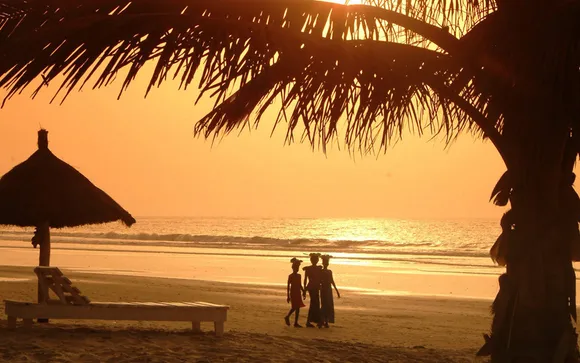
Kololi's beach is pleasant rather than spectacular, but the working fishing pirogues hauled up at either end, painted in the same bright slogans you see across the coast, are worth a slow walk at sunset. Swimming is generally fine directly off the resort beaches, but currents vary by stretch and season; ask your hotel which section is safe that day before swimming further out.
One, two or three days in town before you branch out
Kololi rewards a short, relaxed stay in town bookended by day trips. These routes cover the town itself; see the Day Trips chapter for what to add on.
- Morning
Bijilo Forest Park. Walk the trails before the heat builds, monkeys and birding, down to the quiet end of the beach.
- Midday
Kotu Pond. A short taxi north for an hour of easy birding, then lunch at a local chop house for domoda or benachin.
- Afternoon
Senegambia Craft Market. Batik and woodcarving, haggling expected, back to the hotel for a swim.
- Evening
The Strip. Dinner and live music along Senegambia Road; Calypso Nightclub if you want to stay out late.
- Day 1
The one-day route: Bijilo Forest Park, Kotu Pond, the craft market, dinner on the Strip.
- Day 2 morning
Bakau & Kachikally. A short taxi to the sacred crocodile pool, then the fish market and harbour at Bakau.
- Day 2 afternoon
Fajara & Cape Point. A walk along the headland where the river meets the Atlantic, coffee or a late lunch in Fajara.
- Day 2 evening
Dinner at Ngala Lodge or Butcher's Shop. Kololi's best food is a short taxi away in Fajara; book ahead.
- Days 1-2
The two-day route above, at an unhurried pace.
- Day 3, option A
Banjul & Albert Market. A half-day in the capital: the market, the National Museum, Arch 22 for the view, back to Kololi by early evening.
- Day 3, option B
Tanji & Sanyang. A day on the better beaches south of Kololi, grilled barracuda at a beach shack, the fish market at Tanji if timed for late afternoon.
Compact, walkable, and taxis for everything else
Banjul International Airport (BJL) sits about 20 kilometres from Kololi; a green tourist-registered taxi covers the 25-40 minute journey for around D800 (roughly $11) at the official rate, agreed before you get in, since there are no meters. Within Kololi itself, the Strip, the beach and Bijilo Forest Park are all walkable; Kotu is a comfortable 20-minute walk or a couple of dollars by taxi.
For everywhere else on the coast, green taxis are cheap and simple for short hops (roughly $3-6), while gelly-gelly shared minibuses run the longer, cheaper route to Serrekunda and Banjul for travellers happy with local transport. There is no Uber or Bolt in The Gambia, and boda-boda motorcycle taxis are best avoided on safety grounds. For upcountry day trips or the Kunta Kinteh Island excursion, arrange a car and driver or a boat through your hotel rather than negotiating with waterfront touts.
Best time to visit and practical prep
November to April is Kololi's dry season and peak tourist period: cooler, minimal rain, and the best birding as Palearctic migrants arrive from Europe. June to October brings heavy rain, high humidity and far fewer visitors, with correspondingly lower hotel prices for travellers comfortable with the wetter logistics.
Practical prep: buy an Africell or QCell SIM at the airport for cheap local data. Malaria prophylaxis should be arranged with a travel clinic 4-6 weeks before travel and taken seriously; it's present year-round on the coast, not just upcountry. ATMs on the Strip can be unreliable, so carry sufficient dalasi cash, and confirm your travel insurance covers medical evacuation to Dakar, the realistic option for serious emergencies.
Cheap away from the beachfront hotels
Kololi's costs vary more by hotel choice than almost anywhere else on this site: a guesthouse a few streets back from the beach costs a third of the beachfront resort next door for a broadly similar room. Food, transport and activities stay cheap throughout.
- Guesthouse in Kotu or backstreet Kololi $15-25
- Chop houses & beach grills $2-7
- Walking & short taxi hops
- Bijilo Forest Park plus free birding sites
- Coastal resort hotel $50-90
- Mix of chop houses & Fajara restaurants
- Green taxis & a day-trip excursion
- Craft market souvenirs
- All-inclusive beachfront resort
- In-resort dining & spa
- Private guided excursions
- Fine dining in Fajara
Well-policed, with one specific thing to know
Kololi rates 7.5/10 on our safety scale, in line with The Gambia overall: violent crime against tourists is rare, the Strip and the main hotel areas are safe to walk after dark, and the resort industry here has decades of experience hosting European package tourists without serious incident.
The one thing that actually catches visitors is bumsters, young men who approach on the beach and around the Strip offering guiding, goods or company. Most are harmless and some are genuinely knowledgeable, but the persistence wears on people who aren't expecting it. A firm, polite "no thank you" without extended eye contact or conversation ends it fastest; engaging is read as an invitation to continue. Keep bags and phones secured in crowded spots like the craft market, don't walk isolated stretches of beach after dark, and ask locally which section of the water is safe before swimming, since currents vary by stretch and season. Emergency numbers are the national 117 for police and 116 for ambulance; your hotel front desk is usually the fastest route to help for anything tourist-specific.
Kololi's real advantage is everything within reach of it
Kololi's position on the coastal strip makes it an excellent base for the rest of The Gambia. Five trips are worth a day each, all arrangeable through your hotel or a licensed Banjul operator.
Kunta Kinteh Island & Juffureh
The UNESCO-listed slave-trading fort and the village of Juffureh, made globally known by Alex Haley's Roots, reached on a full-day river excursion from Banjul with birding along the mangrove banks on the way. The single most worthwhile day trip from Kololi.
Banjul & Albert Market
The small, slightly faded capital: Albert Market for fabrics and produce, the National Museum, and Arch 22 for the best view over the city and the river mouth. Easily combined with a domoda lunch near the market.
Abuko Nature Reserve
The country's first protected area and its most accessible quality wildlife site: habituated monkeys, crocodiles and over 270 recorded bird species in 105 hectares of gallery forest, walkable in a half-day.
Tanji & Sanyang
The better beaches, reached in under half an hour: Sanyang's wide, undeveloped sand for grilled barracuda and a swim, Tanji's fish market for one of West Africa's most visually dramatic scenes if timed for late afternoon when the pirogues come in.
Makasutu Culture Forest
A community-run reserve of mangrove and gallery forest near Brikama: boat trips through the mangroves, guided forest walks with strong birding, and a traditional market. Combine with an overnight at Mandina Lodges inside the forest for the fullest experience.
Kololi FAQ
Is Kololi safe for tourists?
Yes, Kololi and the Senegambia Strip are the most tourist-established, best-policed part of The Gambia. The main friction is persistent attention from beach touts called bumsters, an annoyance rather than a danger; keep valuables secure in crowded spots as you would anywhere.
How many days do I need in Kololi?
Two to three days covers Kololi itself: the beach, Bijilo Forest Park, the Senegambia Strip and the craft market. Most visitors add three to five more days for day trips to Banjul, Kunta Kinteh Island and the south coast beaches.
How much does Kololi cost per day?
Budget travellers manage on $40-60 a day with guesthouses and chop-house meals; mid-range runs $100-160 with a coastal resort hotel. All-inclusive beach resorts in peak season run $200 or more.
When is the best time to visit Kololi?
November to April: dry, cooler, and peak season for both tourism and birdwatching as European migrant birds arrive. June to October is hot, wet and much quieter, with lower prices throughout.
What is the Senegambia Strip?
A roughly one-kilometre stretch of bars, restaurants, craft stalls and hotel entrances in Kololi that forms the social centre of The Gambia's tourist coast, busiest and best-lit after dark.
What is the best area to stay near Kololi?
Kololi itself for nightlife and the widest choice of hotels; Kotu for a quieter, more budget-friendly base near good birding; Bijilo or Fajara for a calmer, more upmarket stay a short taxi from the Strip.
Do I need to speak a local language in Kololi?
No. English is The Gambia's official language and is spoken throughout Kololi's hotels, restaurants and shops. Mandinka and Wolof greetings are appreciated but never required.
How do I get from Banjul Airport to Kololi?
A green tourist taxi covers the roughly 20-kilometre, 25-40 minute journey for around D800 (about $11) at the official rate. Agree the fare before getting in; there are no meters.
Can I see monkeys in Kololi?
Yes. Bijilo Forest Park, a short walk from the Senegambia Strip, has habituated green vervet and red colobus monkeys along with strong coastal birding, and is one of the best short wildlife outings in the country.
What Stays With You
Kololi doesn't try to be an undiscovered Gambian village, and being honest about that is exactly why it works as a base. The Strip is loud and commercial by design, built for exactly the winter-sun trade it has served for fifty years. But walk two minutes off it and there are green vervet monkeys watching you from the treeline, a fisherman hauling in a pirogue the same way his family has for generations, and a griot playing kora on a beach bar terrace who isn't performing for the tour buses, he's just playing.
Use Kololi for what it's built for: a comfortable, reliable base. Then spend your days out on the river, at Kunta Kinteh Island, in the forest at Makasutu, on the better beaches south. That combination, not the Strip alone, is what makes people come back.