
What You're Actually Getting Into
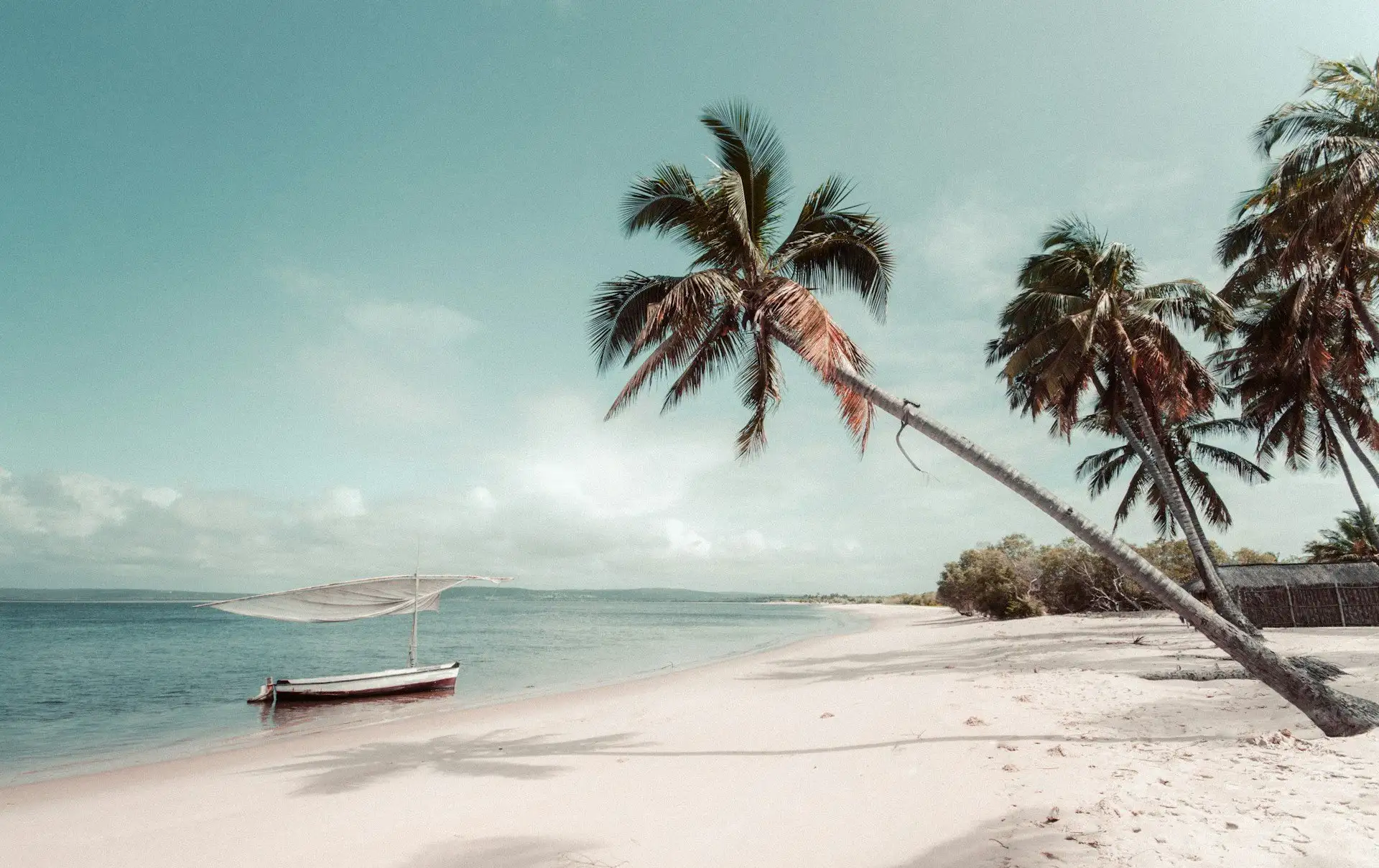
Mozambique is not a country that has finished explaining itself to tourism yet, and that is a large part of its appeal. The coastline is genuinely one of the best in Africa: a chain of coral-fringed islands, mangrove channels and empty white beaches running from the South African border to Tanzania, still light on the infrastructure that has fully priced other Indian Ocean coastlines out of reach. Sixteen years of civil war after independence in 1975 emptied the roads and the national parks of investment; the last decade and a half has been a slow, visible rebuild, from Gorongosa National Park's wildlife recovery to the new suspension bridge across Maputo Bay.
Portuguese colonial rule, a Swahili and Arab trading history that predates it by centuries, and a genuinely diverse mix of Bantu-speaking peoples give Mozambique a cultural texture unlike its Anglophone neighbors. Prawns and peri-peri are everywhere, dhows still work under sail alongside the dive boats, and the capital Maputo has a jazz-and-art-deco energy that surprises most first-time visitors expecting a purely beach destination.
The honest complications
Mozambique's road network outside the main N1 highway corridor is genuinely difficult: potholes, unmarked speed bumps and long stretches without fuel are normal, and a 4x4 is often the only sensible choice for anything off the coast road. Tap water is not safe to drink almost everywhere. Malaria prophylaxis is necessary across most of the country. And the north is not a footnote: Cabo Delgado province has an active insurgency that has displaced hundreds of thousands of people and is explicitly excluded from every reputable itinerary, including this one. None of this erases what makes the south and center worth visiting, but it does mean Mozambique rewards more planning than a beach trip usually requires.
A History Worth Knowing
Long before Portugal arrived, the Mozambican coast was part of the Swahili trading world, with Arab and Indian Ocean merchants working ports like Ilha de Moçambique centuries before Vasco da Gama's ships reached it in 1498. Portuguese colonial control tightened from the late 19th century and lasted until 1975, when a decade-long independence war ended in a negotiated handover. What followed was one of the most brutal civil wars of the late 20th century, and the country's tourism industry today is still, in real ways, rebuilding from it.
- Pre-1498
The Swahili coast. Arab, Persian and Indian Ocean traders work ports along the coast for centuries; Ilha de Moçambique becomes a major node in the gold, ivory and slave trade networks linking East Africa to Asia.
- 1498
Vasco da Gama. The Portuguese explorer reaches the Mozambican coast en route to India, opening the era of Portuguese trading posts and, later, colonial administration.
- 1890s–1975
Portuguese colonial rule. Formal Portuguese administration intensifies from the 1890s; forced labor and cash-crop economics shape the colonial decades that follow.
- 1964–1974
The independence war. FRELIMO, the Mozambique Liberation Front, wages a guerrilla campaign against Portuguese rule.
- 1975
Independence. Mozambique becomes independent on 25 June, with FRELIMO forming a one-party socialist government.
- 1977–1992
Civil war. RENAMO, backed at various points by Rhodesia and apartheid South Africa, fights FRELIMO in a war that kills over a million people and displaces a third of the population before a 1992 peace accord.
- 1998–present
Rebuilding. Gorongosa National Park reopens and begins a long ecological restoration; tourism infrastructure slowly expands along the coast, even as a new insurgency emerges in the far north from 2017.
Read the full history: the Swahili coast, colonial rule, FRELIMO and RENAMO
Ilha de Moçambique's stone town, now a UNESCO World Heritage Site, was the capital of Portuguese East Africa for nearly four centuries, a status that reflects how central the Indian Ocean trade was to the colony's original purpose. Portugal's grip on the interior was thinner and later than its coastal trading posts; systematic colonial administration across the whole territory is generally dated to the period after the 1890s Berlin Conference era scramble for Africa, and forced labor systems (chibalo) and cash-crop requirements shaped the rural economy for decades.
FRELIMO's war for independence, led first by Eduardo Mondlane and after his 1969 assassination by Samora Machel, ran from 1964 until the Portuguese army's own 1974 revolution at home led to a rapid, chaotic decolonization across Portugal's African territories. Independence came in June 1975, with FRELIMO installing a Marxist-Leninist one-party state that nationalized land, banned traditional and religious authority structures, and aligned with the Soviet bloc.
The civil war that followed, RENAMO against the FRELIMO government, was fueled and financed for years by white-minority Rhodesia and later apartheid South Africa as a proxy conflict against a government that had supported black liberation movements in both countries. The toll was catastrophic: over a million dead, a third of the population displaced, and the near-total collapse of infrastructure, wildlife populations and rural economic life. The 1992 Rome General Peace Accords ended the war and led to multiparty elections, though RENAMO and FRELIMO tensions have flared periodically since, including a low-level resumption of conflict in some central provinces in the 2010s.
Gorongosa's recovery. Gorongosa National Park lost the overwhelming majority of its large mammal populations during the civil war, when both armies hunted them for food and ivory. A restoration project beginning in the early 2000s, backed by American philanthropist Greg Carr in partnership with the Mozambican government, has become one of the most cited conservation turnaround stories in Africa, reintroducing wildlife and rebuilding research and tourism infrastructure.
Cabo Delgado. Since 2017, an Islamist insurgency linked to the Islamic State has operated in Cabo Delgado province in the far north, displacing hundreds of thousands of people and drawing in regional (SADC) and Rwandan military intervention. It is geographically distant from every destination in this guide, but it is a live conflict, not a historical footnote, and travelers should understand it as part of the current country, not assume the whole coastline shares the risk.
Top Destinations
Mozambique's tourism geography runs south to north along the coast, with the interior reached mainly through Gorongosa. Maputo and the far south are the easiest region logistically; the Inhambane coast and Bazaruto Archipelago are the country's signature beach-and-diving zone; the far north holds Ilha de Moçambique's stone town and the Quirimbas islands, reached separately from Cabo Delgado's conflict areas. A week covers the south or center well; two weeks lets you combine a beach stint with Gorongosa.
Maputo, the capital
Maputo is Mozambique's most rewarding city stop: jacaranda-lined avenues, Portuguese and art deco architecture, and a genuine live music and restaurant scene that most visitors don't expect from a two-to-four-night city break. The Baixa downtown holds the Mercado Central market and the extraordinary Maputo Central Railway Station, its dome long and wrongly attributed to Gustave Eiffel. Two to three days is enough before heading to the coast.
Tofo, the whale shark coast
Tofo, a laid-back beach town in Inhambane province about a 40-minute flight or 8-hour drive north of Maputo, is Mozambique's diving capital. Plankton-rich currents offshore attract whale sharks and manta rays for much of the year, and the reefs hold turtles, moray eels and dense schools of reef fish. The town itself is unpretentious: sand streets, beach bars and a strong backpacker and dive-instructor culture.
Bazaruto Archipelago
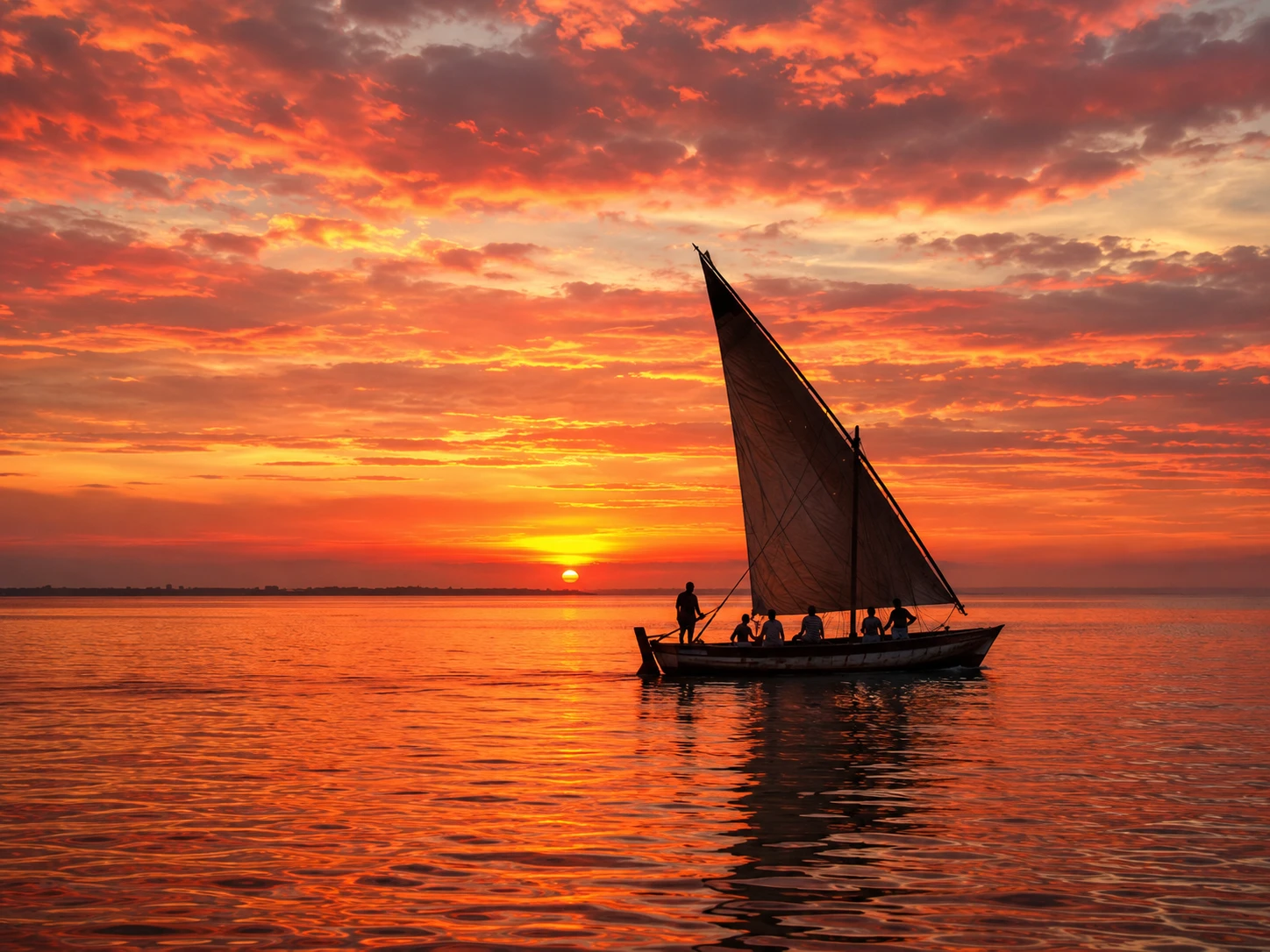
A protected marine park of five islands off Vilanculos, Bazaruto is Mozambique's postcard: powder-white dunes, turquoise water, dhows under sail, and freshwater lakes inland on Bazaruto Island itself that attract flamingos. Lodges range from the high-end Anantara Bazaruto Island Resort to smaller, more accessible options on Benguerra Island. Reach it by light aircraft or boat transfer from Vilanculos, which has its own small airport with direct flights from Maputo.
Ilha de Moçambique
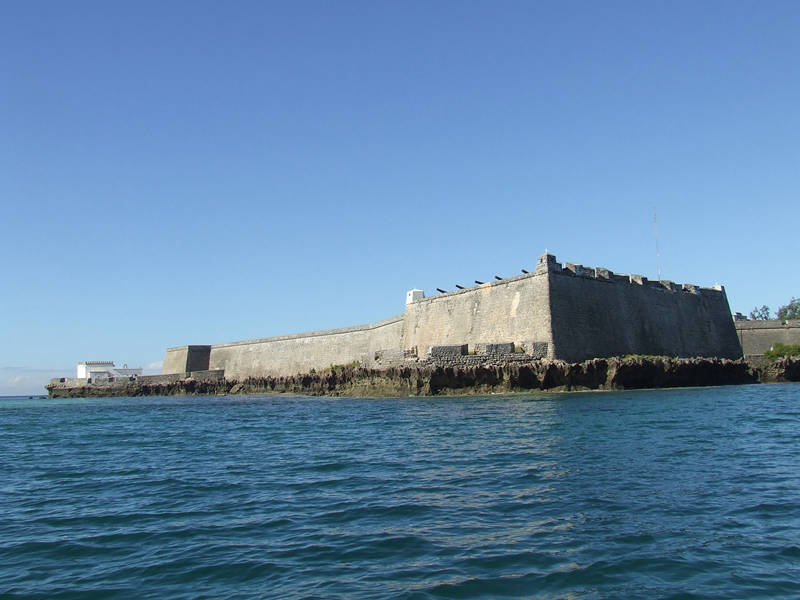
A UNESCO World Heritage Site since 1991, Ilha de Moçambique is a small coral-rag island off Nampula province connected to the mainland by a causeway, and was the capital of Portuguese East Africa for nearly four centuries. The stone town holds the 16th-century Fort São Sebastião, one of the oldest European buildings still standing in the Southern Hemisphere, alongside a Macuti town of reed-and-wood houses on the island's other half. It sits well south of the Cabo Delgado conflict areas and remains a functioning, if sleepy, tourist destination, reached by flights to Nampula followed by a road transfer.
Quirimbas Archipelago, with a caveat
The Quirimbas is a 400-kilometer chain of coral islands with excellent diving, but it sits within Cabo Delgado province, where an active insurgency has been underway since 2017. Some southern islands and lodges in the archipelago have continued operating and are marketed as accessible, but travelers should check current government advisories immediately before booking, not rely on older guides: this is the one part of the country's tourism map that has genuinely changed in the last several years.
Gorongosa National Park
Gorongosa sits at the southern end of the Great Rift Valley in Sofala province, about 80 kilometers northwest of Beira. Its wildlife was decimated during the civil war; a restoration project running since the early 2000s has reintroduced lions, wild dogs, elephant and large herds of buffalo and antelope, and the park is now widely cited as one of Africa's genuine conservation turnarounds. It's less crowded and less expensive than East Africa's marquee parks, with a research-and-conservation feel that appeals to travelers who've done a conventional safari before.
Maputo Special Reserve
Closer to the capital, on the way to Ponta do Ouro, the Maputo Special Reserve protects coastal wetlands, dune forest and a recovering elephant population, and can be combined with a beach stop in the far south as an easier add-on than Gorongosa for travelers short on time.
Hidden gems beyond the main circuit
The zones above cover a first or second trip well. With extra days and a tolerance for rough roads, these reward the detour.
Chimanimani Mountains
A rugged, mist-forested mountain range straddling the Zimbabwe border, with hiking and waterfalls that see a fraction of the visitors the coast does. Basic infrastructure; go with a local guide.
Niassa Special Reserve
One of Southern Africa's largest protected wilderness areas, on the Lugenda River bordering Tanzania: remote, expensive to reach, and correspondingly empty of other tourists.
Barra & Praia do Tofo's quieter neighbors
Barra Beach and the peninsula around it offer the same water as Tofo with fewer people and a slightly more upscale lodge scene, an easy taxi ride from Inhambane town's own colonial architecture.
Culture & Etiquette
Mozambique is genuinely multi-ethnic: over a dozen Bantu-speaking groups, from the Makhuwa in the north to the Changana (Tsonga) around Maputo, each with their own languages, traditions and, in the case of several northern groups, matrilineal family structures unusual within Southern Africa. Portuguese is the language of government, school and most signage, but it's a first language for a minority; greetings, patience and a relaxed sense of time matter more than fluency.
Do
- Greet before you ask anything. Skipping straight to a question, even a simple one, reads as brusque. Bom dia (good morning) or boa tarde (good afternoon) first, then the request.
- Dress modestly outside beach resorts, especially in the more conservative, majority-Muslim towns of the north like Ilha de Moçambique and along the coast toward Cabo Delgado.
- Learn a handful of Portuguese phrases. Obrigado/a (thank you), por favor (please), quanto custa (how much). English is limited outside hotels and dive operators.
- Bargain gently at craft markets like FEIMA, but expect fixed prices at supermarkets and most restaurants.
- Carry small metical notes. Change for large notes can be genuinely hard to find outside cities.
Don't
- Photograph government buildings, military sites, ports or bridges without asking; this is taken more seriously in Mozambique than in many neighboring countries.
- Expect fast service. Restaurant and market pace is unhurried; visibly rushing staff is considered rude rather than efficient.
- Drink tap water, or use it to brush your teeth, anywhere in the country including Maputo.
- Assume the whole country shares the same risk profile. Conflating the south's tourist areas with Cabo Delgado's insurgency, in either direction, misreads the country.
- Drive at night outside cities if it can be avoided: unlit roads, potholes and pedestrians or livestock on the roadway are a real hazard after dark.
Deeper culture: Makonde carving, Chopi timbila, capulanas and religion
Makonde art. The Makonde people, concentrated in the far north and across the border in Tanzania, are renowned across Africa for their intricate ebony wood carving and elaborate lion and initiation masks, sold in craft markets throughout the country including Maputo's FEIMA.
Chopi timbila. The Chopi people of Inhambane province developed the timbila, a xylophone orchestra tradition recognized by UNESCO as Intangible Cultural Heritage, with ensembles performing complex, precisely choreographed compositions at community festivals.
Capulanas. The brightly patterned wax-print cotton wraps worn by women across the country, used as clothing, baby carriers and market bags alike, are one of the most visible everyday textile traditions in Southern Africa and make a genuinely useful souvenir.
Religion. Mozambique is religiously mixed: Christianity (both Catholic, from the Portuguese era, and a growing evangelical presence) is strongest in the south and center, while Islam is more prevalent along the northern coast, a legacy of centuries of Swahili and Arab trade contact. Traditional beliefs and ancestor veneration continue alongside both, often blended rather than kept separate.
Food & Drink
Mozambican food runs on fresh seafood, coconut, cassava and peri-peri, the fiery chili sauce that exists because 16th-century Portuguese ships carried chili peppers from Brazil to their East African trading posts. Goan and Gujarati merchant families, who settled Mozambique's ports from the early 1800s, layered in curry, samosas and chapati. A full seafood meal at a market grill stand can cost the same as a coffee and pastry in Lisbon.
Piri-piri prawns & chicken $8-15
Mozambique's signature dish: prawns or chicken marinated and grilled in a chili, garlic and citrus sauce, usually shell-on and served with rice, xima or chips. Maputo's Mercado de Peixe and long-running restaurants like Costa do Sol do it properly.
Matapa
Cassava leaves pounded and simmered in coconut milk and ground peanut, usually with shrimp or crab folded in, served over rice or xima. One of the most distinctively Mozambican dishes and a good order for a first proper meal.
Xima
A stiff maize porridge, the everyday staple across Mozambique, eaten by hand and used to scoop up sauces and stews the way bread or rice would elsewhere.
2M & Laurentina beer ~$1-2
Mozambique's two national lager brands, both light, cold and cheap, sold everywhere from beach bars to supermarkets.
Caril (curry) & samosas
A legacy of Goan and Gujarati settlement in the port towns: mild-to-medium curries and fried samosas appear on menus alongside purely Portuguese and Mozambican dishes, especially in Maputo and Beira.
Pastel de nata & Portuguese bakeries
Portuguese colonial influence left a genuine bakery culture behind: custard tarts, fresh bread rolls (pão) and strong espresso are easy to find in Maputo and larger towns.
When to Go & Itineraries
May through October, the dry season, is the most reliable window for the whole country: clear skies, calm seas for boat transfers to the islands, and the best safari viewing at Gorongosa. June to August is coolest; September to November overlaps with the humpback whale migration along the coast. December through April is hot and rainy, with a real cyclone risk on the coast in January and February that can disrupt the Bazaruto Archipelago in particular.
All seasons compared, with temperatures
| Season | Verdict | Temps | Notes |
|---|---|---|---|
| Jun-Aug | Best (cool & dry) | 20-28°C | Coolest, driest, best Gorongosa game viewing |
| Sep-Nov | Best (whales) | 24-32°C | Warming up, humpback whale migration, still dry |
| May | Good | 22-29°C | Tail of the rains clearing, good value |
| Dec-Apr | Caution | 27-35°C | Hot, humid, rainy; cyclone risk Jan-Feb on the coast |
Coastal towns like Maputo, Tofo and Vilanculos run 3-5°C warmer than inland Gorongosa year-round.
Itineraries
A week covers Maputo and one coastal destination well. Two weeks lets you combine the capital, a beach or island stay, and a safari extension without feeling rushed.
- Days 1-2
Maputo. Baixa's markets and railway station, FEIMA, dinner at the fish market, a night out on Avenida Julius Nyerere.
- Days 3-4
Ponta do Ouro or Maputo Special Reserve. A short 4x4 transfer south for diving and dolphins, or a two-night safari add-on close to the capital.
- Days 5-7
Fly to Tofo or Vilanculos. Diving with whale sharks at Tofo, or a dhow trip and beach days in the Bazaruto Archipelago, before flying back to Maputo.
- Days 1-3
Maputo extended. Two full days in the city plus a day trip to the Maputo Special Reserve for elephants and coastal wetlands.
- Days 4-7
Inhambane coast. Fly to Inhambane or Vilanculos; split time between Tofo's diving and Barra's quieter beaches.
- Days 8-10
Bazaruto Archipelago. A boat or light-aircraft transfer from Vilanculos for dunes, dhow sailing and the marine park.
- Days 11-14
Gorongosa National Park. Fly via Beira or Chimoio for three to four nights of safari, then return to Maputo for departure.
Getting there & around
Maputo International Airport (MPM) is the main international gateway, with LAM Mozambique Airlines and South African Airlink connecting through Johannesburg, plus a growing set of direct regional routes. LAM's domestic network hubs through Maputo to Vilanculos, Inhambane, Beira, Nampula and Pemba; a direct Maputo-Vilanculos flight takes about 15 minutes and is the practical way to reach Bazaruto rather than the 8-hour drive. Renting a car makes sense for the south (Maputo to Ponta do Ouro or Tofo on the sealed N1/N2), but a 4x4 with high clearance is genuinely necessary for anything off the main coast road, and self-driving to the far north is not recommended given both road conditions and the Cabo Delgado security situation.
All transport options with prices: chapas, flights, car rental
| Option | Price | Notes |
|---|---|---|
| Chapas (shared minibuses) | 5-15 MZN/ride in Maputo | Cheap and everywhere in cities; fixed routes, flag them down anywhere along the route. |
| Domestic flights (LAM) | $150-350 one-way | Maputo hub to Vilanculos, Inhambane, Beira, Nampula, Pemba; book ahead in peak season. |
| Car rental | $50-90/day, 4x4 higher | International license accepted; a 4x4 is close to mandatory outside the main sealed roads. |
| Taxis & ride apps (Maputo) | $3-10 short rides | Bolt, Yango and inDriver operate in Maputo; international Uber does not. |
Practical prep: buy a Vodacom or Movitel SIM at the airport for cheap data, and download offline maps before heading beyond Maputo, since signal drops out on the coast road and in the parks. Malaria prophylaxis is recommended for most of the country; discuss options with a travel clinic well before departure. Standard travel insurance with medical evacuation cover is worth having given how far some lodges are from a hospital.
Where to stay
Maputo city hotels
Historic options like the Polana Serena Hotel (built 1922, on Polana Hill) and Hotel Cardoso (1919, cliff-top over the bay) anchor the top end, with Southern Sun Maputo the only beachfront option in the city itself.
Tofo & Inhambane dive lodges
A dense cluster of dive-focused guesthouses and backpacker lodges right on the beach, most bundling accommodation with dive packages; book ahead in the June-November peak whale shark season.
Bazaruto Archipelago lodges
From the high-end Anantara Bazaruto Island Resort to smaller lodges on Benguerra Island, prices reflect the boat or light-aircraft transfer required to reach any of them; most rates include meals and activities.
Gorongosa & safari camps
Camps in and around Gorongosa National Park run on an all-inclusive model covering meals and game drives, generally cheaper than equivalent East African safari lodges.
Budget Planning
Mozambique costs more than its inland Southern African neighbors, largely because so much of the country's best tourism is on islands and remote coastline reached by flight or boat transfer. Budget travelers who stick to Maputo and Tofo's backpacker scene do well; the archipelago and safari camps push costs up quickly.
- Hostel/guesthouse dorm or room $10-25
- Market and fish-market meals $5-10
- Chapas and local transport
- Free beaches, self-guided city walks
- Boutique hotel or mid-range dive lodge
- Restaurant dinners with seafood $15-30
- Domestic flights between regions
- Dive trips, dhow excursions $50-90
- Island resort or safari camp, all-inclusive
- Private transfers and charter flights
- Premium dive and safari packages
- Fine dining in Maputo
Quick reference prices: meals, transport, entry fees
| 2M or Laurentina beer | $1-2 |
| Market fish market meal (grilled seafood) | $8-15 |
| Mid-range restaurant dinner | $15-30 |
| Chapa ride in Maputo | $0.10-0.25 |
| Maputo-Vilanculos flight (one-way) | $150-350 |
| Guided dive (single tank) | $50-70 |
| 4x4 rental per day | $70-120 |
Prices reflect August 2026 research and drift over time, especially domestic flights and island lodges in peak season. Treat them as a planning baseline, not a quote.
Visa & Entry
Most Western passport holders, including the US, UK, EU and Canada, can visit Mozambique for up to 30 days (renewable once) either by applying for an electronic travel authorization in advance at evisa.gov.mz (roughly $48-50) or by getting a visa on arrival for around $50 at Maputo and other major airports and key land borders. Guidance varies by nationality and even between different government sources, so confirm your specific requirement on the official portal shortly before travel rather than relying on general advice, including this guide.
✓ Valid passport
At least 6 months validity from date of entry, with blank pages. Keep a photocopy separate from the original.
✓ Proof of accommodation
A booking confirmation for at least your first night, sometimes requested at the border or with an ETA application.
✓ Return or onward ticket
May be requested at immigration, particularly for air arrivals.
✓ Sufficient funds
Immigration officers can ask for evidence you can support your stay; a bank statement or card is usually enough.
| Mozambique | Tanzania (Zanzibar) | |
|---|---|---|
| Daily budget | $40-60 gets you far outside the islands | Similar, $30-60, with mandatory travel insurance add-on |
| Visa | ETA or visa on arrival, ~$50, 30 days | E-visa required, $50-100 depending on nationality |
| Coast & diving | Bazaruto's dunes, Tofo's whale sharks, quieter overall | Zanzibar's Stone Town and reef diving, more developed and busier |
| Getting around | Domestic flights essential, roads rough off the N1 | Better tourist infrastructure, more direct international flights |
| Safety notes | South and center safe; Cabo Delgado in the far north is not | Mainland Tanzania and Zanzibar both broadly stable |
Safety, Solo Women & Family
Mozambique's safety picture is regional, and it's worth being precise about it rather than averaging the whole country into one score. Maputo, the southern beaches, the Inhambane coast, Bazaruto and Gorongosa are visited by tens of thousands of tourists a year without serious incident, with petty crime the main practical concern. Cabo Delgado province in the far north is a different situation entirely: an active Islamist insurgency has displaced hundreds of thousands of people since 2017, and multiple governments advise against all travel to the area north of the Rovuma River and most of the rest of the province. No itinerary in this guide goes anywhere near it.
Petty theft & phone snatching
The most common issue in Maputo and other cities: phone and bag snatching, pickpocketing at markets, bus stations and crowded areas. Don't display phones or jewelry, and use hotel-arranged transport or a rideshare app after dark.
Road safety
Potholes, unmarked speed bumps, pedestrians and livestock on unlit roads make night driving genuinely dangerous outside cities. Travel by day, and budget more time than the distance suggests.
Cabo Delgado insurgency
Confined to the far north, well removed from every destination in this guide. Check your government's current advisory before considering the Quirimbas Archipelago specifically, since that region borders the affected province.
Two more things worth knowing: malaria and police stops
Malaria. Present across most of the country, including the coastal tourist areas. Prophylaxis is recommended for nearly all visitors; talk to a travel clinic well before departure and use mosquito protection at dusk and after dark regardless of medication.
Police stops. Traffic police checkpoints are common on main roads, and officers may ask to see your passport, visa and, if driving, vehicle documents. Carry a passport photocopy for daily use, stay calm and polite, and this is rarely more than a brief formality.
Solo women travelers
Mozambique requires more active caution for solo women than some of its Southern African neighbors, particularly around walking alone after dark in cities and on isolated beaches. In practice, most solo women travelers do well by booking reputable dive lodges and hotels with good recent reviews, using Bolt or hotel-arranged transport in Maputo rather than hailing taxis on the street, and traveling with at least a loose group or a guide for anything off the main tourist circuit. The dive and backpacker scene around Tofo in particular is used to solo travelers of all kinds and is a genuinely easy place to meet other people.
Emergency numbers
Family travel & practical health notes
Family travel. The beach lodges around Vilanculos, Bazaruto and Barra work well for families, with calm water and lodge-based activities that don't require much independent exploring. Malaria prophylaxis for young children needs specific medical advice, since not all standard adult medications are suitable, so book a travel health consultation well ahead of a family trip.
Medical care. Maputo has the country's best private hospitals and clinics; beyond it, medical facilities thin out quickly. Comprehensive travel insurance with medical evacuation cover is genuinely important for the island and remote safari destinations, where the nearest serious hospital can be hours away by charter flight.
Mozambique FAQ
Is Mozambique safe to visit?
The south and center, including Maputo, the Inhambane coast, Bazaruto and Gorongosa, are considered safe for tourism, with petty crime the main concern. Northern Cabo Delgado province is under an active insurgency and multiple governments advise against travel there; that risk does not extend to the rest of the country.
Do I need a visa for Mozambique?
Most Western passport holders, including the US, UK, EU and Canada, need either a pre-arranged electronic travel authorization from evisa.gov.mz (around $48-50) or a visa on arrival (around $50) at Maputo and other major airports and land borders, valid for 30 days and renewable once.
What is the best time to visit Mozambique?
May to October, the dry season, is best for beaches, diving and safaris. June to August is coolest, September to November overlaps with humpback whale migration season. December to April is hot and rainy, with a cyclone risk on the coast in January and February.
How much does Mozambique cost per day?
Budget travelers manage on $40-60 a day, mid-range travelers spend $80-150, and luxury island lodges run $200-400 or more. Diving, boat trips to the islands and safari park fees are the main costs that add up quickly.
Is Cabo Delgado safe to visit?
No. Cabo Delgado province in the far north has an active insurgency, and multiple governments advise against all travel to areas north of the Rovuma River and most of the rest of the province. This does not affect Maputo, the Inhambane coast or the southern and central regions covered in most itineraries.
What language is spoken in Mozambique?
Portuguese is the official language but is spoken as a first language by a minority; most Mozambicans grow up speaking a Bantu language such as Changana, Makhuwa or Sena. English is limited outside hotels and tour operators, so a few Portuguese phrases go a long way.
How many days do you need in Mozambique?
A week covers Maputo and one beach or island destination well. Two weeks allows Maputo, the Inhambane coast or Bazaruto Archipelago, and a safari extension to Gorongosa National Park.
Is Mozambique good for diving?
Yes, notably at Tofo, where plankton-rich currents attract whale sharks and manta rays year-round, and around the Bazaruto Archipelago's protected marine park, with reef diving, dolphins and turtles.
Is Mozambique safe for solo female travelers?
It requires more caution than Southern African neighbors like Botswana. Petty theft and occasional harassment occur in cities; solo women generally do well sticking to reputable transport, avoiding walking after dark, and booking lodges with good reviews in the beach and safari regions.
Is Mozambique good for families with kids?
The beach lodges around Vilanculos, Bazaruto and Tofo work well for families with calm water and lodge-based activities. Malaria prophylaxis is necessary across most of the country, which is worth discussing with a travel doctor before booking with young children.
What Stays With You
Mozambique doesn't hand you a finished postcard the way some of its more polished neighbors do, and that's exactly the point. The dhow sailing past Bazaruto's dunes with nothing but wind, the prawns you picked out yourself at the fish market twenty minutes ago, the fort walls on Ilha de Moçambique that have watched four centuries of ships come and go: none of it feels staged, because it isn't. This is a country still actively rebuilding its wildlife, its roads and its own tourism industry from a war that ended little more than a generation ago, and traveling through it means seeing that work in progress rather than a finished product.
Go for the coast, stay curious about the history, and plan around the gaps rather than pretending they don't exist. That's the honest version of Mozambique, and it's a better trip than the airbrushed one.