
Mauritius
"Mauritius was made first and then heaven — and heaven was copied after Mauritius." Mark Twain said it in 1896 and tourism brochures have been quoting it ever since. The lagoons are genuinely extraordinary. The beaches are genuinely beautiful. And beneath the resort surface is a history of slavery, indenture, and multicultural survival that most visitors fly over without noticing.
What You're Actually Getting Into
Mauritius is a volcanic island of about 2,040 square kilometers in the southwestern Indian Ocean, roughly 900 kilometers east of Madagascar. Almost the entire coast is fringed by coral reef, creating calm turquoise lagoons that are genuinely among the most beautiful stretches of water on earth — the comparison to Maldives and Seychelles is valid, though Mauritius has the distinct advantage of being a proper country with a real interior, real history, and real food.
Most visitors come for one of three things: beaches (the island has about 150 kilometers of them, varying significantly in quality and character), water sports (diving, kitesurfing, deep-sea fishing, dolphin excursions), or honeymoon and luxury hotel packages (Mauritius pioneered the all-inclusive Indian Ocean luxury resort and several of its properties remain among the finest in the world). All three of these are fully justified reasons to come. The island delivers on each of them with very few disappointments.
What most visitors underweight — and what gives Mauritius its distinctive depth — is everything that sits underneath the beach surface. The island was uninhabited when the Dutch arrived in 1598, meaning every person on it today is descended from someone who was brought here by force or necessity: enslaved Africans and Malagasy people, indentured workers from India and China, French and British colonists. The result is a multicultural society unlike almost anywhere else — where Hinduism is the most practiced religion, where Creole is the mother tongue of most people, where a dholl puri stall and a Chinese noodle shop and a French boulangerie can all occupy the same market, and where the two UNESCO World Heritage Sites tell two of the most important stories about colonial labor in the modern world.
Mauritius is also one of Africa's genuine success stories: stable democracy, diversified economy (sugar, textiles, financial services, tourism), high human development index, low crime. The dodo — the flightless pigeon hunted to extinction by Dutch settlers in the 1680s — appears on everything from postage stamps to rum bottles and is a symbol Mauritians carry with some melancholy and some pride. It is not a warning about themselves. It is a reminder of what was lost before they arrived.
Mauritius at a Glance
A History Worth Knowing
The island was uninhabited when Arab sailors reached it — they called it Dina Arobi — and remained uninhabited until Portuguese navigators arrived in 1507 and left again, finding no gold and no reason to stay. The Dutch established the first permanent settlement in 1598, naming the island after Prince Maurice of Nassau. Their contribution to Mauritius's long story was largely destructive: they cut down the ebony forests, introduced deer and rats, and hunted the dodo to extinction within roughly 80 years. The dodo — a large flightless pigeon that had evolved without natural predators and therefore had no fear of humans — was simply eaten into oblivion. The Dutch abandoned the island in 1710 after cyclones and crop failures.
The French arrived in 1715, renamed the island Isle de France, and built the colony that still shapes Mauritius most visibly: the language (Mauritian Creole is French-derived), the cuisine, the architecture of Port Louis, the sugar industry, the names of places. They brought enslaved Africans and Malagasy people to work the sugar fields, and the culture those people created — including the *sega* music that is now the island's signature sound — became the foundation of Mauritian identity. The French period lasted nearly a century before the British took the island during the Napoleonic Wars, in 1810.
The British kept the French laws, language, and social structure (an unusual colonial choice) but transformed the economy. Sugar remained central. When Britain abolished slavery in 1834, the colony faced an immediate labor shortage — formerly enslaved people were not going to continue working the plantations for wages they didn't want. The British solution was the "Great Experiment": indentured labor from India. Between 1834 and 1920, nearly half a million workers arrived from India at the dock in Port Louis that is now called Aapravasi Ghat — the indentured labor immigration depot that UNESCO designated a World Heritage Site in 2006. The workers signed five-year contracts under conditions that were theoretically voluntary and practically coercive. Most stayed. Their descendants make up roughly 70% of the modern Mauritian population.
Chinese traders and merchants arrived too, adding another cultural layer. By independence in 1968, Mauritius was a genuinely complex multicultural society: Hindu, Muslim, Creole (African-descended), Chinese, and Franco-Mauritian communities, all sharing a small island with a shared Creole language but distinct cultural identities. Sir Seewoosagur Ramgoolam led the country to independence and is still the national father figure — the airport bears his name. Mauritius became a republic in 1992 and has since built one of Africa's most successful economies and democracies.
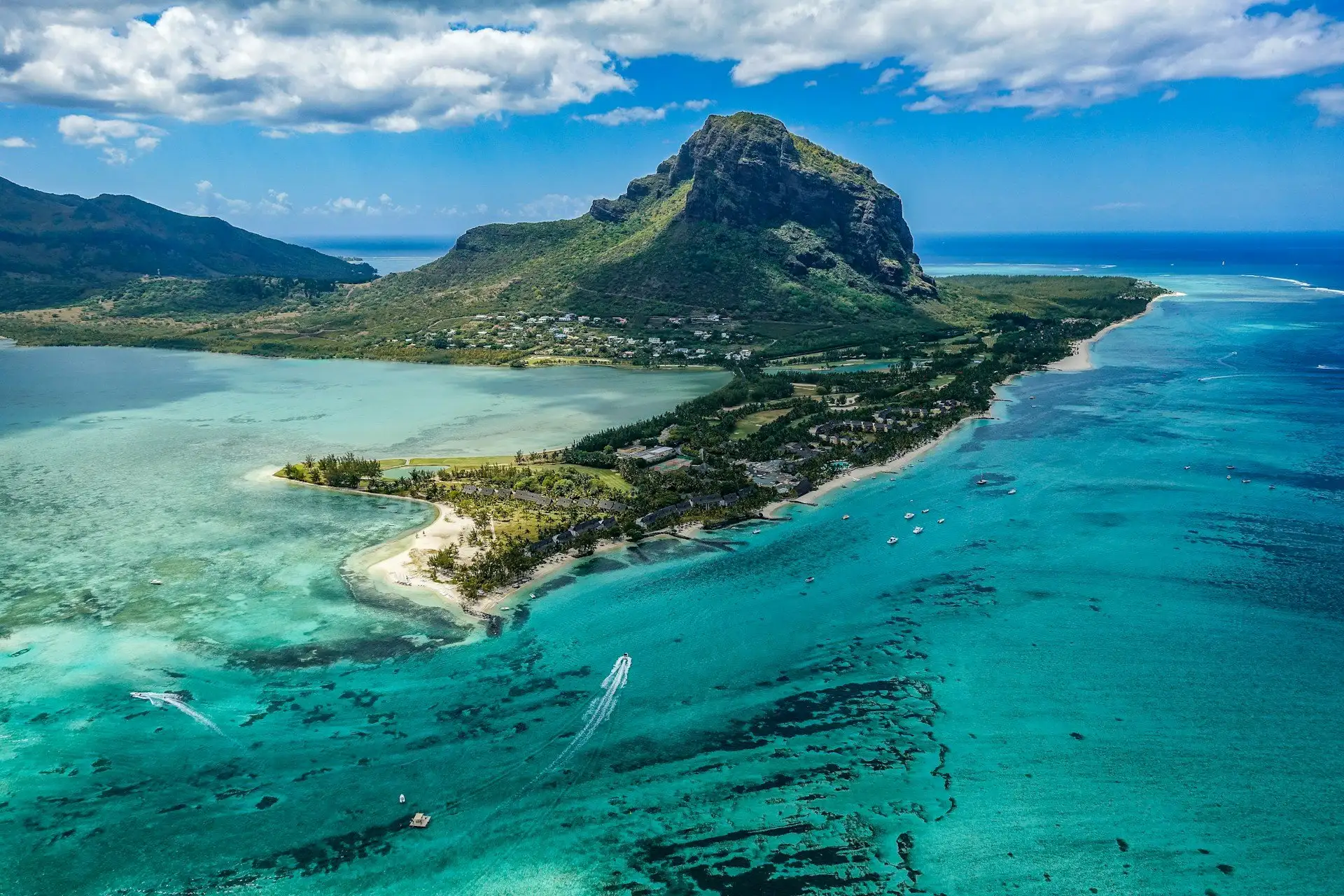
Le Morne Brabant — the dramatic basalt monolith at the southwestern tip of the island — carries a story that belongs alongside Aapravasi Ghat in any honest account of Mauritian history. The cliff was a refuge for escaped enslaved people (*marrons*) who hid in its caves and on its inaccessible upper slopes throughout the 18th and early 19th centuries. In 1835, soldiers climbed Le Morne to bring news that slavery had been abolished. The maroons, seeing them coming, believed they were about to be recaptured. Many threw themselves from the cliffs. The mountain is now a UNESCO World Heritage Site commemorating their resistance — and their tragedy. Most visitors photograph it from the beach without knowing any of this.
First settlement. Ebony forests cut, deer introduced, dodo hunted to extinction by the 1680s. The Dutch abandon the island after cyclones and crop failures.
Sugar plantations established. Enslaved Africans and Malagasy people arrive. Creole language and culture develop. Port Louis built. The French legacy still shapes the island most visibly.
Slavery abolished 1834. "Great Experiment" in indentured labor begins: nearly 500,000 workers from India pass through Aapravasi Ghat. Chinese merchants arrive. A complex multicultural society forms.
Soldiers climb Le Morne Brabant to announce abolition. The maroons, believing they would be recaptured, throw themselves from the cliffs. The mountain becomes a symbol of resistance.
Sir Seewoosagur Ramgoolam leads Mauritius to independence on March 12. The country becomes a republic in 1992 and develops into one of Africa's most stable democracies.
Both Aapravasi Ghat (indentured labor depot) and Le Morne Cultural Landscape (maroon refuge) receive UNESCO World Heritage status in the same year — a remarkable pairing of the island's two most painful histories.
Top Destinations
Mauritius divides naturally into four regions — north, south, east, and west — each with a distinct character and appeal. Most visitors stay in one area and day-trip to others; the island is small enough (roughly 65km north to south) that everything is within 90 minutes of everywhere else. Choose your base based on what you want: Grand Baie in the north for nightlife and island excursions, Belle Mare on the east for the finest beaches, Le Morne in the southwest for kitesurfing and dramatic scenery, Flic en Flac on the west for diving and sunsets.
Chamarel & the Seven Coloured Earths
In the southwest's rolling hills, a patch of volcanic earth cycles through seven colors — red, brown, violet, green, blue, purple, and yellow — in smooth dunes that refuse to mix despite wind and rain. The effect is genuinely otherworldly: the colors sit alongside each other in bands that look hand-painted. Nearby, the Chamarel Waterfall drops nearly 100 meters through tropical forest into a rocky pool. The village of Chamarel has several good restaurants and the Rhumerie de Chamarel rum distillery — the Mauritius rum tastings here are excellent. Combine with a morning at the neighbouring Black River Gorges for a full day in the southwest.
Le Morne Brabant Peninsula
The dramatic basalt monolith at the southwestern tip is one of the island's most photographed landmarks and, when you know its history, one of its most moving. UNESCO designated it a World Heritage Site for its role as a refuge for escaped enslaved people — the maroons who died here in 1835 believing they were about to be recaptured. The hiking trail to the top is moderate and the views are extraordinary. Off the peninsula's tip, the "underwater waterfall" illusion — sand flowing off the continental shelf, visible from seaplane or helicopter as a cascade into the deep — is one of Mauritius's most photographed natural spectacles. This corner of the island is also the global capital of kitesurfing: the consistent southwest trades and flat lagoon make it world-class.
Belle Mare & Palmar (East Coast)
The east coast holds Mauritius's finest beaches — a long, nearly continuous stretch of fine white sand and shallow turquoise water protected by the outer reef. Belle Mare is the benchmark: consistent, calm, and beautiful without the development that crowds the north. The east tends to be slightly windier than the west, which keeps the water clear and the air cool. Trou d'Eau Douce, a little further south, is the departure point for boats to Île aux Cerfs — the small island in the lagoon famous for its water sports and beach clubs, consistently rated among the Indian Ocean's best day-trip islands.
Black River Gorges
The island's largest national park, covering 6,500 hectares of native forest in the rugged southwest interior — the most intact remnant of the forest that once covered all of Mauritius. The endemic echo parakeet was down to fewer than 12 birds in the 1980s; today more than 800 live in this park, one of conservation's great success stories. The Mauritius kestrel was similarly rescued from near-extinction. Several hiking trails vary from easy walks to full-day ridge traverses. The viewpoint at Gorges Viewpoint overlooking the gorge and the western coast is one of the finest in the Indian Ocean.
Port Louis
The capital is more interesting than most resort visitors give it time for. The Central Market — two floors of produce, spices, street food, and craft stalls — is one of the best market experiences in the Indian Ocean. The waterfront Caudan complex anchors a stretch of restaurants and the Blue Penny Museum, home to the famous 1847 "Post Office" stamps (among the world's most valuable, and the reason Mauritius was the first country outside Britain to issue postage stamps). Aapravasi Ghat, the UNESCO indentured labor site, is a 15-minute walk from the waterfront. The Chinatown district and the colourful Hindu temples on the streets above the market complete a genuinely vivid urban picture.
Sir Seewoosagur Ramgoolam Botanical Garden (Pamplemousses)
Founded in 1770, one of the oldest botanical gardens in the Southern Hemisphere. The giant Victoria amazonica water lilies — whose pads are large enough for a small child to sit on — are the famous image. The Talipot palms, which flower only once in their 30-to-80-year life and then die, are rarer and more extraordinary. The garden also holds rare fruit trees, endemic Mauritian species, and the remains of the original colonial garden house. Free to enter with a guide (included in the entrance); allow two hours.
Flic en Flac & Tamarin
Flic en Flac is the west coast's main resort strip — a long public beach with shallow, calm water, excellent sunsets, and the best diving access on the island. The famous Cathedral dive site, a series of underwater caverns off the coast here, is consistently rated among the Indian Ocean's finest dives. Tamarin Bay, just south, is where spinner dolphins rest in the early morning — boat trips operate daily for dolphin encounters. The surf at Tamarin is the best on the island. The road between Flic en Flac and Le Morne through Black River is one of the most scenic drives in Mauritius.
Grand Baie & Trou aux Biches
Grand Baie is the tourist hub of the north — the island's best nightlife, most restaurants, and easiest access to northern island excursions (Île Plate, Île Gabriel, Coin de Mire). The beach in Grand Baie itself is not the island's best, but everything else is within reach. Trou aux Biches, a few kilometers west, has one of the finest beaches in the north and excellent snorkeling from the shore. The northern coastline around Cap Malheureux — the northernmost point, with a red-roofed chapel that is one of the island's most photographed spots — is a good half-day drive.
Île aux Aigrettes
A small coral island off the southeast coast, managed by the Mauritian Wildlife Foundation as a restoration project returning it to its pre-human ecological state. Aldabra giant tortoises (replacing the extinct Mauritian giant tortoise) graze through restored native vegetation. Pink pigeons — once down to 9 birds, now 400+ — nest in the trees. The guided tours are among the most informative in Mauritius. Take the boat from Mahébourg. The visit earns its entry fee in conservation value and genuine fascination.
Culture & Etiquette
Mauritius is genuinely multicultural in a way that goes beyond tourist-board copy. Roughly 52% of the population is of Indian origin (mostly Hindu, with a significant Muslim minority), 27% Creole (African-Malagasy descent), 3% Sino-Mauritian, and the rest of mixed or Franco-Mauritian background. All four groups have been on the island long enough to consider themselves Mauritian first, and the daily negotiation of shared space between communities that maintain distinct religious and cultural identities is one of the most interesting things about the country. Divali lights up Hindu neighborhoods in October. Eid changes the rhythm of Muslim areas. Christmas is a public holiday. Chinese New Year is celebrated nationwide. The school calendar accommodates all of them.
Séga Music
Séga is the soul of Mauritius — a music and dance tradition born from the enslaved African and Malagasy communities on the island's sugar plantations, developed as an expression of resistance and community in conditions of brutal labor. The music uses the ravane (a hand-held frame drum), the maravanne (a shaker), and the triangle, with call-and-response vocals in Creole. The dance is sensuous and grounded. Séga performances at hotels are often sanitized for tourist audiences; the real thing can be found at Creole cultural events, especially around the Festival International Kreol held every December in Port Louis.
Religious Diversity
Mauritius has more public holidays than almost any other country in the world — because it celebrates the major festivals of all its religious communities. Hindu temples, mosques, Catholic churches, and Chinese pagodas exist on the same streets without tension that is visible from the outside. Visiting a Hindu temple during Kavadi (the Tamil festival involving devotees carrying elaborate frameworks pierced through their skin) or watching the fire-walking ceremony at a Tamil temple are among the most extraordinary cultural experiences the island offers — both open to respectful visitors.
Horse Racing
The Champ de Mars racecourse in Port Louis — the oldest horse racing track in the Southern Hemisphere, established in 1812 — is an institution. The racing season runs April to November on Saturday afternoons, drawing enormous crowds across all communities. Attendance at a race day is one of the genuinely authentic Mauritian experiences available to visitors, requiring nothing but the entrance fee and a willingness to be swept along by the collective excitement. The grandstand architecture is colonial and magnificent.
The Dodo & the "Post Office" Stamps
The dodo appears on the Mauritian national emblem, on postage stamps, on rum bottles, on T-shirts. Its extinction is the island's foundational ecological tragedy — a large flightless pigeon that evolved without predators and therefore had no fear of the Dutch settlers who hunted it to oblivion within 80 years of their arrival. Mauritius was also the first country outside Britain to issue postage stamps (in 1847). The "Post Office" stamps — misnamed in the engraving — are among the most valuable postage stamps in the world. Both the dodo skeleton and the stamps are in the Blue Penny Museum in Port Louis.
At temples, mosques, markets, and in Port Louis, covered shoulders and knees are appropriate and expected. Beachwear stays at the beach. Mauritians are tolerant of tourists but notice and quietly judge beach-to-city clothing transitions.
Both Hindu temples and mosques require shoe removal before entry. Respectful head covering for women in mosques. Many temples will provide a sarong at the entrance if needed.
"Bonzour" (good morning/day), "Bonswar" (good evening), "Mersi" (thank you). Mauritians light up when visitors make any effort with Creole. French works everywhere that English doesn't.
Taxis in Mauritius do not use meters in most cases. Agree the fare before the journey starts. Hotel reception staff can tell you the reasonable going rate for common destinations.
The Central Market in Port Louis is genuinely priced for locals, not tourists — this is unusual and worth protecting. Don't aggressively bargain for things that are already fairly priced. The local food stalls especially; order and pay what they ask.
Mauritians are not a backdrop. Ask before photographing anyone at the market, at temples, or at fishing villages. A smile and a gesture is usually enough; a genuine "Pé kapav foto?" (Can I take a photo?) in Creole is better.
All beaches in Mauritius are public by law to the high tide line. Resorts cannot legally exclude non-guests from the beach in front of their property. If you want to use any beach, you have the right to do so.
Aapravasi Ghat, Le Morne, Île aux Aigrettes — these are not optional enrichment activities. They explain what Mauritius actually is and how it got here. Give them a day between beach days. You won't regret it.
Food & Drink
Mauritian food is the most directly enjoyable expression of the island's multicultural identity. The Indian-derived dishes (carried by the indentured workers and their descendants who make up the majority of the population) dominate everyday eating. The Creole tradition layers French technique over Malagasy and African ingredients. Chinese influences appear in the noodle dishes and dim sum. And at the high end, French-trained chefs work with the island's exceptional seafood in some of the best restaurant kitchens in the Indian Ocean. The dholl puri stall by the roadside at 7am and the fine-dining terrace over the lagoon at 8pm are both genuinely Mauritius — you need to eat at both to understand the island properly.
Dholl Puri
The national street food — a thin, pliable flatbread made from flour and split yellow peas, served rolled around a combination of bean curry, rougaille (Creole tomato sauce), and chutneys. Sold from roadside stalls throughout the island from 6am, costing the equivalent of $0.50–1. It is one of the great cheap meals in the Indian Ocean and genuinely difficult to eat just one. Find the stall with the longest queue of Mauritians and get in it.
Mine Frit & Riz Frit
Chinese-derived fried noodles and fried rice, adapted over generations into the Mauritius Chinese-Creole style. Available at every small restaurant on the island, usually topped with fried egg, vegetables, and either chicken or seafood. The Chinese community has been on Mauritius since the 18th century; their food is no longer Chinese-Chinese but something distinctly Mauritian. Mine bouillon (noodle soup with pork or fish balls) is the comforting version on a cooler evening.
Rougaille
The Creole tomato sauce that appears on everything — a reduction of tomatoes, garlic, onions, ginger, thyme, and chili that can accompany fish, chicken, sausage, or vegetables. The fish rougaille is the classic: firm white fish cooked in this fragrant sauce and served with rice and rougaille de légumes (the vegetable version). Every Mauritian family has a slightly different rougaille recipe and considers their grandmother's to be the definitive one.
Vindaye
The Mauritius answer to escabeche — fish or octopus fried then marinated in a potent mix of oil, mustard seeds, turmeric, garlic, ginger, and vinegar. The result is tangy, spiced, and deeply Mauritian in its layering of Indian spice and French pickle technique. Vindaye de poisson (fish) and vindaye de ourite (octopus) appear on nearly every local restaurant menu. Eaten cold or at room temperature, usually with bread or rice.
Octopus Curry (Ourite)
The octopus fisherwomen of Mahébourg and the southeast coast have been supplying Mauritius's restaurants for generations. Octopus curry — slow-cooked in coconut milk or tomato-based sauce with island spices — is one of the finest dishes on the island when done well. The best versions come from small local restaurants on the southeast coast, not resort buffets. Ask the hotel what restaurant the chef recommends in Mahébourg.
Rum & Phoenix Beer
Mauritius has been producing sugar cane rum since the French period. The Rhumerie de Chamarel and Grays distilleries produce some of the finest rums in the Indian Ocean, available at rum tastings included in distillery tours. Phoenix Beer — the local lager, brewed in Mauritius since 1963 — is perfectly calibrated to the climate: light, cold, and best on a beach. The local cocktail is the rum punch; the local occasion is whatever made you come here.
When to Go
Mauritius is genuinely an all-year destination — the climate is subtropical and the lagoons are always warm. That said, the seasons vary enough to matter for different activities. The dry, cooler austral winter (May–October) is ideal for most beach activities. The rainy summer (November–April) includes the cyclone season (January–March), when storms can disrupt plans for a week or more — though the rest of summer is often perfectly beautiful.
May – Oct
Dry Winter SeasonCooler (22–26°C), drier, and with consistent southeast trades. The west and north coasts are at their calmest for swimming and diving. May–September: the southwest trades blow hard on the south and west, making those coasts rougher — but also making Le Morne one of the world's best kitesurfing spots. Peak season for hotels — book early and expect higher prices.
Oct – Dec
Shoulder SeasonThe transition into summer: temperatures rise to 28–30°C, seas calm across all coasts, excellent for diving and snorkeling. October and November are among the best months for underwater visibility. The Festival International Kreol in December is a cultural highlight. Lower hotel prices than peak season.
Jan – Mar
Cyclone SeasonHot (28–32°C), humid, and with a real cyclone risk in January–March. Most years the storms pass without major disruption; some years a cyclone causes two to four days of cancelled activities and strong winds. If your trip overlaps with a cyclone, you'll be safe but frustrated. The beach experience between cyclone events is excellent. Lower prices reflect the risk.
Trip Planning
Seven to ten days is the standard and gives you enough time to see the full variety of the island without rushing. Less than a week means choosing between regions; more than two weeks requires combining with Rodrigues Island (Mauritius's outlying island dependency, quieter and more authentic) or nearby Réunion. The island is small enough to see a lot in a week with a rental car.
Arrive + West Coast
Fly into SSR International Airport, pick up rental car. Drive to Flic en Flac (45 minutes). Afternoon: first swim in the Indian Ocean. Sunset along the west coast is excellent. Dinner at one of the seafood restaurants on the Flic en Flac strip.
Chamarel & Le Morne
Morning: drive south through Black River to Chamarel. Seven Coloured Earths, Chamarel Waterfall, rum distillery. Afternoon: continue to Le Morne peninsula. Hike the trail toward the peak (allow 3 hours return) or simply sit on the beach below the monolith and watch the kitesurfers. Think about what happened here in 1835.
Black River Gorges + Mahébourg
Morning: hike in Black River Gorges National Park — the Gorges Viewpoint trail is 2 hours return and the views are outstanding. Afternoon: drive to Mahébourg on the southeast coast. The historical museum in the old colonial house is excellent. Dinner by the waterfront.
Belle Mare + Île aux Cerfs
Full day on the east coast. Morning: Belle Mare beach — the best on the island. Afternoon: take the boat from Trou d'Eau Douce to Île aux Cerfs for water sports and the shallow lagoon. Back to Belle Mare for sunset.
Port Louis
Spend the morning in the capital: Central Market for breakfast (dholl puri at the stalls), then Aapravasi Ghat UNESCO site (two hours, includes the interpretation centre). Blue Penny Museum with the 1847 stamps. Caudan Waterfront for lunch. Drive to the north coast in the afternoon. Grand Baie for the evening.
North Coast + Pamplemousses
Morning: Pamplemousses Botanical Garden (two hours). Continue along the north coast: Trou aux Biches for swimming and snorkeling, Cap Malheureux chapel and the views over the northern islands. If diving: this is the best area for the north's reef dives. Evening: Grand Baie for dinner.
Grand Bassin + Departure
Early morning drive to the interior: Grand Bassin (Ganga Talao) crater lake for an hour before the heat. Return to the airport via the Plaines Wilhems plateau towns (Curepipe has good craft shopping). Depart.
West Coast Base
Flic en Flac or Le Morne. Two full days: diving at the Cathedral site and nearby wrecks, Tamarin dolphin morning, Chamarel and Seven Coloured Earths, Le Morne hike. Third day: slow exploration of the Black River valley and the road through Bel Ombre to the south coast.
South & Southeast
Drive the scenic south coast road: Rochester Falls, Mahébourg museum, Île aux Aigrettes nature reserve (half-day guided tour — book in advance), Blue Bay Marine Park for snorkeling. Dinner in Mahébourg.
East Coast
Belle Mare for two beach days with proper time to do nothing. Île aux Cerfs day trip. Trou d'Eau Douce restaurants for dinner. Optional: kitesurfing lesson at Belle Mare.
Port Louis + Interior
Morning: Pamplemousses Botanical Garden. Afternoon: Port Louis — Central Market for lunch, Aapravasi Ghat, Blue Penny Museum, Chinatown walk. Grand Bassin on the way back through the interior.
North Coast
Two days in the north: Trou aux Biches beach, north coast islands excursion (Île Plate, Île Gabriel), Cap Malheureux. Grand Baie nightlife if that's your style. Seaplane tour over the underwater waterfall (most depart from the north) on the last afternoon before departure.
Mauritius All-In-One Form
Complete the Mauritius All-In-One Travel Form online before arrival at the official government site. Print the QR code confirmation. Without it, you fill in a disembarkation card at the airport — less convenient but not a crisis.
Rental Car
The single best investment for a Mauritius trip. The bus system is functional but slow and complex. Taxis are expensive per journey. A rental car gives you the freedom to explore the interior, find roadside dholl puri stalls, and reach beaches before the tour groups arrive. Drive on the left. Roads are good. Traffic in Port Louis can be severe.
Vaccinations
No mandatory vaccinations for most visitors. Yellow fever certificate required if arriving from a yellow fever country. Recommended: routine vaccines up to date, Hepatitis A. Malaria is not present in Mauritius. Chikungunya and dengue mosquito-borne viruses are present; use repellent in the evenings.
Full vaccine info →Money
Mauritius Rupees (MUR) are best obtained from ATMs, which are widely available. Major credit cards accepted at hotels, restaurants, and shops. Cash is important for markets, street food, local buses, and tips. Exchange at banks or ATMs rather than hotels for better rates.
Diving
Book with PADI-certified operators. The Cathedral at Flic en Flac requires good buoyancy control — this is not a dive for beginners. Blue Bay in the south is the best option for less-experienced divers. Visibility is best October to December. Whale sharks appear off the west coast May to August — ask dive operators about current sightings.
Beach Notes
All beaches are public by law in Mauritius, to the high tide line. Resorts cannot bar access. The best beaches are not necessarily in front of the most expensive hotels — Belle Mare's public beach is as beautiful as the resort beaches adjacent to it. Bring reef-safe sunscreen to protect the coral.
Transport in Mauritius
The island is small enough that every corner is within 90 minutes of the airport. A rental car transforms the experience, but taxis, buses, and organised excursions all work for specific needs.
International Flights
Via Dubai, London, Paris, or JoburgSSR International Airport (MRU) near Mahébourg in the southeast. Air Mauritius, Emirates, Air France, British Airways, and several others serve the island. Direct flights from London (~12 hours), Paris (~12 hours), Dubai (~6 hours). Most connections from Australia and Asia route through Dubai or Singapore.
Rental Car
$25–60/dayThe best way to see Mauritius. Drive on the left. International licence accepted. Roads are well-maintained. Book in advance for peak season. Fuel is affordable. Traffic is the main challenge around Port Louis at rush hours — avoid it if possible.
Taxis
$8–25/journeyAvailable everywhere. Negotiate the fare before getting in. Hotel receptions have recommended rates. Airport to Grand Baie runs around MUR 1,500–2,000 (~$30–40). App-based taxis are emerging in Port Louis. Reliable and safe.
Buses
$0.30–1/journeyExtensive and very cheap. Run between all main towns on established routes. Useful for getting from Port Louis to Curepipe or from Grand Baie into the city. Slower and less comfortable than taxis. Good for budget travelers and for getting a genuine slice of local life.
Seaplane / Helicopter
$150–400/personAir Mauritius and Air Taxi Mauritius offer seaplane and helicopter tours — the best way to see the underwater waterfall illusion and the full extent of the lagoon and reef. Worth a splurge on a clear day. Also useful for reaching Rodrigues Island if not flying commercial.
Boats & Catamarans
$60–150/dayDay catamaran trips — circling the island, stopping at snorkel spots and islands, with BBQ on board — are a Mauritius institution. Good-value, sociable, and a genuinely excellent way to see the lagoon. Book through your hotel or directly at the marina in Grand Baie or Trou d'Eau Douce.
Accommodation in Mauritius
Mauritius genuinely spans the full range from backpacker guesthouses to some of the world's finest luxury beach resorts. The island pioneered the Indian Ocean all-inclusive beach hotel and several properties — Four Seasons Anahita, One&Only Le Saint Géran, Constance Belle Mare Plage — remain benchmarks for the category globally. Between these and the budget end is a rich range of boutique guesthouses, family-run auberges, and mid-range hotels that deliver excellent value and significantly more authentic access to island life than the all-inclusive compounds.
Luxury Resorts
$400–1,500+/nightThe best are genuinely world-class: Four Seasons Anahita (east, over-water villas), One&Only Le Saint Géran (east, classic elegance), Lux Le Morne (southwest, kitesurfing access), Constance Belle Mare Plage (east, best beach position), Royal Palm Beachcomber (north, intimate). Book well in advance for peak season. All-inclusive makes sense when transport costs are factored in.
Mid-Range Hotels
$80–250/nightExcellent value range. Many smaller hotels and boutique properties along the west and east coasts offer good beaches, pools, and direct beach access without the all-inclusive price tag. Mako Hotel (Flic en Flac), Pearle Beach (west), and dozens of others. Better for travelers who want the rental car freedom to eat and explore independently.
Guesthouses & B&Bs
$30–80/nightFamily-run guesthouses, particularly around Mahébourg, Trou d'Eau Douce, and in the interior towns, offer a genuinely different experience of Mauritius — home cooking, local advice, actual Mauritians as your daily interlocutors. Chamarel has several excellent small guest villas with great valley views.
Glamping & Eco-Lodges
$80–200/nightA growing segment in the interior highlands and south coast. Bel Ombre Nature Reserve, Domaine de Bois Chéri (tea estate), and others offer forest or estate lodging away from the beach crowds. Excellent for the second half of a trip after you've done the beach.
Budget Planning
Mauritius has a genuinely wide budget range — from one of the Indian Ocean's more affordable backpacker options to some of the world's most expensive beach resorts. The key variable is accommodation. Eating and transport costs are manageable at all levels; the resort decision is where the real budget split happens.
- Guesthouses and small hotels
- Dholl puri, mine frit, local restaurants
- Rental car or buses
- Public beaches (all are free)
- Self-organized snorkeling and hiking
- Mid-range beach hotels
- Mix of local restaurants and hotel dining
- Rental car
- Guided excursions: diving, Île aux Cerfs day trip
- One catamaran day trip
- World-class resort (all-inclusive)
- All meals included at resort
- Private excursions and seaplane tour
- Spa treatments
- Private boat charters
Quick Reference Prices
Visa & Entry
Mauritius operates one of the most open visa policies in the world. Citizens of the US, UK, EU, Australia, Canada, India, and most other countries enter visa-free, with the length of permitted stay depending on nationality. The main requirement is the Mauritius All-In-One Travel Form, completed online before arrival.
US, UK, EU, Australia, Canada, India, and most other countries: 60–90 days visa-free. Complete the All-In-One Travel Form online before arrival at the official Mauritius government portal. Bring proof of return/onward travel and sufficient funds.
Safety in Mauritius
Mauritius is one of the safest countries in Africa and the Indian Ocean for tourists. It has a functioning police force, good infrastructure, and a stable democracy with genuinely low violent crime rates. The risks that exist are entirely typical of any tourist destination and require standard precautions rather than any specific Mauritius concerns.
Overall Safety
Mauritius consistently ranks as one of Africa's safest and most stable countries. Violent crime against tourists is very rare. The country has a well-regarded police force, an independent judiciary, and a free press. Political stability is strong.
Petty Theft
The main tourist risk. Pickpocketing at beaches, markets (Port Louis Central Market, Grand Baie), and near ATMs. Don't leave valuables visible on the beach while swimming. Use your hotel safe for passports and large amounts of cash.
Ocean Safety
Strong currents can develop during cyclone season and after storms along exposed parts of the coast. The lagoons inside the coral reef are generally calm and safe. Heed local advice about swimming conditions after weather events. Some beaches have rip currents that are not marked.
Road Safety
Drive on the left. Speed limits are enforced. The main risk is other drivers in Port Louis traffic and the occasional narrow coastal road. Night driving on mountain roads should be cautious. Motorbike hire is available but not recommended for unfamiliar riders given road conditions.
Solo Women
Mauritius is consistently rated as one of the safer Indian Ocean destinations for solo female travelers. Harassment is uncommon. Standard precautions apply at night in Grand Baie's bar areas. The beach and resort areas are genuinely safe and comfortable for women traveling alone.
Cyclones
January to March. The island has well-developed cyclone warning and shelter systems. If a cyclone warning is issued, follow hotel and government instructions immediately. Class 3 and above cyclones require shelter and can last 24–48 hours. Travel insurance covering cyclone disruption is worth having for summer visits.
Emergency Information
Key Contacts in Port Louis
Book Your Mauritius Trip
Everything in one place for planning and booking your Mauritius trip.
The Bird on the Stamp
The dodo appears on the Mauritius national coat of arms, on the postage stamps, on the rum bottles, on the key rings in the airport gift shops. It's a fat, slightly comical bird, rendered in a stylized crest beside a deer that was also introduced by the Dutch and also disrupted the native ecosystem. The dodo is the mascot of a country that did not exist when the dodo did — every Mauritian alive today is descended from someone who came after it was already gone.
The dodo was not stupid and it was not slow. It was a large pigeon that evolved in a place with no land predators, so it evolved without fear. It had never needed fear. When the Dutch arrived with dogs and rats and hunger, it walked toward them. The Dutch ate them all within roughly 80 years of arrival. The last confirmed sighting was 1662. By 1681 the species was gone.
Mauritius carries this story with a kind of collective philosophical honesty that is unusual. The bird is not just a cautionary tale about extinction — it's a reminder that this island was made by arrivals, by people who came from everywhere and made something out of the consequences. The enslaved Africans who created séga music. The Indian indentured workers who built the sugar economy and made Mauritius the multicultural democracy it is. The French who gave the island its language. The Dutch who gave it the dodo's absence.
You will swim in a lagoon that is genuinely among the most beautiful water on earth. You will eat dholl puri by a roadside at 7am and a Creole fish rougaille at a table over the same ocean at 8pm. If you go to Aapravasi Ghat and stand on the 14 steps where half a million people disembarked — most of whom never went home — you will understand something about this island that the resort brochures don't mention. All of it is Mauritius. The lagoon and the history are the same place.