
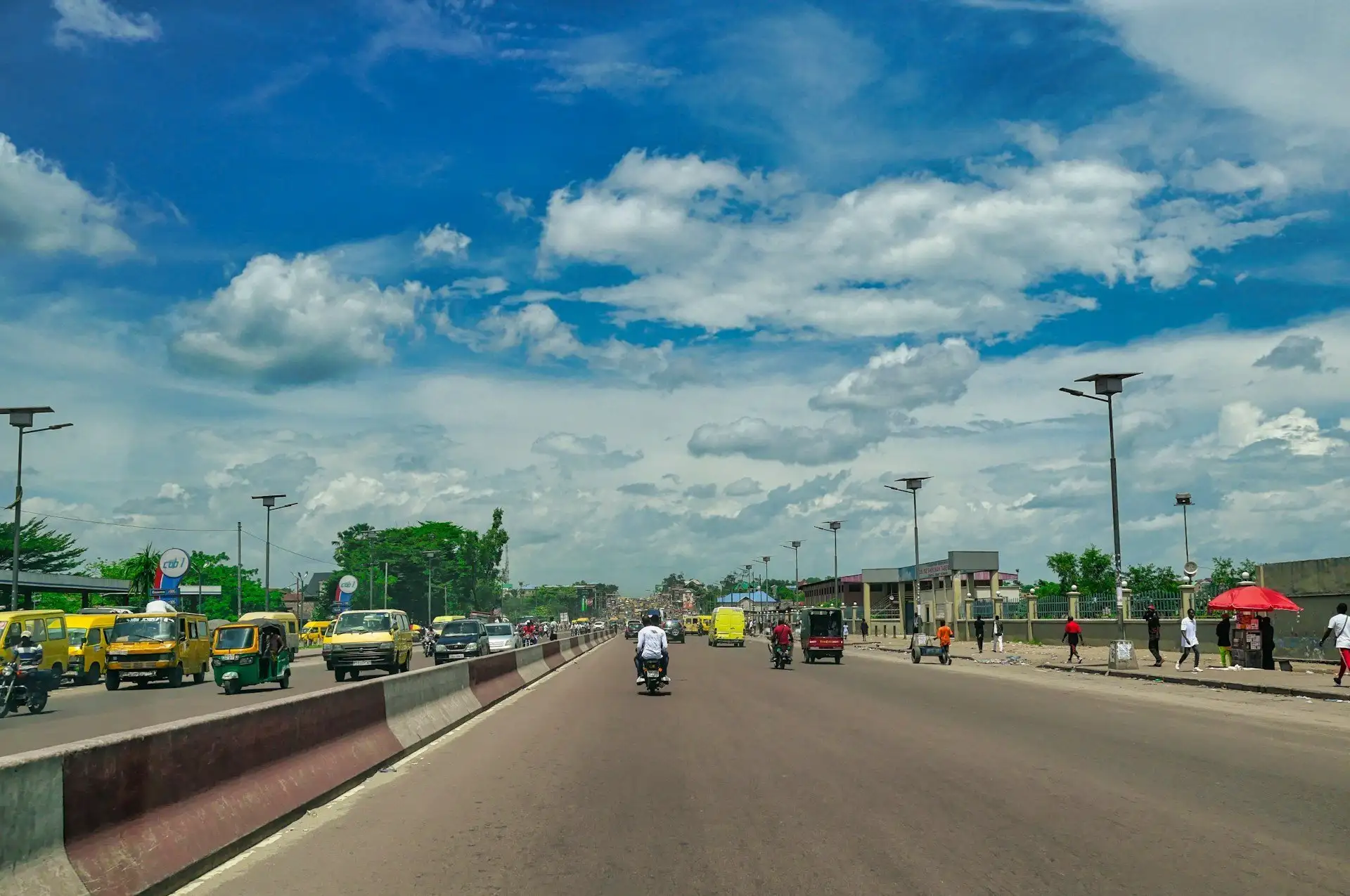
Democratic Republic of the Congo
The world's second-largest rainforest. More mountain gorillas than anywhere on earth. The only place bonobos live. The okapi, unknown to science until 1901. The Congo River, the second deepest on earth, flowing through a country the size of Western Europe. One of the world's most severe ongoing conflicts in its eastern provinces. This guide covers all of it.
What You're Actually Getting Into
The Democratic Republic of the Congo is the most biodiverse country in Africa and one of the most consequential on earth. Its rainforest is the world's second largest, a carbon sink whose fate is inseparable from the climate future of the entire planet. Its rivers drain a basin the size of the Indian subcontinent. It contains species — the bonobo, the okapi, the Congo peacock — that exist nowhere else on earth. Its mountain gorilla population in Virunga National Park is the world's largest concentration of these animals. The DRC's mineral wealth — cobalt, coltan, gold, diamonds — underlies the electronics in every smartphone on earth and the batteries in every electric vehicle. It is, by most ecological measures, one of the most important countries on earth.
It is also the site of the world's deadliest ongoing armed conflict — a complex, multi-actor war in the eastern provinces that has caused an estimated six million deaths since 1996 and has displaced more people than any other crisis in Africa. The mineral wealth and the conflict are not coincidental: the eastern DRC's resources have funded armed groups, attracted regional powers (Rwanda and Uganda have both been extensively involved), and created an economy of war that has proven extremely resistant to the peace processes that have repeatedly failed to end it. The UN peacekeeping mission in the DRC (MONUSCO) was one of the largest and most expensive in UN history, and it achieved limited results before being asked to leave by the Congolese government in 2024.
This guide addresses both realities directly. The DRC is a meaningful travel destination with experiences unavailable anywhere else on earth — the mountain gorillas and bonobos are genuinely in a category of their own. Getting to them requires honest engagement with the security situation and the limitations it imposes on itinerary planning. Kinshasa, Lubumbashi, and the western DRC are accessible with proper preparation and significantly less risk than the eastern provinces. The east — Virunga, Kahuzi-Biega, the Kivus — requires the most current security assessment available and should only be visited with specialist operators and verified safe windows. This guide maps all of it clearly.
DRC at a Glance
⚠️ Wildlife rating reflects accessible sites (Lola ya Bonobo, Virunga when open). Eastern DRC ratings severely compromised by active conflict. Specialist operator mandatory for all DRC travel.
The Security Situation by Region
The DRC is a country of 2.3 million square kilometers — larger than Western Europe — and its security situation varies enormously by region. The fundamental divide is between the west (Kinshasa, Kongo Central, Bandundu, Équateur, Kasai) and the east (North Kivu, South Kivu, Ituri, Maniema, Tanganyika). The west is elevated-risk but navigable. The east has been in active armed conflict for three decades.
Understanding this divide prevents two opposite errors: treating the entire country as a conflict zone (which causes people to miss the genuinely accessible experiences) and treating the accessible west as equivalent to the situation in the east (which causes people to underestimate the complexity of planning an eastern DRC visit). The map of risk is specific and it changes faster than any travel guide can track — always confirm current conditions with specialist operators and current government advisories before any final decisions.
North Kivu
Active armed conflict between M23 rebels (backed by Rwanda), the Congolese army (FARDC), and dozens of other armed groups. Goma, the provincial capital, has been under direct M23 threat multiple times and the security situation changes week by week. Virunga National Park is in North Kivu and has been partially or fully closed to tourists repeatedly due to proximity to combat. Most Western governments advise against all travel to North Kivu. Current status must be verified before any planning.
South Kivu and Ituri
Active conflict. Multiple armed groups including FDLR, Mai-Mai militias, and ADF (Allied Democratic Forces, affiliated with ISIS) operating in Ituri. Kahuzi-Biega National Park (eastern lowland gorillas) is in South Kivu and has had significant security incidents. Bukavu, the South Kivu capital, is more stable than the rural areas but is not safe by normal travel standards. Do not travel to these provinces without the most current specialist security briefing.
Maniema and Tanganyika
Active armed group presence. The town of Kalemie on Lake Tanganyika has been relatively more stable but access routes through Maniema province carry serious risk. The Ituri Forest — okapi habitat — straddles the Maniema-Ituri border in an area with significant insecurity. Verify the current status of the Epulu research station specifically before any planning.
Kinshasa
The capital is not a conflict zone but carries significant urban risk: armed robbery, carjacking, pickpocketing, and periodic political unrest. The Gombe and Limete neighborhoods are the most visitor-oriented. Do not travel at night. Use only operator-vetted transport. The river crossing to Brazzaville is a regular, functional service but requires current customs intelligence. Most Western governments advise a high degree of caution.
Lubumbashi and Katanga
The mining capital and most economically active city in the DRC outside Kinshasa. Elevated urban risk but manageable for visitors with preparation. Less political instability than Kinshasa. The road to Kundelungu National Park and the Lufupa River basin is passable in the dry season with a 4x4. No armed group activity in the Katanga mining belt.
Western DRC (Bandundu, Kongo Central, Équateur)
Significantly more stable than the east. Some areas of Équateur Province have experienced periodic unrest. The Congo River routes from Kinshasa are generally functional. Kongo Central (the coastal province near the Atlantic) is among the most accessible parts of the country. These areas require preparation but not the specialist security framework of the eastern provinces.
A History Worth Knowing
The Congo Basin was settled over thousands of years by Bantu-speaking agricultural peoples expanding from what is now Nigeria and Cameroon, interacting with and largely displacing or absorbing the hunter-gatherer Twa (Mbuti, Aka) peoples who had inhabited the forest for far longer. By the time the Kingdom of Kongo emerged in the 14th century in the area now known as northern Angola and the DRC's Kongo Central province, it was one of the largest and most sophisticated states in sub-Saharan Africa — with a centralized administration, an extensive trade network reaching the Atlantic coast, and a diplomatic relationship with Portugal that was initially a genuine exchange between equals.
The Atlantic slave trade transformed the Kingdom of Kongo from a trade partner into a slave-supply chain. Between roughly 1500 and 1800, the kingdom destabilized, fragmented, and was progressively hollowed out by the demand for enslaved people that the Portuguese — and later other European powers — maintained. An estimated three to five million people were enslaved from the Kongo Basin in this period. The kingdom that had sent ambassadors to the courts of Europe was dismantled by the economics of the same trade those courts were sustaining.
What followed was perhaps the worst episode of colonial extraction in African history. The Berlin Conference of 1884 to 1885 awarded the Congo Basin as the personal property — not a colony of Belgium, but the personal property — of King Leopold II of Belgium. What Leopold built in the Congo Free State between 1885 and 1908 was a rubber extraction regime that used hostage-taking, mutilation, and mass murder as enforcement tools. The rubber quota system required villages to deliver fixed quantities of rubber; failure to deliver resulted in the cutting of hands — including children's hands, documented by missionaries and journalists and eventually the subject of international campaigns by E.D. Morel and Roger Casement. The death toll is estimated between five and thirteen million people over twenty years. The regime was so extreme that international pressure eventually forced Leopold to cede the territory to the Belgian government in 1908, which ran it as a more conventional (though still exploitative) colony until independence.
Independence came June 30, 1960, and the first prime minister, Patrice Lumumba, lasted seventy-seven days before being removed in a CIA and Belgian-backed coup, subsequently murdered with the direct involvement of Belgian officials, and his body dissolved in acid to prevent his grave from becoming a shrine. The man who replaced him, Joseph-Désiré Mobutu, renamed himself Mobutu Sese Seko and the country Zaire, and ruled for thirty-two years through a system of organized corruption and personal brutality that systematically dismantled the state he was supposed to govern. His regime stole billions of dollars while the country's infrastructure collapsed. He was removed by Laurent-Désiré Kabila's rebel forces in 1997, with Rwandan and Ugandan military support, and died in exile in Morocco shortly after.
The wars that followed are known collectively as Africa's World War. The First Congo War (1996 to 1997) removed Mobutu. The Second Congo War (1998 to 2003) drew in nine African countries and is considered the deadliest conflict since World War II. An estimated five to six million people died — mostly from disease and starvation caused by displacement — and dozens of armed groups splintered across the eastern DRC in patterns that have never been fully resolved. Laurent-Désiré Kabila was assassinated in 2001; his son Joseph Kabila governed until 2019, when Félix Tshisekedi won the first peaceful transfer of power in the DRC's history. The eastern conflict continues under new labels — M23 rose to renewed prominence after 2021 with documented Rwandan backing — while the political transition in Kinshasa has brought marginally more stability to the west of the country.
One of sub-Saharan Africa's most sophisticated pre-colonial states emerges in the Kongo Basin. Ambassadors sent to Lisbon, Rome, and the Netherlands.
An estimated 3–5 million people enslaved from the Kongo Basin. The Kingdom of Kongo destabilizes and fragments under the pressure of the trade.
Leopold II's personal property. Rubber quota system enforced by mutilation and murder. Estimated 5–13 million deaths. International campaign forces handover to Belgian government.
Independence June 30, 1960. Patrice Lumumba elected PM. Removed and murdered with CIA and Belgian involvement within 77 days. His assassination shapes DRC politics to this day.
32 years of organized kleptocracy. Billions stolen. Infrastructure dismantled. The state hollowed out while the West supported Mobutu as a Cold War ally.
Two wars involving nine African countries. An estimated 5–6 million deaths. The deadliest conflict since WWII. The eastern DRC's armed group landscape takes shape.
Félix Tshisekedi elected. The DRC's first democratic transfer of power. Conflict in the east continues.
M23 rebels, with documented Rwandan backing, re-emerge as the dominant armed group in North Kivu. Goma repeatedly threatened. Peace talks ongoing with limited results.
Accessible Destinations
The DRC's destinations divide into two categories: those accessible with proper preparation and standard specialist-operator logistics, and those that require the specific security windows of the conflict-affected east. Both categories contain extraordinary experiences. The guide below distinguishes them clearly and gives current context for each.
Lola ya Bonobo Sanctuary
Twelve kilometers from central Kinshasa, Lola ya Bonobo is the world's only sanctuary for orphaned bonobos and the only place on earth where consistent, close encounters with habituated bonobos are available. Bonobos (Pan paniscus) are one of humanity's two closest living relatives and are found wild only in the DRC's Congo Basin rainforest south of the Congo River. They differ from chimpanzees in ways that are philosophically significant: they are female-dominated, resolve conflict through sexual behavior rather than aggression, and have never been recorded killing members of their own species. The sanctuary houses over sixty bonobos in a forested reserve, with morning visits that allow close observation of social groups interacting naturally. The experience is unambiguous: these are the most human-like animals you will ever encounter and the recognition is mutual, disconcerting, and entirely unforgettable. Lola ya Bonobo is accessible from Kinshasa without the security complications of the eastern DRC. Visits must be pre-booked through the sanctuary.
Kinshasa and the Congo River
Kinshasa is one of Africa's most complex and energetic cities, and engaging with it properly requires accepting both qualities simultaneously. The river is the city's defining physical fact: the Congo at Kinshasa is four kilometers wide, carrying an extraordinary volume of dark water past the city's edge, with Brazzaville's smaller skyline visible on the far bank across a stretch of water that is both a geographic boundary and a cultural divide of considerable depth. The ferry crossing to Brazzaville — thirty minutes, operated by multiple boat operators from the Beach port — is itself a remarkable experience. The Marché de la Liberté, the N'Djili quartier's street food scene, the live music venues of Matonge (home of Congolese rumba), and the contemporary art scene centered around institutions like the CAAC (Contemporary African Art Collection) make Kinshasa one of Africa's most culturally productive cities beneath its surface chaos. Understanding Kinshasa takes time and local knowledge; rewarding it is, in proportion.
Virunga National Park (Mountain Gorillas)
Virunga is Africa's oldest national park (established 1925) and contains the world's single largest population of mountain gorillas. It spans the Virunga Massif's volcanic landscape, the Rwenzori mountain foothills, the savanna of the Ishasha area, and Lake Edward. The gorilla trekking here is unambiguously among the world's great wildlife experiences: permits are cheaper than Rwanda or Uganda, the groups are large, and the setting — volcanic forest with the sounds of the eastern DRC around it — is more raw and less processed than the polished gorilla tourism circuits of its neighbors. Virunga also has chimpanzees, hippos (the world's largest concentration in Lake Edward area), and the only accessible active volcano treks in the region (Nyiragongo). The park has been closed to tourists partially or fully multiple times due to North Kivu's armed conflict; rangers and visitors have been killed in security incidents. Check virunga.org for current status before any planning. When it is open and the security corridor is confirmed, it is exceptional. When it is not, it is not open.
Kahuzi-Biega (Eastern Lowland Gorillas)
Kahuzi-Biega National Park near Bukavu in South Kivu holds habituated groups of eastern lowland gorillas (Grauer's gorillas) — the world's largest gorilla subspecies, physically bigger than mountain gorillas, with a more arboreal character. The park is a UNESCO World Heritage Site and was once one of the DRC's most accessible gorilla destinations. Security incidents — including attacks on rangers — have made it intermittently inaccessible since the 2000s. When accessible, the encounters here are extraordinary: Grauer's gorillas in montane forest at 2,000+ meters elevation, with groups that have been habituated over decades. Current status must be confirmed with the park and with specialist operators before any planning.
Okapi Wildlife Reserve (Epulu)
The Okapi Wildlife Reserve near the town of Epulu in the Ituri Forest is a UNESCO World Heritage Site and the best place on earth to see okapi — the forest giraffe that was unknown to Western science until 1901. The Epulu research station has been managing an okapi conservation program for decades. The reserve was attacked by Mai-Mai rebels in 2012, with okapi killed and staff killed or displaced. It has since been partially rehabilitated, but the security situation in Ituri Province requires specific current assessment before any visit. When accessible, the forest around Epulu is extraordinary: the Ituri is one of the world's great remaining intact tropical forests, home to Mbuti forest people, forest elephants, chimpanzees, and the okapi.
Lubumbashi and Katanga
The DRC's second city and the center of the mining economy that produces the cobalt and copper that the global electronics industry depends on. Lubumbashi has better infrastructure than most Congolese cities — the mining economy brings capital and foreign workers — and a calmer security environment than Kinshasa. The Lubumbashi Museum has the best collection of traditional art and ethnographic material in the DRC. Kundelungu National Park, accessible by 4x4 from Lubumbashi, has waterfalls and savanna wildlife. The Lufupa basin south of the park is used by sport fishers for tigerfish. Not a primary tourist draw but a functional base for the southeastern DRC with lower risk than either Kinshasa or the east.
Congo River Journey
The Congo River from Kinshasa to Kisangani (approximately 1,700 kilometers) is one of the world's great river journeys. The barge convoy — a pusher tug pushing a floating village of lashed-together barges carrying hundreds of passengers, motorcycles, crates of smoked fish, live chickens, traders, and the complete economic and social life of the river communities — takes one to three weeks depending on conditions. It is not comfortable. It is genuinely extraordinary: market trading from dugout canoes that pull alongside the moving barges, river dolphins (the Congo River blind dolphin), forest stretching to every horizon, and the specific social world of the river economy. The security situation along the river has been relatively stable in the western section but this changes. Verify current conditions before any journey of this type.
Nyiragongo Volcano
Mount Nyiragongo (3,470 meters) above Goma holds one of the world's largest and most active lava lakes in its summit crater — a churning, glowing pool of molten rock that is visible from the rim at night as one of the most extraordinary natural sights available anywhere on earth. The one-day ascent is managed by the Virunga Conservation Area. The volcano erupted in 2021, destroying parts of Goma and forcing evacuations. Current status is entirely dependent on the North Kivu security situation and volcanic activity levels. Check virunga.org for current accessibility.
Culture & Etiquette
The DRC is the world's most populous French-speaking country, with over 100 million people and four national languages (Lingala, Swahili, Tshiluba, and Kikongo) that function as regional lingua francas across different zones. French is the official language of government, education, and formal contexts, but Lingala is the working language of Kinshasa, the music industry, and the western Congo; Swahili dominates the east. Walking into Kinshasa speaking French works; greeting someone in Lingala ("Mbote!") produces genuine delight.
The Congolese cultural contribution to the world that is most globally underappreciated is the music. Congolese rumba and its offspring — ndombolo, soukous, and what is now generically labeled "Afrobeat" internationally — is the most influential popular music export from sub-Saharan Africa. The style emerged in Kinshasa and Brazzaville in the 1940s and 1950s from the interaction of Cuban son (which had itself derived partly from West African rhythms carried across the Atlantic) with local Congolese rhythms, producing something that became the foundation of contemporary popular music across the entire continent. The artists who built it — Franco, Tabu Ley Rochereau, Papa Wemba — are not sufficiently known outside Francophone Africa and they should be.
"Mbote!" (hello), "Matondo" (thank you), "Bonjour" for formal contexts. Attempting Lingala in Kinshasa or Swahili ("Jambo," "Asante") in the east produces the same disproportionate warmth response as every guide in this series has documented: people are surprised and pleased that you bothered.
Congolese hospitality is genuine and generous despite (or perhaps because of) the material conditions that most people navigate daily. Refusing food or drink offered in someone's home is a social slight. Accept what is given, eat a meaningful amount, and express appreciation.
Kinshasa has a strong visual culture around clothing — the Sapeurs (Société des Ambianceurs et des Personnes Élégantes) who dress in elaborate designer outfits as a philosophical statement about dignity are the most visible expression of a broader norm. Dressing well in Kinshasa is a social courtesy and a signal of respect. Scruffy tourist clothing marks you as someone who didn't make an effort.
DRC police checkpoints are frequent and document checks are thorough. Have your passport, visa, and any relevant permits accessible at all times. Having certified copies is useful. Bribery attempts at checkpoints are common; your operator will advise on how to handle these in the current context.
Strictly enforced and can result in arrest and equipment confiscation. This is particularly sensitive in Kinshasa around the presidential compound and government ministries, and in the east around any military installation. Never photograph uniforms, vehicles, checkpoints, or security infrastructure under any circumstances.
Night road travel in the DRC is dangerous everywhere — in Kinshasa from crime (armed carjacking), in the rural west from road conditions and occasional criminal activity, and in the east from armed groups. No operator runs night road movements. Plan all journeys to complete before sunset.
In Kinshasa, Lingala is the street language and French marks you as an educated outsider rather than a friendly visitor. In Goma and the east, Swahili is the working language of commerce and community. In rural areas, neither French nor Lingala may work at all. Have a local guide with the right language for where you're going.
The political situation involves live tensions: the Kabila-era networks, the M23 conflict and Rwanda's role, the MONUSCO withdrawal, inter-ethnic tensions in the east. Congolese people have strong and informed views on all of these. Listen; don't probe; don't offer facile analysis of a situation whose complexity you've been in the country for a week to observe.
Congolese Rumba
The music that came out of Kinshasa and Brazzaville in the 1940s built on the return of Cuban son to Africa — rhythms that had originally crossed the Atlantic in enslaved people's bodies now coming back transformed, meeting the Congolese guitar traditions and producing something new. Franco Luambo Makiadi, who performed and recorded prolifically from the 1950s to his death in 1989, is the defining figure — his band TPOK Jazz produced thousands of recordings and his influence on African popular music is comparable to James Brown's on American music. Papa Wemba took the tradition into the 1980s and 1990s. The current generation of Kinshasa musicians — Fally Ipupa, Ferré Gola, Innoss'B — carry it forward. Understanding this lineage helps you understand the city.
La Sape
The Sapeurs — members of the Société des Ambianceurs et des Personnes Élégantes — are Congolese men (and increasingly women) who dress in elaborate, coordinated outfits from luxury fashion houses as a philosophical statement. In a country where material conditions are among the world's most difficult, the Sapeurs' insistence on elegance is a claim about human dignity: that the poverty of your circumstances does not determine the quality of your self-presentation or the validity of your claim to beauty. The movement originated in Brazzaville but is equally present in Kinshasa's Matonge district. Photographing Sapeurs requires asking permission and, ideally, engaging with them properly rather than treating them as street photography subjects.
Congolese Contemporary Art
Kinshasa's contemporary art scene has received significant international attention over the past decade, with Congolese artists exhibiting at the Venice Biennale and in major European and American galleries. The work is often politically engaged, visually bold, and draws on both the congolese artistic traditions (particularly the masquerade and sculpture traditions) and the immediate environment of the city. The Académie des Beaux-Arts in Kinshasa has produced generations of artists. The CAAC (Contemporary African Art Collection) building in Kinshasa, and several independent gallery spaces in Gombe, are the access points.
Kongo Spiritual Traditions
The spiritual traditions of the Kongo people — including the nkisi (spirit containers) and the cosmogram that maps the relationship between the living and the dead — survived the Atlantic crossing in the bodies of enslaved people and became foundational to African American spiritual traditions, Haitian Vodou, and Cuban Palo Monte. The Kongo cross (a circle divided into four quadrants representing the cycle of the sun and human life) is recognizable in dozens of diaspora spiritual contexts. Engaging with this history — through visits to collections of traditional art in Kinshasa and through the scholarship of Wyatt MacGaffey and Kongo scholar Fu-Kiau — reveals the DRC as one of the sources of the African cultural diaspora.
Food & Drink
Congolese cuisine is built on the agricultural and forest resources of the world's second-largest tropical rainforest: cassava, plantain, beans, palm oil, and an extraordinary range of freshwater fish from the Congo River and its tributaries. The cooking is slow, the flavors are deep, and the French colonial influence produced a tier of urban restaurants in Kinshasa and Lubumbashi that applies French technique to Congolese ingredients with results that are considerably better than anything else available between Nairobi and Lagos. Kinshasa's restaurant scene — particularly the Lebanese-owned restaurants in Gombe and the Congolese restaurants in Matonge — is underappreciated internationally.
Moambe (Palm Nut Chicken)
The national dish: chicken braised in a thick sauce made from the pulp of palm nuts, often with spinach, and served with fufu (cassava paste) or rice. The palm nut sauce is rich, slightly oily, with a distinctive earthy sweetness that is entirely unlike any other nut sauce in African cooking. Every Congolese family has a version of moambe that is the benchmark against which all other versions are measured. Finding a good version in Kinshasa — at a market restaurant in Matonge on a Saturday lunchtime — is one of the most satisfying meals in Central Africa.
Grilled Congo River Fish
The Congo River and its tributaries produce an extraordinary range of fish — tigerfish (Hydrocynus), Nile perch, tilapia, electric catfish, and dozens of lesser-known species. Grilled whole over charcoal and served with plantain and a raw tomato-onion-chili salad at a riverside restaurant in Kinshasa or Kisangani, fresh Congo River fish is both locally abundant and genuinely superb. The morning fish market at the port in Kinshasa's Kintambo neighborhood is worth an early visit.
Pondu (Cassava Leaf Stew)
Pondu is cassava leaves cooked slowly with palm oil, dried fish or smoked meat, and aromatics until the leaves break down into a rich, savory green stew served over fufu or rice. It is the everyday vegetable dish of the Congolese table — present at every ordinary meal in every part of the country — and when made properly (long cooking, quality palm oil, properly dried fish) it achieves a depth of flavor that its humble description suggests but doesn't quite convey. The Kinshasa street version, eaten standing at a market stall from a shared plate, costs almost nothing.
Liboke (Steamed River Fish)
A whole fish wrapped in banana leaves with palm oil, onion, tomato, and seasoning, then steamed or grilled until the fish falls from its bones and has absorbed the banana leaf's subtle flavor. Liboke is both a cooking method and a dish — the same technique applied to chicken, meat, or beans produces liboke ya nyama, liboke ya nkoko, and so on. The banana leaf wrapping is not decorative; it steams the contents and imparts a specific quality that no other wrapping replicates. A classic of Kinshasa restaurant cooking found at the city's better Congolese restaurants.
Primus and Skol
Primus is the DRC's dominant lager, brewed in Kinshasa since Belgian colonial times and the beer of social occasions, river journeys, and everyday life across the entire country. Cold Primus at the edge of the Congo River at 5pm is a specific Kinshasa pleasure. Skol is the lighter alternative. Lotoko — a distilled corn or cassava spirit of uncertain strength and variable quality — is the local spirit, drunk in the countryside and in Kinshasa's poorer neighborhoods, beloved and dangerous in proportions that depend on the batch.
Madesu (Bean Stew)
Red kidney beans slow-cooked with palm oil, onion, tomato, and smoked fish into a thick, filling stew served with fufu, rice, or chikwanga (cassava paste wrapped in banana leaves and boiled). Madesu is the protein staple of Congolese household cooking and is eaten at least once daily in most families. The version at a local restaurant in any Congolese city, cooked in a clay pot over charcoal, with the beans having fully absorbed the palm oil and fish flavor over four hours of cooking, is as satisfying as anything the country's restaurant scene produces.
When to Go
The DRC straddles the equator and has complex, varied climate zones. The equatorial zone (Kinshasa, Équateur, most of the Congo Basin) has two rainy and two dry seasons. The eastern highlands (Virunga, the Kivus) have a highland climate moderated by altitude. The security situation is the dominant factor over any weather consideration in the eastern provinces — a safe window in April during the wet season is better than a dangerous window in July during the dry season.
Long Dry Season
Jun – SepThe main dry season across most of the DRC. Roads most passable. Gorilla trekking most comfortable in drier highland conditions. River levels lower. Wildlife viewing in Kundelungu and accessible parks is best. Kinshasa is more manageable without daily tropical downpours. The optimal general window for all accessible destinations.
Short Dry Season
Jan – FebA brief drier window in the south and the Congo Basin. Good for Kinshasa visits and Lola ya Bonobo (year-round). Less optimal for the eastern highlands where January–February can see significant rainfall. Acceptable window for the western DRC.
Main Wet Season
Oct – DecHeavy rains across most of the DRC. Roads impassable in many rural areas. The Congo River high and rough in sections. Forest trails muddy. Gorilla trekking is possible but physically demanding in wet conditions. Kinshasa and Lubumbashi remain functional cities. Not a reason to avoid entirely if the security window permits eastern DRC travel.
Eastern DRC Any Season
Any timeFor the eastern DRC, the security situation entirely overrides seasonal considerations. A safe window in the wet season is always preferable to an unsafe window in the dry season. Monitor Virunga's current status at virunga.org and use specialist operators with current security intelligence rather than calendar-based planning for any eastern visit.
Trip Planning
The DRC is one of the world's most logistically demanding travel destinations. French is the working language for all logistics. A specialist operator is strongly recommended for any itinerary beyond Kinshasa's core attractions. For the eastern DRC, a specialist operator is non-negotiable. For Virunga specifically, the Virunga Conservation Area manages all bookings and security assessments — book directly through virunga.org rather than through third parties.
The visa process has improved but remains bureaucratic. Carry multiple copies of all documents. Have a contingency plan for every leg of the itinerary, because the DRC is a country where things that should work sometimes don't and the correct response is patience and local relationships rather than insistence.
Kinshasa Arrival
Arrive N'Djili Airport. Operator-arranged transfer to Gombe guesthouse. Day two: medina orientation with local guide. Marché de la Liberté. The river view from the Gombe waterfront. Understanding the city's geography before moving through it alone.
Lola ya Bonobo
Pre-booked morning visit to the bonobo sanctuary (12km from center). Allow three hours minimum. The afternoon is recovery time for anyone who finds the recognition in a bonobo's eyes more affecting than they expected, which is most people.
Kinshasa in Depth
CAAC contemporary art gallery. The Académie des Beaux-Arts. The Kintambo morning fish market at 6am. Matonge in the evening — dinner at a Congolese restaurant, live music after 10pm. The city's energy is at its most concentrated after dark in Matonge; this is not a time to be overly cautious if you have a trusted local guide alongside you.
River Crossing + Departure
Day six: the Congo River ferry crossing to Brazzaville and back — a return trip for the experience of being on the river rather than for Brazzaville itself, though Brazzaville's quartier Poto-Poto is worth an hour. Return to Kinshasa. Day seven: departure from N'Djili.
Kinshasa Base
Three days in the capital. Lola ya Bonobo on day two. Contemporary art, the market, Matonge music on days one and three. This provides the western DRC context that makes the eastern experience more meaningful when you get there.
Virunga (Security Permitting)
Flight Kinshasa to Goma (1.5 hours, or via Kigali if the Goma security corridor is complicated). Five days: mountain gorilla trekking (two pre-booked permits on separate days), Nyiragongo crater hike, chimpanzee trekking in the Tongo sector. The Virunga Conservation Area coordinates all of this and provides the current security assessment on arrival. Follow their guidance precisely — they know the current situation in a way no external guide can replicate.
Return and Departure
Return flight Goma to Kinshasa. One buffer night in Kinshasa before international departure. Use the buffer day properly — the morning fish market or the market you didn't get to on the first pass through the city.
Kinshasa and Lola ya Bonobo
Four days in Kinshasa. Lola ya Bonobo, the river, the art scene, Matonge, the ferry crossing to Brazzaville. Don't rush the city — it reveals itself over time.
Virunga and the Eastern Highlands
Five days: mountain gorilla trekking (two permit days), Nyiragongo, chimpanzee trekking. Day nine: explore Goma itself — the lakeside, the volcanic rock landscape that covers much of the city from the 2002 and 2021 eruptions, the local market. Goma is a city built on and rebuilt over lava flows and the evidence is everywhere.
Kahuzi-Biega (If Open)
If current security allows, fly Goma to Bukavu (or drive via the lake road with current security assessment). Two days trekking for eastern lowland gorillas in Kahuzi-Biega. This is a bonus itinerary element that requires specific current confirmation — don't build a trip plan that depends on it, but add it if the conditions exist.
Return via Lubumbashi
Fly Bukavu or Goma to Lubumbashi. One to two days: Lubumbashi Museum, the city's calmer atmosphere, the market. Fly home from Lubumbashi (connections via Johannesburg) or return to Kinshasa for international departure. The view from the air over the Congo Basin — the world's second-largest rainforest, stretching to every horizon — is the last image of a country that contains more than any description of it manages to convey.
Gorilla Permits — Book Early
Mountain gorilla permits for Virunga must be booked through the Virunga Conservation Area at virunga.org. Permits are $400 per person (compared to $700 in Rwanda and $600 in Uganda). The number of permits per day is strictly limited. Book at minimum four weeks ahead for the dry season; two weeks may work in the shoulder season. Permit availability is the bottleneck, not the security situation on any given day.
Vaccinations
Yellow Fever mandatory for entry. Typhoid, Hepatitis A and B, Rabies, Meningitis, and Cholera strongly recommended. Malaria prophylaxis essential throughout the DRC — year-round high transmission. The Ebola virus is endemic in parts of the DRC (primarily Équateur and North Kivu provinces); check current outbreak status with your travel health clinic. Mpox has also had recent outbreaks in the DRC. Consult a specialist clinic at least eight weeks before departure.
Full vaccine info →Cash and Currency
The Congolese Franc (CDF) is the official currency but USD is widely used and often preferred in the DRC, particularly for larger transactions. ATMs in Kinshasa work with international cards but are unreliable. Carry sufficient USD in small denominations for your full trip. Outside major cities, cash is the only option. Virunga permits can be paid by card; most other things in the country cannot.
Specialist Insurance
Standard travel insurance may exclude the DRC's eastern provinces under current advisories. Specialist coverage is required, explicitly including medical evacuation from Goma or any eastern province to Nairobi or Johannesburg. For Kinshasa: coverage for armed robbery and medical evacuation to Johannesburg. Confirm the DRC is covered and that any specific region of your itinerary is explicitly included in your policy before departure.
Connectivity
Vodacom Congo, Airtel Congo, and Orange Congo are the main operators. Coverage is good in Kinshasa, Lubumbashi, and Goma city centers. Very limited in forest and rural areas. Virunga provides satellite communication within the park. Download offline maps of all intended destinations before leaving Kinshasa. An Airalo eSIM for Central Africa is useful backup connectivity.
Get DRC eSIM →Ebola and Mpox Awareness
The DRC has had more Ebola outbreaks than any other country. Current outbreak status should be checked with your travel health clinic before departure. The current Ebola risk to tourists is low but not zero in outbreak-affected areas. Mpox (monkeypox) is also present. Standard infection control practices — hand hygiene, avoiding contact with sick people or dead animals — are the appropriate precautions. Your travel health provider will have current outbreak information.
Transport in the DRC
Transport in the DRC is among the most challenging in Africa. The country is the size of Western Europe and has almost no paved road network outside its major cities — Kinshasa, Lubumbashi, and Goma each have paved city streets, but the roads connecting them are largely unpaved and become impassable in the rainy season. Domestic aviation is the practical transport option for most inter-city journeys. The river is the alternative for the western Congo Basin sections. All transport options have significant reliability issues and require generous time buffers.
Domestic Flights
$100–300/routeCAA-Congo (the aviation authority) regulates a number of domestic carriers — Congo Airways, Air Tropiques, Mwant Yav Air, and others. Reliability is variable, schedules change without notice, and the aircraft quality varies. Kinshasa to Goma (90 minutes) and Kinshasa to Lubumbashi (2 hours) are the main routes with relatively reliable service. Book in advance, confirm the day before, and have a backup plan. Luggage limits are strictly enforced on smaller aircraft.
Congo River Barge
$30–100 (class-dependent)The ONATRA river barge service from Kinshasa to Kisangani is the most famous transport route in Central Africa. The journey takes 1 to 3 weeks depending on water levels and mechanical reliability. First class cabins are basic; second class is extremely basic; third class is the deck. The experience — the floating market, the river dolphins, the forest — is extraordinary. Not for tight itineraries or low tolerance for uncertainty. The security situation along the river route should be confirmed before departure.
Congo River Ferry (Kinshasa–Brazzaville)
$10–20 each wayThe 30-minute crossing between Kinshasa and Brazzaville operates throughout the day from the Beach port in both cities. Multiple boat operators, informal and formal. A customs and immigration process on both sides that can range from straightforward to extremely time-consuming depending on the day, the official, and the current political temperature between the two countries. Allow 2 to 3 hours for the round trip even though the crossing itself is 30 minutes.
Hired 4x4 with Driver (City and Park)
$80–150/dayEssential for any movement beyond cities. Within Kinshasa, a driver who knows the current neighborhood security situation and checkpoint protocols is the standard for visitor transport. In Virunga, the park provides 4x4 transport to gorilla trekking departure points. The road from Goma to the park entrance points requires 4x4 capability and a driver with current road intelligence.
Taxis (Major Cities)
CDF 2,000–8,000/tripTaxis operate in Kinshasa, Lubumbashi, and Goma but should be booked through your accommodation or operator rather than hailed randomly. Armed robbery involving complicit drivers is a documented risk in Kinshasa, which makes the vetting of any transport you use the most important logistics decision of the day. In Lubumbashi, street taxis are generally safer than in Kinshasa. In Goma, operator-arranged transport is mandatory.
Motorcycle Taxi (Boda-Boda)
CDF 1,000–3,000/tripMotorcycle taxis (known locally as boda-boda or wewa) operate throughout Kinshasa and in all Congolese cities. Fast and cheap for short city journeys, significantly riskier than four-wheeled alternatives for safety reasons (road conditions, traffic) and crime risk. Most specialist operators advise against motorcycle taxis for visitors in Kinshasa specifically. In Lubumbashi and Goma, the risk profile is somewhat lower.
Accommodation in the DRC
Accommodation in the DRC ranges from international-standard hotels in Kinshasa and Lubumbashi that serve the mining and aid sectors, through guesthouses and smaller hotels for the independent traveler, to the Virunga Conservation Area's lodges in the east — which represent a genuinely world-class tier of wildlife accommodation. The aid and NGO sector in Kinshasa has created a baseline of serviceable accommodation that is better than the tourist numbers alone would justify.
International Hotels (Kinshasa)
$80–200/nightPullman Kinshasa Grand Hotel, Radisson Blu, and several others serve the business, mining, and NGO sectors. Reliable security, generator power, and English-speaking staff. Expensive by regional standards but providing the infrastructure baseline that makes Kinshasa manageable. Located primarily in the Gombe neighborhood.
Virunga Lodges (Eastern DRC)
$200–400/nightThe Virunga Conservation Area operates several lodges in and around Virunga National Park — Mikeno Lodge near the gorilla trekking area, Tchegera Island Lodge on Lake Kivu, and a volcanic crater lodge near Nyiragongo. These are genuinely exceptional properties: thoughtfully designed, locally sourced, with security managed by the Virunga ranger force. Book through virunga.org as part of your permit booking.
Guesthouses (Kinshasa, Lubumbashi)
$40–80/nightA range of smaller guesthouses and auberges in Kinshasa's Gombe and Limete neighborhoods serve the longer-stay market at lower rates than the international hotels. La Forêt and several others have established reputations for reliability. In Lubumbashi, guesthouses near the Haut-Katanga museum offer reasonable accommodation for the southeastern circuit.
Lake Kivu Hotels (Goma, Bukavu)
$60–150/nightLake Kivu, which borders Rwanda and the DRC, has remarkable scenery — volcanic hills, clear water, island communities — and the hotels in Goma and Bukavu with lake views are among the more beautiful accommodation options in the Great Lakes region. The Alpha Palace and Ihusi Hotel in Goma are the standard references. Beautiful setting, unusual city, and a context that includes the security situation of North Kivu.
Budget Planning
The DRC is paradoxically priced: day-to-day costs for food and local transport are low, but the international flights, domestic connections, specialist operator fees, gorilla permits, and Virunga lodge accommodation create a trip that is expensive in total. USD is the practical currency for most transactions of any significance. Budget carefully for the visa, domestic flights, and gorilla permits as fixed costs that dwarf the daily living expenses.
- Guesthouse in Gombe
- Local restaurants and street food
- Operator-vetted taxi transport
- Lola ya Bonobo entry (~$20)
- River crossing to Brazzaville
- Mid-range hotel in Kinshasa
- Domestic flight Kinshasa–Goma
- Mountain gorilla permit ($400 once)
- Virunga mid-range lodge
- All transport operator-arranged
- International hotel (Kinshasa)
- Virunga premium lodges
- Multiple gorilla and chimp permits
- Nyiragongo trek
- Private 4x4 throughout
Key Cost Items
Visa & Entry
Most nationalities require a visa to enter the DRC. The process has been variable: embassy visas have generally been more reliable than visa on arrival, though both are in principle available. Apply through a DRC embassy at least four weeks before travel. Your specialist operator may be able to provide a letter of invitation that simplifies the application. The visa process has historically been bureaucratic — follow the embassy's instructions precisely and have all supporting documents complete. Yellow Fever certificate is mandatory.
Apply through nearest DRC embassy at least 4 weeks before travel. Visa on arrival available at N'Djili Airport for some nationalities but less reliable. Yellow Fever certificate mandatory. Operator invitation letter advisable. Tourist visa typically 30 days.
Safety in the DRC
The detailed security picture is in the Security section above. The day-to-day safety considerations below apply to the accessible areas — Kinshasa, Lubumbashi, and Virunga when open.
Eastern DRC (North Kivu, South Kivu, Ituri)
Active armed conflict. Multiple armed groups. Most Western governments advise against all travel. See the Security section for the full regional breakdown and specific current context. Do not travel to these provinces without the most current security assessment from specialist operators with in-country intelligence.
Kinshasa — Urban Crime
Armed robbery, carjacking, and vehicle theft are elevated risks. Use only operator-vetted transport. Do not travel at night on foot or in unknown taxis. The Gombe, Limete, and Kintambo areas are the most manageable for visitors. Avoid the far periphery of the city and any neighborhoods your operator or accommodation marks as elevated risk.
Police and Checkpoint Interactions
Police and army checkpoints are common throughout the DRC. Bribery demands at checkpoints are documented, particularly outside Kinshasa. Have all documents accessible. Use a local driver who can handle checkpoint interactions in French and Lingala. Never argue or show aggression; patient compliance resolves most checkpoint encounters. Never pay bribes for things that are not your fault — your operator will advise on the current norms.
Health Risks
Malaria is the primary health risk year-round. Ebola outbreaks have occurred repeatedly in the DRC — check current status before departure. Cholera, typhoid, and waterborne diseases are present. Mpox is endemic. The combination of disease risks in the DRC makes comprehensive pre-travel vaccination and prophylaxis more important here than in most destinations in this series.
Virunga (When Open)
When Virunga is operating, the park's security arrangements — ranger escorts, armed protection for gorilla trek groups, satellite communication, and evacuation protocols — provide a managed security environment. Follow ranger instructions precisely and do not deviate from authorized routes. Security incidents have occurred even in open periods; they are uncommon but real.
Lola ya Bonobo
The bonobo sanctuary is a safe and well-managed facility. Standard visitor protocols apply: follow the guides' instructions near the enclosures, wash hands before and after the visit (respiratory disease transmission from humans to great apes is a genuine risk), and stay on marked paths. This is one of the DRC's most visitor-friendly experiences and carries none of the conflict-related risk of the eastern DRC.
Emergency Information
Your Embassy in Kinshasa
Most Western embassies maintain resident presences in Kinshasa's Gombe district, given the DRC's size and strategic importance.
Book Your DRC Trip
Start with virunga.org for gorilla permits (if visiting the east) and lolayabonobo.org for bonobo sanctuary booking. Use the resources below for supporting logistics.
The Country the World Cannot Afford to Ignore
There is a concept in Lingala — mondele — which is the word Kinshasa people use for white foreigners, originally meaning someone from across the water, someone who arrived by ship. It is not always a neutral word; it carries layers of history that include everything this guide has described about Leopold's Congo and the years since. What it also carries, in many contexts, is a particular quality of attention: the mondele has come from somewhere else, which means they can see things that familiarity makes invisible to those who have always been here. The best kind of visitor to the DRC is the one who uses that outsider sight productively — who goes to Lola ya Bonobo and comes back having thought about what it means that the only people you will ever look at across a distance you cannot quite measure are these bonobos; who goes to Virunga and comes back having felt, rather than merely understood, what is at stake in the eastern DRC's conflict; who goes to the Congo River and comes back with the specific humility of someone who has stood at the edge of a current they could not have stopped.
The DRC does not need more people to arrive and observe its suffering. It has that in abundance, from journalists and aid workers and diplomats and academics who have been observing and documenting and ultimately leaving for thirty years without the situation resolving. What it needs, in its best moments, is the kind of attention that comes from genuine engagement — from people who went to see the bonobos and then cared about them afterward; who went to see the gorillas and then followed the news from Virunga; who went to Kinshasa and then listened to Franco's music and understood something about what this city was before the wars and what it remains despite them. That kind of attention doesn't fix anything. But it creates the constituency for caring that nothing else does.
Mbote — the Lingala greeting. It is also the word for good, for okay, for things being as they should be. Against the evidence, Kinshasa says it every morning and means it, or at least means to mean it, which is a form of dignity that the city's residents practice at a scale and a consistency that deserves more recognition than it receives.