
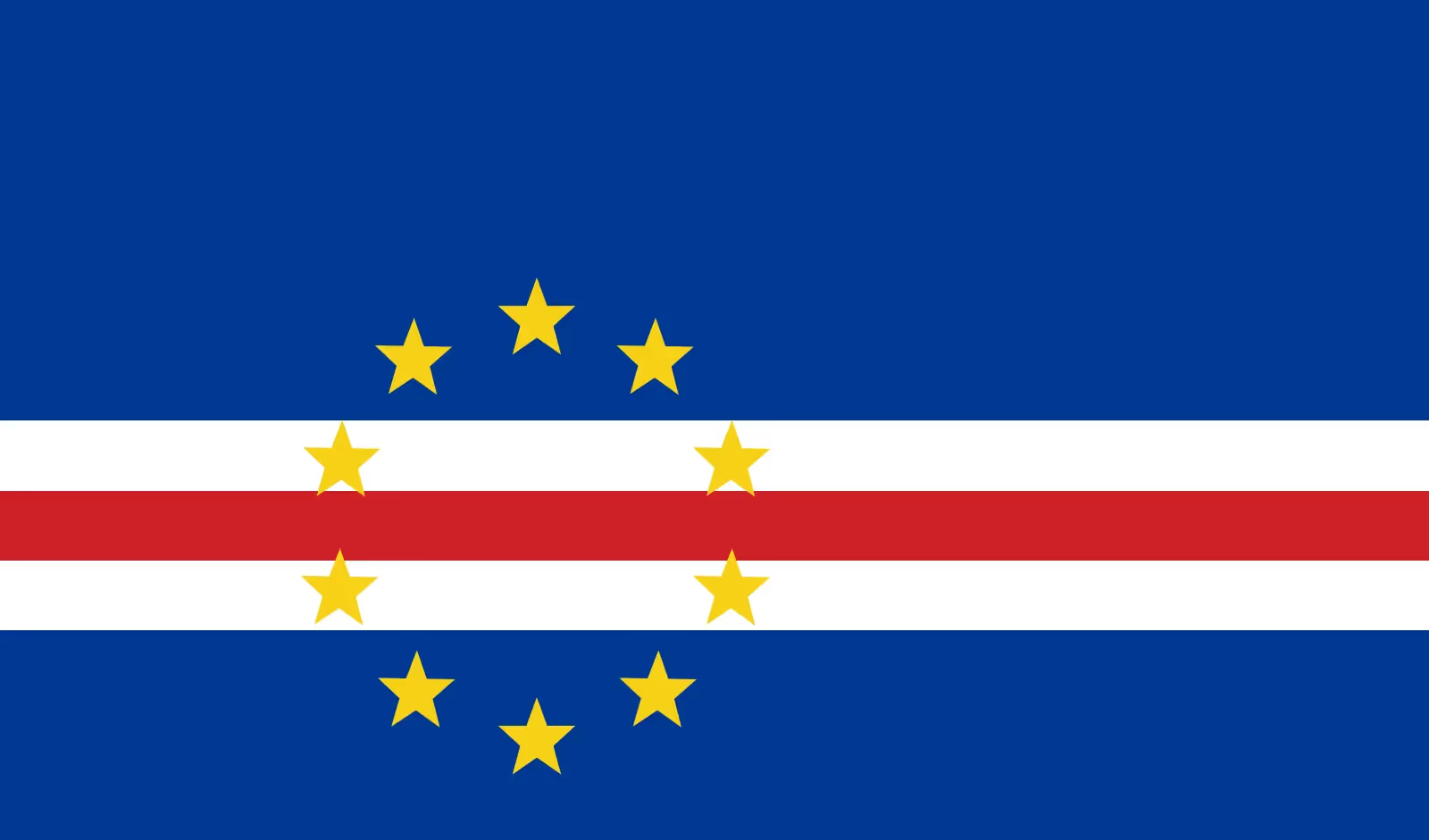

Cabo Verde
Ten volcanic islands in the Atlantic, three hours from Lisbon. Africa's most accessible offshore, where the wind is constant, the music is melancholy, and the culture is something no other country on earth has managed to be.
What You're Actually Getting Into
Cabo Verde is an archipelago of ten islands in the Atlantic Ocean, roughly 570 kilometers off the coast of Senegal and about as close to the Canary Islands as to the West African mainland. It was uninhabited when Portuguese sailors arrived in the 1460s, was colonized and used as a central node in the Atlantic slave trade, became a republic in 1975, and is now one of Africa's most stable democracies and one of its most visited island destinations. None of this is straightforward, and understanding the tensions within it explains why the place feels unlike anywhere else.
The islands divide into two groups. The Barlavento (windward) islands in the north include São Vicente, Santo Antão, São Nicolau, Sal, and Santa Luzia. The Sotavento (leeward) islands in the south include Santiago, Fogo, Maio, Brava, and the Ilhéus do Rombo. Each island is functionally a different destination. Sal has the most developed beach resort infrastructure and the best wind sports conditions. Santiago has the capital Praia, the strongest African cultural identity, and the most layered history. Fogo has an active volcano with a caldera you can sleep inside. São Vicente has Mindelo and the music. Santo Antão has the hiking. São Nicolau has almost nobody.
The most important planning decision in Cabo Verde is which island or islands to visit, and most first-timers make the mistake of trying to see too many. Inter-island travel is expensive and subject to the same trade winds that make the islands attractive in the first place. Pick your purpose — beach, music, volcano, hiking, wind sports — and choose your island accordingly. One or two islands done properly beats four islands rushed.
Cabo Verde is exceptionally safe, genuinely affordable compared to the Canaries or Madeira, English-friendly in the tourist areas, and close enough to Europe that the logistics are simple. It is also, in many contexts, not Africa in the way that travelers expecting Africa mean when they say that. It is its own specific thing: Creole, Atlantic, wind-scoured, musically melancholy, and difficult to describe to people who haven't been there yet.
Cabo Verde at a Glance
A History Worth Knowing
The islands were uninhabited when Portuguese sailors reached them in 1456 to 1460 — genuinely uninhabited, a rarity in the Atlantic at the time. The Portuguese began settlement in 1462 on Santiago, bringing enslaved people from West Africa to work the plantations and serve the trading post that would become one of the most important nodes in the Atlantic system. Ribeira Grande (now Cidade Velha) on Santiago became the first European colonial city in the tropics. In 1533 it became a city by royal charter, the first in sub-Saharan Africa.
What the islands became, culturally, is the direct result of what happened there economically. Cabo Verde was the hub where enslaved people from Guinea-Bissau, Senegal, and the wider West African coast passed through in transit, and where some stayed. The interaction of Portuguese colonizers and enslaved Africans, over centuries of isolation on volcanic islands in the middle of the Atlantic, produced something new: the Creole culture, the Kriolu language, and the morna music that carries both within it. The saudade that permeates morna is not simply borrowed from Portuguese — it was reforged in a context of displacement and longing that the original Portuguese word had never quite had to describe.
The slave trade made the islands wealthy. The end of it made them desperately poor. By the 19th century, Cabo Verde was one of the most economically marginal places in the Portuguese empire, subject to periodic famines — the most devastating in the 1940s killed an estimated 30,000 people — that the Portuguese colonial government did little to prevent and in some accounts actively exacerbated by continuing to export food during starvation years.
The independence movement was led jointly by Cabo Verde and Guinea-Bissau through the PAIGC, the party founded by Amílcar Cabral, one of Africa's most original anti-colonial thinkers. He was assassinated in 1973, two years before independence. Cabo Verde became independent on July 5, 1975. The subsequent decades brought economic pragmatism, democratic reform, and a deliberate positioning as a stable, well-governed small-island state. Cabo Verde graduated from least-developed country status in 2007 — one of only five countries ever to do so. It is a functioning multiparty democracy that has had peaceful transfers of power across multiple elections. In the region, this is exceptional.
Portuguese sailors find the uninhabited islands. Settlement begins on Santiago in 1462. Enslaved West Africans arrive to work the colony.
The first city in sub-Saharan Africa, royal charter granted. Now called Cidade Velha and UNESCO-listed.
Cabo Verde as the central transit point for the Atlantic slave trade. Creole culture emerges from the interaction of Portuguese and African populations.
Colonial famines kill an estimated 30,000 people across two episodes. The Portuguese government's negligence leaves permanent scars on collective memory.
The intellectual leader of the independence movement is killed in January 1973 in Conakry. Independence comes two years later without him.
July 5, 1975. Cabo Verde and Guinea-Bissau become independent simultaneously. They separate as distinct states in 1980.
First multiparty elections. Peaceful transfer of power. The model of governance that has continued since.
One of only five countries to graduate from UN Least Developed Country status. Economic management recognized internationally.
The Ten Islands
The single most useful thing this guide can do for someone planning a Cabo Verde trip is help them choose the right island. The common mistake is island-hopping too many in too little time. Each island rewards going slow, and the inter-island logistics — flights and ferries both subject to wind delays — punish people who've built tight connections. The guide below gives you the honest character of each island, who it's for, and what it's not.
Sal
Sal is the most developed tourist island and the one most visitors encounter first, because it has the main international hub airport with direct flights from Europe. The island is flat, dry, and brownish — not beautiful in the green-mountain sense — but what it has is extraordinary: the beach at Santa Maria, a long crescent of white sand and turquoise water, with the northeast trade winds (Alísios) providing the most reliable wind conditions in the Atlantic for kitesurfing and windsurfing. Kite Beach at Santa Maria is world-famous among the wind sports community. The town of Santa Maria itself is tourist-oriented but has genuine character, with fishing boats pulled up on the beach beside the kite schools and the same fish coming out of those boats onto the restaurant grills. Stay here if you've come for the water sports. Stay a day and leave quickly if you haven't.
São Vicente
Mindelo, the main city of São Vicente, is Cabo Verde's cultural soul. This is where morna was shaped into its modern form, where Cesária Évora was born and performed for years before the world discovered her, and where the Saturday night bar scene on Rua de Lisboa is one of the more casually extraordinary music experiences in the Atlantic world. The city has the architecture and rhythm of a port town that was once genuinely important — the natural harbour was a coaling station for Atlantic shipping in the 19th century, and the scale and quality of the colonial buildings reflects that wealth. The February Carnival here is the biggest in Cabo Verde, with a genuine Rio-adjacent energy. The island itself is arid and mountainous; the town is everything. Pair a São Vicente visit with a ferry crossing to Santo Antão: 45 minutes, and a complete change of landscape.
Fogo
Fogo — the word means fire — is dominated entirely by its volcano. Pico do Fogo (2,829 meters) is the highest peak in Cabo Verde and an active stratovolcano whose last significant eruption in 2014 to 2015 destroyed much of the caldera village of Chã das Caldeiras and the vineyards that had been cultivating wine inside the volcano since Portuguese colonial times. The community rebuilt around the solidified lava flows, which is either admirable defiance or the particular logic of people who have always lived on an island that has never given them anywhere else to go. Climbing Pico do Fogo from the caldera floor takes three to four hours with a local guide. The views from the summit on a clear morning — Atlantic in every direction, the other islands as smudges on the horizon — justify every step. The wine produced in the caldera, made from vines growing in volcanic ash, is worth the trip on its own.
Santiago
Santiago is the largest island, home to the capital Praia, and the one that most authentically maintains its West African cultural roots. The Badius — the descendants of enslaved Africans who escaped to the interior mountains — created a distinct culture of music (funaná, batuque), food, and identity that feels more West Africa than Atlantic resort. Cidade Velha, the original colonial capital built on a hillside above a spectacular bay, is a UNESCO World Heritage Site and one of the most historically resonant places in the Atlantic world: the first colonial city in the tropics, a trading post for enslaved people, and now a small village with ruins and a cathedral that has been standing since 1495. The Tarrafal beach in the north, where the water is calm and the village is small and unhurried, is the best beach on the island. Praia itself is a working capital city with good restaurants and the full range of urban services without the resort overlay of Sal.
Santo Antão
The dramatic island directly opposite São Vicente — 45 minutes by ferry, completely different in every sense. Santo Antão is all ridges and ravines: the interior is cloud-forested, the valleys cut down from 1,500-meter peaks to coastal fishing villages in a few kilometers of switchback descent. The Ribeira do Paul valley, planted with sugarcane, coffee, banana, and mango in a landscape of extraordinary vertical drama, is the best walking on any Atlantic island. The spine road along the ridge between Cova and Porto Novo gives views simultaneously east and west that disorient your geography. No beach worth mentioning. No resort hotel. Entirely worth it.
Boa Vista
The flattest, driest, most desert-like island in the archipelago. Massive sand dunes sweep directly into the sea along stretches of beach that seem unending. Boa Vista has the same wind conditions as Sal and is developing its own water sports scene. It has less tourist infrastructure than Sal but is catching up. The real attraction is the scale: empty desert beaches with Atlantic surf, loggerhead sea turtle nesting colonies (June to October), and a landscape that looks like it was assembled from the Sahara's leftover material and deposited in the ocean.
São Nicolau
The most consistently overlooked island in the archipelago, São Nicolau rewards the few visitors who make the effort. Ribeira Brava, the main town, has a colonial square, a cathedral, and the particular slowness of a place that the world has largely moved past. The island's interior is volcanic and green in the rainy season, with hiking trails between villages whose population has been shrinking for generations as young people move to São Vicente or Praia. The beach at Praia Barril is empty most of the time. The locals are surprised and pleased to have visitors. This is what Cabo Verde was before the resort hotels came.
Brava
The smallest inhabited island and the most dramatically green, Brava receives more rainfall than the northern islands and has a mist-draped, flower-covered interior that's startling after the bare volcanic rock of Fogo a few kilometers across the water. It has been associated with diaspora emigration — particularly to the United States — since the 19th century, when American whaling ships stopped here and Cape Verdean crews joined them. No airport; ferry access only from Fogo or Santiago. Add it at the end of a Fogo visit if time allows.
Culture & Music
Cabo Verde's culture is the product of five centuries of Atlantic mixing: Portuguese language, law, and Catholicism blended with West African musical traditions, culinary knowledge, and social forms, shaped by isolation and poverty and wind and the particular longing of people separated from everywhere by ocean. The result is Creole culture — Kriolu — which is not a hybrid or a compromise but something that grew from the specific conditions of these islands and exists nowhere else.
The word that most visitors encounter first is saudade: the Portuguese concept of nostalgic longing for something absent. In Cabo Verde it takes a specific form: sodade, which carries the added dimension of separation from people who have emigrated, from islands that you can see from the shore but cannot reach, from a history of displacement that runs through the entire population's ancestry. More Cape Verdeans live outside the archipelago than within it — the diaspora in Portugal, the Netherlands, the US, and Senegal outnumbers the home population. Sodade is the emotional fact of that condition, and morna is its musical form.
Morna
Morna is slow, intimate, and built around guitar, violin, cavaquinho (a small four-string guitar), and voice. The lyrics deal in departure, return, longing, and the Atlantic crossing. Cesária Évora, born in Mindelo in 1941 and performing in its bars for decades before achieving global recognition in the late 1980s, remains the defining figure. UNESCO inscribed morna as Intangible Cultural Heritage in 2019. The Museu de Morna in Mindelo is a good introduction; the bar scene is where you hear it actually live. It is not music to dance to. It is music to feel things to.
Funaná and Batuque
Santiago's musical traditions are different from the melancholy morna of São Vicente. Funaná is accordion-driven, fast, dance music, developed by the Badiu communities of the island interior and suppressed by the Portuguese colonial government as immoral — which is all the endorsement you need. Batuque is a percussion-based rhythm performed by women, with call and response vocals, associated with ceremonies and celebrations. Both are more African in feel than morna and represent the African root of Cabo Verde's cultural synthesis more directly.
Kriolu Language
Cabo Verdean Creole (Kriolu or Crioulo) is the actual language of daily life across the islands, with the official Portuguese reserved for government, education, and formal contexts. Kriolu varies island to island in ways that reflect the different colonial and trade histories of each: São Vicente's Kriolu sounds noticeably different from Santiago's. It is a fully developed language with its own literature, not a pidgin. Learning even a few words — "Bon dia" (good morning), "Morabeza" (hospitality, warmth), "Sodade" (longing) — produces genuine delight in Cabo Verdeans who are accustomed to visitors expecting only Portuguese.
Carnival (Mindelo)
Mindelo's February Carnival is the most energetic cultural event in the archipelago. Unlike Brazil's carnival it hasn't yet been industrialized into a ticketed spectacle — the streets are genuinely open, the costumes are made by neighborhood groups with real competition and pride, and the music plays through the night across the whole city. Coming to Mindelo for Carnival specifically requires booking accommodation months in advance, but it is among the Atlantic world's more genuinely alive festivals.
"Bon dia" (good morning), "Bon tarde" (good afternoon), "Obrigado/a" (thank you in Portuguese). "Morabeza" means the particular Cabo Verdean hospitality. Trying any Kriolu word earns immediate warmth.
Morna performance is not background music. When musicians are playing, the room settles into a particular attentiveness. Match it. Don't talk loudly through a performance at a music venue. The audience will notice and you will be the person in the room who doesn't understand what's happening.
The best food in Cabo Verde is not at the resort hotels. It is at the simple family-run pensões where a fixed lunch — cachupa, fresh fish, salad — costs a fraction of the hotel price and tastes significantly better. Ask your accommodation where the locals eat.
The online entry registration must be done before departure. It takes 10 minutes. Without it, you may face delays at the airport. Do it when you book your flight and print the confirmation.
You can absolutely come for the beaches and wind sports and have a great time. But treating the islands as the African Canaries and ignoring the music, the food, the colonial history, and the distinct Creole culture is like visiting New Orleans for the weather. The place is more than its resort infrastructure.
Inter-island flights are expensive and frequently delayed or cancelled due to wind. The ferries are an experience in themselves but take time. Two islands in one week is realistic and satisfying. Four islands in one week is an exercise in waiting at small airports.
The Atlantic currents and surf on the windward sides of the islands are powerful and have caused multiple drownings. Red flags at beaches mean it: don't swim. The leeward beaches on Sal, Santiago, and Boa Vista are calmer, but always check conditions locally.
The Alísios trade winds are the character of the islands, not a weather inconvenience. On the wind sport beaches they are an attraction. On the hiking islands they are the reason the landscape looks the way it does. Reframe how you think about wind.
Food & Drink
Cabo Verdean cuisine reflects the islands' position between Portugal and West Africa: Portuguese techniques applied to African ingredients, adapted over centuries for the specific products available on volcanic islands in the Atlantic. The national dish is cachupa — a slow-cooked stew that varies across islands and social classes but always involves dried corn, beans, and whatever protein is available. Everything else follows from the same principle of making the most of what the land and sea provide.
The fish is exceptional. Being surrounded by the Atlantic and the cold Canary Current produces seafood of a quality that the restaurant scene has been slowly learning to do justice to. The resort hotels on Sal often do worse fish than the small family restaurants in Mindelo or the beach grills in Tarrafal.
Cachupa
The national dish and the meal that defines Cabo Verdean domestic cooking. Cachupa rica (rich) includes meat — salt beef, chorizo, pork ribs — alongside dried corn, beans, and vegetables. Cachupa pobre (poor) is the same dish without the meat, which was what most people ate most of the time for most of the islands' history. Either version slow-cooked and eaten for breakfast the next day, fried in a pan with an egg on top, is cachupa refogada and is what Cabo Verde actually tastes like at 8am before you've done anything ambitious with the day.
Fresh Atlantic Fish
Wahoo (atum), tuna, grouper, sea bream, and the small local reef fish are all superb when bought directly from fishing boats and cooked simply. Grilled over charcoal with olive oil, salt, and a squeeze of lime — served at a plastic table on the beach at Tarrafal or on the front of any Mindelo pensão — this is food that requires no elaboration. The best fish restaurant in Sal is not in Santa Maria's tourist strip but a ten-minute walk back toward the main road, where the fishermen's families run simple places with no menus and no prices until the end.
Caldo de Peixe (Fish Soup)
A clear broth of fish, sweet potato, cassava, and vegetables that's the fisherman's meal across all the islands. Simple, filling, and deeply good when made with fish that was swimming two hours ago. Found at local pensões for lunch rather than at resort restaurants. Order it when you see it on a handwritten menu and you will eat well for very little money.
Grogue (Sugarcane Rum)
Santo Antão's main cash crop is sugarcane, and the local rum distilled from it — grogue — is the drink of the islands in the same way that cachaça is the drink of Brazil. Unaged, clear, fiery, and distinctly good when drunk from a small glass at the distillery in the Paul valley. The aged version (ponche) is infused with local fruits and is significantly more dangerous because it tastes much less like what it is. Buy a bottle from the distillery directly; the price is a fraction of tourist-shop rates.
Fogo Wine
The wine produced in the Chã das Caldeiras caldera on Fogo, from vines growing in volcanic ash soil at altitude, is one of the world's more unusual viticulture stories. The Manecon cooperative makes red and white wines with a particular mineral quality that serious wine drinkers find genuinely interesting. Production is tiny and most bottles leave the island quickly. Drinking a glass of Fogo wine while sitting on the solidified lava flow from the 2014 eruption, with the volcano above you and the ocean below, is the correct way to consume it.
Pastel and Street Food
Pastéis de atum — tuna pastry parcels, fried golden — are the street food of Cabo Verde and sold at small bakeries and market stalls everywhere from morning to afternoon. The version in Mindelo's market on Saturday morning, eaten standing up with a coffee, is the standard breakfast of people who actually live there. Banana fritters, corn bread (broa), and grilled corn on the cob round out the street food landscape. None of this costs more than 100 to 200 escudos and all of it is very good.
When to Go
The timing logic in Cabo Verde is driven by the trade winds and by what you've come for. The standard tourist season (November to June) is the wind season — ideal for kite and windsurf, good for beach holidays on sheltered beaches, with clear skies and moderate temperatures. The quieter green season (July to October) brings heat, occasional Saharan dust that reduces visibility, the start of the Atlantic hurricane season affecting nearby islands (though Cabo Verde rarely sees direct hits), and the dramatic sea turtle nesting on Sal and Boa Vista.
Peak Wind Season
Feb – AprThe strongest, most consistent trade winds. Best kitesurfing and windsurfing conditions globally. Clear blue skies. Temperatures comfortable for beach and hiking. February also means Mindelo Carnival. Book ahead for São Vicente and Sal — these months are peak.
Shoulder Wind Season
Nov – JanTrade winds building. Good beach weather on protected beaches. Less crowded than February to April. Christmas and New Year prices spike sharply. Excellent for hiking on Santo Antão and Fogo before the peak season fills accommodation.
Wet/Green Season
Jul – OctThe agricultural islands (Santo Antão, Santiago, Fogo, São Nicolau) are lush and spectacularly green. Lower prices and fewer visitors. Sea turtle nesting season on Sal and Boa Vista. The heat and occasional Saharan dust (bruma seca) reduce visibility. Calm seas better for ferry travel.
May – June
May – JunTransitional months. Wind fading on some islands. Pre-rainy season heat building. Santos Populares festivals in June are worth timing for on Santiago. Not a reason to avoid completely — just the least obviously optimal window for either wind sports or green landscapes.
Trip Planning
The critical planning decision for Cabo Verde is which island combination to choose and how to move between them. Direct international flights serve Sal, Santiago (Praia), and São Vicente (Mindelo). Everything else requires an inter-island connection. EASE pre-registration must be completed online before departure — it's free and takes ten minutes, but forgetting it creates airport problems. Booking accommodation in advance is advisable for peak season (February to April); outside peak, walk-in is generally fine except on Fogo where the caldera guesthouses are small.
One week: one island, done properly. Two weeks: two islands with breathing room. Three weeks: the full circuit of your chosen region, with ferry crossings included.
Fly into Sal or São Vicente
If you've come for wind sports: Sal. Settle in at Santa Maria, take a beginner kitesurfing lesson on day two. If you've come for culture: São Vicente. Mindelo on arrival. Walk Rua de Lisboa, find Bar Éden Park in the evening. Let the city find its rhythm.
Main island activities
Sal: three days of kite or windsurf progression with a school. Pedra de Lume salt lake on day four. Sunset fish dinner at a local place off the tourist strip. São Vicente: ferry to Santo Antão on day three. Ribeira do Paul walk. Return by evening ferry. Day five: Mindelo market, Cesária Évora's house, live morna if it's Tuesday or Thursday.
Decompress and depart
Beach day, or a final morning in a favorite café. Buy grogue if coming from Santo Antão, Fogo wine if you've managed Fogo, pastéis de atum from the market. Depart. You will have missed things. That is the point of a second trip.
São Vicente
Fly directly into Mindelo. Three days: the city in depth, live music, Carnival if the dates align, the market, the port. Day three: full day ferry and hiking on Santo Antão — Ribeira do Paul valley. Back to Mindelo by evening.
Santo Antão
Overnight on the island rather than day-tripping. Two full days of hiking: the Cova–Ribeira Grande ridge on day four, the coastal path between Ponta do Sol and Fontainhas on day five. Grogue at the Paul valley distillery. Back to Mindelo or fly to Santiago on day six.
Santiago
Fly to Praia. Cidade Velha on day seven — the UNESCO site, the pillory square, the cathedral ruins above the bay. This is where the Atlantic slave trade operated. Stand there with that knowledge. Day eight: Praia city, the Plateau neighborhood, funaná music in the evening.
Fogo
Fly Santiago to Fogo. Drive to the caldera. Sleep inside the volcano at Chã das Caldeiras. Climb Pico do Fogo before dawn on day ten. Return to Praia for your flight home, or extend to Brava by ferry if time allows.
São Vicente + Santo Antão
Four days between Mindelo and Santo Antão. Two full hiking days on the island, two in the city. Carnival if the timing works. The music, the market, the distillery, the ridge walks. The São Vicente–Santo Antão combination is the best two-island pairing in the archipelago.
Santiago
Three days on Santiago. Cidade Velha with proper time. Tarrafal beach in the north — the most beautiful beach on the island. Funaná live music in the Plateau evening. Local cachupa at a pensão rather than a restaurant, which is the correct way to eat it.
Fogo + Brava
Four days on Fogo. Volcano climb on day nine. Winery visit in the caldera. Day eleven: ferry to Brava for an overnight. The green-and-flower interior, the diaspora culture, the sea. Return to Santiago by ferry and fly home from Praia.
Sal
End with wind and beach. Three days of kitesurfing or windsurfing lessons, or simply beach time after the more demanding hiking and volcanic itinerary. Pedra de Lume salt lake on the last full day. Fly home direct from Sal's international airport.
EASE Pre-Registration
The Electronic Authorization System for Entry must be completed online before departure. It is free, takes 10 minutes, and is required for all visitors. Complete it when you book your flights and print the confirmation to carry with your passport. Without it you may face delays at the airport.
Complete EASE registration →Vaccinations
No mandatory vaccinations for most Western nationalities, though Yellow Fever is required if arriving from an endemic country. Hepatitis A, Typhoid, and routine vaccines recommended. Malaria risk is very low (essentially zero) in most of the archipelago — check current guidance for your specific islands, but prophylaxis is generally not required.
Full vaccine info →Connectivity
CVMóvel and Unitel T+ are the main operators. SIM cards available at the airport on arrival in Sal and Praia. Coverage is good on the developed islands; more limited in Santo Antão's interior valleys and on the smaller islands. An Airalo eSIM for Portugal/Cape Verde covers most situations. Download offline maps of each island before departing — some rural roads are not well-mapped.
Get Cabo Verde eSIM →Money
The Cape Verdean Escudo (CVE) is pegged to the euro. ATMs in Sal, Praia, and Mindelo work reliably with international cards. Cards are widely accepted in hotels and resort restaurants; local pensões and market food stalls prefer cash. Always carry some escudo cash outside the main towns. The peg means your euro/dollar exchange math is straightforward: roughly 110 CVE to the euro.
Ocean Safety
The most important safety consideration in Cabo Verde is the ocean. Atlantic currents and surf are powerful and have caused multiple drownings, including experienced swimmers. Observe flag systems at beaches strictly. Avoid red-flag days for swimming entirely. The leeward sides of islands (west and south) are calmer; the windward sides (north and east) have stronger conditions. Ask locally about specific beaches before swimming.
Travel Insurance
Standard travel insurance covers Cabo Verde without restriction. Include medical cover and trip cancellation for inter-island connection delays, which do happen. The best private hospital is in Praia (Hospital Agostinho Neto); medical evacuation to Lisbon or Gran Canaria for anything serious is the backup plan.
Transport in Cabo Verde
Inter-island transport is the main logistical challenge of any Cabo Verde trip. TACV (Cabo Verde Airlines) and Bestfly operate inter-island flights; TICV operates the main ferry routes. Both are subject to the trade winds: ferries especially can be cancelled or delayed in heavy swell, and the crossing between São Vicente and Santo Antão in strong wind is famously rough. Build buffer into any inter-island connection. Missing a flight because the ferry was late is a real possibility, not a theoretical one.
Within islands, transport is manageable: taxis, aluguer (shared taxis running fixed routes), and hire cars on the main islands. Santo Antão is best explored on foot or with a guide rather than self-driving.
Inter-Island Flights
€40–120/routeTACV (Cabo Verde Airlines) and Bestfly operate between the main islands. Flights are short — 25 to 45 minutes for most routes — but relatively expensive given the distances. Book in advance in peak season. Luggage allowances are strictly enforced on small aircraft; excess baggage fees are significant.
Inter-Island Ferry (TICV)
€15–40/routeFerries connect the main islands at a fraction of the flight cost and are a genuine experience rather than merely transport. The São Vicente to Santo Antão crossing (45 minutes) is the most used and most beautiful. The Praia to Fogo route (3.5 hours) goes through open Atlantic. Check schedules at ticv.cv — services are regular but not daily on all routes.
Aluguer (Shared Taxi)
CVE 100–500/tripShared minivan taxis running fixed routes on each island. The most common form of local transport. Cheap, frequent, and the way most Cabo Verdeans move around their island. You wait at a stop or flag one down, state your destination, and pay the fixed fare on arrival. On Santiago the routes cover the whole island extensively.
Car Rental
€30–60/dayAvailable on Sal, Santiago, Fogo, São Vicente, and Boa Vista. Useful on Fogo for reaching the caldera from São Filipe town (though a 4x4 is preferable for the mountain road). On Sal the island is flat and small enough that a car saves time. On Santo Antão the mountain roads are narrow and better done with a local driver.
Taxis (City)
CVE 200–800/tripPrivate taxis available in all main towns. Always agree a price before getting in. In Praia, taxis are essential for navigating between the plateau center and the coastal neighborhoods. In Mindelo, the city is walkable but taxis are needed after midnight. In Santa Maria (Sal) they're available at the main taxi rank on the main square.
On Foot (Santo Antão)
FreeSanto Antão is primarily a walking island. The trail network connecting villages through the ribeiras is the attraction. Hire a local guide in Porto Novo or Ribeira Grande for the first day; after that the trails are well-marked enough for independent walking with a good map. Most trails take 3 to 6 hours between villages with accommodation at each end.
Accommodation in Cabo Verde
Cabo Verde's accommodation landscape ranges from large all-inclusive resort hotels on Sal and Boa Vista (the dominant option for package tourists from Europe) to simple family pensões and small guesthouses that represent the islands at their most authentic. The choice between these is also a choice about what kind of trip you're having. The resort hotels deliver consistent comfort and remove all logistical friction. The pensões deliver genuine contact with the islands at a fraction of the cost. A mix of both, calibrated by island, is often the smartest approach.
Resort Hotels (Sal, Boa Vista)
€80–250/nightLarge all-inclusive hotels dominate Sal's Santa Maria and Boa Vista's main coast. Good for: beach holidays, wind sport beginners who want to book a course package, families with young children who want consistent infrastructure. Not for: people who want to engage with Cabo Verde's culture, food, and music beyond a pool experience.
Boutique Hotels (São Vicente, Santiago)
€50–120/nightMindelo and Praia have a growing tier of well-designed small hotels in restored colonial buildings that offer good service, proximity to the city's cultural life, and a genuinely Cabo Verdean feel. Casa Colonial, Hotel Porto Grande in Mindelo, and Oásis Porto Grande are consistently well-reviewed. These are the right choice for cultural-focus trips.
Pensões and Guesthouses
€20–50/nightFamily-run guesthouses on every island, from Santo Antão's hiking villages to São Nicolau's Ribeira Brava. Simple, clean, often with excellent home-cooked meals included. The people running these know their island in a way that no hotel concierge can replicate. On Fogo, the guesthouses inside the caldera at Chã das Caldeiras are the only accommodation option and are genuinely special.
Caldera Accommodation (Fogo)
€25–60/nightSeveral small guesthouses inside the Chã das Caldeiras caldera, operated by local families who rebuilt after the 2014 to 2015 eruption. Sleeping surrounded by a volcano, with the vineyards and the solidified lava flows outside your window, is the experience that makes Fogo one of the more singular overnight options in the Atlantic. Book ahead: these fill quickly in peak season.
Budget Planning
Cabo Verde sits at an interesting price point: more expensive than mainland West Africa but significantly cheaper than the Canary Islands, Madeira, or the Azores. The escudo's euro peg keeps pricing stable and predictable. The biggest cost variable is accommodation choice: an all-inclusive resort on Sal costs as much as a mid-range European beach hotel; a guesthouse in Mindelo or a pensão in a Santo Antão village costs a fraction. Inter-island flights are the other significant cost that many visitors underestimate when planning.
- Pensão or guesthouse accommodation
- Pensão meals and market food
- Aluguer shared taxis
- Ferry transport between islands
- Free beaches, hiking, market visits
- Boutique hotel or good guesthouse
- Mix of pensão meals and restaurants
- Inter-island flights for longer hops
- Car hire for island exploration
- Kitesurfing or hiking guided activities
- Boutique or resort hotel
- Good restaurants including seafood
- Flights for all inter-island travel
- Wind sport course packages
- Private guided excursions
Quick Reference Prices
Visa & Entry
Cabo Verde does not require a visa for most Western nationalities for stays up to 30 days. What it does require is completion of the EASE (Electronic Authorization System for Entry) online pre-registration before departure. This is free, takes about ten minutes, and must be completed before you board your flight. You will be asked for it at the airport. Complete it when you book your tickets.
Citizens of ECOWAS member states (West African community) have visa-free access. Some African nationalities require a visa — check the Cabo Verde Immigration Service website for the current list relevant to your passport.
Most Western nationalities enter visa-free for up to 30 days. EASE pre-registration (free, online, 10 minutes) must be completed before departure. Complete at ease.gov.cv. Print and carry the confirmation with your passport throughout your stay.
Family Travel & Pets
Cabo Verde is excellent for family travel. It is safe, warm, English-friendly in the tourist areas, with a well-developed resort infrastructure on Sal and Boa Vista specifically designed for European family holidays. The country is welcoming to children in a way that's genuine rather than transactional, and the beaches on the sheltered leeward coasts are among the safest in the Atlantic. The main practical consideration is ocean conditions — always swim on beaches with green flags and teach children the significance of red flags before they're near the water.
Beach Islands (Sal, Boa Vista)
The all-inclusive resort model on Sal and Boa Vista is genuinely well-suited to families with younger children: calm sheltered beaches, kids' clubs, consistent food, and the logistical simplicity of everything in one place. For parents who want to actually engage with Cabo Verde beyond the pool, build in a day or two in Santa Maria town rather than staying exclusively in the resort compound.
Fogo for Older Kids
Teenagers who can handle a three to four hour uphill climb will find the Pico do Fogo summit experience genuinely extraordinary. The caldera itself — the village rebuilt around solidified lava, the vineyards, the scale of the volcanic landscape — is one of those places that recalibrates what children think the world looks like. Age 10 and older is realistic for the summit climb with a guide.
Sea Turtle Nesting
Loggerhead sea turtles nest on Sal and Boa Vista beaches between June and October. Watching a nest hatching — 100 tiny turtles scrambling toward the Atlantic on a dark beach — is the kind of wildlife experience that children carry for life. Several conservation organizations run guided evening turtle watches: Turtle Foundation on Boa Vista and SOS Tartarugas on Sal both offer supervised visits. Book in advance for the nesting season.
Wind Sports for Kids
Most Sal kitesurfing schools take children from around age 10 for lessons, and windsurfing from younger. The consistent, moderate conditions of the trade wind season make learning safer and faster than at more variable spots. The major schools — Kite Beach School, Cabrinha Factory — all have dedicated kids' teaching programs. Teens who take to it typically leave wanting to return.
Ocean Safety for Families
This cannot be overstated enough for families: the Atlantic surf and currents on the windward sides of the islands are powerful and indiscriminate. A red or yellow flag means real conditions, not bureaucratic caution. Even experienced adult swimmers have drowned in conditions that looked swimmable from the beach. Establish the flag rules with children before they're near the water and enforce them consistently.
Food for Kids
The resort buffets on Sal and Boa Vista cover every dietary requirement. Independently, cachupa is generally acceptable to children, grilled fish is universally available, and fresh bread and pastéis de atum cover morning snack needs. The Portuguese colonial culinary influence means rice, pasta, and grilled chicken are everywhere. Picky eaters will find Cabo Verde more accommodating than most African destinations.
Traveling with Pets
Pets can be brought to Cabo Verde with the right documentation. Requirements include a microchip, valid rabies vaccination (at least 21 days and not more than 12 months before entry), an EU-format health certificate or equivalent for non-EU travelers, and a tapeworm treatment for dogs administered between 24 and 120 hours before entry. The documentation must be issued by an official veterinarian and may need to be endorsed by the competent authority in your country.
Practical considerations: most resort hotels on Sal and Boa Vista do not accept pets. Small guesthouses and rental accommodations are more flexible. The islands are warm year-round and shade management for pets is important. Veterinary care is available in Praia and Mindelo; more limited elsewhere. Bringing a pet is manageable with preparation, but research your specific accommodation's pet policy before booking.
Safety in Cabo Verde
Cabo Verde is one of Africa's safest destinations and compares favorably with many European resort destinations in terms of violent crime rates. It is a stable democracy with a functioning rule of law and no recent history of political violence or civil conflict. The main safety consideration, by a considerable margin, is the ocean.
General Security
Very safe by any regional or international standard. Violent crime targeting tourists is uncommon. The country has a professional police force and a political system that functions. First-time Africa travelers consistently report Cabo Verde as the most comfortable and familiar-feeling entry point to the continent.
Petty Theft
Pickpocketing and bag snatching occur in crowded areas: Praia's Plateau market, Mindelo's market, and Santa Maria's tourist strip on Sal. Standard precautions: no visible expensive equipment, bags worn in front in crowds, phone in a zipped pocket. Not a major risk but present enough to mention.
Ocean Currents and Surf
The primary safety risk in Cabo Verde. The Atlantic surf and rip currents on windward beaches are genuinely dangerous. Multiple drownings occur annually, including experienced swimmers. Respect the flag system absolutely: red flag means no swimming, full stop. Always swim at flagged beaches with lifeguard presence when available. Teach children the rules before they approach the water.
Fogo Volcano
Pico do Fogo is an active volcano. The 2014 to 2015 eruption gave residents three days' warning before lava destroyed large parts of the caldera. The caldera is currently safe to visit and climb, but the volcano is monitored and any changed status would mean immediate evacuation. Check current status with local guides before ascending. Always climb with a guide who knows current conditions.
Solo Women
Cabo Verde is consistently rated as one of Africa's most comfortable solo female destinations. The tourist areas are safe at night with normal precautions. Unsolicited attention from men occurs in tourist areas on Sal and in Praia, but threatening situations are rare. Solo women travelers regularly report positive experiences across all the main islands.
Road Safety
Roads are generally in reasonable condition on the main islands. Mountain roads on Fogo (to the caldera) and Santo Antão (everywhere) are narrow with steep drops and require careful driving. Feral dogs are a hazard on some rural roads. Drive at moderate speeds and pay particular attention at dusk when dogs and livestock are crossing roads.
Emergency Information
Your Embassy / Consulate
Cabo Verde's small size means most countries maintain limited diplomatic presence. The main embassies are in Praia.
Book Your Cabo Verde Trip
Everything in one place. Complete your EASE pre-registration first, then book the rest.
The Islands That Made a Word for Longing Theirs
Cesária Évora performed barefoot because, she said, the poor people of her islands never had shoes, and she was not going to perform for the world in shoes when they could not. She became internationally famous in her 50s, after decades of singing in Mindelo's bars for local audiences, and she spent the rest of her life being the most recognizable ambassador of a culture and a concept — sodade — that most of the world had no equivalent for.
Sodade is not simply sadness or nostalgia. It is the specific ache of separation from something that is real and present and unreachable: the island you can see on clear days from the shore of the one you're on. The family member who emigrated. The past that is still somewhere in the ocean air. Cabo Verde was built on separation — enslaved people taken across the Atlantic, colonists who died in famines, a diaspora that outnumbers the population at home. The music is made from that condition. It is not tragic. It is honest.
When you stand on a ridge on Santo Antão and look back at São Vicente across fifteen kilometers of Atlantic, or watch the sun set from the Fogo caldera while the vineyards glow orange around the solidified lava, or sit in a Mindelo bar and let the morna settle into the room — you will understand something about longing that the word you arrived with probably didn't quite cover.