
A River Capital Under a Level 4 Advisory
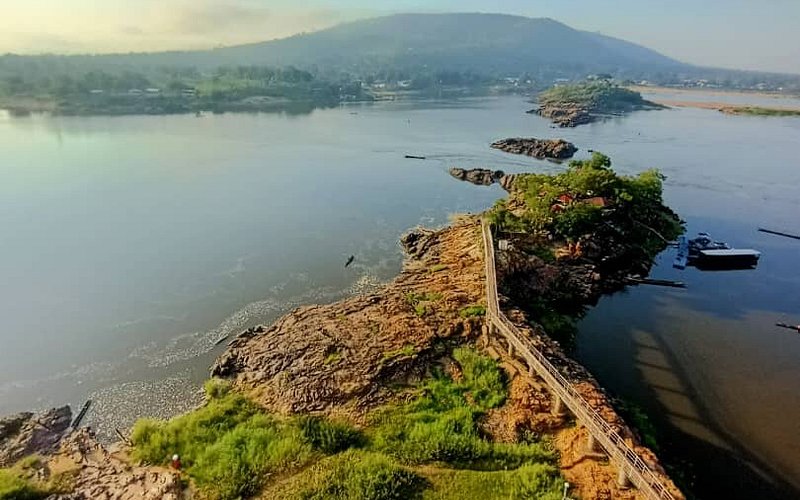
Bangui, home to around 1.5 million people, was founded by the French in 1889 at a spot on the Oubangui River just below the rapids that block further navigation upstream, which is precisely why the city exists where it does. Across the water sits Zongo in the Democratic Republic of Congo, and beyond it, downstream, the sprawl of Kinshasa. The riverfront, a cathedral, a national museum and a central market are the core of what a visitor would see here, modest by the standards of most African capitals, but real.
This guide covers Bangui's neighbourhoods, named hotels and restaurants, and its handful of sights the way any Atlas Guide city page would, because that infrastructure genuinely exists and is used daily by the diplomatic, NGO and MINUSCA population based here. It is not, however, a recommendation to visit. Bangui sits under the same Level 4, Do Not Travel advisory as the rest of the Central African Republic, and this guide should be read with that fact in mind throughout, not just in the safety chapter below.
The honest complications
Bangui has, on the whole, been spared the worst of the rural fighting that has affected other parts of the country since 2013, largely because of the roughly 12,000 to 15,000 MINUSCA peacekeepers headquartered here. That's a genuinely important distinction, and it's why the UK's advisory treats Bangui as essential-travel-only rather than lumping it in with the advice against all travel it gives for the rest of the country. But essential-travel-only is still a serious warning, not a green light, and the city has its own history of unrest, including periods of violence directly tied to the wider Seleka and anti-balaka conflict. Read this guide as a description of what exists in the capital, not as an endorsement of visiting it.
Essential Travel Only, Even Here
Bangui carries the US State Department's Level 4, Do Not Travel advisory exactly as the rest of the Central African Republic does. The UK Foreign Office draws its one real distinction in the country around Bangui specifically: essential travel only, versus advice against all travel everywhere else, including Bangui M'Poko International Airport itself under that same essential-travel framing. The roughly 12,000 to 15,000 MINUSCA peacekeepers headquartered in the city are the main reason for the distinction; it does not mean the city is safe by ordinary standards.
US government employees posted to Bangui must get special authorization to travel outside the city, are required to move in armored vehicles within it, and are subject to a curfew, restrictions imposed on trained staff with dedicated security support that most visitors won't have. Checkpoints are routine within Bangui itself; while many are legitimate security or police checkpoints, some are police stops set up to collect bribes, and armed actors have used fake checkpoints for the same purpose elsewhere in the country. Carry identification at all times and expect delays as a matter of course, not an exception.
Emergency numbers
These numbers are listed inconsistently even across official sources, and organized dispatch is limited even in the capital. Anyone here on essential business should lean on their organization's security contacts or MINUSCA channels over a phone number, alongside comprehensive insurance covering medical evacuation.
A City Strung Along the River
Bangui's layout follows the Oubangui River, with the diplomatic and government core near the center, denser commercial and residential districts spreading inland, and the presidential palace and national museum sitting toward the river's edge.
Centre-ville
The administrative heart of the city, along and around Avenue de l'Indépendance and Avenue David Dacko, holds the presidential palace area, the Notre-Dame Cathedral, and most embassies still operating in the country, including the US Embassy. Ledger Plaza Bangui sits here too, roughly a 30-minute walk from Place de la République.
PK5
Named for its distance, five kilometers, from the city center, PK5 became a flashpoint during the anti-balaka period of the conflict and remains a closely-watched, historically Muslim-majority district. Not somewhere to visit casually or without local guidance on current conditions.
The riverfront
The Oubangui riverbank is where Bangui actually relaxes: fishermen working the shallows, small ferries crossing toward Zongo on the Congolese side, and a genuine sunset ritual as locals gather along the water in the evening. A handful of the city's few riverside restaurants sit along this stretch.
One International Hotel, and a Small Business-Travel Tier Below It
Bangui's hotel scene is built for diplomatic, NGO and business travelers rather than leisure tourism, and it is genuinely small: one property meets an international five-star standard, and the rest cluster in a modest business-hotel bracket below it.
Ledger Plaza Bangui, on Avenue de l'Indépendance about 20 minutes from Bangui M'Poko Airport and 10 minutes from the city center, is the country's only true international-standard hotel: 156 rooms, an infinity pool, a spa, a tennis court, a fitness center and a restaurant, with rates historically running from around $140 up to $350 a night depending on room category. Opened in 2012 under the LAICO brand and acquired by the Arem Group in March 2022, it sits within walking distance of the cathedral, the Boganda museum and the river.
A step down in price, Hotel Oubangui occupies a riverside position with rooms looking directly over the Oubangui and an outdoor restaurant on a small peninsula jutting into the water, though its facilities and service are noticeably more modest than Ledger Plaza's; confirm current condition before booking. Hotel Levy's is a smaller four-star property with a terrace, restaurant and bar that turns up consistently in business-traveler reviews. At the budget end, Residence Agnes et Victor is a well-regarded guesthouse-style option, and rooms can be found from roughly $31 a night at simpler properties, though Atlas Guide couldn't independently verify pricing or current conditions for the cheapest listings with enough confidence to recommend booking them sight unseen.
A Small Scene, Concentrated on the River
Bangui's restaurant scene is tiny relative to most African capitals and leans heavily on its diplomatic and NGO population, with a genuine French and Lebanese presence alongside places serving Central African staples, cassava-based gozo and grilled river fish chief among them. The Oubangui riverfront itself is where several of the more established places sit.
La Tentation
Housed in a historic colonial building, La Tentation has the reputation as Bangui's foremost dining address, serving French cuisine with a Central African inflection to a mostly diplomatic and NGO clientele.
Auberge Saint-Flour
A riverside restaurant directly on the Oubangui's bank, known for French-inspired cooking and views across the water toward the Congolese side, whether you're there for a breezy lunch or dinner under the stars.
Bangui Marina Club Restaurant
A deck restaurant built out over the Oubangui, offering one of the more scenic dining setups in the city for anyone wanting the river as the main event rather than a backdrop.
Bangui Plage
A small, low-key outdoor spot on the riverbank with covered tables, better for a sunset drink and something simple to eat than a full dinner, and one of the more accessible ways to experience the riverfront ritual described in the neighbourhoods chapter above.
What the City Offers, Described for Context
Bangui's sights cover a comfortable half-day to a day: a cathedral, a national museum, a market and the riverfront itself. All of it is described below for what it is, not as a current recommendation, and any visit should be planned with local security guidance rather than independently.
Notre-Dame Cathedral
The Cathédrale Notre-Dame de l'Immaculée Conception, seat of the Metropolitan Archdiocese of Bangui, is a red-brick Roman Catholic cathedral of the kind common to French colonial territories in the tropics, and one of the city's clearest architectural landmarks.
Boganda National Museum
Named for Barthélemy Boganda, considered the father of the country's independence movement, this museum near the presidential palace holds Central African artifacts, archaeological pieces and contemporary art. Opening hours can be irregular; confirm locally before making the trip.
Grand Marché
Bangui's central market is the city's main commercial hub, selling textiles, produce, spices and everyday handicrafts in the kind of dense, chaotic setting typical of large Central African markets.
The Oubangui riverfront
The river is Bangui's genuine public living room: fishermen working the shallows, small ferries crossing to Zongo on the Congolese side, and a real evening gathering ritual as locals come down to the water to watch the sunset. Several of the restaurants in the Food chapter above sit directly on this stretch.
M'Poko Airport, Then Taxis Only
Bangui M'Poko International Airport (BGF) is the country's only airport with scheduled international flights. Afrijet, ASKY Airlines, Ethiopian Airlines, Royal Air Maroc and RwandAir connect it to the region, with Addis Ababa the most frequent single route and others running to Douala, Kigali and Casablanca; there are no direct flights from Europe or North America. The airport has a single runway, two boarding gates, a small food concession and a first aid center, reflecting the scale of the operation.
Within the city, taxis are the standard way to move, fares agreed before you get in and typically running $2 to $5 for a ride within Bangui; meters aren't standard practice. There is no public bus network, and walking is not recommended given both safety concerns and the state of the sidewalks. Orange RCA and Telecel Centrafrique both have counters in the airport's small arrivals hall; a SIM costs around 1,000 CFA (roughly $1.60), with data bundles from about 500 CFA for 500MB over 24 hours or 10,000 CFA for 5GB over 30 days.
Reference Costs for Essential Travelers
As with the country guide, these are reference figures gathered for essential (business, diplomatic, NGO) travelers in Bangui specifically, not a suggested daily budget for a leisure trip Atlas Guide isn't recommending.
Transport & connectivity
Taxi fares within the city run roughly $2 to $5, agreed before the ride. A SIM card at the airport costs about 1,000 CFA (~$1.60), with a 500MB/24-hour data bundle around 500 CFA (~$0.80).
Ledger Plaza & the business-hotel tier
Ledger Plaza Bangui runs roughly $140 to $350 a night depending on room category. Hotel Oubangui, Hotel Levy's and Residence Agnes et Victor sit in a more modest bracket; confirm current rates directly given how quickly conditions and pricing shift.
Boali Falls, In Ordinary Times
Under normal conditions, Boali Falls, a waterfall on the M'Bari River roughly 95 kilometers (about a one to one-and-a-half hour drive) northwest of Bangui, would appear here as the standard day trip from the capital: over 50 meters high, at its fullest in the wet season, with a small hotel and restaurant historically operating above the falls. It's covered in more detail, with the same safety caveats, in the Central African Republic country guide's destinations chapter, since the drive there currently carries the same advisory as everything else in this guide.
Bangui FAQ
Is Bangui safe to visit?
No, not by ordinary travel standards. The US State Department rates the whole country, including Bangui, Level 4, Do Not Travel. The UK Foreign Office treats Bangui differently from the rest of the country, advising against all but essential travel rather than all travel outright, largely because of the MINUSCA peacekeeping presence.
What is MINUSCA and why is it in Bangui?
The UN Multidimensional Integrated Stabilization Mission in the Central African Republic, a peacekeeping force of roughly 12,000 to 15,000 troops and police headquartered in Bangui since 2014. Its presence is the main reason the capital's day-to-day security picture is more stable than rural, rebel-contested areas.
Where do business and NGO travelers stay in Bangui?
Ledger Plaza Bangui is the city's only true international-standard hotel, with rates roughly $140 to $350 a night. Hotel Oubangui and Hotel Levy's are established mid-range options, and Residence Agnes et Victor is a smaller, well-rated budget property.
Can I fly directly to Bangui from Europe or the US?
No. Bangui M'Poko International Airport (BGF) has no direct flights from Europe or North America. Afrijet, ASKY Airlines, Ethiopian Airlines, Royal Air Maroc and RwandAir connect through Addis Ababa, Douala, Kigali and Casablanca.
What can you actually see in Bangui?
The Notre-Dame Cathedral, the Boganda National Museum near the presidential palace, the Grand Marché central market, and the Oubangui riverfront itself, where locals gather at sunset. Boali Falls, about 95km northwest, is the standard day trip in ordinary times.
How do you get around Bangui?
Taxis, with the fare agreed before getting in, typically $2 to $5 for a ride within the city. There is no public bus network, and walking is not recommended given both safety concerns and poor sidewalks.
What currency is used in Bangui?
The Central African CFA franc (XAF), pegged to the euro at 655.957 XAF per euro. ATMs are scarce even in Bangui compared to other African capitals, so carry cash and exchange at banks or bureaus de change in the city.
What Stays With You
Bangui exists where it does because of a set of river rapids that stopped nineteenth-century French boats from going any further, and everything about the city since, the cathedral, the market, the peacekeepers now headquartered here, has grown up around that same stretch of the Oubangui. The sunset ritual on the riverbank, fishermen and ferries and a whole city coming down to the water, is the one thing in this guide that isn't complicated by any advisory.
The honest answer to whether to visit right now is still no, beyond essential purposes carried out with a real security plan. This page exists so that the city's real, if modest, infrastructure, Ledger Plaza, the cathedral, the Boganda museum, the river restaurants, isn't lost to the advisory that currently and correctly overrides every other answer about Bangui.