
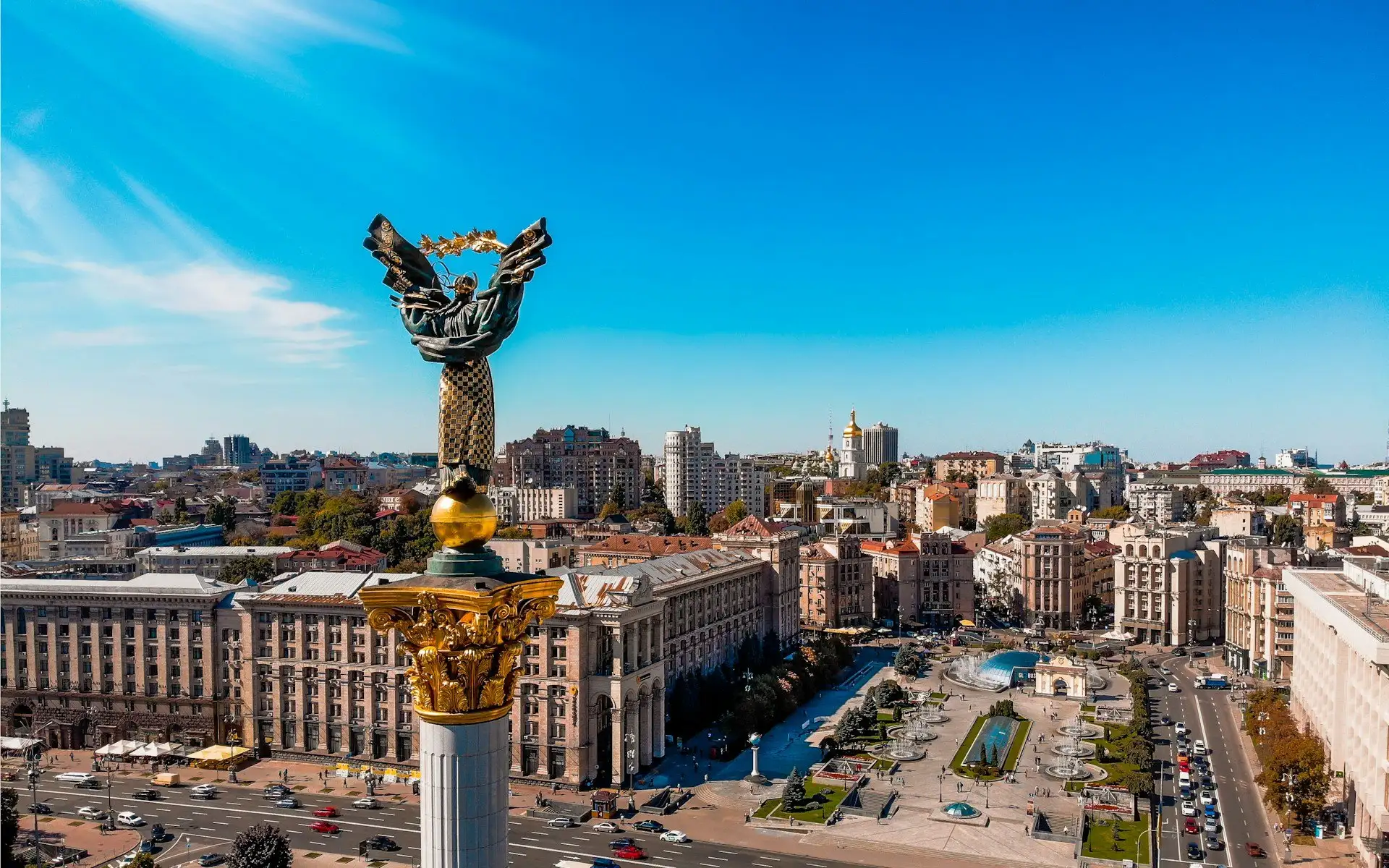
Ukraine Travel Scams
A driver outside Boryspil arrivals quotes you EUR 60 for a ride that costs EUR 10 on Bolt. A man near the Kyiv train station offers to exchange your euros at a rate 5% better than any bank, and hands back half of what he counted. A waiter in a Lviv cellar restaurant presents a bill with two dishes you never ordered. Ukraine is one of Europe's most compelling countries to visit. It is also one where tourist fraud is common, cash handling requires care, and the current security situation adds a layer of planning that no other European destination requires. This page covers everything.
Ukraine Scam Overview 2026
Pre-war Ukraine received around 14 million international visitors per year. That figure collapsed after February 2022 but has partially recovered in western Ukraine, particularly Lviv, which continues to function as a cultural hub, a base for international press and NGO operations, and a destination for diaspora Ukrainians and solidarity visitors. Kyiv also receives a meaningful number of foreign visitors, primarily journalists, diplomats, aid workers, and people with personal connections to the country. Odesa, on the Black Sea, has seen significantly reduced tourism due to its proximity to the southern front.
In this context, tourist scams in Ukraine take on a different character than in most other European destinations. Taxi fraud, currency exchange scams, and restaurant bill manipulation are the dominant economic risks, and they operate in an environment where visitors may be less alert due to the weight of other concerns, where cash is more necessary than in Western Europe due to international card restrictions, and where some of the normal consumer protections are less consistently enforced. This page documents each risk with specific tactics, current prices in UAH and EUR equivalents, and practical avoidance steps.
Active war with Russia. Air strikes occur across the country including in Kyiv and western Ukraine. This is the primary risk for all visitors and must be planned for before arrival.
Taxi overcharging, street currency exchange fraud, and restaurant bill manipulation are the most common tourist scams. Higher risk than Western Europe, lower risk than some Central Asian destinations.
Pickpocketing at Kyiv's central market, train stations, and crowded metro platforms. Lower frequency than before the war due to reduced visitor numbers. Still active in tourist-facing areas of Lviv.
ATM skimming, phishing targeting aid workers and journalists, and fake accommodation sites. Card functionality for foreign-issued cards is significantly restricted; cash dependency raises physical fraud risk.
Ukraine Safety at a Glance
Security Context for Visitors
Ukraine has been under full-scale invasion since February 24, 2022. As of 2026, active fighting continues in the east and south of the country. Drone and missile strikes have targeted infrastructure across Ukraine, including Kyiv, Lviv, Odesa, and other cities far from the frontlines. No part of Ukraine is outside the range of Russian long-range missiles.
Western Ukraine, particularly Lviv and the Carpathian region, has been struck significantly less frequently than eastern and southern regions. Lviv functions as a hub for international organisations, a cultural refuge for many internally displaced Ukrainians, and a point of entry for many foreign visitors. Travel there carries real risk but is substantively different from travel toward the front lines.
Kyiv has continued to function as a capital city throughout the war. Restaurants are open, the metro runs, cultural institutions operate, and international hotels receive guests. Air strikes occur periodically and the air defense network, while effective, is not total. The city has a shelter system and the Kyiv metro serves as primary shelter during alerts.
✅ What to Do Before Entering Ukraine
Register with your country's embassy in Kyiv or, if your embassy is operating from elsewhere, through your government's travel registration system. The US STEP program, the UK FCDO registration, and equivalent systems in other countries allow your government to contact you in an emergency and include you in evacuation planning if required.
Install the Alerts UA app (iOS and Android) before crossing the border. Enable push notifications. This is the official Ukrainian civil protection alert system. When an alert fires for your region, move immediately to the nearest shelter: hotel basements, metro stations (in Kyiv), or the designated shelter of whatever building you are in. Understand that ignoring an air raid alert in Ukraine is not the same as ignoring a test alarm elsewhere.
Obtain travel insurance that explicitly covers active conflict zones. Standard travel insurance policies exclude war and armed conflict. Specialist insurers (e.g. Battleface, Safety Wing's war zone rider, or specialist media/NGO insurers) provide coverage that standard policies do not. Entering Ukraine without appropriate insurance is a significant financial and medical risk.
Identify the location of the nearest shelter to your accommodation before you need it. Identify the location of the nearest hospital. Know the number of the duty officer at your country's embassy. Save all of these in your phone before arrival.
📍 Which Areas of Ukraine Are Accessible
Western Ukraine (Lviv, Ivano-Frankivsk, Uzhhorod, Carpathian region): The most accessible region for foreign visitors. Significantly lower frequency of direct attacks than other regions. Land entry from Poland (Medyka crossing), Slovakia, or Hungary is the standard route since Boryspil and most Ukrainian airports are closed to commercial flights. Rail from Warsaw, Krakow, or Budapest to Lviv is the most common entry method.
Kyiv: Accessible and functioning but requires active air raid awareness. No commercial flights. Train from Lviv (around 5-6 hours, or overnight). Road travel within Ukraine from Lviv is possible but requires understanding of the fuel situation, checkpoint procedures, and curfew rules in different oblasts.
Eastern and southern Ukraine (Kharkiv, Zaporizhzhia, Mykolaiv, Kherson): Active front-line or near-front-line areas. Not appropriate for civilian tourist visits. Odesa has periodic attacks but continues to function; assess current security advisories before any trip there.
Occupied territories (parts of Donetsk, Luhansk, Zaporizhzhia, Kherson, Crimea): Under Russian military control. Do not enter under any circumstances.
Kyiv Scams
Kyiv continues to operate as a capital city and receives foreign visitors, primarily journalists, diplomats, aid workers, and diaspora visitors. The scam ecosystem that existed pre-war is still present in modified form: taxi fraud, street currency exchange, and pickpocketing near the main train station (Kyiv-Pasazhyrskyi) and Khreshchatyk metro stations are the consistent risks. The reduced visitor numbers mean fewer tourist-trap restaurants than before 2022, but the ones that remain are more targeted in their approach.
🚗 Boryspil Airport Unlicensed Taxi Overcharging
Note: commercial flights to Boryspil are suspended. The airport serves charter, military logistics, and humanitarian flights. Visitors arriving by these means face the same taxi scam that operated pre-war, now with even less oversight. Unlicensed drivers approach in the arrivals area quoting flat rates of EUR 40-80 in cash for the journey to central Kyiv. The legitimate Bolt or Uber rate for the same journey is UAH 350-550 (approximately EUR 8-13). Some drivers speak enough English to seem reassuring and present laminated fare cards that show inflated prices as if they were official. None of this is official. The official rate does not exist in this format.
Open Bolt or Uber while still on the aircraft or in the terminal and have a car queued before you exit the building. Never quote a destination to an approaching driver. If the apps show surge pricing, the Skybus is always the correct alternative. Never pay more than UAH 900 for the Boryspil-Kyiv journey from a licensed operator.
💰 Street Currency Exchange Fraud
Street currency exchange is illegal in Ukraine and has been since 1994. It persists because cash dependency has increased significantly since international card networks suspended Ukrainian operations in 2022. Changers approach visitors offering EUR or USD exchange at rates fractionally better than official bank rates. The scam operates in several variants. The most common: the changer counts out the hryvnia and hands them over folded, with the outer notes being the correct denomination and the inner notes being lower-denomination or even foreign currency of low value. A second variant involves palming a portion of the counted notes before handing them over. A third involves aggressive distractions during the handover. None of these is recoverable: street currency exchange is illegal and you have no recourse if defrauded.
Exchange all currency at licensed offices only. Count your hryvnia carefully before leaving the counter. Legitimate exchange offices have glass screens, printed rate displays, and issue receipts. Refuse any exchange offered on the street regardless of the rate. If you are short on cash in an emergency, any branch of PrivatBank will exchange USD or EUR at the official rate with minimal documentation requirements for small amounts.
🍽 Restaurant Bill Manipulation
A subset of tourist-facing restaurants in central Kyiv practice bill manipulation targeting visitors who are less likely to scrutinise a UAH-denominated bill carefully. Common tactics: adding dishes not ordered (a side salad, a bread basket, a sauce) as line items; billing for drinks at a price not on the menu; applying a "service charge" not disclosed on the menu at 10-20%; and bringing change in lower denominations than expected in a way that obscures whether the correct amount was returned. These are not universal practices and most Kyiv restaurants operate honestly. They are concentrated at establishments whose décor and street-side positioning targets foreign visitors.
Ask for a menu with prices before sitting down. Compare every line on the final bill against what you actually ordered. Ask the waiter to remove any item you did not order before paying. In Ukraine, bread and sauces brought to the table without asking are frequently charged: if you did not request them, you can decline the charge. Use Google Translate's camera mode on the bill if you cannot read the Ukrainian or Russian.
👷 Pickpocketing at Kyiv Central Station and the Metro
Kyiv's central train station is one of the busiest in Europe in 2026, serving as the primary transit hub for both domestic and international rail travel in the absence of commercial aviation. The concentration of travelers with luggage, limited Ukrainian language skills, and unfamiliarity with the environment creates conditions for pickpocketing. The underground passages of the Kyiv metro, particularly at Khreshchatyk (Line 1) and Vokzalna (the station serving the central rail terminal), are the highest-risk areas. The metro also serves as the primary air raid shelter in Kyiv, and the additional crowds during alerts create secondary pickpocketing opportunities.
Keep your bag zipped and held in front of you at the train station and in the metro. Do not use your phone visibly in crowded metro carriages. If you descend to the metro for shelter during an air raid alert, be aware that the additional crowd density is a known pickpocket window: move to the wall, hold your bag to your front, and stay alert despite the stress of the alert situation.
🏳️ Fake Charity and War Relief Collectors
Individuals with printed materials, collection tins, and sometimes distressing photographs approach visitors collecting for military or humanitarian causes. Some are genuinely volunteering for registered Ukrainian charities. Others are not. The war context makes it very difficult to challenge a collector without appearing callous, which is precisely what a fraudulent collector relies on. Cash handed to an unregistered individual has no route to any legitimate cause.
If you want to support Ukrainian humanitarian or military causes, donate directly through verified organisations: United24 (the official Ukrainian government fundraising platform), the Come Back Alive Foundation, the Ukrainian Red Cross Society, and Razom for Ukraine are all audited and have online donation infrastructure. Cash given to an unverified street collector has no accountability. Legitimate Ukrainian volunteer organisations do not primarily fundraise via street collection from foreign visitors.
Lviv Scams
Lviv is the most accessible Ukrainian city for most foreign visitors in 2026, reachable by train from Warsaw, Krakow, Budapest, and other European cities without needing to fly into Ukraine. The UNESCO-listed Old Town is one of Central Europe's most beautiful urban centres and the city continues to function as a cultural capital and international hub. Its tourist economy, while significantly smaller than pre-war, is active and tourist-facing pricing in the Old Town has not decreased proportionally with the reduction in visitors.
🚗 Lviv Train Station Unlicensed Taxi Touts
Lviv railway station is the primary entry point for the vast majority of foreign visitors to western Ukraine. Unlicensed drivers work the forecourt and the station underpass, approaching travelers with bags immediately as they exit. They quote EUR 20-40 to the Old Town or central hotels. The legitimate Bolt fare for the same journey is UAH 80-150 (approximately EUR 2-4). This is among the starkest overcharge ratios of any tourist scam in Europe: 10-15 times the fair price. The drivers are persistent and will follow you toward the official taxi rank to continue negotiations.
Book your Bolt before the train arrives at Lviv station. The app works reliably in Lviv and drivers arrive within 3-5 minutes of booking. If your phone has no Ukrainian data connection, connect to the station WiFi (free, requires a Ukrainian phone number to activate, which you may not have) or walk to the official taxi rank at the far end of the forecourt where metered taxis operate. Ignore anyone who approaches you inside the station building or the underpass.
🍽 Rynok Square Restaurant Tourist Pricing
Restaurants with outdoor seating directly on Rynok Square and in the first 50 metres of streets radiating from it apply a consistent tourist premium. The atmosphere is genuinely beautiful, the buildings are extraordinary, and the pricing reflects this. Varenyky (dumplings): UAH 280-420 on Rynok Square vs UAH 100-160 at a canteen two streets away. Borscht: UAH 180-250 vs UAH 70-100. A half-litre of Ukrainian beer: UAH 90-140 vs UAH 50-80. A three-course dinner for two on the square routinely costs UAH 1,200-1,800 (EUR 28-43) for food that would cost UAH 500-700 five minutes walk away. Whether the view is worth the premium is your decision. Being unaware of it is not.
Walk to Virmenska Street, Staroievreiska Street, or Drukarska Street for excellent Ukrainian and Central European cooking at local pricing. Puzata Khata (a Ukrainian fast-food cafeteria chain with a location near Rynok Square) serves excellent traditional Ukrainian food at consistently fair prices and zero tourist markup. Ask to see the Ukrainian-language menu at any Rynok Square restaurant and compare it to the English menu if prices seem high.
🍺 Lviv Coffee and Chocolate Tourist Pricing
Lviv has a genuine and celebrated coffee culture with roots going back centuries and some of the finest coffee houses in Eastern Europe. It also has a thriving chocolate industry that produces excellent handmade product. Both have tourist-facing pricing tiers. The famous Lviv Coffee Mine (Pid Zolotym Telelyam) and several Old Town "experience" coffee houses charge UAH 180-350 (EUR 4-8) for a small cup of coffee in an elaborate atmosphere when a comparable excellent espresso at a local café on Svobody Avenue or in the Rynok Square quarter costs UAH 40-70. Lviv Handmade Chocolate shops charge UAH 80-150 per 100g for handmade pieces, and the quality genuinely justifies a premium over supermarket chocolate. The tourist-core pricing, however, applies even on items of identical quality to those available in the same shop's second location one street further from the tourist core.
Visit one atmospheric Old Town coffee experience if the theatre appeals to you, going in with clear eyes on the pricing. For your daily coffee, use Svit Kavy or any local café off the main tourist streets. For chocolate, Lviv Handmade Chocolate is genuinely worth buying as a gift: accept the price as the honest cost of artisan work. The experience coffee houses are legitimate businesses charging for atmosphere. The issue is not fraud but rather not knowing in advance that the price includes a location premium.
📱 Unlicensed Tourist Guide Approaches
Individuals who approach visitors near the main tourist sites offering walking tours at agreed prices sometimes fail to deliver the described tour, cut it short, or add charges mid-tour for "entrance fees" to locations they had not disclosed. In the current wartime context, some individuals also offer informal interpretation and fixer services for journalists and aid workers that may involve inflated logistical costs. This is not universal: many genuinely excellent informal guides operate in Lviv. The risk is specifically with unsolicited approaches from strangers at tourist sites.
Book walking tours through the Lviv Tourist Information Centre on Rynok Square 1, which maintains a register of licensed guides. Free walking tours with a tip-at-the-end model are available through established operators and are reliably delivered. For journalist and NGO fixer needs, established operators (Fixergate, local press clubs, and recommendations from colleagues already in-country) are significantly more reliable than street approaches.
Transport Scams & Traps
🚌 Intercity Bus and Train Ticket Touts
Touts outside train stations offer to purchase train or bus tickets "without the queue" for a fee. In some cases they sell genuine tickets with an added markup of UAH 200-500. In others they sell printed tickets that are invalid or for the wrong class of travel. The Ukrainian Railways (Ukrzaliznytsia) ticketing system is entirely bookable online and via app in English, with no language barrier for visitors. There is no legitimate reason to buy a ticket from a person outside the station.
Book Ukrainian Railways tickets through the official Ukrzaliznytsia website (uz.gov.ua) or app, both of which offer an English interface. The Lviv-Kyiv overnight train (a key route for many visitors) books out quickly; book at least a few days in advance. Tickets are scanned digitally and do not need to be printed. For international trains (Lviv-Warsaw, Lviv-Krakow, Lviv-Budapest), book via PKP Intercity (Poland), MAV (Hungary), or Rail Europe depending on origin.
🚙 Taxi Meter Tampering and Route Padding
A minority of licensed-looking taxis operate with meters calibrated to run at 1.5-2x the legal rate. Others take significantly longer routes than necessary, particularly with visitors unfamiliar with the city geography. This is most prevalent in post-curfew situations (the curfew in Ukrainian cities operates between 23:00 and 05:00 in most oblasts as of 2026; check current rules before travel) when app-based taxis may be unavailable or surging and visitors have fewer options.
Use Bolt or Uber for all taxi journeys where app availability permits. The apps show the route in real time and the pre-quoted fare is binding. For journeys where apps are unavailable (post-curfew, very rural areas), agree on a price and route before entering any vehicle and use Google Maps on your phone to verify the route being taken in real time. If the driver deviates significantly from the logical route, name the deviation aloud.
🚲 Marshrutka (Minibus) Overcharging of Foreigners
Marshrutky (shared minibuses) are a standard form of urban and peri-urban transport in Ukraine, operating on fixed routes at fixed prices. The fixed fare on most urban routes is UAH 8-15. Some drivers quote foreign-looking passengers higher prices (UAH 30-50) or provide incorrect change. The amounts involved are small but the frequency of the scam is higher than the individual cost suggests.
Have small-denomination hryvnia (UAH 5, 10, 20 notes) available for marshrutky. Observe what other passengers pay before you do. The correct fare is typically displayed inside the vehicle. Hand the driver the correct amount and do not expect change from a large note. For urban travel in Lviv and Kyiv, trams and trolleybuses are more straightforward: pay the conductor a fixed fare of UAH 8-10 and receive a paper ticket.
Restaurant Traps & What Things Should Cost
Ukrainian food is genuinely excellent and extraordinarily affordable by Western European standards even at tourist-tier prices. Borscht, varenyky, holubtsi, salo, and the Ukrainian take on Central European cuisine represent some of the best value eating in Europe. The tourist trap issue is not that the food is bad but that the same dish at the same quality costs three to five times more in a tourist-facing establishment than at a local canteen. Knowing the price difference also helps you identify when a bill has been manipulated.
What Things Actually Cost in Ukraine 2026
International Visa and Mastercard payments are suspended for Ukrainian merchants for most foreign-issued cards. Cash in hryvnia is the primary payment method. Withdraw UAH at PrivatBank ATMs, which accept the widest range of international cards. A Wise card has better-than-average functionality in Ukraine compared to standard bank cards, though you should verify current Ukraine compatibility before travel. Keep EUR or USD as a backup: both are widely accepted at licensed exchange offices in Lviv and Kyiv and by some larger hotels.
Currency, Cards & Cash in Ukraine
Ukraine's currency situation for foreign visitors is significantly more complex than in any Western European country. The combination of the Visa/Mastercard suspension, high cash dependency, active currency exchange fraud, and the legitimate need for local currency in a country where USD and EUR are not universally accepted, requires more active planning than a typical European trip.
💳 Card Functionality in Ukraine
Visa and Mastercard suspended processing for Ukrainian-issued cards on their networks in March 2022. This does not affect foreign-issued cards in the same way, but the practical result is that many international cards do not work reliably at Ukrainian point-of-sale terminals because the terminals themselves often route through Ukrainian acquirers that are not fully integrated with international networks. UnionPay-issued cards (primarily from Chinese banks) have had better in-country functionality. Amex has almost no acceptance in Ukraine.
PrivatBank ATMs accept a wider range of international cards than most other Ukrainian ATMs and represent the most reliable withdrawal option. Monobank (a digital-first Ukrainian bank) also has ATMs with reasonable international card acceptance. Withdrawal limits and fees vary by your issuing bank.
Practical recommendation: Arrive with sufficient EUR or USD cash to cover your entire trip, exchange at licensed offices as needed, and treat any card functionality as a useful bonus rather than a reliable primary option. Do not arrive in Ukraine with only a card and no cash backup.
🔜 ATM Skimming
ATM skimming, involving card slot overlay devices and hidden PIN cameras, is documented at standalone ATMs in tourist areas of both Kyiv and Lviv. The risk is higher than in Western Europe due to lower ATM maintenance frequency, older machine stock, and less consistent law enforcement in the current wartime environment. Machines attached to bars, small shops, and currency exchange offices are the highest-risk category. Bank branch ATMs during opening hours are significantly lower risk.
Use PrivatBank or Monobank branch ATMs exclusively. Before inserting your card, pull gently on the card slot: a skimmer overlay will come away. Cover your PIN with your free hand at every machine. Enable instant transaction notifications on your card app before entering Ukraine. If your card is compromised, call your issuer immediately to block it and open a fraud claim. Keep a backup card in a separate location from your primary card.
💵 Short-Changing and Counterfeit Notes
Short-changing is practised at some market stalls and small tourist-area shops, relying on the visitor's unfamiliarity with Ukrainian banknotes. A UAH 500 note is similar in colour to a UAH 100 note at a casual glance to someone unfamiliar with the currency. Change may be returned with a UAH 100 note where a UAH 500 was given. Separately, counterfeit UAH 500 and UAH 200 notes have been reported in circulation, most commonly received as change from street vendors or street changers. Bank-issued notes from a licensed exchange office carry no counterfeit risk.
Before arriving in Ukraine, familiarise yourself with Ukrainian banknote denominations and colours using the NBU (National Bank of Ukraine) website, which has high-resolution images of all current notes. Always count your change immediately and visibly before putting it away. For large purchases, break larger notes at a PrivatBank branch or licensed exchange office before shopping, rather than relying on vendors to make change correctly from UAH 500 or UAH 1000 notes.
Digital Scams
📱 Phishing Targeting Journalists and NGO Workers
Ukraine has a sophisticated cyber threat environment as a direct consequence of the war. Foreign visitors, particularly journalists and NGO workers, are targeted by phishing campaigns that have been attributed to Russian intelligence-linked actors as well as opportunistic criminal groups. Tactics include: credential-harvesting emails posing as Ukrainian government ministries or accreditation bodies; Telegram messages purporting to be from fixers or sources containing malicious links; and fake "press accreditation" websites that harvest login credentials. These are not petty tourist scams. They are targeted digital operations with capabilities well beyond typical travel fraud.
Use a VPN at all times in Ukraine. Use Signal (not WhatsApp or Telegram) for sensitive communications with sources. Never click links in unsolicited messages from unknown contacts, regardless of how official the message appears. Use a dedicated travel device where possible: a phone and laptop that do not contain sensitive personal or professional data from your home institution. Enable two-factor authentication on all accounts before entering Ukraine. Brief your organisation's security team before travel if you are a journalist or NGO worker.
🌐 Fake Accommodation and Booking Sites
Ukraine's accommodation market has shifted significantly since 2022. Many pre-war hotels are now used for military, government, or humanitarian purposes. Booking.com and Airbnb listings in Ukraine require careful verification: some listings represent properties that have changed function or are no longer available. Fraudulent listings and clone booking sites that harvest payment details operate in the gap between reduced official supply and continued visitor demand, particularly for Lviv Old Town apartments.
For Lviv, use well-reviewed hotels that have continuous recent reviews (2025-2026 dates) and an established web presence. Contact the property directly by email to confirm your booking before arrival. For Kyiv, larger international-standard hotels (InterContinental, Opera Hotel, Hyatt) have continued operating and have reliable booking infrastructure. Do not pay the full accommodation cost in advance to an unverified private host. Use a credit card for bookings to preserve chargeback rights.
🔓 Public WiFi Interception
Rogue WiFi access points in tourist areas and the elevated general cyber threat environment in Ukraine mean that public WiFi carries higher risk than in most European countries. This applies to both opportunistic local fraud and to more sophisticated state-linked interception. The risk is particularly significant if you are carrying sensitive professional data or accessing work systems.
Use a mobile data connection (Kyivstar, Vodafone UA, and lifecell all sell prepaid SIMs at border crossings, Lviv station, and major city shops) for all internet activity. An Airalo Ukraine eSIM provides data from before you cross the border. Use a VPN for all connections regardless of the network. Do not access banking, institutional email, or sensitive work systems over any public WiFi in Ukraine.
An Airalo eSIM for Ukraine can be activated before you cross the border, giving you data connectivity the moment you arrive, with no dependency on local SIM availability at the crossing point. Mobile data is your primary secure internet connection in Ukraine. Local prepaid SIMs (Kyivstar, Vodafone UA) are also available at major entry points and in Lviv and Kyiv for a few hundred hryvnia.
Universal Prevention Guide
Preparing for a trip to Ukraine in 2026 involves a different and more extensive checklist than for any other European destination. The prevention practices below cover both the security layer specific to the wartime context and the tourist fraud layer that operates beneath it.
Install Alerts UA Before You Cross the Border
The Alerts UA app (iOS and Android) provides real-time air raid warnings by oblast. Enable push notifications. Know the location of the nearest shelter to your accommodation before you need it. In Kyiv, metro stations are the primary shelter: descend immediately when an alert sounds for Kyiv oblast. In Lviv, hotels, public buildings, and specifically designated street-level shelters are the standard options. Do not ignore alerts.
Register with Your Embassy Before You Arrive
US citizens: STEP program (step.state.gov). UK citizens: FCDO LOCATE service (gov.uk/foreign-travel-advice/ukraine). Australian citizens: Smartraveller registration (smartraveller.gov.au). Canadian citizens: Registration of Canadians Abroad (travel.gc.ca). This is free, takes five minutes, and allows your government to contact you in an emergency and include you in evacuation coordination if required.
Arrive with Sufficient EUR or USD Cash
Do not rely on card functionality in Ukraine. Bring enough EUR or USD to cover your entire trip. Exchange at licensed PrivatBank branches or licensed exchange offices only. Keep your cash in multiple locations (not all in one wallet): a front-pocket amount for daily use, a larger reserve in your accommodation safe or in a money belt under clothing. Carrying less accessible cash reduces your loss if pickpocketed.
Use a VPN for All Internet Activity
Ukraine has an elevated cyber threat environment. Use a reputable VPN (ProtonVPN, Mullvad, or ExpressVPN) for all internet connections including mobile data. Enable it before you cross the border and keep it on throughout your stay. Do not access banking, institutional systems, or sensitive personal accounts over public WiFi under any circumstances.
Book All Transport via App in Advance
Bolt and Uber are reliable in Kyiv and Lviv. Book your car before you exit any station or airport. Never negotiate with or accept a ride from a driver who approaches you. For intercity rail, book through Ukrzaliznytsia in advance. Know the Skybus timetable from Boryspil as a backup to app-based taxis. Having your transport sorted before you need it removes the window of vulnerability that touts depend on.
Know the Curfew Rules for Each Oblast
Curfew hours in Ukrainian cities vary by oblast and have changed multiple times since 2022. As of 2026, most oblasts maintain a curfew between approximately 23:00 and 05:00 local time, but this is subject to change on short notice. Check the current rules for the specific oblast you are visiting before arrival and plan your evenings accordingly. Being outside during curfew hours is not a tourist trap but it is a serious legal risk and, in some situations, a safety risk.
For tours, cultural experiences, and day trips in western Ukraine, booking through GetYourGuide means licensed, reviewed operators with transparent pricing and consumer protection. Lviv Old Town walking tours, Ukrainian cooking classes, Carpathian hiking experiences, and cultural workshops are all available through verified operators. This is the simplest way to avoid the unlicensed guide approaches and informal operators that target foreign visitors near the main tourist sites.
Solo Women Travelers
Ukraine has a mixed record on gender-based safety for solo women travelers, with significant variation between cities and contexts. Lviv is generally considered safe for solo women during daylight and evening hours in the Old Town and central neighbourhoods. The wartime demographic shift (a large portion of adult men are engaged in or connected to the military) has changed some social dynamics in Ukrainian cities in ways that are difficult to characterise uniformly.
Kyiv presents the same general safety profile as other large Eastern European capitals for solo women at night: the main tourist and commercial areas are reasonably safe, while outer districts and areas around train stations late at night require the same awareness as in any large city. The metro, while safe during operating hours, closes earlier than pre-war (currently at around 23:00 in most of Kyiv) and late-night transport options are limited.
Sexual harassment in public spaces is present but not qualitatively different from similar-sized Eastern European cities. The "Ask for Angela" type schemes that operate in UK and Western European licensed venues are not yet standard in Ukrainian nightlife venues. If you feel unsafe in any situation in Ukraine, leaving immediately and calling 102 (police) or 112 (emergency) is the correct action.
Reporting Scams & Emergencies in Ukraine
The Ukrainian police (National Police of Ukraine) continue to operate and take tourist crime reports. In practice, enforcement capacity is reduced due to the wartime context and prosecutions of tourist fraud are less likely than in peacetime. Filing a report is still worth doing for insurance purposes and to create an official record.
Step-by-step: What to Do if You're Scammed or Robbed
Ukraine Is Extraordinary. Go Prepared.
Ukraine before the war was one of Europe's most underrated destinations: extraordinary architecture, exceptional food, deep history, warm hospitality, and almost no crowds compared to its western neighbours. Parts of that country are still accessible and the people visiting it in 2026, whether for solidarity, journalism, humanitarian work, or genuine cultural connection, are having meaningful experiences. The scams on this page are real, predictable, and avoidable. A visitor who never exchanges money on the street, always books transport via app before exiting a station, and knows what a plate of varenyky should actually cost will not lose money to any of them.
Ukraine deserves visitors who take it seriously, who plan carefully, who install Alerts UA and register with their embassy, and who put their spending into the local economy honestly. If you go, go prepared.