
Liechtenstein Travel Scams
You hand over a EUR 20 note in a Vaduz cafe and get change back in Swiss francs at a quietly worse rate than the ATM would have given you. An inspector checks your bus ticket, the one you forgot to validate, and the fine doubles on the spot. Liechtenstein barely has street scams at all. What it has is a small, very specific list of ways to pay more than you needed to. This page names every one.
Liechtenstein Scam Overview 2026
Liechtenstein is tiny, about the size of Washington, D.C., tucked into the Rhine Valley between Switzerland and Austria, and it has no airport of its own. Most visitors arrive by train or bus from Zurich, Sargans, or Feldkirch, spend a few hours or a couple of days in Vaduz and the surrounding villages, and move on. That low, manageable tourist volume is a large part of why the country has almost none of the scam ecosystem you'd find in a busier European capital.
What visitors actually need to watch for here falls into two categories, and neither is criminal. The first is currency and payment friction, paying in euros and getting weaker-rate change in francs, or letting an ATM charge you in your home currency instead of Swiss francs. The second is simply not knowing the local systems, buying a bus ticket without validating it, or not checking a menu price before sitting down somewhere that turns out to be very expensive even by Liechtenstein standards.
Violent crime against visitors is exceptionally rare. Locals and travelers alike routinely walk anywhere in Vaduz at any hour without a second thought.
Liechtenstein's National Police describe money-related street scams as virtually nonexistent. The country's genuine "trap" is simply the high cost of everyday things.
Occasional theft is reported at busy transport hubs and border crossings, more relevant if you're passing through on a cross-border train than while walking around Vaduz itself.
Financial and romance scams targeting residents and visitors through email, letters, and dating apps are the most commonly flagged risk by government travel advisories, more than anything encountered in person.
Liechtenstein Safety at a Glance
Vaduz Scams and Traps
Vaduz is small enough to see on foot in an afternoon, with Vaduz Castle looking down over a compact center of museums, cafes, and government buildings. There's no Old Town crowd crush here the way there is in Vilnius or Brussels, so almost nothing on this page involves another person trying to trick you. It's nearly all about paying attention to prices and payment methods.
💳 Euro Payments With Weak-Rate Franc Change
Liechtenstein uses the Swiss franc, not the euro, but many shops, cafes, and hotels in Vaduz will accept euro cash anyway as a convenience for visitors arriving from the Eurozone. The catch is that your change comes back in francs, calculated at an exchange rate set by the merchant rather than the market rate, typically 5 to 10 percent worse than what you'd get from an ATM or card payment.
Pay in Swiss francs or by card whenever possible rather than handing over euros. If you only have euros and the price difference matters to you, ask what exchange rate is being used before you pay. A Wise or Revolut card set to francs removes this friction entirely and avoids the markup altogether.
💎 Vaduz Castle Photo Expectations
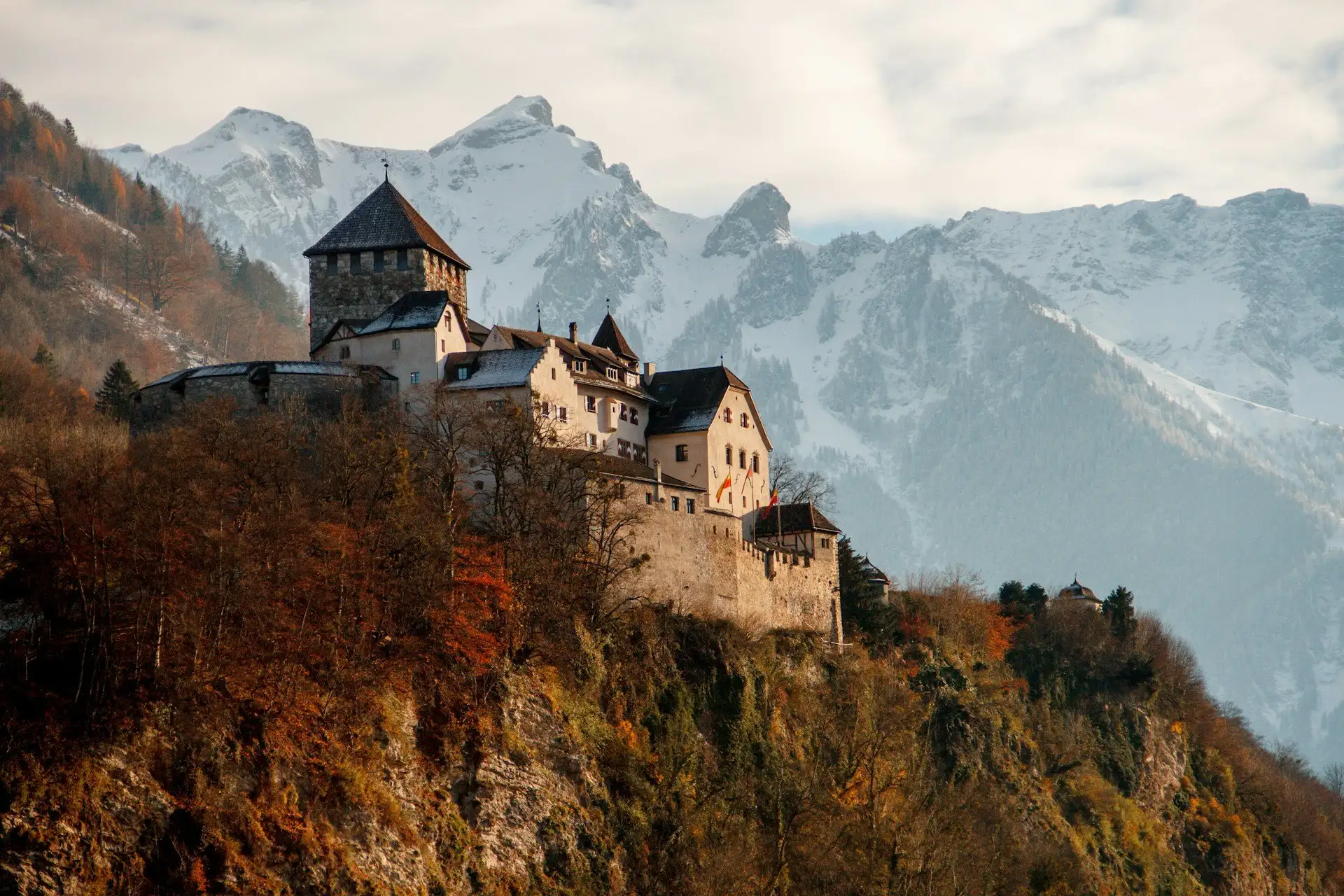
Vaduz Castle is the Prince's private residence and is not open to the public inside, a detail that surprises some visitors who assume every European castle offers paid tours. There's no scam here exactly, just an expectation gap: some travelers walk up expecting a ticketed interior visit and are disappointed to find only the exterior and the surrounding paths are accessible.
Plan your visit around the walk up and the view over the Rhine Valley rather than an interior tour. The Liechtenstein National Museum and the Kunstmuseum in central Vaduz are the country's genuine indoor museum experiences and are well worth the ticket price.
🔜 ATM Currency Conversion Upsell
Some ATMs offer to charge you in your home currency rather than Swiss francs, a practice called dynamic currency conversion. It sounds convenient but bakes in a worse exchange rate and extra fees, and the machine is designed to make the foreign-currency option look like the default choice.
Always choose to be charged in Swiss francs when an ATM or card terminal asks. Your own bank's rate, especially with a fee-free travel card, will almost always beat the machine's conversion.
Malbun, Triesenberg & the Rhine Valley
Because Liechtenstein is small enough to cross by car in under half an hour, most visitors treat the whole country as a single extended day trip from Vaduz, up to the mountain village of Triesenberg, onward to the ski resort of Malbun, or south through the wine villages around Balzers and Eschen. The traps here are even gentler than in Vaduz, mostly about outdoor preparedness rather than money.
🗻 Underestimating Alpine Conditions
This isn't a scam, it's a genuine safety gap worth flagging here because it catches more visitors than anything on this page involving another person. Liechtenstein's elevation ranges from the valley floor to over 2,500 meters within a very short distance, and hiking paths, while clearly marked, don't always carry the same density of warning signage travelers might expect from home. Weather and temperature can shift quickly between the Rhine Valley and the mountain villages above it.
Check the weather forecast before heading up to Triesenberg or Malbun, hike with at least one other person, tell someone your planned route and return time, and carry layers even on a warm valley day. Stick to designated paths and follow posted trail conditions.
🍷 Wine Tasting Pricing in the Rhine Valley
A small number of vineyard cellars in the wine-growing villages around Vaduz and Eschen don't post tasting prices clearly, similar to the pattern seen in other small wine regions across Europe, so a visitor can be surprised by the bill for what they assumed was a complimentary sample tied to a cellar visit.
Ask what a tasting costs before you sit down, particularly at smaller family-run cellars rather than the country's larger, more established wine producers, which tend to post prices clearly.
Transport Traps
🚌 Unvalidated Bus Tickets
Liechtenstein has no passenger railway of its own, so buses are the backbone of getting around and connecting to the Swiss and Austrian train stations at Sargans, Buchs, and Feldkirch. Tickets must be bought and validated before boarding, either at a machine near the stop or through a mobile app, since drivers do not sell tickets on board. Inspectors carry out random checks, and if you're caught without a validated ticket, the standard fine applies immediately and doubles if you don't pay it on the spot.
Buy your ticket at the machine near the bus stop or through the LIEmobil app before boarding, and keep it validated and with you until the journey ends. If you're unsure whether a ticket needs separate validation after purchase, ask at your accommodation or check the machine's instructions before you get on.
🚗 "Priority to the Right" Driving Confusion
Not a scam, but a genuine source of accidents among foreign drivers renting a car locally. Liechtenstein follows a "priority to the right" rule at many intersections, including some secondary roads, meaning vehicles approaching from the right have the right of way even without a stop sign. Drivers used to a different system are frequently caught out.
Familiarize yourself with the priority-to-the-right rule before driving in Liechtenstein, watch carefully at unmarked intersections, and drive with extra caution in the mountain villages where roads are narrower and winding.
Restaurant Costs & What Things Should Cost
There's no overcharging scam to speak of in Liechtenstein's restaurants, the trap is simply the baseline cost, among the highest in the world, and a bill that surprises visitors who haven't checked prices first. Menus are required to display prices clearly, so a quick look before sitting down avoids any unpleasant surprise at the end of the meal.
What Things Actually Cost in Liechtenstein 2026
📄 Not Checking Prices Before Sitting Down
This is less a scam than a straightforward cost-of-living reality that trips up visitors used to lower prices elsewhere. A simple lunch for two at a sit-down restaurant near Vaduz's museums can easily exceed CHF 80, and menus display prices clearly, so anyone caught off guard usually just didn't look first.
Check the posted menu before sitting down, and consider a bakery or supermarket lunch in Schaan or Triesen if you're traveling on a tighter budget. Setting a daily spending target before you arrive helps keep Liechtenstein's genuinely high prices from becoming an unwelcome surprise.
Use a Wise card or Revolut to pay in Swiss francs at the real exchange rate with zero foreign transaction fees, avoiding both the euro change markup and any ATM currency conversion upsell. Both send instant notifications for every transaction, so you always know exactly what you've spent.
Shopping Traps
📜 The Passport Stamp Souvenir
For a small fee, the official Vaduz Tourist Center will stamp a decorative Liechtenstein stamp into your passport or onto a keepsake card. This is a genuine, well-known novelty run directly by the tourist office rather than any kind of trick, but it's worth knowing upfront that the stamp has no border-control function and won't appear on any actual entry record. A small number of unofficial sellers elsewhere have occasionally charged more for the same souvenir.
Buy it only from the official Vaduz Tourist Center, where the price is posted and fixed at around CHF 3. Treat it purely as a fun keepsake rather than anything with official standing, and consider whether you want a stamp in your actual passport versus a separate souvenir card.
💎 Postage Stamp and Coin Collector Pricing
Liechtenstein has a long tradition of collectible postage stamps and coins, genuinely popular with philatelists worldwide, but a small number of souvenir shops price commemorative sets well above their actual collector value for tourists who don't know the market.
Buy directly from the Liechtenstein Postal Museum or the national post office if you want genuine philatelic items at fair, posted prices, rather than a general souvenir shop with no visible pricing.
Digital Scams
📞 Financial and Romance Scams
Government travel advisories specifically flag financial scams as a genuine concern connected to Liechtenstein, more so than any street-level risk. These typically begin online, through dating apps, emails, or letters, and can involve someone posing as a romantic interest who eventually asks for money, or someone impersonating a local authority claiming a fee or fine is owed. Liechtenstein's reputation as a wealthy financial center makes it an occasional backdrop for these schemes even when neither party is actually there.
Be cautious with anyone online who develops a relationship quickly and later asks for money, and never send funds to someone claiming to represent a government agency, bank, or law enforcement body without verifying independently through an official phone number. Genuine authorities do not request payment by wire transfer, gift card, or cryptocurrency.
📱 Public WiFi in Cafes
Liechtenstein's digital infrastructure is excellent, which also means a lot of remote workers and visitors rely on cafe WiFi for extended periods. Unsecured public networks carry the same general interception risk here as anywhere else, even if the country's overall digital crime rate is low.
Use a VPN on public WiFi, particularly for anything involving banking or login credentials, and consider a local or European eSIM for mobile data instead, given how strong cellular coverage is across the country.
An Airalo eSIM gives you local data from arrival, no roaming charges, and a secure personal connection that removes the public WiFi risk entirely. Coverage across the country and into neighboring Switzerland and Austria is excellent, and setup takes about 5 minutes before you travel.
Universal Prevention Guide
Almost everything on this page is about protecting your budget rather than protecting yourself, which says a great deal about how safe Liechtenstein genuinely is. A little preparation covers nearly all of it.
Pay in Francs, Not Euros
Card payment is accepted almost everywhere and avoids the weaker exchange rate that comes with paying cash in euros. If you do carry cash, Swiss francs go further than euros will.
Save Emergency Numbers Before You Go
Liechtenstein emergency: 112. Direct lines also work: 117 police, 118 fire, 144 medical assistance. The Landespolizei station in Vaduz handles in-person reports.
Validate Every Transport Ticket
Buy and validate bus tickets before boarding, either at the stop's machine or through the LIEmobil app. Keep the validated ticket with you until your journey ends, in case of a spot check.
Choose Local Currency at Every Terminal
When an ATM or card terminal asks whether to charge you in Swiss francs or your home currency, always choose francs. The foreign-currency option almost always carries a worse rate and hidden fees.
Prepare Properly for the Mountains
Check the forecast, hike with a companion, tell someone your route, and carry layers if you're heading up to Triesenberg or Malbun. Weather and elevation change quickly in a country this compact.
Verify Anyone Asking for Money Online
Be skeptical of online relationships or messages that turn into requests for money, and never wire funds to someone claiming to be an authority without verifying independently through an official number.
Booking experiences through GetYourGuide means vetted, transparently priced operators for Vaduz walking tours, Rhine Valley wine tastings, and Malbun hiking excursions. Prices are shown upfront, which removes any guesswork about what a Liechtenstein experience should genuinely cost.
Solo Travelers
Liechtenstein is about as low-risk a destination as exists for solo travelers of any gender, with even solo female travelers reporting complete comfort walking around Vaduz and the surrounding villages at any hour. The country's small size, low crime rate, and generally calm, orderly culture make it an easy place to explore independently.
The main practical consideration for solo travelers is less about personal safety and more about logistics, Sundays are quiet with most shops closed outside tourist-oriented spots, and hiking alone in the mountains above Triesenberg or Malbun is worth avoiding regardless of your travel style, simply because help can be slower to reach in more remote alpine terrain.
Reporting Issues in Liechtenstein
Genuine crime reports are rare in Liechtenstein, but if you do run into a problem, whether it's a lost card, a transport fine dispute, or something more serious, the process is straightforward and the national police clear-up rate is high.
Step-by-step: What to Do if Something Goes Wrong
Liechtenstein is Worth It. Go Prepared.
There is genuinely very little to warn you about here, and that's the whole point of this page, a country where the national police call street scams virtually nonexistent doesn't need much more than a note about currency rates and ticket machines. A traveler who pays in francs rather than euros, validates every bus ticket, and checks a menu before sitting down will spend a completely trouble-free visit here.
Liechtenstein rewards a slow, curious afternoon or two, a castle you admire from below rather than inside, a walk up into alpine villages that feel a world away from the valley floor, and vineyards producing wine most visitors never expect from a country this small. Go, enjoy it, and spend your money on things that deserve it.