
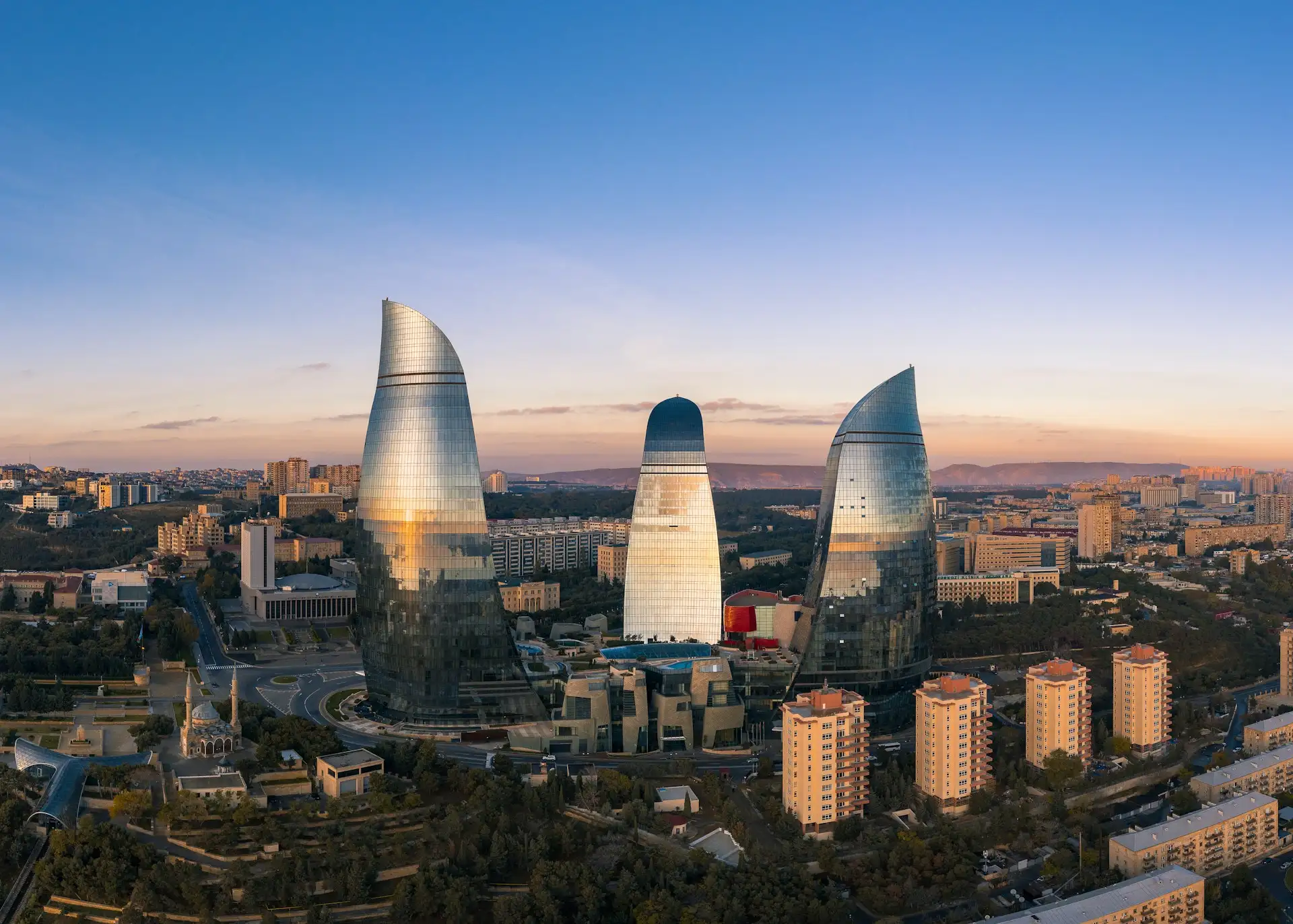
What Travellers Should Know About Azerbaijan
Azerbaijan is a rapidly developing tourism destination — Baku in particular has invested heavily in its appeal to international visitors. The scam landscape is moderate and concentrated in Baku's tourist districts.
Common Scams in Azerbaijan
Azerbaijan's tourist traps follow recognisable patterns — most are avoidable with a few simple habits established before arrival.
Taxis from Heydar Aliyev Airport are a primary overcharging hotspot. Drivers waiting at the exit quote AZN 40–60 for the 30km journey to central Baku that should cost AZN 15–20 via app. Inside the city, unmetered taxis quote dramatically inflated fares to tourists — a 10-minute ride priced at AZN 20+ by a street taxi might be AZN 4–6 on Bolt. Drivers often claim the app doesn't work at the airport or that the traffic warrants a higher fare.
- Download Bolt before arriving — it works at Heydar Aliyev Airport and shows prices upfront. Walk outside the terminal to the designated pick-up area.
- The airport also has an official taxi desk inside arrivals — fares are fixed and higher than app but reliable and safe.
- In Baku city: use Bolt or Uber for all taxi journeys — never negotiate with street taxis in tourist areas.
- Never accept a ride from anyone who approaches you in the arrivals hall or airport car park exit.
The Azerbaijani carpet is a genuine UNESCO Intangible Cultural Heritage item and a magnificent thing to buy — if you buy correctly. The trap is the tea-and-pressure sales method used in tourist-area carpet shops: you are invited in for tea, shown carpets at length, offered an extended hospitality experience, then placed in an awkward social obligation to buy. The quoted prices are typically 5–10× the legitimate local value — a carpet legitimately priced at AZN 100 might be quoted at AZN 600–800. Some shops also misrepresent machine-made carpets as handmade.
- If you want to buy a genuine Azerbaijani carpet, visit the Azerbaijan Carpet Museum (Baku waterfront) first to understand quality, provenance, and fair price ranges.
- Genuine handmade Azerbaijani carpets have a certificate of authenticity — insist on documentation identifying the weaving region and technique.
- Tea hospitality is a genuine cultural expression — you are not obliged to buy anything regardless of how much tea you drink.
- A firm "thank you, I am just looking" repeated calmly is sufficient to exit any carpet shop situation.
The Azerbaijani manat is pegged to the US dollar at a fixed rate (approximately AZN 1.70 = USD 1.00). There is no legitimate parallel exchange rate — anyone offering a "better rate" than official exchange offices is running a scam. Common tricks include fast-counting, including old or damaged notes in bundles, and short-changing. ATMs at international banks (ABB, Kapital Bank, PASHA Bank) in Baku dispense manat at the official rate reliably.
- Use ATMs inside bank branches in Baku — ABB, Kapital Bank, and PASHA Bank branches are reliable.
- Licensed exchange offices (mübadilə) at the airport and in city centre malls offer official rates — use these, not street changers.
- The manat is pegged to the dollar — there is no black market rate worth pursuing. Anyone offering better is scamming.
- Count money carefully inside the exchange office before leaving — never count on the street.
Some tourist-facing restaurants around Fountains Square (Fəvvarələr meydanı) and the Old City operate dual pricing — menu prices shown to tourists are higher than those given to local customers, or service charges are added that weren't indicated. Charges for bread, water, and condiments brought automatically are also common. The practice is less systematic than in some regional neighbours, but bill review is always worthwhile.
- Review the bill against the menu before paying — query any line items you don't recognise.
- If bread, water, or snacks are brought without being ordered, confirm whether they are complimentary before consuming.
- Restaurants one or two streets back from the main tourist corridors offer significantly better value and more honest pricing.
- Google Maps reviews in Azerbaijani from local customers provide the most reliable indication of real prices.
English-speaking locals approach tourists — typically near the Maiden Tower or Palace of the Shirvanshahs — offering to show them around, share tea, or recommend a "real local restaurant." The person is charming and genuinely friendly in manner, but all roads lead to a carpet shop, souvenir seller, or overpriced restaurant where they receive a commission. The interaction can last an hour before the commercial intent becomes clear.
- Be warmly but firmly sceptical of any new acquaintance who quickly suggests somewhere you should visit or eat.
- Enjoy the conversation — Azerbaijani hospitality is genuine — but choose your own destinations independently.
- Book licensed Old City tours through GetYourGuide for a structured, commission-free experience.
- If you follow a "friendly local" to a shop, you are under absolutely no obligation to buy anything regardless of how much time you spent there.
Day trip and tour operators touting for business in hotel lobbies and near the airport frequently charge USD 80–150 for tours (Gobustan mud volcanoes, Ateshgah fire temple, Yanar Dag burning mountain) that licensed operators sell for USD 20–40 per person. Some operators also add fuel surcharges, entry fee mark-ups, and "guide tip" expectations not mentioned at booking. In some cases, tours are booked but not delivered as described.
- Book day trips through GetYourGuide or a verified Baku tour agency well in advance — transparent pricing and customer reviews.
- Research standard prices before arrival: a full-day Gobustan and Absheron tour from Baku should cost AZN 35–60 per person in a group.
- Agree the total all-inclusive price including entry fees and waiting time in writing before departure.
- Do not book tours through anyone who approaches you unsolicited in a hotel lobby or on the street.
Risk by City & Region
Azerbaijan's tourist activity is concentrated in Baku. Beyond the capital, risk drops significantly — the main concern in remote areas shifts from scams to infrastructure and border sensitivity.
The capital concentrates virtually all of Azerbaijan's tourist-targeting scams. The Icheri Sheher (Old City), Fountains Square, Nizami Street, and the Boulevard are the main tourist zones — and the main scam zones. Outside the tourist corridors, Baku is a very safe city.
- Airport taxi overcharging from Heydar Aliyev International (GYD)
- Carpet shop tea-and-pressure selling in the Old City
- Restaurant bill padding near Fountains Square and Boulevard
- "Friendly local" commission steering near Maiden Tower and Palace of Shirvanshahs
- Fake tour package operators in hotel lobbies
- Photography restrictions — metro stations and government buildings
The Absheron Peninsula contains some of Azerbaijan's most extraordinary sites — the mud volcanoes of Gobustan, the Ateshgah Fire Temple, Yanar Dag (burning mountain), and the ancient rock carvings at Gobustan National Park. Most visitors come on organised day trips from Baku.
- Unofficial "guide" approaches at Gobustan mud volcano and Yanar Dag entrance
- Tour operator price inflation for walk-up bookings vs pre-booked group tours
- Unmarked souvenir stalls near attraction entrances with tourist pricing
One of Azerbaijan's most beautiful towns — medieval caravanserai, the Sheki Khans' Palace with extraordinary stained glass, and a thriving bazaar. Generally very safe and hospitable. The main tourist trap is the bazaar's carpet and silk pricing for foreign visitors.
- Bazaar carpet and silk sellers quoting tourist-premium prices — bargaining expected
- Unofficial guide approaches near the Khans' Palace and caravanserai
- Guesthouse pricing without posted rates — confirm price before checking in
- Taxi overcharging on the Baku–Sheki route — book marshrutka (minibus) or pre-arrange transfer
The Greater Caucasus mountain region north of Baku — Gabala, Quba, Lahij, and Ilisu — is spectacular and increasingly visited for hiking and eco-tourism. Very safe throughout. The main issues are transport logistics and accommodation pricing.
- Gabala ski resort walk-up pricing vs advance booking online
- Private taxi overcharging on mountain routes — negotiate fare before departure
- Lahij copper souvenir sellers — tourist pricing above local market value
- Road conditions in the high mountains can be poor — 4WD recommended for some routes
Azerbaijan's exclave — separated from the main country by Armenia — is accessible only by direct flight from Baku (no overland route through Armenia); the land border with Iran is currently closed. Very few foreign tourists visit. Crime is extremely low. The main consideration is the logistics of getting there and the sensitive border situation.
- Accessible only by AZAL flights from Baku — no overland route through Armenia; the land border with Iran is currently closed
- Limited tourist infrastructure — accommodation options are sparse
- Turkish and Iranian borders — check current entry requirements as they fluctuate
The districts of Kalbajar, Lachin, Zangilan, Jabrayil, and Fuzuli were returned to Azerbaijani control between 2020 and 2023 following the Nagorno-Karabakh conflict. Infrastructure is limited, unexploded ordnance may be present, and tourist facilities are essentially non-existent. Do not travel here without thorough current research and government advisory checks.
- Potential unexploded ordnance — never leave established routes
- No tourist infrastructure — hotels, medical facilities, fuel are extremely limited
- Check your government's current travel advisory for specific restricted areas
- The Armenian border is closed — do not approach it from either side
Safety Tips for Azerbaijan
Azerbaijan is a welcoming and manageable destination for prepared travellers. Most of these tips are about financial awareness and geopolitical context rather than personal safety.
- ✓ Download Bolt before landing at Heydar Aliyev Airport — it works at the airport and eliminates all taxi price disputes in Baku.
- ✓ Apply for your e-visa only at evisa.gov.az — the official Azerbaijani government portal. The state fee is USD 20, plus a service fee. Avoid any third-party "visa service" website.
- ✓ Do not photograph metro stations, government buildings, military installations, oil infrastructure, or border areas — restrictions are real and enforced.
- ✓ Check your government's current travel advisory for western districts near the former conflict zone before planning any itinerary outside Baku.
- ✓ If your passport contains an Armenian stamp, check current entry requirements before travelling — entry may be refused.
- ✓ In carpet shops: tea is free and hospitality is genuine — you are not obliged to purchase anything regardless of how long you stayed or how much tea you drank.
- ✓ Visit the Azerbaijan Carpet Museum before buying any carpet — understand regional styles, quality indicators, and fair price ranges.
- ✓ Use ATMs inside bank branches (ABB, Kapital Bank, PASHA Bank) — avoid standalone street ATMs, particularly at night.
- ✓ Book all day trips and tours in advance through GetYourGuide or a verified agency — never through hotel lobby touts or unsolicited street offers.
Book Smart, Explore More
Pre-booking eliminates the most common financial traps and gives you a paper trail if anything goes wrong.
Emergency Numbers & Contacts
Emergency services in Baku are responsive. Outside the capital and in mountain areas, response times can be significantly longer — travel insurance is essential.