
Tobago's front door, and most people never leave it
Crown Point sits on Tobago's southwestern tip, wrapped around the island's international airport so tightly that several hotels are a five-minute walk from the runway fence. That proximity is the whole point: land, drop your bags, and be in the water at Store Bay inside the hour. The neighbourhood itself is unpretentious, low-rise hotels, guesthouses and food huts rather than glass-tower resorts, and it works because the two things that matter, calm swimmable water and a short boat ride to a genuinely spectacular reef, are both right here.
What Crown Point is not is a manufactured resort enclave. Fishermen still haul in the day's catch at Store Bay in the morning, the food huts are family businesses that have operated for decades, and the pace outside peak season (Christmas, Easter, Carnival) is unhurried enough that a week here can feel like doing very little, in the best sense.
The honest complications
Crown Point's beaches, while excellent, are not large: Store Bay in particular can feel busy by mid-morning once the day-trip boats and cruise-linked groups arrive. Nightlife is low-key by Caribbean standards, a few beach bars rather than a strip of clubs, which suits some travellers and disappoints others. And while Tobago overall is markedly safer than Trinidad (see the safety chapter below), it is not immune to opportunistic theft on quieter stretches of beach, so the same common sense that applies anywhere applies here too.
A compact strip, four names, one walkable area
"Crown Point" covers a small enough area that most of it is walkable, but the sub-neighbourhood names matter for booking a hotel and knowing what's nearby.
Crown Point proper
The core hotel strip, wrapped around A.N.R. Robinson International Airport, with the highest concentration of restaurants, car rental desks and tour operators. Store Bay is a short walk from most properties here.
Store Bay
Technically part of Crown Point, but distinct enough to name on its own: a small, calm, coral-sand beach that doubles as the main launch point for Buccoo Reef and Nylon Pool glass-bottom boat tours, ringed by the famous food huts.
Bon Accord
A residential village just inland from the airport, with a handful of smaller hotels and guesthouses that trade beachfront proximity for a quieter night's sleep and a more local, less tourist-facing streetscape.
Pigeon Point
Tobago's most photographed beach is a fenced heritage park rather than a neighbourhood: no accommodation sits directly on it, but it's an easy walk or short taxi from any Crown Point hotel, and worth a full day rather than a quick photo stop.
From beachfront resorts to a holistic garden retreat
Crown Point's hotel scene runs from full-service beach resorts to small, family-run properties with genuine personality, and almost everything sits within a 15-minute walk of Store Bay.
On the beach itself, Coco Reef Resort and Spa is Crown Point's most complete resort, with a private stretch of imported white sand, a kids' club and watersports desk that makes it the natural choice for families, and two in-house restaurants covering both ends of the price range. Overlooking Store Bay itself, Crown Point Beach Hotel sits on seven acres of grounds with sea-view rooms and kitchenettes, useful for longer stays who want to self-cater some meals.
For something smaller and more distinctive, Kariwak Village Holistic Haven and Hotel in Bon Accord has been running since 1982: 24 rooms around an award-winning tropical garden, a chlorine-free pool, yoga and Tai Chi sessions, and a kitchen that grows its own herbs, a genuinely different register from the beachfront hotels a short walk away. Tropikist Beach Hotel & Resort offers reliable mid-range value with direct beach access, and Carolina Point Resort, about five minutes on foot from the beach, is a solid four-star option for travellers happy to trade a slightly longer walk for a quieter garden setting.
A short drive north in Grafton, Mount Irvine Bay Resort sits on its own private beach beside Tobago's most established golf course, a good pick for travellers who want a Crown Point-adjacent base with more space and a slower pace.
Curried crab and dumplings, eaten standing up at a beach hut
Crown Point's food scene runs on two tracks: the Store Bay food huts, unpretentious, cheap and some of the best local cooking on the island, and the hotel restaurants and beach bars a few steps further back, which cover everything from fine dining to a sunset rum punch.
Miss Jean's
One of five small huts lining Store Bay beach, and reportedly the oldest, Miss Jean's is built around a single dish: curried crab and dumplings, small local crabs in a rich, spiced curry sauce with soft dumplings for mopping it up. The queue here runs longer than at the neighbouring huts for a reason; arrive hungry and patient.
Bago's Beach Bar
A casual, rustic beach bar right on the sand, decorated with international license plates and known for seafood plates and a relaxed, all-day drinking crowd. A reliable spot to watch the sun go down after a day on the water.
Tamaras & Bacchanals
Coco Reef's two in-house restaurants cover both ends of a night out: Tamaras for a proper sit-down dinner, Bacchanals for a casual open-air lunch or a themed BBQ buffet evening. Both are open to non-guests.
Blu Restaurant
An alfresco restaurant overlooking Store Bay itself, mixing Caribbean staples with broader international dishes and a solid cocktail list, a good middle option between a food hut and a resort dining room.
Two world-class beaches and a reef within paddling distance
Crown Point's attractions are concentrated enough to see the essentials in two or three unhurried days, with the rest of a longer stay best spent simply returning to the water.
Store Bay & the reef boats
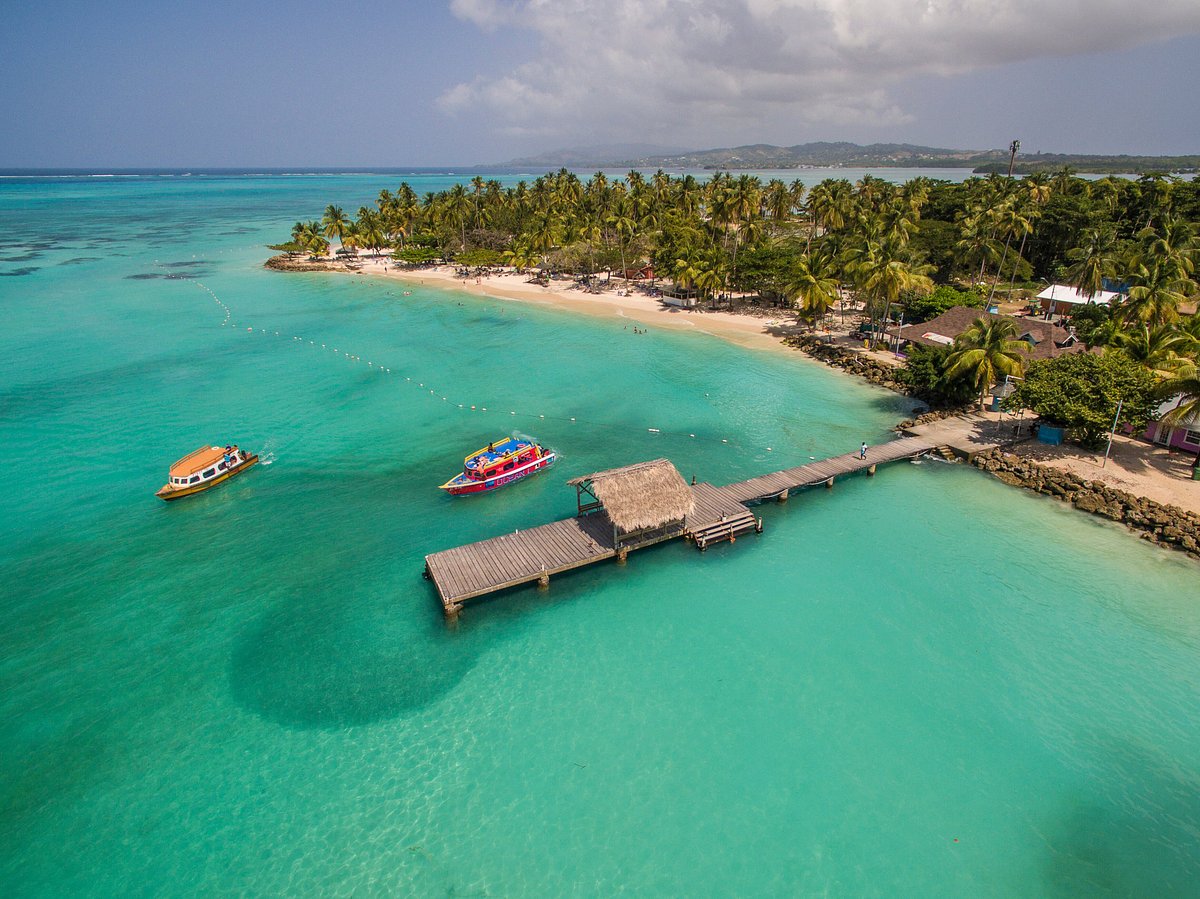
Start at Store Bay itself: calm, shallow, coral-sand water good for swimming rather than surfing, with the food huts and a small craft market right behind the beach. This is also the main launch point, alongside Pigeon Point, for glass-bottom boat trips to Buccoo Reef, a roughly 10,000-year-old coral reef system, and the Nylon Pool, a chest-deep sandbar in open water named by Princess Margaret in 1962 for its improbable clarity. Tours run about two hours, include snorkel gear, and typically stop for a swim at both sites; walking up and booking on the spot works for most of the year.
Pigeon Point Heritage Park
Tobago's signature view: a thatched-roof jetty reaching into turquoise, reef-protected water, with soft white sand and palm trees behind it. It's a fenced day-use park with a small entrance fee (TT$20 for adults, TT$10 for children, a weekly pass also available), and chairs, umbrellas and huts rent separately. Come early to get a hut near the water before the day-trip crowds build, and stay for a full day rather than a quick photo, the swimming here is as good as the view.
Fort Milford
A small, easily overlooked 18th-century British fort right at the edge of Crown Point, with a handful of original cannon still in place and a short, shaded nature trail looping through the grounds. Free to visit and a good 20-minute break between beach sessions.
No Man's Land & Bon Accord Lagoon
A sandy spit reachable by a short boat ride across Bon Accord Lagoon from Store Bay, popular for a quieter stretch of sand and calm, mangrove-fringed water away from the main beach crowds; several of the same operators running Buccoo Reef tours will drop passengers here on request.
One, three or five days, planned beach by beach
Three to four days covers Crown Point's own beaches and reef properly; five or more lets you add a full day up the leeward coast or across to Tobago's wilder northeast.
- Morning
Store Bay. Swim, then a Buccoo Reef and Nylon Pool glass-bottom boat tour, back by early afternoon.
- Lunch
Miss Jean's or a neighbouring hut. Crab and dumplings, eaten at the shared tables behind the beach.
- Afternoon
Pigeon Point. The thatched jetty, a swim, and a rented hut for the rest of the day.
- Evening
Bago's Beach Bar or dinner at Blu, watching the sunset from Store Bay.
- Day 1
The one-day route above: Store Bay, the reef tour, Pigeon Point in the afternoon.
- Day 2
Fort Milford in the morning, then a slower beach day, No Man's Land by boat from Store Bay in the afternoon.
- Day 3
Leeward coast day trip: Englishman's Bay for snorkeling, Castara for lunch, back to Crown Point by evening.
- Days 1-3
The three-day route above, at a gentler pace.
- Day 4
Argyle Waterfall and the Main Ridge Forest Reserve, both reachable in a single guided day trip from Crown Point.
- Day 5
Speyside or Charlotteville, a longer drive to Tobago's northeast for diving or a boat to Little Tobago, best as an overnight if time allows.
Small enough to walk, with a rental car worth it for the rest of the island
Crown Point is unusually convenient to reach: A.N.R. Robinson International Airport (TAB) sits inside the neighbourhood, so most hotels are a 5 to 15 minute walk or a short taxi ride from arrivals, roughly TT$30-50 by licensed taxi. Caribbean Airlines' subsidized air bridge connects TAB to Piarco International Airport (POS) on Trinidad in about 25 minutes, running up to 20 times a day; a slower ferry (3 to 3.5 hours, roughly TT$120-130) runs between Scarborough and Port of Spain for those without a reason to fly.
Within Crown Point itself, everything, Store Bay, Pigeon Point, Fort Milford and most restaurants, is walkable. A rental car ($35-60/day, driving on the left) or an organised tour becomes worthwhile for reaching Englishman's Bay, Castara, Argyle Waterfall or the Main Ridge Forest Reserve, all 45 minutes or further along winding coastal roads. Route taxis (shared, fixed-route, TT$4-15) run along the main roads but don't reliably reach the more remote beaches.
Best time to visit and Carnival crossover crowds
January through May is Tobago's dry season and the best all-round window: warm, relatively low humidity, and ahead of the wetter months from June. Carnival (early February, on Trinidad) pulls some visitors across for the festival itself, but Crown Point's own high season runs closer to the December-to-April northern hemisphere winter, when hotel prices peak. June through November is quieter and cheaper, with more rain but few weather disruptions serious enough to derail a beach trip.
One of the more affordable beach bases in the English Caribbean
Crown Point is noticeably cheaper day to day than Barbados, the Bahamas or the more resort-heavy islands nearby, especially for food: a full meal at a Store Bay hut costs a fraction of a hotel restaurant plate of the same quality.
- Guesthouse or budget hotel room $30-60
- Store Bay food huts $8-15/meal
- Walking plus the occasional route taxi
- Free beaches, Fort Milford
- Beachfront hotel $100-180
- Restaurant meals $15-35
- Rental car or licensed taxis
- Buccoo Reef tour, Pigeon Point entry
- Coco Reef or equivalent full-service resort
- Private tours to Speyside/Charlotteville
- Spa treatments, dive packages
- Peak-season (Dec-Apr) accommodation
Notably safer than Trinidad, with the usual beach-town precautions
Trinidad and Tobago as a whole carries a US State Department Level 3, Reconsider Travel advisory, driven by gang-related violence that is heavily concentrated in Trinidad, particularly in and around Port of Spain. Tobago's crime rate runs well below Trinidad's, and the same advisory treats it as the safer of the country's two islands; Crown Point specifically, built almost entirely around tourism, sees little of the violence driving the national rating. See our full Trinidad and Tobago country guide for the national picture in detail.
What actually catches visitors here is more mundane: opportunistic theft from unattended beach bags at Store Bay and Pigeon Point, so don't leave valuables unwatched; occasional overcharging by unlicensed taxi drivers, so agree a fare before getting in or use your hotel's arranged transport; and standard water safety, currents pick up on the more exposed windward beaches beyond Crown Point, so ask locally before swimming somewhere unfamiliar. Walking Crown Point's main streets after dark is generally fine, but stick to lit, populated routes rather than shortcuts through quiet residential lanes. Emergency numbers are the same nationwide: 999 for police, 990 for fire, 811 for ambulance, and 112 works from most mobile phones.
The rest of Tobago is closer than it looks on the map
Tobago is small enough that most of the island is a manageable day trip from Crown Point, by rental car or organised tour.
Englishman's Bay & Castara
A secluded, forest-backed bay with some of the best shore snorkeling on the island, including rare staghorn coral, followed by lunch in Castara, a working fishing village with its own laid-back beach scene and simple seafood shacks on the sand.
Argyle Waterfall & Main Ridge Forest Reserve
Tobago's highest waterfall at 54 metres, a gentle 20-minute guided walk from the road through cocoa and fruit trees, with a natural jacuzzi pool at the second tier. Combine it with a stop in the Main Ridge Forest Reserve, declared a Crown Reserve on 13 April 1776 and the oldest legally protected forest reserve in the Western Hemisphere, marking its 250th anniversary in 2026.
Speyside & Charlotteville
Tobago's northeastern tip and its best diving: Angel Reef off Speyside drops into clear water rated among the Caribbean's best, with regular manta ray sightings, while boats also run out to Little Tobago for seabird colonies. Charlotteville, a further 20 minutes on, opens onto Pirate's Bay and Lovers Bay, both worth a swim. Far enough from Crown Point that an overnight beats a rushed there-and-back.
Scarborough
Tobago's capital and largest town, worth an hour or two for the hilltop Fort King George, with sweeping views over the Atlantic side of the island, and the adjacent museum covering Tobago's Amerindian and colonial history.
Crown Point FAQ
Is Crown Point safe for tourists?
Yes, notably more so than Trinidad. Crown Point and Tobago's tourist areas see far less crime than Port of Spain, and the US State Department itself treats Tobago as the safer of the country's two islands. Standard beach-town precautions, secure your room, don't leave valuables on the sand, are the main things to keep in mind.
How many days do I need in Crown Point?
Three to four days covers the immediate area well: a day for Store Bay and Pigeon Point, a half day for the Buccoo Reef and Nylon Pool boat tour, and a day for the leeward coast up to Englishman's Bay. Add two or three more days to reach Speyside or Charlotteville for diving and the Main Ridge Forest Reserve.
How much does Crown Point cost per day?
Budget travellers manage on $60-90 a day with guesthouses and Store Bay food-hut meals; mid-range runs $130-220 with a hotel and restaurant meals. Prices rise around Christmas, Easter and Carnival.
How do I get from the airport to Crown Point?
Most hotels in Crown Point are a 5 to 15 minute walk or short taxi ride from A.N.R. Robinson International Airport (TAB), since the airport sits inside the neighbourhood itself. A licensed taxi into the immediate area costs roughly TT$30-50.
What is the best area to stay near Crown Point?
Crown Point proper, closest to the airport and Store Bay, is the most convenient; Bon Accord, a short walk inland, is quieter and includes well-regarded smaller hotels. Pigeon Point itself has no hotels directly on it, it is a day-use park a short drive or walk from Crown Point's accommodation.
Do I need to book the Buccoo Reef and Nylon Pool tour in advance?
Not usually. Glass-bottom boats leave regularly from Store Bay and Pigeon Point through the day; walking up and booking on the spot works for most visitors, though booking ahead is safer around Easter and Carnival.
Is Pigeon Point free to visit?
No. Pigeon Point Heritage Park charges a daily entrance fee of TT$20 for adults and TT$10 for children, with a weekly pass available. Chairs, umbrellas and beach huts are rented separately.
Can I visit Crown Point without a rental car?
Yes, for the immediate area: Store Bay, Pigeon Point and most restaurants are walkable from Crown Point hotels. A rental car or organised tour becomes useful for Englishman's Bay, Argyle Waterfall and the Main Ridge Forest Reserve, all 45 minutes or more away.
What Stays With You
Crown Point doesn't try to be more than it is: a short strip of coast where the airport, the beach and the reef are all within a few hundred metres of each other, and where a family-run hut serving one dish for decades draws a longer line than anything with a marketing budget behind it. The jetty at Pigeon Point photographs perfectly, but it's standing chest-deep in the Nylon Pool with the horizon flat in every direction, or watching the crab and dumplings come out of Miss Jean's window, that actually stays with you.
Save one evening for nothing at all: a chair at Store Bay, a rum punch from Bago's, and the specific, unhurried version of the Caribbean that Crown Point has been quietly getting right for decades.