
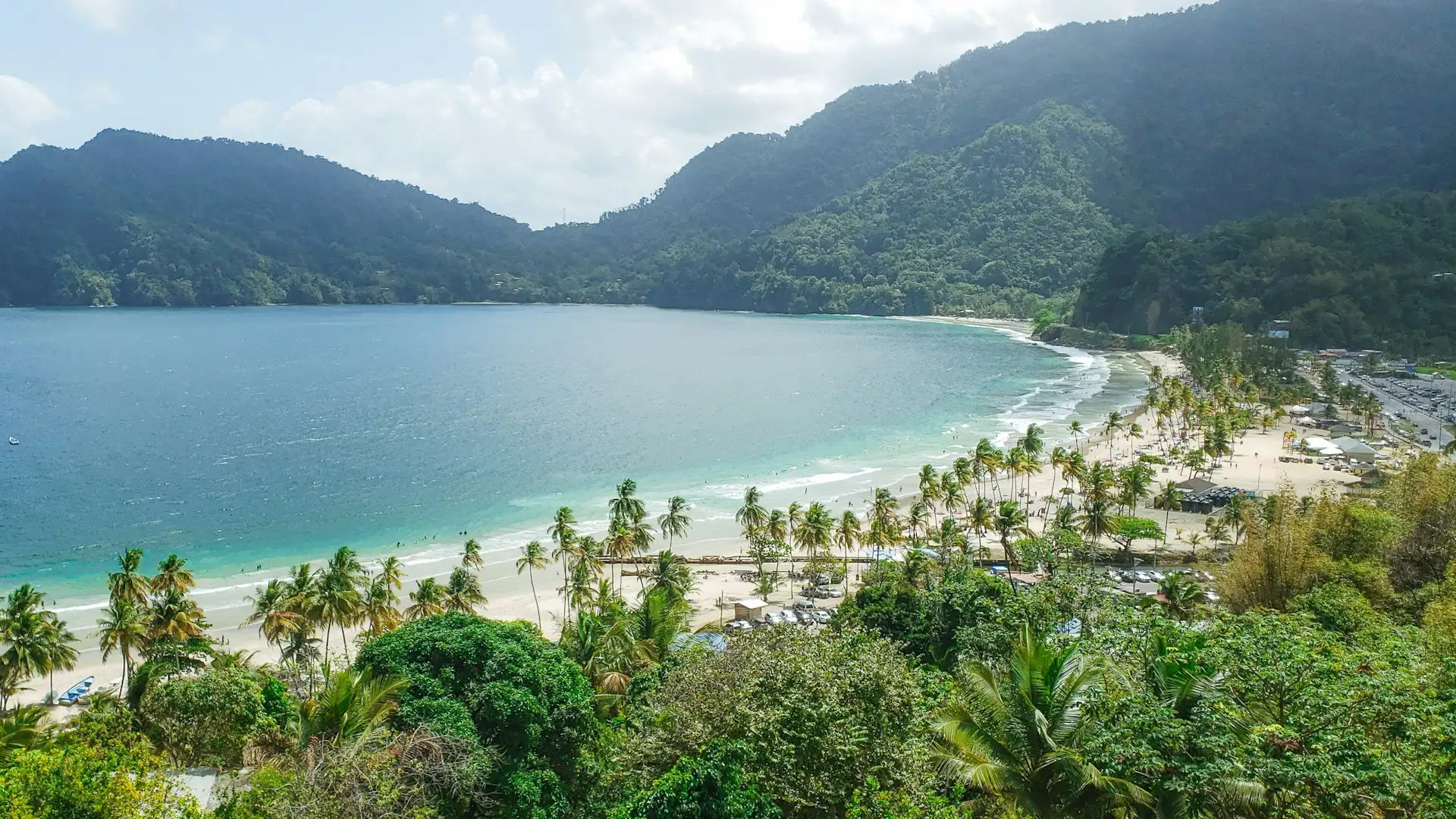
Two Islands, One Passport, Two Different Trips
Trinidad and Tobago is the wealthiest country in the Caribbean per capita, built on offshore oil and gas rather than tourism, and it shows: Trinidad in particular doesn't perform "Caribbean paradise" for visitors the way Barbados or the Bahamas do, because its economy was never built to need to. What it built instead was Carnival, the source event that the versions in London, Toronto, New York and Brooklyn all trace back to, along with the steelpan, the only acoustic instrument invented in the 20th century, and the soca and calypso that soundtrack it. Tobago, a 20 to 30 minute flight away, is a different country in spirit: a small, slow, reef-fringed island whose Main Ridge Forest Reserve has been continuously protected since 1776, the oldest legally protected forest reserve anywhere in the Western Hemisphere, marking its 250th anniversary in 2026.
The population of roughly 1.5 million splits almost evenly between descendants of enslaved West Africans and the indentured Indian laborers brought over after abolition in 1834, and that dual heritage shows up everywhere: in a calendar that gives public holidays to Christmas, Eid and Divali alike, in a cuisine that runs from curry and roti to callaloo and pelau, and in a national identity built more around mixing than around a single dominant culture.
The honest complications
Read the safety chapter immediately below before booking anything. Trinidad and Tobago is currently under a nationwide State of Emergency and a Level 3 US advisory, driven by gang violence that is real, ongoing, and concentrated in specific parts of Trinidad rather than spread evenly across the country. That is the central fact shaping this guide, and it means the two islands need to be evaluated somewhat separately rather than as a single uniform destination. Beyond safety: Trinidad's tourism infrastructure outside Carnival season is thin compared with Tobago or with more visitor-oriented islands, English is spoken everywhere but the Creole pace and cadence take a day or two to tune your ear to, and Carnival week itself is genuinely overwhelming, loud, crowded, expensive and not a good introduction to the country for anyone hoping for a quiet beach trip.
The Level 3 Advisory, and Why Tobago Is a Different Story
The US State Department's April 2026 advisory rates Trinidad and Tobago Level 3, Reconsider Travel, citing crime, health and terrorism, with some areas carrying an increased risk. The government declared a fresh nationwide State of Emergency on 3 March 2026 in response to a wave of gang-related mass shootings and reprisal killings, and extended it again in June 2026; the measure gives police expanded powers to search and arrest without a warrant, and as of the most recent extension there was no curfew or ban on public gatherings in force. Canada and Australia issue comparable warnings, both specifically flagging cruise-ship docks and tourist areas in Port of Spain for petty theft alongside the broader crime concern.
The violence is concentrated, not universal
Killings are driven overwhelmingly by gang reprisal shootings centered on specific communities in and around Port of Spain, on Trinidad. Tobago has a markedly lower crime rate, and the State Department's own guidance treats it as the safer of the two islands for visitors, a genuine and useful distinction rather than marketing spin.
Petty crime in tourist spots
Pickpocketing, bag snatching and theft from slow-moving traffic occur around cruise terminals and tourist areas in Port of Spain, and on public buses and in unlicensed taxis islandwide. Use hotel-arranged or licensed "H" taxis, keep bags zipped and in front of you, and don't display cash or jewelry.
Night travel
Avoid walking after dark outside well-lit, populated tourist areas on either island, and avoid poorly-lit or unfamiliar neighborhoods in and around Port of Spain entirely, day or night. If arriving late, arrange airport transfer in advance rather than hailing transport on arrival.
What this means in practice for a Tobago-based trip or a Carnival trip
If you're basing yourself in Tobago, as most first-time leisure visitors do, the practical exposure to the crime driving the Level 3 rating is low: the resort areas around Crown Point, Store Bay and the northern coast villages are not where the gang violence is concentrated, and the island's own crime statistics run well below Trinidad's. Ordinary precautions, secure your room, use reputable tour operators, don't flash valuables, cover the realistic risk.
If you're visiting Trinidad, especially for Carnival, the calculation is different. Carnival itself draws enormous, well-policed crowds and is not where visitor-targeted violence has concentrated, but greater Port of Spain includes neighborhoods (Laventille, parts of East Port of Spain and Beetham Highway environs) that residents and authorities alike treat as no-go areas regardless of the current State of Emergency, Carnival season or not. Stay in vetted accommodation in St. Clair, Woodbrook or the waterfront hotel district, move between fetes and events by pre-arranged transport rather than walking or flagging unmarked taxis, and follow the same advice locals give first-time visitors: enjoy the event, don't wander.
Track it before you go. The State of Emergency and the underlying crime wave are active and dynamic; check the US Embassy in Trinidad and Tobago's latest security alerts and your own government's advisory in the weeks before departure rather than relying on this page alone.
Solo women travelers
Solo women traveling in Tobago's tourist areas report a similar experience to elsewhere in the English Caribbean: occasional verbal attention, rarely threatening, and a local culture where women mostly go out in groups so a solo traveler draws some curiosity. In Trinidad the calculation folds into the broader safety picture above: reputable accommodation, pre-arranged transport and avoiding unfamiliar areas after dark matter more here than gender-specific precautions. Full detail on our Solo Woman Explorer pages.
Emergency numbers
112 works from most mobile phones and routes to the police. Register with your embassy's traveler program before the trip, and confirm your travel insurance covers medical evacuation.
A History Worth Knowing
Both islands were home to Indigenous peoples, the Kalinago and their predecessors, before Columbus sighted Trinidad in 1498 on his third voyage. Spain held Trinidad nominally for three centuries while barely settling it; Tobago changed hands among Spanish, Dutch, French, Courlander and British powers more often than almost any other Caribbean island. Sugar and cocoa built the plantation economy on both islands, worked first by enslaved Africans and, after abolition in 1834, by indentured laborers brought from India, whose descendants make up roughly a third of the population today. Independence from Britain came in 1962, and the country became a republic in 1976. Oil, discovered commercially in the early 20th century, and later natural gas, turned Trinidad into the industrial exception in a region built mostly on tourism and agriculture.
- 1498
European contact. Columbus sights Trinidad on his third voyage; Tobago is contested by multiple European powers for the next 300 years.
- 1797
British capture Trinidad. Spain cedes Trinidad to Britain; Tobago is formally united with Trinidad as a single colony in 1889.
- 1834
Abolition, then indenture. Slavery ends; indentured laborers from India begin arriving from 1845, reshaping the country's demographics and culture.
- 1930s
The steelpan is born. Communities barred from traditional drums by colonial authorities turn oil drums into the first new acoustic instrument of the 20th century.
- 1962
Independence. Trinidad and Tobago becomes independent on 31 August, with Dr. Eric Williams as first Prime Minister.
- 1976
Republic. The country becomes a republic within the Commonwealth, replacing the British monarch as head of state.
Read the full history: colonial tug-of-war, indenture, and the steelpan
Trinidad's Spanish period was thin and mostly administrative; the island's real colonial development began after 1783, when a Spanish decree inviting French Catholic planters brought a wave of French-speaking settlers and their enslaved workforces from other Caribbean islands, which is why French Creole surnames and place names persist alongside English ones. Britain captured Trinidad in 1797 and formalized control in 1802. Tobago's history is far more chaotic: the small island changed colonial hands more than 30 times among Spanish, Dutch, Courlander (Latvian), French and British claimants before Britain secured it for good in the Napoleonic era, and the two islands were administered separately until 1889, when fiscal necessity pushed London to merge Tobago into Trinidad's colony as a junior partner, a dynamic that still shapes Tobago's occasional push for greater political autonomy today.
Indenture and its legacy. After abolition in 1834, sugar planters faced a labor shortage and the British colonial government arranged the transport of indentured workers from India, roughly 144,000 of them between 1845 and 1917, under contracts that were frequently exploitative and rarely honored in full. Their descendants, Indo-Trinidadians, now make up close to 35% of the population, and their influence runs through the country's cuisine, its Hindu and Muslim festivals, and its politics, where Afro-Trinidadian and Indo-Trinidadian political coalitions have alternated in government since independence.
The steelpan. Colonial authorities banned African drumming after emancipation, fearing it as a tool of organization and rebellion, which pushed percussive tradition through a series of substitutes: bamboo "tamboo bamboo" stamping tubes, then found metal objects, and finally, by the late 1930s and 1940s, tuned steel oil drums. The instrument was refined in Port of Spain's working-class neighborhoods through the 1940s and 1950s and is now the national instrument, taught in schools and competed over every Carnival in the Panorama steelband competition.
Top Destinations
Trinidad and Tobago splits cleanly along its own border: Trinidad for Carnival, the capital, and a wild, birding-rich interior; Tobago for beaches, reefs and a rainforest older than the concept of national parks. Most first-time visitors doing a beach trip should read the Tobago tabs first; anyone planning around Carnival should start with Port of Spain.
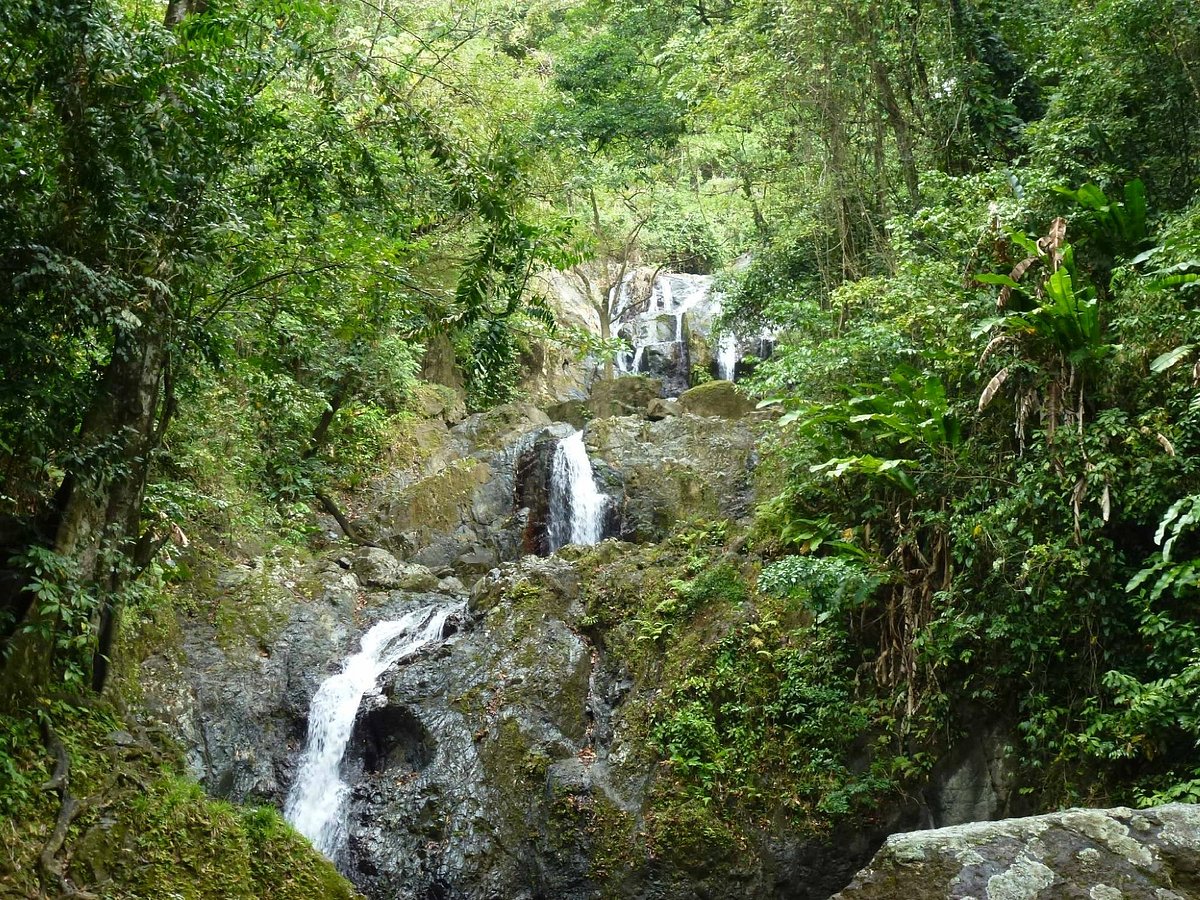
Port of Spain, the capital that never quite sleeps
Port of Spain is Trinidad's commercial and cultural hub, built around the 260-acre Queen's Park Savannah, the world's largest traffic roundabout by some measures, ringed by the ornate colonial "Magnificent Seven" mansions. The National Museum and Art Gallery, the 60-acre Royal Botanic Gardens founded in 1818, and the adjacent Emperor Valley Zoo cover a full day. Ariapita Avenue in Woodbrook is the after-dark strip: restaurants, rum shops and live soca spilling onto the sidewalk on weekends. Read the safety chapter above before planning any Port of Spain time: stick to St. Clair, Woodbrook and the waterfront hotel district, and use pre-arranged or hotel-booked transport rather than walking between neighborhoods after dark. Budget one to two days outside Carnival season.
Asa Wright Nature Centre & the Northern Range
About an hour northeast of Port of Spain along the Arima-Blanchisseuse Road, the Asa Wright Nature Centre occupies a former cocoa, coffee and citrus estate in the rainforested Northern Range and is one of the Caribbean's premier birding destinations, with hummingbirds, toucans and the rare oilbird among more than 150 recorded species from its veranda alone.
Caroni Swamp & the scarlet ibis
Thirty minutes south of the capital, Caroni Swamp's mangrove channels open into wide lagoons where the scarlet ibis, Trinidad's blazing-red national bird, comes home to roost by the thousand at dusk, turning entire trees crimson. Evening boat tours run daily from the visitor center off the Uriah Butler Highway.
Crown Point, Store Bay & Pigeon Point
Southwest Tobago around the airport is the island's tourism center: Store Bay's calm, shallow water and food huts sit a short walk from most Crown Point hotels, and Pigeon Point, with its photographed thatched jetty, is the island's most iconic beach. Glass-bottom boats run daily from both to Buccoo Reef and the Nylon Pool, a waist-deep sandbar in the middle of the sea named by Princess Margaret in 1962 for water so clear it reminded her of nylon stockings. Our dedicated Crown Point city guide covers this stretch of coast in full.
Englishman's Bay & the leeward coast
North of Crown Point, the leeward coast road runs past a string of quieter bays: Englishman's Bay, ringed by rainforest with staghorn coral visible while snorkeling just offshore, and Castara, a working fishing village with its own laid-back beach scene. Both sit an hour or so from Crown Point by rental car or organized tour.
Main Ridge Forest Reserve
Declared a Crown Reserve on 13 April 1776 to protect Tobago's rainfall-generating rainforest, the Main Ridge Forest Reserve is the oldest legally protected forest reserve in the Western Hemisphere, turning 250 in 2026. Guided trails through the reserve's lower montane and lowland rainforest reveal motmots, hummingbirds and, with luck, the elusive white-tailed sabrewing.
Speyside & Charlotteville
Tobago's northeastern tip is its wildest and best diving. Speyside faces Little Tobago and Goat Island, where Angel Reef drops into some of the clearest water on the island and manta ray sightings are common; Charlotteville, a quiet fishing village further round the coast, opens onto Pirate's Bay and Lovers Bay, both reachable by boat or a short hike. This end of the island runs 90 minutes to two hours from Crown Point and rewards an overnight stay over a rushed day trip.
Trinidad Carnival
The two days before Ash Wednesday, Carnival Monday and Tuesday, 8-9 February 2027, are the reason half the Caribbean diaspora's Carnivals exist in the first place. J'ouvert, the pre-dawn Monday opening with mud, paint and oil, gives way to the daytime Parade of the Bands on Tuesday, thousands of costumed masqueraders moving through Port of Spain behind trucks stacked with speakers. The weeks before are their own season of fetes (ticketed parties) and the Panorama steelband competition finals. Book flights and accommodation six months or more ahead; prices and demand both spike hard.
Tobago Heritage Festival
Running for two weeks each July into early August, villages across Tobago take turns hosting reenactments of old wedding customs, traditional dance, storytelling and food, a lower-key, more community-rooted counterpoint to Trinidad's Carnival spectacle.
Culture & Etiquette
Trinidad and Tobago's culture is built on the coexistence of its Afro-Trinidadian and Indo-Trinidadian communities, plus smaller Chinese, Syrian-Lebanese, European and Indigenous threads, and the national self-image leans hard into the mixing rather than any single dominant strand. Christmas, Eid-ul-Fitr and Divali are all public holidays; steelpan, soca, chutney and calypso share the same radio stations. "Liming", the Trinidadian art of hanging out with no particular agenda, is close to a civic virtue.
Do
- Greet before you ask anything. A "good morning" or "good afternoon" before a question, even to a shopkeeper or driver, is expected; skipping it reads as brusque.
- Learn a few Creole phrases. "Wha' goin' on" (what's happening), "Real ting" (that's genuine/great), and a cheerful "Ay" of acknowledgment go a long way.
- Try the food at both ends of the spectrum. A roadside doubles stand and a proper curry lunch are both essential, not a hierarchy of authenticity.
- Book Carnival costumes and fetes well ahead if that's the trip: mas bands and popular parties sell out months in advance.
- Ask before photographing people, particularly at Carnival events and in residential neighborhoods.
Don't
- Wander into unfamiliar Port of Spain neighborhoods, Carnival or not; see the safety chapter for specifics.
- Assume "Trinidadian" means one culture. Conflating Indo- and Afro-Trinidadian traditions, or assuming Carnival represents the whole country's daily life, misses most of what's actually here.
- Expect Trinidad to look like a resort island. It's an industrial economy with tourism as a side interest; Tobago is the half built around visitors.
- Skip the mas camp or steelband yard visits if you're around during Carnival prep season (January-February); watching costumes or a steelband rehearse is free and genuinely interesting.
- Rely on unlicensed taxis, known locally as "PH" cars, especially late at night; stick to licensed "H"-plated taxis or hotel transport.
Deeper culture: Carnival's origins, chutney music, and Divali
Carnival's roots. The pre-Lenten Carnival was brought by French Catholic planters in the 18th century as a masquerade ball season; enslaved and later freed Afro-Trinidadians transformed it after emancipation into a street celebration with its own characters (Midnight Robber, Moko Jumbie stilt-walkers, Jab Molassie devils), setting the template that Caribbean diaspora Carnivals in Notting Hill, Toronto and Brooklyn all descend from.
Chutney and chutney-soca. A genre blending Indian folk and devotional music traditions with Caribbean rhythm, chutney (and its dance-club cousin chutney-soca) is a direct product of the same Indo-Trinidadian community that shapes the country's food and festivals, and it has its own competitive season alongside calypso and soca ahead of Carnival.
Divali. The Hindu festival of lights, usually in October or November, sees homes across central and south Trinidad lit with rows of deyas (clay lamps), with the Divali Nagar site in Chaguanas hosting the largest public celebration, cultural performances and food stalls for over a week beforehand.
Food & Drink
Trinidadian food is the clearest expression of the country's dual heritage: West African-rooted stews and one-pot dishes sit alongside Indian curries, rotis and chutneys, often on the same street-food menu. Most of the best eating happens standing up, at a roadside stand or a "cook shop" rather than a sit-down restaurant.
Doubles ~TT$8-10
Two soft fried bara filled with curried channa (chickpeas), topped with tamarind, cucumber chutney and pepper sauce to taste. The national breakfast and the single most iconic Trinidadian street food, sold from carts everywhere from dawn.
Roti TT$25-45
A curry, usually chicken, goat, beef or vegetable, wrapped in a soft flatbread rather than served over rice. "Buss up shot" (paratha roti) torn and served alongside curry is the other classic version, meant to be eaten with your hands.
Bake and shark ~TT$40
Fried flatbread stuffed with fried shark and dressed at a topping bar with tamarind, garlic, pepper and mango sauces. Maracas Bay is the dish's spiritual home; Richard's and Natasha's are two long-running stands there.
Callaloo & Pelau
Callaloo is a thick, dasheen-leaf and coconut-milk stew usually served alongside a main; pelau layers rice, pigeon peas and meat cooked down with caramelized sugar (browning) for a distinctive dark, sweet-savory base.
Angostura Bitters
Invented in Trinidad in the 1820s and still produced there today, Angostura's aromatic bitters and rum both anchor the country's cocktail culture; a rum punch made with local Angostura or Fernandes rum is the standard order.
Corn Soup & Street Snacks
A thick, hearty corn and split-pea soup sold from carts, especially popular after a night out or at Carnival fetes, alongside fried snacks like aloo pie and saheena (spinach and split-pea fritters).
When to Go & Itineraries
January to May is the dry season and the easiest time to visit both islands, and it also contains Carnival, the single busiest and most expensive week of the year to book. June through December is wetter and more humid, with the islands sitting far enough south that they rarely take a direct hurricane hit, though tropical systems can still bring heavy rain.
Seasons compared, with temperatures
| Season | Verdict | Temps | Prices & crowds |
|---|---|---|---|
| Jan-May | Best (dry season) | 24-32°C | Carnival (Feb) spikes hard; otherwise moderate |
| Jun-Aug | Good, wetter | 25-33°C | Lower prices, Tobago Heritage Festival in Jul |
| Sep-Nov | Wettest | 24-32°C | Lowest prices, fewest crowds |
| Dec | Good | 23-31°C | Holiday season prices rise toward Carnival |
Year-round temperatures barely vary: both islands sit close to 11 degrees north of the equator and stay warm and humid throughout the year.
Itineraries
Seven days suits a single-island trip; two weeks lets you combine Tobago's beaches with a properly planned Trinidad visit rather than a rushed add-on.
- Days 1-5
Tobago. Crown Point as a base, Pigeon Point and Store Bay, a Buccoo Reef and Nylon Pool boat trip, a day up the leeward coast to Englishman's Bay and Castara.
- Days 6-7
Trinidad (optional add-on). Fly over for the Caroni Swamp scarlet ibis at dusk and a half day in Port of Spain's Savannah and museum district, staying in a vetted central hotel.
- Days 1-7
Tobago in full. Crown Point and the southwest beaches, then relocate to Speyside or Charlotteville for two nights of diving and the Main Ridge Forest Reserve.
- Days 8-10
Trinidad's nature. Asa Wright Nature Centre, Caroni Swamp at dusk, and a stop at Pitch Lake.
- Days 11-14
Port of Spain & Maracas Bay, or, if the dates line up, Carnival itself: book flights and mas costumes at least six months ahead for this option.
Getting there & around
Piarco International Airport (POS) near Port of Spain is the main international gateway, with direct flights from the US, Canada, the UK and the Caribbean. A.N.R. Robinson International Airport (TAB) in Crown Point, Tobago, also takes some direct international and regional flights, letting beach-focused visitors skip Trinidad entirely. Between the islands, Caribbean Airlines' subsidized "air bridge" flies the 25-minute hop up to 20 times a day; a slower ferry (3 to 3.5 hours, roughly $120-130 TTD one-way) runs between Port of Spain and Scarborough for those bringing a vehicle or preferring the sea.
Getting around each island: taxis, rentals, and driving on the left
| Option | Price | Notes |
|---|---|---|
| Route taxis (shared) | TT$4-15/route | Fixed routes, shared with other passengers, the cheapest way to move around either island's main roads. |
| Licensed "H" taxis | Negotiate/fixed | Look for the "H" on the license plate; agree the fare before getting in. Avoid unmarked "PH" cars, especially at night. |
| Rental car | US$35-60/day | Driving is on the left; an international permit isn't required for most short-term visitors but is worth carrying. Roads on Tobago's leeward coast are narrow and winding. |
| Air bridge (POS-TAB) | ~TT$150-300 | Book ahead in Carnival and holiday periods; the subsidized fare is popular with residents too. |
Practical prep: buy a local SIM at either airport or an eSIM before landing; both bpTT and Digicel have decent coverage on the main tourist circuits of both islands, weaker in Tobago's northeastern villages. Standard travel insurance works well; make sure the policy covers medical evacuation given the current safety picture.
Where to stay
Crown Point & Tobago's southwest
The island's hotel and resort concentration, walkable to Store Bay and a short drive from Pigeon Point. Covered in full in our Crown Point city guide.
Port of Spain hotel district
The Hyatt Regency Trinidad on the waterfront and the Hilton Trinidad & Conference Centre near the Savannah are the two international-standard anchors, both in vetted, well-secured parts of the city; the Kapok Hotel is a solid mid-range alternative in St. Clair.
Tobago's northeast (Speyside & Charlotteville)
Smaller guesthouses and dive-focused lodges cluster around Speyside and Charlotteville, best for travelers prioritizing diving and quiet over nightlife and restaurant choice.
Carnival season, Port of Spain
Prices in vetted central neighborhoods (St. Clair, Woodbrook, the waterfront) triple or more during Carnival week and sell out months ahead; book as soon as your dates are fixed.
Budget Planning
Trinidad and Tobago runs cheaper than the more tourism-dependent islands nearby for food and local transport, though hotels in Tobago's main resort strip and anything during Carnival week both push toward the higher end. Prices below are in US dollars unless noted.
- Guesthouse or hostel bed $25-45
- Doubles, roti and cook-shop meals $5-10
- Route taxis and buses
- Free beaches, self-guided reef snorkeling
- Mid-range hotel or resort room
- Restaurant meals $15-30/person
- Rental car or licensed taxis
- Reef tours, Argyle Waterfall, day trips
- Best available resorts in Tobago or Port of Spain
- Private drivers and guided tours
- Diving trips at Speyside/Charlotteville
- Carnival fetes and premium band packages
Quick reference prices: doubles, taxis, tours
| Doubles | ~TT$8-10 |
| Roti (chicken or vegetable) | TT$25-45 |
| Bake and shark, Maracas Bay | ~TT$40 |
| Route taxi, short trip | TT$4-15 |
| Air bridge, POS-Tobago | ~TT$150-300 |
| Ferry, Port of Spain-Scarborough | ~TT$120-130 |
| Buccoo Reef & Nylon Pool boat tour | ~$20-30 |
| Rental car, per day | $35-60 |
Prices reflect September 2026 research and drift over time, especially around Carnival. Treat them as a planning baseline, not a quote.
Visa & Entry
Trinidad and Tobago has a permissive visa regime for most Western passports: citizens of the US, UK, EU, Canada, Australia and most CARICOM countries can enter visa-free for stays of up to 90 days. Rules and durations vary by nationality and do change, so confirm current requirements with the Trinidad and Tobago Immigration Division before booking, rather than a third-party visa-service site.
✓ Valid passport
Most nationalities need at least the duration of stay in validity; carrying 6 months' validity is the safer international standard.
✓ Return/onward ticket
May be requested at immigration on arrival, along with proof of accommodation or sufficient funds.
✓ Immigration/customs form
Complete on arrival at either Piarco (POS) or A.N.R. Robinson (TAB) international airports.
✓ Check your specific nationality
Visa-free duration and eligibility vary; some nationalities require a visa in advance. Confirm before booking flights.
| Trinidad and Tobago | Barbados | |
|---|---|---|
| Current safety picture | Level 3, nationwide State of Emergency (crime concentrated in Trinidad) | Markedly lower advisory level, more typical Caribbean risk profile |
| Vibe | Reef beaches (Tobago) plus an industrial, un-touristy capital (Trinidad) | Polished, tourism-first island, more resort infrastructure |
| Carnival/festivals | The original Carnival, Feb 2027, plus year-round steelpan and soca culture | Crop Over festival in July-August, a smaller-scale equivalent |
| Daily budget | Cheaper day to day, especially food and local transport | Noticeably higher across the board |
| Diving & reefs | Tobago: Speyside/Charlotteville, manta rays, Buccoo Reef | Good but less renowned than Tobago's northeast coast |
Trinidad and Tobago FAQ
Is Trinidad and Tobago safe to visit?
It depends heavily on which island and area. The US State Department rates the country Level 3, Reconsider Travel, citing crime, health and terrorism, and a nationwide State of Emergency has been in effect since March 2026 in response to gang-related violence concentrated in Trinidad. Tobago, where most leisure visitors base themselves, has notably lower crime and is treated by the same advisory as the safer of the two islands.
Do I need a visa for Trinidad and Tobago?
Citizens of the US, UK, EU, Canada and most CARICOM countries can enter visa-free for up to 90 days with a valid passport and onward ticket. Rules vary by nationality, so check the Trinidad and Tobago Immigration Division before booking.
What is the best time to visit Trinidad and Tobago?
January to May, the dry season, is best, and Carnival in February is the single biggest draw. June to December is wetter with more humidity, though the islands rarely take a direct hurricane hit given their southerly location.
How much does Trinidad and Tobago cost per day?
Budget travelers manage on $60-90 a day in Tobago, mid-range runs $130-220. Carnival week in Trinidad costs significantly more for flights and accommodation, which book out and surge in price months ahead.
Should I stay in Trinidad or Tobago?
For a first visit built around beaches, reefs and reef diving, Tobago, and Crown Point specifically, is the easier and safer base. Trinidad is the one to visit for Carnival itself, business travel, or a specific interest in Port of Spain's culture and nightlife.
When is Carnival in Trinidad?
Carnival Monday and Tuesday fall on 8-9 February 2027, immediately before Ash Wednesday. Fetes and events build for weeks beforehand, and accommodation in Port of Spain should be booked months in advance.
What currency does Trinidad and Tobago use?
The Trinidad and Tobago Dollar (TTD), trading at roughly 6.7-6.8 TTD to 1 US Dollar in 2026. US dollars are widely accepted at hotels and tour operators, but change usually comes back in TTD.
How do I get between Trinidad and Tobago?
Caribbean Airlines operates a subsidized 25-minute air bridge between Piarco International Airport (Trinidad) and A.N.R. Robinson International Airport (Tobago), running as often as 20 times a day. A slower ferry runs 3 to 3.5 hours between Port of Spain and Scarborough.
Is Trinidad and Tobago in the hurricane belt?
The islands sit at the southern edge of the Caribbean hurricane zone and are rarely hit directly, which is part of why the June-November wet season is still a workable time to visit. Direct hits are historically uncommon but not impossible.
What language is spoken in Trinidad and Tobago?
English is the official language. Day to day, most people speak Trinidadian English Creole, a fast, musical dialect with its own vocabulary; Trinidadian Hindustani and French Creole survive in smaller pockets of use.
Is Trinidad and Tobago good for families?
Tobago works well for families: calm, shallow water at Pigeon Point and Store Bay, glass-bottom boats over Buccoo Reef, and an easy pace. Trinidad, outside a well-run Carnival trip, is a less natural fit for families right now given the current safety picture.
What Stays With You
Trinidad and Tobago doesn't ask to be a postcard, which is exactly why the parts of it that are extraordinary, the scarlet ibis lighting up a mangrove at dusk, a steelband tuning up in a Port of Spain panyard, the sandbar in the middle of the sea where you can stand chest-deep and see your own feet, land harder than they would somewhere built for the camera. This is a country that made its own instrument, threw its own party, and let the rest of the world's Carnivals borrow from it, while quietly working through a hard, real, current chapter of gang violence that this guide has tried to describe honestly rather than around.
Go to Tobago for the water and the quiet. Go to Trinidad, eyes open, for Carnival and the steelpan yards. Both are worth it, on their own terms.